
While in Florence on my honeymoon many years ago I learned to love mostarda di Cremona, the sweet tangy mustardy fruit condiment. I bought a bulk kilo, hauled it home, and for many years enjoyed it with all kinds of things. Then I developed blood sugar problems and changed to a ketogenic diet and such treats were off my list of possibilities. Continue reading
Archive for the ‘Ketogenic diet’ Category
25 Jul
Poblanos con Queso
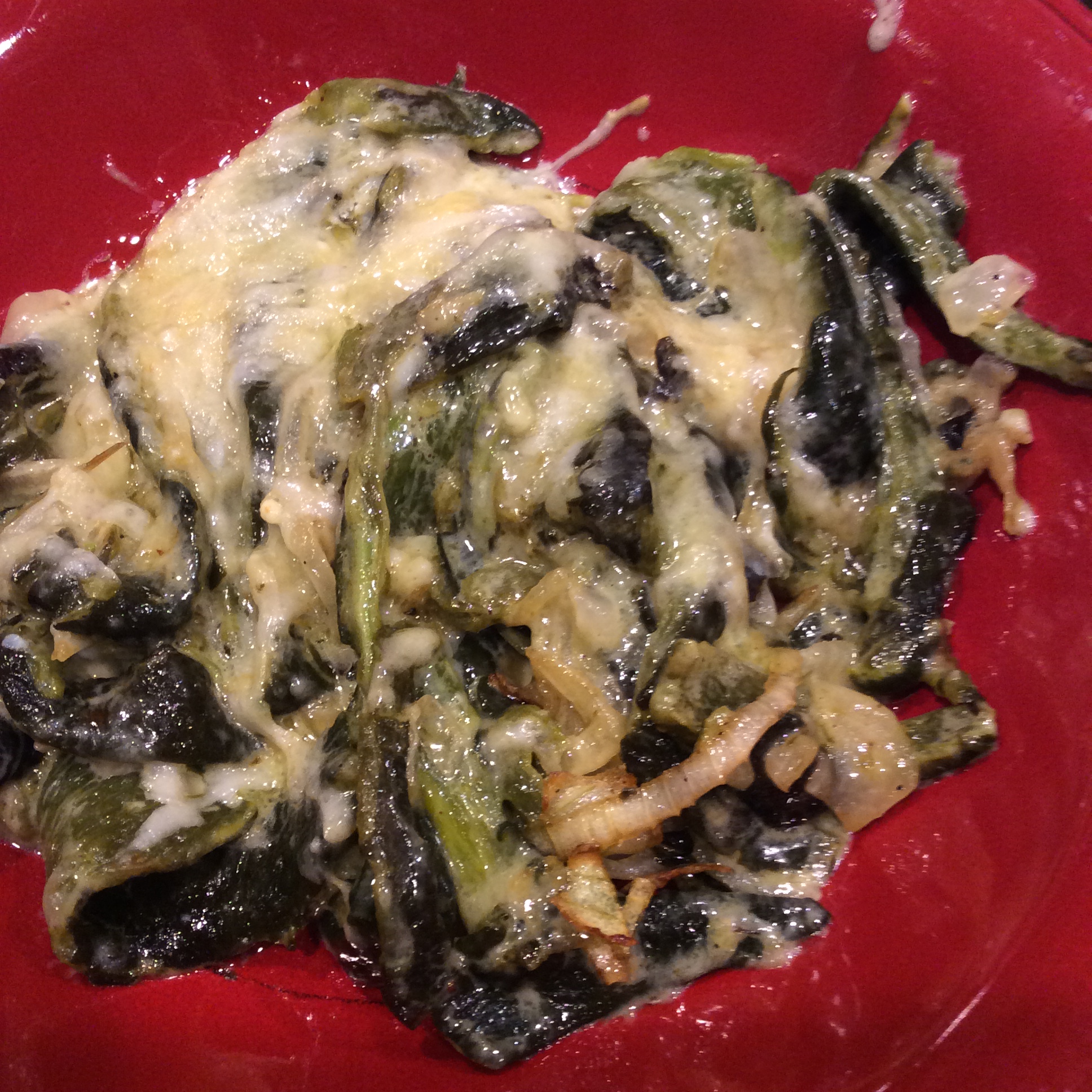
I used to love a bowl of chiles con queso to fold into soft corn tortillas, and now that I eat low-carb and no longer eat tortillas, I find that my enjoyment of roasted chilies with cheese and cream is undiminished.
Here in New Mexico August is the great season of chilies, and soon chile roasters will appear everywhere and the aroma of roasted chile will float in a faint delicious cloud over the city. But there are plenty of chiles around right now and they can be roasted easily on the grill or under the broiler. My favorites are the lovely inky green poblanos. I was so eager to roast mine that I forgot to photograph them, so here is a borrowed photo:
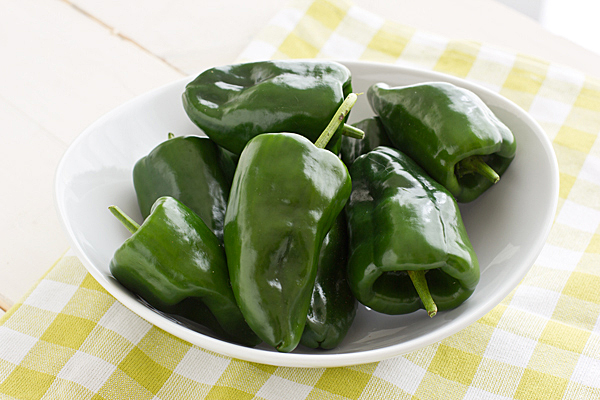
Chile pepper plants are sturdy and attractive and can usually be grown in the front yard without comment, especially if planted in groups rather than rows. They have nice deep green foliage. In the case of poblanos, they turn very hot when red and should be harvested when dark green. They have a deep rich flavor and, depending on growing conditions, can be surprisingly hot when green, although generally they are considered a mild chile. Roast them until they have blackened spots all over their skin, turning as needed, then throw them in a plastic bag to steam for 20 minutes. Peel off the skin and remove the core and seeds. Now tear them into strips. These are called rajas de chile. For the roasted strips from six poblanos, chop up one small onion and one good-sized clove of garlic and sauté them until cooked; I used fat from my homemade bacon. Add the chili strips and about half a cup of cream, and boil hard for just about one minute until the cream is a little reduced. And a generous cup of grated cheddar, stirring some into the chili strips and put in the rest over the top, and broil until the cheese is melted and maybe a little brown in spots. It makes a delicious light meal for two. If you add soft tortillas, it will feed two generously. It makes a good side dish for grilled meats of many kinds. To me roasted chile is the flavor of August, and I am happy to have a foretaste of August in July.
24 Jul
Real Bacon
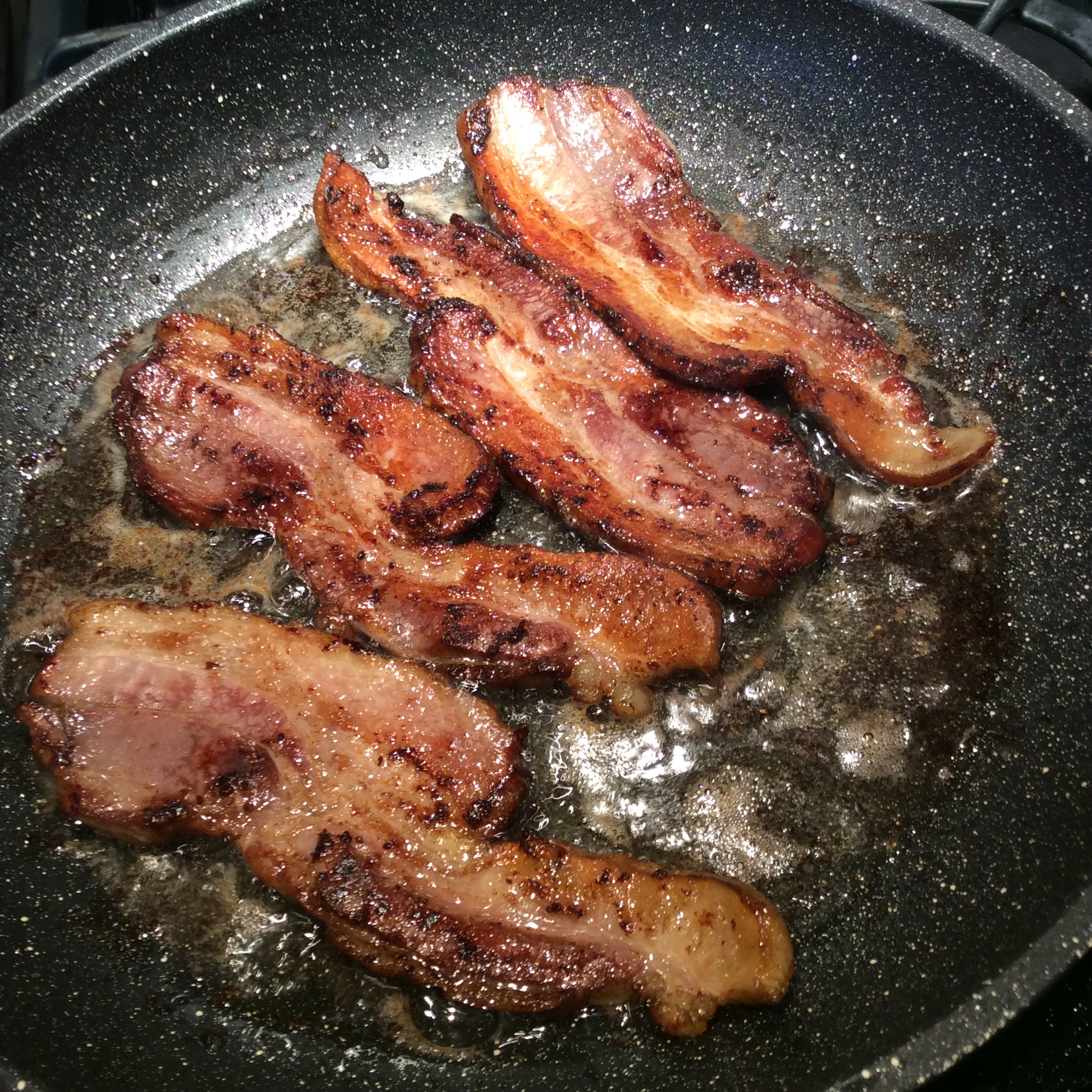
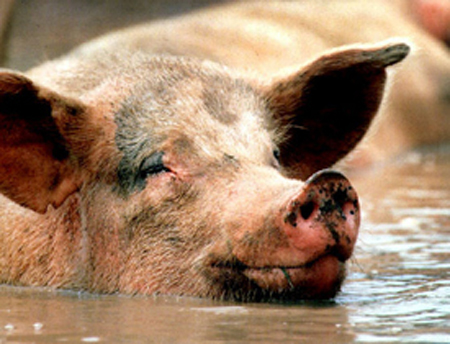
I am firmly opposed to factory farming of animals, especially in the case of pigs, and only want to eat meat from animals that were treated decently and fed well. Pork like this is hard to find, but recently I came into a large fortune: a slab of pork belly from a farmer who runs a great small pig operation. Naturally I decided to make Real Bacon.
As it turns out, making bacon is child’s play. There are a lot of ways to approach the curing step, but I chose brine because it’s so simple. Dissolve a cup of salt in each gallon of cold water, and make enough gallons to cover the pork belly completely in a vessel that will fit in your refrigerator. If you want, you can buy curing salt that contains nitrates to preserve red color in the meat, but I don’t see much point in this when you are going to fry the meat brown anyway. Put a plate on top of the meat to keep it totally submerged, cover the vessel, and refrigerate for a week.
7 days or so later, take the meat out, dry the surface, and set it on a rack in the refrigerator to dry more thoroughly overnight. Cold-smoke by your favorite method. We have a smoker, but it you don’t, there are all sorts of contraptions that let you cold-smoke on your grill or even on the stovetop if the piece of meat is small enough. Just be sure that the temp can be kept under 150 degrees at all times. I used a combination of cherry and pecan chips. Applewood is also delicious on pork. I don’t recommend mesquite, which is just too strong. Smoke a couple of hours. Monitor the internal temp of the meat. If it reaches close to 120 at the thickest part, stop. Cool the meat, cut it into pieces of a suitable size for your household, and fry it or freeze it.

Our lunch today was generous slabs of real bacon, eggs from my hens fried in bacon fat, green chile, and a garnish of avocado sprinkled with chipotle. After a lunch like this, we are full until 8 or 9pm. A snack in the late evening is plenty. This is real food.
There are all kinds of ways to get creative with the formula. Dry-salt with herbs, add other ingredients to the brine, whatever. There are lots of good cookbooks on charcuterie, so read one if you’re interested. But I’m glad that for my first try, I stuck to simple brine, rich smoke, and real pig .
4 Jun
A Grand Mess of Greens
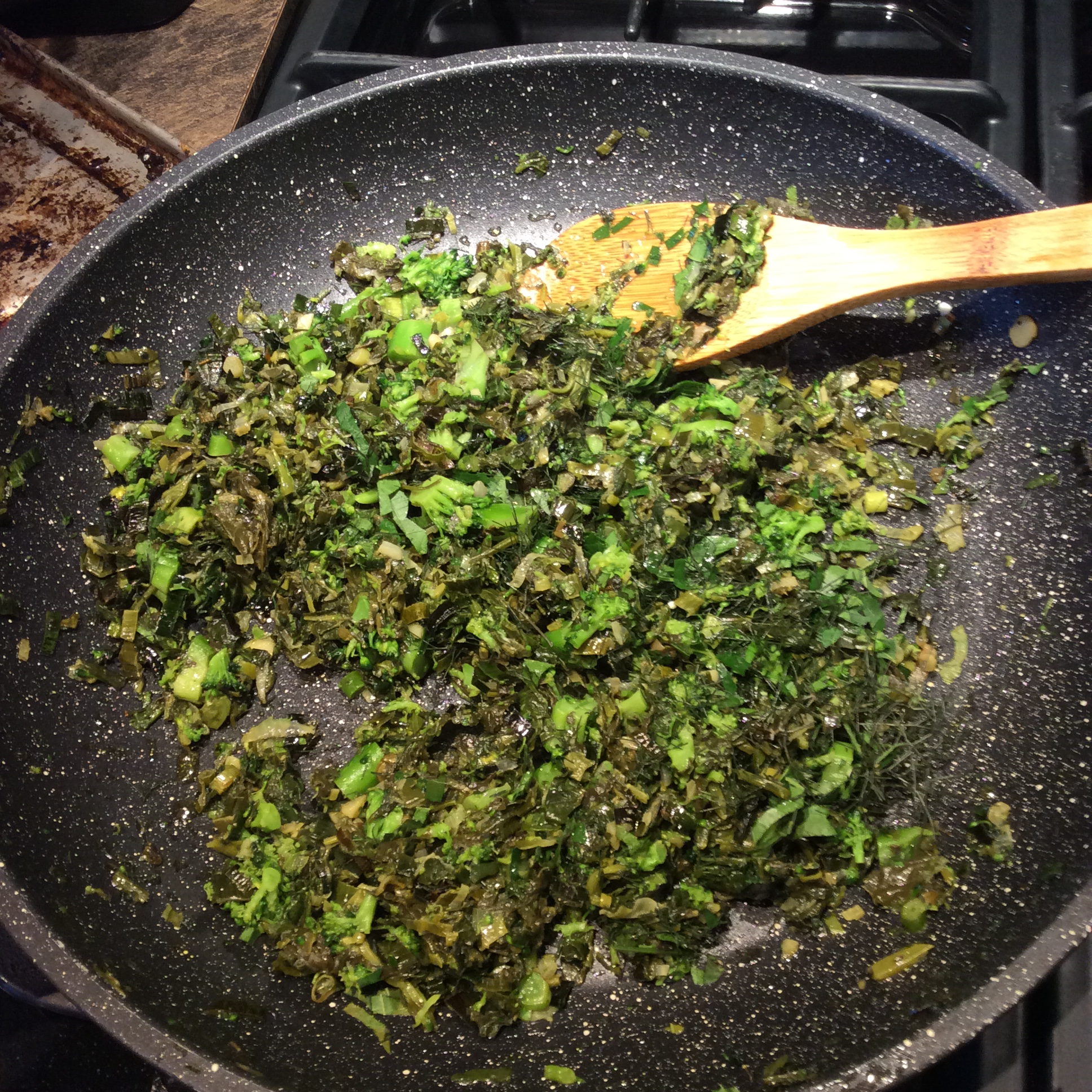
I love the various vegetables that the seasons offer me, and for the most part prefer to eat what my environment is offering me fresh that day. I do freeze greens mixtures, though, so that I never run short and have them all winter. Recently I came across a forager’s description of his “56 species calzone” and it made me want to count up the number of species in the large batch of cooked seasoned greens for the freezer that I’m working on today.
The main components: chard, dock, lambs-quarters, spinach, nettles
Seasonings and minor components: mulberry leaves, hops shoots, lettuce ( about to bolt,) dandelion, scorzonera, salsify, sunflower, green onion, young leeks, elephant garlic, corn poppies, young grape leaves, marjoram, mint, fennel, mustard, cattail shoots, pea vines, broccoli leaves, arugula, sow thistle, wild lettuce
Sauteed separately and added: chopped broccoli stems, grape leaves, green garlic
So, 30 species, a thoroughly respectable count for an average early summer morning, and a potential treasure on winter days when I need to be flooded with the antioxidants of summer. In general I blanch the bulk greens in a fairly small amount of water which I later drink or make soup from, saute the chopped alliums and seasonings, then combine all and saute together for five-ten minutes or until the flavors have blended.

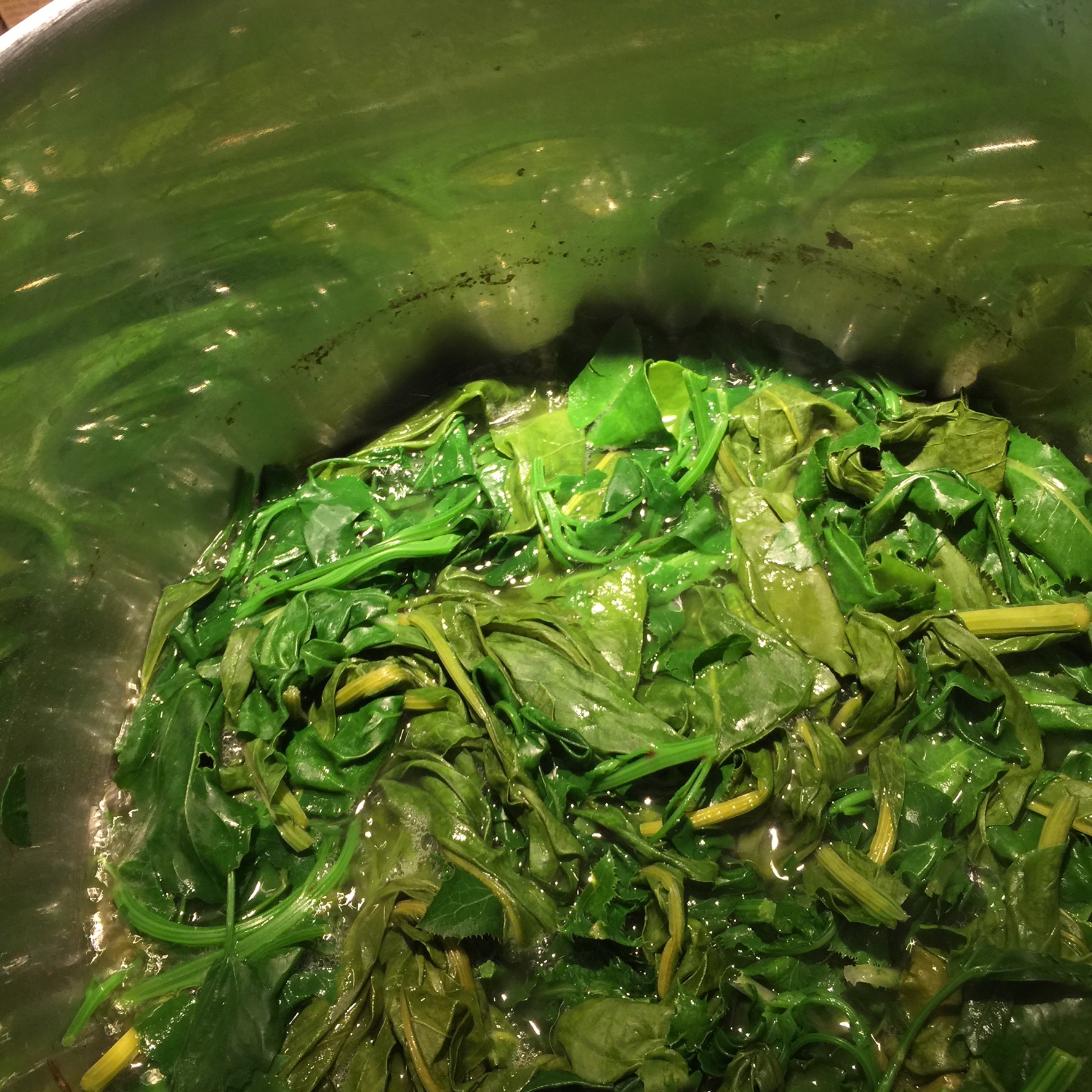
The true Cretan diet, the one that nourished some of the healthiest and longest-lived people in the world, was based on huge numbers of wild mountainside greens. It’s said that over 300 edible greens grow on Crete, and the average citizen can recognize over a hundred, making my 30 seem limited. But be assured that if you can learn to recognize ten of your local edible weeds and know when to harvest them and how to prepare them, your health and table will improve. I’ve been tracking the preferences of a vegetable-despising friend, and he will eat greens, sometimes even second helpings, if they don’t look like greens on the plate. An example is the horta egg cake that I make often. He will even eat plain greens if they have a sweet component and a bit of texture, and an easy way to provide this is to douse them in the Quasi-Korean Sauce that I always have in the refrigerator and put a handful of roasted peanuts on top. If you eat bread, toasted sourdough bread crumbs provide delicious crunch on greens sautéed with garlic and chile flakes.
Be aware that greens have a remarkable capacity to absorb and mute flavors, and may need more seasoning than you think. Salt seems to disappear into them, and enough seasoning may be key to getting your loved ones to eat them and even like them. So keep tasting and adjusting until the flavor is right.
If you want to learn to identify some wild greens, gather them at the right stage, and cook them well, there is no better foraging author than John Kallas.
 My urban homestead