Archive for the ‘home food production’ Category

Post 300: Magnolia

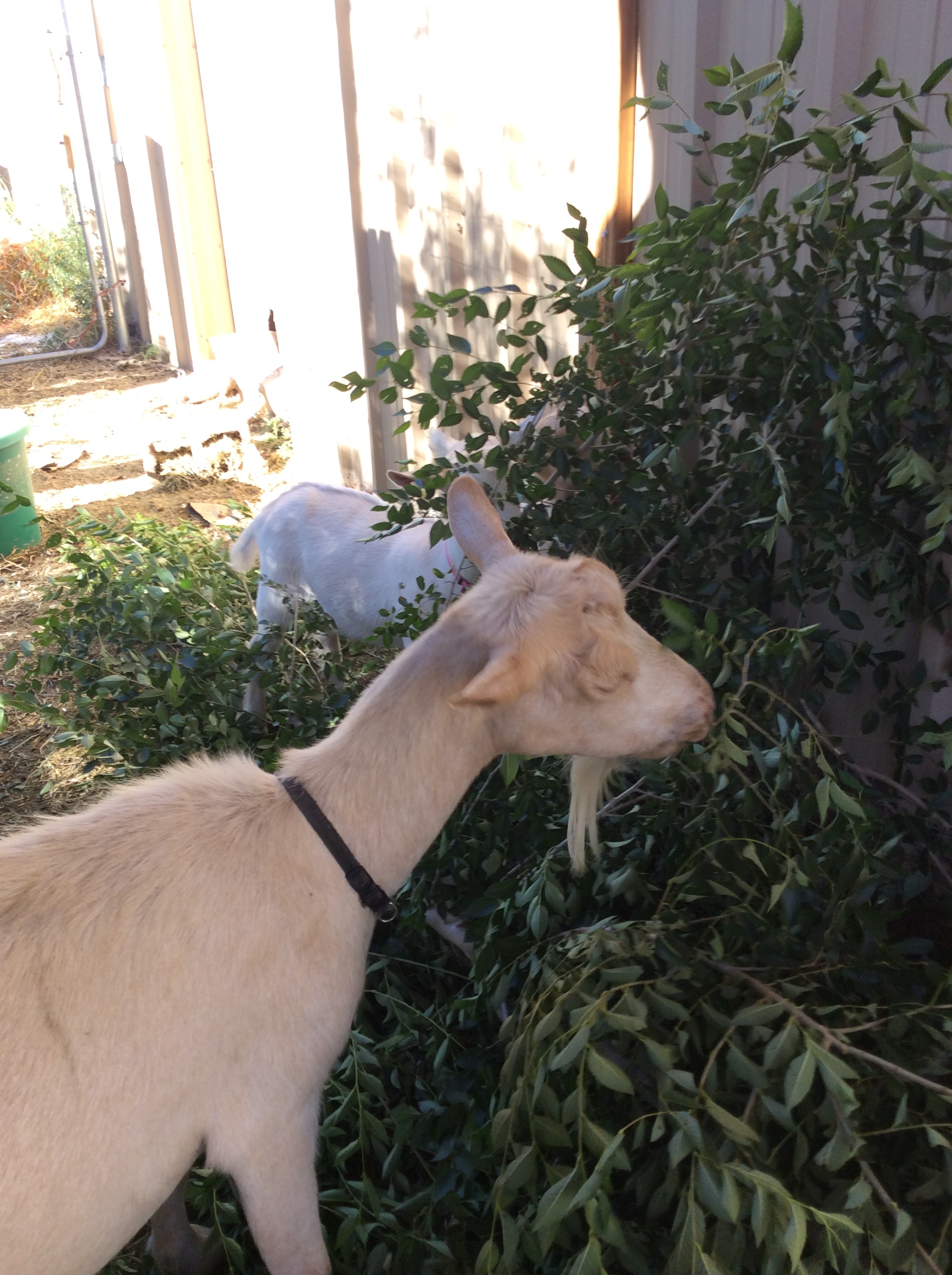
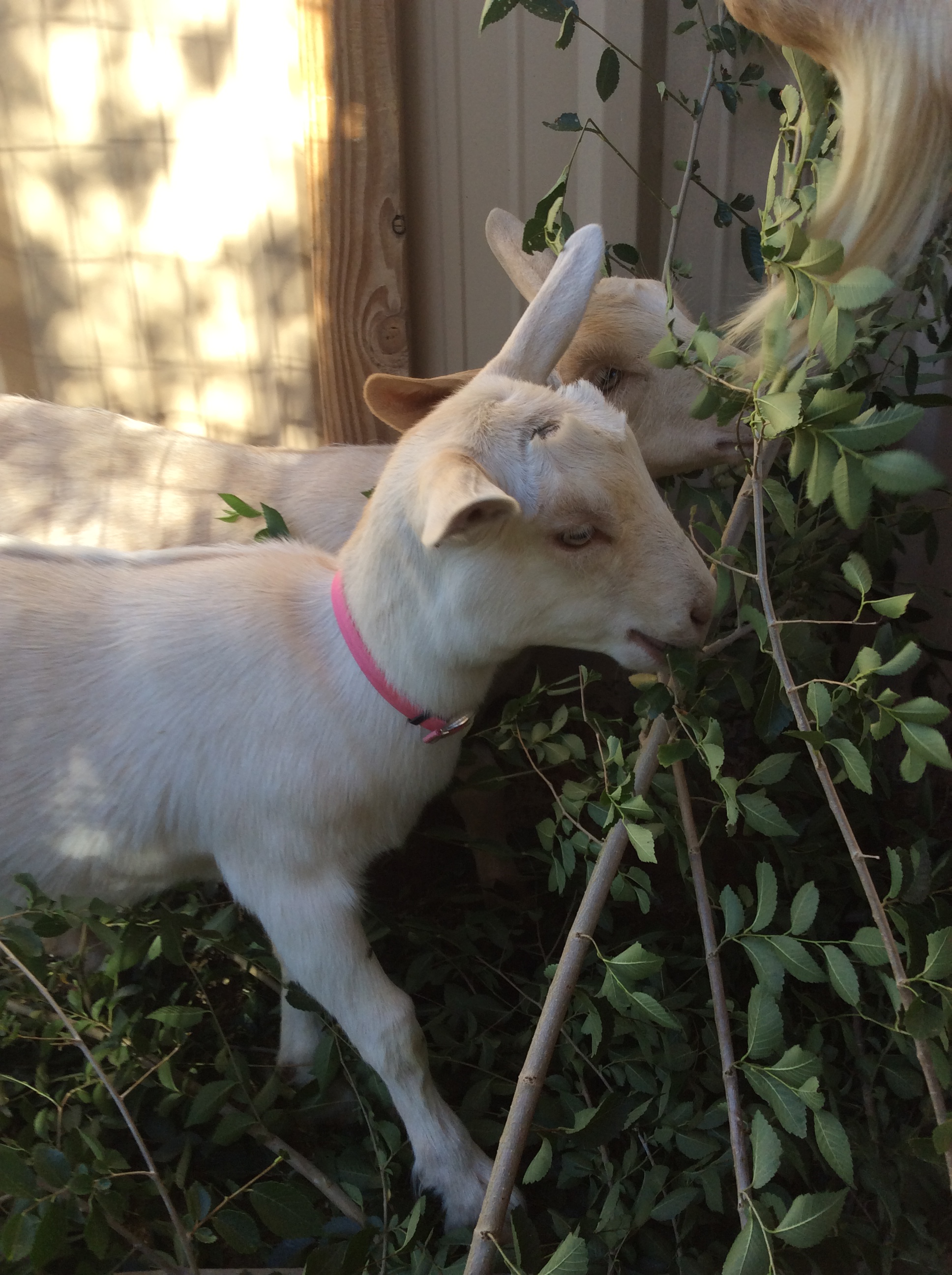
This is a poignant post for me to write, because one of my very first posts written on this property was about my new Sanaan doe goat Magnolia. Beloved Maggie is over nine years old now, and no longer  holding body weight well when she’s in milk, and I’ve concluded that for her own good, this is her last lactation. So I’m filling the freezer with goat cheese, and Magnolia will retire and live out the rest of her life in leisure. Goats are smart and interactive and, like dogs, incredibly painful to lose. I hope that Maggie will be with us for a few years yet. She is a big part of my daily life, and I can’t think of a better subject for my 300th post.
If you are interested in having a dairy animal, bear in mind that they need excellent nutrition and eat a lot of expensive food and occasionally have veterinary needs, so don’t even think in terms of producing economical food. Think in terms of having a lovely pet, with benefits. Do remember that periodic male offspring are almost inevitable and you have to have a plan for what to do with them, so if you are vegetarian yourself this may be a real issue for you. Female offspring can often be given to good homes, but can very seldom be sold at a profit.  Also, I trust it goes without saying that when in milk they have to be milked out every day, not just when you feel like making cheese, and have to be milked when you travel, which is not a job that the average pet sitter will take on. Be aware that excellent fences are required to keep goats out of your own shrubbery and trees or your neighbor’s, and in my area an 8 foot fence they can be secured behind at night is needed for protection from coyotes. All of this costs money.  If any of this discourages you, there is an abundance of excellent cheese including the superb Mount Vikos halloumi available at any upscale food store or co-op.

One of the reasons that I wanted a dairy animal in my suburban yard is that I like to make cheese, and currently it’s pretty hard to make cheese from most commercial milk. This is because milk is being pasteurized at increasingly high temperatures to extend its shelf life, and the milks in your local dairy case that don’t say “UHT” were probably still pasteurized at near-UHT temperatures. This affects the proteins, and such milk will not form a proper curd when rennetted. Therefore, unless you have access to fresh-from-the-animal milk, success is by no means certain with any cheese recipe except ricotta. Since it’s illegal or very difficult in most areas to sell raw milk, a dairy animal is your ticket to cheesemaking. If you don’t have a dairy animal or access to milk that wasn’t processed at high temperatures, I am very sorry to say that I do not recommend cheesemaking because it is going to be too disappointing. Personally, I find it absolutely weird to think that most commercial milk is so denatured that you can’t make cheese out of it. But these are the facts.
If you have access to  clean milk that was not pasteurized at high heat, go immediately to Ricki Carroll’s wonderful cheesemaking site and go to town. She has all the supplies and cultures as well as reams of recipes and advice.
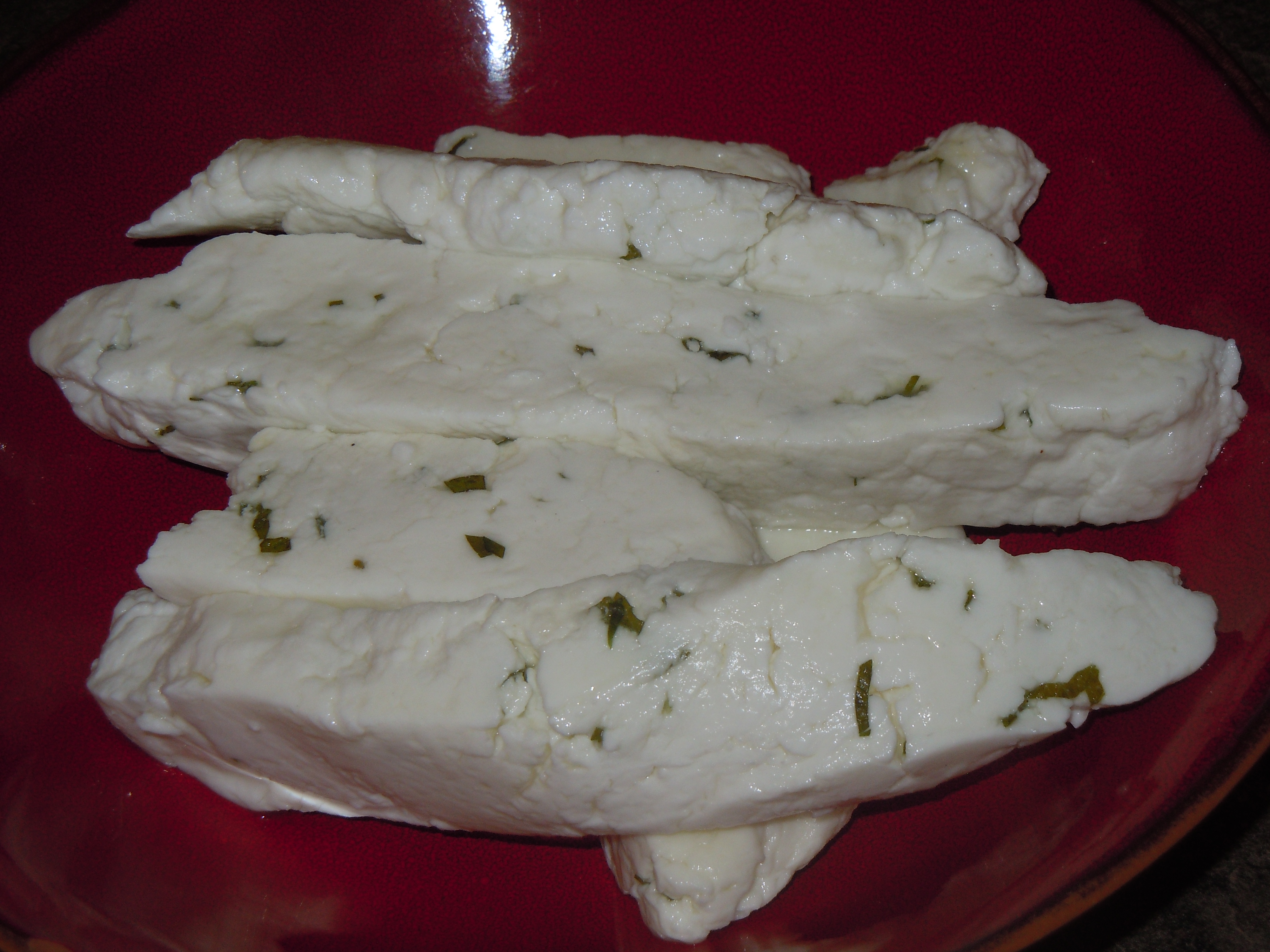
My own choice has been to stick to fresh cheeses and halloumi, because they are quick and easy to make, can be frozen for later use, and do not require any special attentions as they age because they don’t age. I’m especially fond of halloumi because it can be grilled to such a wonderful crusty brown, and I do love a good Maillard reaction.
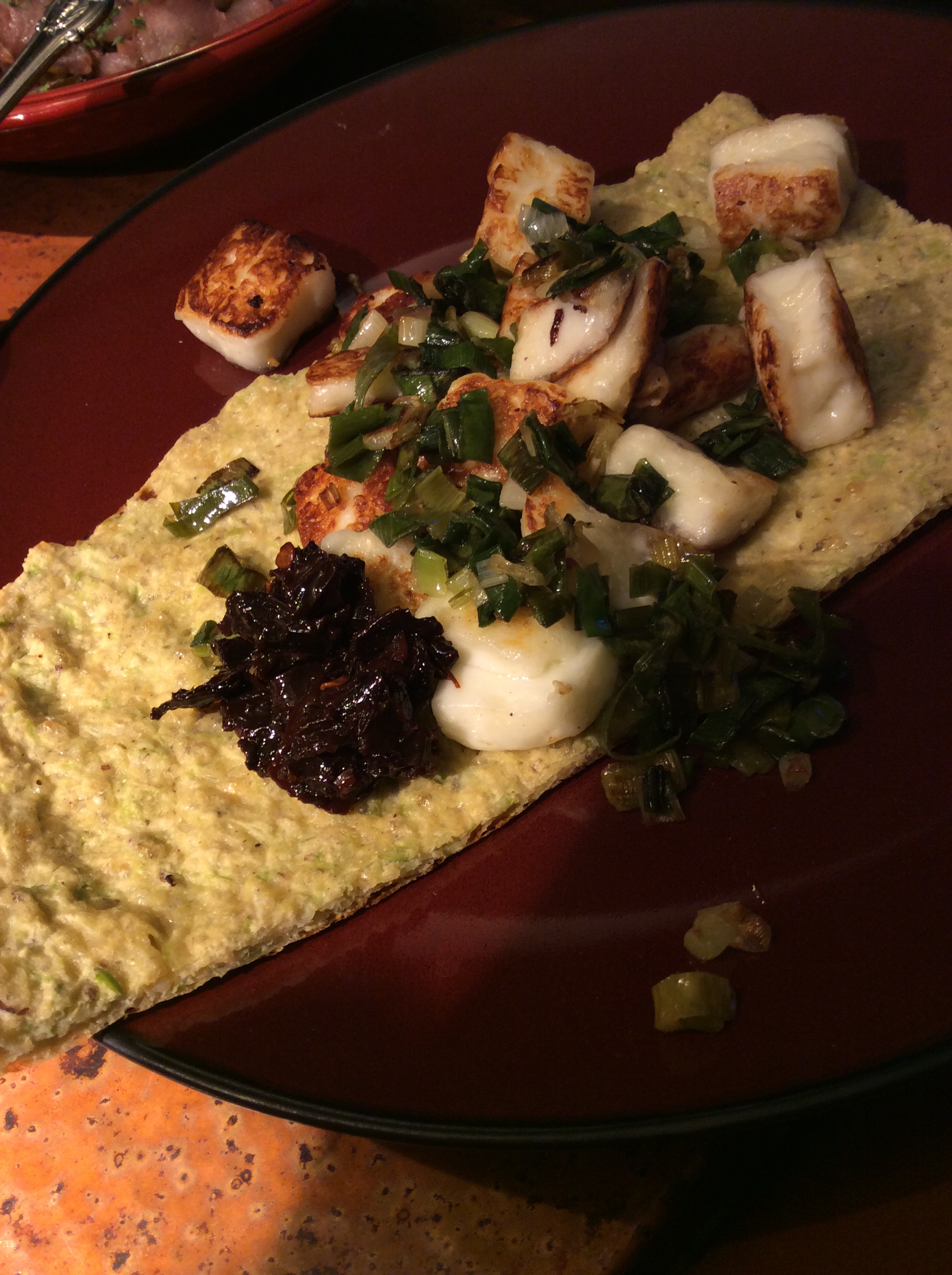
Rather than give my own haphazard procedure for making halloumi, which might not be perfect but fits into my kitchen routine and produces a good product, I am going to have you start off on the right foot by linking to Ricki’s recipe.  I will only add that I don’t use any herbs in finishing the cheese, because it is more versatile if it isn’t already carrying an herb flavor.  Any herbs that you want can easily be added at the cooking or serving stage, as the green onions pan-grilled with the halloumi in the top picture.  Also, a salted but unseasoned halloumi is an excellent stand-in for paneer if you feel suddenly moved to go Indian rather than Mediterranean.  And a wild greens saag paneer with your own greens fed cheese is as delicious a dinner as I know of,  and likely to contribute to your health and longevity as well as your immediate gratification.
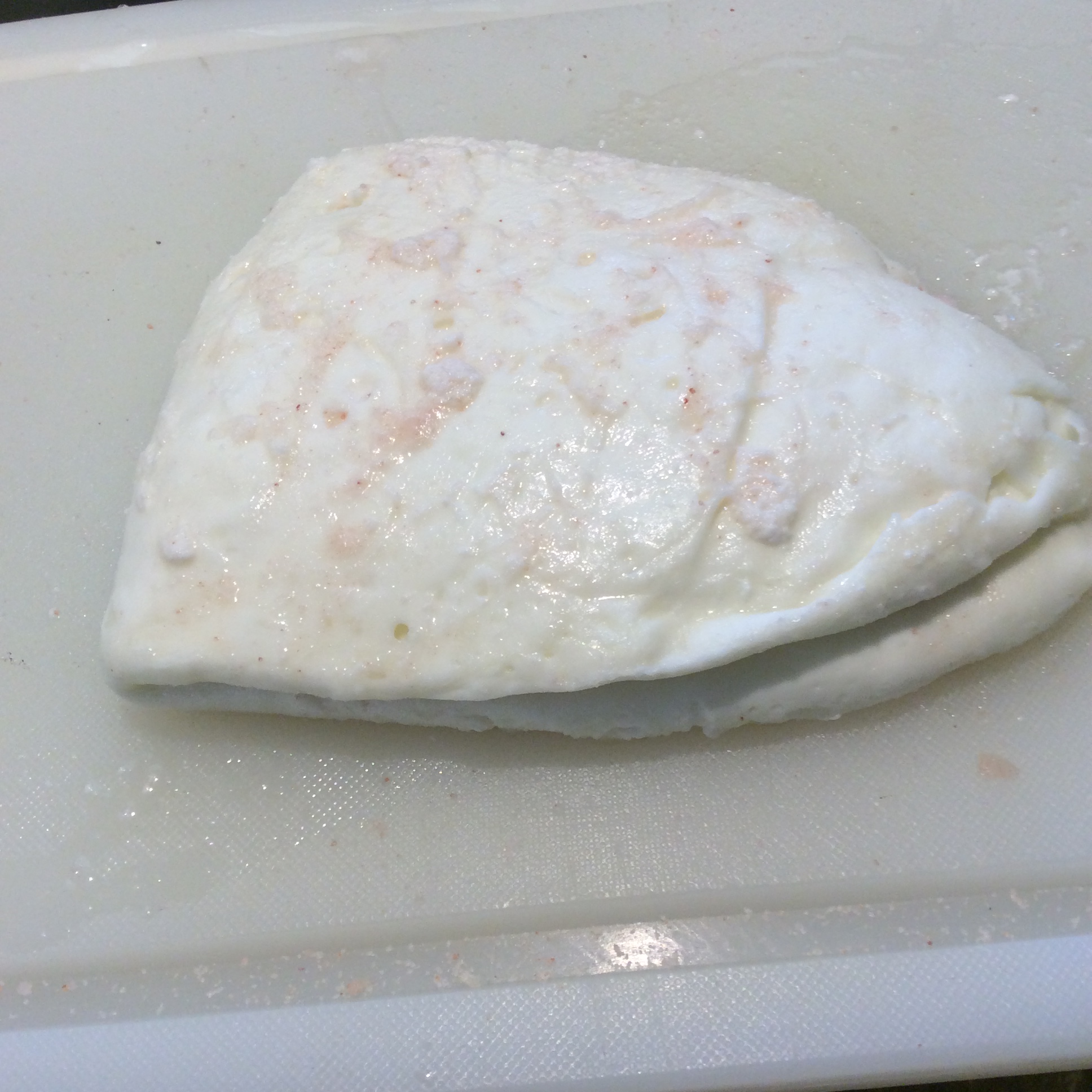
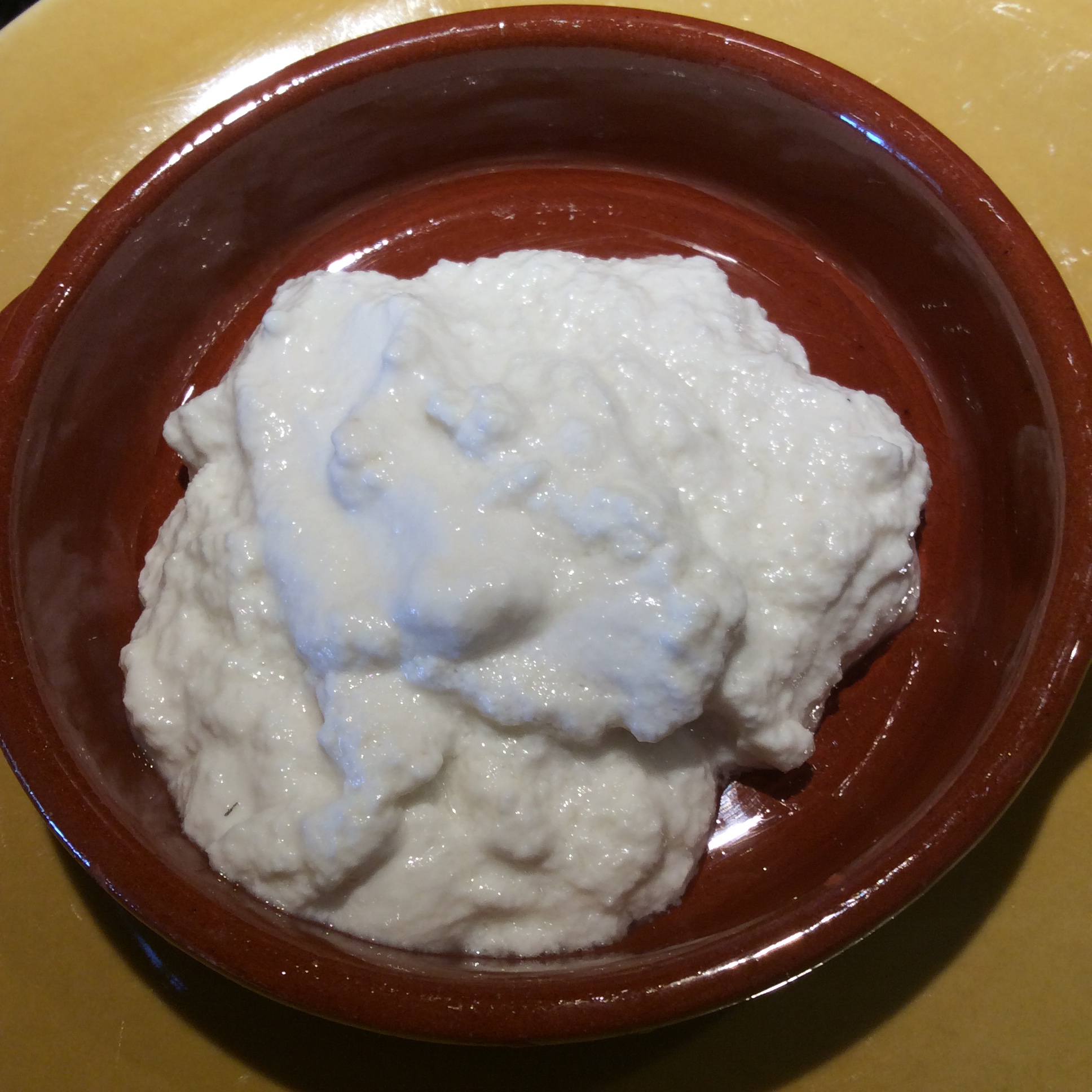
A quarter cup of ricotta  is a byproduct of making halloumi,  and makes a nice Cook’s Treat to reward yourself for your enterprise.
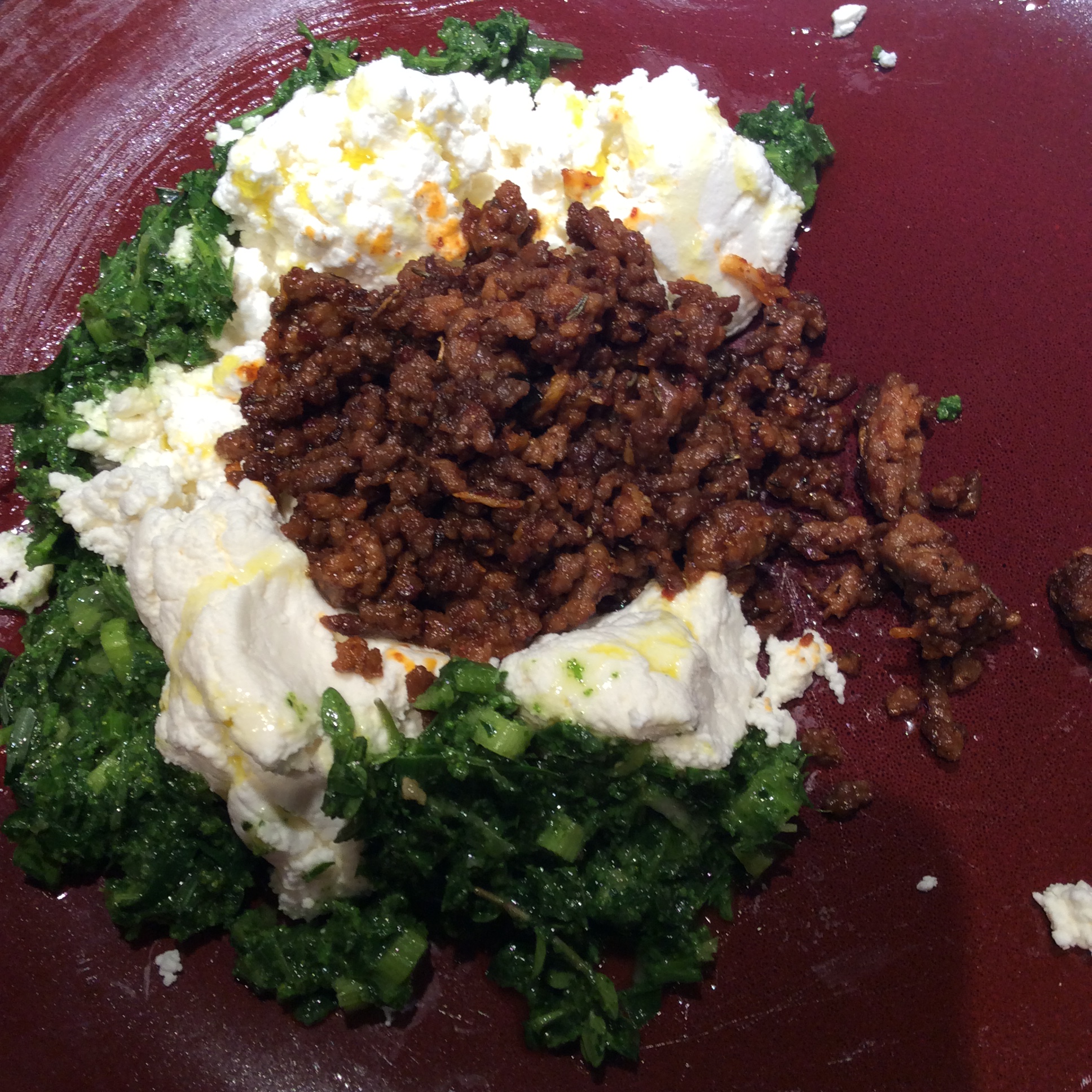
Here,  fresh goat cheese serves as the bulk of a dinner, a strongly seasoned ground meat with sweet spices in the Arabic style is part of the flavoring, and an elaborate herb pesto is the other part.
Continue reading

The Squash Chronicles I: Ambitious Summer Squash

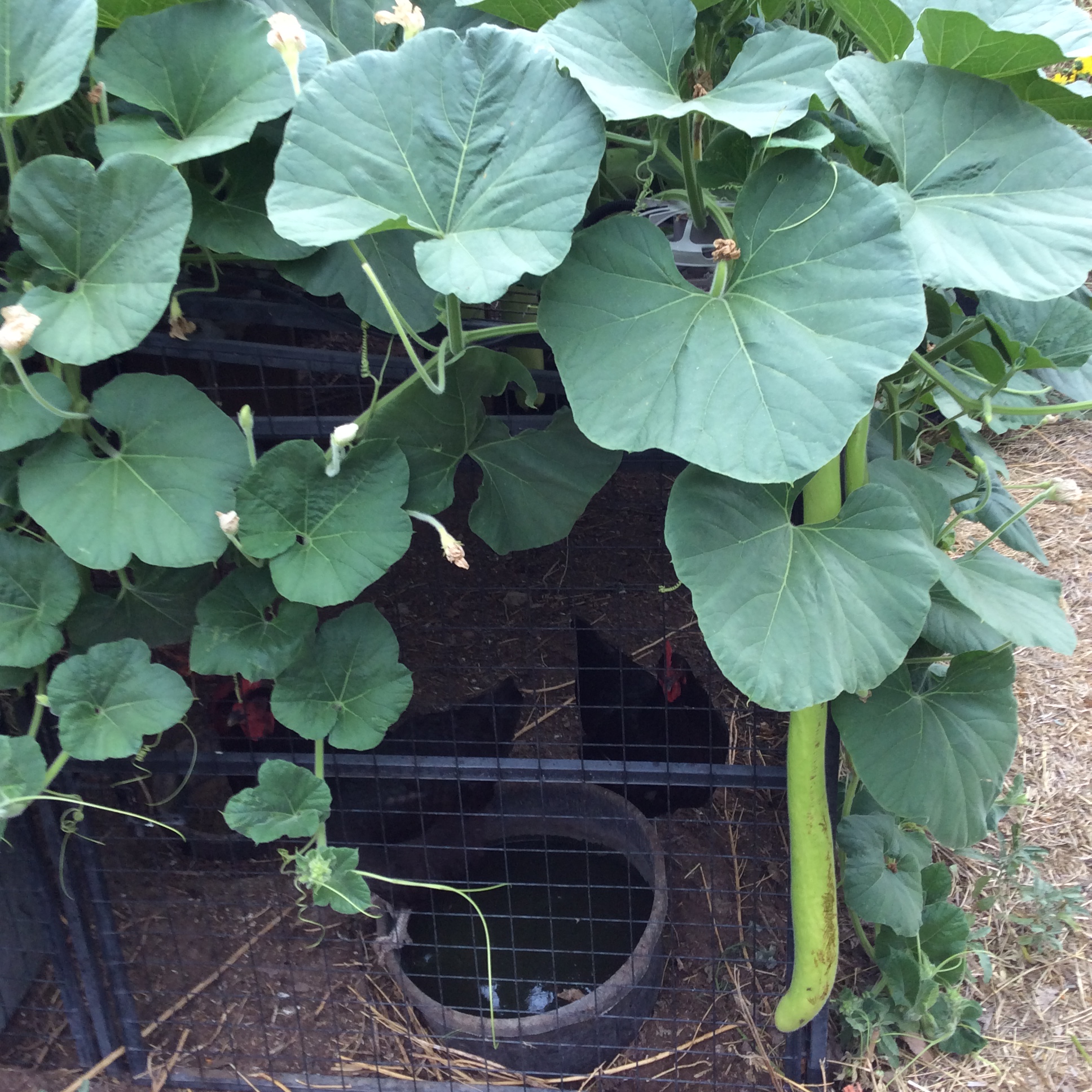
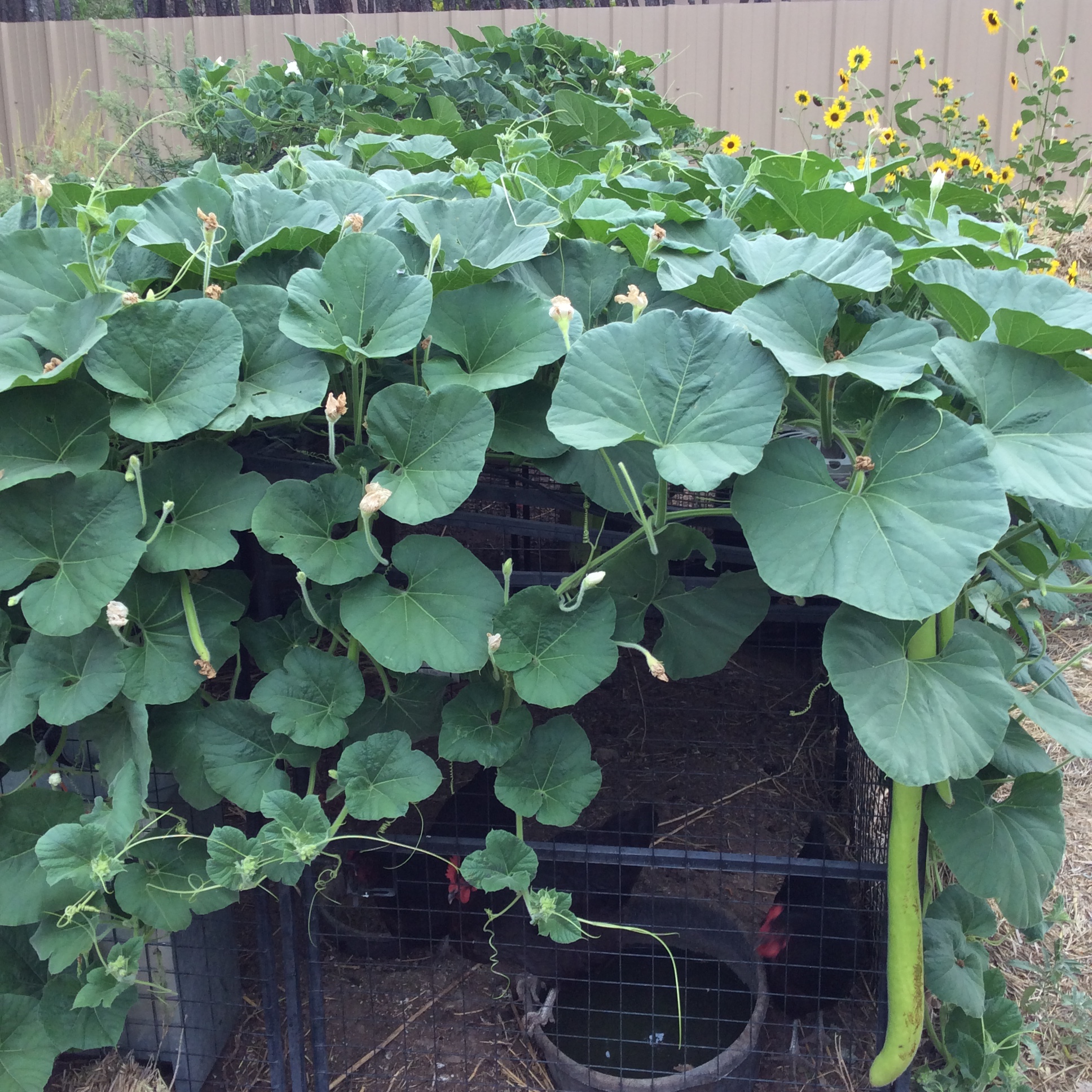
Every year  I lose my zucchini to diseases in late summer, despite the fact that I always plant whatever is most highly touted for disease resistance. This year I decided to try some new squash types  and see if I could overcome the disease issues, and still get some summer squash. The two I planted were Thai bottle squash and Italian Serpiente squash, both from the entrancing Baker Creek seed catalog.   I planted a couple of seeds of each in the compost pile next to the chicken coop, and thinned to one plant of each when they were small.  The results were as you see above; they are quite frighteningly successful. The vines are up to 30′ long, so be prepared.  They covered the chicken coop in nothing flat, providing some nice shade for the hens, and I was amused to note that wherever squash formed hanging down into the chicken run, the hens would jump up and peck them down to stubs.

Both can be picked at any point when your thumbnail will still penetrate the skin without significant pressure, and used just like zucchini.  They taste like zucchini, by which I mean they really have very little taste and need some help from seasonings.  When cooking any summer squash I prefer to slice it, salt heavily, and let it sit for 30 minutes to an hour and then squeeze out the large amounts of excess water by wringing the squash slices in a dish towel. Proceed to cook any way you like.

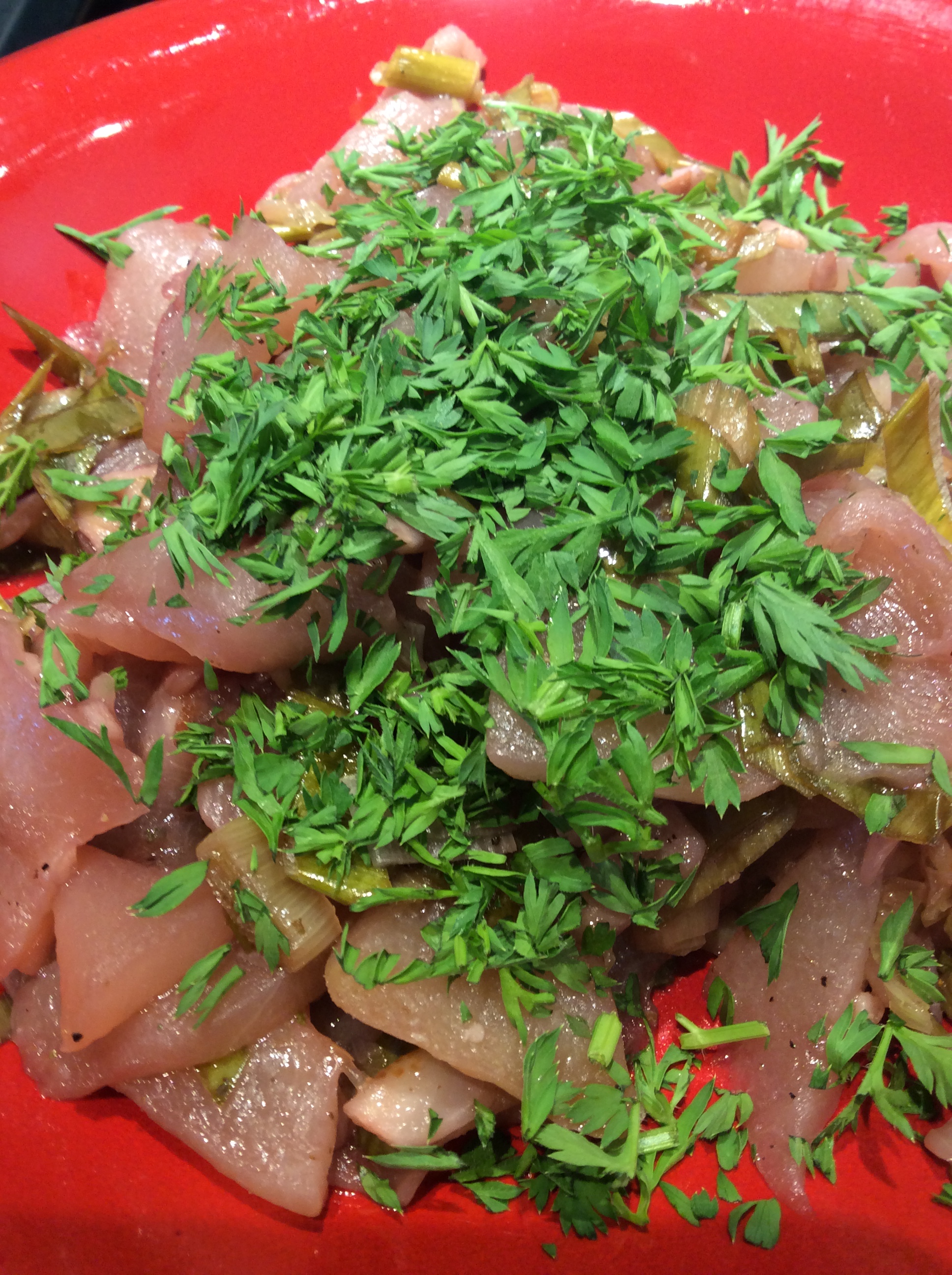
I like to make low-carb wrap bread out of  summer squash, and I’ll write about that in the near future, but today I want to encourage you to try marinated squash. Slice up one zucchini or a comparably sized chunk of a serpiente or bottle squash or whatever, salt heavily, and let sit 30 minutes or so. Meanwhile, chop a clove of garlic and slice a scallion or two thinly and put in a bowl large enough to hold the squash with half a cup of very good red wine vinegar. Add a half teaspoon of salt ( most of the salt you put on the squash will be squeezed away with its liquid) and herbs to taste. I like a few sprigs’ worth of thyme leaves.  Wring the squash slices out thoroughly in a clean dish towel, then fry in olive oil until the texture is the way you like it, which for me is done but not mushy. Dump the hot cooked squash slices in the bowl, stir the vinegar mixture through, and let cool to room temp, stirring a few times to distribute the seasonings. It can be made ahead and sit for a few hours, or refrigerated until needed, but do let it warm to room temp before serving.  When you are ready to serve, drain off all the excess vinegar,  pressing a bit to get any excess liquid out,  and toss with a quarter cup or so of your best olive oil and maybe add a small handful of chopped parsley or chopped young carrot leaves.  I like this as a side dish, and if you have some roasted pinenuts to sprinkle over the top, that adds deliciousness. Some crumbled queso  fresco would turn it into a light lunch, and it could be tucked into a wrap bread and eaten with a dip of seasoned yogurt or hummus for a more substantial meal  that would suit plant-based or vegetarian inclinations. Using a mildly sweet late harvest vinegar or adding a dash of honey, and finishing with chopped roasted salted pistachios would give the dish an interesting Sardinian sweet-and-sour turn.

As you can see above, the use of red wine vinegar gives the dish a pinkish cast that some people might object to. I use red wine vinegar because I make my own and love the flavor, but if it bothers you just use white wine vinegar instead.

The whole concept of a cooked vegetable salad goes as beautifully with Asian meals as with western style dinners. Try using rice vinegar and palm sugar or sweetener of your choice, adding a few teaspoons of chopped ginger along with  the garlic, and garnishing with scallions. Some slivered chiles would be great if you like heat,  and a handful of chopped cilantro would make a pretty and tasty garnish.


Independence

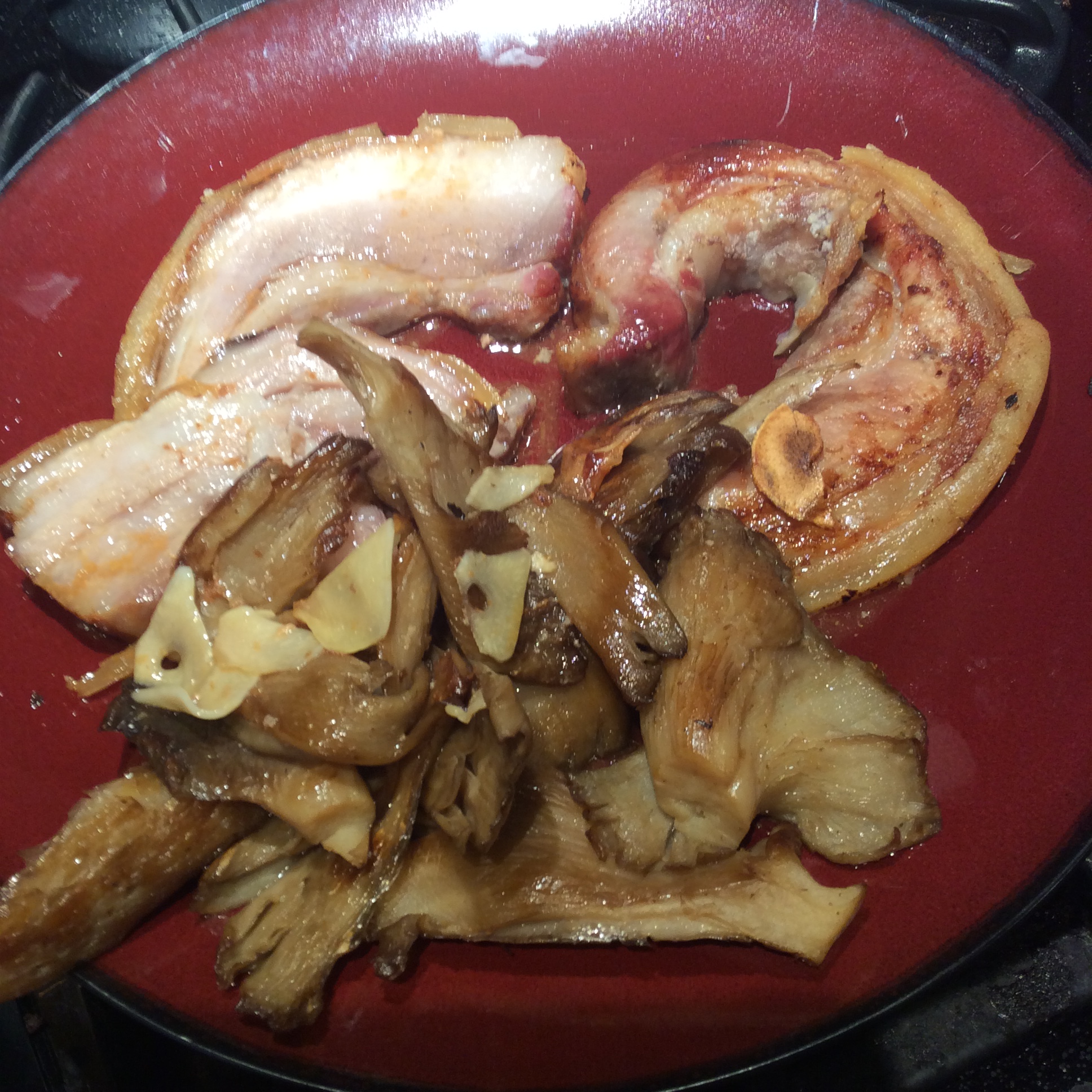
On this July 4th, I am sitting after dinner contemplating the hardly-revolutionary idea that all independence is local as well as national, and neither can exist without the other. I have wonderful irreplaceable freedoms under the Constitution. I also have a little plot of land on which to grow food like the garlic shown above, a splendid local system of farmer’s markets where I can buy what I can’t grow like the  pork belly that I roasted, and a system of national forests that preserve nearby wilderness areas where I found the oyster mushrooms. Without the national systems that protect our local freedoms, none of this could be maintained.

So be conscientiously local. Grow what you can, and buy what you have to. Waste as little as you can manage. Connect with other local people. Compost and reuse as well as recycling. Support your area farmers, not just by buying their products, but by realizing that your votes can support politicians who are sympathetic to local farms. Keep it always in mind that “All politics is local.” Connect with your neighbors, even if (especially if) their political views are different from yours, because both you and your neighbors might end up with something new to think about. And love and relish this country and support its national freedoms and national programs, and refuse to consider abridgment of its freedoms or demonization of people who don’t look or sound or worship exactly like its founders. We are bigger than that.


Deconstructed Thai Egg Salad

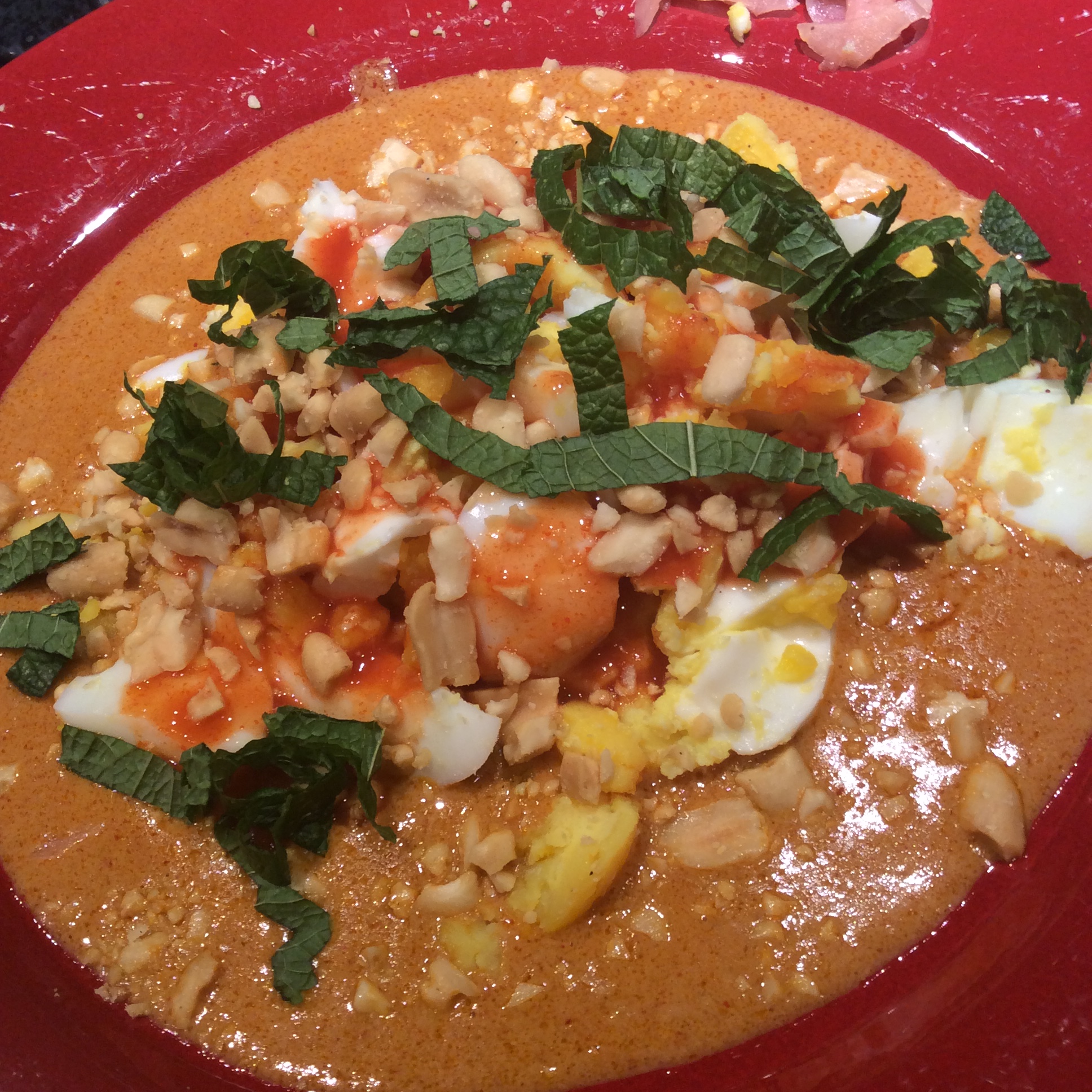
If you have chickens, there are inevitably times when you grow tired of eggs. I had one of those times recently and started to grope for a new way to think about egg salad. Since I love Thai food and keep a lot of the necessary seasonings around, some sort of Thai egg salad seemed like the perfect way to reawaken my enthusiasm. I wanted to make it quick and easy, too, so cupboard condiments played a large role. I used coconut milk, fish sauce, some artificial sweetener (people with no blood sugar problems can just use sugar,) Shark brand Thai  sriracha sauce (important, because it tastes very different from standard Vietnamese-style sriracha,) the excellent Hand brand Matsuman curry paste, and chopped peanuts, and all I added to them was eggs and sliced mint leaves.

For two people I started with three hard-boiled eggs each, and chopped them roughly leaving them in large chunks. I heated the top fat off one can of coconut milk, stirred in a heaping tablespoon of Matsuman curry paste, and cooked a few minutes until thick and smooth. I added fish sauce to taste and sweetened it a bit. I pooled this elixer on a plate, put piles of chopped eggs on top, salted the eggs to taste and then dribbled Thai sriracha (which is not very hot) liberally all over the eggs. Peanuts and sliced mint finish up the seasoning, and a bit of sushi ginger on the side is my own very weird addition.

If the eggs are already hard-boiled, you will be plating your lunch in about ten minutes. It’s ketogenic except for the sugar in the sriracha, which isn’t much. You can use your own sweet-hot dipping sauce for the dribbling if you prefer. The mint could be replaced with Thai basil or cilantro. I speculate that finely slivered leaves of lemon verbena might be interesting here but I haven’t tried it yet. This is of course in the Thai-ish category and I feel free to experiment and find new tastes.

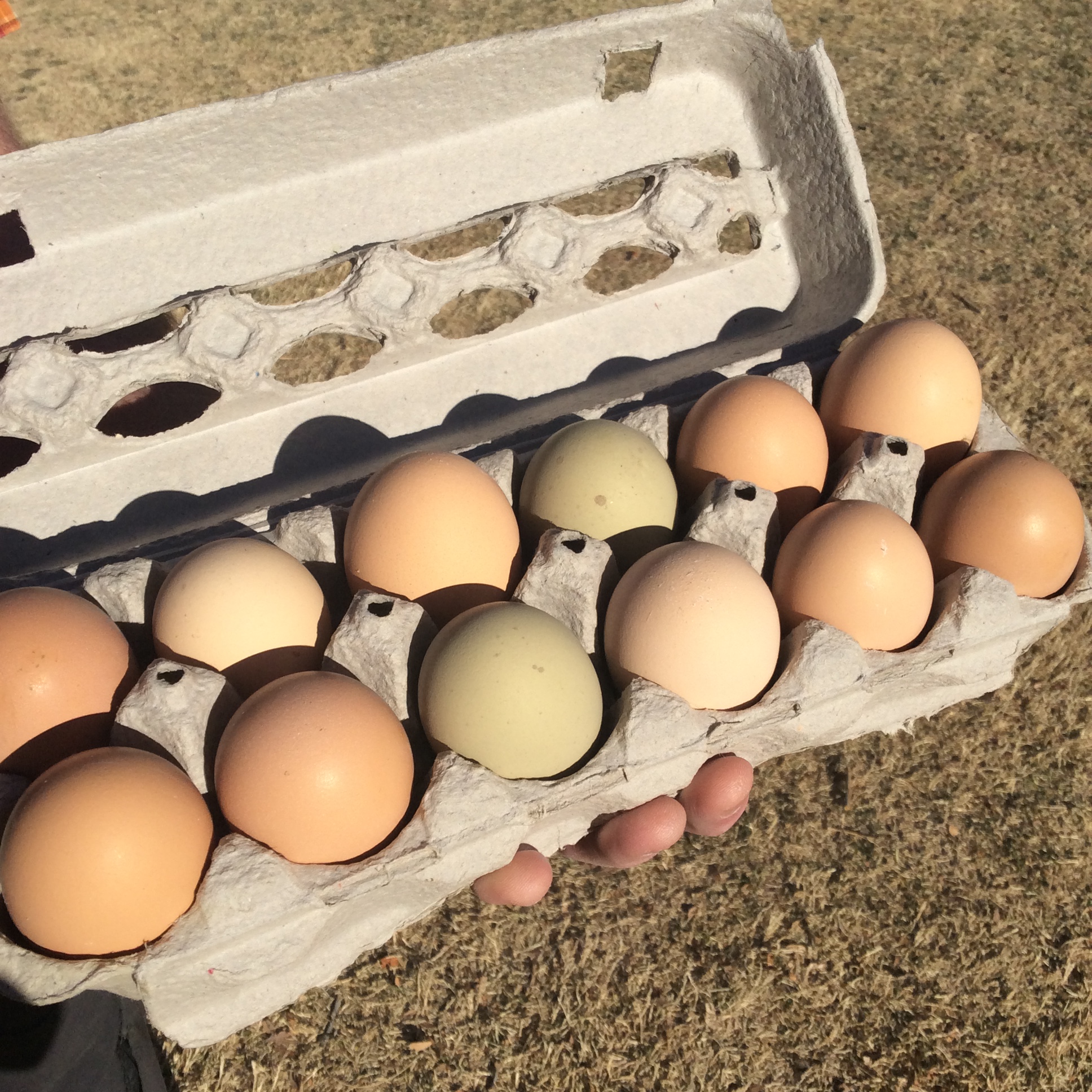
This is a good time to say something about producing the best eggs you can: in addition to a good commercial laying pellet high in an Omega-3 source such as flaxseed, feed your chickens all the greens that they will eat and a good source of calcium. In addition to oystershell I save all eggshells, dry them in the microwave and grind them, and feed them back in any soft foods from the table or kitchen that I have occasion to give my birds. I grow alfalfa patches in the back yard so that I can cut fresh alfalfa for them. Chickens are busy little machines that convert the 18-carbon Omega-3 fatty acids found in plants, which we absorb poorly, into the 20 and 22-carbon Omega-3s EPA and DHA, which we absorb well. (More structural info here.) One small commercial egg producer who feeds this way says he has hit about 600 mg Omega-3s per egg, verified by testing. I haven’t tested mine, but when I watch my chickens chow down greens, I know that it’s happening and that they are the best eggs I can get.