Archive for the ‘greens’ Category

Dandelion Time

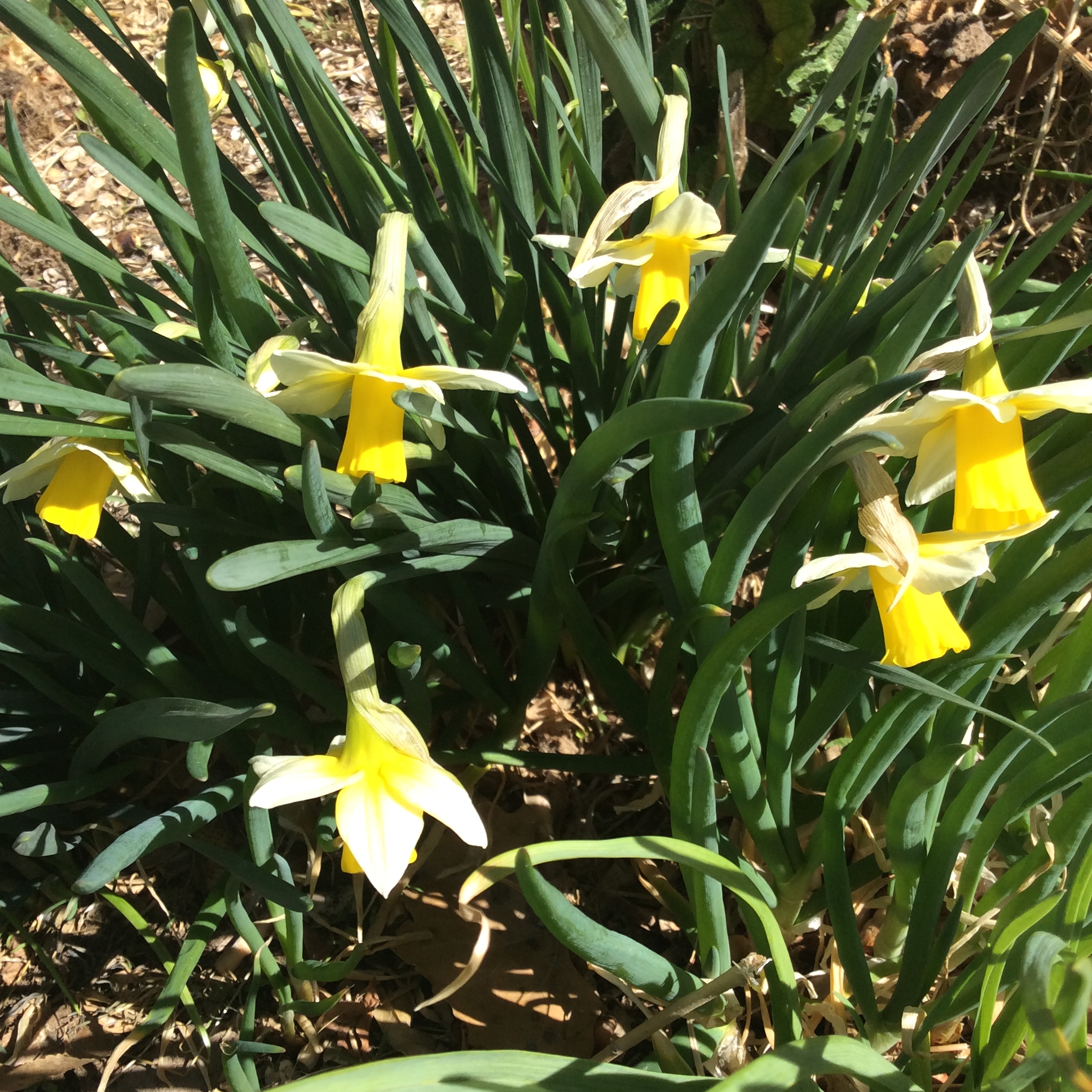
Just after the first nettles, the first dandelions are ready to eat. This happens about the same time that the earliest daffodils bloom.
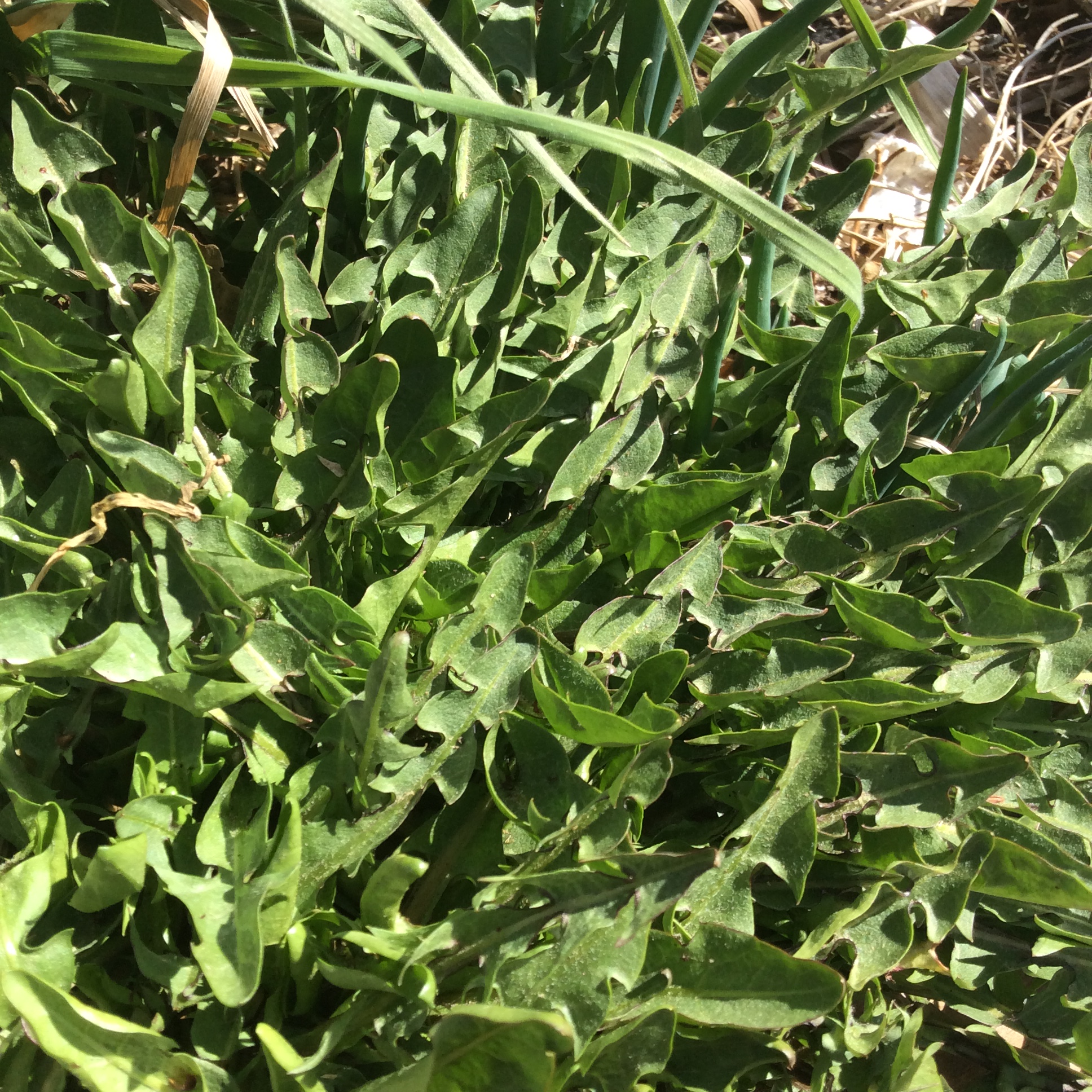
I have mentioned in another post that dandelions don’t seem to occur naturally in my neighborhood, and I went to a ridiculous amount of trouble to have them and paid good money for seeds that people in other climates would pay to get rid of.  Surprisingly, they take a long time to establish. I find that they are extremely straggly and thin the first year, and only a little more substantial in the second year. But in the third year, they make beautiful thick rosettes of spring time leaves that are perfect for salads.  Interestingly, the dandelions growing in my garden beds are not bitter, although in general dandelion leaves are famous for bitterness.  This may have something to do with my alkaline and highly mineralized soil. I’m really not sure. But it is a nice bonus. If yours are bitter, check out Dr. Kallas’s excellent book Edible Wild Plants: Wild Foods From Dirt to Plate, which contains a number of sensible suggestions about making bitter greens more appealing.

All sorts of medicinal properties are attributed to dandelions,  and if you’re interested in that you can read up on it. Personally, as I have said several times before, I think that all leafy greens are medicinal in that they are really, truly good for you. Eat them all, lots of them.
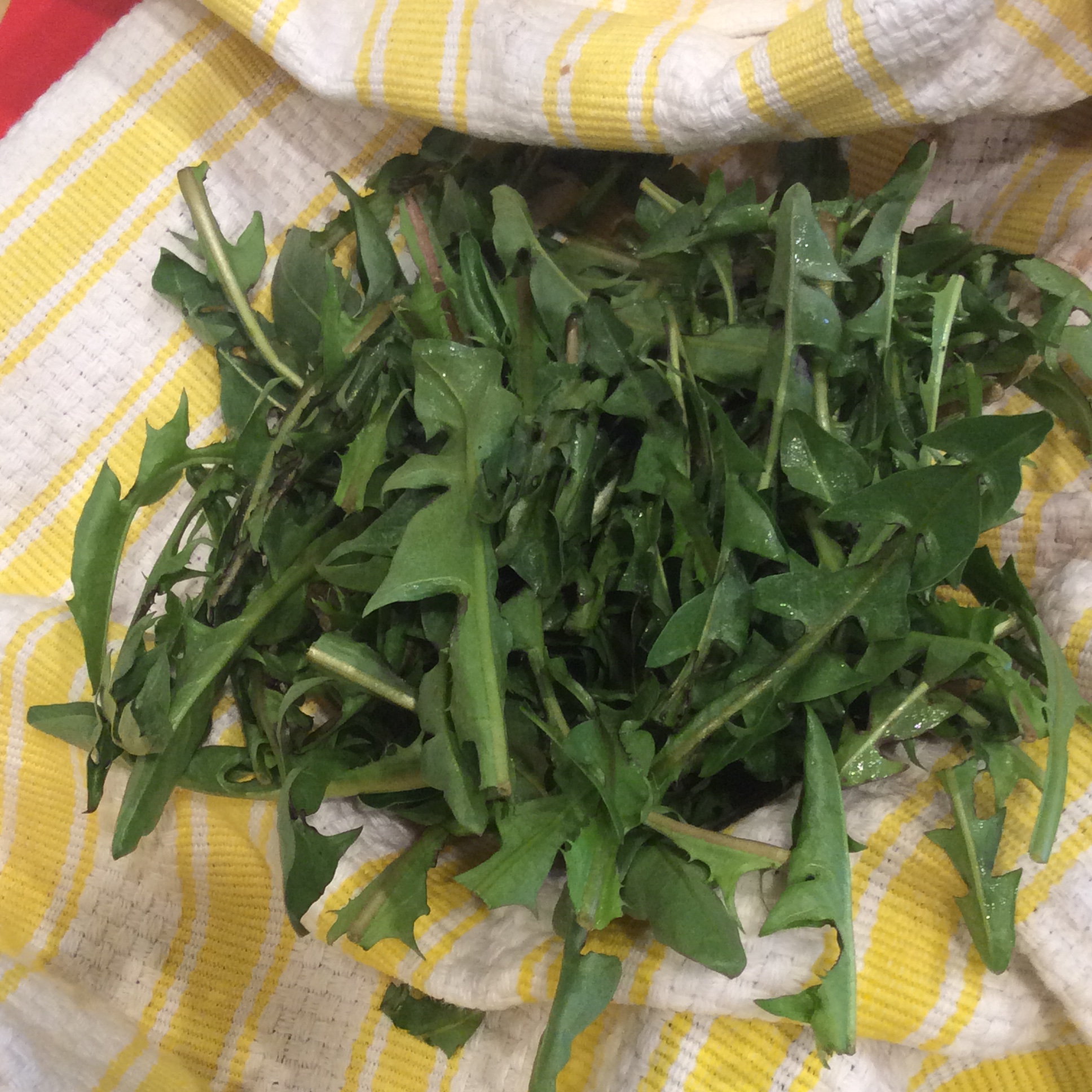
The early spring leaves are both tender and substantial in texture. I like them in a salad either by themselves or with a little bit of outer leaves of romaine lettuce added.  But if you want to add them to a more traditional mixed salad, they add a nice amount of “lift“ to the mixture at this stage.  At times when I lived where dandelions or more bitter,  I was very fond of adding crumbled bacon and hard cooked or Friday eggs to dandelion salads. With the nonbitter leaves that grow here, I prefer to eat them just with a good vinaigrette, and maybe a few bones’ worth of roasted marrow alongside to complete the meal. I roast the bones with salt and seasoning, then dig the marrow out and plop it on a pile of dandelion leaves dressed with good vinaigrette. Grind some pepper over the top, and yum.  It’s a delicious way to stay ketogenic, but if you are not a low-carbohydrate eater, you can enjoy the marrow spread on elegant little pieces of sourdough toast.
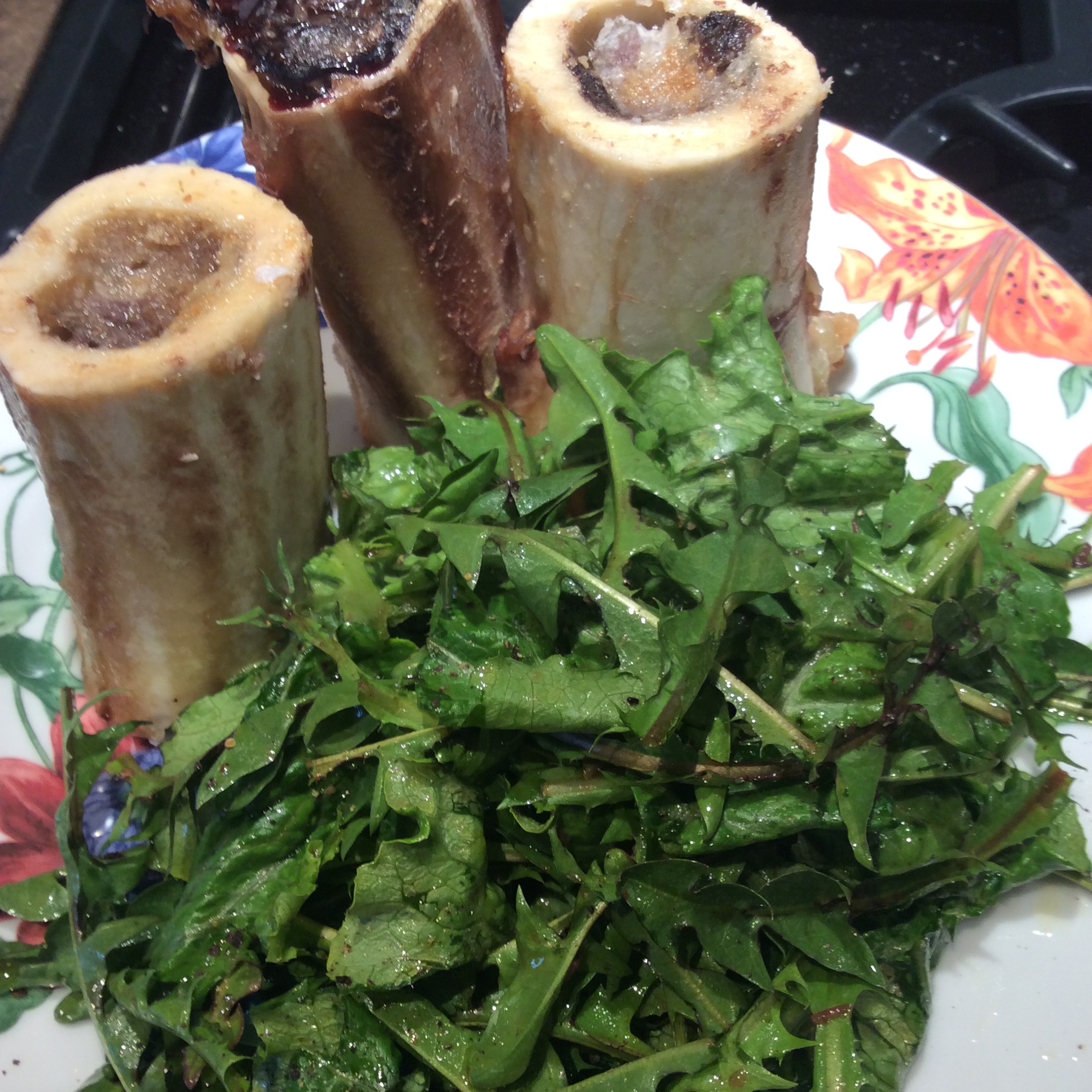
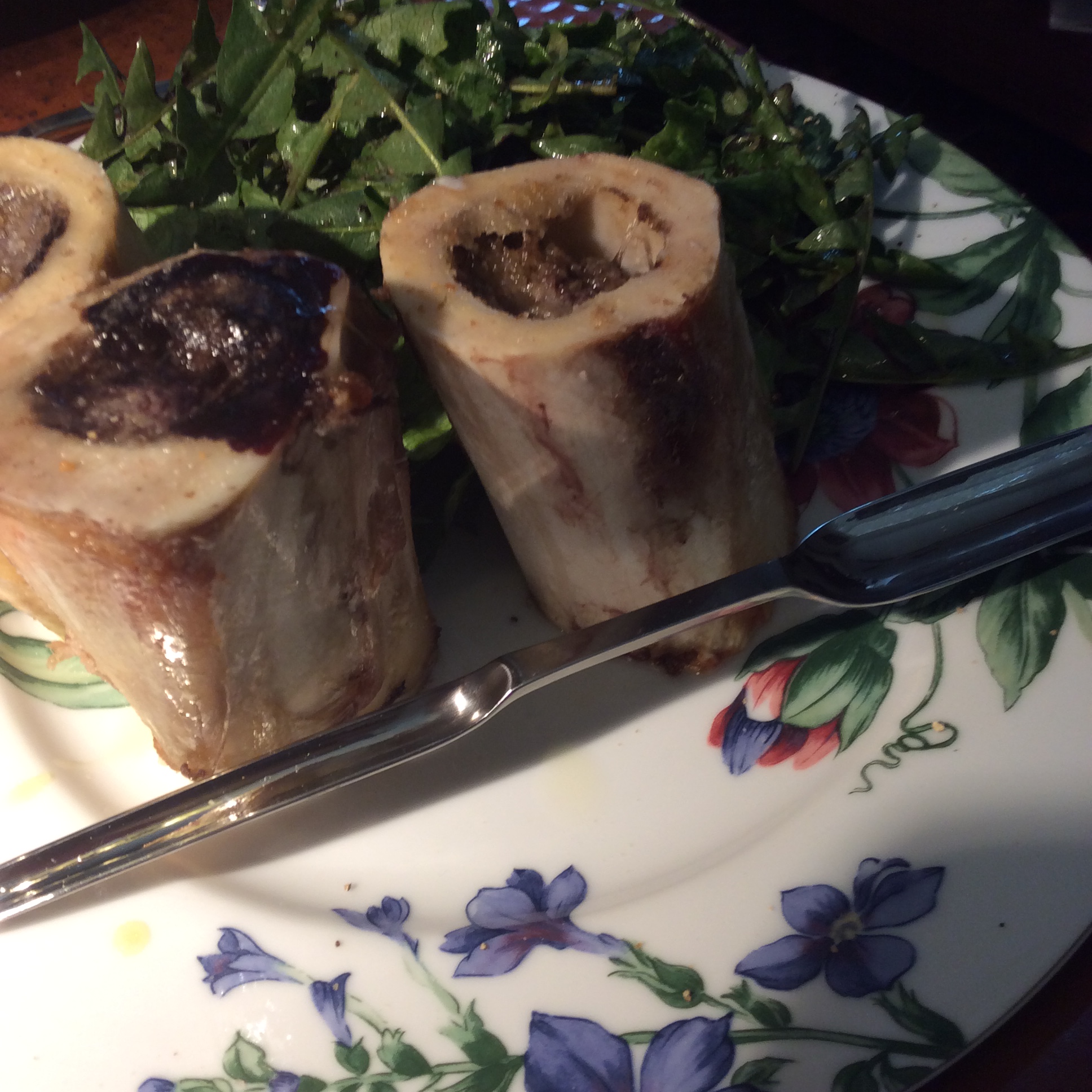
Incidentally, if you are a fan of bone marrow, you might want to keep marrow spoons around, as shown above. They have long, narrow bowls that are specially designed for digging this delicious substance out of the bone. You can get heirloom sterling silver ones from England for $700 or more apiece, or you can do what I did and buy stainless steel marrow spoons on Amazon for less than $10 each. They work just fine.

The First Nettles of Spring

This year we ate all winter from the broccoli and greens growing under frost blankets. Even so, it remains a major spring event when the first nettles are ready to pick. They taste so good and give such an all-over glow of virtue.  There are people who think that nettles have special medicinal benefits. My own belief is that all dark leafy greens have medicinal benefits, and the important thing is to eat as wide a variety of them as possible. But that first meal from the uncovered soil does confer a special feeling that spring is finally and truly here.

If you aren’t familiar with them, consult a good wild-food field guide, and be aware that the sting is quite uncomfortable and can last hours. Have leather gloves handy for picking. They’re ready to harvest when 6-8” tall. I cut off the top 2” or so, including as much leaf and as little stem as possible.

I turn them into a big bowl of water and stir gently with a wooden spoon for 2-3 minutes to get dirt off.

My favorite tool for lifting them out of the water, leaving any dirt that was present at the bottom of the bowl, is a pair of “salad hands” that somebody once gave me as a hostess gift. A large slotted spoon would work too. I make sure to throw the water on a garden bed. We live in the desert, after all.

Cooking nettles is a breeze, but in my opinion chopping is a necessary step, to eliminate stringy stems. First I put them in the pan with about half a cup of water, and cook over high heat, stirring, for about two minutes or until thoroughly wilted. The water should be pretty much gone. Turn out on a cutting board, let cool for five minutes or so, and chop. The cooking has eliminated their capacity to sting, and you can handle them with impunity now.

The flavor of nettles is rather like spinach, but deeper and richer, with a slight feral twist. I especially like them creamed, and always eat the first ones this way. Slice up two big fat green onions, sauté them in butter until cooked, add chopped nettles, sauté another minute or so, add heavy cream just to cover, boil for a couple of minutes until the cream is thickened, and salt to taste. Serve with freshly ground pepper and nothing else, so that you can taste the true flavor of the nettles.  You can also use netales in absolutely any way that you would use cooked spinach. They are infinitely versatile, and I have never served them to anyone who disliked them.  After the initial cooking and chopping, they can be frozen for later years. Whenever I wash and cook nettles, I try to make about twice as much as I need for immediate use, so that I can freeze the other half.

They can be dried for tea, although I do not care for the watery tasting tea that results and don’t bother.  Adding a twist of orange peel or something similar would give more flavor. I am not much of a tea drinker, but if you are, this might be worth considering.

If, like me, you live in an area who are nettles don’t grow naturally, there are some considerations to growing them in your yard.  First is obtaining them. When I first started growing them in central New Mexico about 12 years ago, I could not get seeds to germinate and no herb nurseries offered them. I finally called an herb nursery from whom I was buying other things and asked if they could please find me some nettles.  The “plants” I received had clearly just been dug from the nearest roadside, and were little more than cut rhizomes in potting soil, but they grew just fine.  These days they are easier to find and a number of mail order nurseries have them.

Siting  must be done carefully, because of the sting and because they are invasive.  I have mine in an area surrounded by concrete, where they cannot escape to parts of the yard where I don’t want them.  My large dogs are readily able to avoid them, but I have heard that they could do real harm to very small dogs, so keep this in mind.   Growing them in areas where small children could get into them is an obvious no-no. They get tall and gangly and flop around, but if cut or mown back in summer, they stay neater and make a second crop in fall.  I hope that I am never without nettles in spring.


A Wild Tangle

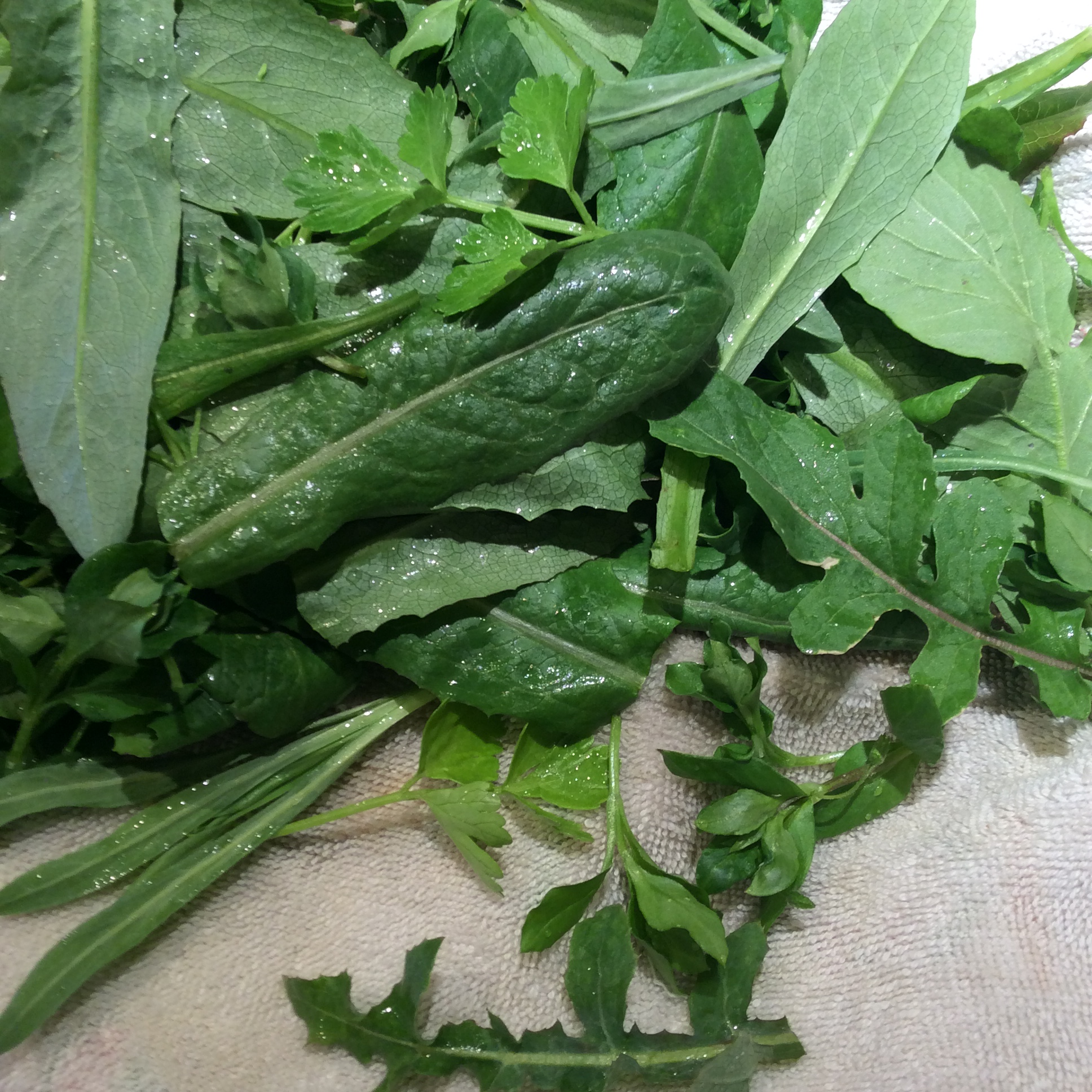
Back when I first became interested in the Cretan diet, somewhere I read a saying that I cannot remember accurately but that went something like this: “better my own greens and olives than foreign  sugar doled out to me by others.”  From a health standpoint, certainly, better any greens than any sugar, no matter where it came from.  So after the broccoli under frost blankets in my garden beds finally gave in, having produced most of the winter, I pulled out the broccoli plants for the goat and chickens  and left all the weedy little seedlings under the blankets to grow into salad greens.  In addition to real weeds like wild lettuce and arugula and sow thistle, which sow themselves all over the place at my house,  there are some greens like chickweed which are very weedy in other parts of the country, but which I actually had to start from purchased seed because they don’t grow around here.  Another treat that I am really enjoying in salads right now is celery micro greens, of which I have a large cluster simply because I forgot to cut down one of last year‘s celery plants before it went to seed. Now, tender 4 inch high celery has formed a dense patch over a foot in diameter, and it is very delicious in salad. With a wide enough assortment of wild and semiwild greens and herbs, a simple vinaigrette is all you need to have a great salad or side dish. Add some meat, eggs, or cheese and you have a meal.

I did make sure to have one established dandelion plant under frost blankets, but it is not doing any better than the ones in the open. Dandelions absolutely resist being civilized, and they do not adapt to us. They just keep doing their own gloriously wild thing.  Dandelions also resist selective breeding. I have bought expensive packets of seed that purported to produce larger, thicker-leaved, more delicious dandelions, and they are exactly like all the other dandelions around. This year, in some fit of madness, I spent €24 ordering two packets of highly specialized dandelion seed from France, despite the fact that I know perfectly well they will come out exactly like the common yard dandelion.

Early spring is the perfect time to learn to do a little foraging, if that is not already one of your hobbies. I would suggest starting out with the wonderful book from John Kallas, Edible Wild Plants: Wild Food From Dirt to Plate.  Most of the plants that Dr. Kallas describes will be found in your area, because they are common and  ubiquitous, and he will  teach you to identify like an expert and then get you doing delicious things with them.

Just recently, over maybe the last six months, I have noticed that any post I write that is tagged as having anything to do with wild lettuce gets an astounding amount of attention.  I wish that somebody could explain this to me. Because I have been foraging and eating this plant for a good 20 years, and  despite some strange Internet rumors I feel that I can definitively say as follows: it will not relieve pain. It will not cure insomnia. It will not get you high. I wish I understood where these ideas came from, because they certainly did not come from anybody with a knowledge of foraging wild plants.  Really, if your goal is to get high, please leave the wild lettuce for those of us who just like to eat greens.

Food Diatribe II: Leafy Green Season

Medscape just published an article worth reading. The information is from a prospective study of older adults living in the community, and showed a direct linear relationship between consuming one or two servings a day of leafy green vegetables and slower cognitive decline. In fact, eating leafy greens daily offered the cognitive equivalent of being 11 years younger.

One expert neurologist asked to comment on the findings responded with confirmation: “This study adds to the rapidly evolving and convincing evidence that you are what you eat when it comes to brain health,” Richard Isaacson, Weill Cornell Medicine, New York City, said. “From a practical clinical perspective, regular intake of green leafy vegetables should be a standard part of a risk reduction paradigm to delay cognitive decline throughout the lifespan.”

Amusingly, another expert said that it was “too soon” to recommend leafy greens, and advised waiting for further confirmation from future studies, a typical recommendation for new drugs but not typically applied to foodstuffs that healthy people have been eating for millennia. I do of course see his point, which is not to jump into thinking of leafy greens as a cure-all, but really now. So here is my response as a gardener, a doctor, and an avid reader of research: don’t wait. Some of the longest-lived and healthiest populations in the world have had  markedly high  consumption of leafy greens. There is no downside and no dangerous side effect to worry about unless you are on warfarin. So just do it. You can read the article here if you want, and it contains a link to the study. Then, just do it. Grow them if you can. If you have a small garden patch, make an investment in your family’s health by filling it with greens. If you don’t garden, you can haunt your farmers market or start making foraging trips. If you prefer to eat salad, choose darker greens, not lettuce hearts or iceberg, and eat a big bowlful.

Right now I’m still eating last fall’s leafy greens from under frost blankets. The collards and Savoy cabbage held up best, and are uniquely delicious after exposure to cold. I harvested Swiss chard for people and chickens all last summer, and then put a frost blanket over half  the row.  The new leaves of spring are the meatiest and most delicious that a chard plant ever produces, and the protected ones are nearly eating size, while the unprotected ones will come in some time next month. Just be sure to get them before the central stalk starts to elongate, because they lose their sweet meatiness and get strangely dirty-tasting when the flowering stalk starts to form. Green alliums are coming up everywhere, and my nettle patch is sprouting strongly.

If you keep animals for food, feed greens to your animals (not nettles, but chickens do love the leftover cooked ones.) I have a carnivorous friend who eats supermarket meat and insists that he’s a secondary consumer of vegetables, and I keep trying to tell him that on the contrary, he’s just a secondary consumer of GMO corn. Unless you are buying animal foods known for a fact to be grassfed or pastured and not grain-finished, you aren’t consuming the nutrients of vegetables.  But if you keep your own, it’s astounding what quantities of greens chickens will eat if they get a chance, while cattle, sheep, and goats can be raised to butterball fatness on grass and greens alone if you have enough. The nutritional profile of the eggs and meat is enhanced and the animals are much happier. I’ll have more to say about meat in the near future.