Archive for the ‘fruit’ Category

The Joys of Spring: Goumis

image

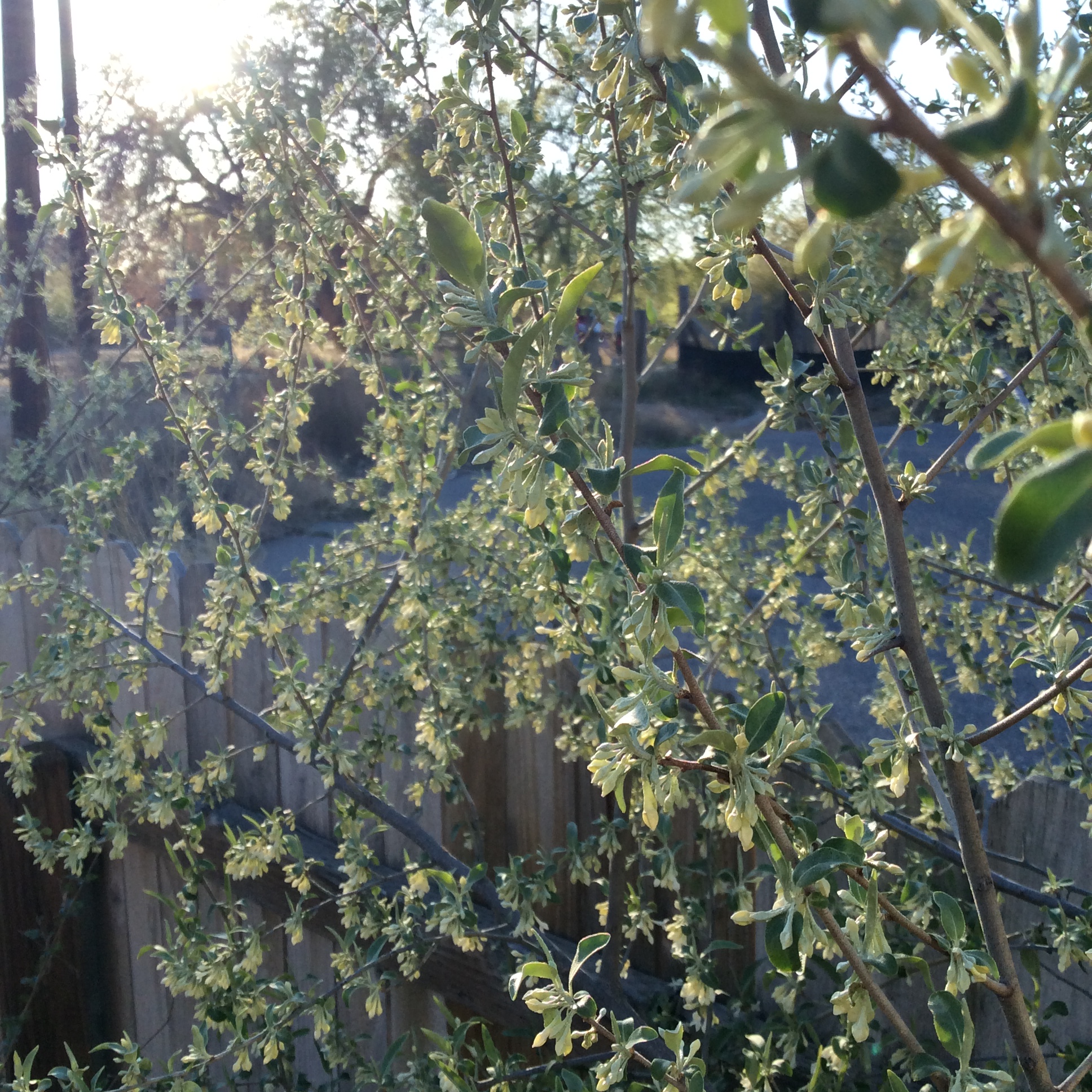
A few years ago I began a project to grow fruits that offered maximum antioxidants with minimum carbohydrates, in other words fruits very different from the swollen sugar-pops that fill the American grocery store. I had been reading with great interest about Goumi berries because genus Eleagnus thrives in my area with relatively little water. I planted three of them, and over the next two years they got a bit bigger but nothing much happened. Last year, their third year, they grew over 5 feet tall and one produced three tiny berries. Hardly an exciting outcome. But this year they have already earned their place; all three are covered with scads of small discreet blossoms and when the sun hits them, the scent that they throw all over my front yard is indescribable. It has the honeyed spicy sweetness that characterizes Russian olives in bloom, but without the grape Koolaid note. Utterly delicious. They are humming with bees, and I do wonder what Goumi honey would taste like.

The bush seldom tops six feet, and unlike their relatives the Russian olives and autumn olives, they are thornless.  They are nitrogen fixers and tolerate my poor alkaline soil, and are not demanding about water. I soak mine every two or three weeks and ignore them the rest of the time. They are not dangerously invasive like their cousins. I hope that later in the year I’ll be reporting on fruit production and quality. The berries have a high lycopene content and the seeds inside contain a quantity of omega-3 fatty acids.  But even if I had no interest in the fruit, they would be the stars of my early spring yard. Sometimes my message is a simple one: grow this plant, you’ll like it.
Indolent Pest Management

image

There is a semi-organic, thought-intensive mode of pest management called Integrated Pest Management. It has occurred to me lately that I could spearhead an alternative IPM called Indolent Pest Management. It has two phases:

  1. I notice a pest problem.
  2. I wait to see what happens.

The most recent example started last fall, when I noticed a proliferation of large garden snails from who knows where, leaving slime trails on the chard. I read about preparation of escargot out of curiosity but never did anything effective about the snails, because I was busy and there were so many other things to eat.

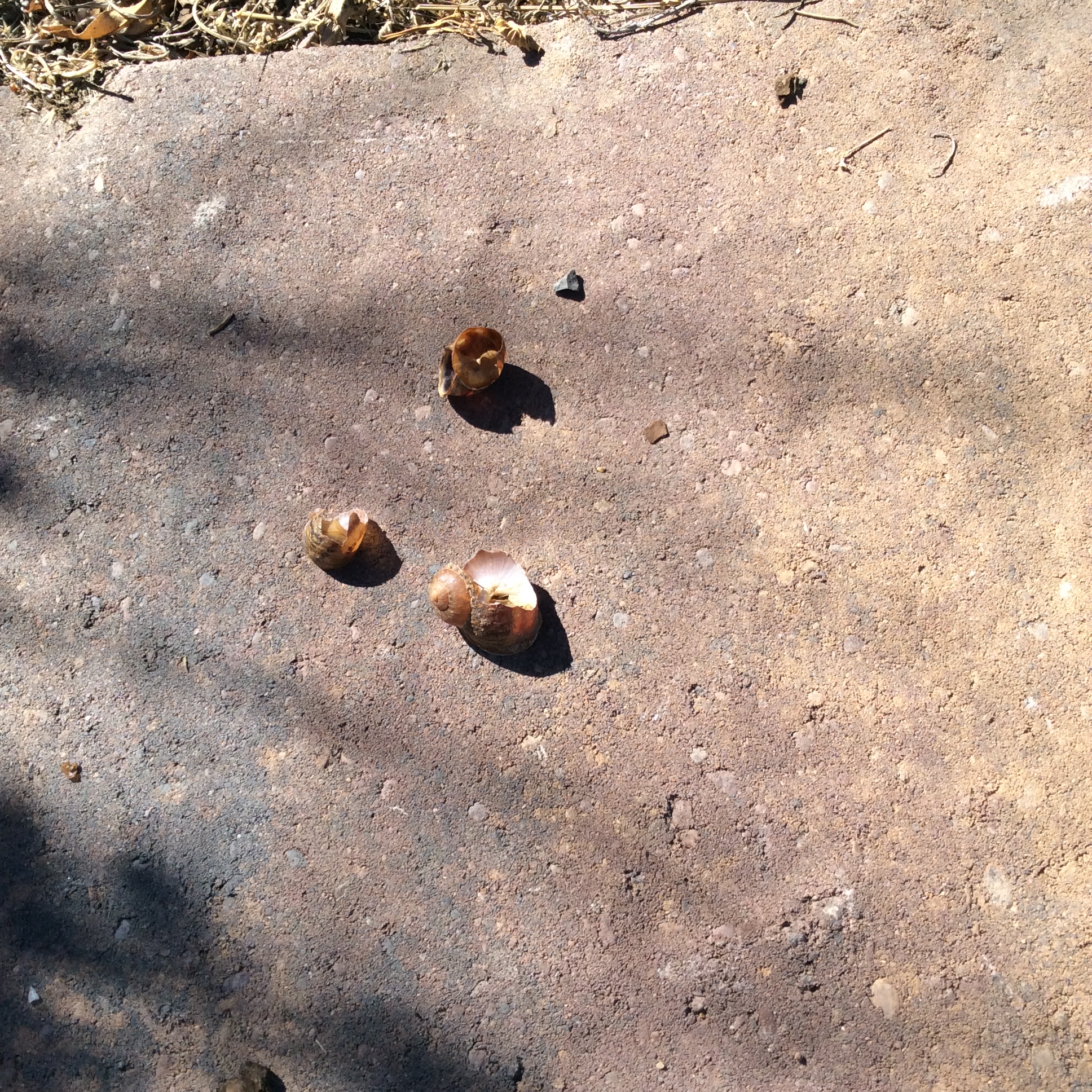
After a month or so, I started to see these everywhere:

image

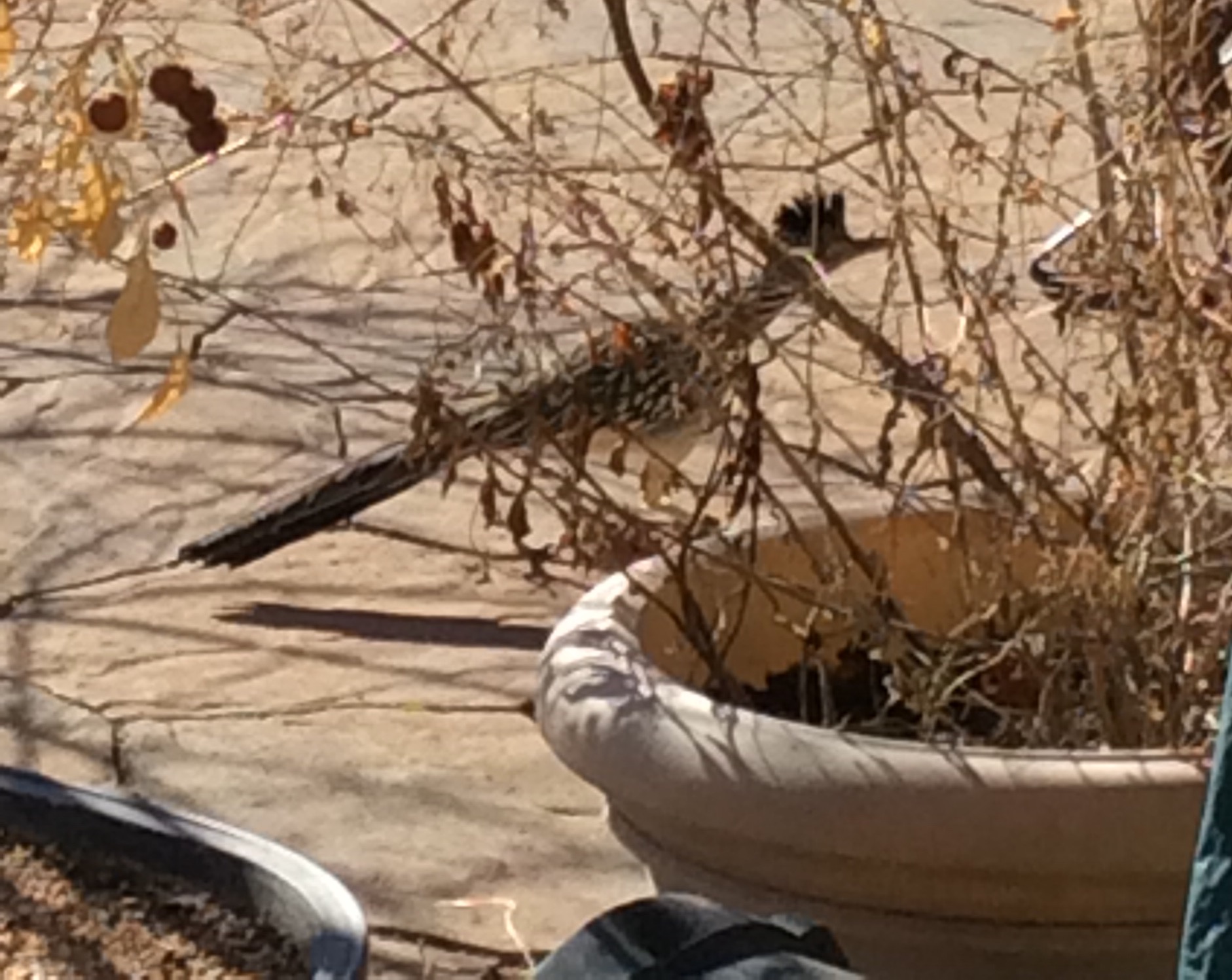
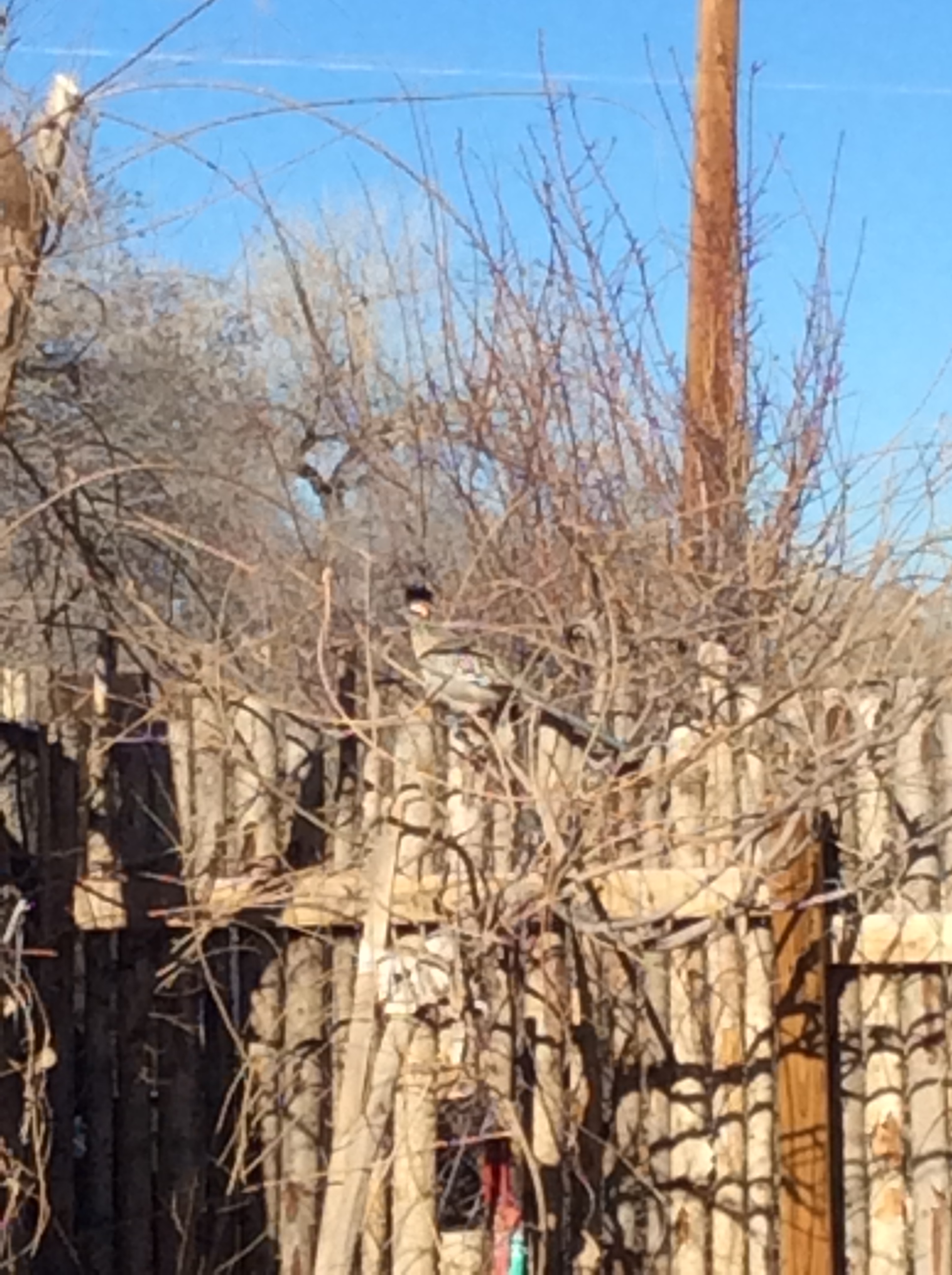
Snail shells, broken open and empty, appeared all over the place. Further observation revealed that a roadrunner, our local little feathered velociraptor, had taken over my yard and was exploring the mulch and eating all the snails, as well as a few stray mice. With the first warm day of spring he began strutting on my roof, calling for eligible females. I keep trying to photograph him, but roadrunners are wary and fast. Most of my photos of him are just a blur. The ones at the top and bottom of this post, where at least you can sort of see him, are the best I could do.

A sharp-shinned hawk has started nesting nearby and this helps keep the mice and English sparrows down. Yes, he hunts at my bird feeder occasionally. Hawks have to live too.

My much-loved Toka plum tree gets an aphid infestation every year after leafing out, although none of my other plums do. Ladybugs move in and decrease them, and the remaining aphids are certainly unattractive but don’t diminish yield in the slightest and are gone by early June.

Cabbage loopers put a few holes in my collard leaves every year. No issues. I feed those leaves to the chickens and eat the others.

Squash bugs spread viruses that are hard on my zucchini. But I am no worse afflicted than people who spray.

My point is that we are gardeners and urban homesteaders, not commercial farmers. Also, we typically have day jobs and limited time to attend to our crops. So why spend it trying to exterminate things that don’t do that much harm? Wait and see, and if a planting fails, other plantings will succeed.  Before fixing, wait to see if it’s really broken. Meanwhile, eat something else. There’s plenty.

image

Clove Currants

image

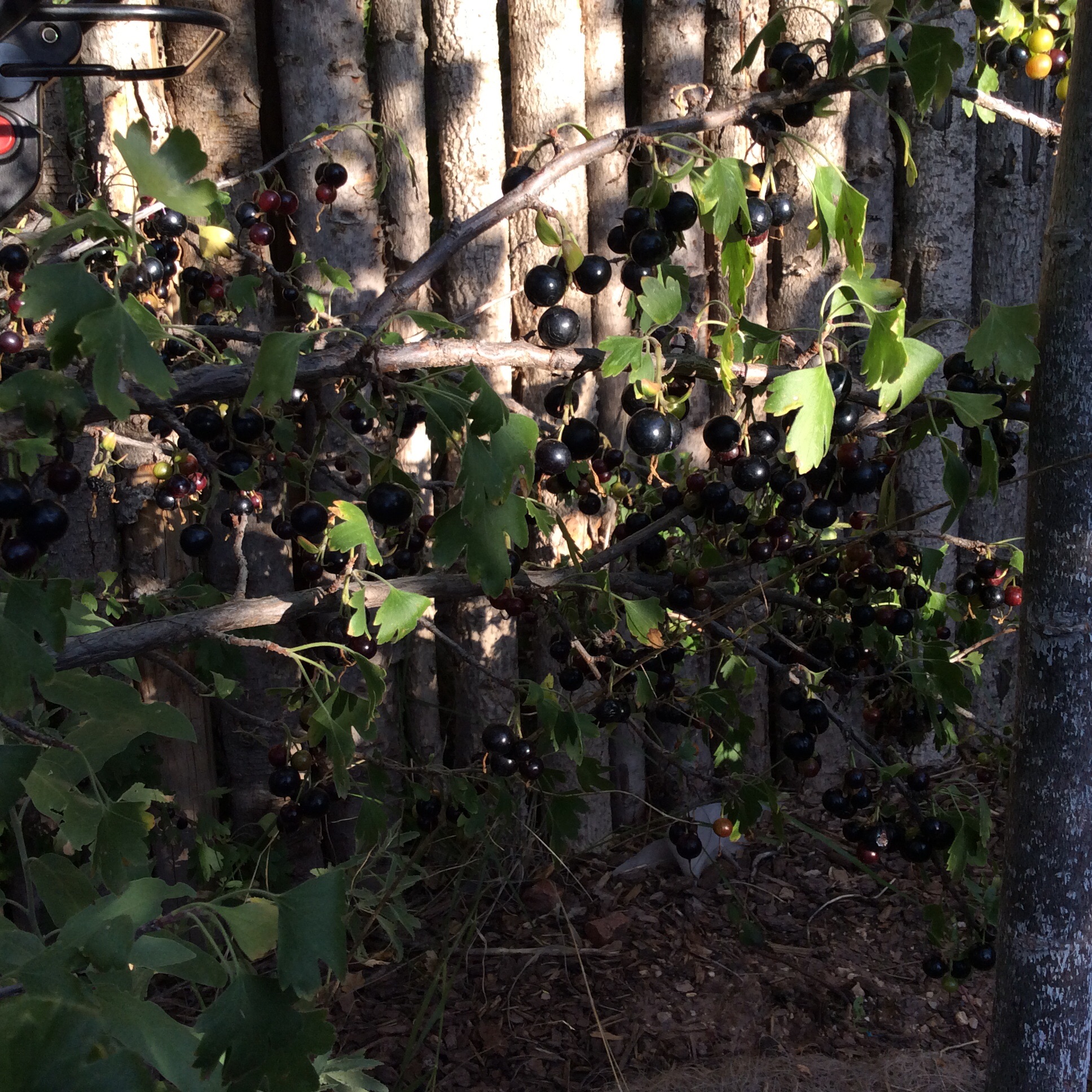
The native clove currant, Ribies odoratum, grows beautifully in my area. It is sturdy, healthy, drought-tolerant, will tolerate some shade, suffers from no bugs or diseases, and is reasonably attractive, especially in spring when covered with thousands of tiny yellow flowers that have a soft pleasant scent. I haven’t found them growing wild in my area but I have a bush that was planted by birds; they grow that easily, and start to bear within three years.  I have several large bushes and would have planted more if not for one major disadvantage: I thought the fruit tasted awful.  The fruits, like most berries, are relatively low-carb for fruits and probably contain a good set of antioxidants, but eating things prescriptively rather than for pleasure is just not my style.

But sometimes plants just have to hang around my yard until I learn to use them well. This year, after living with clove currants for five years, I finally figured out (duh) that the fruits are not ready to eat when they turn black. Don’t grab those first black shiny fruits. Leave them on the bush for another couple of weeks. Taste every few days, and when they taste sweet and spicy (still very tart but with a balance of acid and sweetness) they’re ripe. The fruits actually get a little smaller as they ripen, and some will look a bit wrinkled. Don’t worry. Don’t use any that are dry and shriveled, but a little loss of turgor just intensifies the flavor.

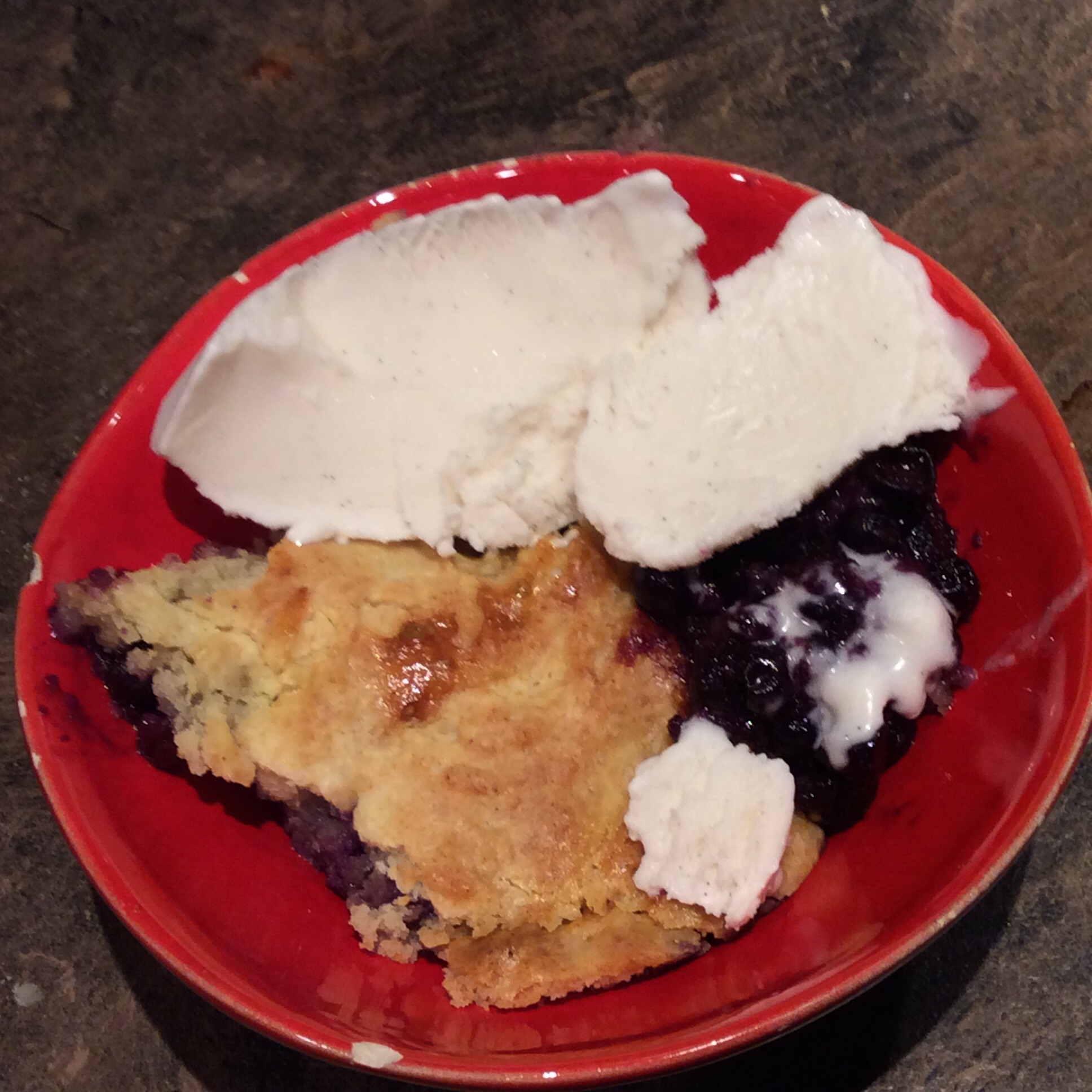
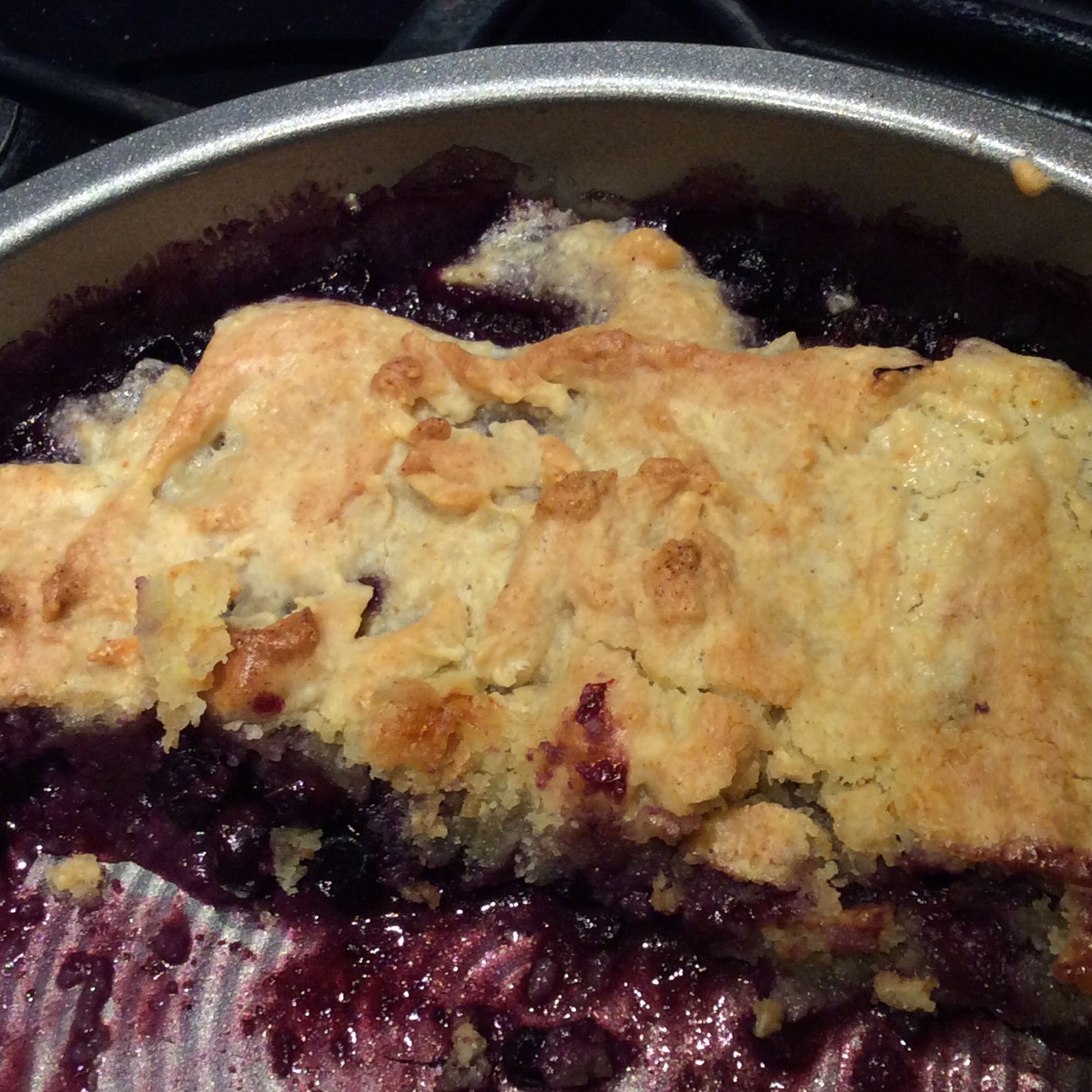
I enjoy eating a handful in the garden when I make my morning rounds, but my favorite use for them is in cobbler. If you are low-carb, use my recipe for red, white, and blue cobbler, using clove currants alone or adding in some frozen wild blueberries to make up the fruit volume if you don’t have enough clove currants. Work the sweeteners into the fruit with your fingers, crushing the fruits a bit as you go. If you eat sugar and flour, just use your own favorite cobbler recipe. Be sure to grate a little fresh nutmeg into the fruit mixture to bring out the spiciness.
image
The fruit clings to the stems and often has a little wiry “tail” clinging to the blossom end which has to be removed, so harvesting them is a bit tedious. I wait until early evening and then sit comfortably under the bushes with a bowl, pulling off stems and tails as I go so that fruits that hit the bowl are ready to use. I eat a few along the way. The laborer is worthy of her hire, after all.

I’ve been thinking of other ways to use them, and I think that they might be good in sauces for meat and game. I can recall reading a British recipe for a blackberry sauce for venison, and along those lines I plan to try using clove currants for a sauce for roasted pork. But right now they are going into cobbler or disappearing straight down my greedy gullet.
image

I also have a couple of bushes of Golden currant, also known as wax currant, but they are slower to bear and I haven’t had enough fruit to experiment with yet. More on that later.


A Passion for Passiflora

image
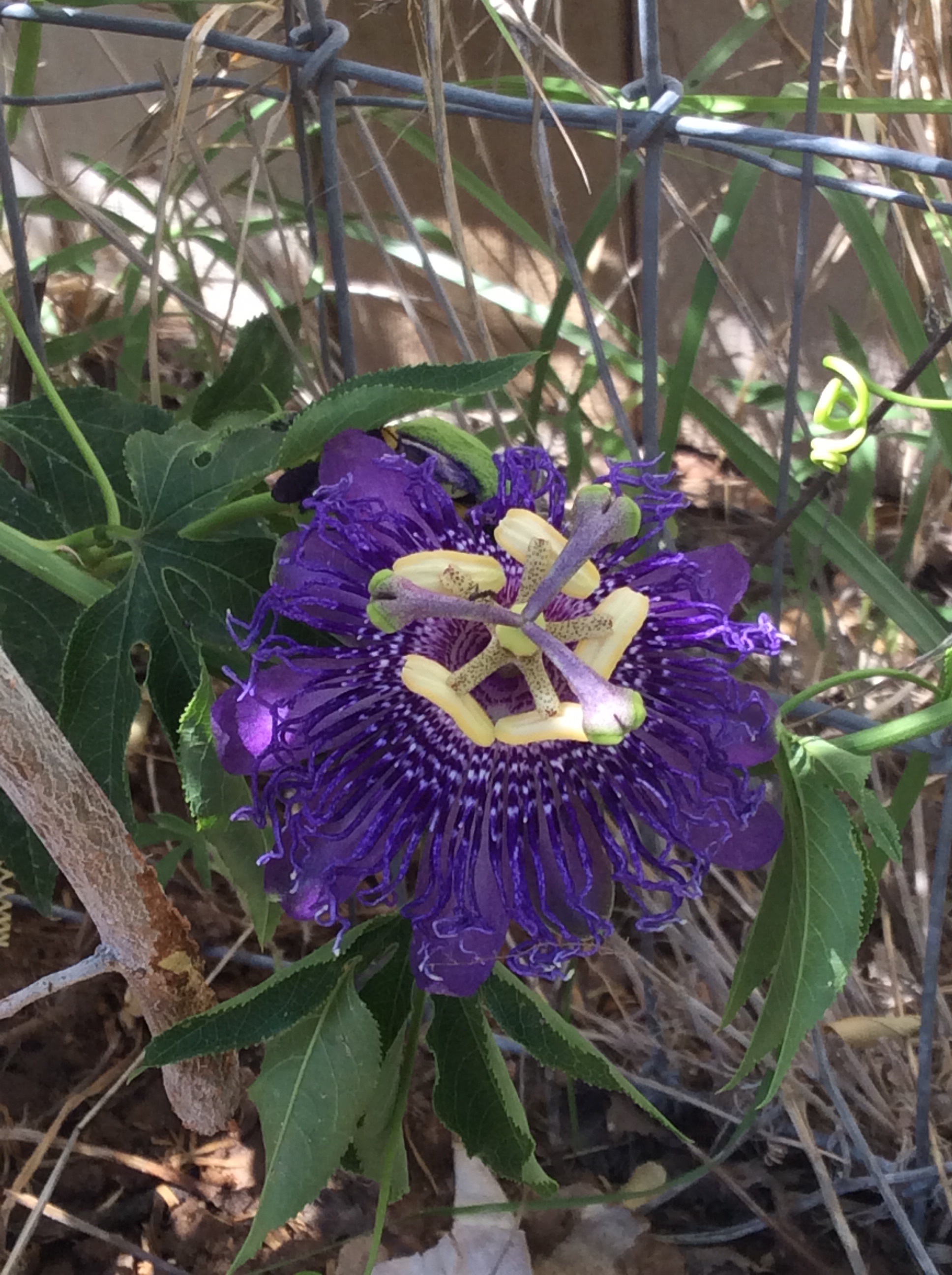
There are few plants I love more than the common maypop, Passiflora incarnata. There are also few plants that I have failed with as consistently since moving to the Southwest. I think it might be our alkaline soil and water that they dislike. This spring, in what has become a yearly ritual, I ordered a plant. I tried amending the soil in that area with acidic cottonseed meal and gypsum. Then I walked away and, beyond regular watering, did nothing more, which made it all the more marvelous when I spotted the first flower.
The passionflower produces a tropical-tasting fruit in cold winter areas. Quite possibly the single best seafood dish I ever made in my life involved seared scallops on a plate coated with a slightly sweet sauce of coconut milk flavored with shallots, a little lemongrass and ginger, and passion fruit juice. The flowers are lovely. A tea made from the leaves is an excellent home remedy for insomnia, and I have read that the shoot tips can be cooked as a vegetable, although I’ve never tried it and don’t vouch for that use.
Mostly, the Maypop gladdens my heart just by existing. But if I ever get any fruit, I do plan to recreate that sauce.