Archive for the ‘front yard gardening’ Category

Spring in the food garden


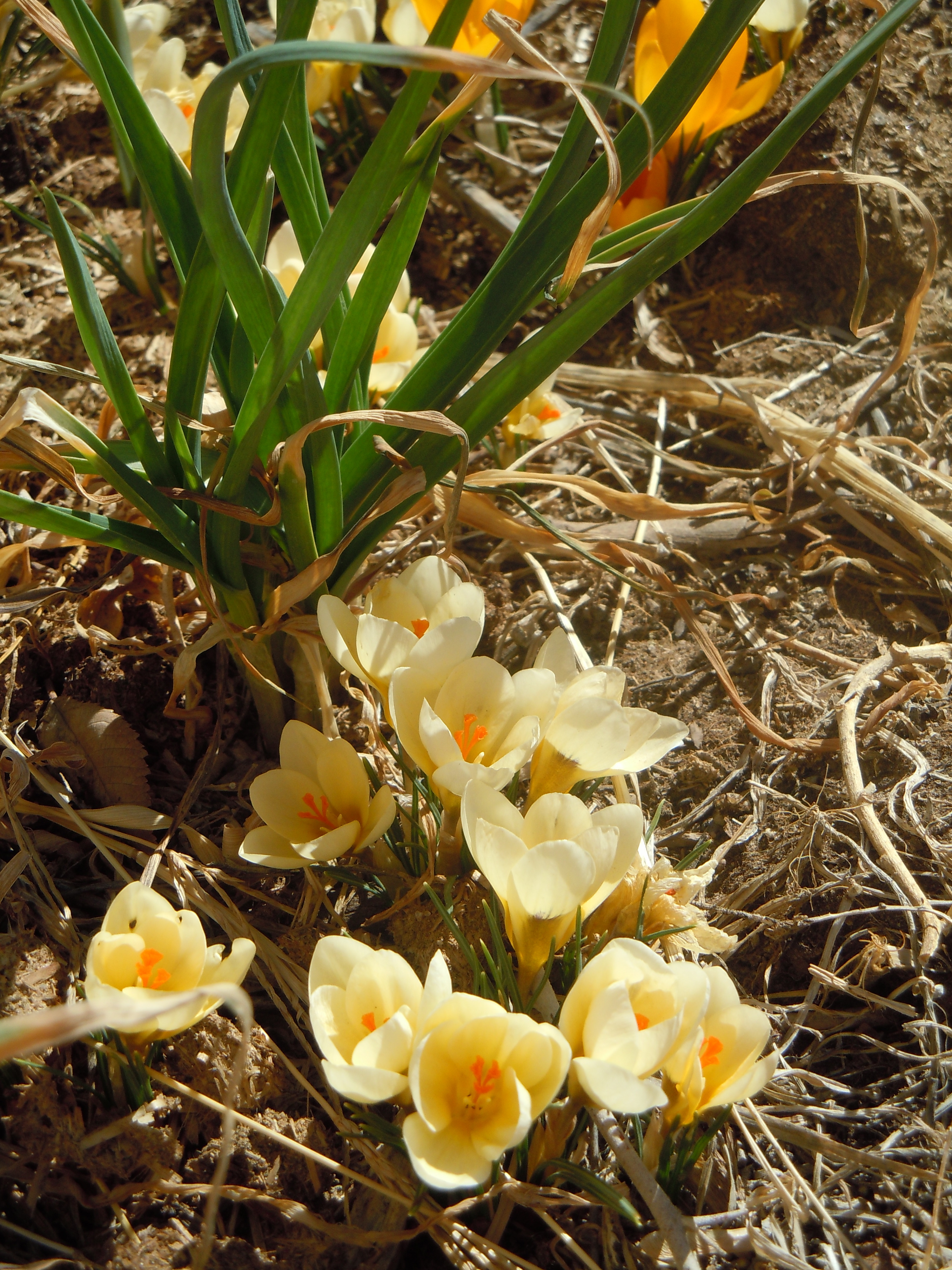
I’m not a winter person, so wherever I move, I always plant a patch of the early little species crocus “Cream Beauty” in my garden. When I see the first glowing blooms, I’ve officially survived another winter.

“Cream Beauty” is also a kind of floral nag, reminding me that there’s no time to hang around luxuriating in the sunlight; I need to be prepping and planting furiously. It’s one of the ironies of garden writing that, just when you actually have something to say, you have no time in which to say it. So here are a few spring tidbits in no particular order:

Last fall I coated all my “greens” beds thickly with horse manure, and dug it in as soon as the ground thawed in early February. Fresh manure needs to go on in the fall, but you can apply well-aged manure or finished compost now. Now the beds are ready to plant, and I put in three kinds of lettuce, several types of mustard, two kinds of spinach, snap and shelling peas, and a wide assortment of chicories, both leaf and heading. It’s important to get them in early so that they don’t fry in overly hot summer sunlight. Chard, parsley, and potatoes will be planted within the next week or two. Leeks and scallions were started in seed trays last month, and the multiplier onions, garlic, and shallots planted last fall are sprouting. I planted grey shallots once and didn’t find the bulbs useful- too small and too much work to peel- but they provide generous cuttings of sharp shallot greens every spring to season salads and soups. They are like chives but with a distinctly stronger flavor.

Every year I try a few things that are completely new to me, and one of my newbies this year is bladder campion, which, according to the catalog, provides young greens that taste something like green peas. It’s a common weed in wetter parts of the country, but here it needs some shelter and encouragement. Bear in mind that many plants which need full sun elsewhere prefer some shade from our high-desert sun. If you fail the first time, as I did with bladder campion last year, try giving a little afternoon shade.

Don’t forget to plant more peas than you need so that you can cut the sweet young greens for spring stir-fries.

If you’re going to try chickens this year, build the coop and make a brooder set-up now, BEFORE you buy the adorable baby chicks. I’m going to try a few meat chickens this year, so I’m building a large open-bottom cage to keep them in. It’s my first effort at carpentry, and I don’t think that there is a perfect 90 degree angle anywhere in it, but the chickens are unlikely to care. Make your chicken construction sturdy and raccoon-proof, not beautiful.

Gardening is a natural process, with all the entropy of any other natural process. Success does not pile upon success in an automatic fashion. Our freakishly cold snap is likely to result in some garden disappointments. My artichokes all seem to be dead, a sad event because they are offshoots of the first plants I grew from seed, many years ago. But that’s a reminder that nature is under no obligation to respect our sentiments. If you are very fond of getting your own way, gardening might not be for you. Nature offers some consolations too, like the glut of big brown eggs with deep orange yolks flowing out of the henhouse. There are a million ways to enjoy them, but while I’m waiting for the spring bulbs to bloom I enjoy eating what I think of as Daffodil Salad. The name comes from the colors, which remind me of the exquisite Poet’s Narcissus. Please know your edible flowers if you use them, and remember that daffodils are NOT edible.
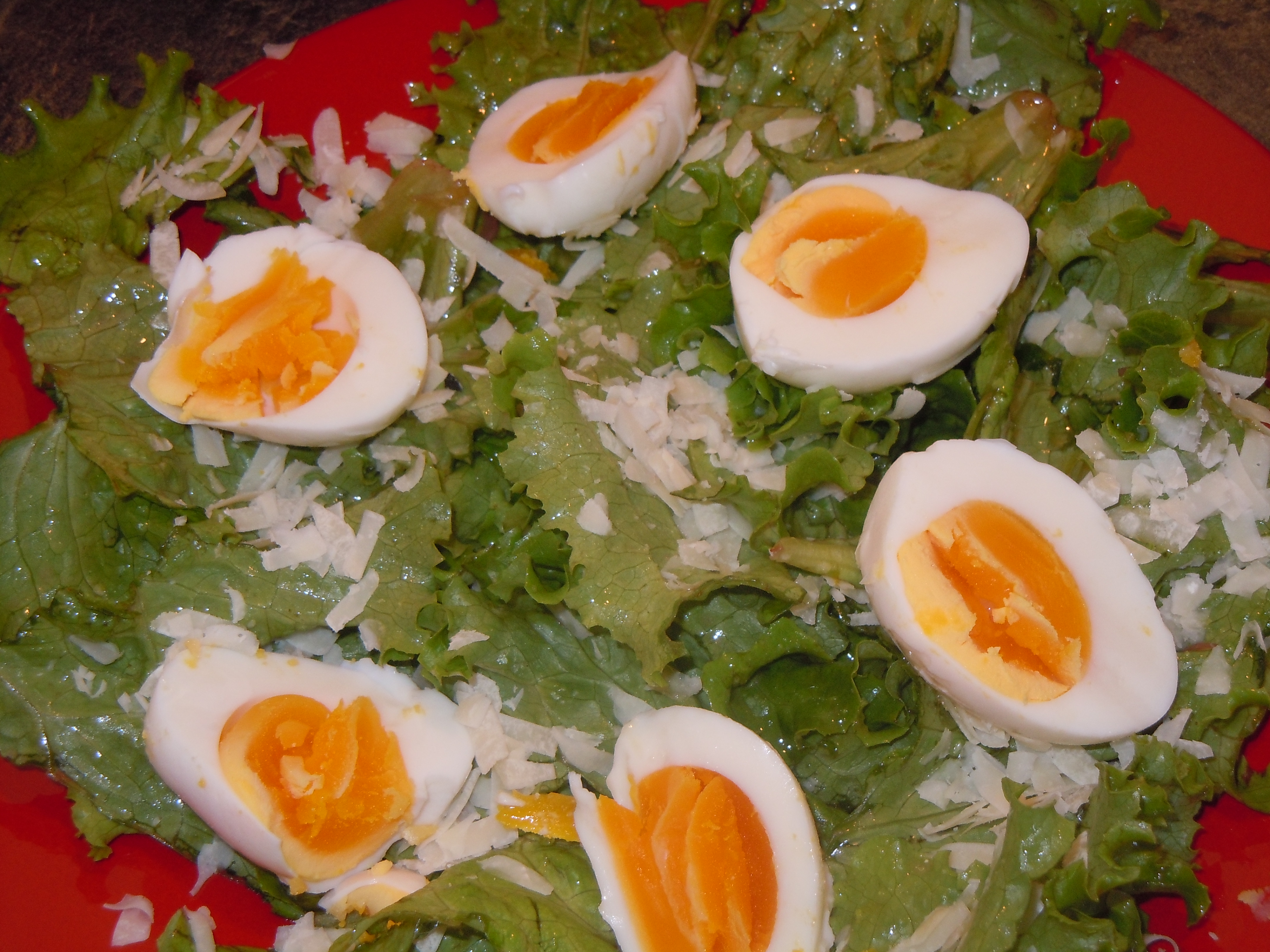
To make a main dish, put three eggs per person in cold water, bring to a boil, simmer 10 minutes, and cool quickly in cold water. If you have your own hens, the eggs need to be at least a week old to peel cleanly. With store eggs this is seldom a problem. The ten-minute simmer gives yolks as shown, just barely solid in the center and a rich orange. Peel the eggs and cut them in half. Put the amount of salad greens you prefer in a big bowl; I use about three good-sized single handfuls per person. Toss with the dressing below or your own favorite vinaigrette. Pile on plates, top with the egg halves, and drizzle a little more dressing over the eggs. Scatter on some thin shavings of your best Parmesan and enjoy.

Spring dressing
1 small shallot or the white part of one scallion or the white part of one stalk of green garlic
juice of one lemon
1/2 cup best olive oil
2 tablespoons roasted hazelnut oil
half a teaspoon of salt, or to taste.
fresh pepper, about 15 turns of the mill
a small handful of chopped chives or about 2 tablespoons very thinly sliced shallot greens

Chop the shallot bulb, scallion, or green garlic bulb very finely and marinate in the lemon juice for fifteen minutes, with the salt added. Don’t skip the marinating step. After fifteen minutes stir in the other ingredients, shake in a jar, taste for seasoning, and use. Any not used immediately will last a day or two in the refrigerator.
Books Worth Reading: food gardening and the chicken micro-flock


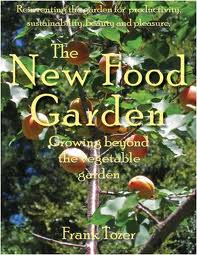
The New Food Garden is the newest volume by Frank Tozer, an author I admire for his complete and knowledgable gardening books that don’t seem to get the attention that they deserve. This book is about how to create an integrated property producing vegetables, fruit, and pleasure. He uses permaculture principles but doesn’t get dogmatic about it. There are good sections on garden design, fruit trees and trees generally, “hard drive” infrastructure garden stuff such as paths, buildings, and greenhouses, and lots of information about outdoor living areas that assumes you will want to live in and enjoy your garden as well as harvest food from it. There are brief but interesting sections on a variety of subjects that give you a good framework for more detailed reading, such as fencing, water features, and use of human urine and humanure. It doesn’t include much info on growing specific vegetables, because he’s already written an entire book about that (and a very good one, by the way.)
This and Mini Farming are my favorites of the scads of new gardening books that I’ve looked over this winter. What’s the difference between them? MIni Farming emphasizes very precise soil amendment techniques and concentrates on maximizing returns in small spaces. Tozer takes a more relaxed approach in which compost, mulch, and other organic techniques are used, parts of the property are used as living areas rather than producing a food return, and fertility builds at nature’s pace. Please also note that Mini Farming has very detailed info on integrating chickens into the small layout for meat and eggs, while Tozer is a vegetarian and includes no information on food use of animals. The best solution is to get both. They won’t go unused.
Best tip and best quote: “You probably never realized that you are a walking plant fertilizer factory and that every day you are literally pissing away money.”

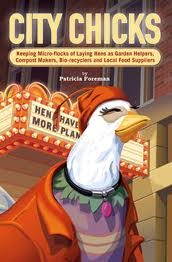
City chicks is a very good collection of information for the chicken owner who plans to have a micro-flock of laying hens. There is lots of information about every aspect of keeping a few layers, clearly organized so that beginners can find what they need. If you plan to have a dozen hens or fewer and don’t plan to produce any meat, I would recommend this book above most others. Do be aware that there is zero information about butchering and meat production, so if you plan to replace your hens every couple of years to keep production up, you’ll need another source of information about how to get them into the stockpot.
Best tip: Use plastic laying mats inside the nesting boxes. These are like stiff artificial turf, and droppings don’t stick to them. They can be hosed clean. They keep the eggs clean and dry. The hens can’t scratch them out of the laying boxes as they will with other types of bedding. This matters, because they then lay on the bare floor of the box and the eggs can be cracked, which renders them useless and introduces the hens to egg-eating. They cost about $4 each. I got mine from Murray McMurray, but other hatcheries have them too.

Vegetable dinners: Starting the new year


Recently a reader contacted me about how to transition to a diet of “all real food.” Expense and time were real concerns for him, as they are for most of us.  Well, there’s no question that if you’ve been eating a lot of convenience and supermarket food, real food is likely to be more expensive. You will be making more things from scratch, so it will take more time, too. So my first piece of advice is: don’t make a New Year’s resolution to change your whole diet. I am very mistrustful of New Year’s resolutions; in fact I am mistrustful of any statement that anyone is going to make sudden sweeping changes in their way of being in the world and maintain those changes over time. Personally, my transition in food and lifestyle took place over years, with one step building on the previous ones, and no one change so huge that I couldn’t maintain it until it became a habit.
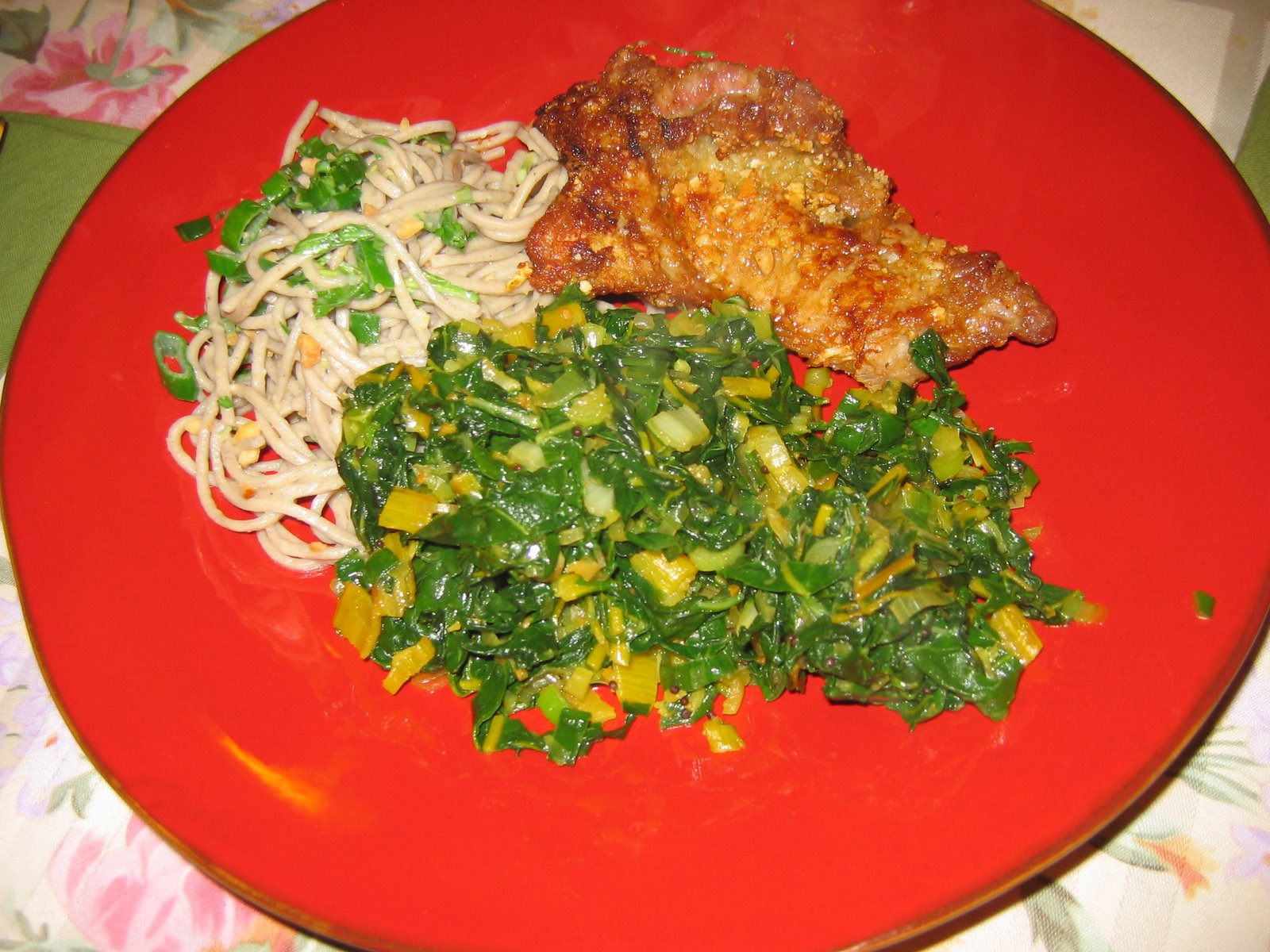
So here’s how I would approach this change: eat more vegetables. Fill your plate with them. Twice a week or so, make two or three simple vegetable dishes for dinner, and don’t have any meat available. On the other nights, offer a small amount of meat and lots of vegetables. A loaf of good bread is a great way to center the table for all-vegetable dinners, and at first you can buy the bread and transition to home-baked later on if you want to. Heat the bread up and have butter or olive oil available to make it festive. Let your vegetable meal be a celebration. Learn a few simple whole-grain dishes and use them as “grounding and centering” dishes to offer some variety from bread. Don’t forget vegetable pasta dishes, which are delicious and appeal to kids. Buy your vegetables wherever you usually shop, and learn to cook them in ways that taste really good. Notice that at this first stage you do not torment yourself by trying to grow all your own food, eat local only, or eat organic only. You just cook the veggies that are readily available to you in ways that work for you. Pay special attention to learning to cook leafy greens in ways that you really like. They are abundantly good for your health, and if you take up gardening later on, they are among the easiest things to grow, but they are also the most likely to sit in the garden unused if you don’t have your kitchen techniques down pat. When you and your family are used to eating lots of vegetables, you can add more whole-grain dishes, or go organic, or shop at the farmers’ market when possible.

If you make this your first step toward a whole-foods diet, you won’t save much money initially because CAFO meat at the supermarket is cheap, but you won’t spend more than usual. Invest a very little bit of money in a really good vegetable cookbook; a wonderful and inexpensive one is Fast, Fresh, and Green by Susie Middleton. Check out my “vegetable dinners” category, too.

When you and your family are really loving your veggies and you can turn out vegetable dishes smoothly and without kitchen trauma, and plates heavy with vegetables look just right to you, take the next step. Enlist your family in deciding what the next step will be. If you use a lot of dairy products, organic dairy might be a good step. Or consider a backyard garden, or a farmers’ market excursion once a week in season, or more whole grains, or whatever. Bear in mind that truly ethical meats are going to be expensive, and if you just substitute them for the supermarket kind in the amounts you are used to eating, you are in for a nasty surprise when you add up the bills. I don’t suggest changing to them until you have formed the habit of eating small amounts of meat and making veggies the biggest part of your meal.
Don’t forget breakfast. Cook a pot of wild rice or red quinoa ahead of time and heat up enough for breakfast, topping it with some butter and maple syrup or honey. This is a treat even for people who don’t like “health” foods.

I don’t believe that negative energy is ever very helpful. Don’t berate yourself for the things you aren’t doing, just be appreciative of the positive changes that you’re making. If you need to pick up a quart of milk at the convenience store some night, don’t go crazy over it. If unexpected events change your life for a while, respond to them as needed, and then go back to your new way. Somewhere along the way, read or reread The Omnivore’s Dilemma, still head and shoulders above other books about factory-farming systems and, in my view, much better than Pollan’s subsequent books at helping you remember why you are making these changes. Love your food, and enjoy your mealtimes, and step will follow naturally on step. Have fun, and happy New Year!

Organic Matters

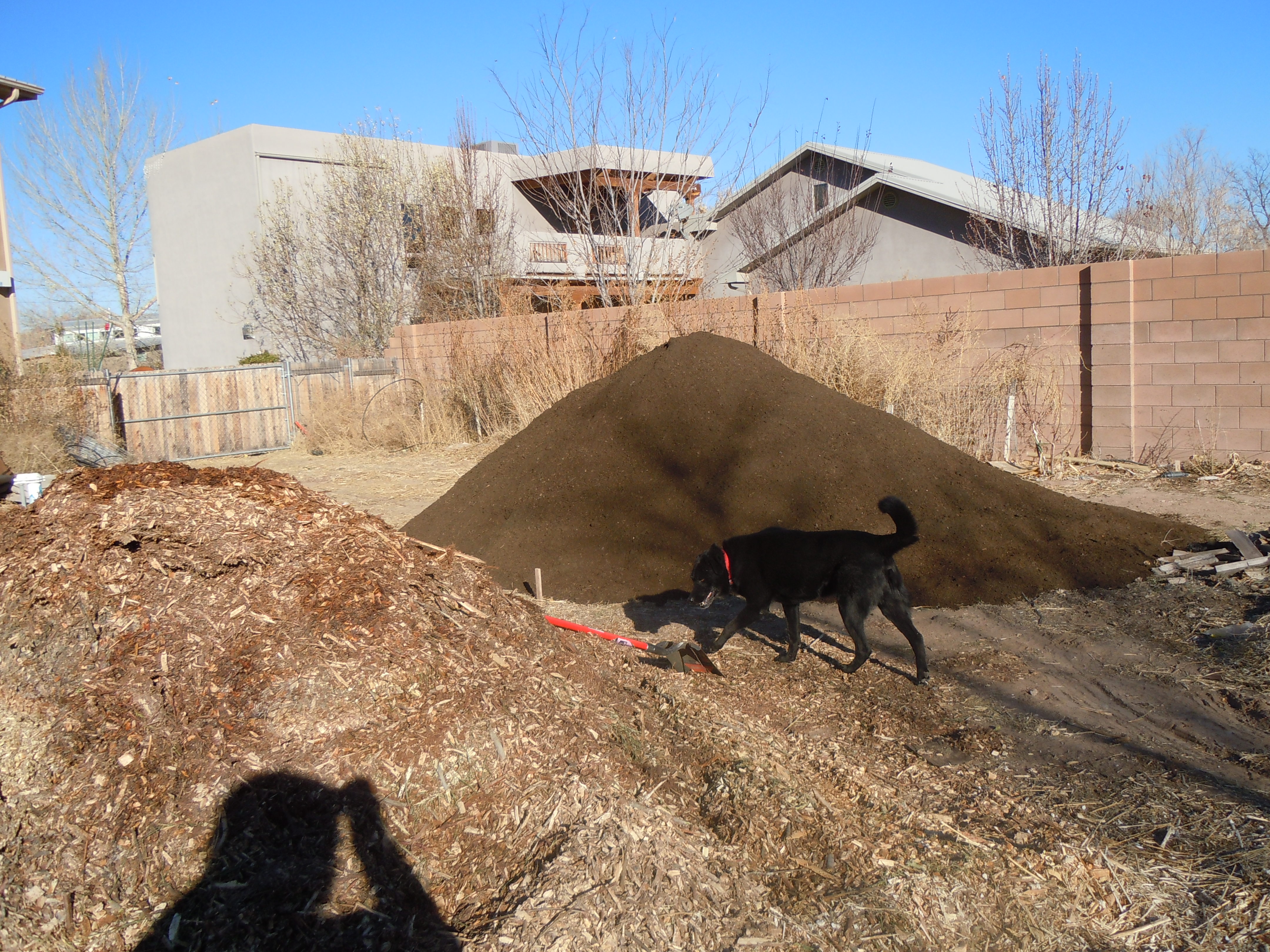
The soil at our new house, like many urban soils, was unpromising at best. Rocky, compacted, and highly alkaline, the only thing that really wanted to grow in it was tumbleweed.  With compost, gypsum,  and sheet-mulching it’s already a lot better and improving steadily. Beginning gardeners may be amazed at the sheer quantities needed. To emphasize the point of using enough, I’m illustrating the winter Grand Tetons of my backyard, Mt. Shredder and Mt. Manure. It might look like a lot, but it will be gone by spring.  Over the winter I’ll gradually spread the compost and work it into the growing areas, and mulch paths with the bark chips.  If you don’t have room for big heaps, you can get compost in bags, but get plenty. Apply gypsum per the results of your soil test, and you’re set for a successful growing season.

Didn’t get a soil test? I have to admit that I didn’t either. On soil that hasn’t been gardened before, I apply gypsum according to the directions on the bag, putting a little more where I’ll be growing calcium-lovers like broccoli and spinach. I also use extra on the potato patch, to get the pH down into a range that the potatoes can tolerate. Where soils are acidic I’d be using lime instead, but our very alkaline high-desert soils usually need a dose of gypsum to make them liveable for vegetables. Then I put on a scientifically determined amount of compost: all I can afford. Unless it’s really well aged, I keep it off the potato area. Instead, I dig all my neighbors’ discarded leaves into that area. No doubt it leads to comment when I remove the leaf bags on the night before green waste pick-up day, but as I see it, worse things could be said about me, so I’m lucky if people are only talking about my leaf-snatching habits. Needless to say, nothing should be touched unless it’s set out by the curb for pick-up. When in doubt, ask. But there’s no reason to pass up free organic matter that others are trying to get rid of.  Think of yourself as the Guerilla Gardener, and you may feel dashing instead of disheveled and a bit silly.