Archive for the ‘farmers market’ Category

Chard’s Great Moment

image image

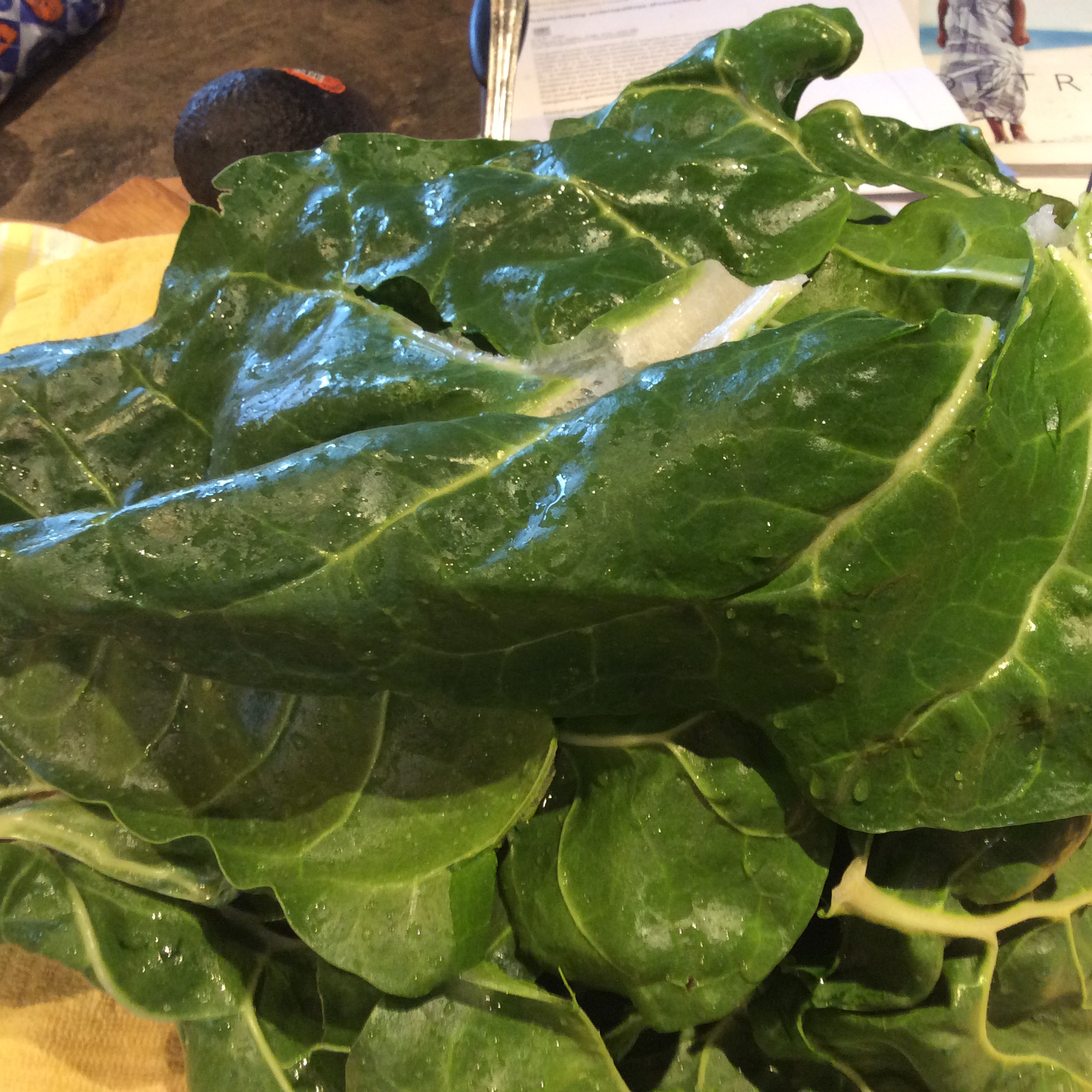
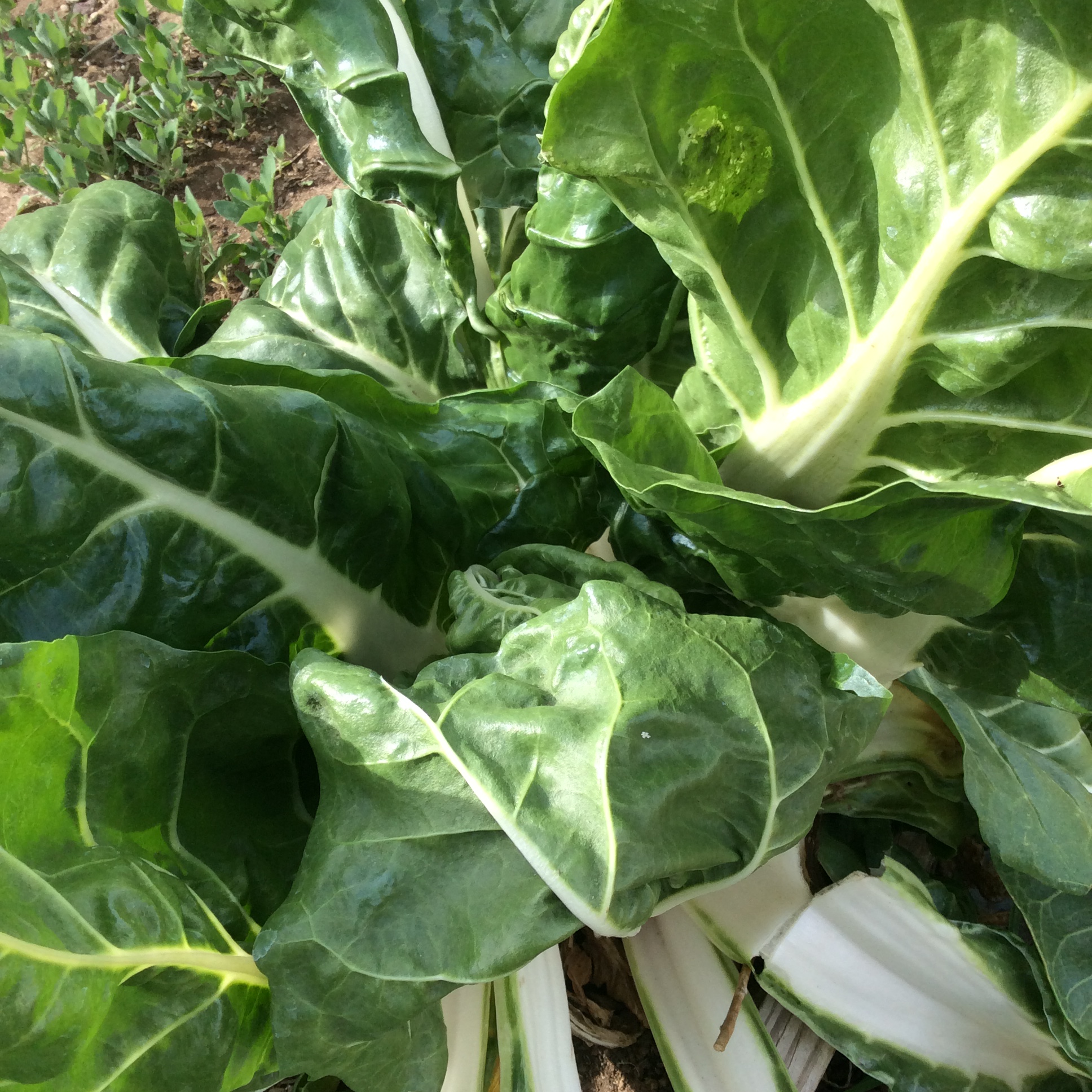
In my garden, this is the time to plant Swiss chard. It grows slowly in summer heat and gets a new lease on life in the fall, which is when I start eating it.  It goes dormant for the winter, and then in spring it emerges again and gradually progresses to making enormous leaves over a foot long.  These early spring leaves are very thick and meaty, and have a taste that has the umami elements of meat, but is mild and clean.  These early spring leaves are the ones that I eat, in huge quantities.  They are great cooked, and this is the only time of year that I love chard as a salad green. As soon as the plant starts to bolt to seed, the leaves of the elongating stalk acquire a rather dreadful dirty taste.  Interestingly, the large thick leaves at the base retain their mild delicious flavor for a while, so once the central stalk starts to form, you still have a week or two to collect leaves.  Then the chard season is over, and in my yard the rest is cut and goes to the goat.  When the last chard plant has been cut, I know it is time to plant more for the following fall and spring. ‘

So plan ahead, plant now, and love your chard in its best season.

A Grand Mess of Greens

image

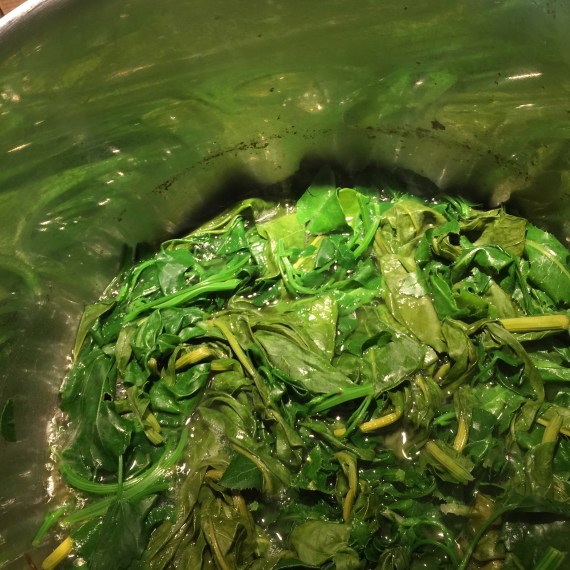
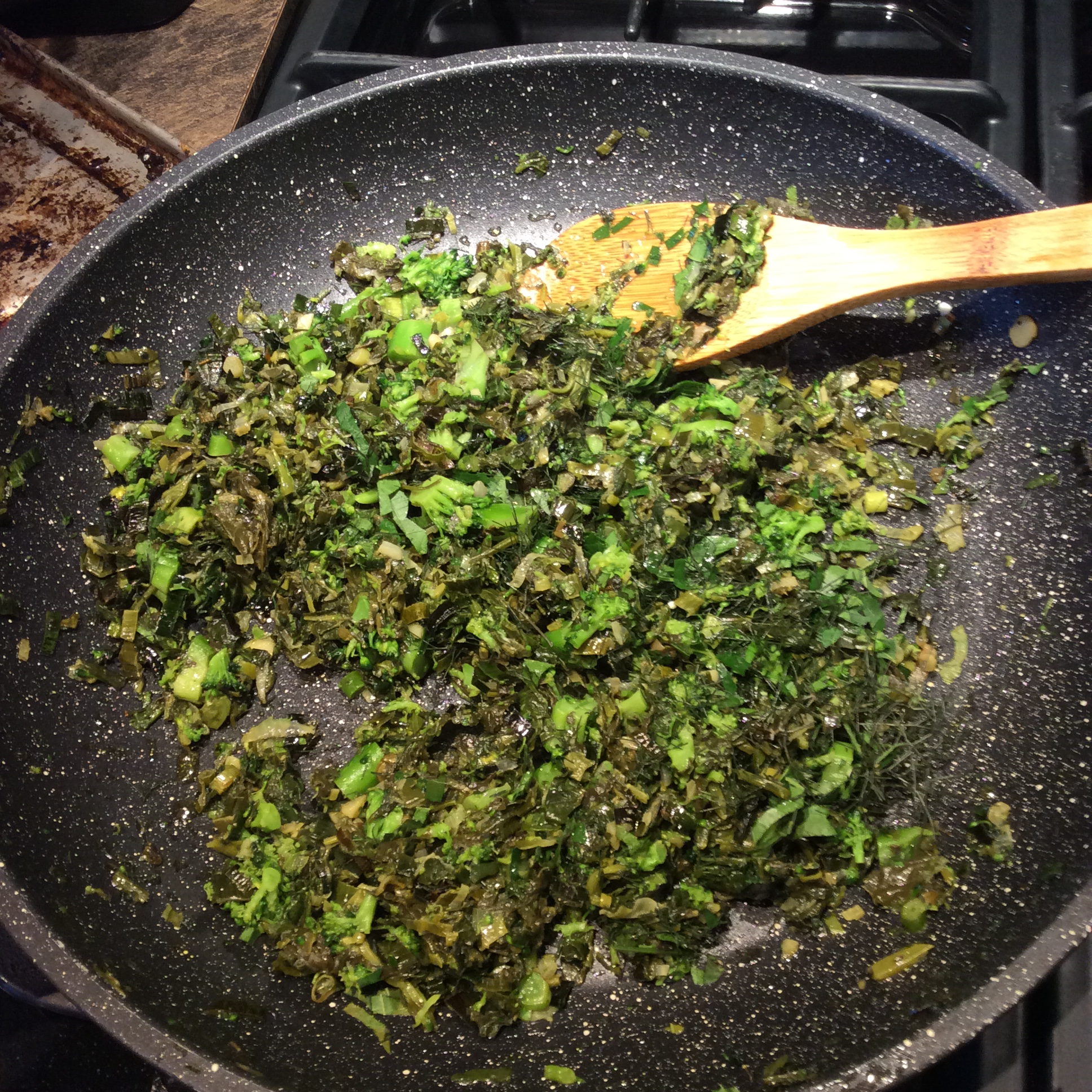
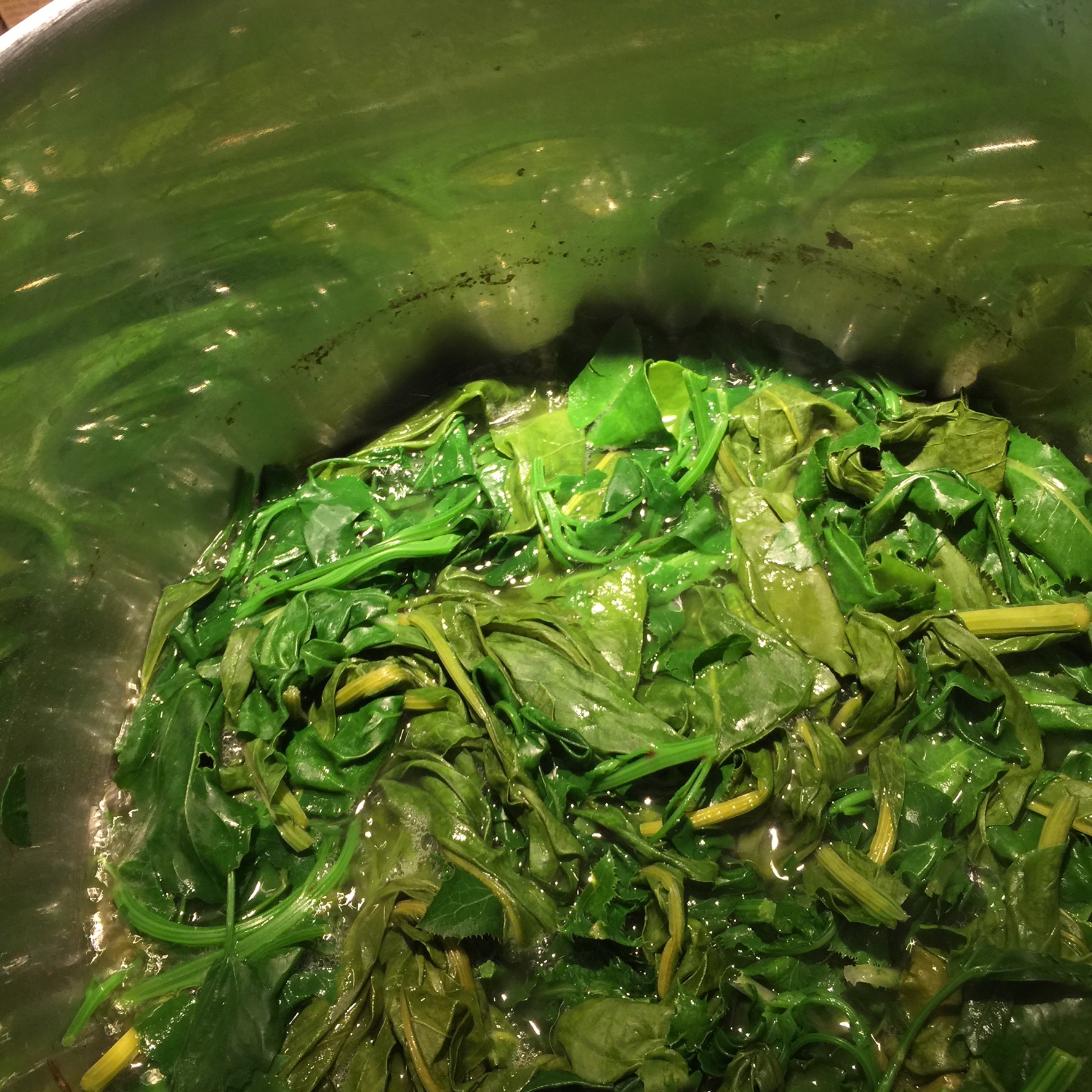
I love the various vegetables that the seasons offer me, and for the most part prefer to eat what my environment is offering me fresh that day. I do freeze greens mixtures, though, so that I never run short and have them all winter. Recently I came across a forager’s description of his “56 species calzone” and it made me want to count up the number of species in the large batch of cooked seasoned greens for the freezer  that I’m working on today.

The main components: chard, dock, lambs-quarters, spinach, nettles

Seasonings and minor components: mulberry leaves, hops shoots, lettuce ( about to bolt,) dandelion,  scorzonera, salsify, sunflower, green onion, young leeks, elephant garlic, corn poppies, young grape leaves, marjoram, mint, fennel, mustard, cattail shoots, pea vines, broccoli leaves,  arugula, sow thistle, wild lettuce

Sauteed separately and added: chopped broccoli stems, grape leaves, green garlic

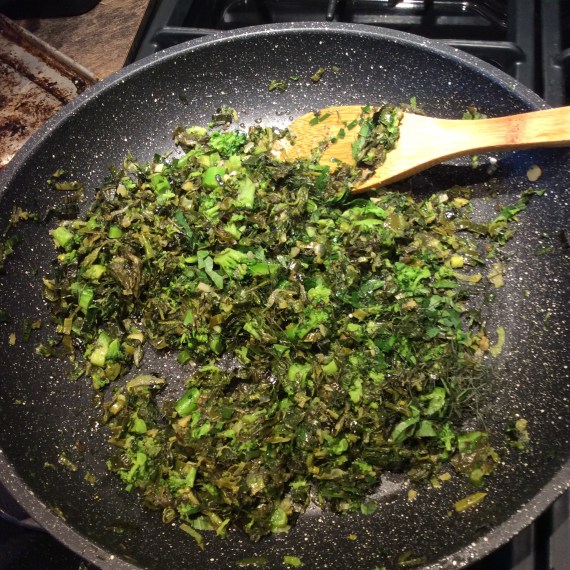
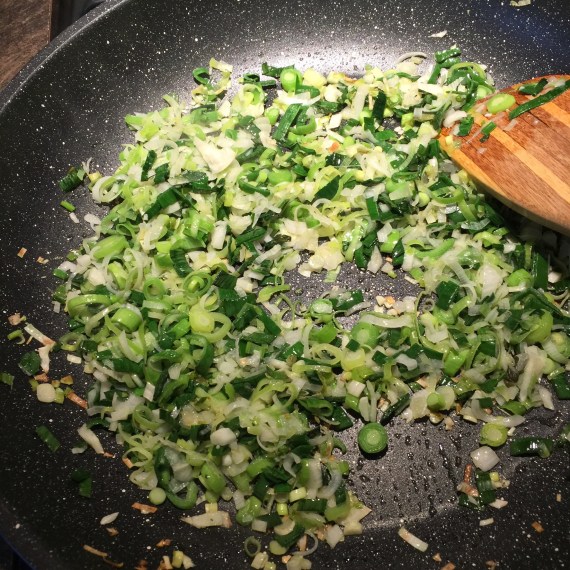
So, 30 species, a thoroughly respectable count for an average early summer morning,  and a potential treasure on winter days when I need to be flooded with the antioxidants of summer. In general I blanch the bulk greens in a fairly small amount of water which I later drink or make soup from, saute the chopped alliums and seasonings, then combine all and saute together for five-ten minutes or until the flavors have blended.
image
image

The true Cretan diet, the one that nourished some of the healthiest and longest-lived people in the world, was based on huge numbers of wild mountainside greens. It’s said that over 300 edible greens grow on Crete, and the average citizen can recognize over a hundred, making my 30 seem limited. But be assured that if you can learn to recognize ten of your local edible weeds and know when to harvest them and how to prepare them, your health and table will improve.  I’ve been tracking the preferences of a vegetable-despising friend, and he will eat greens, sometimes even second helpings, if they don’t look like greens on the plate. An example is the horta egg cake that I make often. He will even eat plain greens if they have a sweet component and a bit of texture, and an easy way to provide this is to douse them in the Quasi-Korean Sauce that I always have in the refrigerator and put a handful of roasted peanuts on top. If you eat bread, toasted sourdough bread crumbs provide delicious crunch on greens sautéed with garlic and chile flakes.
Be aware that greens have a remarkable capacity to absorb and mute flavors, and may need more seasoning than you think. Salt seems to disappear into them, and enough seasoning may be key to getting your loved ones to eat them and even like them. So keep tasting and adjusting until the flavor is right.
If you want to learn to identify some wild greens, gather them at the right stage, and cook them well, there is no better foraging author than John Kallas.
More on Scapes: Scape Powder

image
Lately I’ve been experimenting with dehydration, and it occurred to me that I object to the mucousy quality of cooked onion scapes and dehydration often solves such problems. So I put a large bunch of scapes in my dehydrator to see what happened.
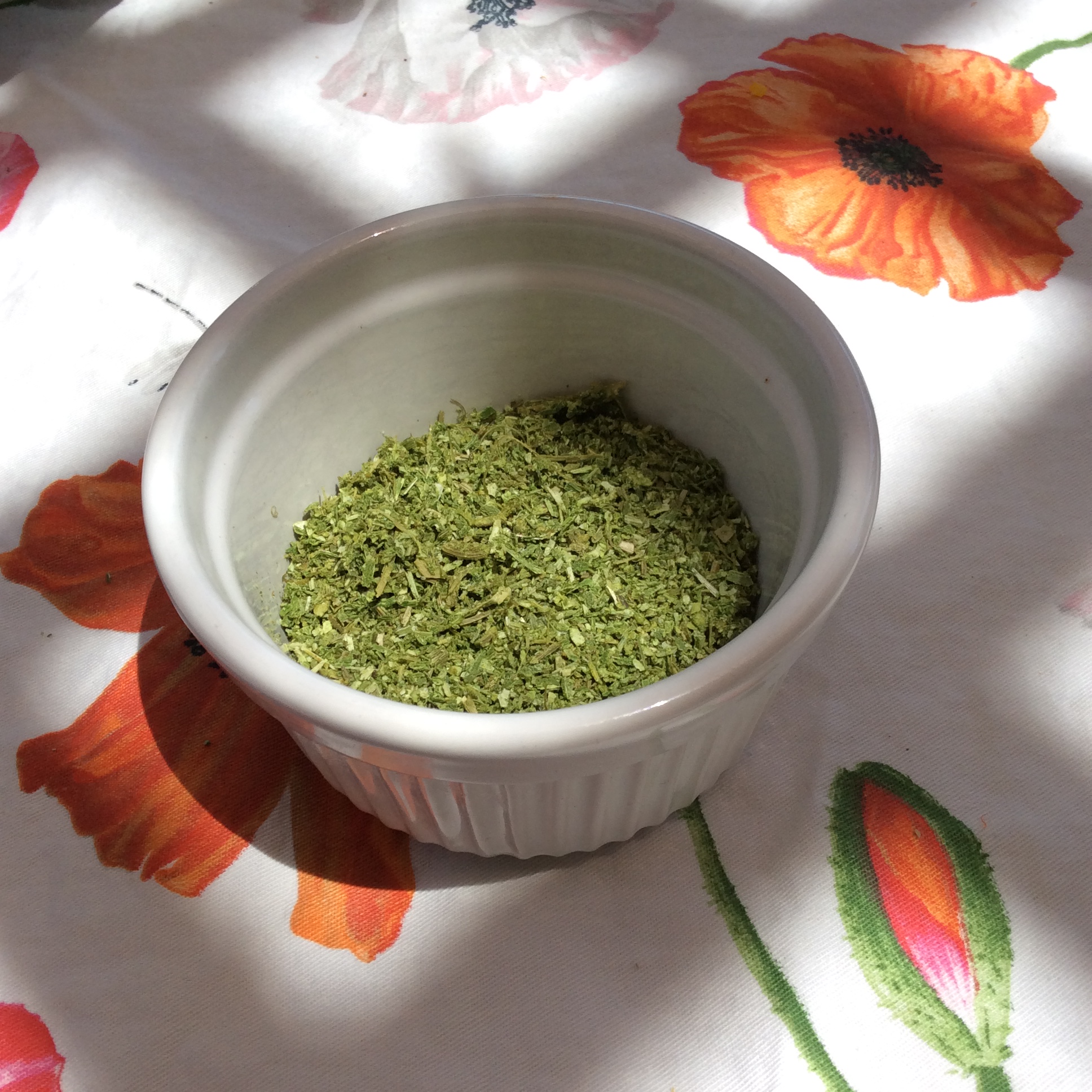
Lesson learned: they really are juicy inside, and in future I will split them in half lengthwise before dehydrating, because it took about twice as long as it should have to dry them thoroughly. The bulbous tops should also be cut off at the time of initial preparation.  But I did eventually achieve brittle-dry scapes that I could grind into a fragrant green powder.
image
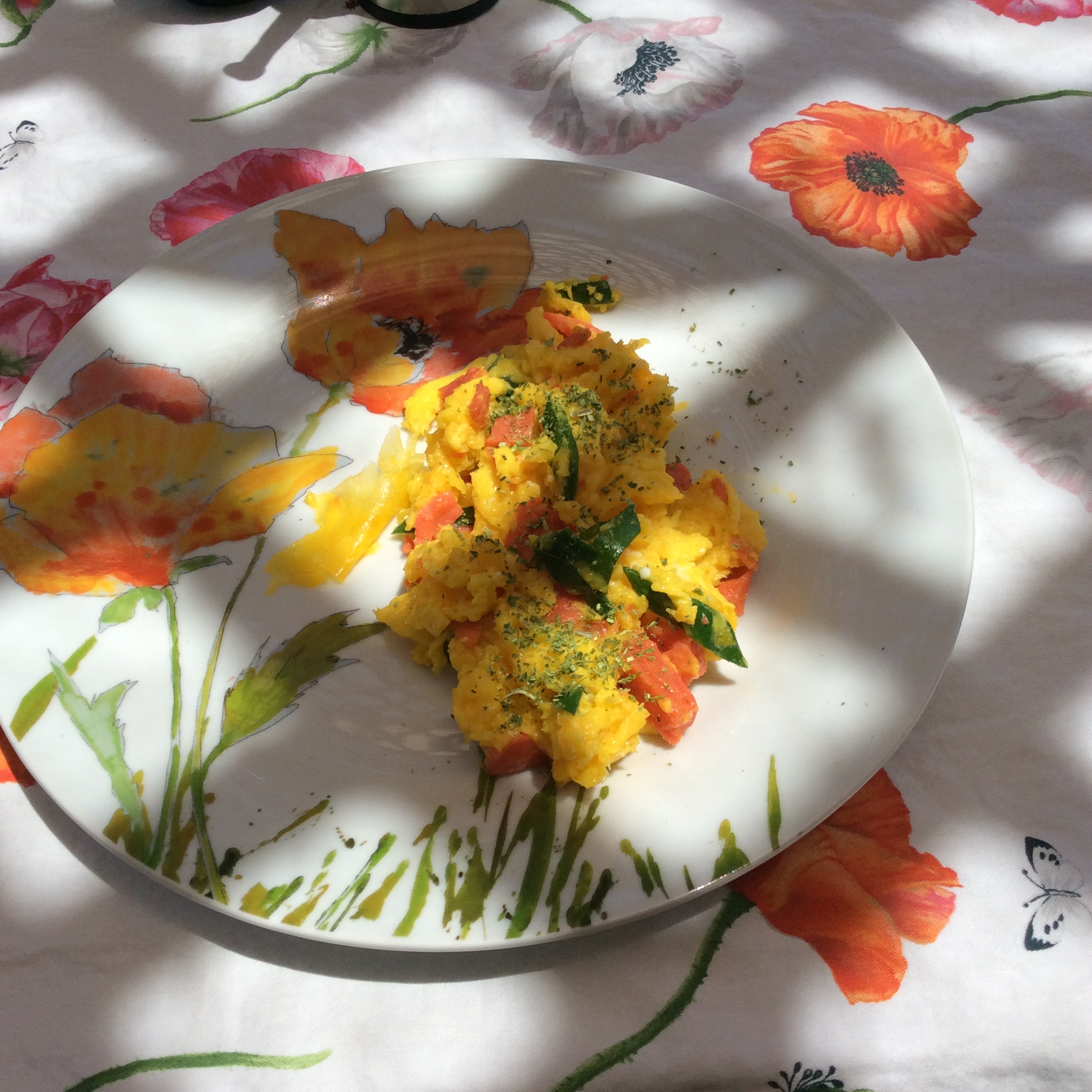
The powder is tasty and sweet, and I’m still considering how to use it. I started with the ultra-simple scramble above: four whole eggs and four yolks beaten with a couple of tablespoons of heavy cream and a dash of salt, then scrambled in butter with one large green onion leaf chopped and four ounces of smoked salmon chopped, finished with pepper and a lavish sprinkling of scape powder. Yum.
This is my favorite way so far to use onion and shallot scapes and the remaining ones will all become scape powder. I think it would be delicious if used to finish chicken, fish, and seafood, and might be good on a steak as well. I have heard of dehydrating garlic scapes, and I tried a couple but didn’t care for the result and will continue to gobble them up as a fresh vegetable.
image

The Season of Scapes

image

Back in 2009 I wrote a post on onion and garlic scapes that you can find here, and all I can say is that if I had known that hundreds of people were going to look at it and it would still be going strong in 2016, I would’ve been more thorough. But then, when I think about it, I think my advice to get young tender garlic scapes, chop them in about 1 inch lengths, and pan fry them in hot olive oil is still my favorite way to use them. These days I usually cut the whole bud off before cutting them up to cook. It has a slightly starchy quality that does not, in my current opinion, go well with the greenness of the rest of the scape. Try it both ways and see what you think.
I also still enjoy putting them under roasting meat and poultry to stew in the juices, and in fact tonight I will be having roast chicken thighs on a bed of garlic scapes, almost exactly as I described in that post seven years ago. Make sure that they get 20 minutes or more to cook. If necessary, you can take the meat out to rest and continue roasting the scapes until done. Make sure the pan doesn’t get dry, which will cause them to burn. Add a little water or broth if needed to keep things a little juicy but not soupy.
I can also add that allicin, the antioxidant in garlic and other alliums that is thought to have many health benefits, is present in much higher levels in the green part of the garlic plant than in the cloves that you typically cook with, so eating the plant bits is good for you as well as tasty.
I am also experimenting with dehydrating scapes and grinding them into powder. I am not doing this with garlic scapes because I prefer to eat them as is, but I have been dehydrating onion and shallot scapes so that they can be ground into an attractive green powder that, I hope, will be useful for seasoning. So far, I have sprinkled some over salad with good effect. I am thinking about using it to coat chicken thighs, along with salt, and then searing them in olive oil and finishing them in the oven. I’m not sure how the green color will play out in this context, but I think it will brown enough that it will not be particularly startling.
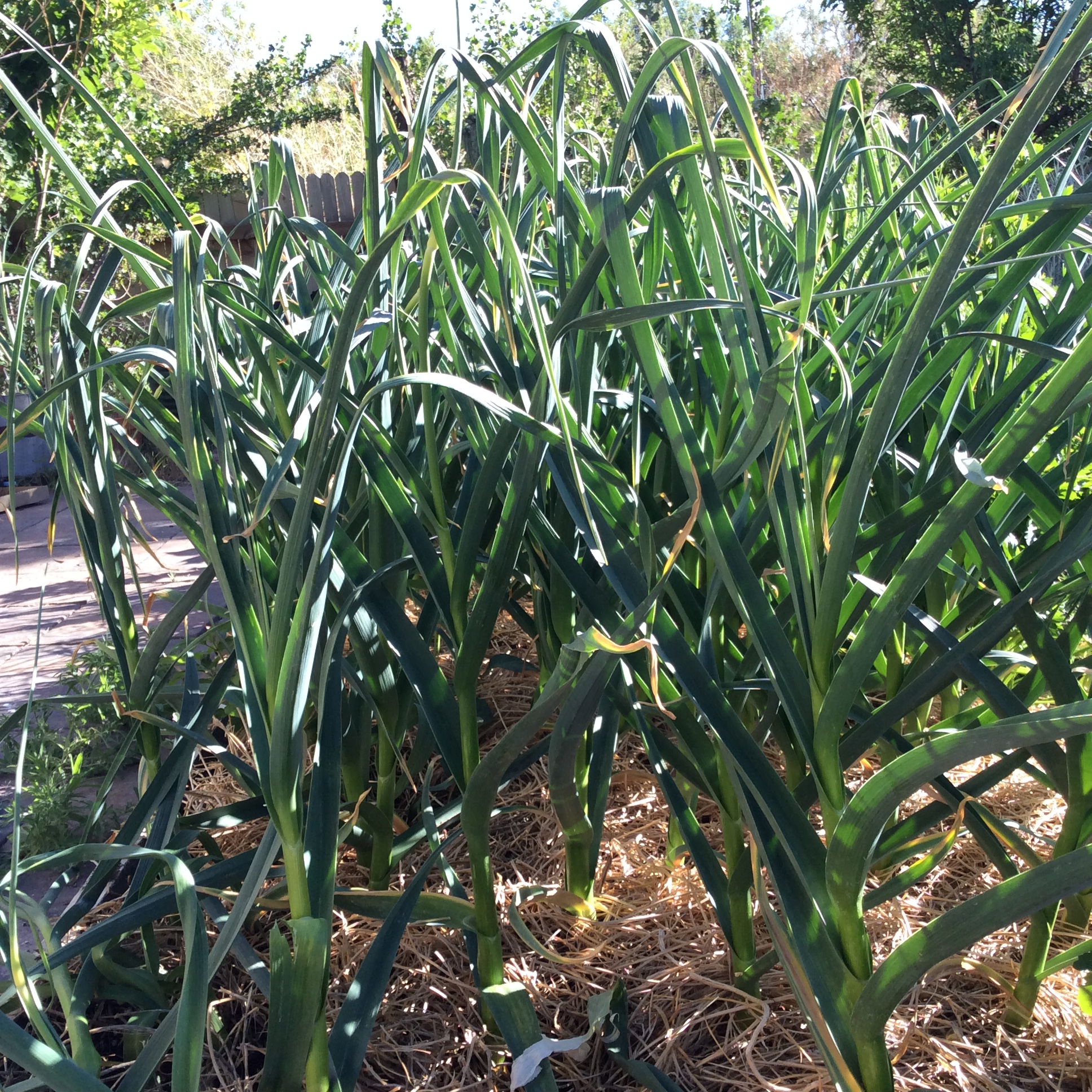
The best advice that I can give to vegetable gardeners is: grow green garlic. Grow a lot of it. Use the greens, and ignore any rigid advice to use the white parts only, because you would be missing the best part of the garlic. Remember to slice crosswise in 1/4″ slices when using the whole stalk and leaves, since they are not as tender as the scape, and once the scape appears, the stalk and leaves are too tough to use. Try it every which way, because you are probably going to love at least some cooking methods. Click the tag for “green garlic” at the head of this post to look at all my various experiments with it.  If your space is limited and you can’t grow enough for your yearly needs, you can eat all your garlic as green garlic and then buy heads of garlic at your farmers’ market, grocery, or food co-op for winter use. If you are limited to a small space, there is no point in using it on storage vegetables.
Be aware that you can create a very long season by choosing a number of different varieties. My green garlic season starts in mid-March with the very early Chinese Pink, and right now in late May the late Mount Hood and elephant garlic are still providing wonderful green garlic. I buy all my garlic from Territorial Seeds, and I strongly recommend getting your order in by June because the most interesting varieties sell out quickly. It will be delivered in fall in time for planting. This year I have finally planted enough that I think I will be able to replant from my own stock; in previous years, I’m afraid I have gluttonously eaten it all.

image