Archive for the ‘farmers market’ Category

Independence

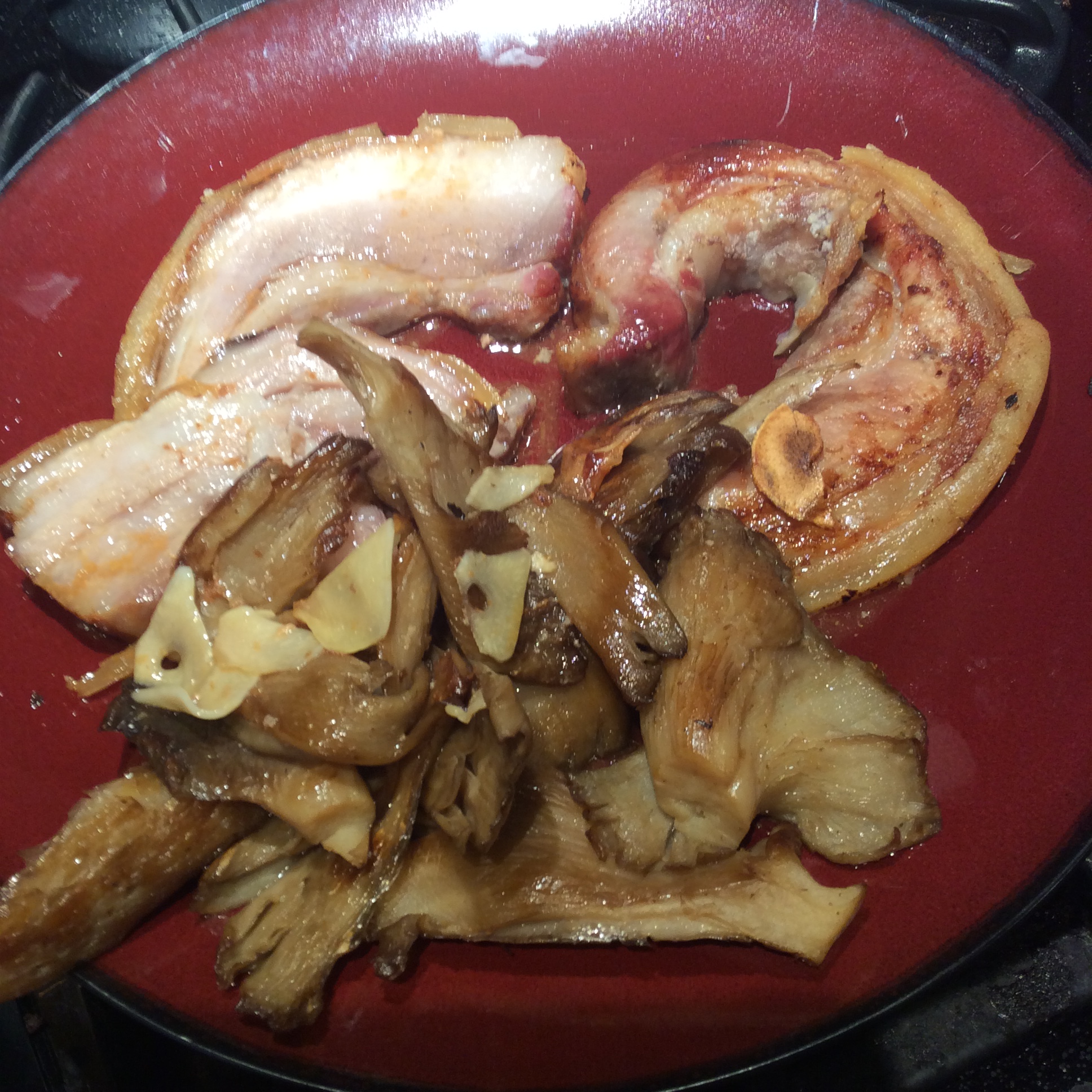
On this July 4th, I am sitting after dinner contemplating the hardly-revolutionary idea that all independence is local as well as national, and neither can exist without the other. I have wonderful irreplaceable freedoms under the Constitution. I also have a little plot of land on which to grow food like the garlic shown above, a splendid local system of farmer’s markets where I can buy what I can’t grow like the  pork belly that I roasted, and a system of national forests that preserve nearby wilderness areas where I found the oyster mushrooms. Without the national systems that protect our local freedoms, none of this could be maintained.

So be conscientiously local. Grow what you can, and buy what you have to. Waste as little as you can manage. Connect with other local people. Compost and reuse as well as recycling. Support your area farmers, not just by buying their products, but by realizing that your votes can support politicians who are sympathetic to local farms. Keep it always in mind that “All politics is local.” Connect with your neighbors, even if (especially if) their political views are different from yours, because both you and your neighbors might end up with something new to think about. And love and relish this country and support its national freedoms and national programs, and refuse to consider abridgment of its freedoms or demonization of people who don’t look or sound or worship exactly like its founders. We are bigger than that.


An Easy Southeast Asian Evening: Thai-ish lettuce wraps

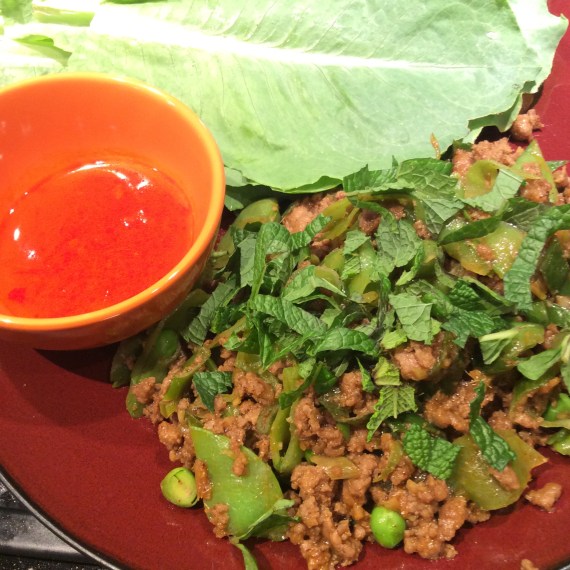
In hot weather  I start to crave the food of hot climates, especially Thai food.  Since I eat as few carbohydrates as possible, much of what I cook is pseudo-Thai, but it can still be delicious.  Having some good condiments on hand can be a shortcut on an evening when I worked late, and my favorite Thai condiment is nam prik pao.  Once I made my own according to the complex directions in David Thompson’s authoritative and addictive cookbook Thai Food,  and it was the best I ever had, but it is quite an undertaking and involves deep frying a succession of ingredients before grinding them together, and deep frying is not my favorite cooking modality.  Too messy.  So except for special occasions, I use the fairly good bottled one from Mae Pranom.  Just as a warning, this excellent Thai company makes several different condiments that all say “Thai chili paste” on the label, and are only fully and accurately labeled in Thai.    So my recommendation would be to order through Importfood.com, a very good US purveyor of Thai ingredients, and get the one that they say is nam prik pao.  While you’re at it, order some Shark brand Thai sriracha sauce, which is different from the Vietnamese style and can be hard to find.

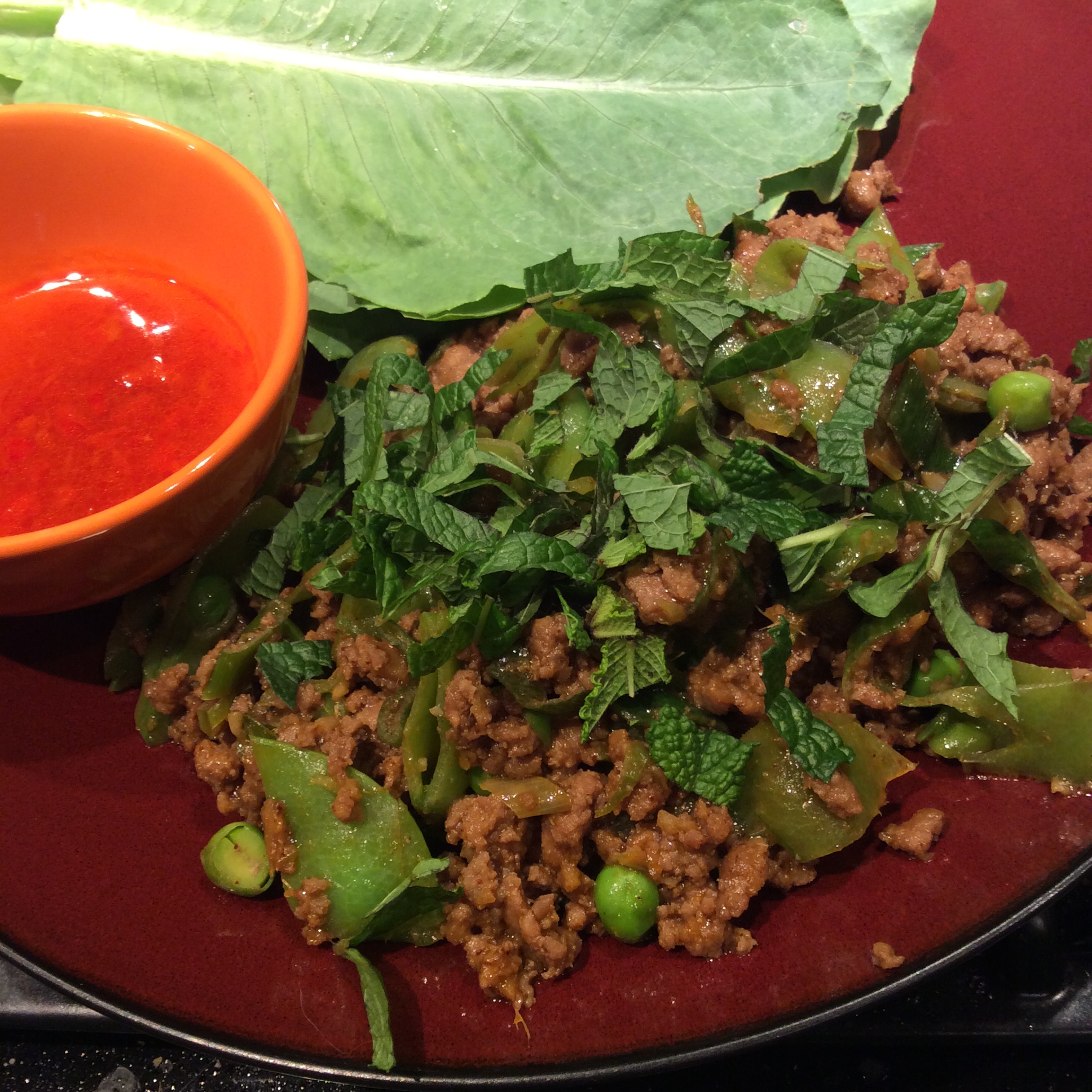
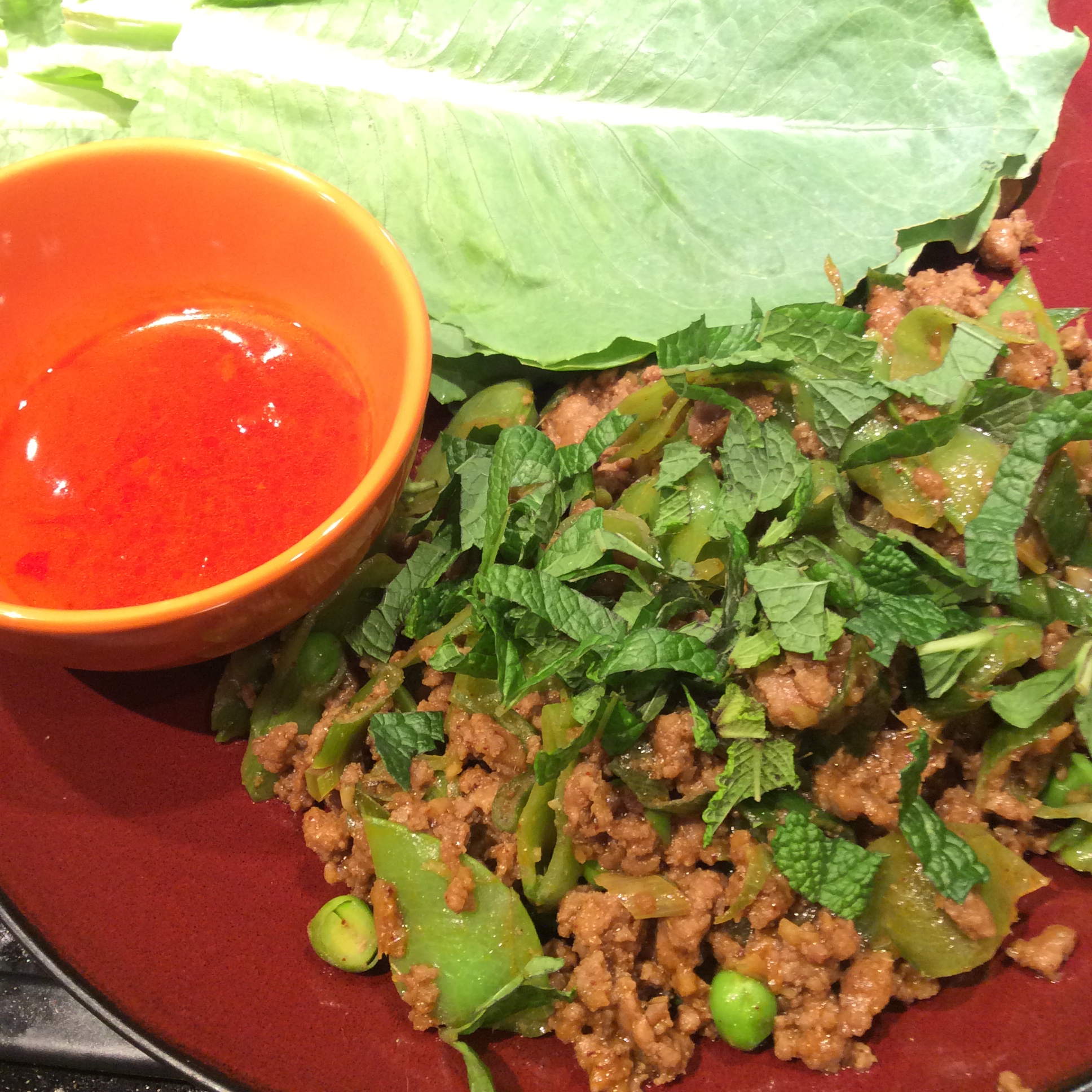
Besides the nam prik pao, you will need a pound of good ground meat.  I used wild boar because I had some in the freezer, but ground goat, ground pork, or plain old ground beef would all be fine.  The vegetable component was a pound of Oregon Giant snow peas. Any good snow pea or sugar snap pea will do.  Lettuce leaves are needed for serving, and I used leaves of the hot climate celtuse-type  lettuce Balady Aswan,  but romaine is fine if you don’t grow your own.  Other needed ingredients are a small knob of ginger, two cloves of garlic,  one large or three small green onions,  fish sauce,  coconut cream (unsweetened) or coconut oil for cooking, sweetener of your choice, and a large handful of chopped fresh mint.
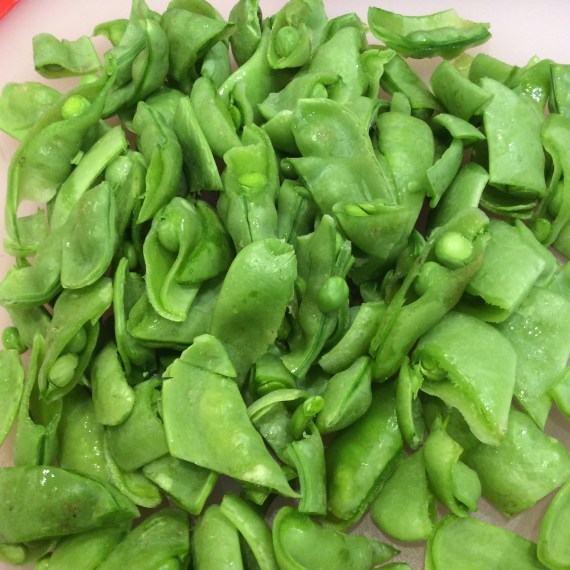
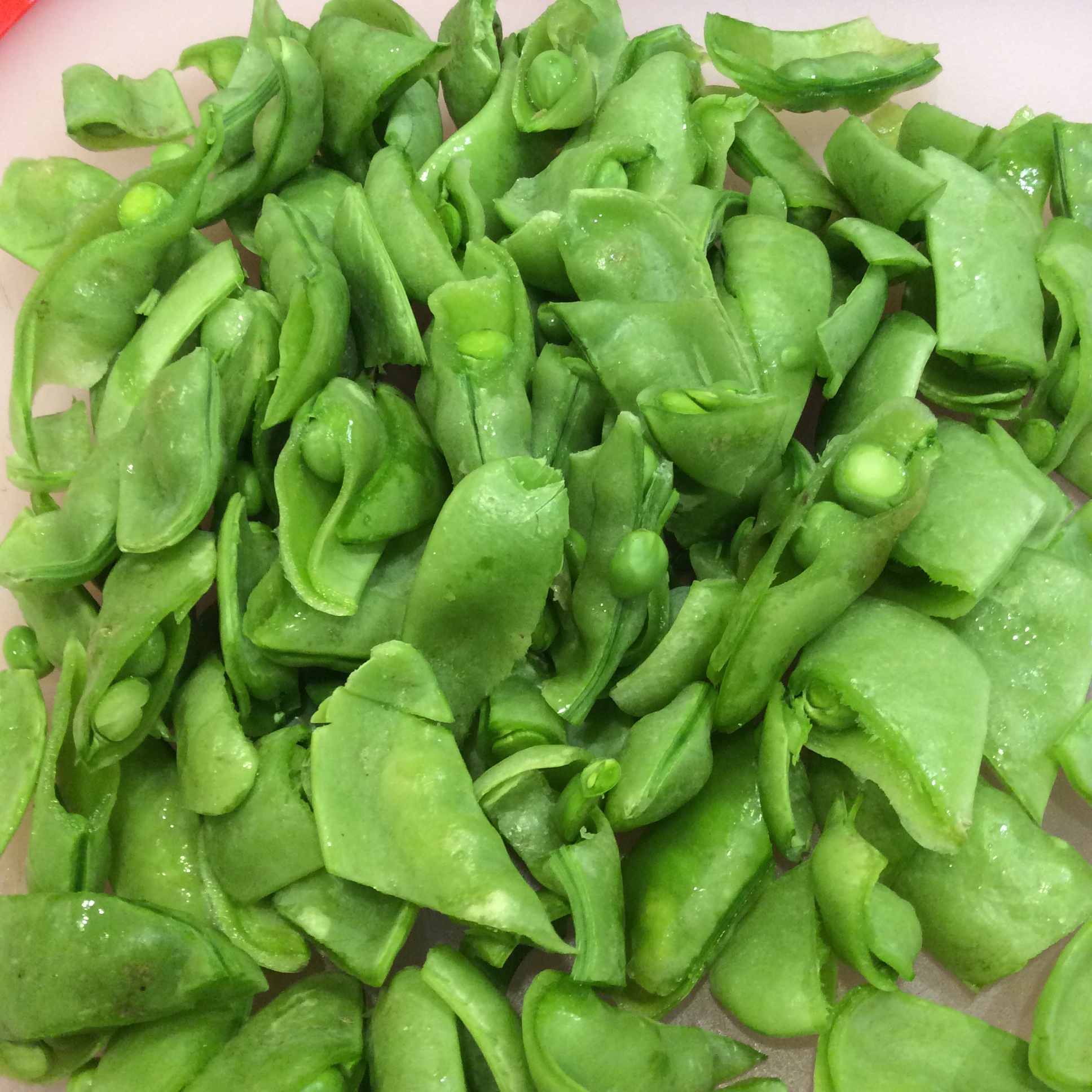
Blanch the snow peas or sugar peas in boiling water for two minutes, drain and cool in ice water, and slice diagonally.  Slice the scallions diagonally, and chop the ginger, garlic,  and mint. Now you’re ready to cook.
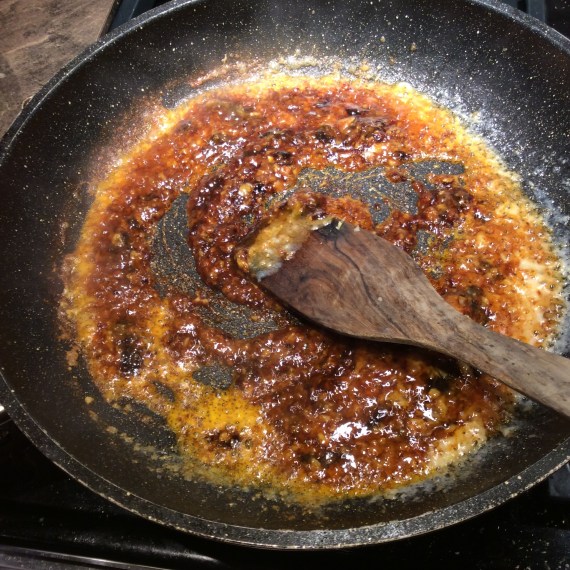
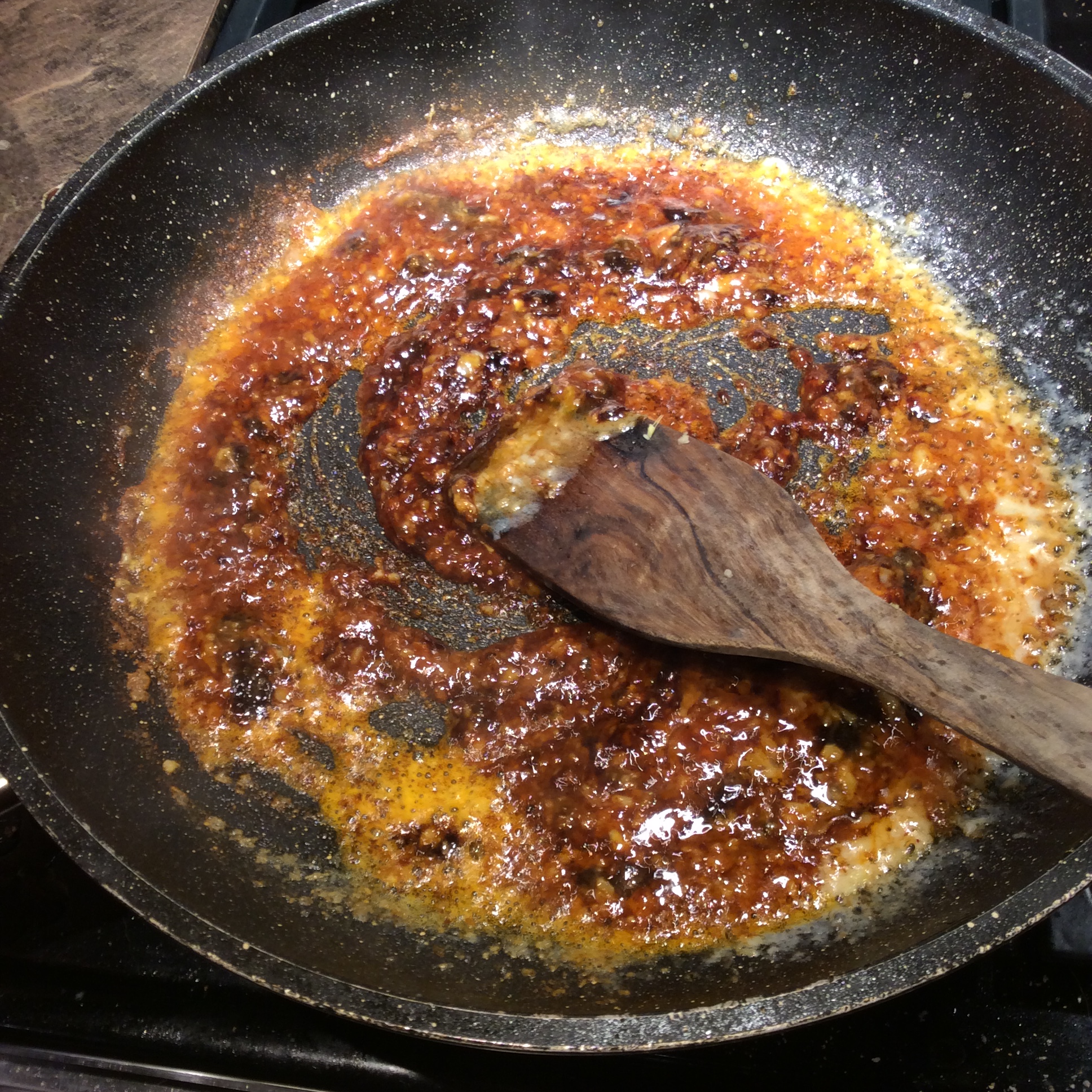
Heat a skillet or wok over high heat and boil the coconut cream hard for a minute or melt coconut oil. Stir-fry in the chopped ginger and garlic for a minute, then add 1/4 cup of nam prik pao  and fry until it looks like the picture. Add your ground meat now and continue to stir-fry over high heat. When it’s about half cooked, add the sliced green onions, sweetener to taste, and fish sauce to taste. I used a quick squirt of liquid sucralose and about 3 tablespoons of fish sauce. If you’re being authentic and using palm sugar, I would guess that about two tablespoons would do it. Go easy if you’re not sure, because you can adjust later. Stir-fry until the meat is completely cooked, add the blanched snow or snap peas, and cook over high heat another minute or two until they are heated through. Taste and correct the seasoning if needed.

I should add that I was using my large perennial green onions, and in the hot weather this time of year they take a bit of cooking to become tender and pleasant to eat. If you are using the store-bought kind, you can add them closer to the end of the process. Know your ingredients and adapt your methods to get the best out of them.

Top with chopped fresh mint just before serving and serve with stacks of lettuce leaves. I like to add a sweet-hot dipping sauce made with equal parts fish sauce and rice vinegar, artificial sweetener added until it’s pretty sweet, and sambal oelek or sriracha added until it’s pretty hot.
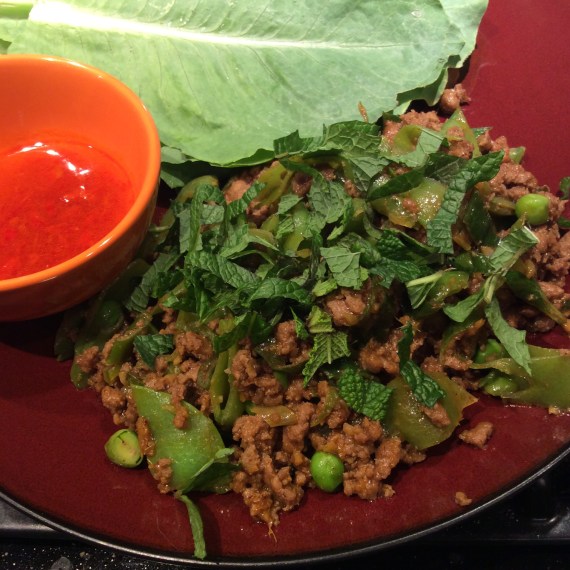
Once you have the basic formula, the dish is endlessly accommodating.  Use whatever ground meat you have, and I speculate that ground chicken or salmon might work well too. If snap or sugar peas aren’t in season, consider green beans ( be sure to blanch until tender) or greens of almost any kind. Collards could be delicious, especially if preblanched for a minute to improve tenderness.  Even slightly bitter greens are worth considering, although I would reduce the quantity and not use anything more than slightly bitter. But the coconut fat and sweetening does a lot to  ameliorate a small amount of bitterness.  Broccoli would be delicious if blanched and then cut in small cubes to fit into  the general texture of the dish. Mushrooms  are another excellent possibility, and dried soaked shiitakes cut in cubes would be good but mushrooms that you grow yourself might be even better. Some mushrooms such as oysters are pretty juicy and it is worth dry sautéing them in a separate pan to get excess liquid out before adding them to the mixture.

Other herbs are worth considering. Thai basil is a natural, and Italian basil is  something that I would consider if I did not have Thai basil or mint handy.  It just occurred to me that the licorice-sweet leaves of sweet cecily might be really good in this context, so I will be trying that.

Personally I get very annoyed with finding most  Thai food in America smothered in chopped peanuts, but I admit they’re delicious and they do add a good texture. If you want to explore other texture additions, a little chopped jicama or maybe even raw Jerusalem artichokes would add a sweet crunch.


The hallmark of a good basic recipe is that you rapidly learn how to make it come together easily and adapt to your whim of the day and what is available in your garden.  I always keep ginger, garlic, fish sauce, and some basic Thai condiments in the house, but ultimately your supply of basics may be different.  If you want to announce your food as authentic Thai, then by all means read David Thompson’s cookbook and follow his lengthy and exacting directions. But if what you want is to have delicious food on your table that suits your needs and what is available in your garden, then be imaginative and don’t worry yourself overmuch about authenticity. Just pay attention to the basic logic of the flavors.
My Winecap Mushroom Bed

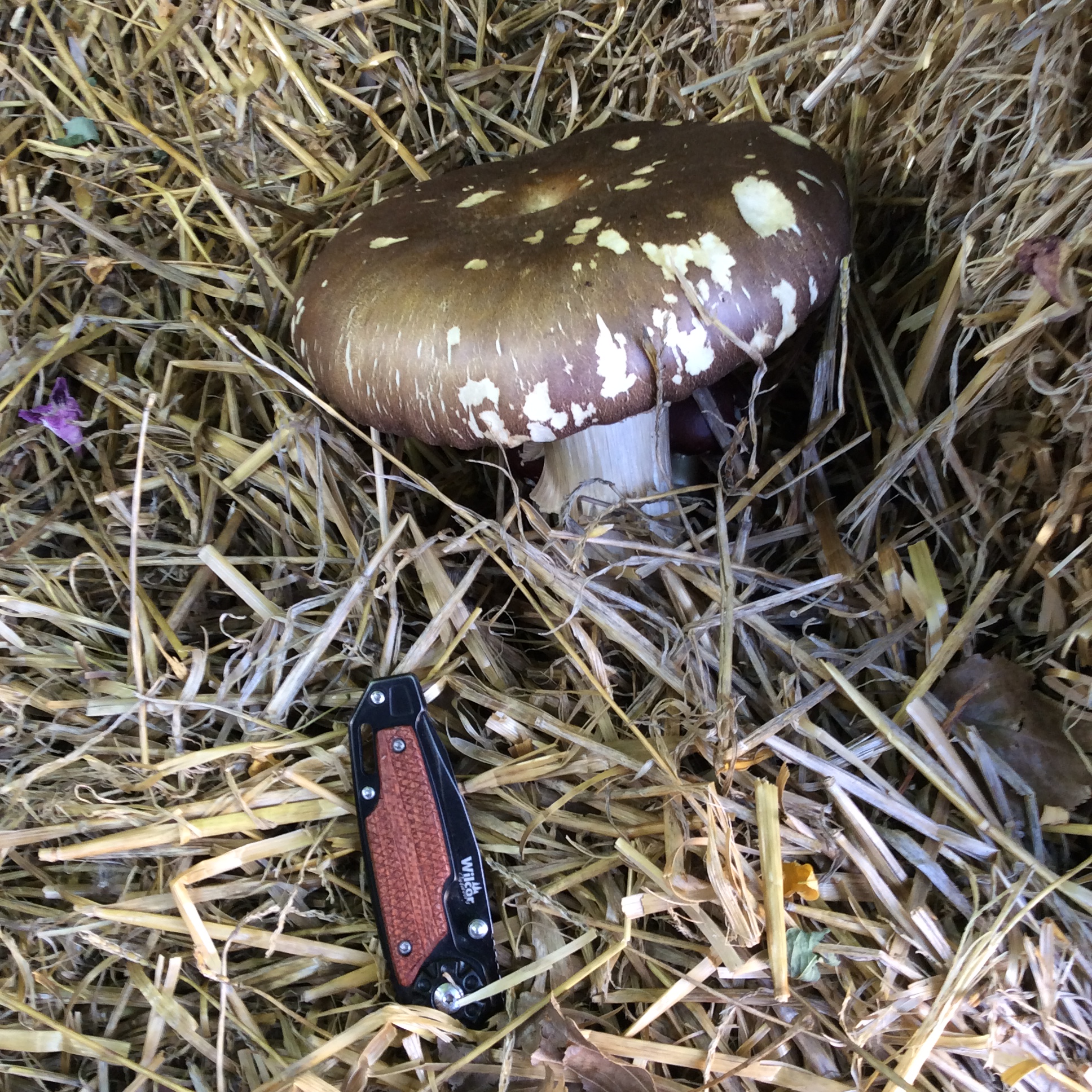
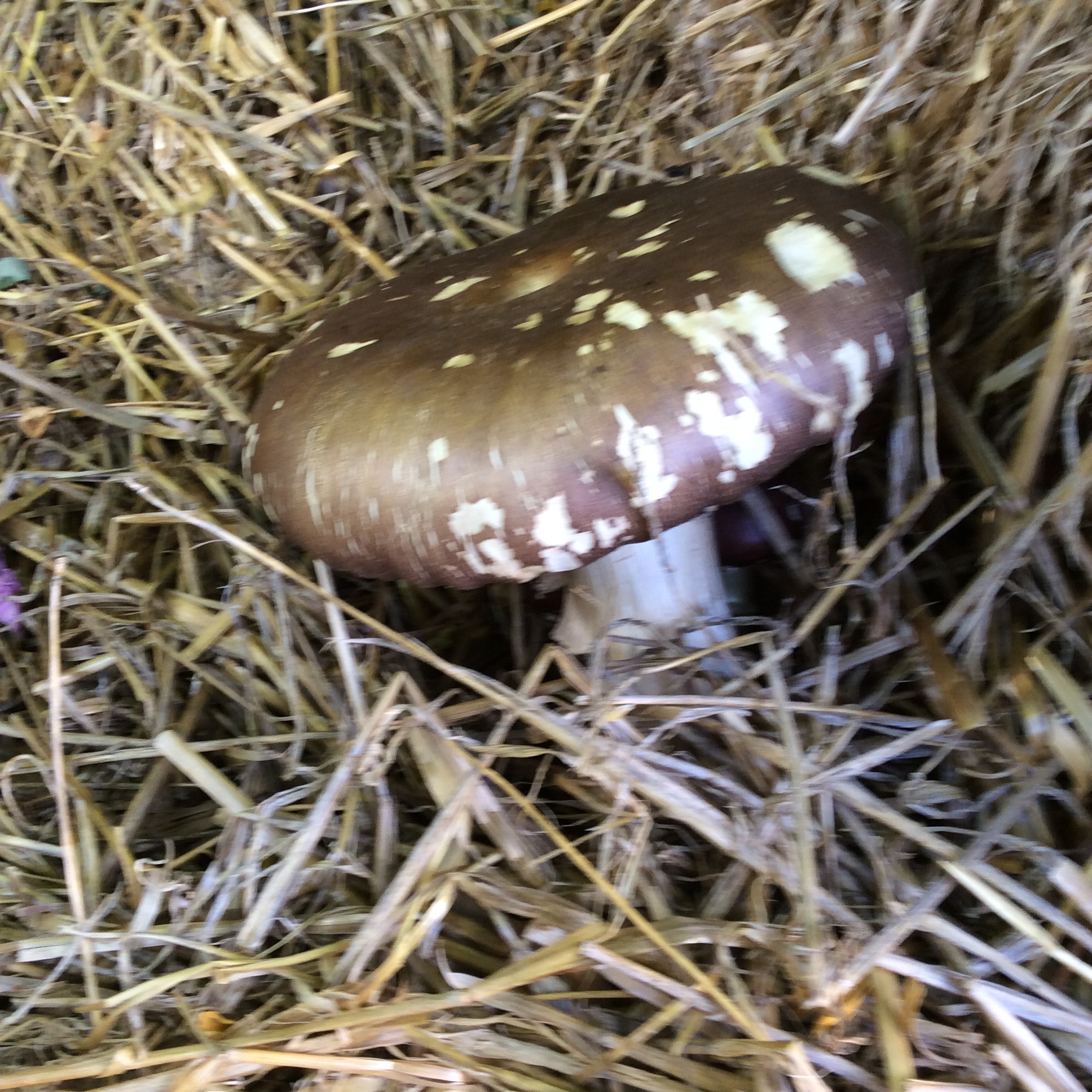
Early this spring I was putting down straw mulch around some new plantings in the shade and decided to order and incorporate some spawn for the winecap  mushroom, Stropharia rugosa-annulata.  I have never grown or tasted this mushroom before, and so I was very excited yesterday when a young friend pointed out “a giant mushroom” under one of the new little saplings.  My first winecap was a healthy 6 1/2 inches in diameter.  I cooked it plainly in butter with a little bit of salt, and it was perfectly nice but I would say not significantly  better than store-bought cremini mushrooms.  Still, my homegrown mushrooms are deep organic and came from my own land, so of course I favor them,  and they benefit the soil and the growing plants as well as me.

The advantage of Stropharia  is that it is fairly rugged and easy to grow. I am told that it grows much better in deciduous wood chips than in straw, and at the very least I should have mixed in some deciduous wood chips or put some on top, but it is one of those things that I meant to get around to and haven’t done yet.  Maybe I will still top up with some wood chips.

They grow well in the paths between garden beds, and once you have them established I am assured that you can move shovelfuls of the substrate around and start new  mushroom beds pretty much at will. The presence of fungi can be very important to the health of plants, and for much more on this fascinating subject I recommend reading “Mycelium Running.”

Here’s an important safety bulletin: just because you “planted” mushrooms in a specific spot, it is not safe to assume that any mushroom that comes up in that spot is what you planted.  There is absolutely no substitute for knowing the identification points for the mushroom you planted as well as for any poisonous look-alikes.  The mushrooms that I grow in my garden, oyster mushrooms and Stropharia, are easy to identify so this is not a difficult task.

The hugeness of the Stropharia  mushrooms can make your whole garden seem Wonderland-like and magical. It might not be the very best eating mushroom there is, but it is quite wonderful to have a visitor gasp and say “Ooh, what is THAT?”


Chicken with Double Garlic Sauce

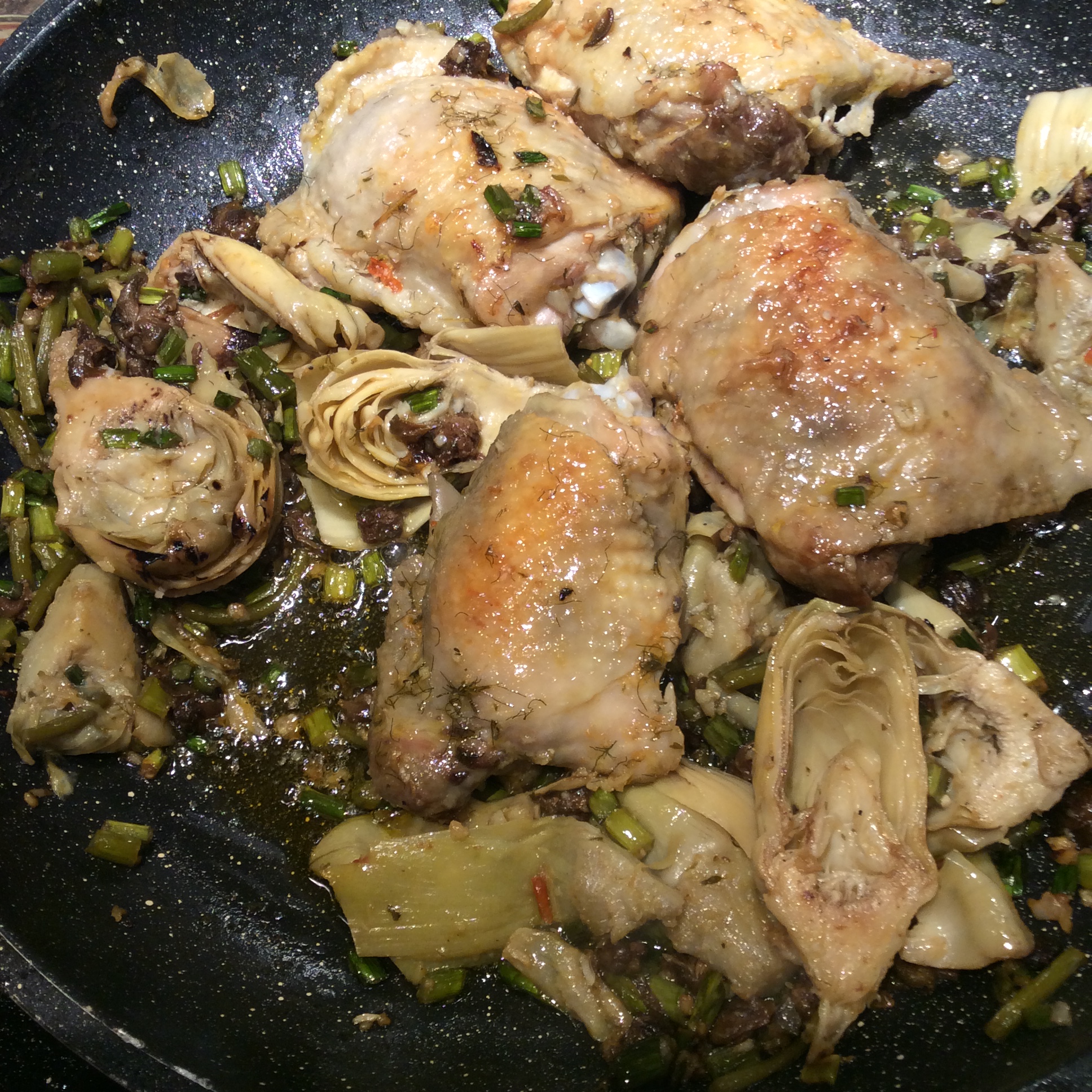
Garlic is wondrous in all its forms. I called this simple chicken sauce  “double garlic” not because it contains a lot of garlic, although it does, but because it contains garlic in two distinct forms. Right now I am harvesting the bulbs of the early Chinese Pink while the late Mount Hood is forming tender scapes. So both went into this dish. For the chicken, I used some leftover plainly roasted thighs. You could also make the very quick seasoning sauce to add interest to a plainly seasoned rotisserie chicken that you bought on the way home after a busy day. Of course you could also cook chicken thighs right in the sauce, but I conceived of this as a way to make leftovers fresh and interesting.

In the spirit of easy convenience, I added some artichoke hearts marinated in oil that I found at a grocery store olive bar. If you have some leftover vegetable that isn’t too seasoned, this is a good place to use it up. Just don’t use marinated veggies that are acidic or pickled-tasting; taste to be sure.

You will need:

1/3 cup very good EV olive oil

7 cloves fresh garlic, chopped

5-6 tender garlic scapes (snap one near the base. It should snap cleanly, with no “bark” peeling at the breakpoint) Chop in bits a little more than 1/4″ long

1/3 cup salted capers, soaked and squeezed dry, or brined capers rinsed and squeezed dry

1/4 cup, loosely packed, chopped herbs of your choice. I used half thyme and half fennel

4 cooked whole chicken thighs, or a disjointed rotisserie chicken

roughly 1 cup of cooked leftover veggies, not too seasoned

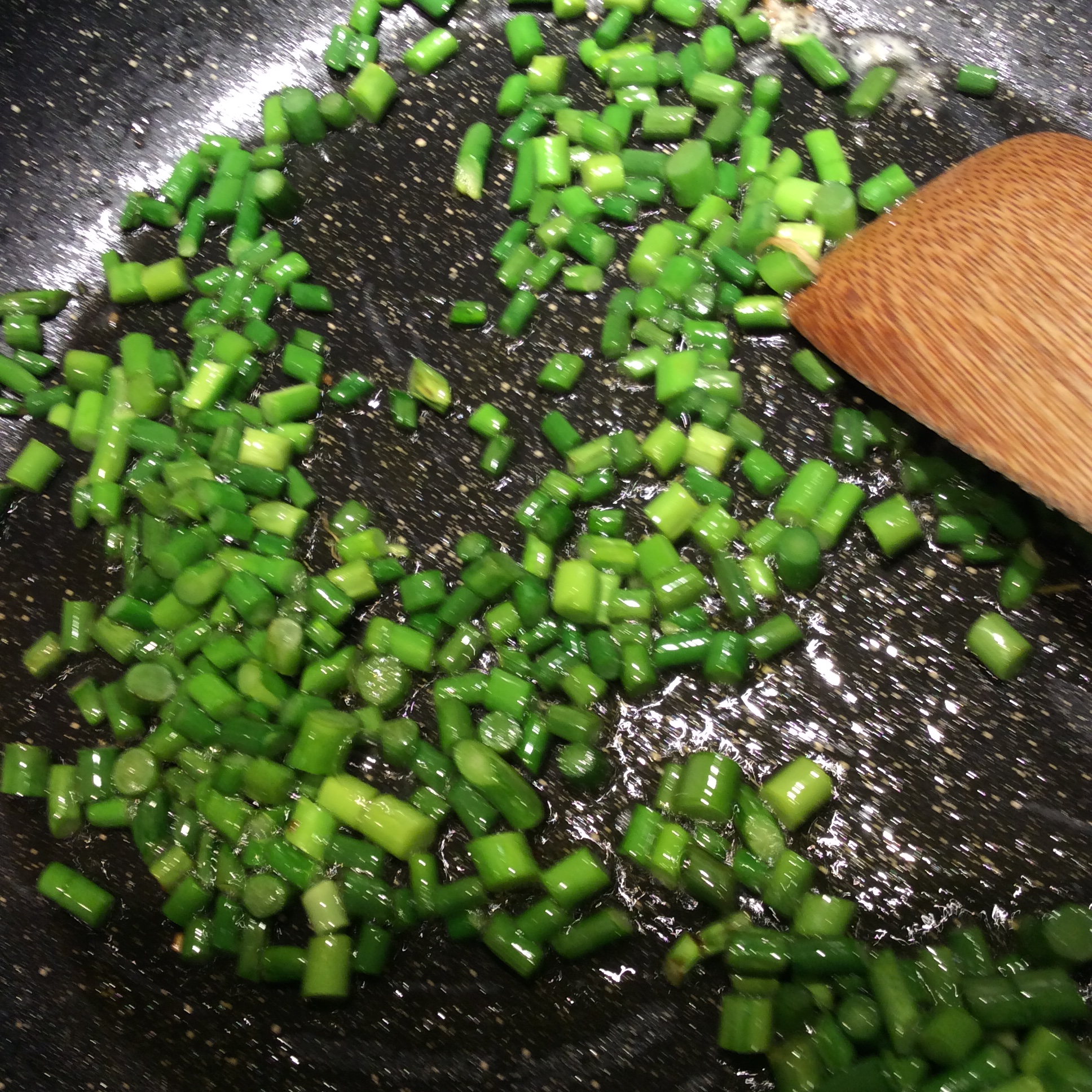
Heat a skillet ovet high heat and add the olive oil. Put in the chopped scapes, fry for about two minutes stirring frequently, reduce heat to medium, and cook until scapes are crisp-tender ( the best way to find out is to chew one.)

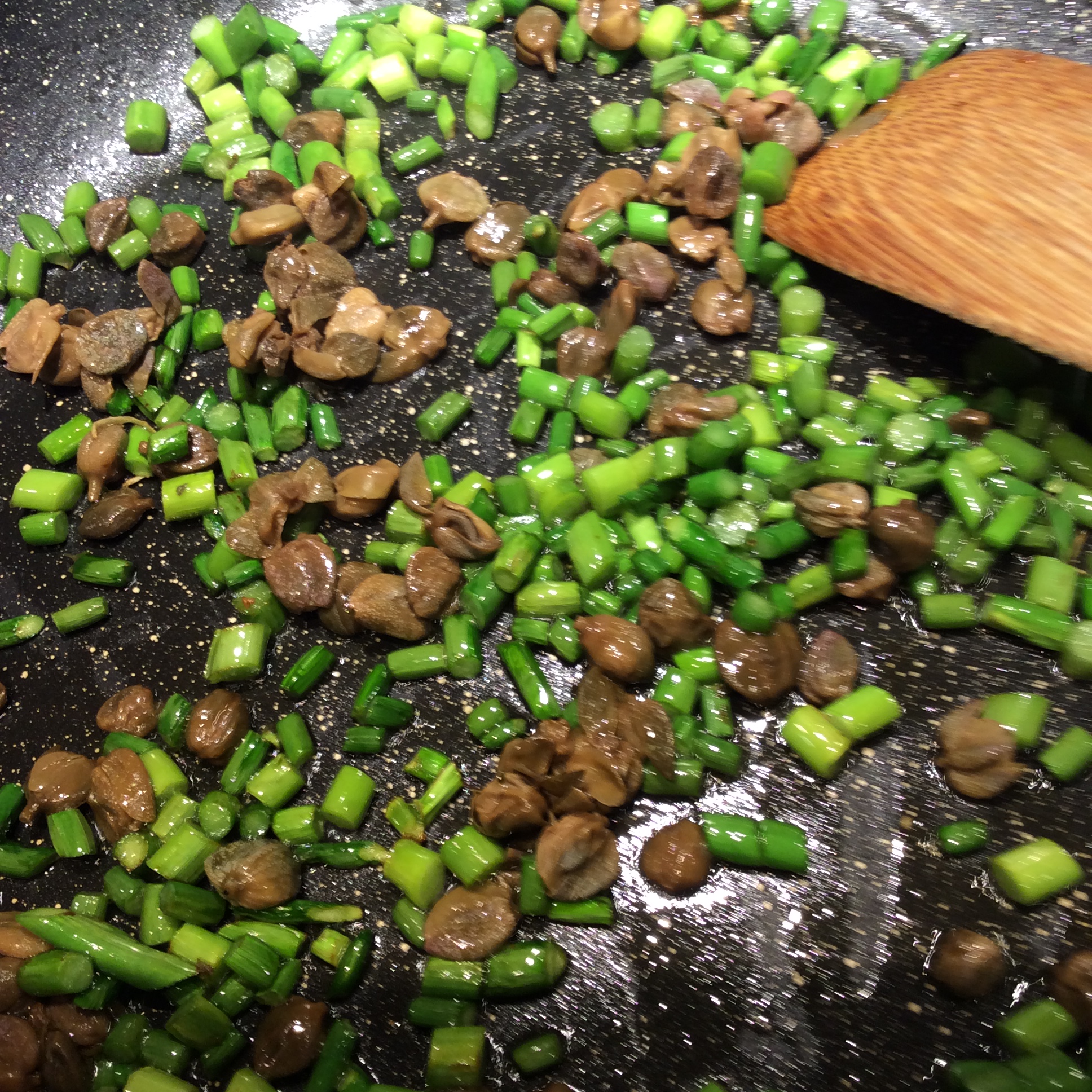
Add the squeezed-dry capers and cook until they look a bit dry and (ideally) a bit browned. Add the chopped garlic and the herbs, sauté just until the chopped garlic looks cooked, and add about 2 tablespoons of water and the veggies and chicken. Cook uncovered over medium-low heat, stirring and turning as needed, until heated through. There should be little to no water left, just seasoned oil full of delicious bits that can be spooned over the chicken and veggies. Serve with freshly ground pepper, but taste before adding salt, because of the capers and the pre-cooked ingredients.

I have already talked about garlic and garlic scapes at length, so this a good time to talk about capers for a minute. I consider them an essential kitchen staple and my favorites come from Morocco, but they are absurdly expensive, so feel free to buy something much more reasonable. The tiny nonpareil capers are often marketed as the best, but I don’t like them except as a garnish on smoked salmon and generally prefer the largest and most herbaceous that I can find. If salted, rinse the salt off, soak in water to cover for 20 minutes, and squeeze dry. If brined, rinse the brine off thoroughly, soak in hot water for a few minutes, and squeeze dry. There is currently a lot of silly snobbery about brined capers, but they can be delicious and are far preferable to tasteless or oversalted dry capers. I eat capers all summer and try to keep a handful, already soaked and squeezed, ready wrapped in a square of plastic wrap in the refrigerator. They’re astoundingly rich in quercetin, if that’s important to you, and they taste like essence of summer.