Archive for the ‘farmers market’ Category

Kitchen Staples: notes on staples and specialty ingredients


I’ve been in the habit of referring readers to my website for more information on the seasonings that I use and the ingredients that I don’t grow at home, but at this point it seems to make more sense to make the blog more independent. Therefore, here are some random jottings on what I keep in my kitchen and why.

Vegetables: Veggies are a primary and prime staple! During the growing season, I cook with what’s ready, but often I’m tired out by dinner and don’t want to spend more time picking, so I try to harvest and prep vegetables in the morning so that they’re ready in the refrigerator and can be prepared with little trouble. When I buy vegetables, I try to wash and trim them right away so that they’re near-instant gratification at dinnertime. Salad greens are soaked clean, rinsed twice, and stored in a large salad spinner-crisper. I try to think of vegetables first, meat or grain second, when planning meals. When I know that something is ripening, for example the first of eight broccoli heads is nearly ready to pick, I brush up on interesting recipes then, not a week later an hour before dinner when I’ve got three heads of broccoli in the refrigerator.

Meat: here in Albuquerque, I get most of my beef, fish, and lamb from the Fishhuggers, an energetic local couple who sell their family’s grassfed beef and lamb and the Alaskan salmon that Kenny catches every summer. Their meat is 100% grassfed, and unlike many grassfed operations, their meat is not overly lean and tough. Cooking grassfed meat is different, and I recommend getting some advice from them. Generally it cooks a lot faster than grain-fed meat and you have to get it off the grill promptly to keep it rare and tender. I get all my chicken from the Pollo Real people at the Santa Fe Farmers’ Market. Their chicken is fed some grain but is raised on pasture. It’s healthier for the chickens and for you, and also it tastes like real chicken. I don’t know of a reliable local source for pasture-raised pork, so I get mine from the James Ranch people in Durango. Again, with regard to sustainability and health benefits, you can use the sources of info mentioned in “butter and Dairy” above. Most of the meat mentioned above comes frozen. If you want to buy fresh, be aware that “grass-fed” is not a legally controlled designation and there is a lot of meat in the meat cases around town labelled “grass-fed” that isn’t. One producer even told me that his meat was grass-fed “but I just finish them on grain for a month. That’s still grass-fed.” That isn’t grass-fed, and a well-designed study has indicated that the Omega3 content falls very rapidly during even a brief period of grain-finishing, eliminating the health benefits that you are paying for as well as the environmental benefits. I would only buy from a farmer that I knew personally and trusted. If in doubt, ask to visit the farm.

Butter and cheese: for the sake of the planet and the cows, I eat only pastured butter. The very best that I know of is from Pasturelands in MInnesota, and is 100% grass-fed, no grain supplementation, which makes it unique in the market. It comes frozen in styrofoam shippers, and they include a prepaid label so that you can send the empty shipping carton back and have it reused. I keep it in the freezer for up to a few months. They also offer 100% grass-fed cheeses. I especially like their mild Cheddar for snacking, and then they have complex cave-aged cheeses for special occasions. Why does 100% grass-fed matter? For quick info you can check out the Eat Wild site, or you can take more time and read The Omnivore’s Dilemma, still the best book on ethical eating that I know of and far above later books on the subject (including, unfortunately, Pollan’s own later books.) I wish that there were a local producer of 100% grassfed dairy products, but until there is, I’ll buy by mail.

Parmesan: I am giving this imported cheese its own heading because there is no worthy substitute for the genuine Italian article. It’s worth buying the best that you can find. Discount stores like Trader Joe’s or Sam’s Club carry imported Italian Parmesan, but the quality is quite poor compared to really good Parmesan, and most domestic and Argentinian imitations that I’ve tasted have been appalling. Nobody will be more thrilled than me if American producers come up with a truly great Parmesan, but I would argue that it hasn’t happened yet. If you buy the good stuff, your pastas will benefit, and because the flavor is so pronounced you can use it the way the Italians do, ie sparingly. Pastas in America are too often oversauced and overcheesed. You’re supposed to be able to taste the pasta.

Capers: There is no question about salt-cured capers being the best. I’ve seldom met a caper I didn’t like, but my favorites are the “Wild Mountain Capers” that I get at The Spanish Table in Santa Fe. They are fearfully expensive but they have a wonderful herbaceous flavor and are less salty than other kinds. I buy them in 1 pound jars. When you are ready to use them, rinse off the surface salt and soak in cold water to cover for an hour, then drain and squeeze dry. In the summer I use capers so much during the summer that I often soak some when I’m working in the kitchen, squeeze dry, and pack them tightly in little plastic containers to use on the spur of the moment. They will keep 2-3 days this way, and they keep indefinitely in their salted state.

Anchovies: There is no better seasoning than anchovy for giving a meaty complexity and richness with minimal use of actual flesh. One or two fillets can give a complex undertone that can’t be identified as “fish” but which greatly improves the dish. I use tiny amounts in a wide variety of dishes. Salt-cured are the best if they are the lovely meaty specimens that you find in Italy, and in a very few specialty food stores in this country. Food “experts” frequently recommend the 1KG cans of salted anchovies that are readily available in the US, which makes me think that they themselves have never opened such a can to find the scads of teensy fish with no fillets to speak of that they contain. My experiments with those cans have been very disappointing, and I now use anchovy fillets packed in olive oil instead. Another product that I would never be without is colatura, an Italian “anchovy essence” of the highest quality. It is something like Asian fish sauce but darker, more complex, and richer in flavor. Zingerman’s has it. I don’t know of a local source.

Wine: all I will emphasize here is that if you cook with wine, it has to be good wine. If you wouldn’t drink it or serve it, don’t cook with it.

Eggs: I have my own laying flock now, but there are several people at the various local farmers’ markets who have real free-range eggs, not the ersatz kind that come from large producers. Be sure to save your egg cartons and take them back to the people who sell eggs. The growers are always glad to get them back, because they aren’t cheap, and reuse always beats recycling.

Olive oil: I’m sometimes shocked at how much of it I use in a couple of months. It loses flavor slowly but steadily in the bottle, so don’t buy more than you can use up in a few months, store it in a dark place, and buy from good sources where it isn’t displayed in a light hot place. Find a few kinds that you like. The easiest way to find out what you like is to taste a lot of them, and the most convenient way to get started is to go to The Spanish Table in Santa Fe, where knowledgable employees will offer you samples of oils that you are interested in. Or just let them surprise you. I try to keep a couple of very flavorful oils on hand for salads, and some less intense but much less costly oil for cooking.

Charcuterie: The excellent products of La Quercia last a long time when wrapped properly and refrigerated, and they are scrupulous about using humanely raised pigs. The prosciutto rosso is superb. I have not tasted any Italian prosciutto that was better, and no domestic product has been anywhere near as good. They also have a less expensive grade called Americano, and it’s very good, although it lacks the subtlety and finesse of the rosso. Their guancialle is a good staple to have around, and has been the start of about a zillion delicious pasta sauces in my home. For Spanish cooking I keep some Spanish chorizo around. This is a dry cured sausage, nothing like the fresh uncased chorizo found in Mexican groceries.

Herbs: I strongly recommend growing your own, even if you don’t grow anything else. The presence of fresh organic thyme, winter savory, sage, rosemary, basil, and parsley will inspire you to cook. They are easy to grow, and in our sun-drenched area will survive in partial shade if necessary. Having big pots of them around invites frequent use. I advise getting the culinary classic Simple French Food by Richard Olney and reading his notes on use of herbs. These are very strong flavors, and using them at random invites a muddled result. Once you have used them for a while, it’s second nature to create a balanced taste.

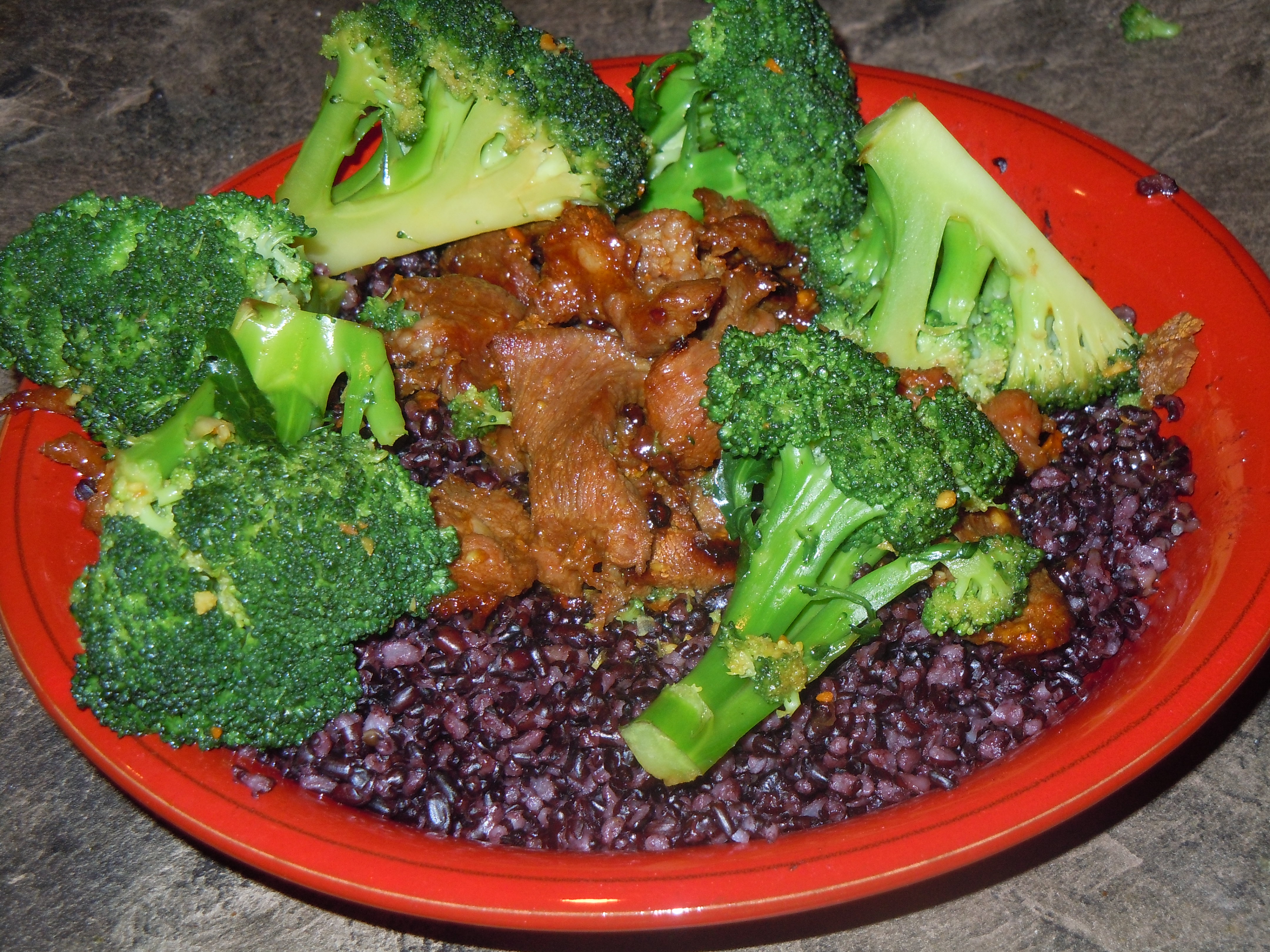
Grains: I like to have coarse bulgur, size 2, on hand because it cooks up with a more interesting texture than the finer grades that “gourmet” groceries tend to sell. Local readers here in Albuquerque can get it at Cafe’ Istanbul. Elsewhere, check your local Middle Eastern food source. I keep organic jasmine rice on hand at all times for Thai-influenced meals. I have never been able to take to brown rice, so I use white. I do love to use forbidden rice (black rice) on occasion. As you see above, it makes a dramatic deep-purple backdrop for bright green vegetables. I keep yellow, blue, and purple cornmeal. For baking, I always have coconut flour on hand to supplement white-flour products with a dose of fiber that doesn’t ruin the flavor. It’s tricky to work with at first, but as you learn its quirks it becomes easy to add fiber to your baked goods to improve the glycemic index. Coconut flour doesn’t ruin the color the way grain brans do.

Legumes: I cook these in my solar cooker and freeze them in containers. But if inspiration strikes shortly before dinner, a frozen block is daunting to approach, so I keep a few cans of beans and chickpeas on hand for the last-minute ideas.
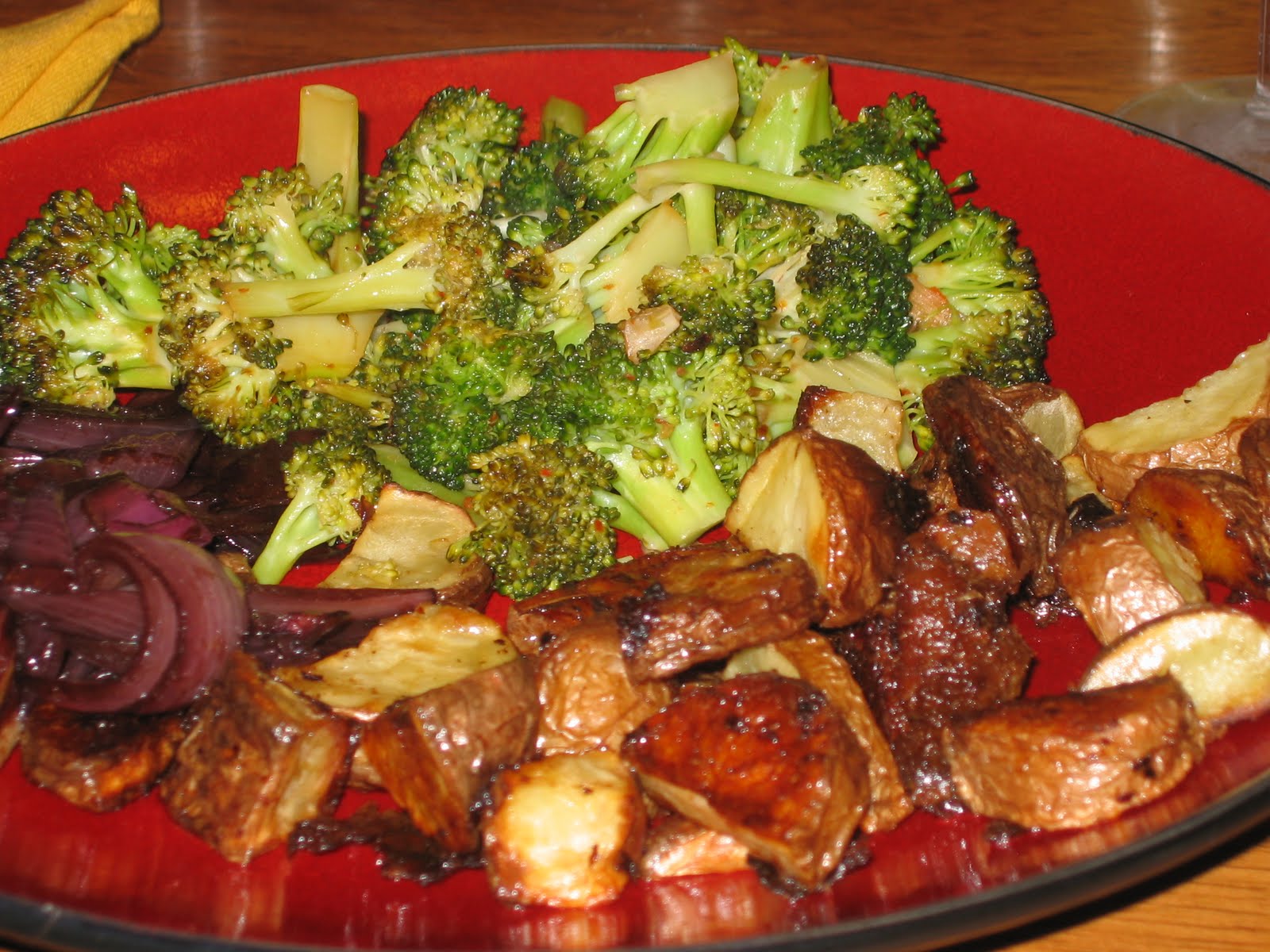
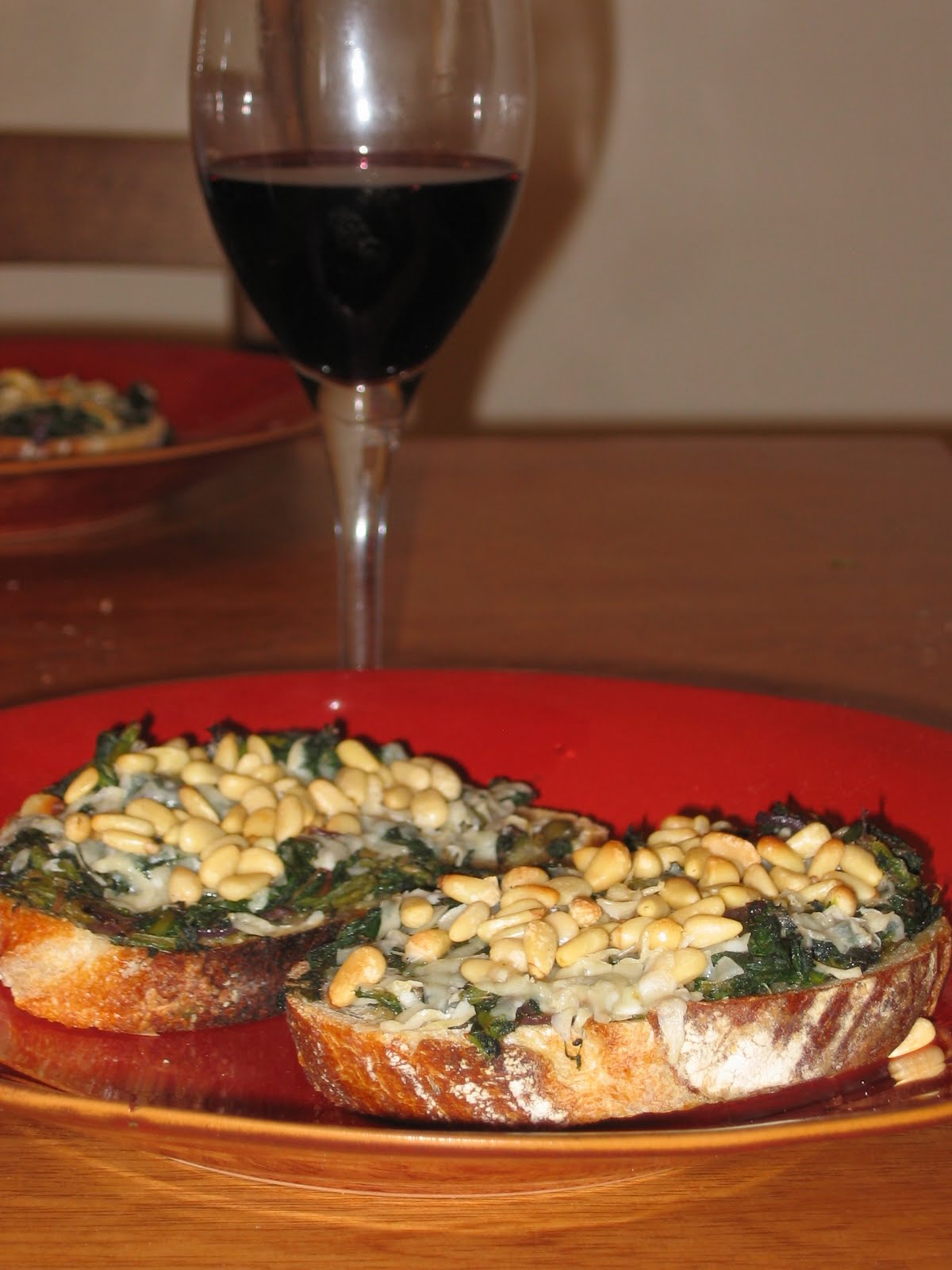
Vegetable dinners: Starting the new year


Recently a reader contacted me about how to transition to a diet of “all real food.” Expense and time were real concerns for him, as they are for most of us.  Well, there’s no question that if you’ve been eating a lot of convenience and supermarket food, real food is likely to be more expensive. You will be making more things from scratch, so it will take more time, too. So my first piece of advice is: don’t make a New Year’s resolution to change your whole diet. I am very mistrustful of New Year’s resolutions; in fact I am mistrustful of any statement that anyone is going to make sudden sweeping changes in their way of being in the world and maintain those changes over time. Personally, my transition in food and lifestyle took place over years, with one step building on the previous ones, and no one change so huge that I couldn’t maintain it until it became a habit.
So here’s how I would approach this change: eat more vegetables. Fill your plate with them. Twice a week or so, make two or three simple vegetable dishes for dinner, and don’t have any meat available. On the other nights, offer a small amount of meat and lots of vegetables. A loaf of good bread is a great way to center the table for all-vegetable dinners, and at first you can buy the bread and transition to home-baked later on if you want to. Heat the bread up and have butter or olive oil available to make it festive. Let your vegetable meal be a celebration. Learn a few simple whole-grain dishes and use them as “grounding and centering” dishes to offer some variety from bread. Don’t forget vegetable pasta dishes, which are delicious and appeal to kids. Buy your vegetables wherever you usually shop, and learn to cook them in ways that taste really good. Notice that at this first stage you do not torment yourself by trying to grow all your own food, eat local only, or eat organic only. You just cook the veggies that are readily available to you in ways that work for you. Pay special attention to learning to cook leafy greens in ways that you really like. They are abundantly good for your health, and if you take up gardening later on, they are among the easiest things to grow, but they are also the most likely to sit in the garden unused if you don’t have your kitchen techniques down pat. When you and your family are used to eating lots of vegetables, you can add more whole-grain dishes, or go organic, or shop at the farmers’ market when possible.

If you make this your first step toward a whole-foods diet, you won’t save much money initially because CAFO meat at the supermarket is cheap, but you won’t spend more than usual. Invest a very little bit of money in a really good vegetable cookbook; a wonderful and inexpensive one is Fast, Fresh, and Green by Susie Middleton. Check out my “vegetable dinners” category, too.

When you and your family are really loving your veggies and you can turn out vegetable dishes smoothly and without kitchen trauma, and plates heavy with vegetables look just right to you, take the next step. Enlist your family in deciding what the next step will be. If you use a lot of dairy products, organic dairy might be a good step. Or consider a backyard garden, or a farmers’ market excursion once a week in season, or more whole grains, or whatever. Bear in mind that truly ethical meats are going to be expensive, and if you just substitute them for the supermarket kind in the amounts you are used to eating, you are in for a nasty surprise when you add up the bills. I don’t suggest changing to them until you have formed the habit of eating small amounts of meat and making veggies the biggest part of your meal.
Don’t forget breakfast. Cook a pot of wild rice or red quinoa ahead of time and heat up enough for breakfast, topping it with some butter and maple syrup or honey. This is a treat even for people who don’t like “health” foods.

I don’t believe that negative energy is ever very helpful. Don’t berate yourself for the things you aren’t doing, just be appreciative of the positive changes that you’re making. If you need to pick up a quart of milk at the convenience store some night, don’t go crazy over it. If unexpected events change your life for a while, respond to them as needed, and then go back to your new way. Somewhere along the way, read or reread The Omnivore’s Dilemma, still head and shoulders above other books about factory-farming systems and, in my view, much better than Pollan’s subsequent books at helping you remember why you are making these changes. Love your food, and enjoy your mealtimes, and step will follow naturally on step. Have fun, and happy New Year!

Root vegetables Chairoscuro


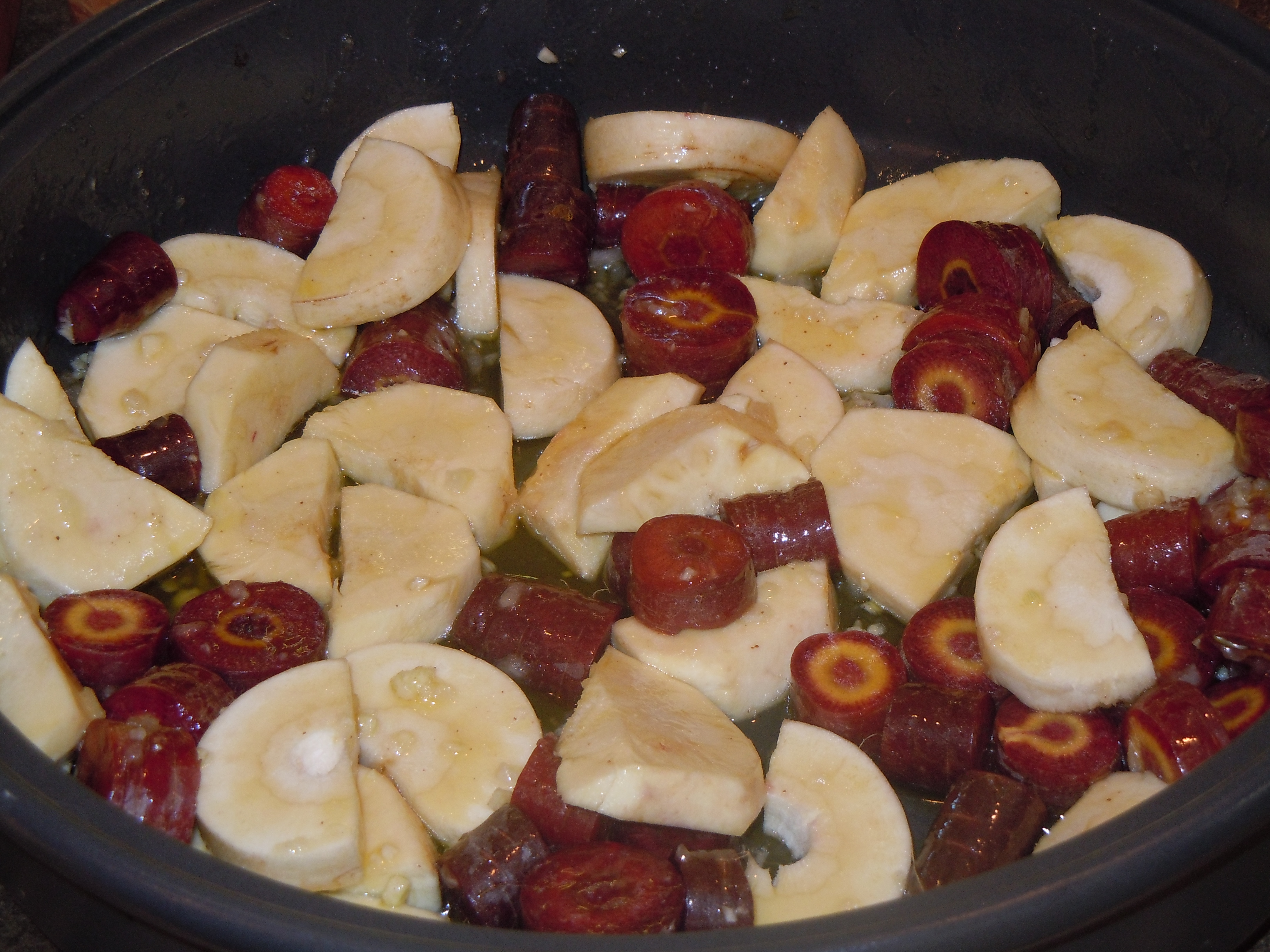
This time of year, parsnips are your friends. They are sitting patiently out in the garden waiting for you to get to them, never demanding any special attention or winter storage. During hot weather they weren’t worth eating and you tended to forget about them, but while you were catering to the flighty tomatoes and peppers, they were biding their time. When the needier vegetables gave in to the frosts, they started to convert their stored starches to sugars. Now, whenever you can pry them out of the cold ground, they’re ready to meet you halfway with a sweet flavor that repays your labor. I love them roasted, but for whatever reason I’m not big on white vegetables, and I started looking for something to relieve their snowy monotony. Finally I settled on their visual opposite, the deep purple carrots that become almost black when roasted, to create a dish with a little drama.
Clean two big parsnips and cut them into chunks no more than an inch on any side. Thoroughly scrub 3 large purple carrots and cut them into chunks somewhat smaller than the parsnips. Combine a quarter cup of good olive oil, a few tablespoons of white wine, half a teaspoon of salt or to taste, and two cloves of chopped garlic. Now this part is important: Put the carrots and the parsnips in two separate bowls and toss each with half the olive oil mixture. Don’t toss them together, because the carrots will “bleed” and stain the parsnips an unattractive magenta in places. If you are using regular orange carrots, separation doesn’t matter. Put the pieces in a cazuela big enough to hold them in one layer, or use a 9X13 heavy pan lined with parchment paper. Roast at 325. Don’t toss them around during roasting, because of the staining problem from the anthocyanins in purple carrots. The timing will vary a lot depending on the tender/tough ratio of the roots and on your personal taste. I like winter root vegetables roasted until they are soft and well caramelized, and it usually takes close to 2 hours at this low heat. If you like yours with some crunch you can stop cooking them sooner, but taste them before turning the oven off. These are not the tender roots of summer, they’re big meaty winter roots, and you may not like the amount of crunch they retain. If necessary, cook longer. Sprinkle a little bit of minced parsley over the top. If you want to be sure they’re done in time for dinner, cook them a little earlier in the day and leave them slightly underdone, then return to the oven for a final 20 minutes before dinner.

A big serving of these “white and black” roots on a red plate makes a great main course with a little piece of something meaty in the center. A few thighs of good pastured chicken seasoned with thyme, garlic, and olive oil can be roasted in the same oven for the last hour or so of cooking and will accent the roots nicely without overwhelming their flavors.

Kitchen Staples: Squash, and further notes on squash varieties


Since reading Carol Deppe’s book The Resilient Gardener, I’ve been thinking more about growing things that are staples rather than side dishes. This does not require that I change what I grow. I need to think in terms of putting my vegetables at the center of the plate rather than letting the “side dish” mentality sneak in. Winter squash is a filling, substantial staple and can easily be the centerpiece of a meal.
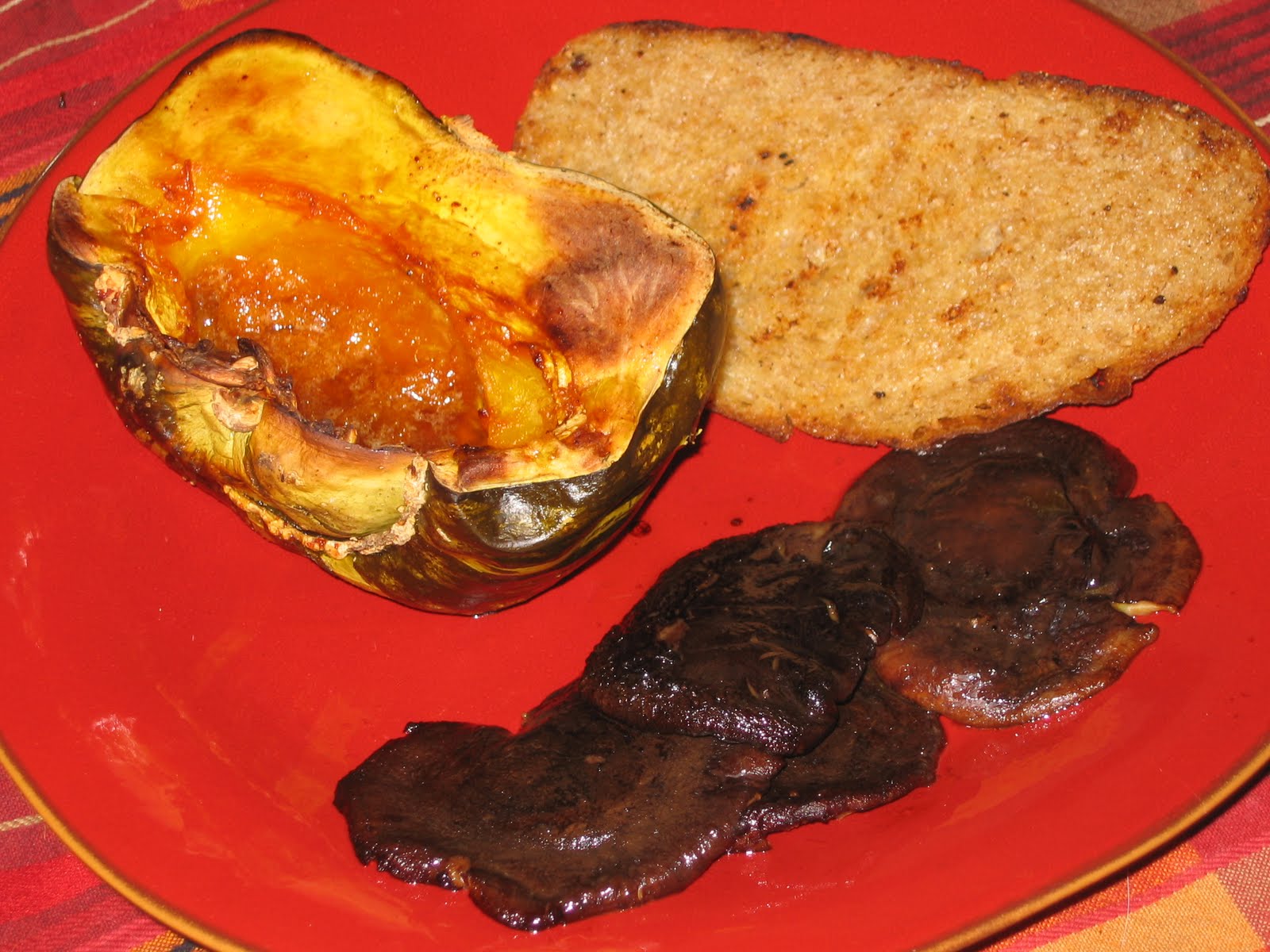
In my opinion, roasting is by far the best way to bring out the flavor of squash. It keeps wonderfully in the refrigerator for a few days once roasted, and can also be mashed, packed tightly into containers, and frozen for later use. Once properly roasted, it can be made into ravioli or lasagna fillings, form the basis of hearty soups, or just be reheated later to eat out of the shell, so I roast plenty at a time. If roasting smaller squash, I cook several, so that the oven heat is efficiently utilized, or I put them on the bottom shelf of the oven when roasting something else. I love to put maple syrup or agave nectar, a pat of butter, and a pinch of salt in the cavity if I will be eating the squash straight, but if I might use it for something else like lasagna or ravioli or one of the impromptu dishes below, I just rub the cut surfaces with olive oil and salt before roasting. In the picture above, a roasted Kukuza half dominates the plate, with a few grilled mushrooms brushed with oil and soy for a meaty touch and a slice of grilled bread with olive oil and garlic. THis is a great substantial meal to share with vegetarians and vegans, or with nearly anyone.

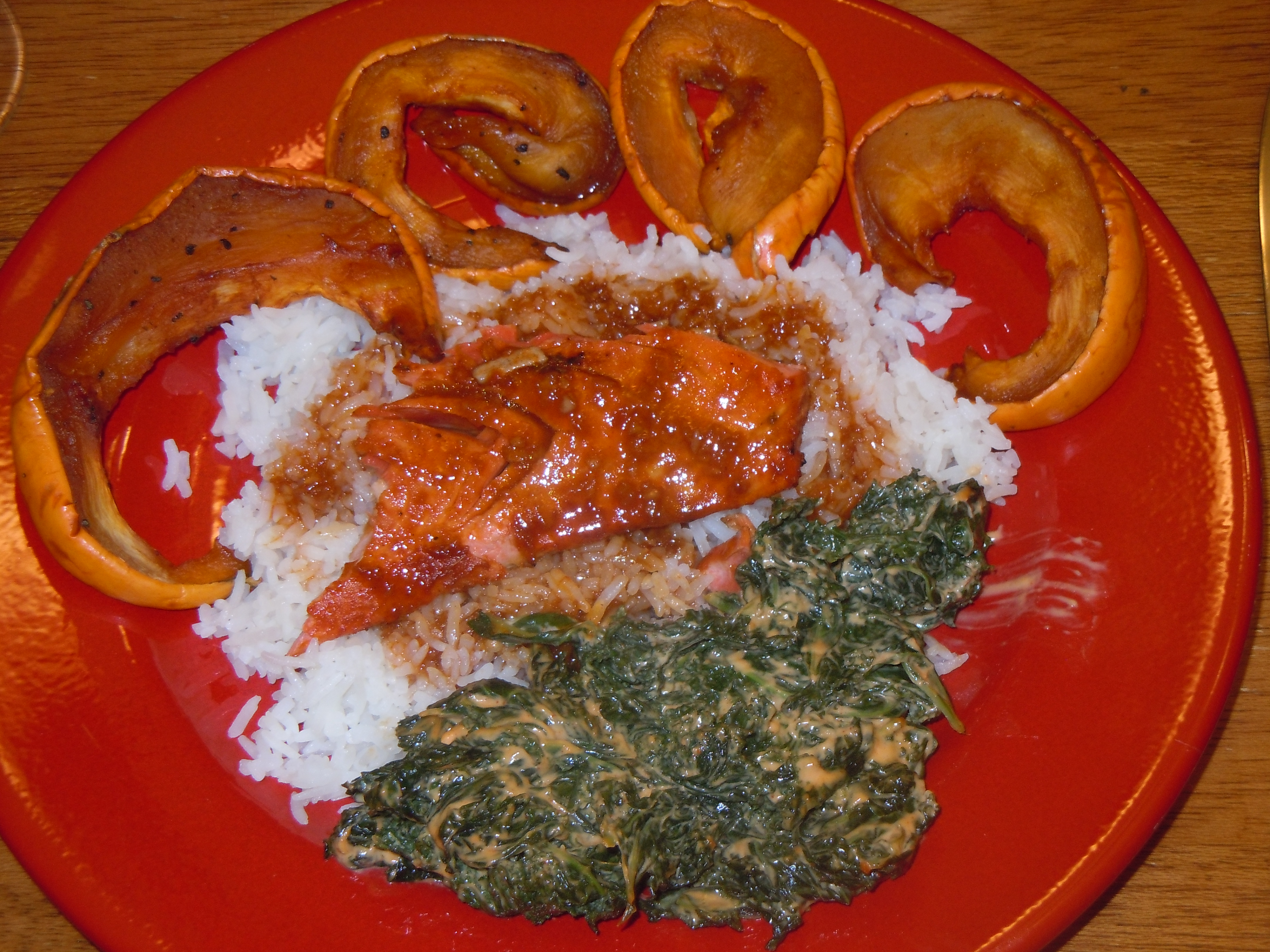
Here I cut a roasted squash half into thick slices, brushed lightly with soy sauce, chili oil, and roasted sesame oil, and broiled for a minute or two to accompany Asian flavors.

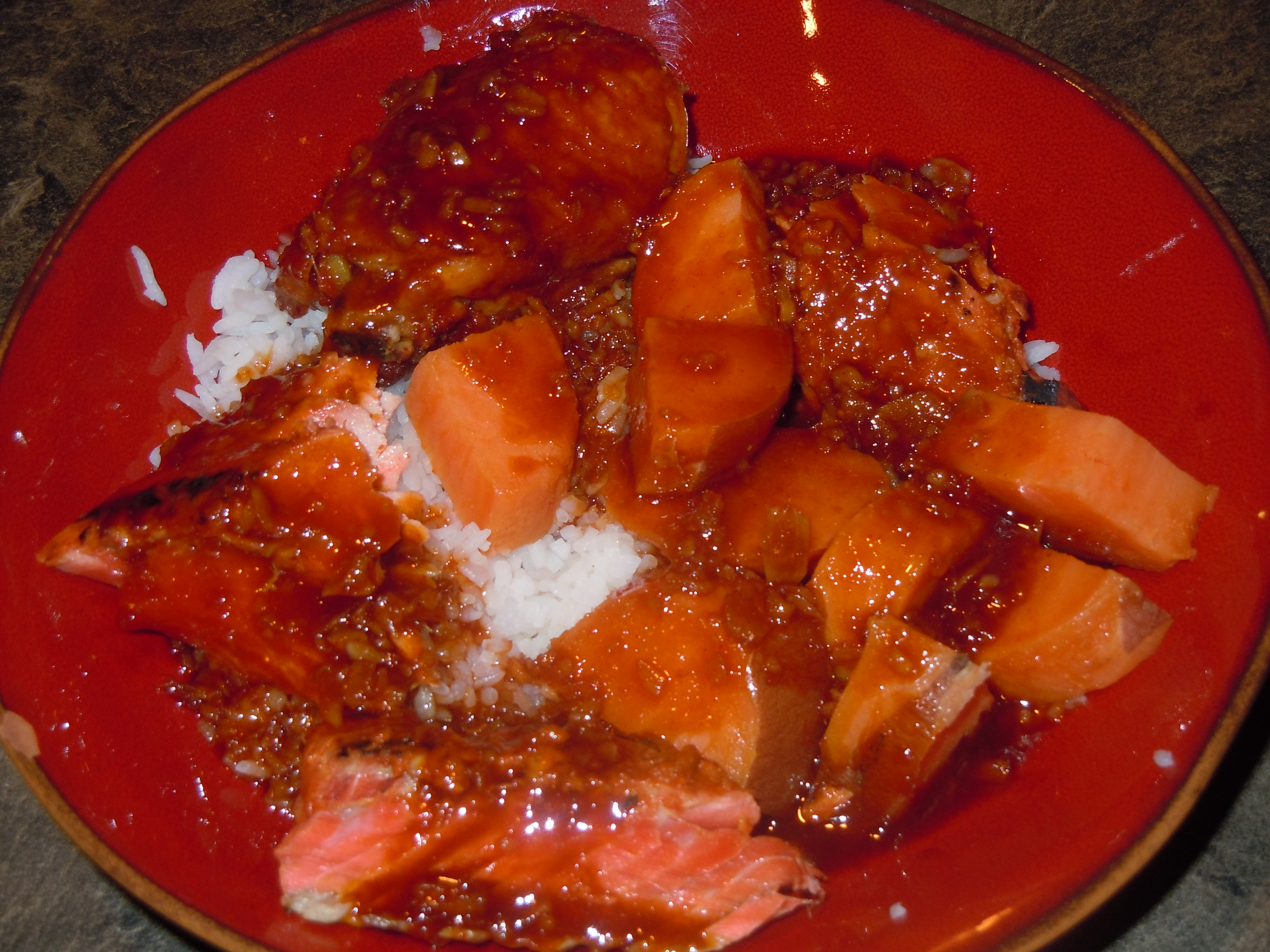
Here chunks of leftover roasted squash join a few chunks of leftover roasted salmon under a cheerfully colored Korean sauce. To make the sauce, chop up 2 cloves of garlic and a 1″ cube of peeled ginger. Heat a couple of tablespoons of oil in a small wok, and when the oil is hot throw in the chopped garlic and chile. As soon as the ginger fragrance comes up, about a minute, put in a tablespoon of gochujang and stir around madly for half a minute, then add half a cup of stock and 2-3 tablespoons of soy sauce. As soon as it comes to a boil, turn off the heat and add a teaspoon of dark sesame oil. Have ready a teaspoon of arrowroot dissolved in a tablespoon of water, and stir in. Let the sauce thicken briefly and serve over a bowl of rice topped with hot chunks of salmon and squash.
If you are going to think of squash as one of your winter staples, you need to find a squash that you can grow well and that you really enjoy eating. A few posts ago, I wrote about the immense harvest of squash that I grew this year because I planted only Cucurbita moschata varieties, which love hot weather and are resistant to squash borers. C. moschata types need a hot summer to do well, and we can certainly provide that here (they are less esteemed in cooler parts of the country). All squash need curing before you eat them in order to taste their best. Needs vary among varieties. In general, I let all squash ripen on the vine and don’t pick it until a frost is expected. Then I set it on shelves to cure. It will cure faster in warmer ambient temperatures but will hold longer in cool places, so I keep some in the house, and some in my cool but nonfreezing garage to eat later. I give the smaller squashes three weeks to cure, and the bigger ones 8 weeks before I sample the first specimen.
Even with the best treatment, squashes vary immensely in quality in flavor. My favorite C. moschata so far is a big turban-shaped beauty called Chiriman. It has moist but not watery flesh, no strings, and a lovely sweet-earthy flavor. The much smaller Kikuza is also delicious, and its small size may be preferable for some. Both are rather shy yielders, and Kikuza has rather thin flesh. Sucrine du berry yielded prolifically, and the flesh is very thick and is a dark and splendid orange-red, but the flavor is poor and the flesh is both stringy and watery, so most of the bounty is going to the chickens. I wrote to the seed company about my experience with it, and they sent back an excerpt from a gardening book explaining that winter squash needs to be vine-ripened and then cured for best flavor. Well, duh. Some squash just isn’t much good no matter how you raise it. If I ever get into hybridizing, though, I’m going to try some crosses of the prolific and bullet-proof Sucrine du berry with better-tasting C. moschatas. I still have splendid 20-lb specimens of Musque de Provence sitting around curing, but I won’t broach those until Christmas, so I’ll report on the flavor and texture after the holidays.
If you save your own seed, remember that squash of the same species interbreed wildly, so consult Ms. Deppe’s book or a good book on seed-saving to learn how to ensure squash that is true to type. It isn’t as easy as just “saving the best one for seed.”