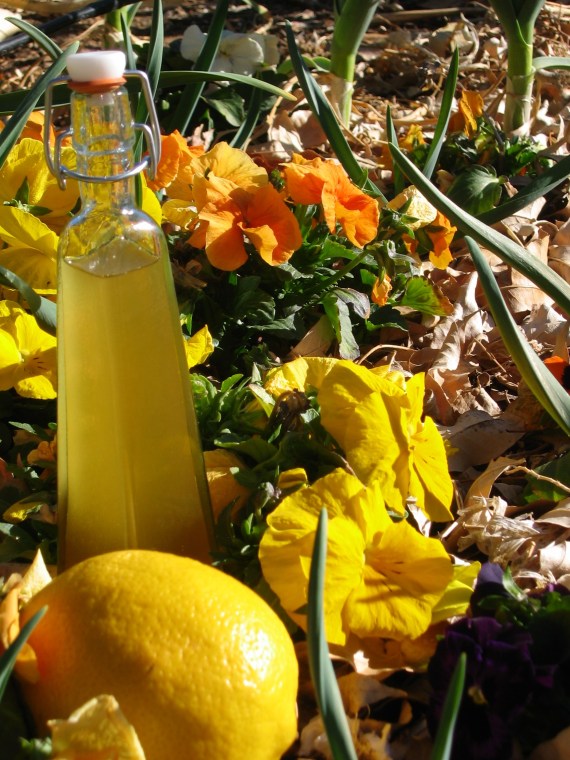
I recently returned from a conference in Tucson, where there were trees gloriously heavy with brilliant lemons and oranges. It set me thinking about the Ilalian liqueur Limoncello, which at its best is redolent of pure fresh lemons. Unfortunately, most of the versions that make it to America taste a bit artificial. It’s quite common for Italians to make it at home, and I started looking for a recipe. As often happens, most of the easily located recipes online were copied from one source, and used only the peel and not the juice. After looking further, I ended up doing it this way:
Obtain ten fresh juicy organic lemons. With a very sharp paring knife, peel the zest off in strips, carefully avoiding the white layer underneath. Probably it would also work to grate the zest off, but I haven’t tried that. Put the zest in a large jar (I used a half-gallon jar) and add the strained juice of five of the lemons,
2 1/2 cups good vodka, and 1 1/2 cups sugar. Stir it around to start the sugar dissolving, but it won’t finish dissolving for days, so don’t worry. Let steep for one week, stirring daily. Taste it for sweetness, and adda little more sugar if needed. Let it sit two or three more days. Then strain carefully, pour into decorative bottles, and store in the refrigerator. Since it’s never boiled and contains fresh juice, it won’t keep as well as the commercial stuff. Serve well chilled in tiny glasses.
Addendum:shortly after I posted this, I received a comment which led me to a fascinating site, limoncelloquest.com. I recommend that anyone with an interest in the subject check out this quirky and fascinating site.
Archive for the ‘cooking’ Category
1 Mar
Lemons, limoncello, and springtime
22 Feb
The Sensuous Carrot
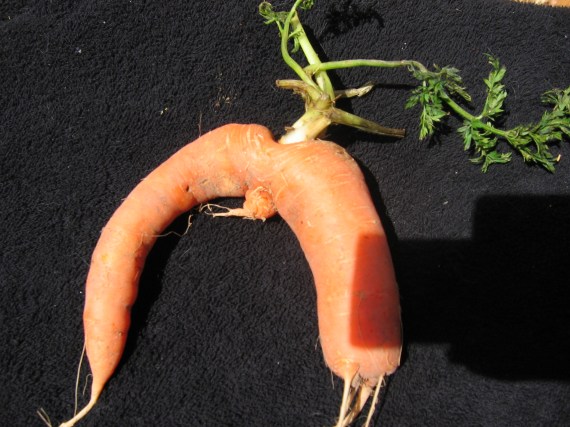
In the relatively mild central New Mexico climate, I leave my carrots in the ground all winter and dig them whenever the ground is thawed enough to get a shovel into. The area that I find it convenient to grow carrots in has some stones, and sometimes the roots hit the stones and are induced to grow in peculiar ways. I offer this piece of natural carrot art without further comment.
11 Feb
Mushrooms: cleaning up the waste
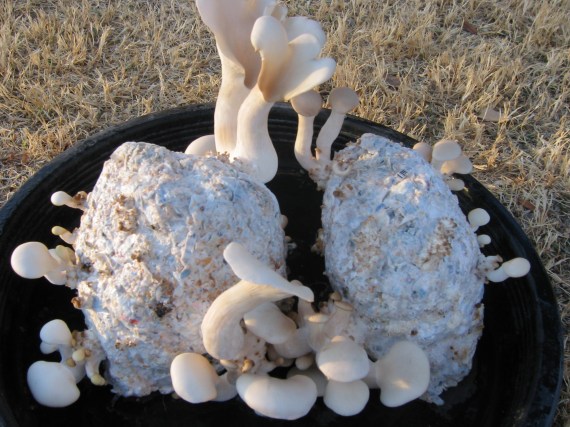
One of my Christmas treats was a kit for growing oyster mushrooms. It came from Fungi Perfecti, and it consisted of a log of mycelium-impregnated straw that needed to be covered with a plastic-bag humidity tent and misted a few times a day. It produced oyster mushrooms in a responsible fashion, and you can see its portrait at the end of this post; click below to read and see the rest. Far more interesting, though, was growing oyster mushrooms from spawn. The spawn can be ordered from them or from other suppliers and used to inoculate mediums chosen by you (with guidance from the experts). The recommendation is to grow them in coffee grounds (start saving them in a bag in the freezer) but I grew the ones that you see above in shredded waste paper and am very excited about the results.
Click here for directions!
5 Feb
Foraging: wild mustard
Right now, the wild mustard is free for the picking in our region. I find it in unexpected places in my yard, including the middle of the lawn, and along acequias closer to the river. Needless to say, you don’t want to pick any that’s growing where it’s exposed to walking dogs, or where chemical spraying may have taken place.
When the weather is still very cold and the wild mustard is still young, it’s a great green to spice up a salad, adding a wasabi-like heat when combined with milder greens. Taste it, and if it’s too hot for salads cook it, which lowers the heat. I love to mix it with spinach, chard, or other mild greens about half and half: saute’ some chopped garlic in olive oil in a skillet, add the well-washed greens and a couple of tablespoons of raisins, and braise over medium heat until done. Garnish with toasted pine nuts, and eat.
These potent, highly flavorful greens were the “spring tonic” of our ancesters, and today we still need those vitamins, minerals, and antioxidants. We may not be recovering from a winter without fresh vegetables, but we still need the connection with the awakening earth that its first green shoots can provide. If you were thinking ahead last fall, you made sure to have plenty of herbs, and now you can sprinkle your cooked greens with the shoots of parsley and fennel that are coming up from last year’s plants. They’ll shoot to seed soon, so use them up now.
 My urban homestead