
While in Florence on my honeymoon many years ago I learned to love mostarda di Cremona, the sweet tangy mustardy fruit condiment. I bought a bulk kilo, hauled it home, and for many years enjoyed it with all kinds of things. Then I developed blood sugar problems and changed to a ketogenic diet and such treats were off my list of possibilities. Continue reading
Archive for the ‘cooking’ Category
9 Aug
The Oyster of the Woods
There is nothing more interesting than mushrooms. Really. An independent kingdom of organisms, they have much in common with animals and their interactions with plants are complex and often beneficial. For a wonderful read about mushrooms and their biological role, check out Paul Stamets’s Mycelium Running, and you will be wonderstruck at the hypheal hijinks going on all around you.
They are extremely easy to grow for everyone but me. I am convinced that mushrooms have a very important role to play in a functioning urban homestead, even here in the high desert. So far, however, I have been unable to make that work out in practice. I have tried spreading the spawn among existing plantings under heavy straw mulches, and putting the spawn in piles of hard wood chips, and so far have not had any significant success, due to lack of consistent moisture, lack of shade, dry air, and insufficient attention. I have harvested a few mushrooms, but nothing to write home about. That is why the below images below are borrowed, to show how easily it can be done in moister climates than mine.
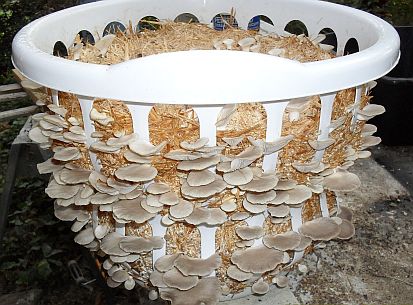
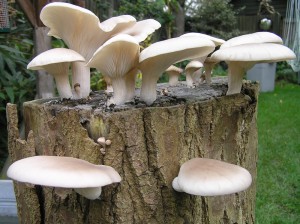
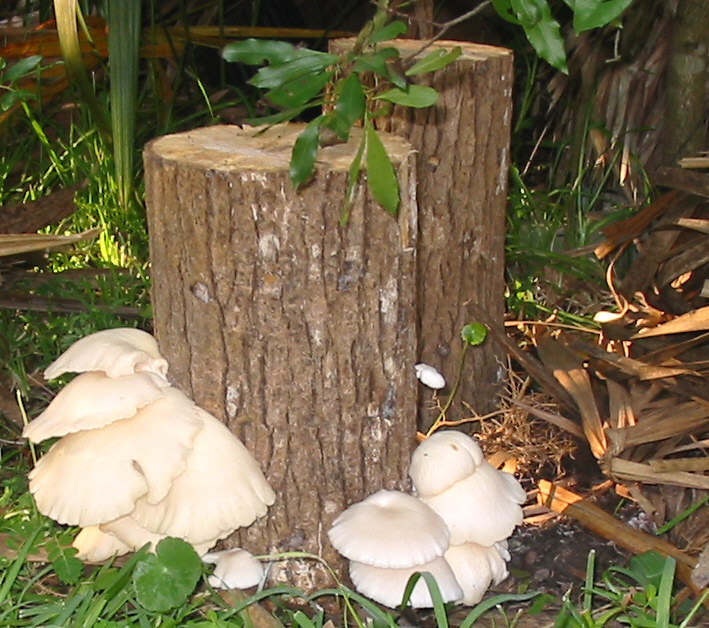
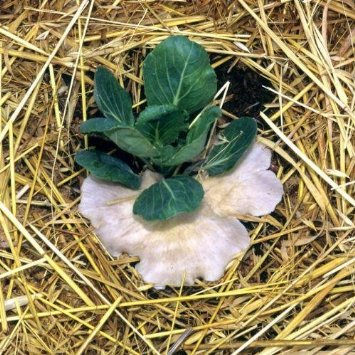
.
Since I have finally accepted that it’s going to take more focus than just throwing some spawn around, my next attempt will be to insert plug spawn into damp hay bales in the dense shade of my black locust tree. I have also cut down a small Siberian elm recently and have a few pieces of suitable fresh log to try drilling plug spawn into. Next August I will harvest them, or not.
Meanwhile, many farmers’ markets have a mushroom farmer or two, and oysters can be found in our river bosque here and in many woods and forests if you are a knowledgable forager and know exactly what you are picking. Mushroom foraging is not for you unless you are prepared to study it seriously and know all your local toxics. No margin for error here.
However you get hold of them, good oyster mushrooms are just delicious. I love their earthy-almondy aroma and their meaty texture. I like them best simply pan-fried with a little macadamia oil and salt, but roasting them with a bit of butter and soy is awfully good, and so is grilling them rubbed with olive oil. The addition of a little chicken glacé early in the cooking stage so that it can cook into the caps suits their meaty flavor.
For preserving, I roast them with macadamia oil and salt just to the point that they are cooked through, cool them, bag, and freeze. When wanted, they can be thawed and pan-grilled until they get some lovely brown crunchy bits. I dehydrate the clean stems as long as they’re not buggy and grind them into oyster flour to thicken mushroom sauces and soups. I admit that I also open my little bag of oyster flour just to inhale deeply and recall the woods where I found them.
Yesterday I found that I had tossed more caps with macadamia oil and salt than would fit in my roasting pans, and stuck the surplus in the dehydrator. They emerged as delicious crunchy lightly browned Oyster Crackers. Yum. I will make more of those. A small pan-grilled cap on an Oyster Cracker would make a wonderful cook’s treat. In fact, a couple of them with nothing on top made a great cook’s treat…
8 Aug
Chicken Glacé Pulls It All Together
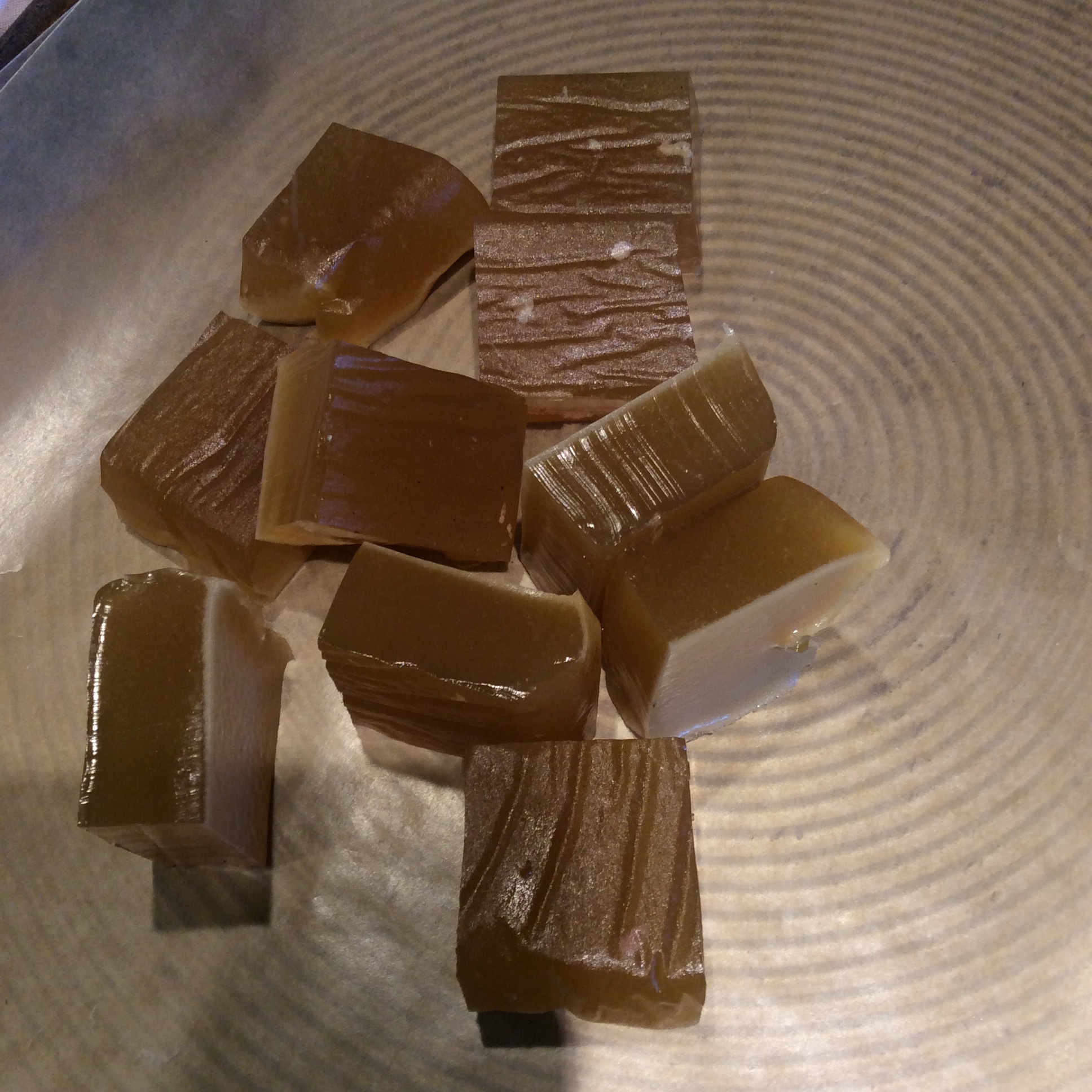
At about age 20, in a marvelous cookbook called The Supper of the Lamb, I learned about glacé de viand. I am still making it decades later, because it works kitchen magic and there is no commercial substitute. Think of it as a boullion cube that died and went to heaven. Rather than giving a nasty chemical edge to your sauce, it lends a subtle fullness and richness and pulls together any flavors that you care to add or elevates simple wine and cream and pan deglazing to an artful dish.
The principle could not be simpler. Make a big pot of excellent stock, then cook it down into a thick syrup that gels hard when put in the refrigerator. Cut your pure meat gelatine into cubes, freeze them until you need them, and throw one in every time you make a pan gravy, or cook anything where concentrated wonderful meat juice would be a good addition. You can also make it with roasted beef or veal bones to go in meat dishes.
In recent years I have been able to make my broth out of my old laying hens, and there is no good substitute for a really old hen full of omega-3s and collagen from a long and well-fed life. But you can make do with backs and necks of any good organic chickens. Roast them golden in a hot oven, fill your pot with them, add an onion, a carrot, and a stalk of celery, add enough cold water to cover, bring slowly to a simmer, and simmer forever. I simmer for 24 hours, so I only make broth on weekends. Cool, remove all solids and strain the stock, return to the pan, and boil down over high heat. I make at least a couple of gallons of broth at a time, so the final boiling-down takes a few hours and has to be watched. I do it when I have other processing tasks to do in the kitchen. Boil, boil, boil, until finally the stock looks darker and thicker and is reduced to a fraction of its former volume. Don’t let it burn, which it will readily do when it’s really concentrated. Thick bubbles in clusters will form. Pour it out into a square baking pan, chill a few hours, and see if it sets stiffly. If not, put it back in a saucepan and boil some more, then test again. After you have done it a few times, you can tell by looking at the bubbles when it’s ready to gel.
Once chilled and stiff, cut into cubes, put them on wax paper on a baking sheet, freeze, and put in a plastic bag in the freezer.
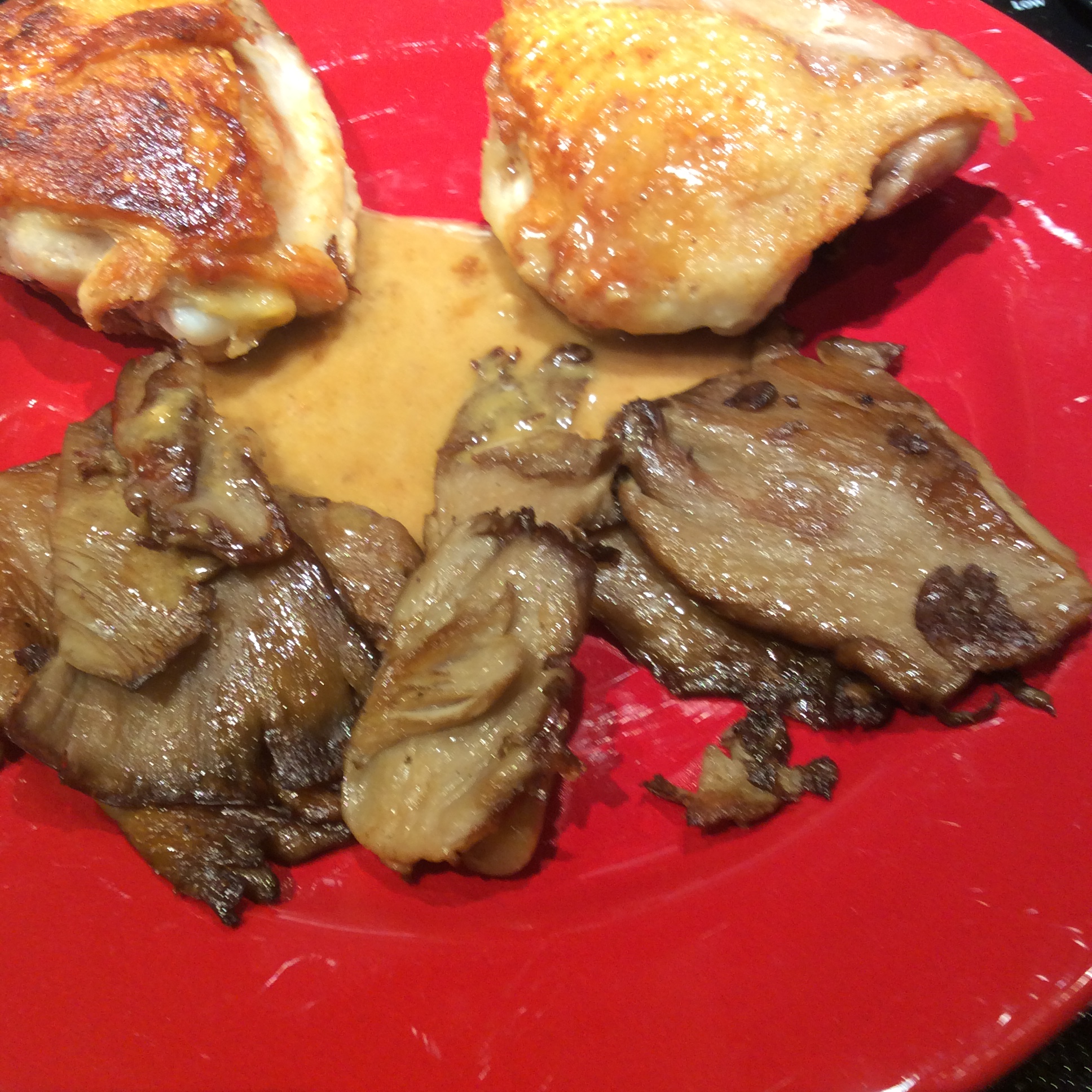
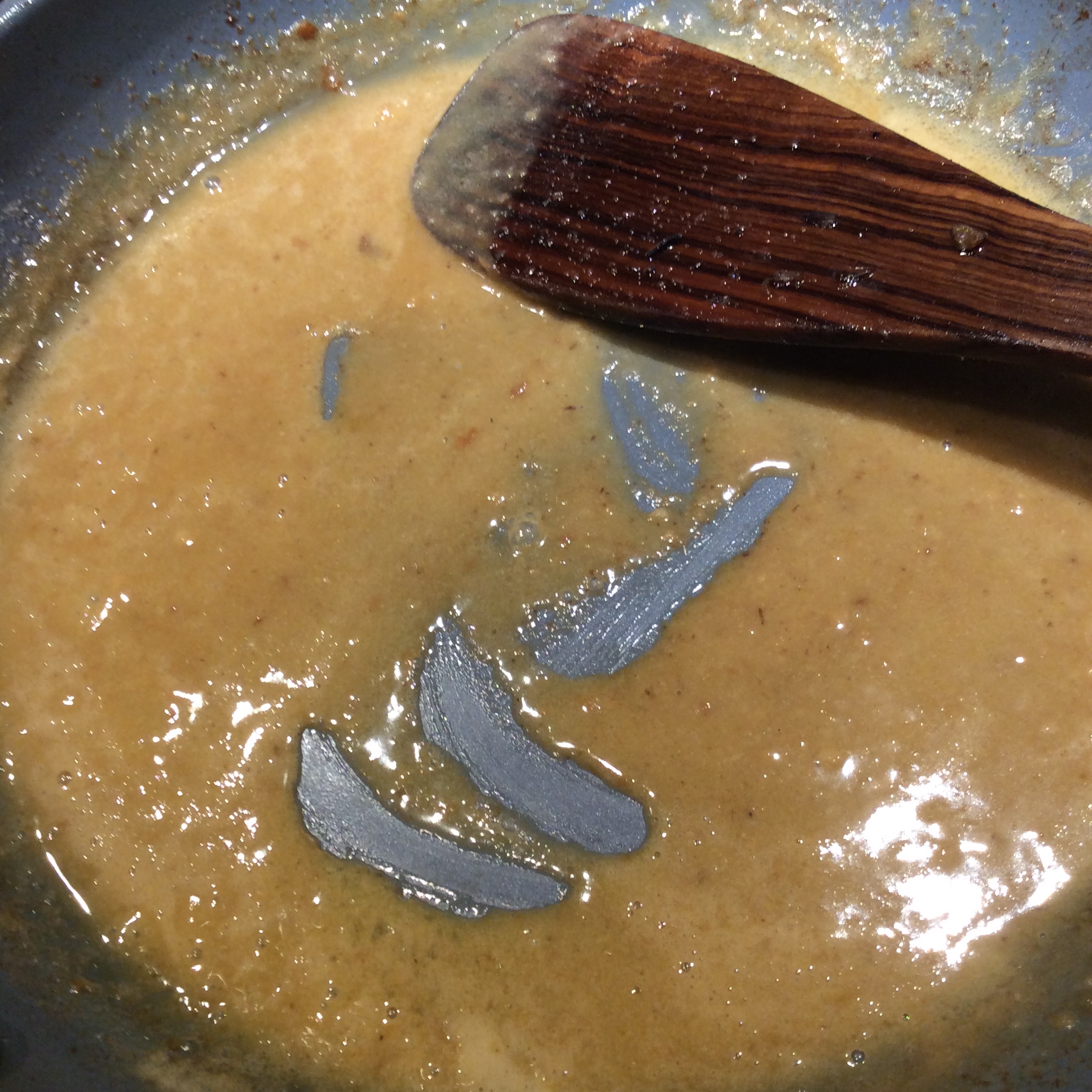
Now comes the fun part. Have some chicken (maybe PerfectSkin Chicken,) and a vegetable but no real union between them? Deglaze the chicken-frying pan with white wine, boil it down hard with a cube of chicken glacé, add half a cup of heavy cream and boil that down hard until it thickens, taste and adjust seasoning. Simple as that. I often like a bit of fresh chopped thyme with chicken, but suit yourself. Below you see a simple pan sauce made this way serving to unite chicken with pan-grilled oyster mushrooms. I like to nap the plate with the sauce rather than pouring it on top, to preserve the exquisite crunch of the skin.
Don’t be afraid to boil your pan sauces briefly but hard; that’s what makes them thicken with no flour. Always swirl in a bit of butter at the end for finesse and polish. Don’t ever take your eyes off them during the boiling-down or disaster may ensue, but it only takes a couple of minutes, while if you had no chicken glacé and used a cup of stock, it would take a lot longer to boil down and wouldn’t be as good. The chicken glacé will thicken the amalgam just enough that your stirring leaves pan bottom exposed for a moment, and that’s perfect.
25 Jul
Poblanos con Queso
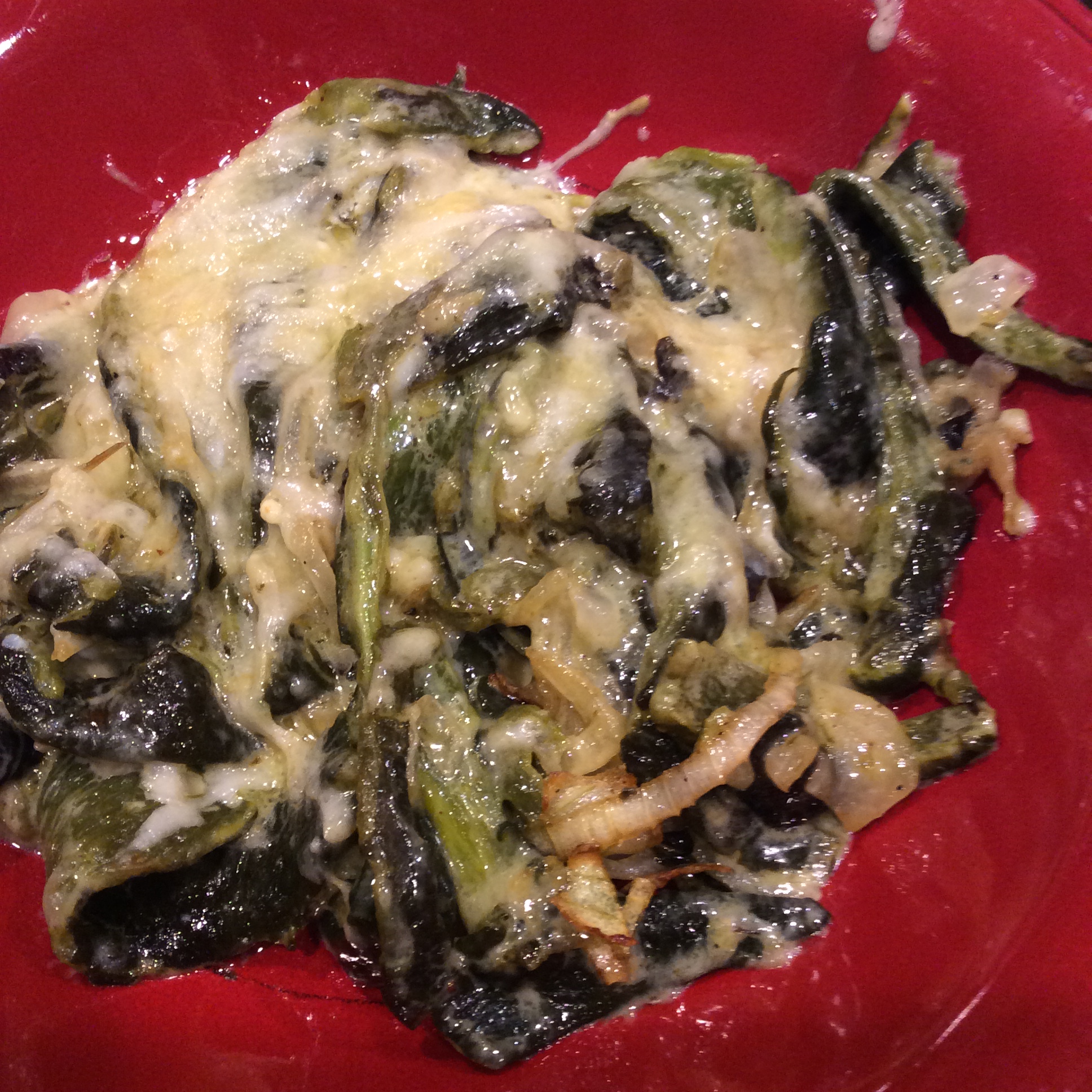
I used to love a bowl of chiles con queso to fold into soft corn tortillas, and now that I eat low-carb and no longer eat tortillas, I find that my enjoyment of roasted chilies with cheese and cream is undiminished.
Here in New Mexico August is the great season of chilies, and soon chile roasters will appear everywhere and the aroma of roasted chile will float in a faint delicious cloud over the city. But there are plenty of chiles around right now and they can be roasted easily on the grill or under the broiler. My favorites are the lovely inky green poblanos. I was so eager to roast mine that I forgot to photograph them, so here is a borrowed photo:
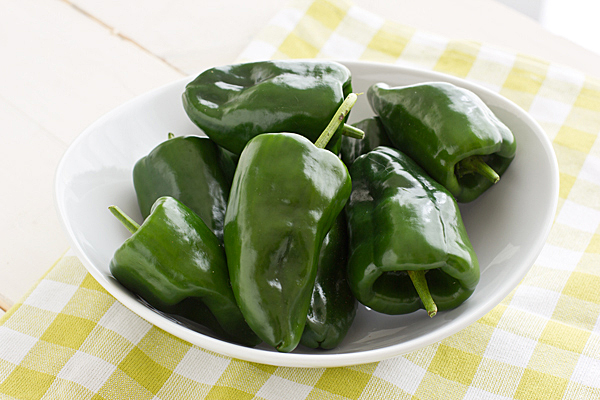
Chile pepper plants are sturdy and attractive and can usually be grown in the front yard without comment, especially if planted in groups rather than rows. They have nice deep green foliage. In the case of poblanos, they turn very hot when red and should be harvested when dark green. They have a deep rich flavor and, depending on growing conditions, can be surprisingly hot when green, although generally they are considered a mild chile. Roast them until they have blackened spots all over their skin, turning as needed, then throw them in a plastic bag to steam for 20 minutes. Peel off the skin and remove the core and seeds. Now tear them into strips. These are called rajas de chile. For the roasted strips from six poblanos, chop up one small onion and one good-sized clove of garlic and sauté them until cooked; I used fat from my homemade bacon. Add the chili strips and about half a cup of cream, and boil hard for just about one minute until the cream is a little reduced. And a generous cup of grated cheddar, stirring some into the chili strips and put in the rest over the top, and broil until the cheese is melted and maybe a little brown in spots. It makes a delicious light meal for two. If you add soft tortillas, it will feed two generously. It makes a good side dish for grilled meats of many kinds. To me roasted chile is the flavor of August, and I am happy to have a foretaste of August in July.
 My urban homestead