Archive for the ‘cooking’ Category

A Quickie Relish

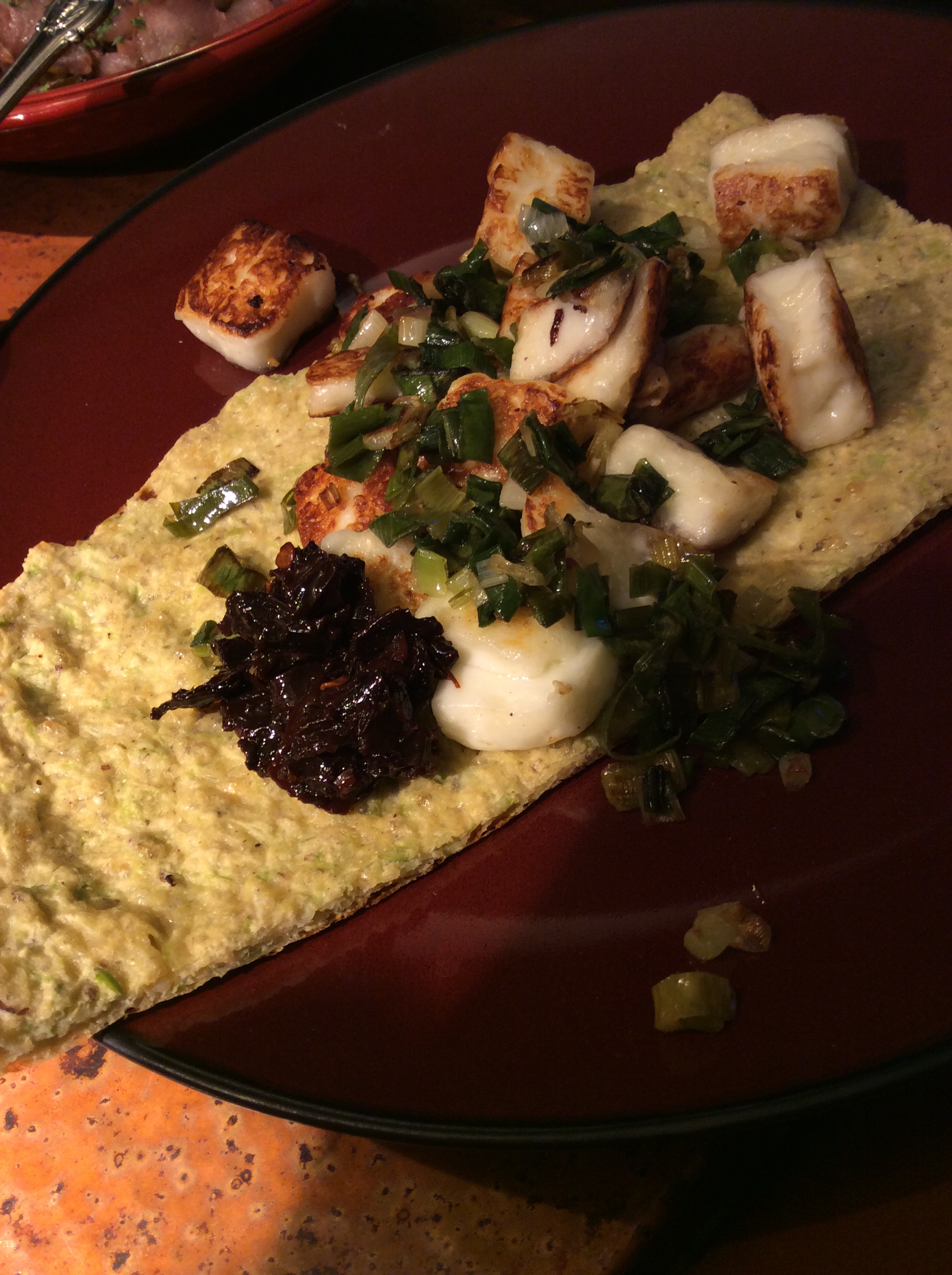
After posting the above picture in my post on making halloumi, I realized that the chile relish in the foreground deserved a post because it is so easy and so good. Its origin is Mexican, and I learned it from Diana Kennedy’s superb Mexican cookbooks, where it’s called Tia Georgina’s Salsa or Scissors Sauce. It’s great with a Mexican meal, of course, but also good with almost any other kind of food that could use grounding with a dollop of full-bodied mellow flavor with a bit of heat.

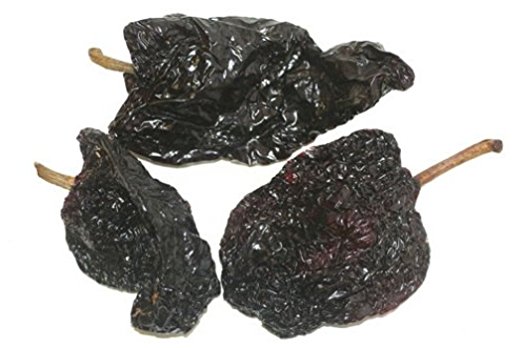
First, catch your anchos. The ancho chile is the ripened dried Poblano chile, and should be leathery and bendable rather than crisp-dry. The chile has a mild sweetness and marvelous notes of coffee and darkest chocolate in its meaty flavor. Pull the stems, seeds, and internal matter out of six ancho chiles. Cut them into thin strips with scissors. Add two chopped cloves of garlic and a half teaspoon of salt. Stir in half a cup of mild vinegar; I use about 2/3 homebrewed red wine vinegar and 1/3 water to decrease the acidity just a bit. Then add half a cup of oil. I prefer a mild olive oil. Then-this is key-let it sit covered overnight. This gives the chiles time to soften and lets their flavor bloom. In the morning stir it up, taste and adjust the salt, store in a jar in the refrigerator, and eat with nearly anything. It’s wonderful with grilled meats or chicken, great alongside scrambled eggs (especially if they are cooked with a bit of onion and green chile and garnished with cilantro,) and if you aren’t ketogenic it’s superb in nearly any kind of taco or just spread on a freshly grilled tortilla with a handful of crumbled queso fresco. Ah, those were the days…

The Squash Chronicles II: Squash Flatbread

I love my ketogenic diet and my blood sugar is superbly controlled, but there are times when I really miss bread.  Not just the flavor of bread, although the flavor of a really good sourdough bread is unbeatable. For that, there is no substitute. But there are times when what I really crave is the ease and convenience of bread, and the way it  pads out a meal and pulls it together.  In this case what I miss is not really the flavor of bread but its use as a “landing” for all kinds of other foods.  I have a few ways to fill in without adding too many carbohydrates, and one of my favorites is zucchini flatbread.

In addition to a couple of good sized zucchini or about a foot of serpiente squash,  you will need two eggs, a cup of grated mozzarella (the semi soft processed kind, not true fresh mozzarella for this purpose,)  half a cup of grated Parmesan, seasoning of your choice, and about a half cup of low-carb baking mix.  The best mix that I have found is the one from Trim Healthy Mama,  which is extremely expensive but does work well.
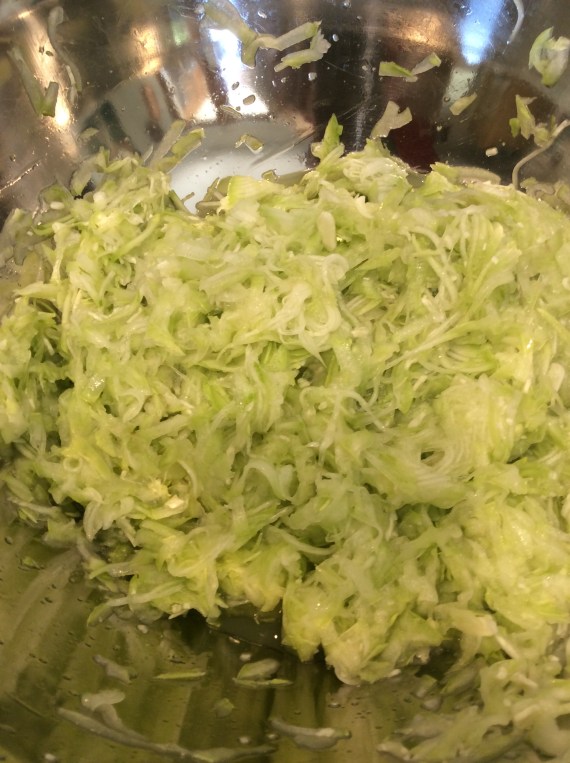
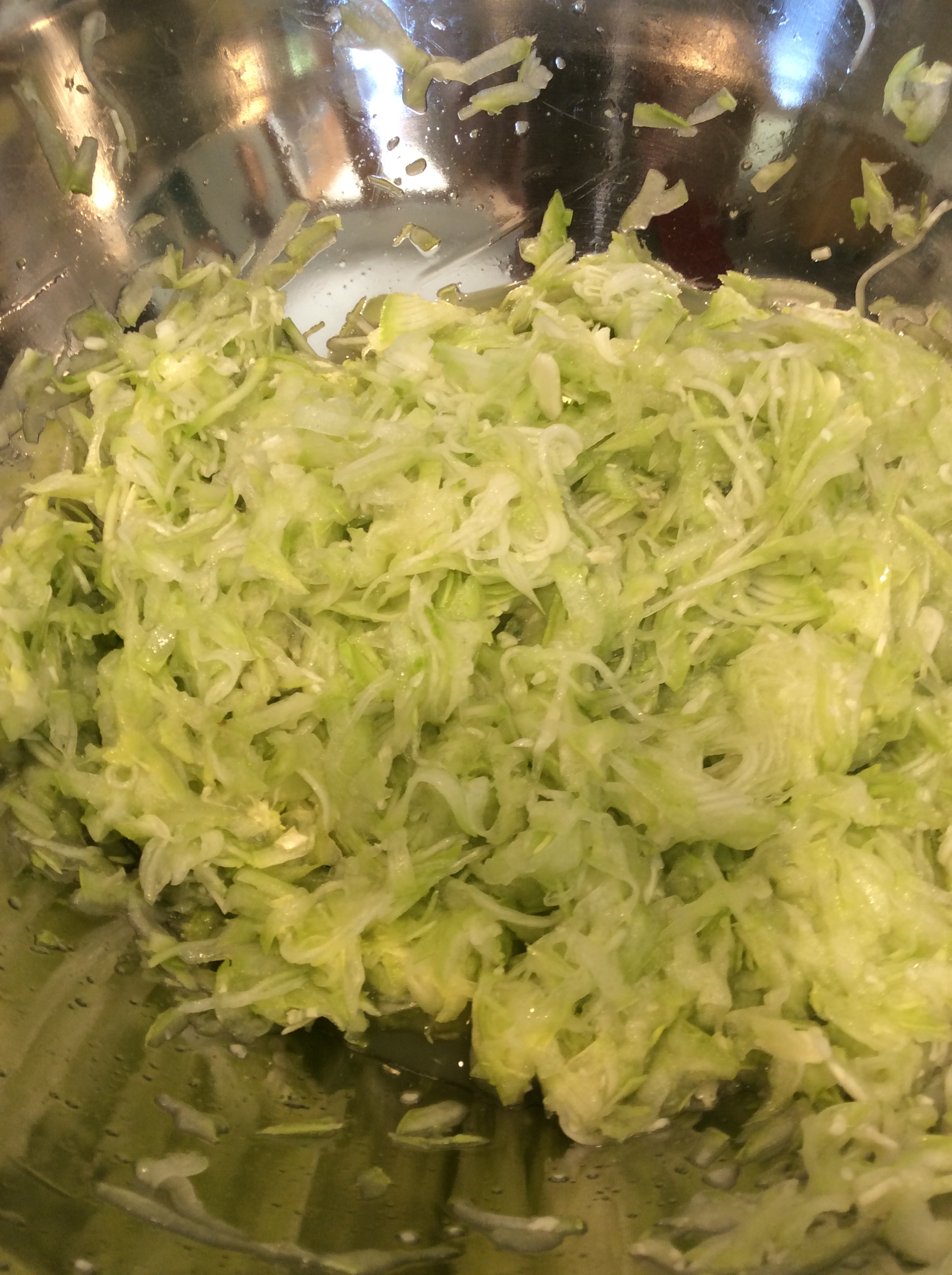
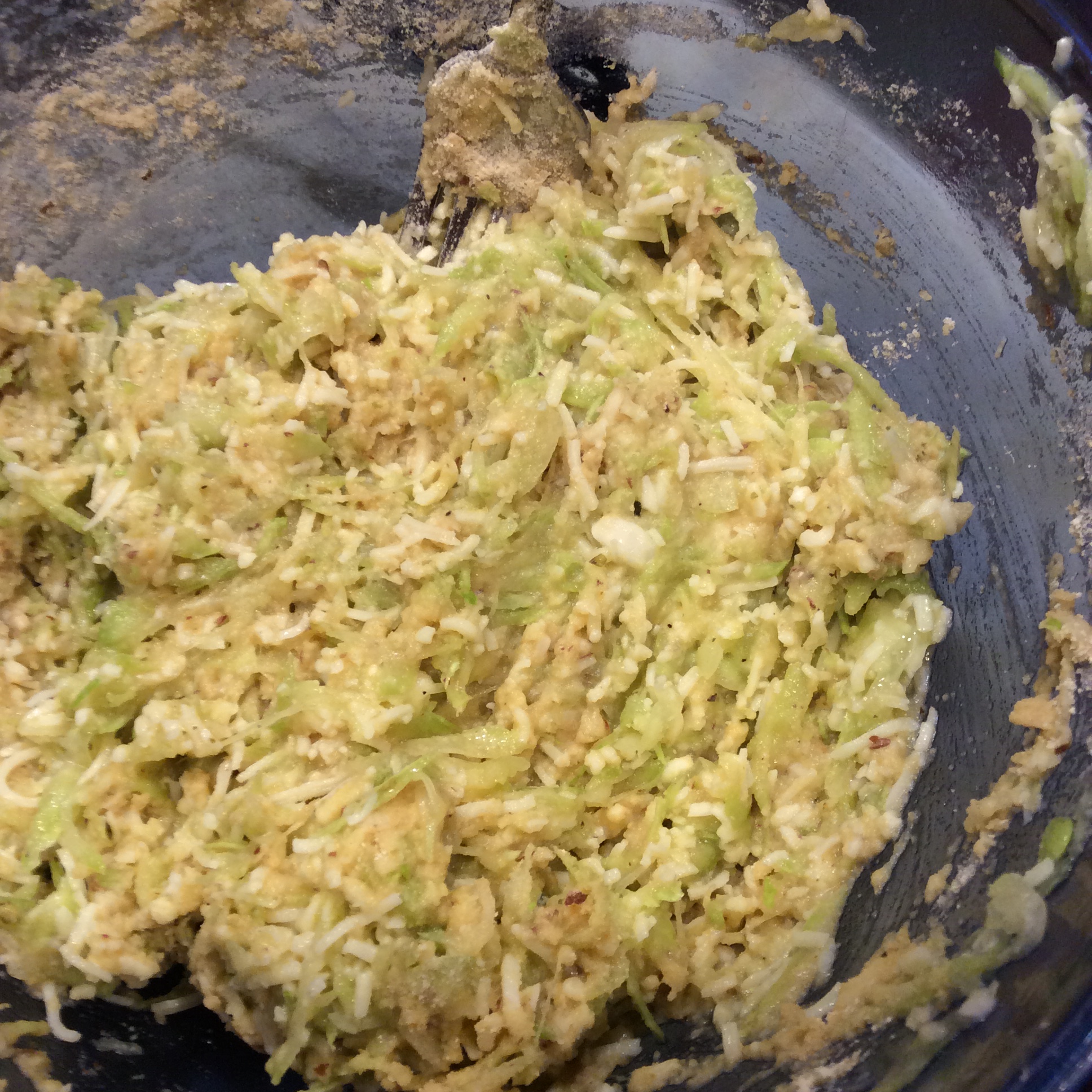
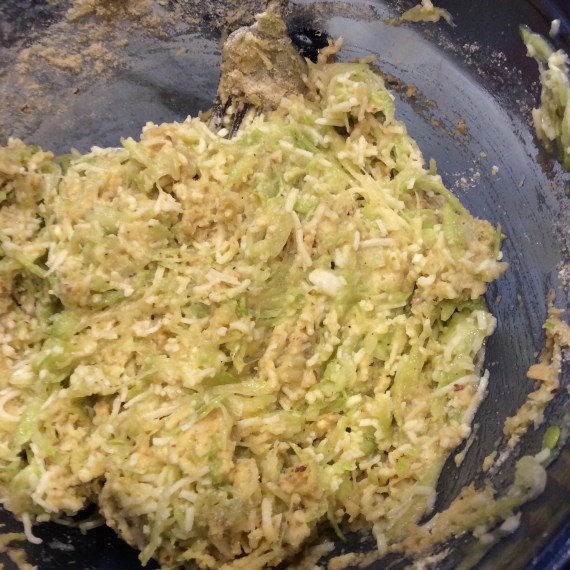
First, grate the squash and mix in about a tablespoon of salt.  Let it sit for half an hour. At this point, the shreds of squash will be swimming in liquid.  Over the sink, wrap the squash in cheesecloth or a thin dishtowel and start squeezing out liquid.  Keep squeezing and wringing, until you are left with about a cup of pulpy squash shreds.  Put these in a bowl and beat in the two eggs with a fork.  Mix in the shredded mozzarella and Parmesan.  Add a half teaspoon of salt (most of the salt that you used for disgorging the squash disappeared with the excess water) and seasoning of your choice. I like some fresh thyme leaves and a pinch of granulated garlic. For some reason fresh garlic doesn’t work well in this recipe. Add in a half cup of low-carb baking mix and half a teaspoon of baking powder and beat until evenly incorporated.
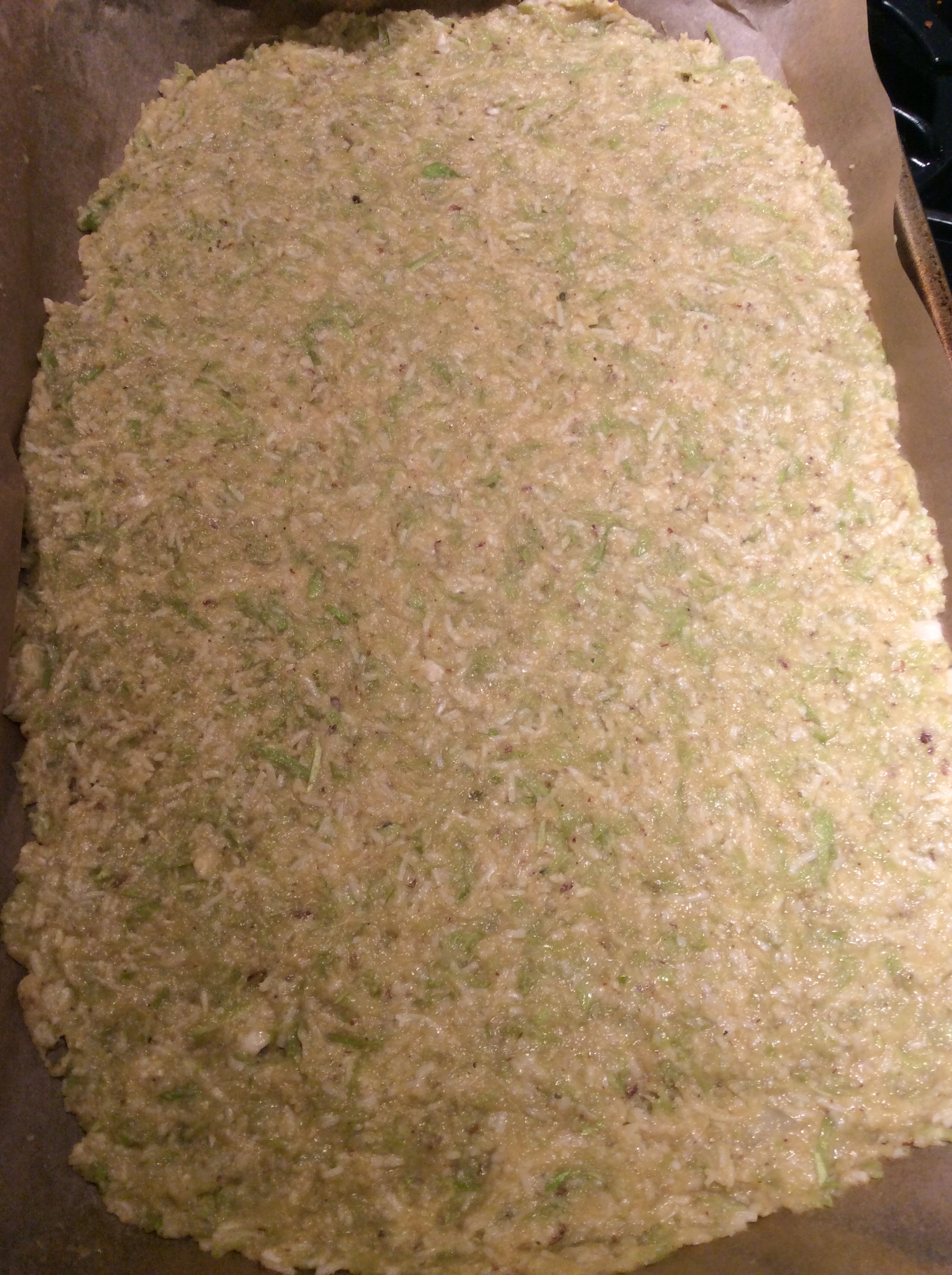
Preheat the oven to 425. Now line a baking sheet with parchment paper, oil your hands with olive oil, and begin pressing out the mixture into a thin even oblong.  Generally I aim for something a little less than a quarter inch thick, but if you plan to use it for breadsticks or a pizza crust you may want it a little bit thicker.  Make sure that there are no holes. The dough is lumpy and you will have to keep patting it down with the flat of your hands.
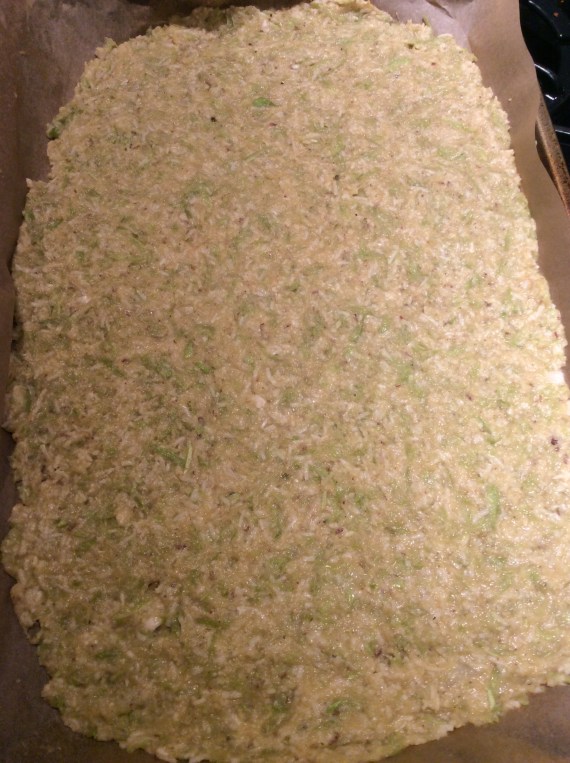
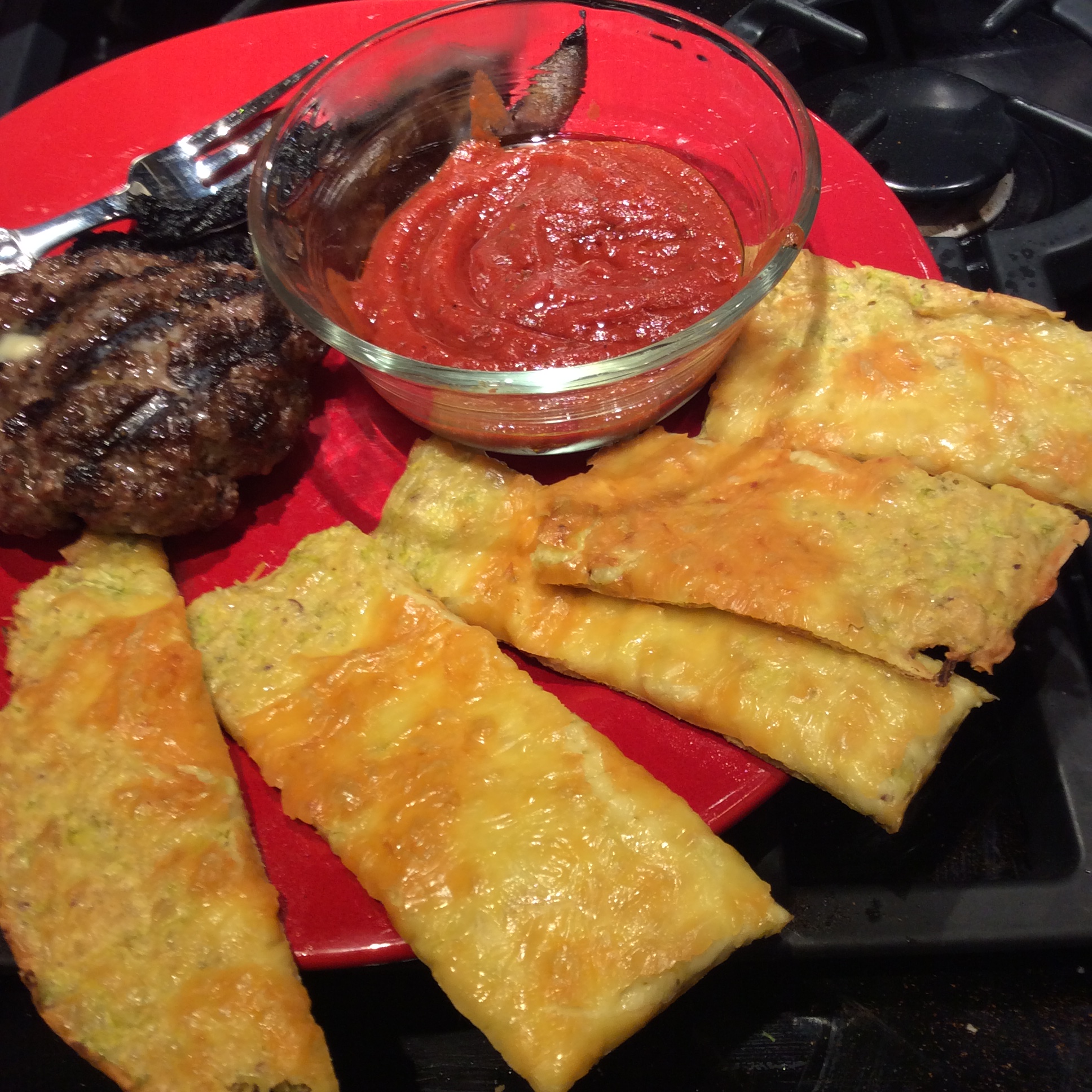
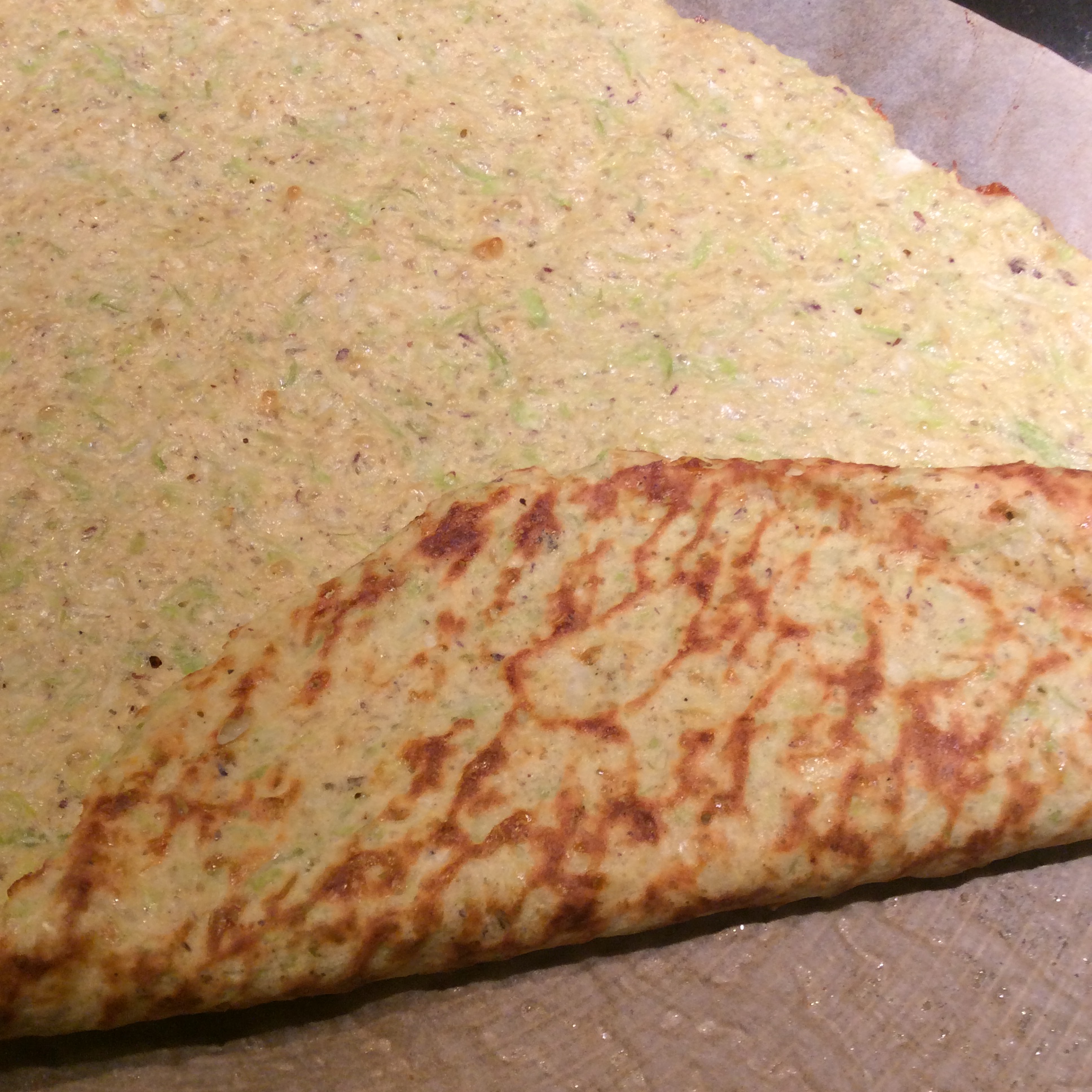
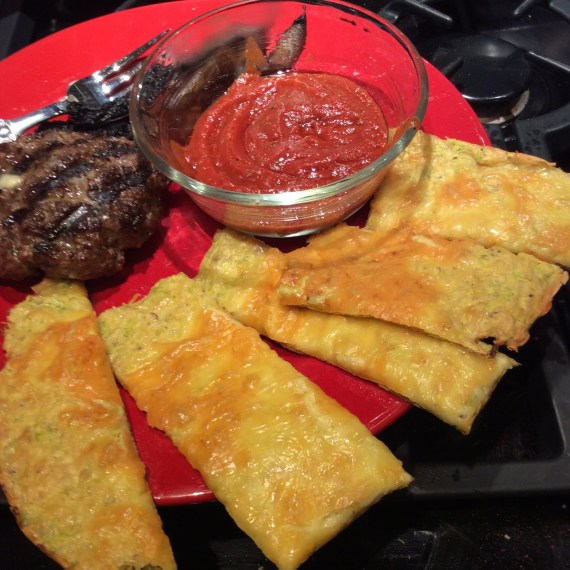
Bake at 425 until done to the right degree for your purposes.  It has to be baked enough to hold together well, but if you want to use it as a wrap, you will have patted it out pretty thin and should bake it only until it is cooked through and will come off the parchment paper in one piece but is still flexible.  If you want to make sticks as shown above, it should be more crisp, and the same goes for a low-carb pizza crust.
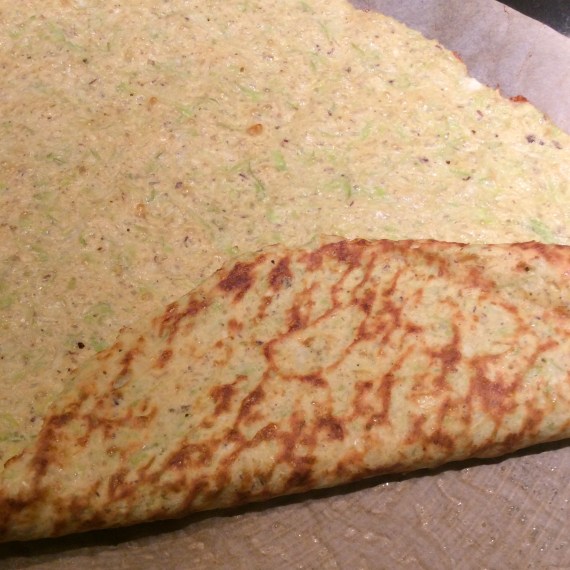
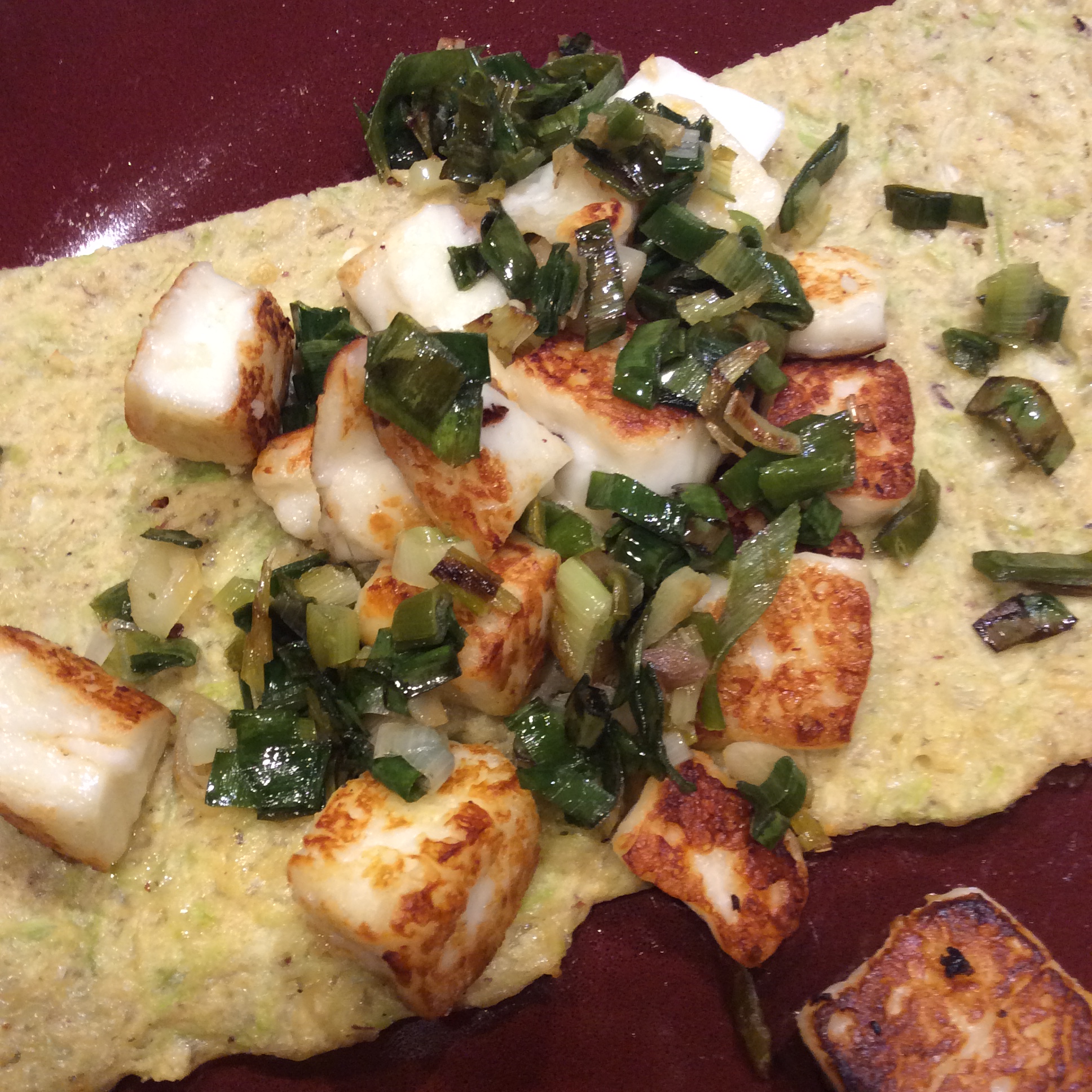
Above, it’s just cooked through, browned on the bottom, and right for making wraps. To make the breadsticks shown above, once it is baked to the right degree, top with another half cup of shredded mozzarella  and some chopped roasted garlic.  Return to the oven and broil until the cheese is melted and a little bit browned.   It is good dipped into your favorite pizza sauce, preferably the kind that you make yourself.  Any kind of herb pesto or sour cream dip is also good.

To make an impromptu low-carb pizza, cook the flatbread until fairly crisp. Brush the top lightly with a thick flavorful pizza sauce, coat with shredded mozzarella, and top with pepperoni, sausage,  or what you will.  Return to a very hot oven and bake until the cheese melts.

It goes without saying that if you insist on the wonderful malt flavor of really good bread, you need to eat really good bread and there are no substitutes.  But having a few options like this one means that you can save the great bread for very special treats and keep your carb intake down the rest of the time.  This is also a good way to take in extra vegetable fiber, with all its health benefits.
 

The Squash Chronicles I: Ambitious Summer Squash

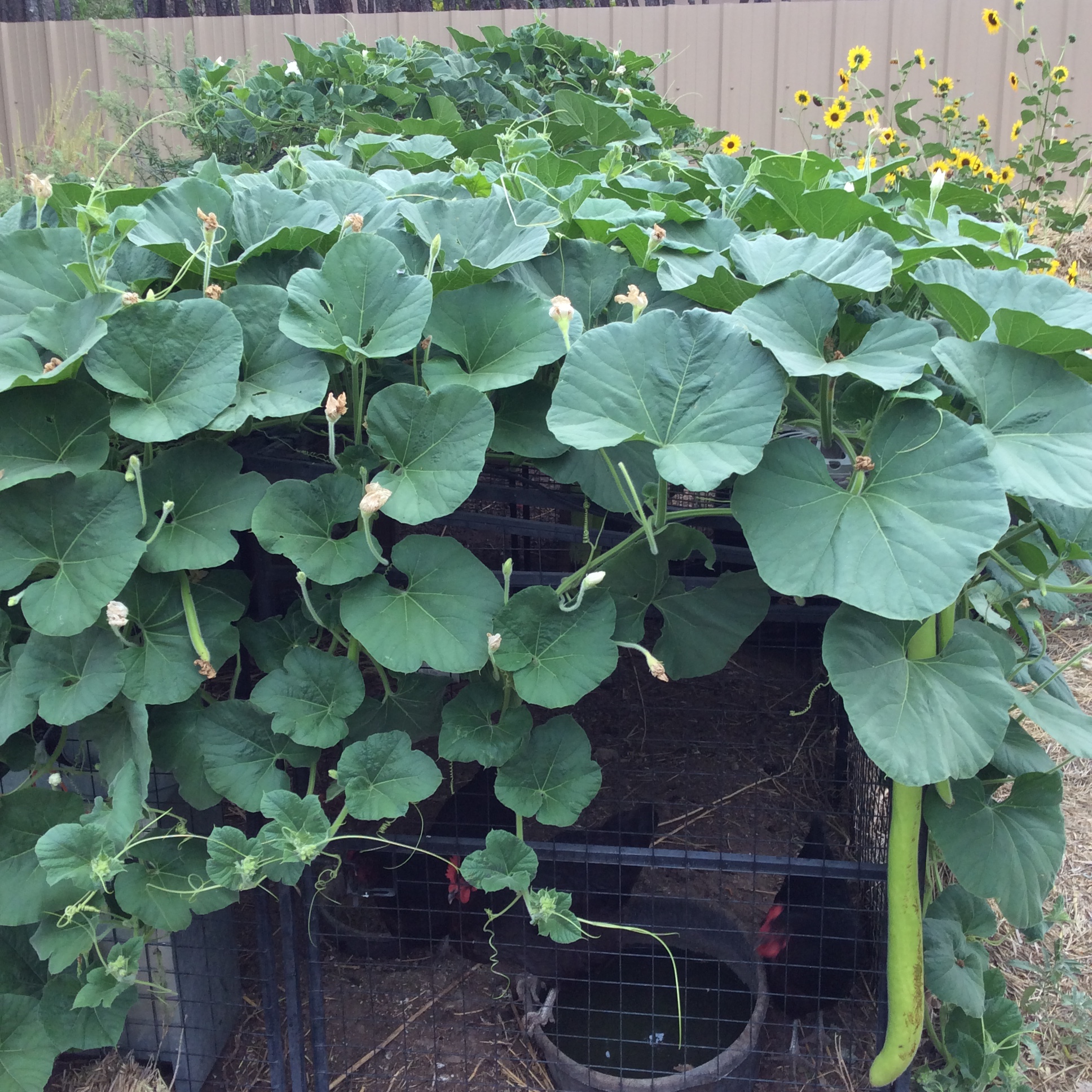
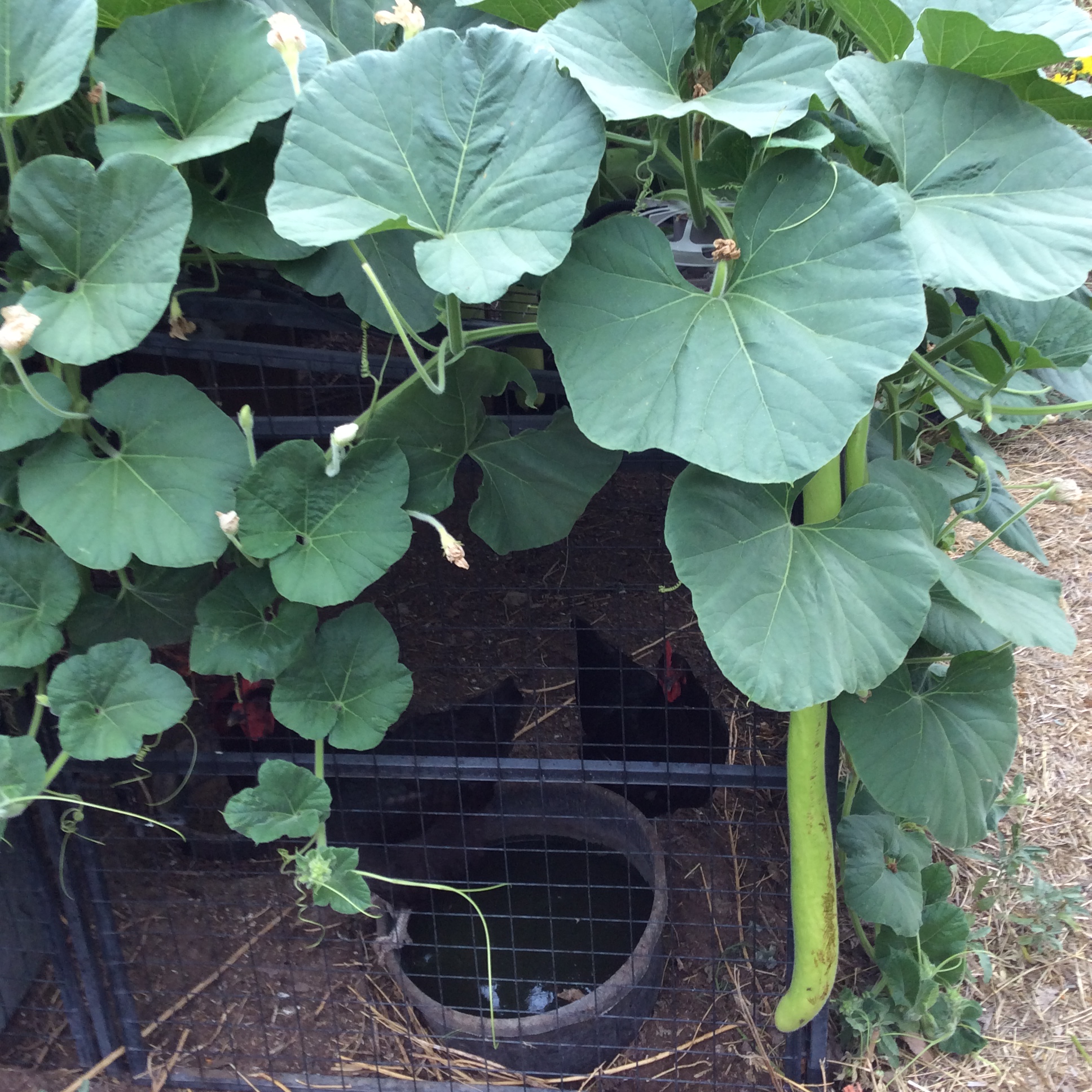
Every year  I lose my zucchini to diseases in late summer, despite the fact that I always plant whatever is most highly touted for disease resistance. This year I decided to try some new squash types  and see if I could overcome the disease issues, and still get some summer squash. The two I planted were Thai bottle squash and Italian Serpiente squash, both from the entrancing Baker Creek seed catalog.   I planted a couple of seeds of each in the compost pile next to the chicken coop, and thinned to one plant of each when they were small.  The results were as you see above; they are quite frighteningly successful. The vines are up to 30′ long, so be prepared.  They covered the chicken coop in nothing flat, providing some nice shade for the hens, and I was amused to note that wherever squash formed hanging down into the chicken run, the hens would jump up and peck them down to stubs.

Both can be picked at any point when your thumbnail will still penetrate the skin without significant pressure, and used just like zucchini.  They taste like zucchini, by which I mean they really have very little taste and need some help from seasonings.  When cooking any summer squash I prefer to slice it, salt heavily, and let it sit for 30 minutes to an hour and then squeeze out the large amounts of excess water by wringing the squash slices in a dish towel. Proceed to cook any way you like.

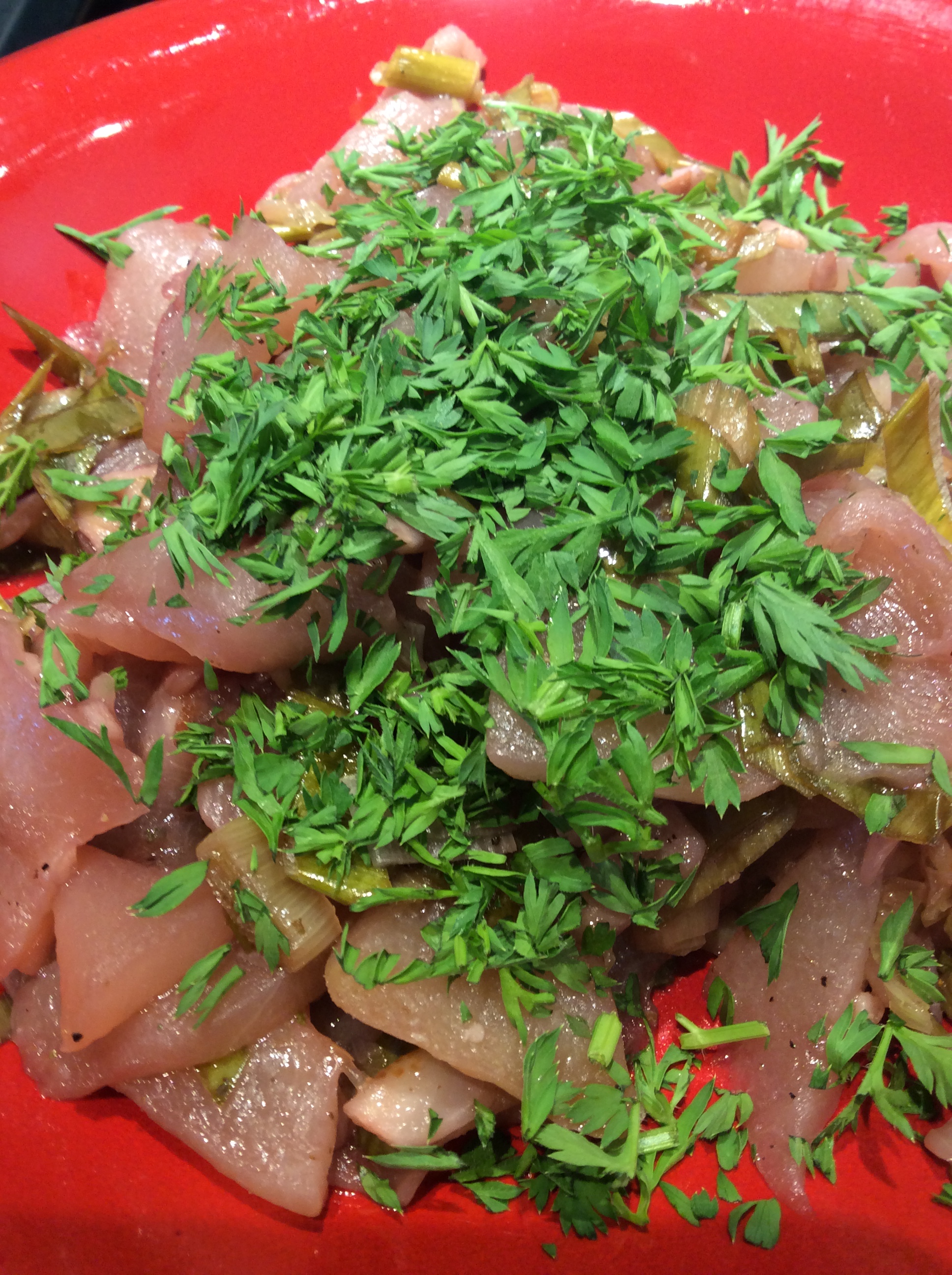
I like to make low-carb wrap bread out of  summer squash, and I’ll write about that in the near future, but today I want to encourage you to try marinated squash. Slice up one zucchini or a comparably sized chunk of a serpiente or bottle squash or whatever, salt heavily, and let sit 30 minutes or so. Meanwhile, chop a clove of garlic and slice a scallion or two thinly and put in a bowl large enough to hold the squash with half a cup of very good red wine vinegar. Add a half teaspoon of salt ( most of the salt you put on the squash will be squeezed away with its liquid) and herbs to taste. I like a few sprigs’ worth of thyme leaves.  Wring the squash slices out thoroughly in a clean dish towel, then fry in olive oil until the texture is the way you like it, which for me is done but not mushy. Dump the hot cooked squash slices in the bowl, stir the vinegar mixture through, and let cool to room temp, stirring a few times to distribute the seasonings. It can be made ahead and sit for a few hours, or refrigerated until needed, but do let it warm to room temp before serving.  When you are ready to serve, drain off all the excess vinegar,  pressing a bit to get any excess liquid out,  and toss with a quarter cup or so of your best olive oil and maybe add a small handful of chopped parsley or chopped young carrot leaves.  I like this as a side dish, and if you have some roasted pinenuts to sprinkle over the top, that adds deliciousness. Some crumbled queso  fresco would turn it into a light lunch, and it could be tucked into a wrap bread and eaten with a dip of seasoned yogurt or hummus for a more substantial meal  that would suit plant-based or vegetarian inclinations. Using a mildly sweet late harvest vinegar or adding a dash of honey, and finishing with chopped roasted salted pistachios would give the dish an interesting Sardinian sweet-and-sour turn.

As you can see above, the use of red wine vinegar gives the dish a pinkish cast that some people might object to. I use red wine vinegar because I make my own and love the flavor, but if it bothers you just use white wine vinegar instead.

The whole concept of a cooked vegetable salad goes as beautifully with Asian meals as with western style dinners. Try using rice vinegar and palm sugar or sweetener of your choice, adding a few teaspoons of chopped ginger along with  the garlic, and garnishing with scallions. Some slivered chiles would be great if you like heat,  and a handful of chopped cilantro would make a pretty and tasty garnish.


Of Spruce and Steaks

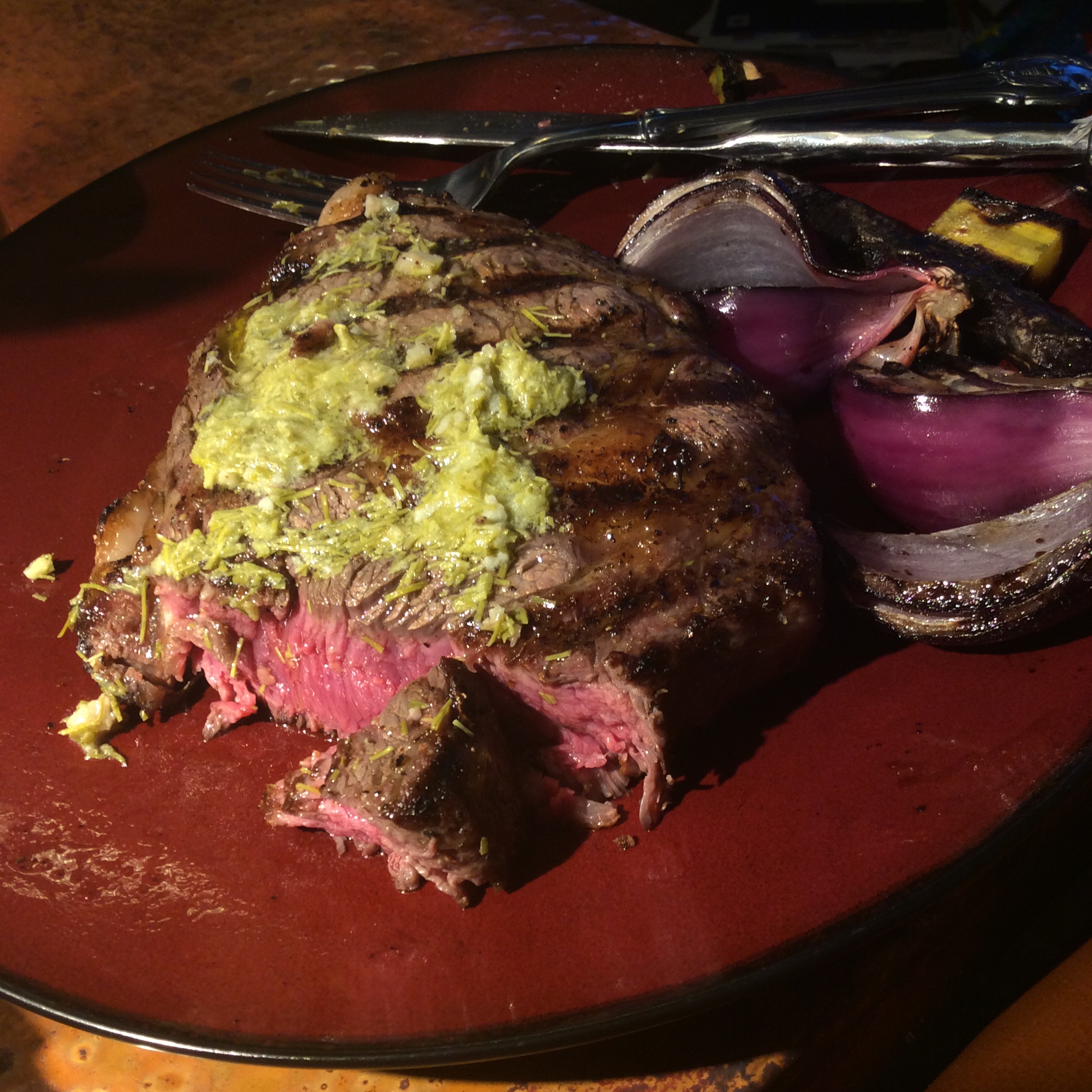
Every now and then I love a really good dry-aged ribeye on the grill,  and one of my favorite accompaniments is spruce tip butter.  The young growing tips of spruce trees in the spring have a fascinating array of flavors, ranging from bright and citrusy to something close to turpentine. I wander along my favorite trails tasting in until I find one that is on the spicy citrusy side, and  bring home the tips to chop and sauté in good butter for a few minutes. The spruce tip butter can then be frozen for use later in the year.  I like to freeze it in pats the size of large ice cubes, so that one pat is plenty of finishing butter for two steaks.  The frozen butter can be put on the steak for the last minute of grilling, and as the steak is finished for five minutes in a 200° oven it will finish melting luxuriously into the top.  If you happened to grill some onions along with the steak, this butter is delicious on them too, and it is a way of bringing your spring time hikes home for the rest of the year.

There aren’t many spruce trees in my area so this compound butter is the only thing that I make with the few tips that I have available, but if you have more trees available, you can consider other uses for the tips, such as spruce beer or Hank Shaw’s spruce tip syrup.