Archive for the ‘cooking’ Category

A Quick Snack for Dinner

When dinner needs to be quick and light, the staples that you have available become crucial. On a recent evening I decided to build a light meal around the goat halloumi that I always have in the freezer. It comes from my beloved Sanaan doe Magnolia, and since she is entirely greens-fed, this dish could be called “greens, direct and indirect.” If you aren’t lucky enough to have a pet goat, the superb halloumi from Mount Vikos is widely available and is great to have in the freezer.

Two flavorings that I always have on hand are preserved lemons (very easy to make yourself) and pitted kalamata olives. For 10oz of halloumi, I chopped a small handful each of olives and lemon rind, leaving them fairly coarse. Out of the garden, I grabbed a few stems of thyme, a small bunch of lambsquarters, and a few tender mulberry shoots.

The halloumi was fried in a little avocado oil, my current favorite for searing and other high-heat cooking. Meanwhile, I chopped the other ingredients. My lemons are preserved in salt and fresh lemon juice, and I left the juice clinging to them, to season the dish. While the halloumi seared, I fried the other ingredients at lower heat in a little olive oil in another saucepan. When the halloumi was ready, I tossed it with the seasonings and served.

The whole process took just over ten minutes. If you’re hungrier than we were, you can put a slice of sourdough bread drizzled with good olive oil alongside.

The point here is that you can feed yourself well and in a very healthy fashion even if all you have time for is quick, improvisational cooking. Keep a few staple flavorings that you like in the refrigerator, and buy a few fresh herbs when you shop so that you can lift quick dishes out of the ordinary. Parsley and thyme are always good. No halloumi on hand? Fry a couple of eggs per person in the olive oil instead, and toss the sautéed seasonings over them. No garden where you can grab some tender shoots on the way to the kitchen? Keep a bunch of Swiss chard on hand, and rather than trying to cook it all at once, put a couple of sliced leaves into multiple different dishes. Like to forage a little but didn’t find much? This is a perfect dish to use up a handful of dandelion or whatever other greens you found. Don’t care for greens at all? Use herbs and sliced mushrooms instead.   Cooking is endlessly adaptable and can work for you, with whatever time and energy you feel able to devote to it.



The Perennial Paddock: Mycelial Madness

Nothing made me more joyously certain that I had created a real, albeit tiny, ecosystem in my suburban yard than when the first mushrooms grew among perennial plants rather than in a grow-bag or other artificial arrangement. Last year two kinds of mushrooms spread from spawn I had introduced and appeared far from the original “planting.” I was ecstatic; the mycelial Internet was forming! And this spring I was even more gratified to find a big cluster of Stropharia rugosa-annulata pushing up through the mulch months before I had expected to see any mushrooms. By perfectionist standards they were  overly mature when I discovered them, as evidenced by size, lightened cap color, and the cracks in the cap. But I am no perfectionist and knew that they were still perfectly good to eat.

So a few notes on introducing mushrooms, in no particular order:

1. Stropharia rugosa-annulata is the easiest mushroom  to grow in your garden. Even here in the high desert, it thrives in a deep mulch of straw and oak sawdust. In my opinion the almond agaricus is the most delicious, but it is more finicky and less productive. I have grown oyster mushrooms in containers, but this year I’m experimenting with introducing them into more unlikely spots. I’ll report back.

2. Get good spawn. Mine came from Field and Forest Products, and it was ready to grow.

3. Know how to indentify the mushroom that you introduced. Know its field marks and identify it before you eat it. When you create a good outdoor environment for mushrooms, you are not in complete control of what grows, any more than you are immune to weeds in your garden beds.

4. Be aware of how many commercial mulch products are treated with fungicides to prevent fungus from moving in. If you want select funguses to move in and thrive, you need to avoid these products.

5. Cook and eat with a sense of reverence and awe for the complex and extraordinary interactions of nature. If you want to learn more about this, Mycelium Running, Mycelial Mayhem, and Radical Mycology are useful books.

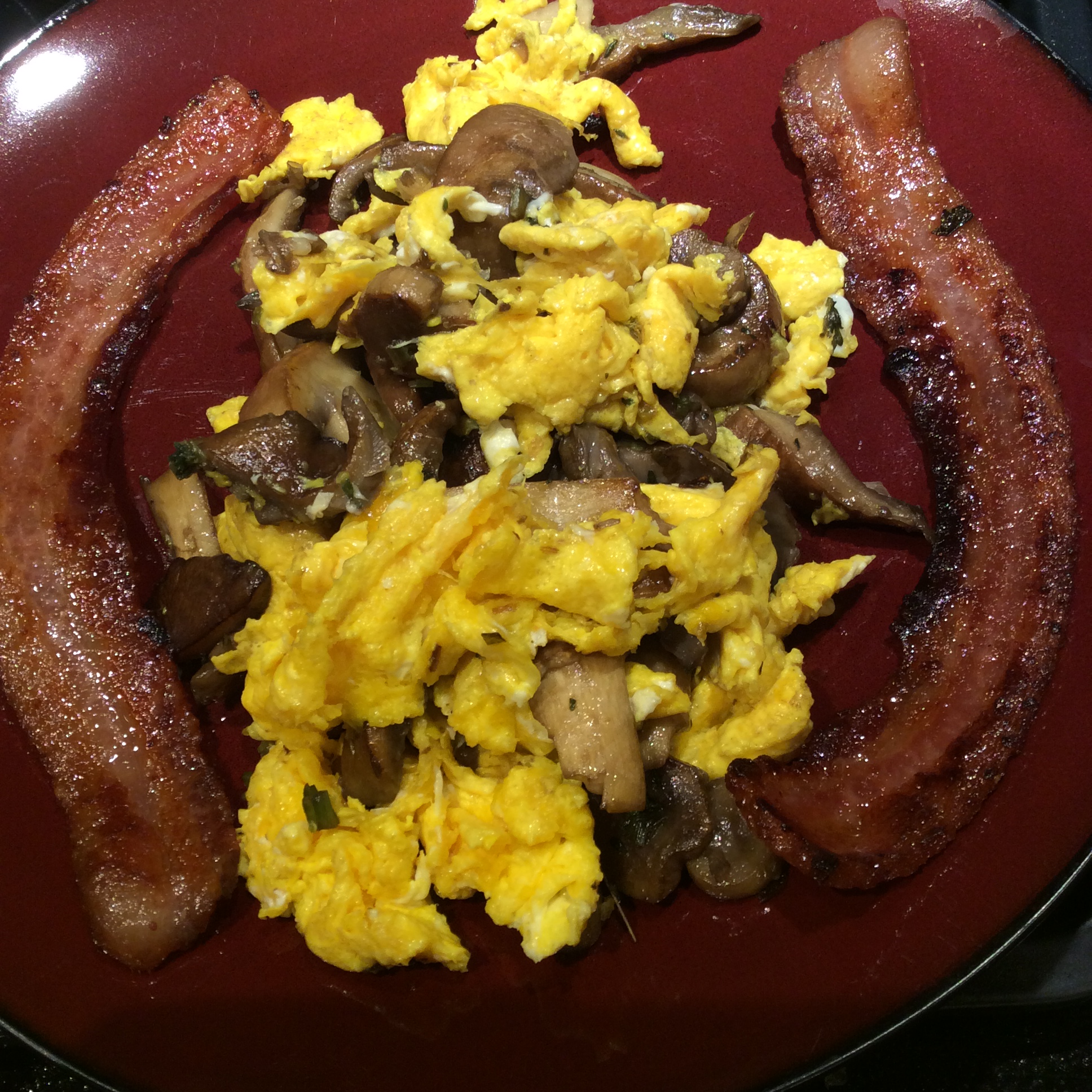
I sautéed my mushrooms in olive oil with generous additions of green garlic and fresh thyme, then removed them from the skillet, set aside in a warm spot, and scrambled some eggs in additional olive oil with a little salt. When the eggs were cooked, the mushrooms were folded back in. Simple as that. Scrambling is an underestimated technique. In this case I cooked the eggs fairly firm, for texture contrast with the softer mushrooms.  I framed the fragrant heap with a couple of slices of bacon. It made a quick delicious dinner, mostly from my own property, and was a culinary salute to the mycelial web that underlies, well, damn near everything.

Dandelion Time

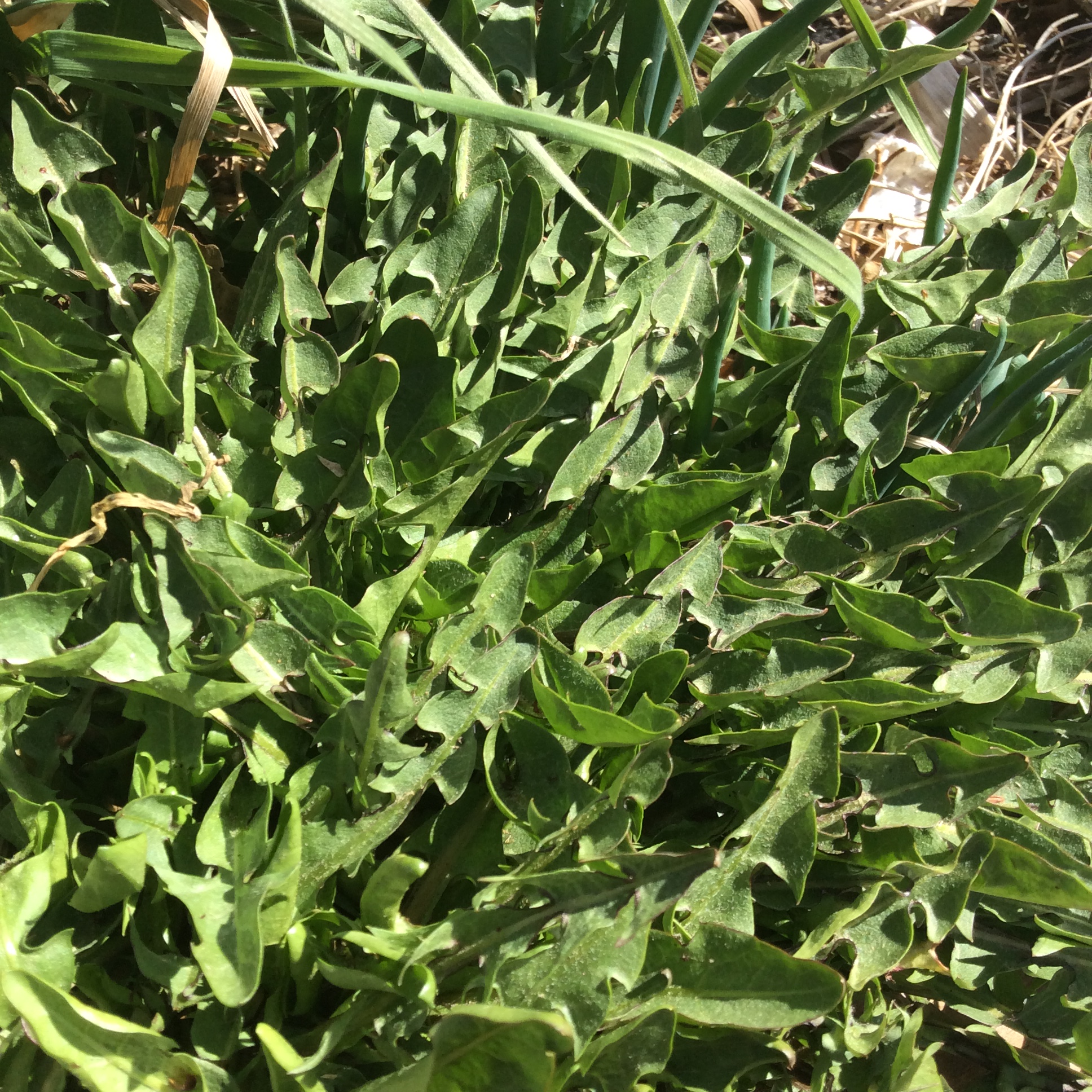
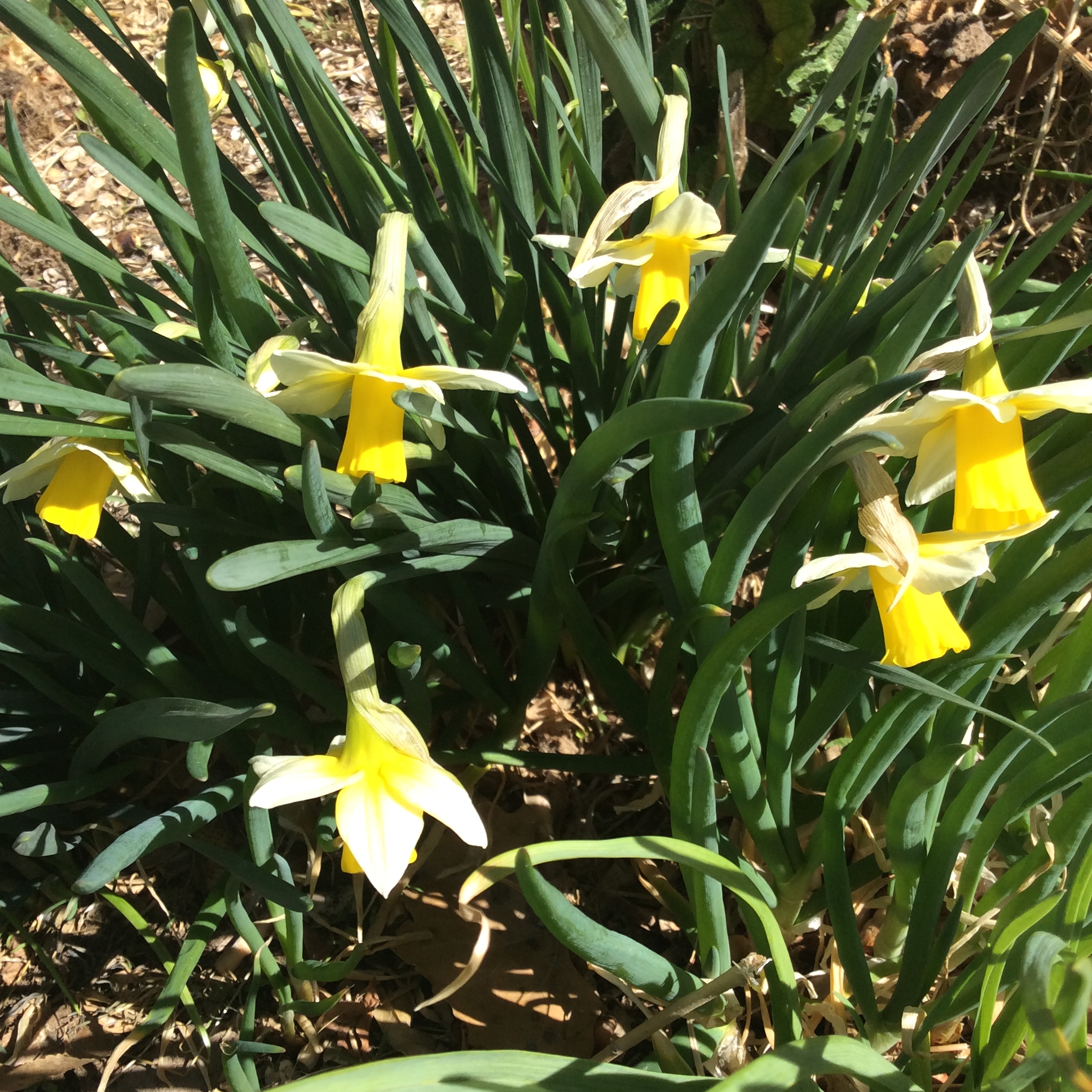
Just after the first nettles, the first dandelions are ready to eat. This happens about the same time that the earliest daffodils bloom.

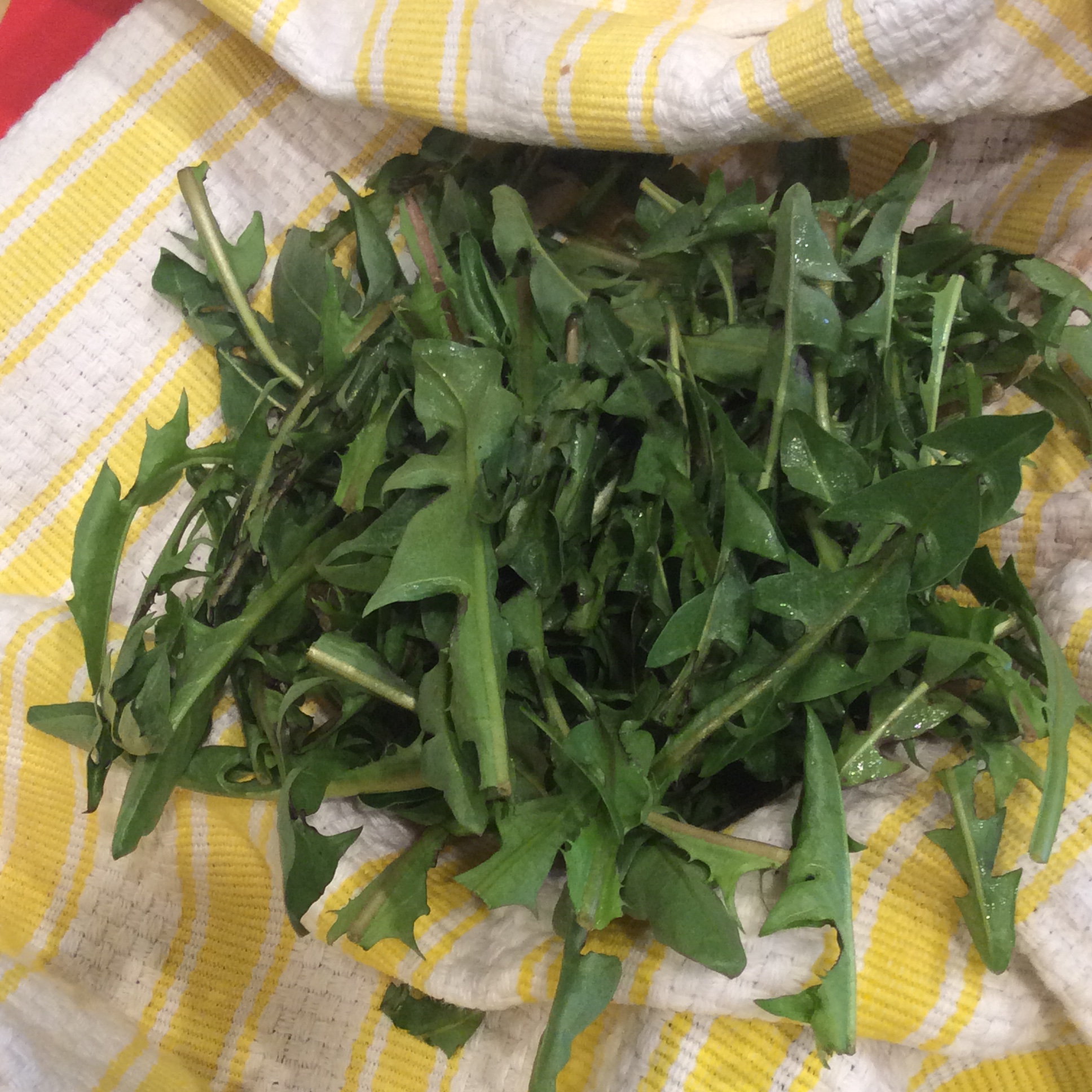
I have mentioned in another post that dandelions don’t seem to occur naturally in my neighborhood, and I went to a ridiculous amount of trouble to have them and paid good money for seeds that people in other climates would pay to get rid of.  Surprisingly, they take a long time to establish. I find that they are extremely straggly and thin the first year, and only a little more substantial in the second year. But in the third year, they make beautiful thick rosettes of spring time leaves that are perfect for salads.  Interestingly, the dandelions growing in my garden beds are not bitter, although in general dandelion leaves are famous for bitterness.  This may have something to do with my alkaline and highly mineralized soil. I’m really not sure. But it is a nice bonus. If yours are bitter, check out Dr. Kallas’s excellent book Edible Wild Plants: Wild Foods From Dirt to Plate, which contains a number of sensible suggestions about making bitter greens more appealing.

All sorts of medicinal properties are attributed to dandelions,  and if you’re interested in that you can read up on it. Personally, as I have said several times before, I think that all leafy greens are medicinal in that they are really, truly good for you. Eat them all, lots of them.

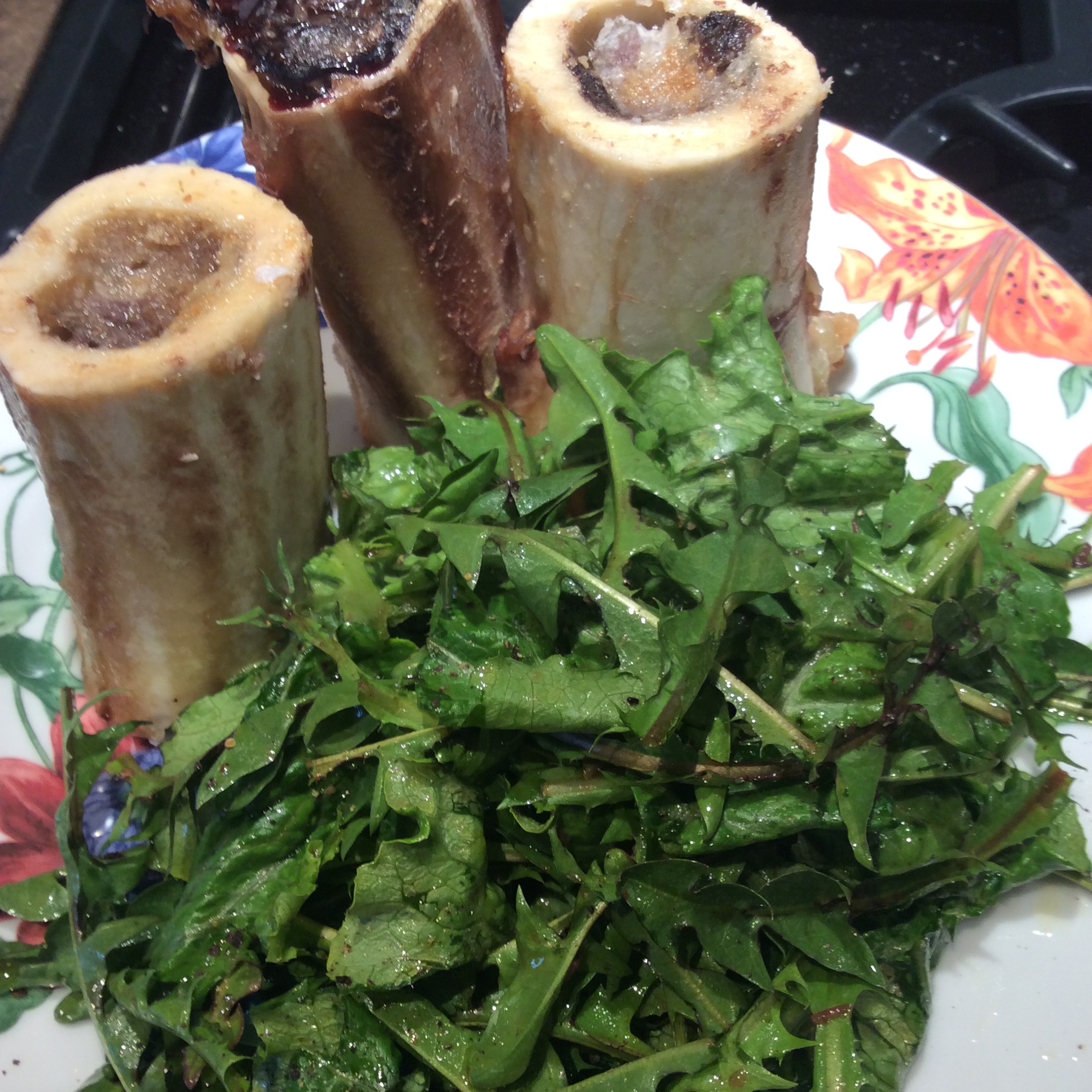
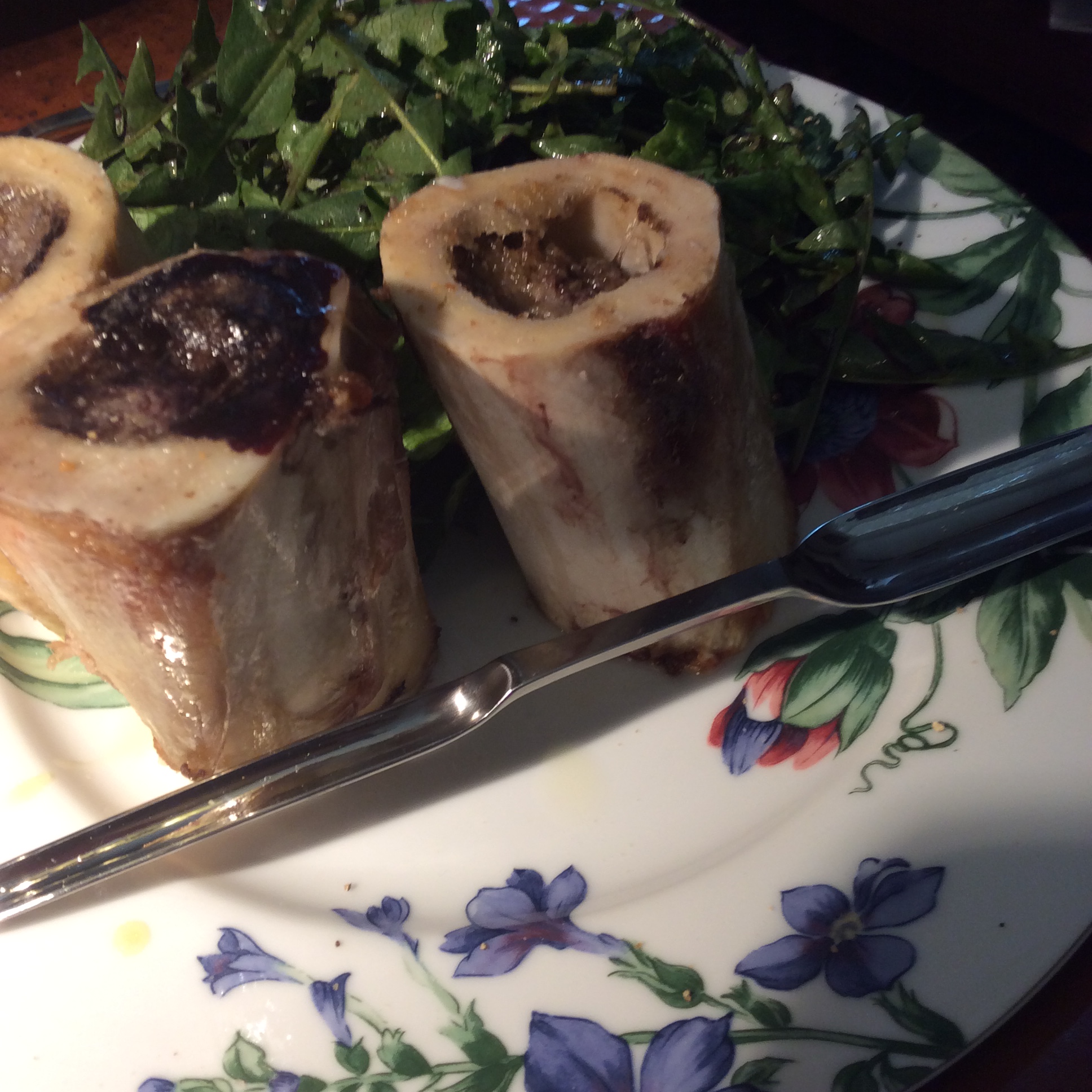
The early spring leaves are both tender and substantial in texture. I like them in a salad either by themselves or with a little bit of outer leaves of romaine lettuce added.  But if you want to add them to a more traditional mixed salad, they add a nice amount of “lift“ to the mixture at this stage.  At times when I lived where dandelions or more bitter,  I was very fond of adding crumbled bacon and hard cooked or Friday eggs to dandelion salads. With the nonbitter leaves that grow here, I prefer to eat them just with a good vinaigrette, and maybe a few bones’ worth of roasted marrow alongside to complete the meal. I roast the bones with salt and seasoning, then dig the marrow out and plop it on a pile of dandelion leaves dressed with good vinaigrette. Grind some pepper over the top, and yum.  It’s a delicious way to stay ketogenic, but if you are not a low-carbohydrate eater, you can enjoy the marrow spread on elegant little pieces of sourdough toast.

Incidentally, if you are a fan of bone marrow, you might want to keep marrow spoons around, as shown above. They have long, narrow bowls that are specially designed for digging this delicious substance out of the bone. You can get heirloom sterling silver ones from England for $700 or more apiece, or you can do what I did and buy stainless steel marrow spoons on Amazon for less than $10 each. They work just fine.

Grass-fed beef

I love beef, and I want beef that is produced with respect for the animals and the environment and is healthy for me to eat. I choose only to eat grass fed beef.  In the spring and summer I am able to get a wonderful grade of grass-fed beef at my local farmers market, but this winter I begin to think about the problems of people who don’t have this available but still want to eat as healthily as possible. If you’re a ketogenic eater  you tend to spend a lot of time thinking about the quality of the protein in your diet, but really it would be wise for everybody to think about that.  After doing some research on various possibilities, I began buying through Crowd Cow.

Crowd Cow  is a service that brings beef from small, well run farms directly to consumers. They represent both grass finished and grain finished beef, and the farms are listed as one or the other so that you can select only the kind that you want. They allow you to buy individual cuts or small packages, so that you don’t have to buy a new freezer to eat good beef, and the shipping  is an incredibly reasonable $12.99 per package, no matter how much you buy.  I placed three orders this winter, and always had everything arrive solidly frozen, with no partial thaw problems.

The meat has been high-quality and delicious. The steaks are superb, but I try to concentrate on less lavish and expensive cuts, and those have been great too.  They also offer pastured chicken, but the problem is that when a chicken sale starts in the morning, the cuts that I want are usually sold out by lunchtime when I have time to look at the website, so I have only gotten one order of chicken. It was very delicious, though, and produced in much the same way that I raise my own meat chickens when I do that.

The link below will take you to Crowd Cow and, if you order, earn a $25 credit both for you and for me.  But it will be the first bonus I ever received from them.  I don’t accept any “free samples“ of services from anybody, and I do not write about something until I have paid exactly the price that you were likely to pay and determined in my own mind whether a good cost/benefit ratio exists. In this case, I really think it does, and gives people a chance to buy high-quality beef and to support the sort of farms that produce such beef.

https://www.crowdcow.com/l/ugp3uonsg