Archive for the ‘Books worth reading’ Category

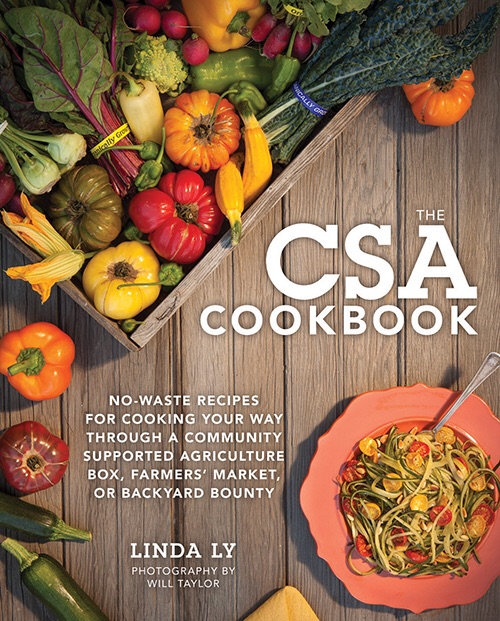
A Veggie Cookbook Worth Owning

image

There are a lot of vegetable cookbooks on the market currently,most of them much of a muchness and pretty forgettable as far as I’m concerned, but now and then I come across one that must be bought. I bought this one. Then I bought another copy for a friend. It’s of special interest to anyone who grows their own vegetables or gets a CSA box for a few reasons:

1. The organization is by vegetable type, so if you have leafy greens in the garden you can turn to the leafy greens chapter and consider some cooking options.

2. It offers suggestions for vegetables, or parts of vegetables, that aren’t usually eaten. Broccoli leaves, for example, which are good to eat and highly nutrient-dense ( be careful how many you harvest, though, or your broccoli-bud crop will be significantly reduced.) Ms. Ly’s improvisational kale-stem pesto gives you a flexible way to use up the “nasty bits” of your kale. Tomato leaves are used well as a seasoning, and no, they aren’t poisonous. There are numerous other examples: I am looking forward to trying her chard-stem hummus later in the season. The recipe for pan-charred beans with bean leaf pesto looks like another winner.

3. The recipes that I have tried work and taste good. This does not go without saying. I have come across recipes, especially no-waste recipes, that look lovely in the picture but aren’t really edible. Ms. Ly’s recipes are good.

Oh, and 4. It’s available on Kindle if you need to save space on your cookbook shelves.

I don’t accept review copies of cookbooks. I buy them at my local indie bookstore, paying the same price that you will pay. That’s the only way that I can judge whether the value/ price ratio is really favorable. I think this one is worth the money. Even an old hand in the kitchen will pick up some new ideas for using vegetables.


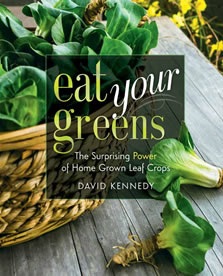
Books Worth Reading: Eat Your Greens!

imageimage
I am a gardener and also a doctor, so I spend a lot of time thinking about what could improve health for individuals and communities. When it comes to simple and practical innovations, I’m firmly convinced of this: there is no better thing that we can do for our own health and our families’ health than cook, serve, and eat more leafy greens. You can take me at my word,or you can read Eat Your Greens, by David Kennedy. Mr. Kennedy has collected a lot of information about why growing and eating more leafy greens is important, and gives information about some obscure greens. He is the founder/director of Leaf for Life and he wants everyone to be healthier.

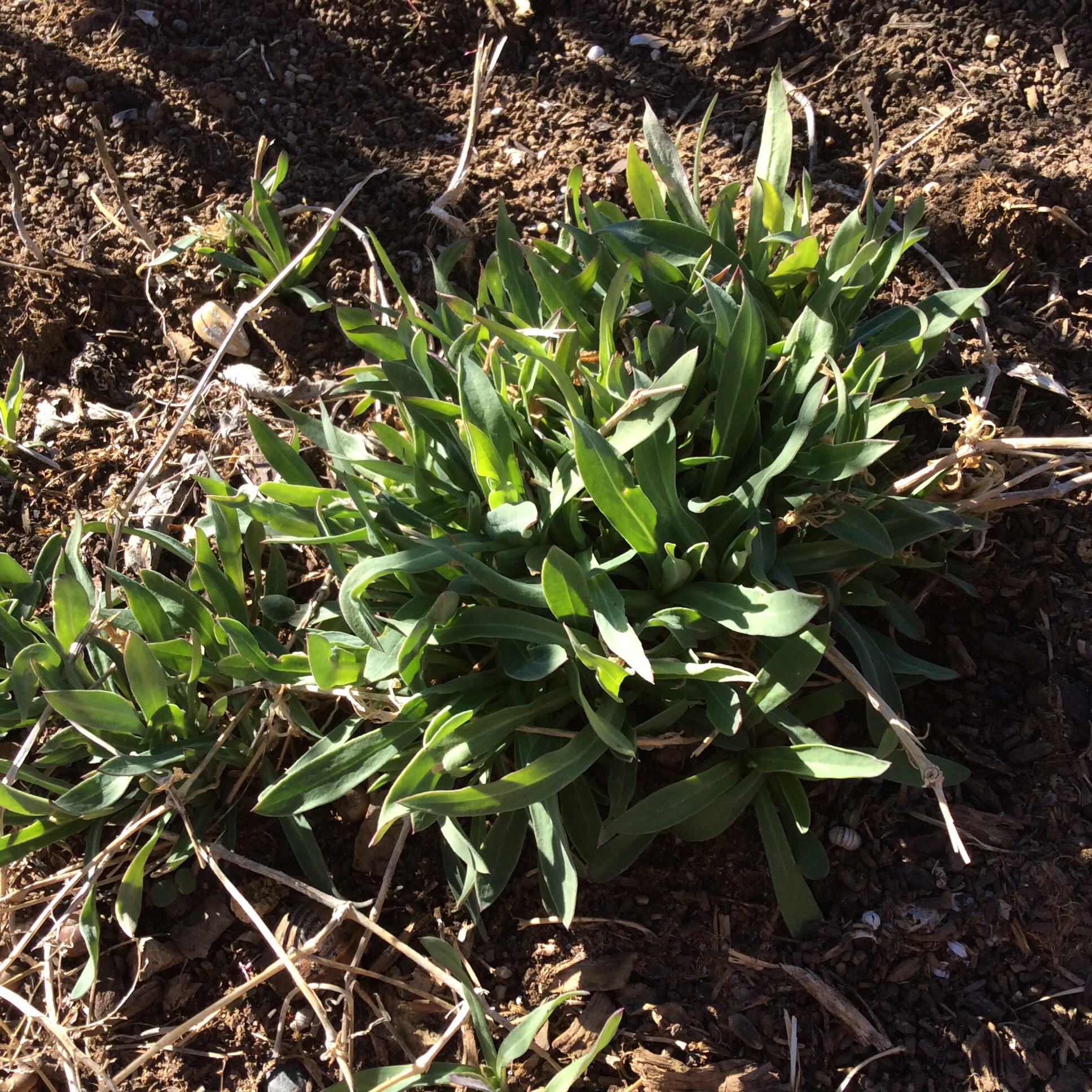
Whenever I review a book, I want to talk about what it is and what isn’t. This is not a gardening book, and it isn’t a cookbook. It is a book about the importance of leafy greens to improving health worldwide. Lots of plants are given equal importance, no matter how relatively unsuited they are to cultivation in temperate America; this author thinks globally. Read it anyway, if you need to be convinced that the best thing you can do with your home garden plot is to grow a good supply of greens. A plentiful supply of fresh imageunsprayed greens is just about guaranteed to improve your health and your family’s health. There are some really good books about how to cook your crop. This one is to stretch your thinking in other directions.

Be sure to review the chapter on edible cover crops. If you want to improve your soil and eat some greens at the same time, try the cover crops that Kennedy recommends.

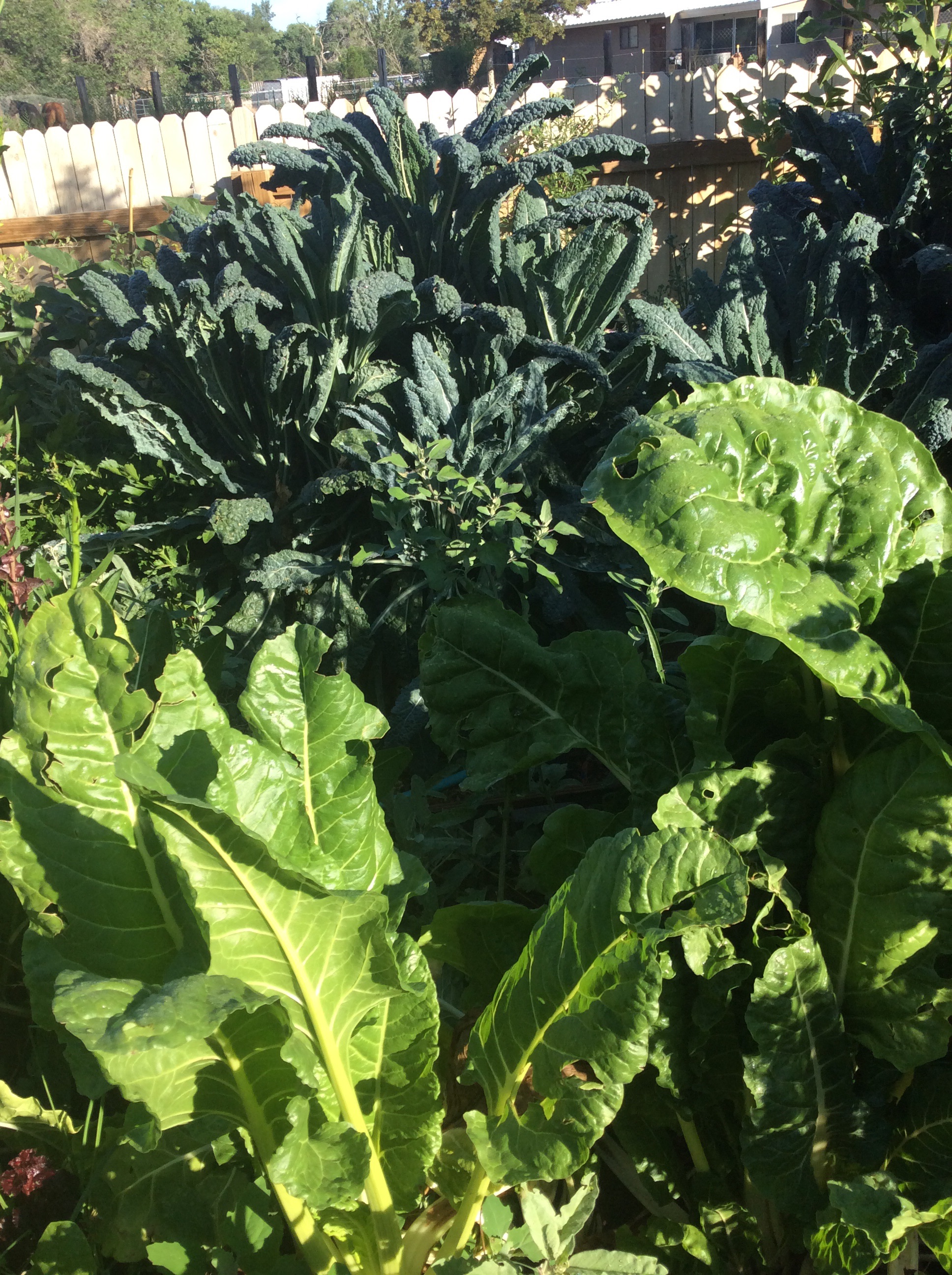
So, my personal opinion, after years of home gardening and given that I have trialed moringa and Chaya and many other chic greens discussed in this book, goes something like this: forget the obscure stuff unless you love to fool with that sort of thing (I do, but that’s not where the bulk of our green veggies come from.) Grow what grows well in your area. Grow kale, lots of kale, and chard and spinach and leaf lettuce, and harvest amaranth and lambs-quarters and purslane from your weedy patch. Grow any green leaves that you like to eat, and then eat them. Lots of them. Use cover crops in your little yard-farm, and feed leafy greens to your chickens and other livestock so that they will enrich you indirectly. Recognize green leaves as the most extraordinary solar collectors in the world, and let them feed you the energy of sun, earth, and water. Think about how to preserve them for winter. Keep them on your table. I will be trialing some of Kennedy’s ideas like Green Tofu, or leaf-juice curd, and I’ll let you know how it comes out for me. But please, eat your greens!

Oh, and please consider buying this book and other great books at your local independent bookstore. This is a genuine case of use it or lose it.

image

Some of my current favorite books


Winter in central New Mexico is a time of spectacular, and early, sunsets. Once I’ve enjoyed the light show, I’m ready for a long evening of cooking and reading. I don’t do any posts about “best books of the year” because many of the most useful and interesting books that I read are old, and some of the best are things that I’ve read before and have returned to this year because they are good and useful. So this list is personal, opinionated, and idiosyncratic. With that in mind, here are some of the books that I used most this year.

An Everlasting Meal, by Tamar Adler
I didn’t expect to like this book, based on preliminary information that it was a book of culinary essays. Over the years I’ve become dubious about culinary essays because there are too many of them, many of them sound just like one another, most of them elevate the obvious, and nearly all of them lust a little too obviously after M. F. K. Fisher. THis one, however, has a genuinely original voice and was one of the most interesting books on food that I read in 2011. Ms. Adler’s organizing principle is thrift, and her musings offer a system of thought in which every product created in the kitchen can lead to future, equally delicious, products of the kitchen. Follow the flow of her thoughts about avoiding waste of food or effort and, whether you are a beginning home cook or an old hand, you will learn things about how to make your efforts pay future interest. In addition, you’ll enjoy yourself a lot.

Simple French Food, by Richard Olney
This is a real oldie, but in my opinion everyone with a real interest in cooking should reread it every couple of years. At a time when Julia Child was laying down rules of French cooking for anxious Americans, Olney was capturing the spirit of day-to-day Provencal cuisine, where thoughtful improvisation is informed by classic principles, and rational frugality is made delicious. The chapter on improvisational cooking is a culinary classic, and should be read by all cooks who try to improvise without really thinking about their potential ingredients first. On second thought, it should be read by all cooks.

New Moroccan, by Mourad Lahlou.
This one is new this year, and may be my favorite of the current crop of new cookbooks. The “memoir with recipes” is a very overdone genre, but this one is the real deal, where memories and personal history genuinely inform the author’s thoughtful musings about food and cooking. It doesn’t really matter if you make the recipes or not; you will be a better, more thoughtful cook after exposing yourself to the way that Mourad thinks about food. I should add that, as would be expected, the recipes are very complex. You may never make a single one of them precisely as written, but they are lovely to read and give insight into a culture where many people spent a lot of time thinking about food. I have never been to Morocco, but my childhood in food-obsessed Louisiana wasn’t much different in spirit, so this volume was oddly nostalgic for me.

Crazy Water Pickled Lemons, by Diana Henry
This one is subtitled “Enchanting Dishes from the Middle East, Mediterranean, and North Africa” and this is certainly accurate, but like all my favorite cookbooks, there are gems of description here that help a cook use ingredients really well. Here is Ms. Henry on cumin: “A real workhorse, its coarse ridged seeds smell like earth and life: fresh sweat, sex, dust, maleness.” In one sentence, you have the germ of a mindset about how to use cumin intelligently in cooking, and a clear visceral sense of where it doesn’t belong. I have had this book for a few years, and come back to it regularly.

Make the Bread, Buy the Butter, by Jennifer Reese.
Ms. Reese lost her job, a common story these days. She began to experiment with doing more food production at home, and wrote a book about which things are worth doing and which things are not. I disagree with her about many specifics; just for starters, she is vehement about not raising meat birds at home, while I think it’s one of the most valuable of my home food production systems. Nonetheless, her experiments and conclusions are always worth thinking about. I should point out that there was still an income in the family, and the financial freedom to spend $1600 on goats and goat necessities that she admits will never pencil out, so this is not a poverty-level view, but it contains valuable information for the frugal middle class and for people who like to do things for themselves, even if they cost a bit more that way. In one vignette that I especially like, she describes her husband saying about one of her proposed projects “it’s like we wanted to go for a drive, so you decided to build a car.” If you have self-sufficient leanings, keep it reasonable, for others in the household as well as for yourself. This book is a fun read with a good perspective, and while your own decisions about what’s worth doing may be different from the author’s, you are likely to have a good time.

The Weekend Homesteader, by Anna Hess
This one is not a book but a monthly newsletter available electronically. It’s based on the premise of doing one major homesteading task and a number of minor ones each weekend for a year. The projects are intelligent and well-described, the writing is good, the slant is practical rather than wild-eyed, and it is clearly the work of someone who has actually done the work. Highly recommended.

Mini Farming, by Brett Markham, and The New food Garden, by Frank Tozer
I have referred to both these books over and over since I bought them, and I wouldn’t want to be without either one of them. Right now, I’m thinking of incorporating more aesthetic elements into my back yard and so I’m consulting Tozer’s book more. When I’m on an efficiency kick, I use Markham’s volume more. Get them both, and skip the many pile-on-the-trend books out there by authors who clearly haven’t walked the walk.

The Vegetable Book and The Fruit Book, both by Jane Grigson
I can’t imagine being without these fine older books, and when I finally use my well-thumbed current copies to death I’ll buy new ones. You can’t do better for the products of your garden than to get these books, read them, and use them.

Happy holidays, and many happy winter evenings to you!

Goat milk in the morning, and a great goaty book


My goat does Magnolia and Cocoa are out being bred right now, and the back of my property is depressingly silent, with none of the constant cross-talk that occurs as they stand on the roof of their goathouse observing the antics of the rest of us. It makes me realize how much they’ve become part of our daily lives. In their absence, I’ll talk about some things that I do with goat milk.
Of course I make cheese, mostly soft cheese and halloumi. I plan to discuss cheesemaking in some later post, but for now let’s get on to the fresh milk. You will hear it said that goat milk tastes just like cows’ milk, to which I say “Not so fast.” On day 1, goat milk tastes much like cows’ milk but even when impeccably fresh it has a tangier flavor profile. However, it contains lipase that works on the lipids and changes the flavor. On day 2, it’s good but you will know that you’re drinking goat’s milk. On day 3 it’s quite strong and only good for making stronger cheeses, and on day 4, as far as I’m concerned, it’s chicken food (they love it, by the way.) So the goal is to use it up by the end of day 2.

I’m always looking for nutritious, tasty, and interesting things to eat for breakfast. They have to be very quick, because getting to work in the morning is not optional. And they have to hold me for hours so that I’m not tempted to snack.
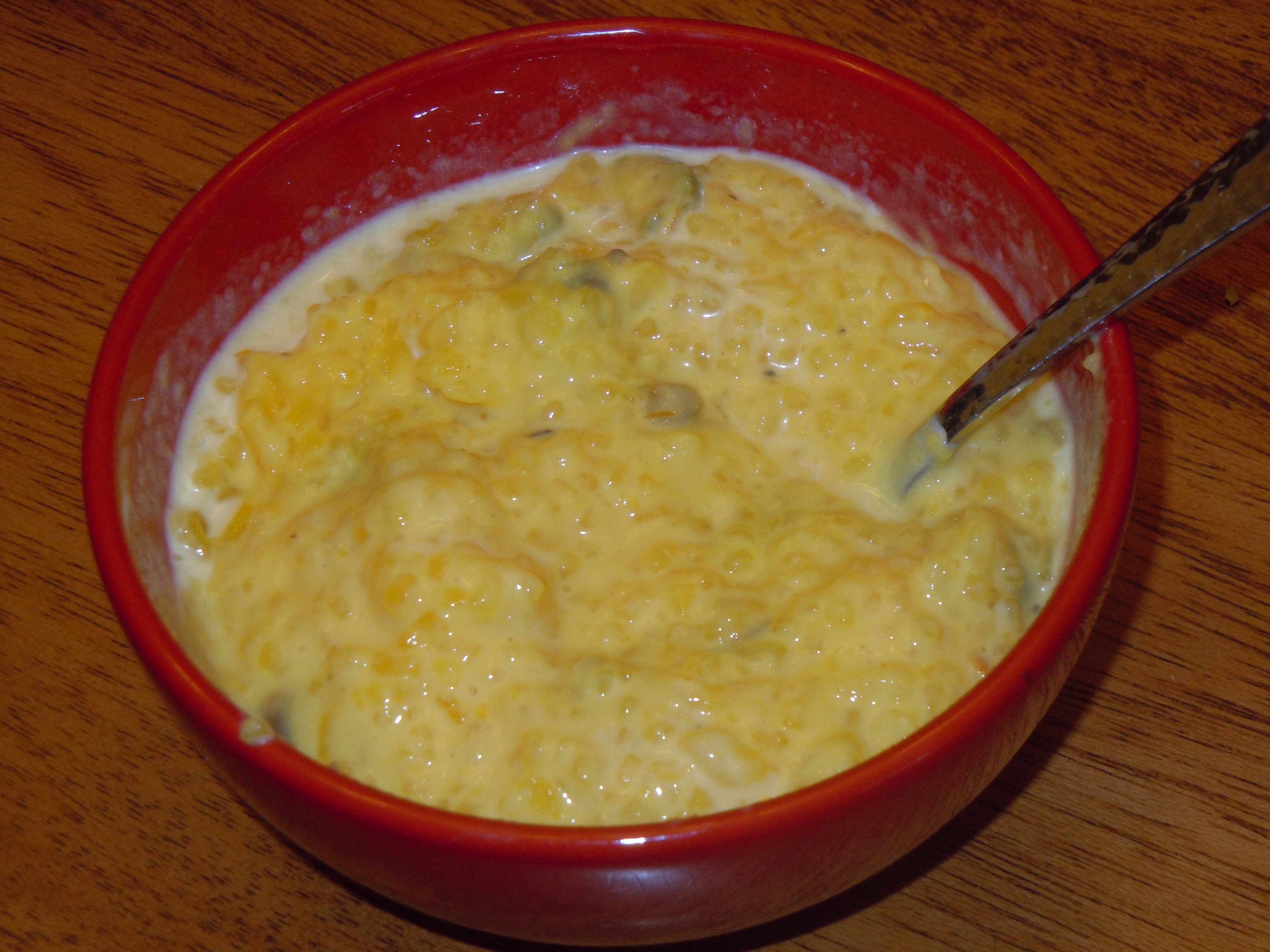
One of my favorite breakfasts is a sort of warm pudding of goat’s milk and rice. The flavors are based on an Indian drink of warm milk sweetened and flavored with saffron that I read about in my early twenties. I recommend cooking this in an unglazed clay pot for the ineffable earthiness it confers, but do use a flame-tamer device or a simmer burner, because scorched milk adheres to clay like stucco. You can make several days’ worth at once and it will keep in a good cold refrigerator for up to a week.
Start with eight cups of fresh goat milk. Add half a cup of unwashed uncooked basmati rice or jasmine rice. Start the burner on low, and as your clay pot warms up, increase the heat gradually to medium. Add half a cup of agave nectar (important for its low glycemic index), a half teaspoon of salt, a teaspoon of saffron crumbled between your fingers, and a half teaspoon of cardamom crushed finely in a mortar and pestle (please don’t use the preground stuff.) For the first half hour you will need to stir frequently, scraping the bottom of the pot well all over with a wooden spoon so that the grains of rice don’t stick and scorch. Once the milk comes to a good simmer, turn the burner down as low as possible and add the flame-tamer under the pot. Add a large handful of raw shelled pistachios or slivered almonds. Let simmer, uncovered, for 4-5 hours. Stir occasionally. When a milk-skin forms on the top, stir it in. The rice will swell and the milk will cook down. You are aiming for something about the consistency of half-and-half, although naturally it will be lumpy with softened rice grains. It will thicken as it cools. Eventually you will have what looks like a cream-soup of a beautiful creamy-gold color. Turn off the burner and let it cool. Taste when cool, and add a little more sweetening if needed, but keep in mind that this is a breakfast, not a dessert. Store in a container in the refrigerator and ladle out into pretty little bowls, heat gently in the microwave (I use two minutes at the defrost setting for two bowls) and eat. I like to pour a tablespoon or so of extra fresh milk across the top for extra gleam and “juice.” It turns breakfast into a little ten-minute island of luxury, and the boost from my own chemical-free hormone-free alfalfa-fed goat milk is considerable.

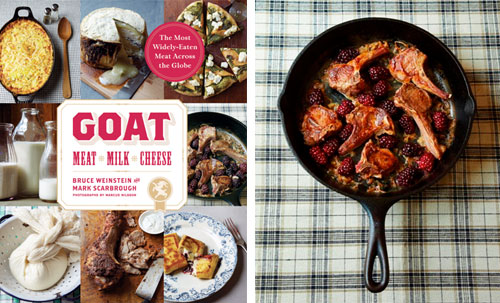
Goats are compact, hardy, and economical, and the amount of milk they produce relative to body size is prodigious. It’s no surprise that they were among the earliest domesticated animals (although well after dogs) and that they still help people eke out a living in marginal circumstances all over the world. They are the ideal dairy/meat animal for small properties. And yet, rarely are the meat or milk seen in American cookbooks. This book changes all that, with scores of carefully composed recipes for the meat, milk, and cheese that goats produce. Buy it if you have goats or access to goat products. If you don’t, it’s still a great read, full of stories about the authors’ interactions with these highly interactive animals.
Also, checl out Mark and Bruce’s marvelous blog about making and eating real food, Real Food Has Curves.