Archive for the ‘Books worth reading’ Category

The Hen That Laid the Golden Eggs, and more notes on ethical meat


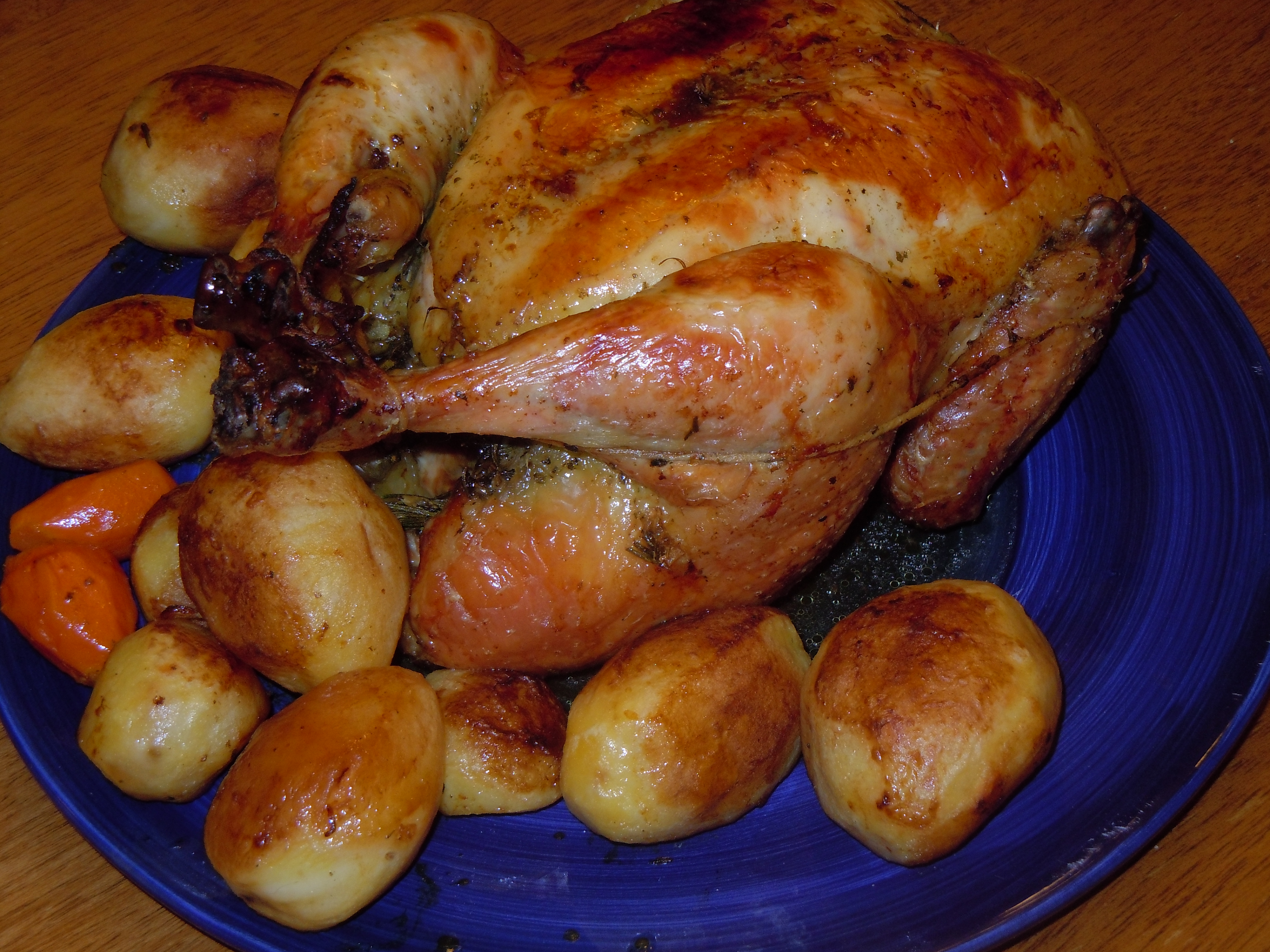
The days are short now, cold nights make a warm stove welcome, and there are longer evenings in which to do my culinary experimenting. Sometimes I like to try unknown ingredients and cuisines that are new to me, and sometimes I like to try slight twists on familiar favorites. Right now I have an abundance of good chicken raised in my own yard, and a simple roast chicken is great when it has real chicken flavor. These birds are big (the one we ate for Thanksgiving had a dressed weight of 14 pounds) and they look quite impressive roasted, but of course a smaller chicken is fine as long as it was raised properly and tastes like a real chicken. Here I followed my usual MO for roasting a chicken (see my post on roast chicken) with a couple of changes.
Twist #1: Since these huge birds have deep breasts which can dry out near the surface by the time the center is cooked properly, I injected the breast with a half-and-half mixture of melted butter and concentrated homemade chicken broth to improve the juiciness. You can buy injectors for this purpose which have big needles that won’t clog up easily. This isn’t as necessary on a smaller chicken, but is still a very tasty touch.
Twist #2: I carved the potatoes into eggs and browned them well in a skillet with some olive oil before putting them in the oven to roast. Keep them in a separate roasting pan and put them in the oven about 50 minutes before the chicken will be done. Be sure to sprinkle them with salt. Baste them regularly with chicken pan juices (you will need to keep adding good broth to the chicken pan to have enough juices.) When you take the chicken out to rest before carving, test the potatoes for doneness and leave them in the oven if needed while the chicken rests. Then pile them around the hen and bear the laden platter to the table. I also carve some chunks of carrot into smaller, goldener eggs to roast in the chicken pan, but I’ll be the first to admit that this is unnecessary fiddling.
If your bird isn’t a hen, it can be the rooster that laid golden eggs, an even rarer phenomenon. I suppose that if you were obsessive enough, you could cut some chard leaves or kale leaves into long, trailing tail feathers to make the phoenix that laid golden eggs, but this is the sort of culinary feat that announces to your friends and loved ones that you spend way too much time thinking about matters unrelated to real life. It will get you talked about, and not in a good way. But if your tastes lean toward culinary fantasy, it’s worth trying anyway. Since you are already lost to reason, consider carving some blue potatoes and purple carrots into colored eggs to add to the general picture of barbaric opulence.

Now, about those notes on ethical meat that I promised you. None of my homesteading ventures have been treated with more dubiousness by others than my decision to raise chickens for meat and harvest them myself. But from a personal standpoint, it’s the best project that I’ve undertaken. The way that commercial chickens are raised is appalling, and fancy labeling about “free range” means very little. If you want details, read the section on chickens in The Omnivore’s Dilemma, and then remind yourself that Pollan is describing a best-case scenario. Then, get real about what you eat. Sometimes I come across writing by others who have participated in the harvest of meat, and today I’d like to share a clip from Mourad Lahlou’s marvelous book New Moroccan. He describes how in his Moroccan home, it was the duty of one adult man to kill meat animals with maximum speed and minimum suffering for the animal, and that it was an activity conducted after prayer and one that the whole family gathered to witness. At thirteen he was taught to do the ritual slaughter by his grandfather. He says “No doubt your reaction to this is that it seems barbaric. But I’m telling you that it’s the opposite, not simply because the slaughter is done in a humane way, but because the act of witnessing it is a reminder that we can never take a life for granted. When you’ve seen an animal give its life for you, you don’t take it lightly. You cook it with care. You eat it with respect. And perhaps the greater barbarism is never coming face to face with that, and pretending that meat comes from a market and not an animal.” Amen to that.
Mourad’s book is one of the best new cookbooks I’ve come across for years, and I recommend it to anyone for the marvelous writing as well as for the recipes.

In the near future I’ll write about exactly how I produce the chickens.

.

Good Businesses: The Urban Store


Although my readers come from all over (even Kuwait, if you can believe it,) I try to keep an eye out for businesses and services that are of interest to my local readers here in Albuquerque. One of my most interesting findings so far is The Urban Store, at 3209 Silver Ave SE. Kathy and Chuck promote all things having to do with sustainability. Their mantra is “Grow, Eat, Return.” Grow good healthy local food, eat it, and return whatever’s left to the soil in a clean and usable form to grow more food and keep the cycle going.
When I first looked around the shop, I said to Kathy “You have all the stuff that really works.” After tiresome (and expensive) experimenting, I’ve found a lot of “green gadgets” that work and a lot of others that don’t. At the Urban Store the experimenting has been done for you, which will save you considerable time and money in the long run. They carry the Naturemill Composter, as well as a great variety of less high-tech composting systems. They have the books written by experienced people who actually know their stuff, and they don’t have the glossy but inaccurate ones thrown together to capitalize on the current fads. They have dehydrators and yogurt makers and cheesemaking supplies and kits to make organic wine and beer. They have an assortment of really well-crafted gardening tools, and shelves of bulk seeds, vermicomposting setups and solar ovens and lots more.
Now here’s the stuff that fascinates me: they work cooperatively with Desert Plastics, a local firm, to make rainbarrels and a wonderful micro-vegetable garden called the Urban Garden. This device, shown below, enables anyone to grow vegetables anywhere. It is cast from resin with UV inhibitors, and comes in 21 colors. It has its own drip system and drainage, and comes with 2 covers for protection from cold or blistering sun. The components are 100% recyclable. It is lighter and more durable than wood (which they also sell.) You can buy just the garden for $295, or for $400 they will deliver it to your site, fill it with organic soil, plant it with seeds for the veggies that you prefer, and give you some organic bug treatments and lots of training in how to micro-garden. The Urban Grower can make a garden out of a patio, balcony, or hard piece of ground that would be too much trouble to dig. They also carry rainbarrels, both stock and custom, and at next week’s Coop Tour they will be debuting a cast resin chicken coop. I’ll be there to take a look, because a chicken coop that’s easy to clean would hold a lot of appeal for me.


This store places a lot of emphasis on teaching, and in fact they will come to your site to consult on how to do whatever sustainable project you want to do.
I won’t use the term “green business,” because that has become a tired and overused marketing phrase with little meaning. Instead, I refer to “good businesses,” the sort that enrich our community and allow us to live better than we could without them. This is a good, even a great, business. You can visit them online, but it will be more fun to stop in and talk with them about how you’d like to make your life a little more sustainable. Whatever you have in mind, odds are that they already know a lot about it and can help you. And have fun! Ultimately, all this is not about giving-up in a grimly austere spirit. It’s about pleasure, and about how much you can have, and how good you can feel about what you do.

Appearing now in your salad bowl: Chickweed


Funny how things cycle. When I first learned to forage as a child, I was distressed because I couldn’t find any chickweed near my Louisiana home. Later, when I had a farm in upstate New York, I had plenty of chickweed and came to curse its abundance. Now, in the desert southwest, nature doesn’t offer any chickweed and I had to buy seeds in order to have it again.
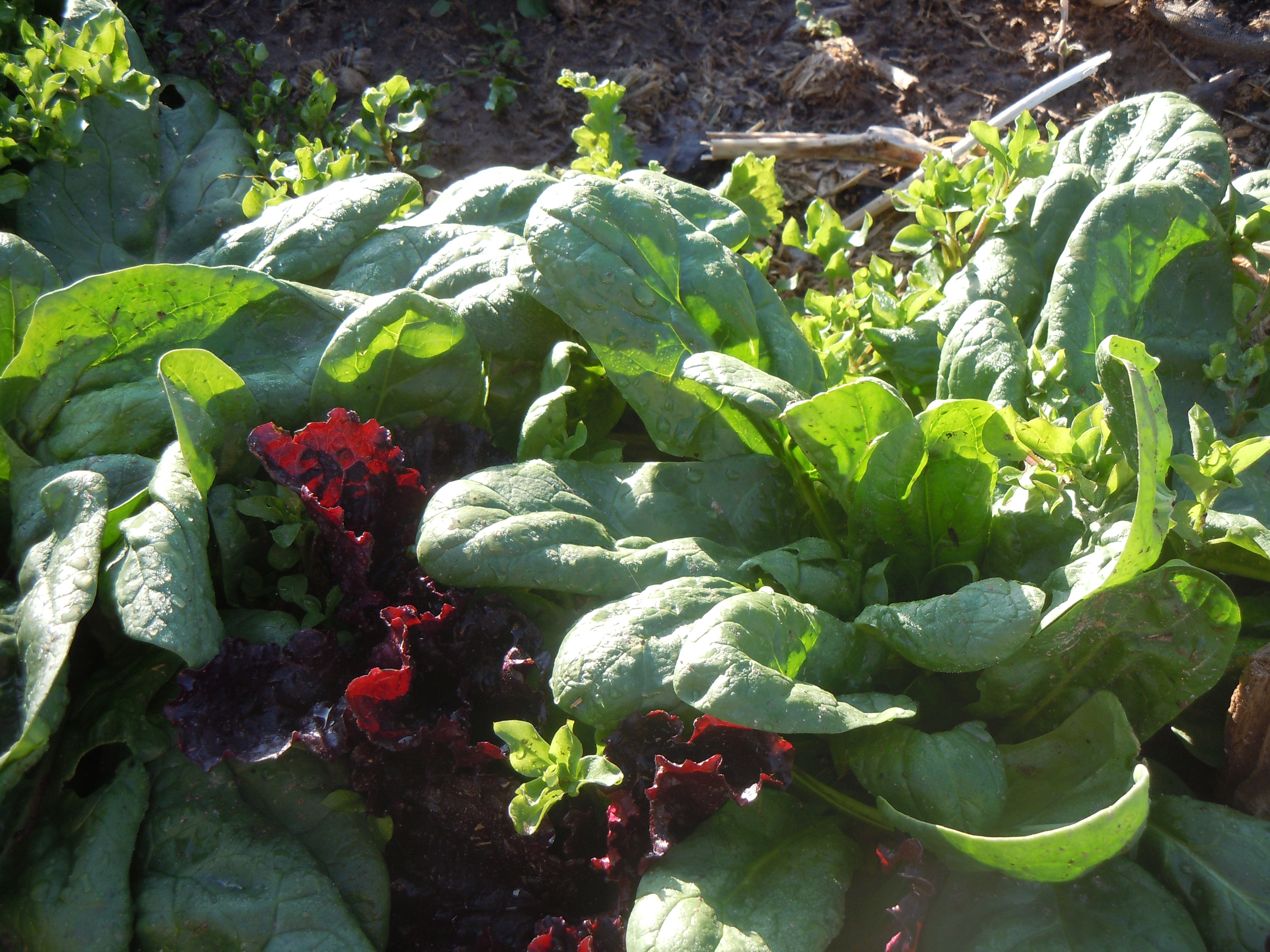
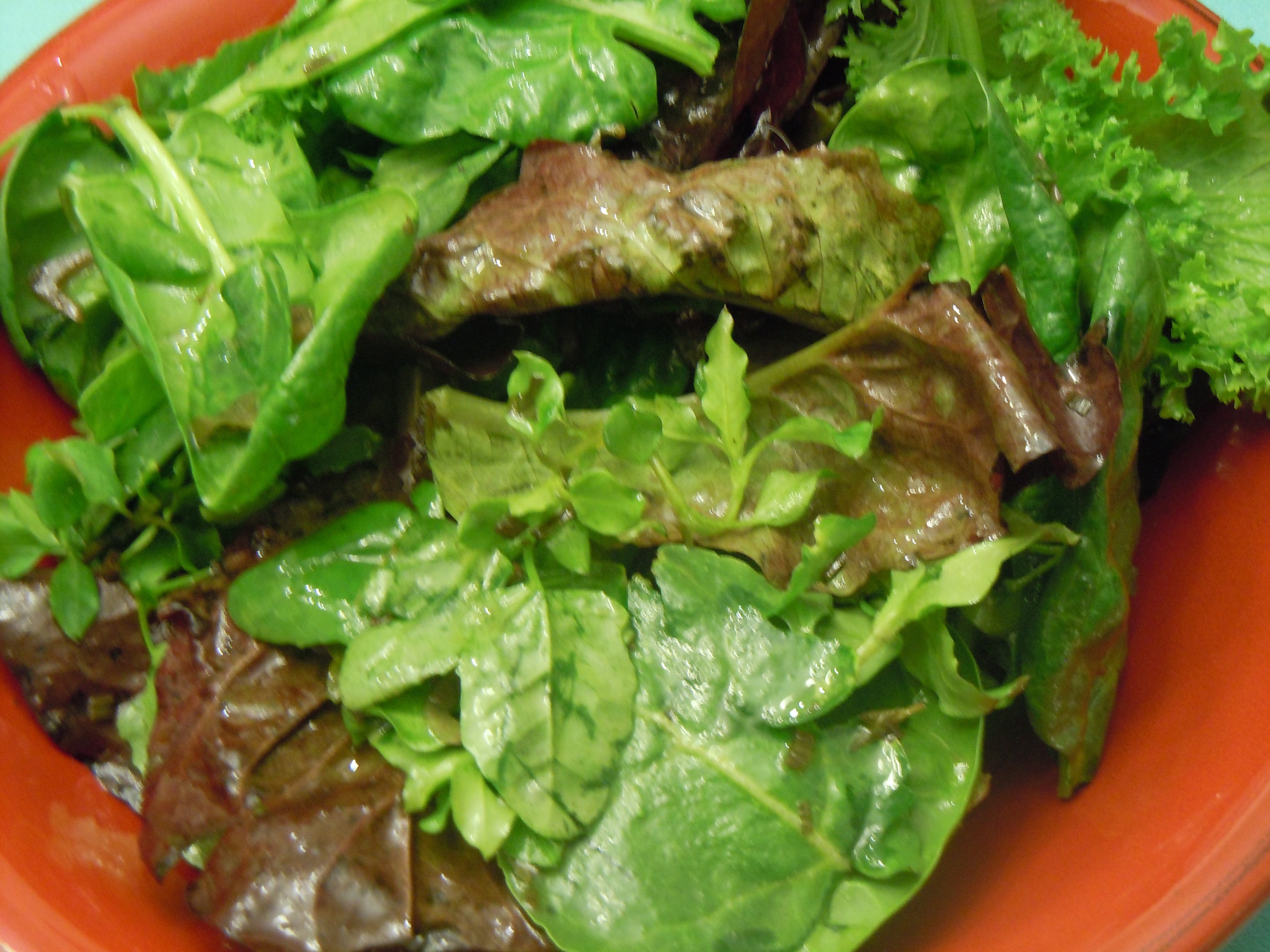
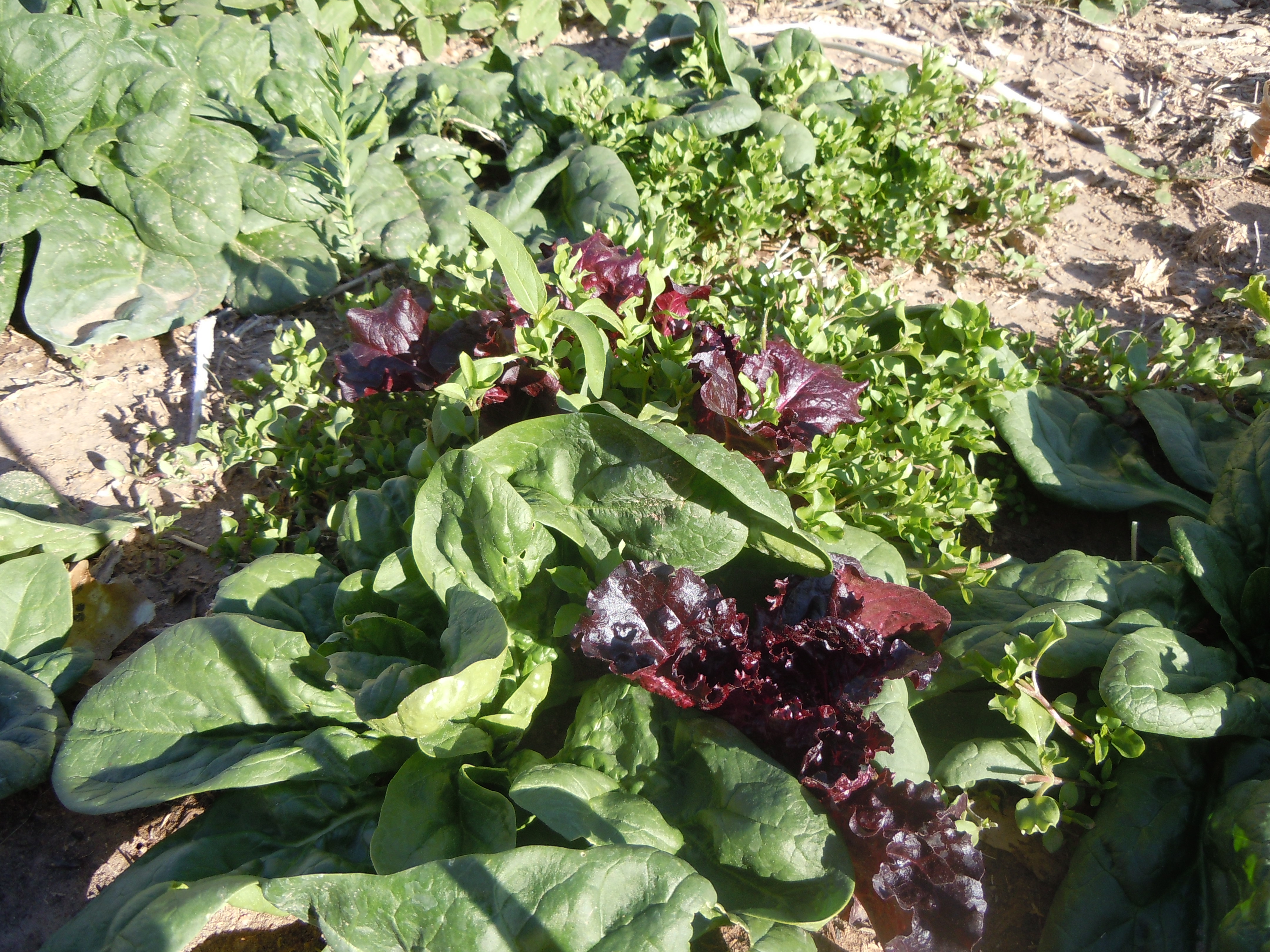
Stellaria media, the common chickweed, is a mild and tasty wild salad green, with more nutritional value than many domesticated salad greens. I had to look hard for seed, because it tends to be assumed that everybody has it and wishes they didn’t. I finally found it at Wild Garden Seeds. It appreciates some shelter from our blazing sun, which I provided by planting it in the same row as lettuce and spinach (right in the same tiny trench) so that it could nestle under the larger leaves and stick its head up for picking. The picture above shows this. In my opinion, only the tip of each sprig is worth eating, so I cut one or two inches off each little branch and leave the rest. Eaten alone with no dressing it has a somewhat grassy flavor, but mixed with other greens it’s delicious and adds a certain airiness and lift to the texture of a mixed salad. I use it up for anywhere up to half the bulk of a salad, depending on how much of it I have available at the moment. I have often read that it can be used as a cooked green, but I don’t care for it that way- too bland- and use it only in salads. I plan to let some go to seed, and will also make another planting in the fall, because it loves cool weather.

Books Worth Reading: Homesteading then and now


Urban homesteading and homesteading generally are enjoying 15 minutes of fame right now (this seems to happen every 30 years) and so there are a plethora of books about homesteading, many of them written by people who got their information from other books about homesteading. Occasionally a book turns up that was written by people who have actually walked the walk, not for a year or two but for decades, and this is such a book. It is much more about rural homesteading and small farming than about urban/suburban issues, but there are urban-oriented sidebars that have some useful information. The section on choosing a property is exceptional, and I strongly recommend that anybody who is thinking about buying a rural property read it carefully. Alas, it is packed with exactly the sort of useful advice that most of us don’t take when the time comes. Instead, we fall in love with a property, buy it, and then learn what the problems are and spend years and dollars sorting them out. But if you read this first, you will at least have your eyes opened about where the problems might lie before they actually smack you in the face. The section on vegetable gardening has good information about how to calculate realistically how much of each veggie you might actually use, as well as a lot of practical growing information. The sections on keeping animals deserve a careful and attentive reading BEFORE you actually purchase any animals. The material on maintaining animals in a healthy condition is excellent. If you are planning to raise meat animals, be aware that there is a good sidebar about going from sustainable/humane fantasy to blood-spattered reality, but there is little information about how to do that, so if you are planning to do your own butchering you will need other sources of information about the process. There is also a good piece of advice about discussing your self-sufficient fantasies with your partner, in detail, before embarking, because one person’s rural idyll can be the other person’s isolated nightmare. Sometimes even full disclosure doesn’t help. I can say from personal experience that my very truthful husband told me in a straightforward way, before we moved to a bigger property, that he didn’t want to do any garden or yard work, and it turned out that what he meant was this: he didn’t want to do any garden or yard work. I had the nerve to act surprised when I realized this. Now I arrange things so that I can manage the garden myself, and we’re both happy with the arrangement.
Writing about a new homesteading book makes me think of old homesteading books, and some of them are too good to be forgotten. The Complete Manual of practical Homesteading by John Vivian stands out. I first read it when I was 17, and when in my twenties I acquired an actual working farm, I used a lot of his information. I don’t agree with some of it, but I am very grateful that he started me on the path to thinking about how to do farm tasks as well as possible. I don’t think it’s in print any longer, but used copies turn up here and there, and it’s worth a read for anyone who has a larger or rural property. And if anybody knows where John Vivian is these days, let me know so that I can thank him. By scrupulously writing about only what he knew for himself and had done himself, he saved me a lot of time that I would otherwise have spent sorting out real information from the second-hand kind.