Archive for April, 2020

Living in Interesting Times: Shortages

When I talk with friends and neighbors about the current pandemic, I am sometimes surprised to encounter a firm fixed belief that there are no food shortages and won’t be any food shortages. Ask them if they’ve tried to buy flour or rice lately and you won’t receive a sensible reply. My own view is that in such situations there are potentially two kinds of shortages: short-term ones caused by panic-buying and hoarding, and longer-term ones caused by interruption of supply chains. Our current difficulty (at least in my area) in getting rice, flour, eggs, and toilet paper fall in the first category. Some people’s’ hoarding caused others to go without, and I’ll just add that there is a special place in hell reserved for those who hoard and price-gouge infant food, diapers, and other baby supplies. But there is lots of other stuff available and most of us will be just fine except for a little grousing.

The other kind of shortage, from interruption of production and transportation chains, is longer-term, hard to predict accurately, and potentially more worrisome. Without predicting disaster, I can only say that American agriculture depends heavily on immigrant labor, and you can review the Farm Bureau’s summary of this. I will quote only one startling fact from their statistics: “If agriculture were to lose access to all undocumented workers, agricultural output would fall by $30 to $60 billion.” Since to help contain the pandemic we are closing borders and tightening enforcement, I don’t see how the agricultural labor supply can be unaffected. This could translate to fruit unharvested and veggies decaying in the fields or not getting planted in the first place.

This is a long-winded way of saying that all food should be treated like the treasure it is. Don’t hoard it, and don’t waste it either. Look at what you have and let your imagination run wild about how you might use it. Relax your usual food restrictions unless they relate to religion or health. Taste things you might not ordinarily think about. Get a couple of good cookbooks about vegetables so that you’re ready to get the most out of available produce. Two that I highly recommend are Six Seasons and Vegetables Unleashed. Both are available in e-format and will help you make the most of any food available. Think creatively about what to make. Can’t get rice? Make lettuce wraps. We are not going to starve, not by a long shot, and we can better utilize our supply chain by being more flexible in our thinking.
The problem that I really worry about is not national and international supply chains but local ones. Huge ag corporations won’t be allowed to go under, but your area small farmers and stock raisers just might, or may be disheartened enough by plowing good vegetables back into the dirt that they don’t continue. So find out where they are and how you can buy their produce. In my area the growers’ markets will open in May but  will be limited to food only, and since it’s in the open air, this is probably safer than going to a grocery store. Use all recommended precautions, but support those growers.

Plant something of your own. This morning I was thinking about what I would grow if I only had one small garden bed to work with. Given a tiny little space four feet on a side, I would double-dig it, enrich the hell out of the soil, and plant Fordhook Swiss chard and tuck some thyme plants in at the edges. Chard produces heavily all summer regardless of heat if kept watered, and few things will do more for your health than eating more leafy greens. The taste is mild and acceptable to nearly everyone. The old reliable Fordhook is more productive and resilient than the newer fancier colors, and the stems offer a second vegetable with a different texture, great in stir-fries. It can be harvested all summer and then left in place to produce some early greens the following year. Chickens adore any leaves that you don’t get around to eating, and if you know any goats, they love the tough ends of the stalks, or just compost them. One packet of seed produces all the greens a small family can eat. I don’t know of a more nutritious and efficient vegetable. As for how to use it, click on the “greens” category in the sidebar on the right side of this page  for a dozen or more ideas, and that’s just the beginning.


Living in Interesting Times: Tough Herbs


Joyous Ostara/Passover/Easter, happy Spring, or whatever you choose to celebrate when life is returning to the soil. “Spring is Christ, raising dead plants from their shrouds” Rumi said, and any ordinary yard shows us the truth of it.  These are strange times indeed, and the best way to keep yourself safe is to stay home when not working. Gardeners and permaculturists are used to staying home, and have plenty to stay home for. This is the glory season for greens and herbs.

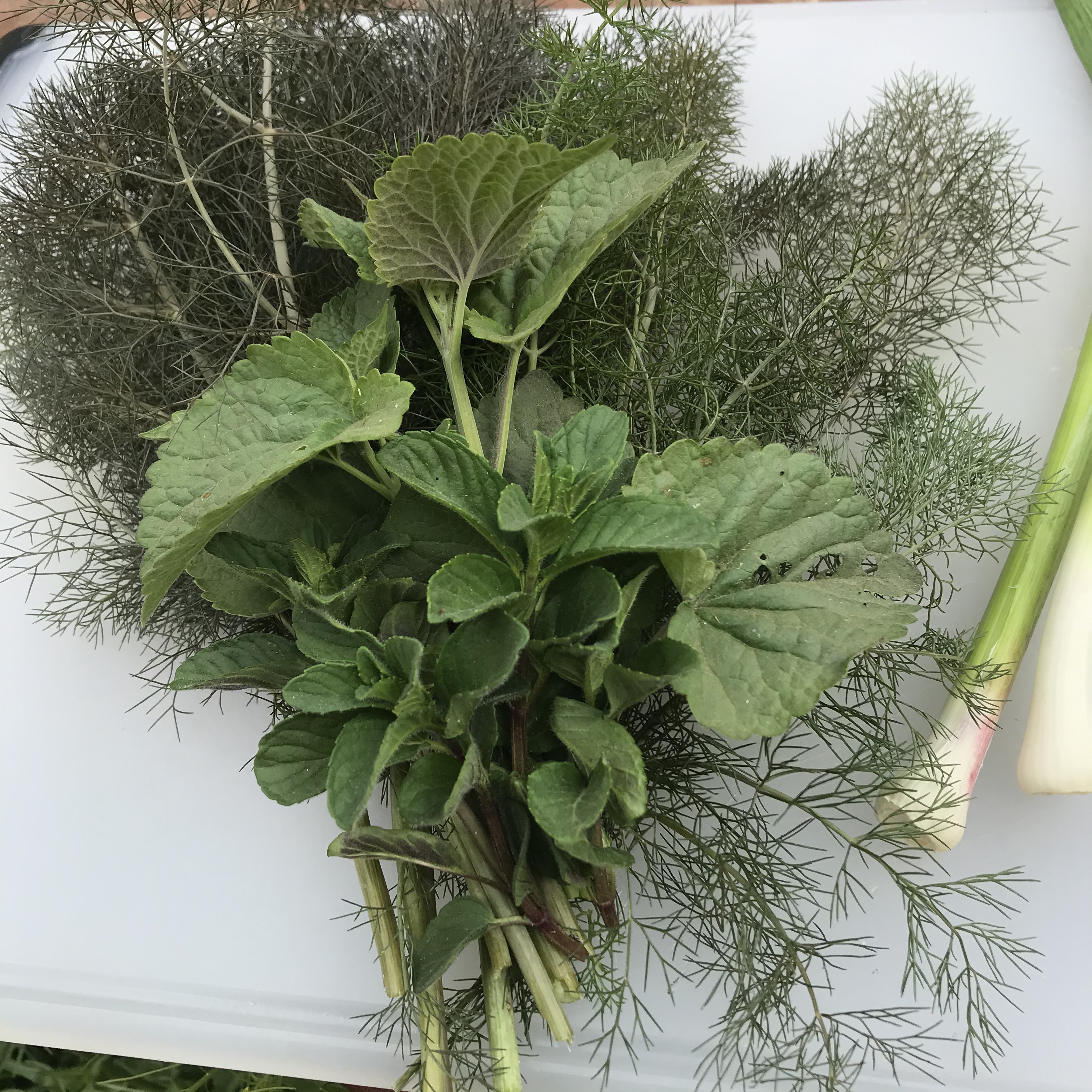
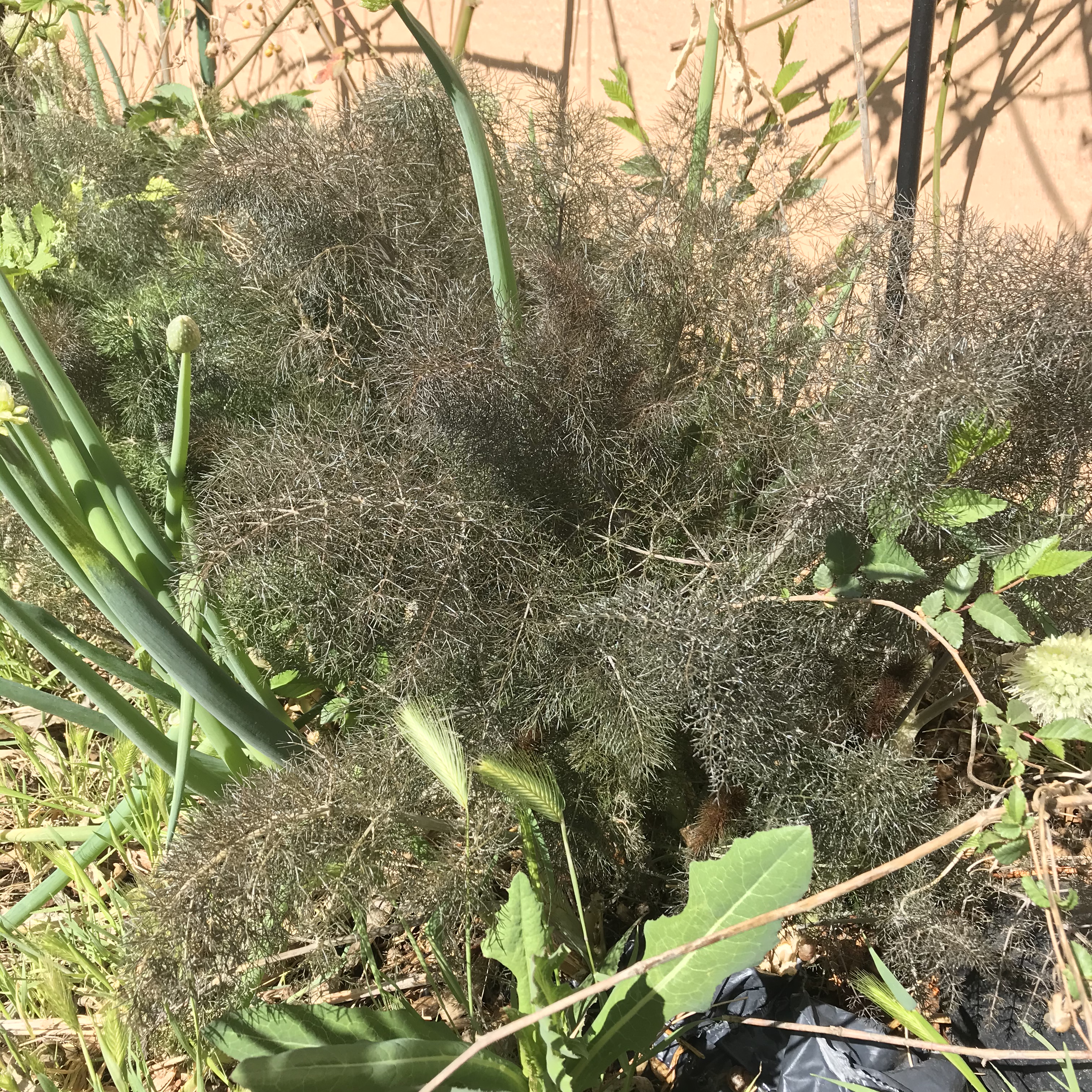
I have written before about one of my favorite plants, bronze fennel, and you can find that post here. Today I’ll just remind you that it is very ornamental most of the time and you can easily sneak it past your homeowners association if you are unlucky enough to have one. Pollinating insects adore it, and so do I. It will take two or three years to reach a good size, so start now.

in the spring I like to make herb pesto used to have on hand for all kinds of seasoning uses. Essentially, pesto involves garlic in some form, herb leaves, nuts of some kind, and olive oil. I typically add the cheese at a later stage.

Don’t make pesto just by throwing together all the herbs you have. Herbs have strong flavors, and some contemplative tasting, sniffing, and thinking is called for to make sure you have a coherent and appealing flavor picture. I made this one yesterday morning, picking the  fennel first, and decided to go with the anise flavor and chose anise hyssop and a fruity mint, a couple of stout sprigs of each, and two stalks of green garlic.

in my opinion, proper pestos are made with a mortar and pestle. Use the food processor if you must, but please, don’t even think about using the blender. Blended leaves all acquire an off, grassy taste. Wash the herbs, remove tough stems, chop the leaves coarsely, and peel the green garlic down to tender parts and finely slice it crosswise. Pound the garlic in the mortar with a good pinch of salt until it is pretty thoroughly crushed, then add the chopped leaves and pound to a chunky paste. Then add nuts of your choice and decide how finely to crush them. The herbs had a Sardinian taste so I added roasted salted pistachio kernels and pounded them only until coarsely crushed. Pound in a little really good herbaceous olive oil, then stir in more oil to the consistency that you want. Check for salt.

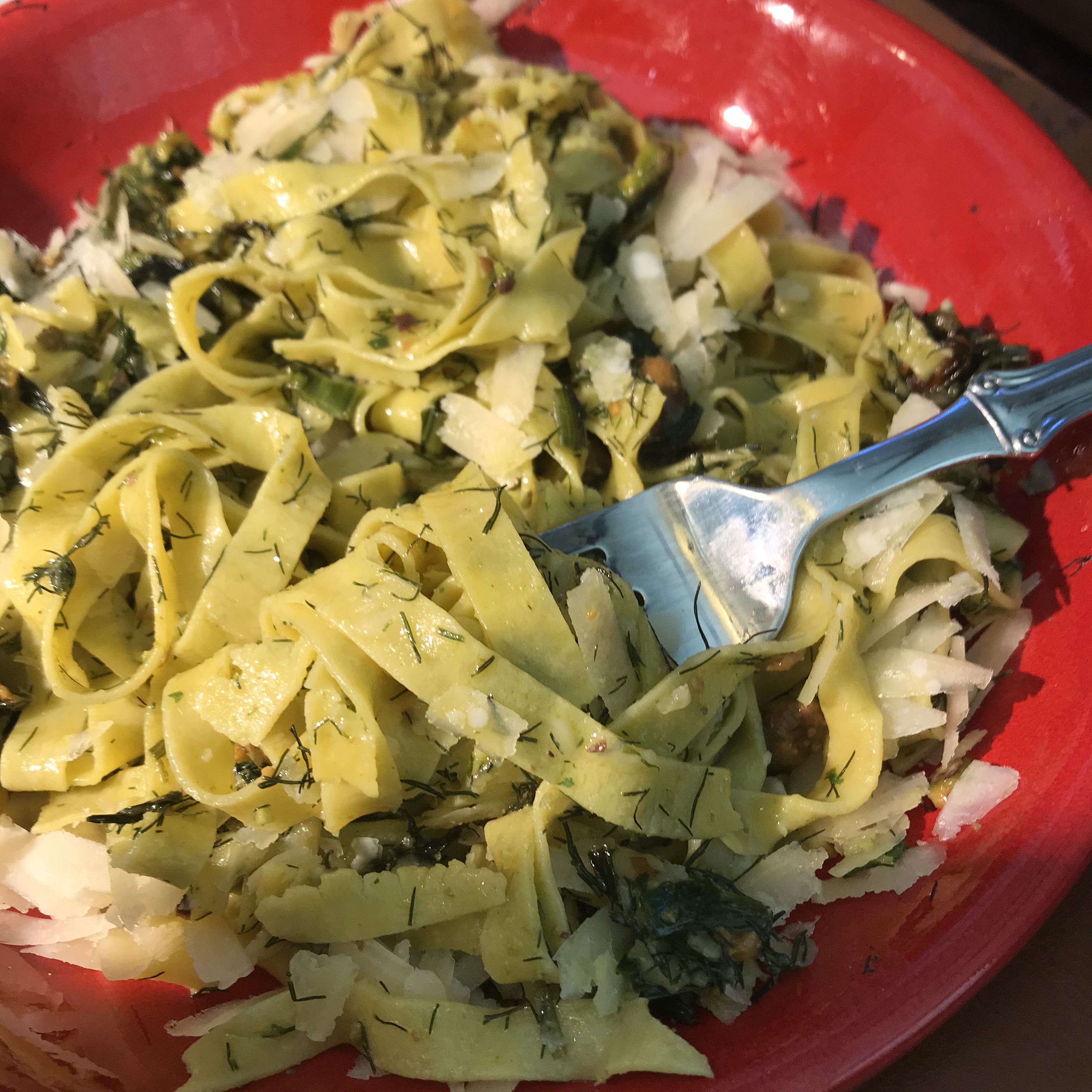
It smelled so good that I was eager to eat some right away, so for lunch we had fresh handmade egg linguine with half the herb pesto, a couple of glugs of additional olive oil, and some top notch Parmesan. Yum. The rest of the pesto went in a jar, and later that day I stirred up some sourdough bread dough and left it to rise in the refrigerator overnight.

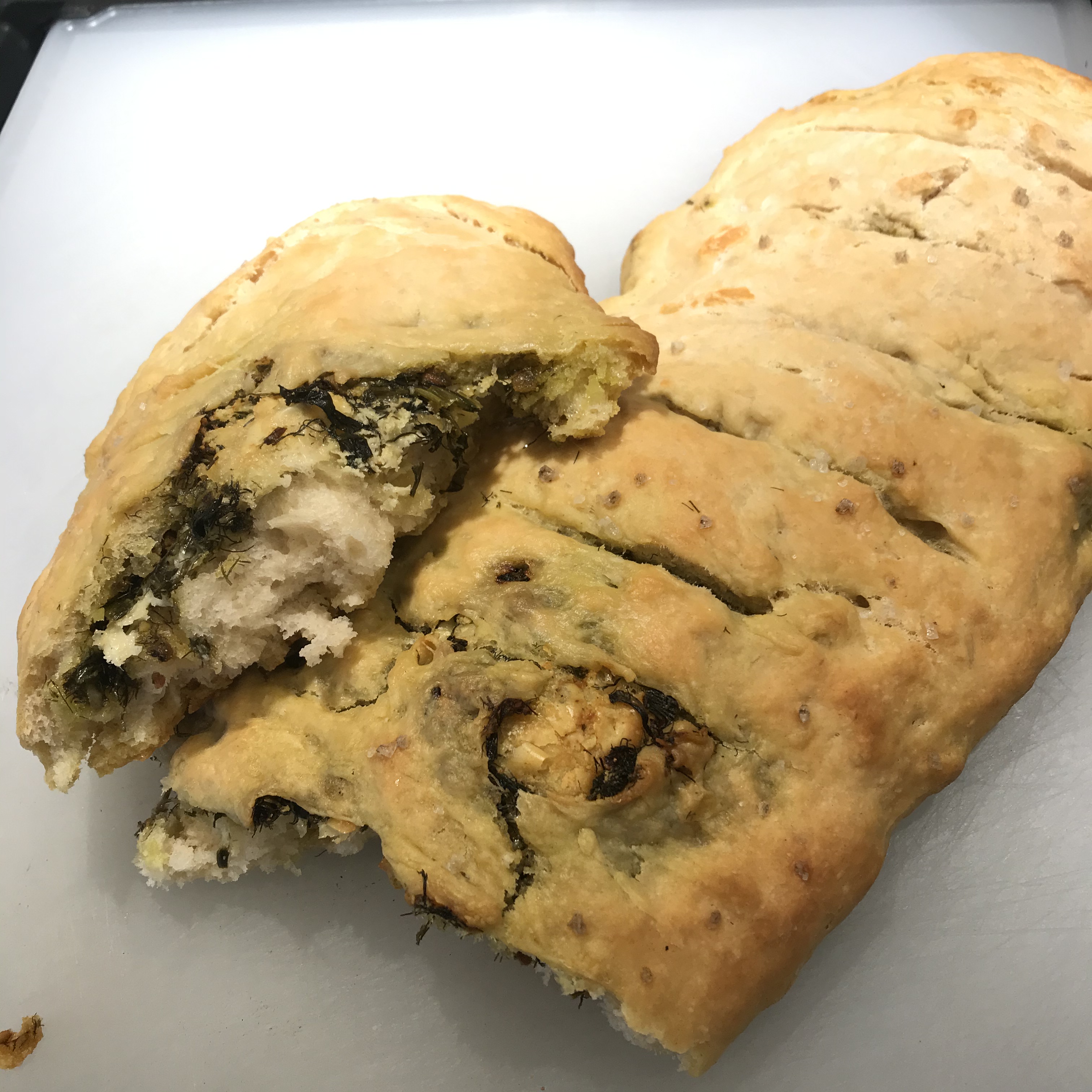
The next day I took the dough out of the refrigerator mid-morning and let it come to room temperature for a couple of hours. Then I patted a loaf’s worth of the dough out into a large somewhat erratic rectangle on an oiled board, smeared it thickly with the rest of the pesto, and then topped it with grated Romano. This was rolled into a long loaf and left to rise on a baking sheet, then slashed across the top, brushed with more olive oil, and baked in a preheated 425 degree oven until done. After cooling on a rack for 15 minutes, it was ready to break into beautiful fragrant chunks and eat as an Easter lunch full of the flavors of the season. Butter was excessive, but that didn’t stop us.

The amount of pesto to make is a very individual decision. The flavor of this one is subtler than it sounds, and I picked a nice sized bouquet of fennel leaves and ended up with about a cup of pesto, divided between the two dishes here.

Living in Interesting Times: Radiant Moments


To sum up the pandemic news: daily life is strange and it’s going to be strange for some time to come. If you don’t have a garden, it’s even weirder and more disturbing. But if you do have a garden, there are moments of such transcendent beauty that you realize with a fresh shock how lucky you are to be alive. They make all the distancing and disinfecting seem worthwhile.

I had a moment like that this morning. My Italian plum is in full bloom, about two weeks later than all my other plums, and when I came out to feed the chickens this morning the whole tree appeared to be in motion. As I got closer, I realized that hundreds of fritillary butterflies were flapping around it, lighting briefly to drink nectar there and there. They moved so fast that I couldn’t get a very good shot, but the whole tree was covered with several butterflies per branch. The beauty and lively motion were such that I stood gaping at it for several minutes, filled with gratitude for this visitation.

There are plenty of other things to be grateful for. I have a job, and that alone makes me really lucky. I have chickens and as long as they’re fed, they lay. Giving them fresh green grass and edible weeds makes the yolks deep gold. Still exulting over the butterflies, I decided to make egg fettuccini. I have written about this before and will only add here that using all yolks in the dough adds another layer of deliciousness, and you can afford this extravagance  if you have chickens. I wanted something with a Southern Mediterranean feel and used sautéed green garlic, capers, pine nuts, a few rinsed and chopped anchovy fillets, some chopped grilled scallions left over from another meal, cherry tomatoes dried into wonderful “tomato raisins” in a slow oven, a good pinch of red pepper flakes, and floods of top-notch olive oil. Finished with shavings of good Parmesan, this makes a meal that isn’t quickly forgotten and came out of your garden, your pantry, and your freezer.

Be kind to those around you, take care of your health as well as possible, love your friends and your pets, and let gratitude flood you whenever possible. If you own a little bit of ground, put it to food production. Tend your pantry and freezer. Try to have enough to share. Survive, but survive kindly.