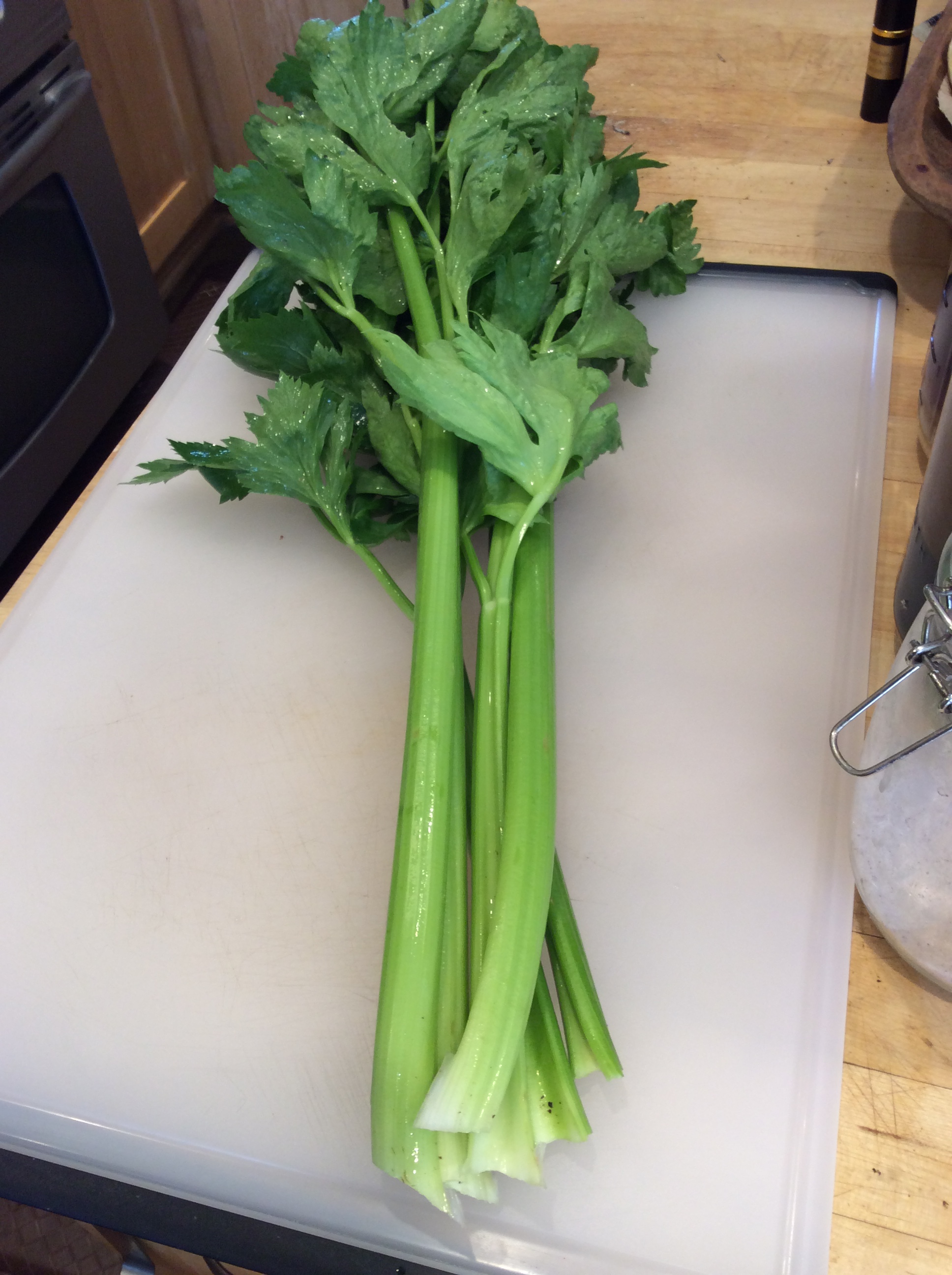
My WordPress dashboard brought to my attention that I have been yapping endlessly about home food production for 199 posts. Naturally, I decided to make my 200th post about a green vegetable, the very thing that I am forever droning on about.
I never tried growing celery because I never ate that much of it. I crunched an occasional stalk, and as a homegrown Louisiana cook I cooked it in the mirepoix that begins so many Cajun dishes, but a bunch a year pretty much met my needs. Then last spring I noticed that a supplier had celery plants at the same time that I noticed I had a bed about to be empty. So I ordered a dozen plants as a lark.
As it turns out, celery is highly versatile in the kitchen as well as easy to grow. It needs your best soil and some elbow room, and here in the desert it has to be watered regularly. Given those conditions it will grow into a wonderful mound of greens.
For general snacking, stalks can be harvested as soon as they’re big enough. Break or cut near the base, but don’t damage the plant. The stalks are a little less tender than grocery store celery, and also a lot less watery and have a full delicious flavor of their own. I snacked away about four of my twelve plants and had eight big plants left by fall. After several frosts when the rest of the garden was over, the celery was green and robust and I finally got around to harvesting it. I never blanched the plants. Blanching produces lighter, yellower, and more tender stalks, but it is also a fair amount of trouble and I am as lazy a gardener as there is.
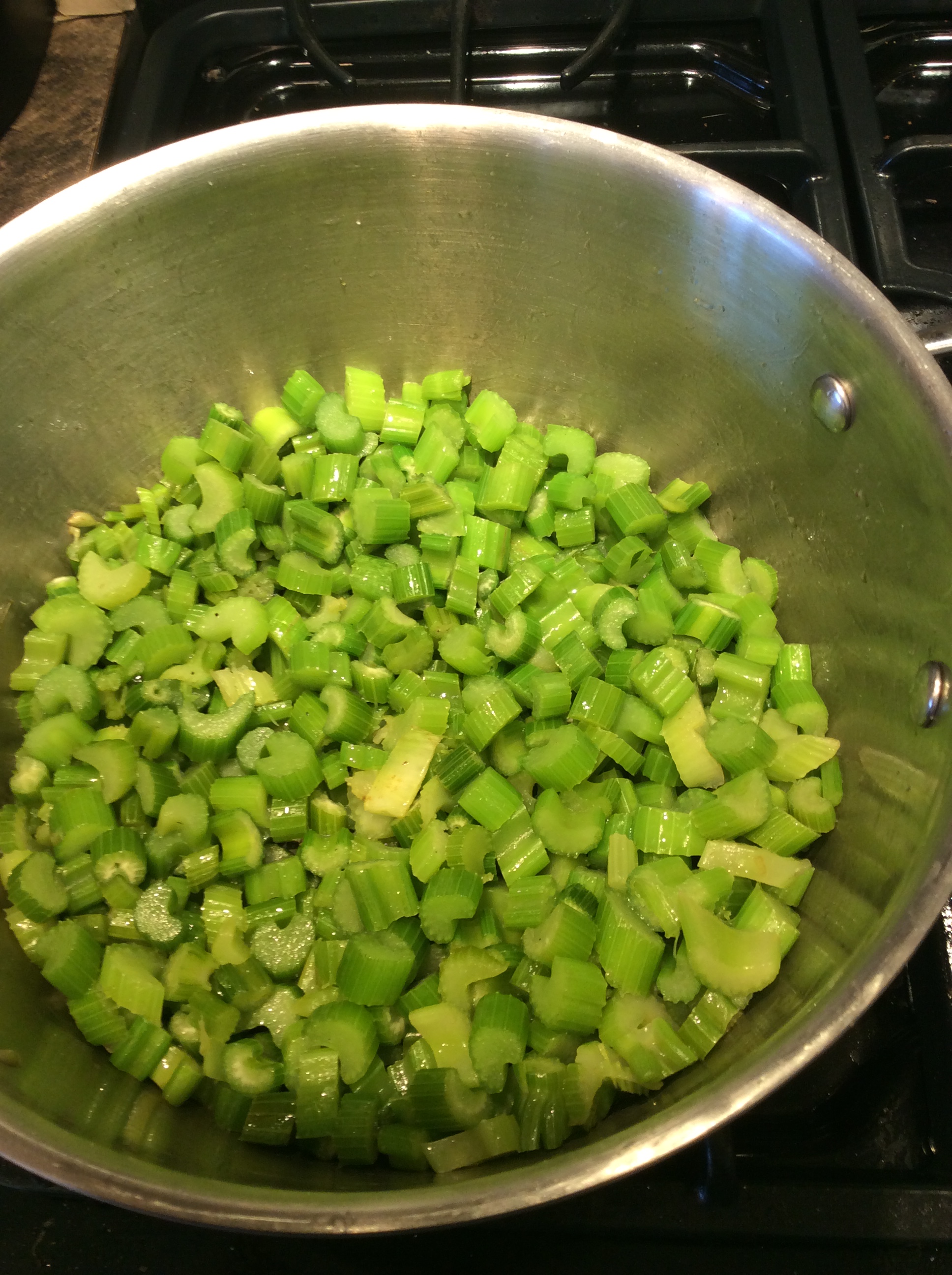
I cleaned the stalks thoroughly and cut them in 1/2″ cross sections and sautéed them in batches in very good olive oil. I thoroughly enjoyed eating them as a green vegetable, with salt and bits of fried guanciale on top. I froze a lot in vacuum-sealed bags to eat this way and to use in mirepoix and soup all winter.
I was left with a counter full of the upper halves of the plants, all thin stalks and dark green leaves. I sorted out the pale self-blanched leaves in the middle, ate some dipped in olive oil as a cook’s treat, and refrigerated the rest for use in salads.
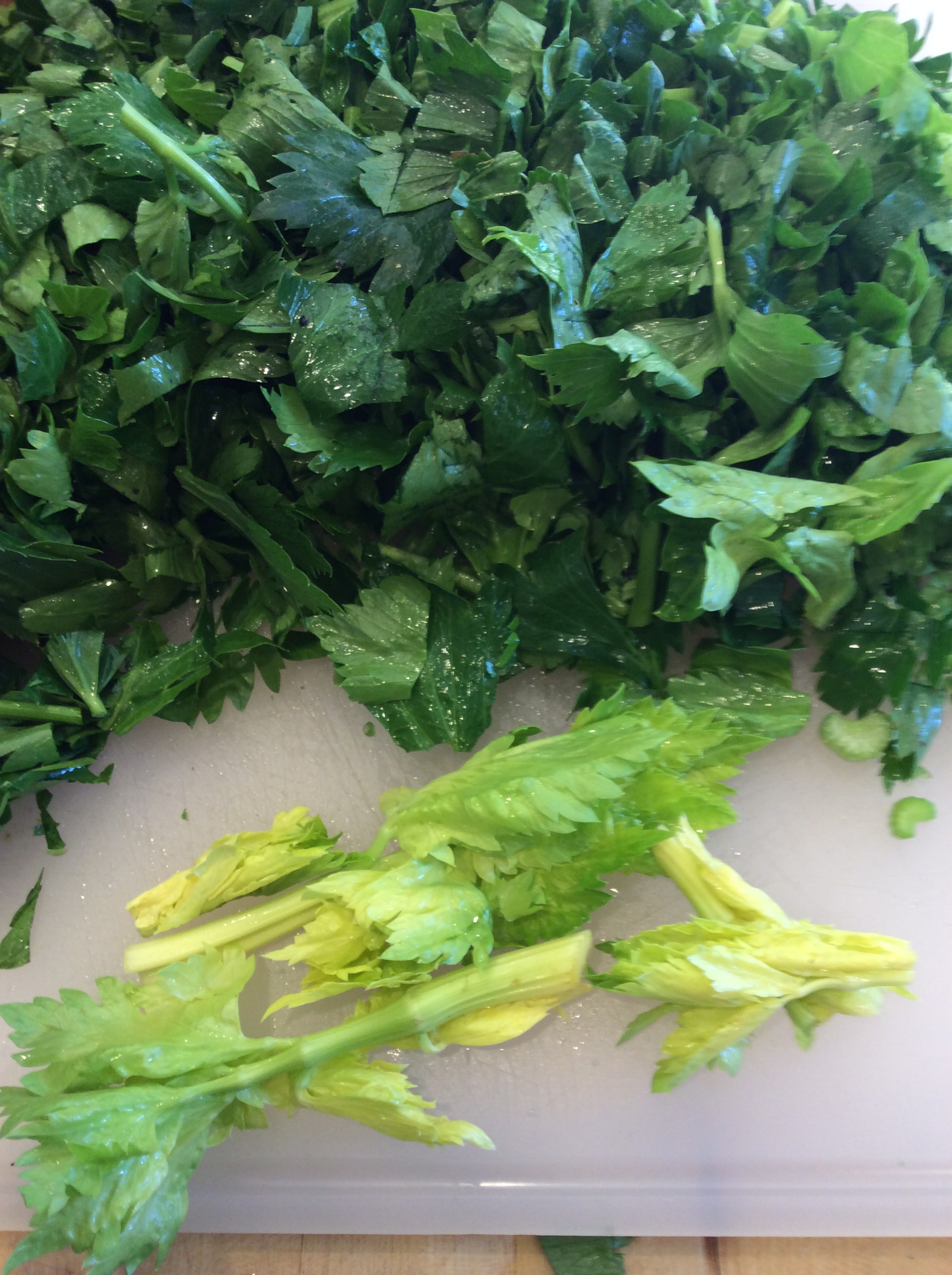
I was left with heaps of dark leaves like the ones toward the top of the picture above. I am not one to waste leafy greens, so I cut them in the same half inch cross sections, leaves and all, and sautéed them in olive oil until cooked. I put a bit of the cooked tops in a skillet with more olive oil and added a chopped clove of garlic, some salt, several chopped black oil-cured olives, and a squeeze of lemon to make a Horta of pure celery leaves. I ate it with crumbled feta and greatly enjoyed it, but have to say that this is a bitter green and probably only real greens-lovers will enjoy it. But when I made a horta with celery tops as about a quarter of the total greens and used milder greens to make up the bulk, I was surprised how much the bitter leaves added to the savory nature of the dish.
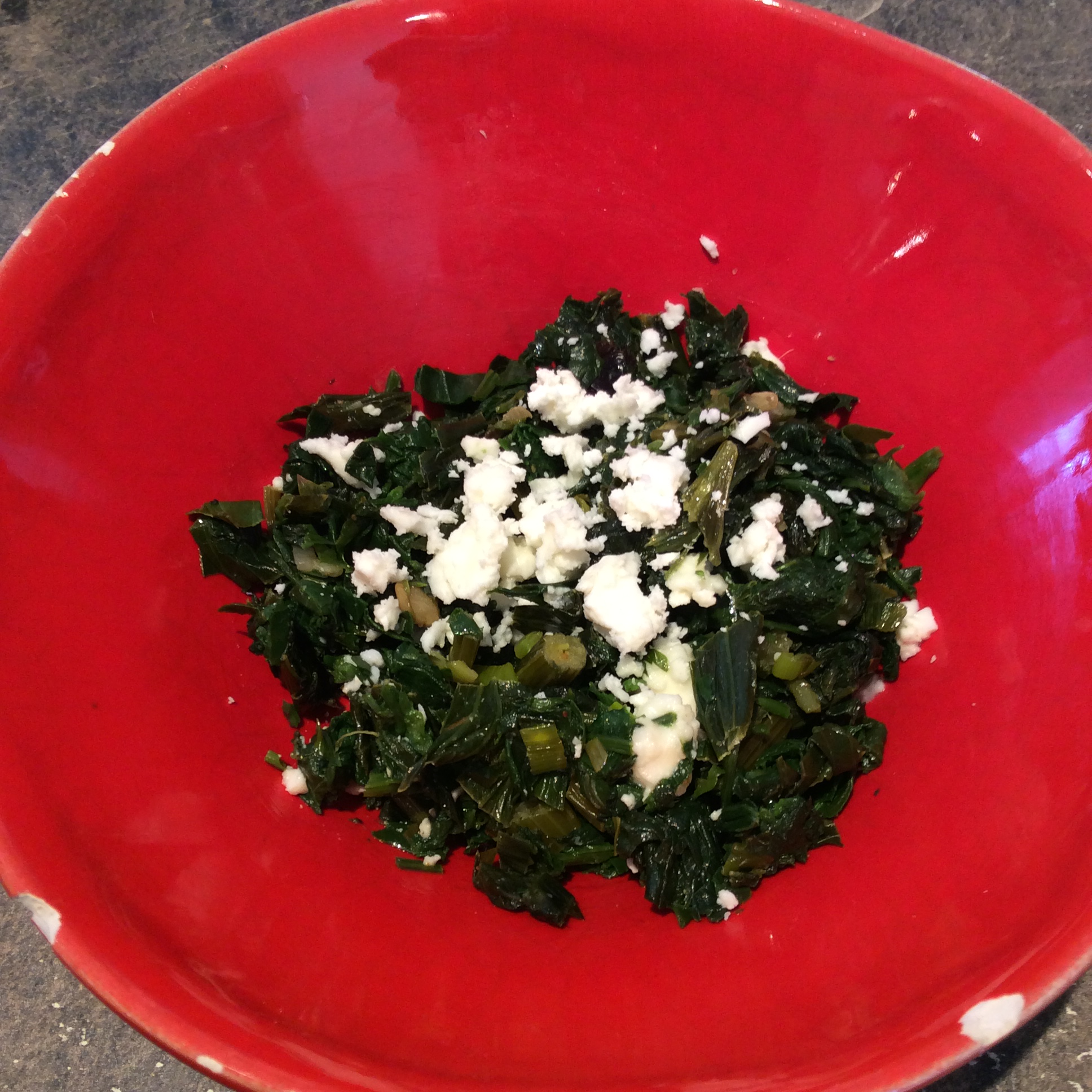
I sealed and froze the rest of the cooked tops and am using them with my frozen lambsquarters and amaranth to make horta that meets with general approval. I think that a bit of the pure celery-top horta would be good as a sort of herb salad next to roast duck to cut the richness, but I haven’t tried it yet.
I want to say once again, when cooking leafy greens, don’t be afraid to cook them. I often find the stronger greens tough and revolting when lightly cooked but delicious with 10 or 15 more minutes on the stove. As long as you are sautéing there is minimal nutritional loss. The thing I no longer ever do is blanch them and toss out the blanching water. If a sauté method isn’t appropriate, I blanch in a very small amount of water with frequent stirring, sort of half-steaming in effect, and drink the bit of water after it’s been drained off and cooled.
Just as a point of interest, a phytochemical found in celery called luteolin is being studied for neuroprotective effects. If true, one more reason to eat your celery, and your green veggies generally. You can find an abstract here.


 My urban homestead