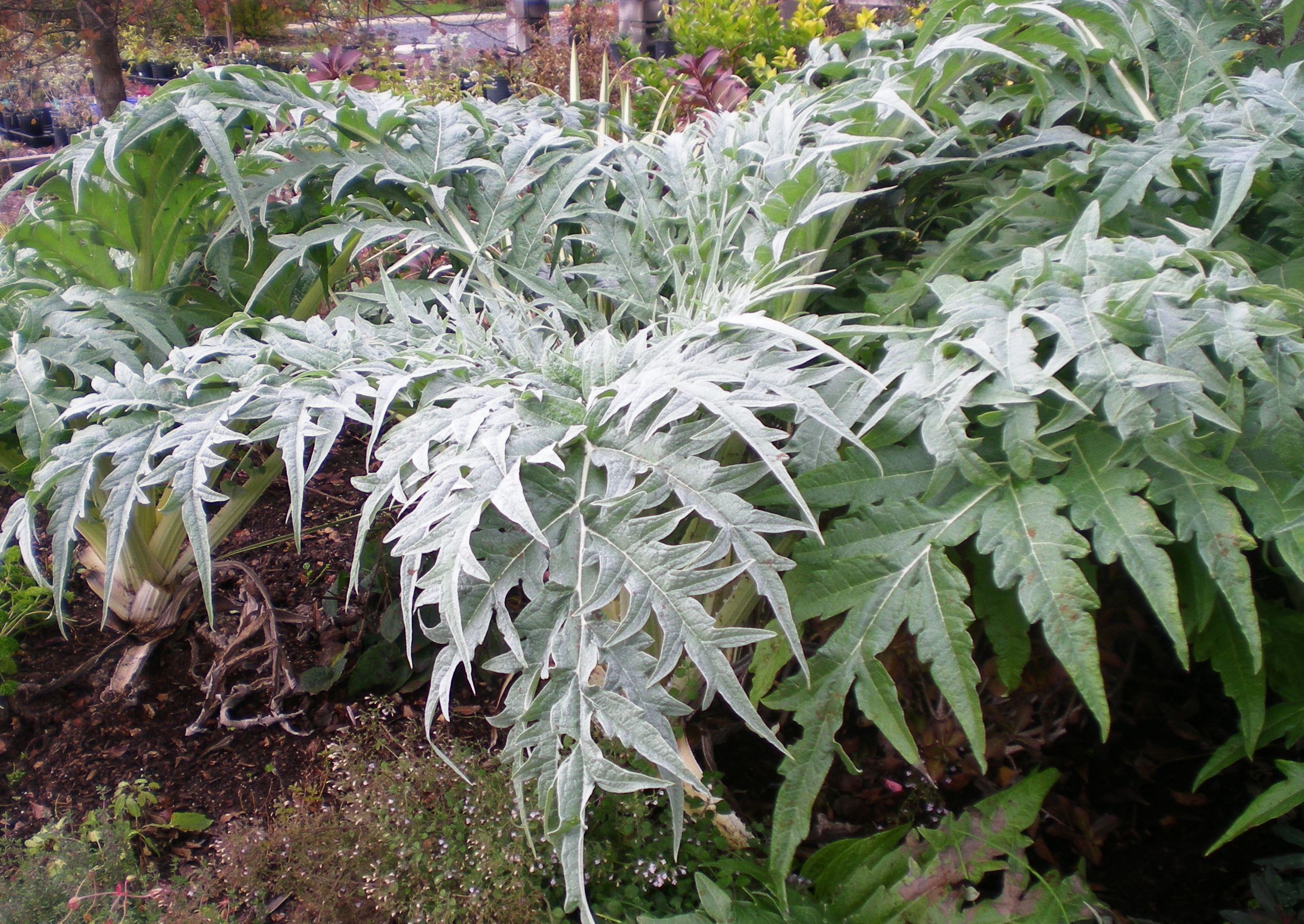
It took me a long time to learn to eat cardoons. My own cardoons, at least. I first found them in the market while honeymooning in Italy, and there they are neatly blanched, trimmed, and ready for the pot. I loved them, and ordered seeds from Italy as soon as I got home. They grow robustly in my desert climate and alkaline soil, and they are very ornamental. I had them for years before I successfully cooked them, and they were wonderful bee fodder all that time, blooming in the blasting-hot late summer when few other flowers are available to our pollinators. I tried to cook them without the tedious step of blanching the plants, and would say that this just doesn’t work.
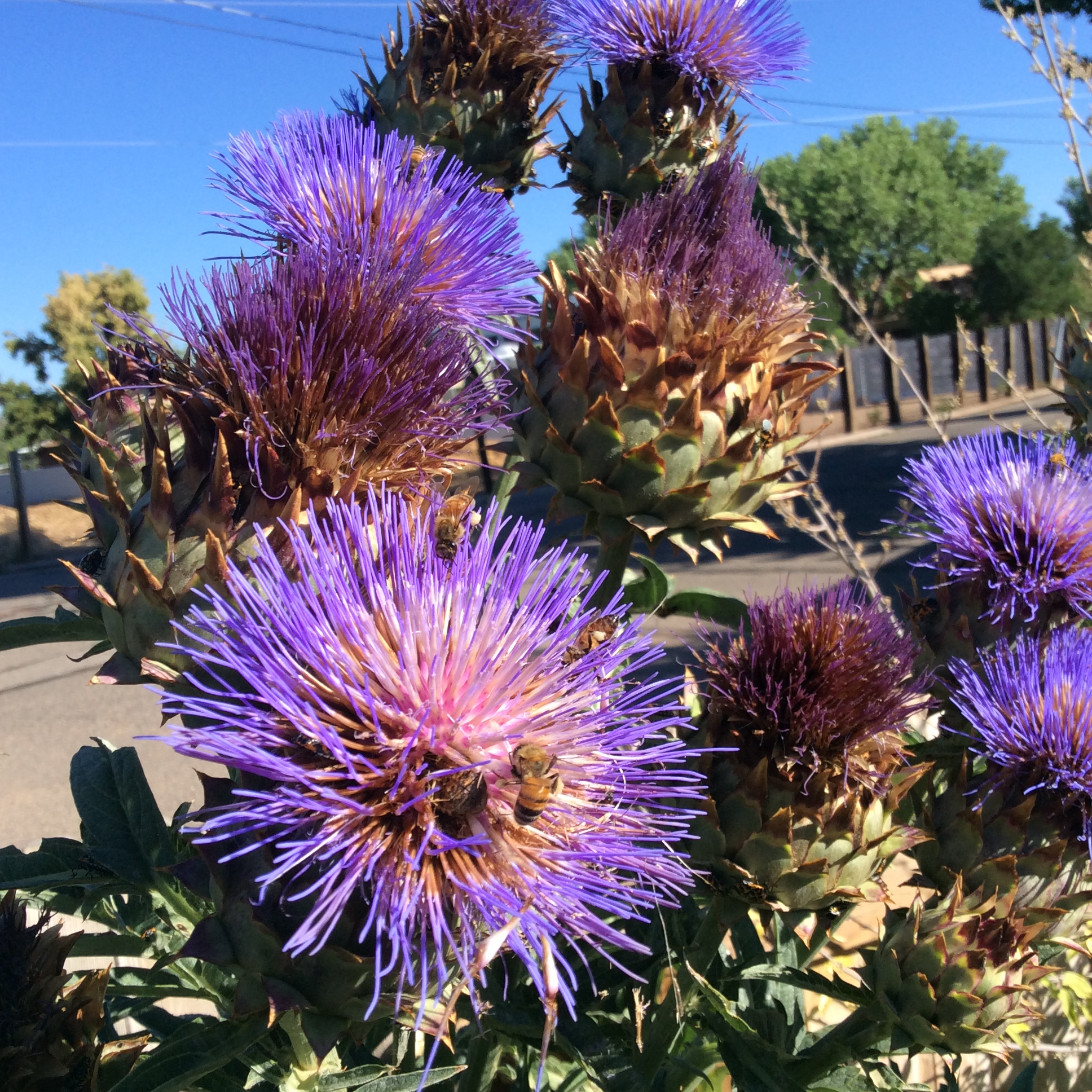
They die back unattractively after flowering, but then sprout again from the ground up. The foliage is silvery, full, and stunning in November. Unfortunately this is also the time when they’re best for eating, so mine aren’t exactly ornamental right now.
Before eating, blanch the stalks for a couple of weeks. I covered mine with some landscape cloth I had around, which is black and fuzzy and nearly lightproof while letting air and water through. You could also wrap your bundled plant in a couple of layers of corrugated cardboard, tieing it on carefully to exclude light from the stalks.
When blanched, use a sharp knife to cut the whole center out of the plant. Wear gloves, because cardoons are thistles and have nasty bristles down the edges of the leaf stalks and at the leaf margins. Cut off the leaves, leaving a bundle of stalks, and pull off any outer stalks that look ragged. My goat adores the leaves and trimmings, and since the leaves are intensely bitter, this is the best use for them.
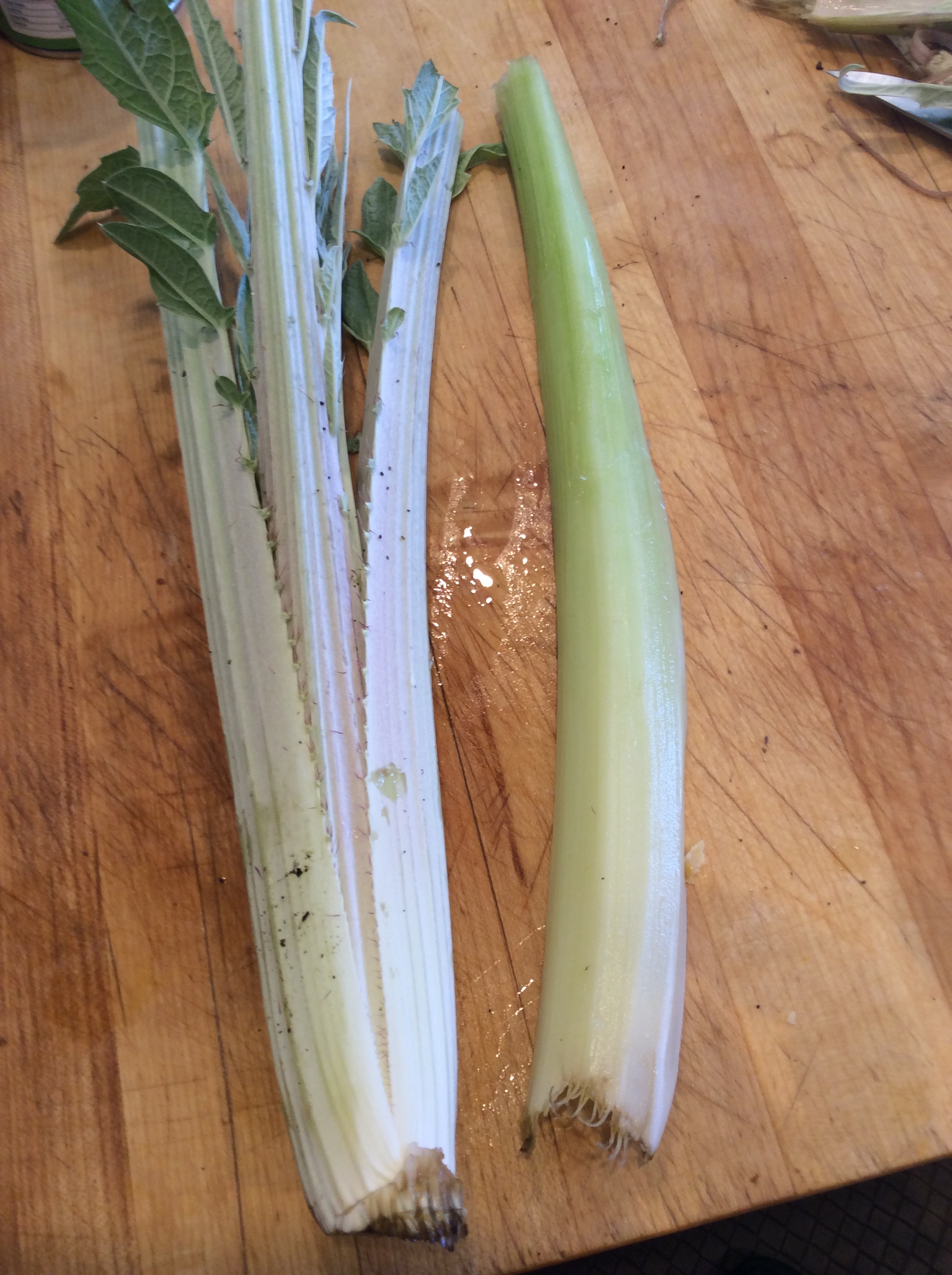
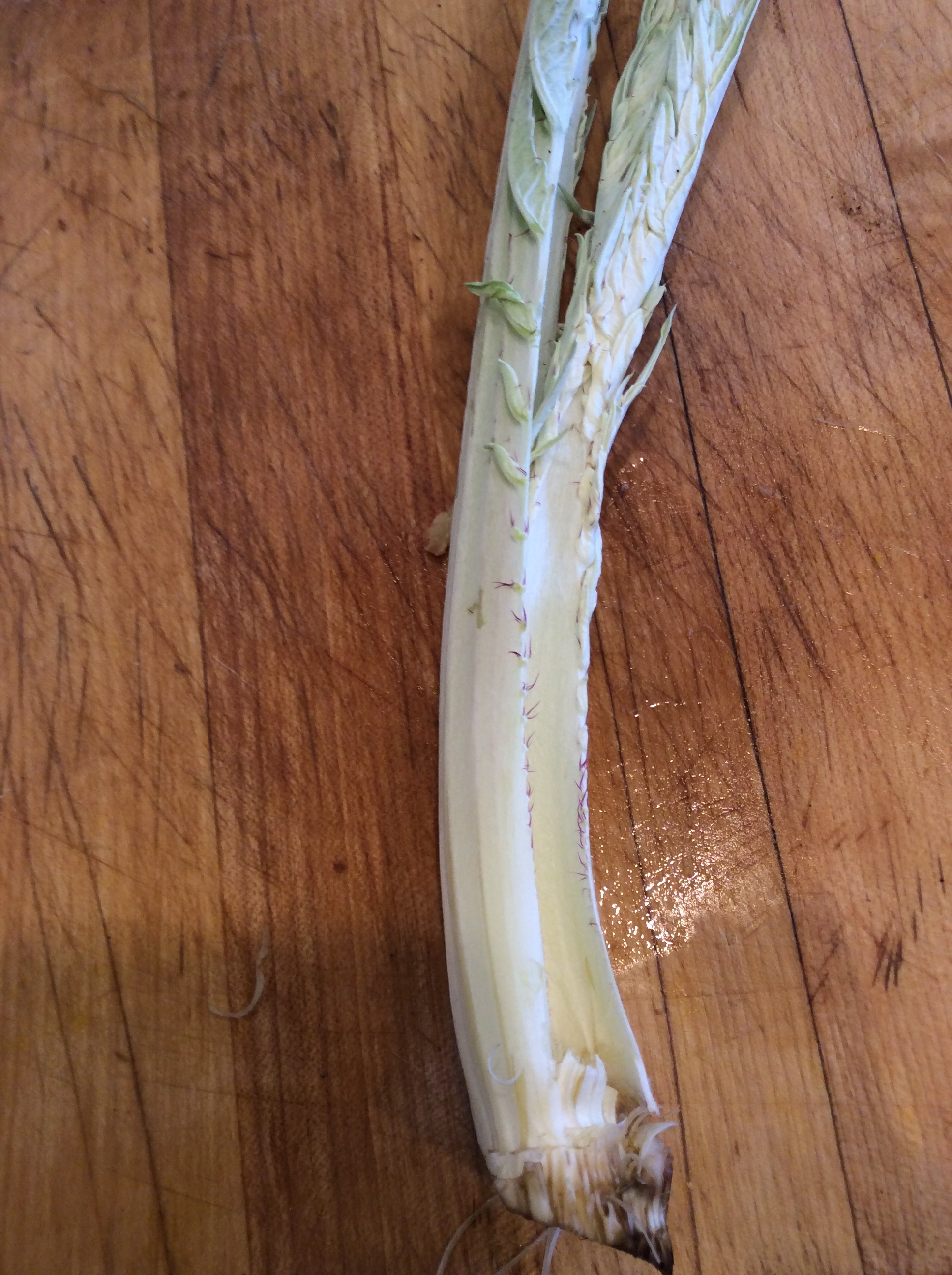
Separate the leaf stalks, wash well, and use a vegetable peeler to skim off the outer margin on each edge, where the bristles are. Now use the peeler to skin off the tough stringy part on the convex outer surface of each stem. When you are done, they will look like the peeled stalk on the right above. The innermost stalks are tender and fairly stringless and just need the base trimmed and the row of bristles on each edge skinned off. Be sure you pull off the leaves from the center stalks, because even though they are very blanched and not bitter, they are tough even after cooking. Cut off the stalks at the point that they start to look corrugated and use everything below that.
Cut the stalks in half-inch cross sections and blanch in boiling salted water for about two minutes, then drain well and either continue cooking as you desire or refrigerate them for later. They have a flavor rather similar to artichokes, so I gave them a bagna cauda treatment by sautéing them for about five minutes in plenty of good olive oil with a chopped clove of garlic and half a mashed anchovy fillet and a final garnish of roasted pine nuts. Their own flavor is subtle, so don’t get too heavy handed with the seasonings.
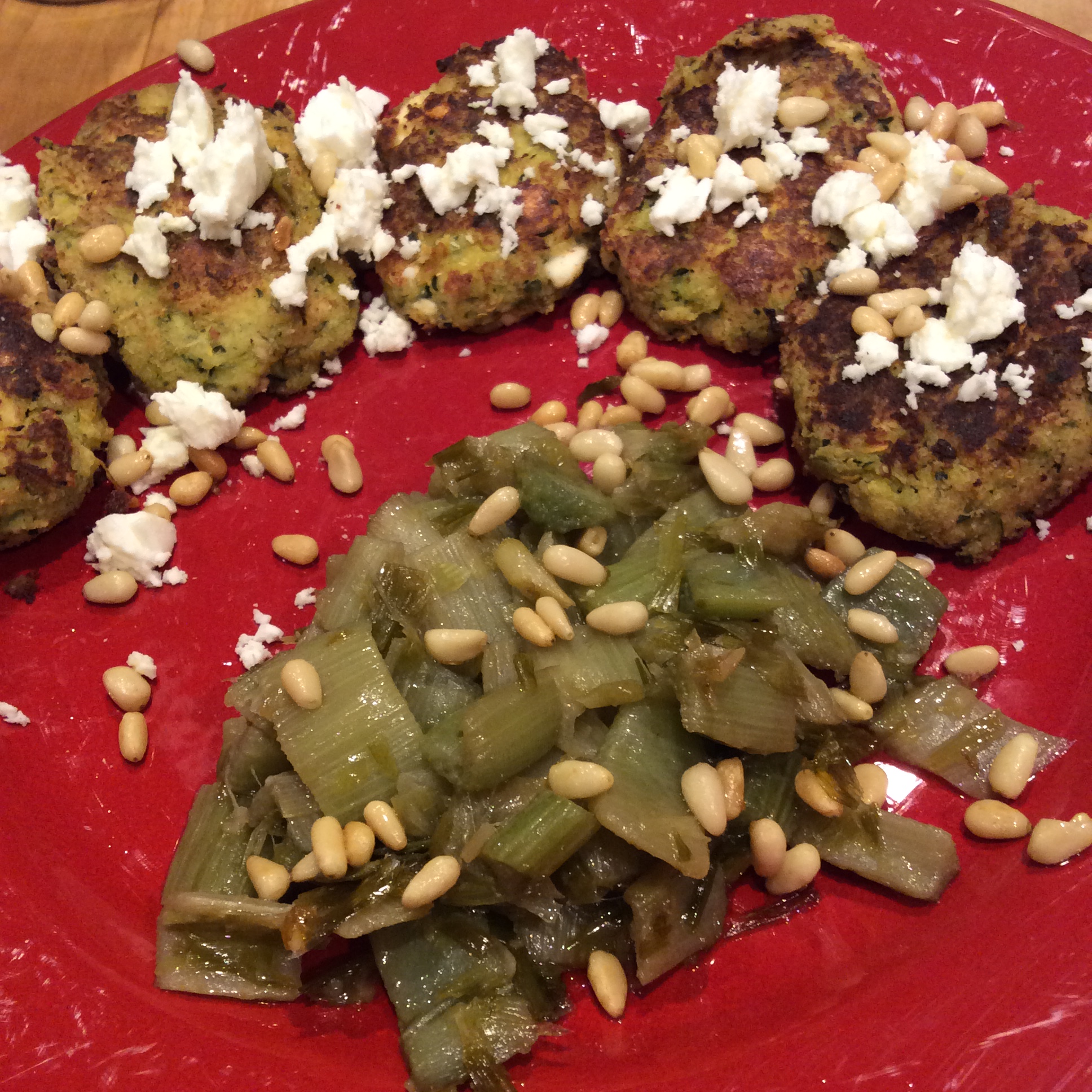
I think they are awfully tasty. The bad news is that one large plant, with a fair amount of preparation, makes two generous servings. But given that they are drought tolerant, attractive, and truly carefree perennials, I don’t mind putting in some effort in the kitchen. As for the low yield aspect, I will just work on growing more of them.
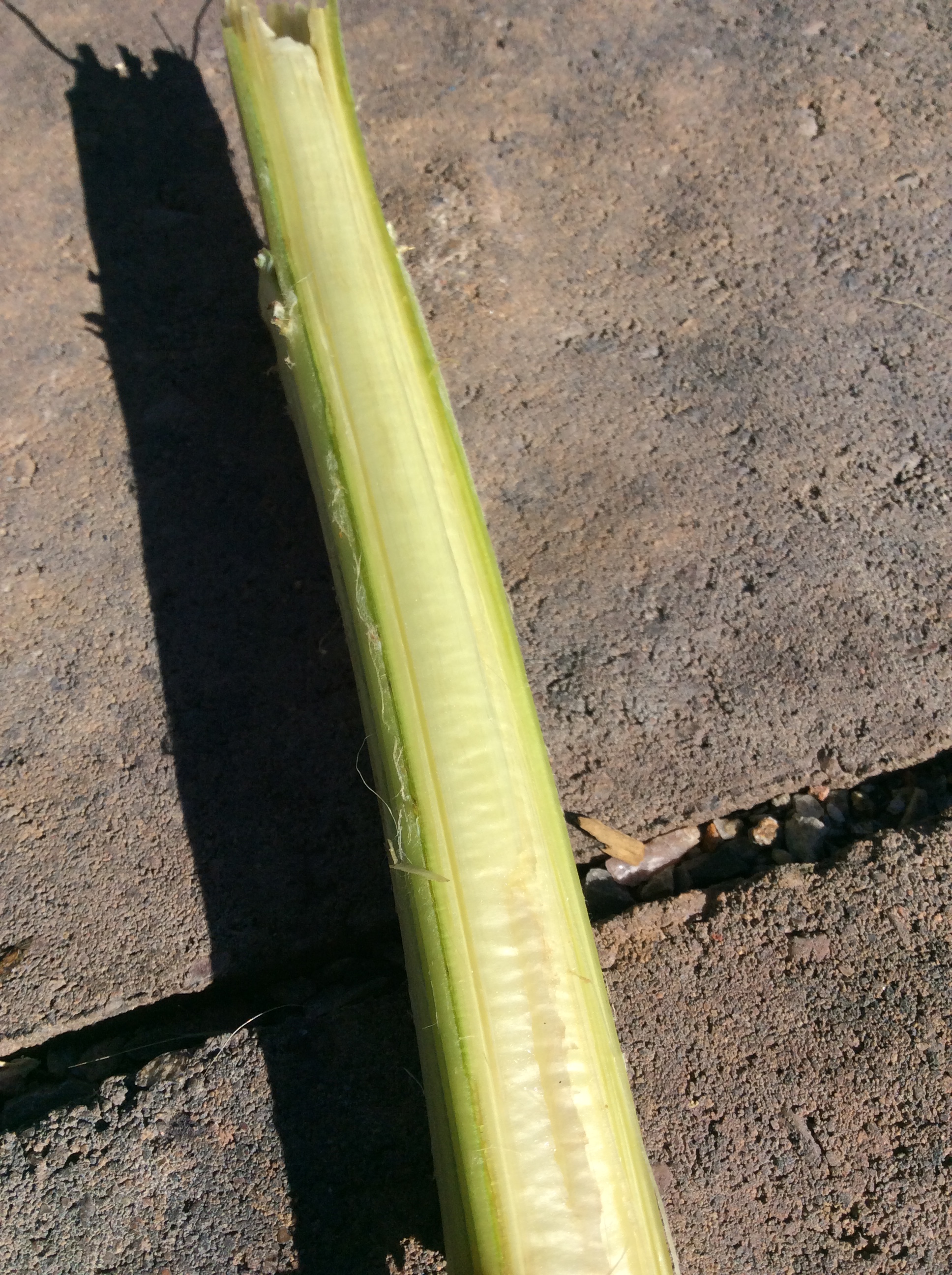
Incidentally, before they flowered last summer, I picked a flower stalk when it had lengthened to about 3 feet but before the buds started to swell. I peeled the thick tough skin off the stalk, cut it in sections about an inch long, and sautéed it in olive oil with some salt until cooked through and fairly tender. The upper 8 to 10 inches of the stalk, when treated this way, made a delicious vegetable with a crisp texture and a pronounced artichoke flavor. The other 2+ feet of the stock were not usable because, even when the outer tough skin is peeled away, fibers have developed in the pith itself. But if you have a lot of cardoons and can afford to pick several stalks, this makes one really delicious vegetable. Otherwise treat the top of one stalk as a Cook’s Treat and cook it in your smallest skillet and eat it standing up in the kitchen, gloating quietly to yourself.


 My urban homestead