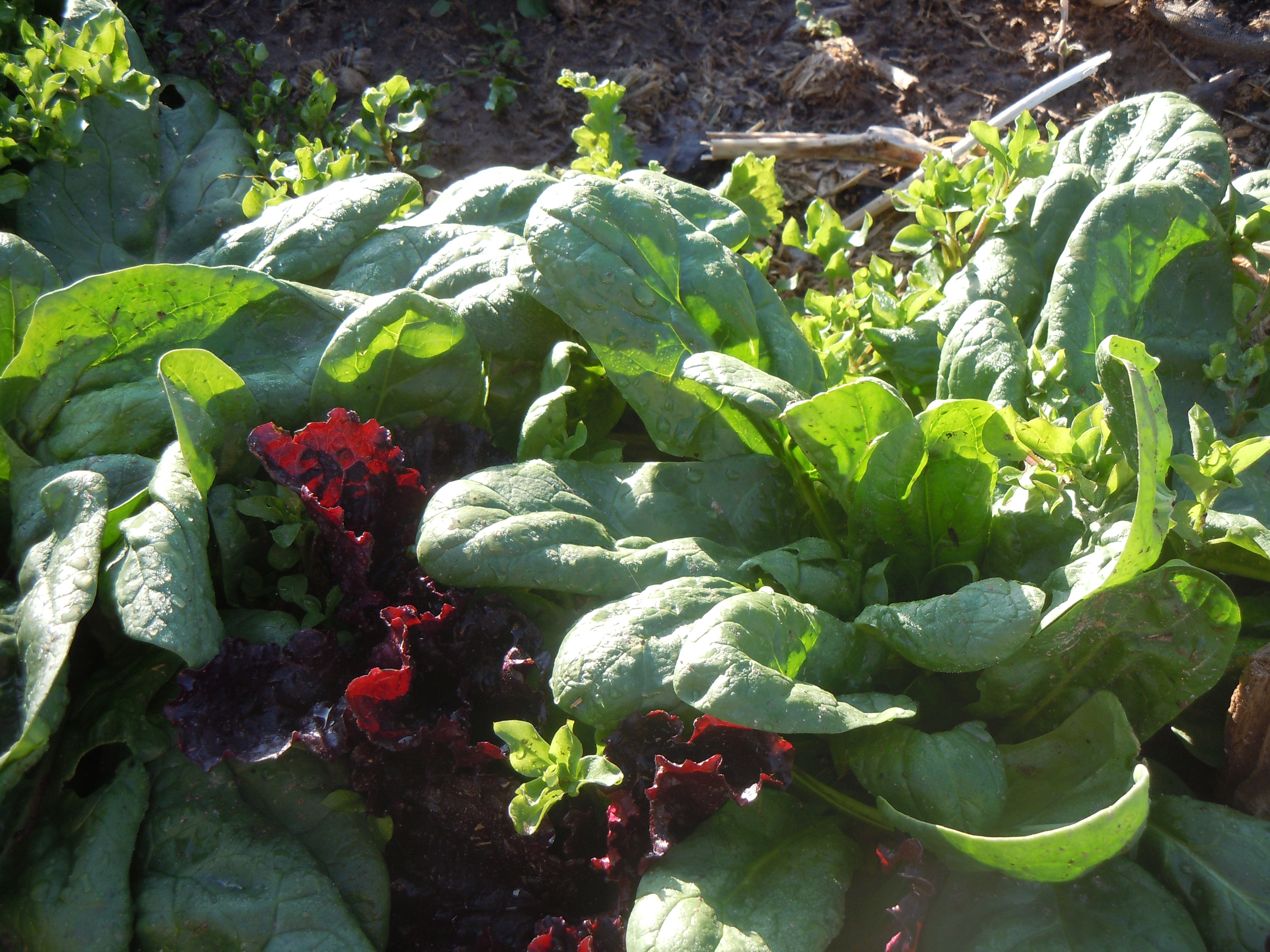
Funny how things cycle. When I first learned to forage as a child, I was distressed because I couldn’t find any chickweed near my Louisiana home. Later, when I had a farm in upstate New York, I had plenty of chickweed and came to curse its abundance. Now, in the desert southwest, nature doesn’t offer any chickweed and I had to buy seeds in order to have it again.
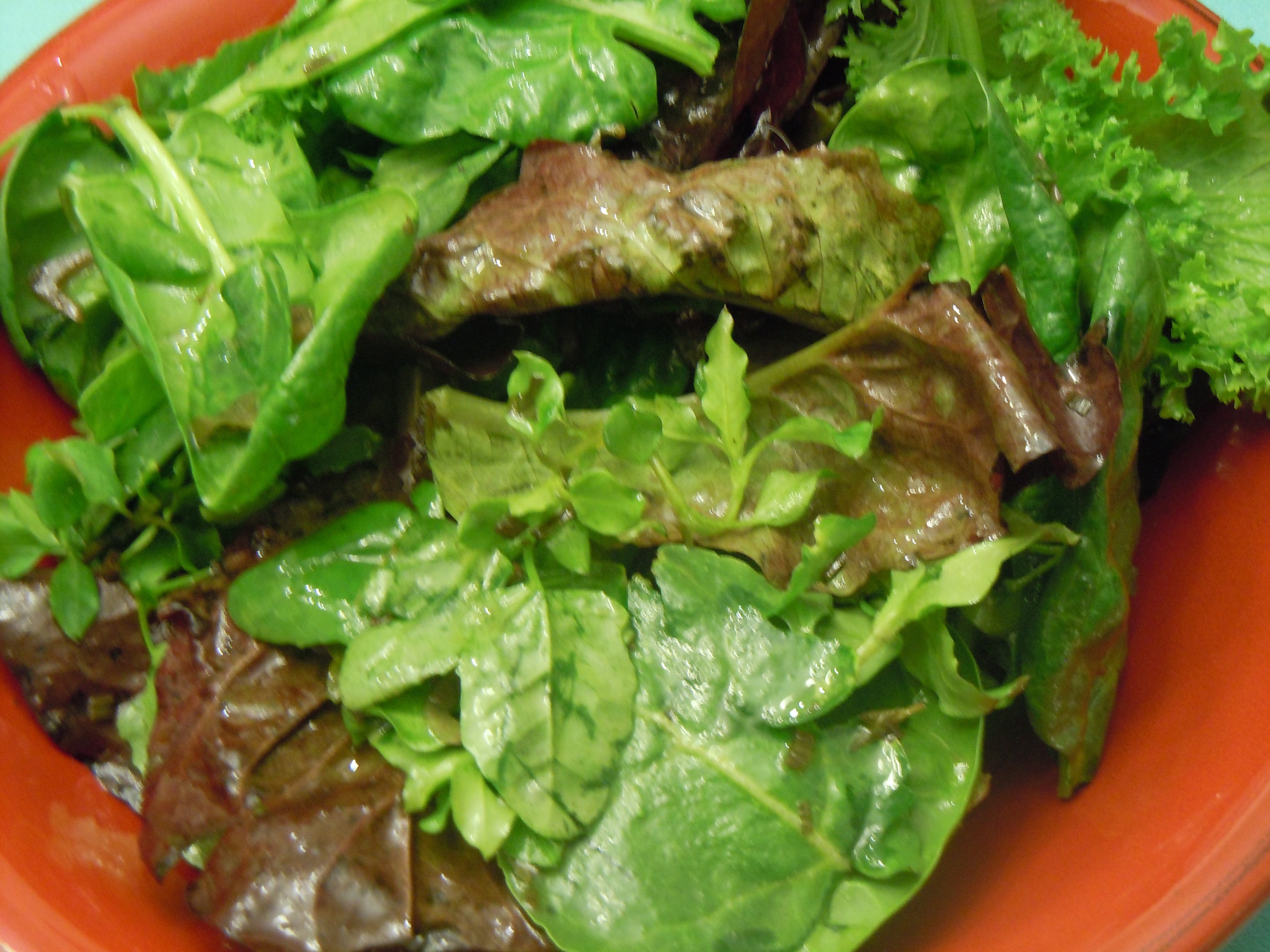
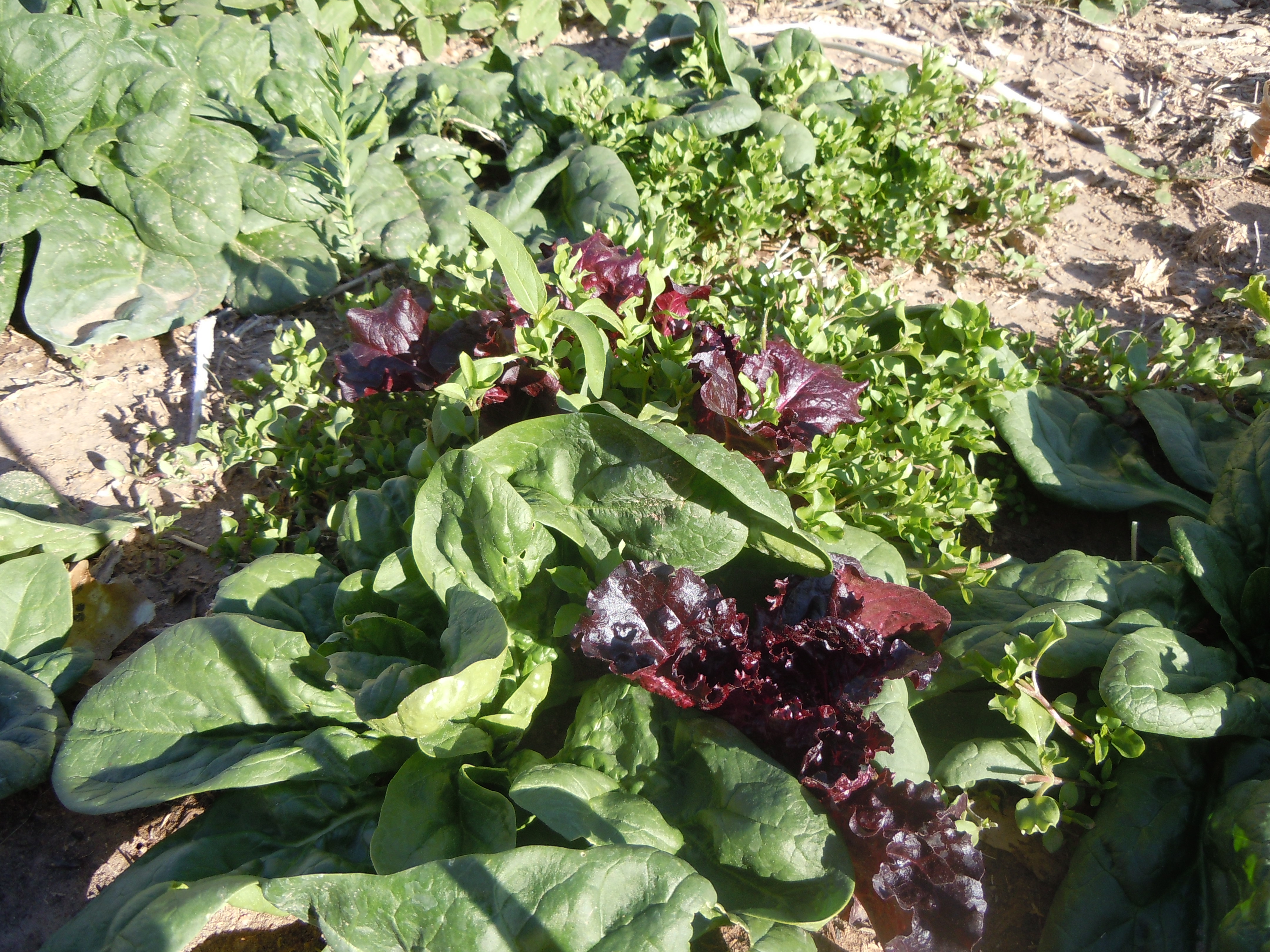
Stellaria media, the common chickweed, is a mild and tasty wild salad green, with more nutritional value than many domesticated salad greens. I had to look hard for seed, because it tends to be assumed that everybody has it and wishes they didn’t. I finally found it at Wild Garden Seeds. It appreciates some shelter from our blazing sun, which I provided by planting it in the same row as lettuce and spinach (right in the same tiny trench) so that it could nestle under the larger leaves and stick its head up for picking. The picture above shows this. In my opinion, only the tip of each sprig is worth eating, so I cut one or two inches off each little branch and leave the rest. Eaten alone with no dressing it has a somewhat grassy flavor, but mixed with other greens it’s delicious and adds a certain airiness and lift to the texture of a mixed salad. I use it up for anywhere up to half the bulk of a salad, depending on how much of it I have available at the moment. I have often read that it can be used as a cooked green, but I don’t care for it that way- too bland- and use it only in salads. I plan to let some go to seed, and will also make another planting in the fall, because it loves cool weather.
Archive for May, 2011
6 May
Appearing now in your salad bowl: Chickweed
2 May
Books Worth Reading: Homesteading then and now
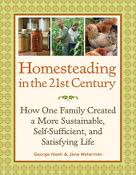
Urban homesteading and homesteading generally are enjoying 15 minutes of fame right now (this seems to happen every 30 years) and so there are a plethora of books about homesteading, many of them written by people who got their information from other books about homesteading. Occasionally a book turns up that was written by people who have actually walked the walk, not for a year or two but for decades, and this is such a book. It is much more about rural homesteading and small farming than about urban/suburban issues, but there are urban-oriented sidebars that have some useful information. The section on choosing a property is exceptional, and I strongly recommend that anybody who is thinking about buying a rural property read it carefully. Alas, it is packed with exactly the sort of useful advice that most of us don’t take when the time comes. Instead, we fall in love with a property, buy it, and then learn what the problems are and spend years and dollars sorting them out. But if you read this first, you will at least have your eyes opened about where the problems might lie before they actually smack you in the face. The section on vegetable gardening has good information about how to calculate realistically how much of each veggie you might actually use, as well as a lot of practical growing information. The sections on keeping animals deserve a careful and attentive reading BEFORE you actually purchase any animals. The material on maintaining animals in a healthy condition is excellent. If you are planning to raise meat animals, be aware that there is a good sidebar about going from sustainable/humane fantasy to blood-spattered reality, but there is little information about how to do that, so if you are planning to do your own butchering you will need other sources of information about the process. There is also a good piece of advice about discussing your self-sufficient fantasies with your partner, in detail, before embarking, because one person’s rural idyll can be the other person’s isolated nightmare. Sometimes even full disclosure doesn’t help. I can say from personal experience that my very truthful husband told me in a straightforward way, before we moved to a bigger property, that he didn’t want to do any garden or yard work, and it turned out that what he meant was this: he didn’t want to do any garden or yard work. I had the nerve to act surprised when I realized this. Now I arrange things so that I can manage the garden myself, and we’re both happy with the arrangement.
Writing about a new homesteading book makes me think of old homesteading books, and some of them are too good to be forgotten. The Complete Manual of practical Homesteading by John Vivian stands out. I first read it when I was 17, and when in my twenties I acquired an actual working farm, I used a lot of his information. I don’t agree with some of it, but I am very grateful that he started me on the path to thinking about how to do farm tasks as well as possible. I don’t think it’s in print any longer, but used copies turn up here and there, and it’s worth a read for anyone who has a larger or rural property. And if anybody knows where John Vivian is these days, let me know so that I can thank him. By scrupulously writing about only what he knew for himself and had done himself, he saved me a lot of time that I would otherwise have spent sorting out real information from the second-hand kind.
 My urban homestead