Recently I noticed a package of soy-based cheese in the dairy case at my local co-op, labelled “The Good Health Alternative!” and I picked it up to scan the ingredients. I was so intrigued by what I read that I bought it just so I could transcribe the ingredient list accurately: Soy base, casein (milk protein,) canola oil, natural and cultured flavorings, organic rice flour, sodium and calcium phosphate, sea salt, citric acid, carrageenan, lactic acid, sorbic acid, potato starch added for anticaking. The taste was appalling, if you know and like real cheese. I’d eat it if I were starving- I’d eat almost anything if I were starving- but I wouldn’t call it real food. All this proves to me is that unreal food is a problem in healthy-food stores as well as supermarkets.
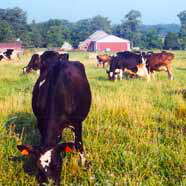
I like 100% grassfed butter and cheese, and I order mine from the Pastureland people in Minnesota. They remain grass-fed during the winter, feeding hay and forage, but they only make cheese and butter in the summer when the cows are eating pure pasture and nothing else. The taste is wonderful, the method is better for the cows, the environment, and the eater, and the ingredients list is very, very short. This is a good time of year to order because the weather is cool. They ship in styrofoam insulated cartons, and they include a prepaid UPS label so that you can ship the empty carton and gelpacks back for reuse. I order a lot of butter at a time and seal it carefully to keep in the freezer. I also buy their mild cheddar in 5lb blocks to use as my “melty” cheese and general snacking-cooking cheese. The more aged cheeses are good on the cheese platter.
Naturally, it isn’t cheap. It takes a lot of good pasture to make this stuff, and good farmland is anything but free.
To those who argue against having food shipped from other places, I reply that if somebody would make a product of this quality locally, I would certainly support them by buying it. But keep in mind that to maintain this quality, the cows have to be eating real grass. Not hay, not silage, but grass. If somebody in my area will start doing that, I’ll line up to buy it. Until they do, I’ll support Pastureland. This is a rare and unique product and there isn’t much like it available in the US.
Regarding the CLA, omega-3 fatty acids, b-carotene, etc. that are found in grassfed butter, I would only say that I’m hard put to think of butter as a health supplement. I do think this is healthier than most butter, but moderation is still called for. The bottom line is that it tastes very, very good.
Archive for December, 2010
6 Dec
Kitchen Staples: Real Butter and Cheese
4 Dec
Kitchen Staples: Cornbread with more corn
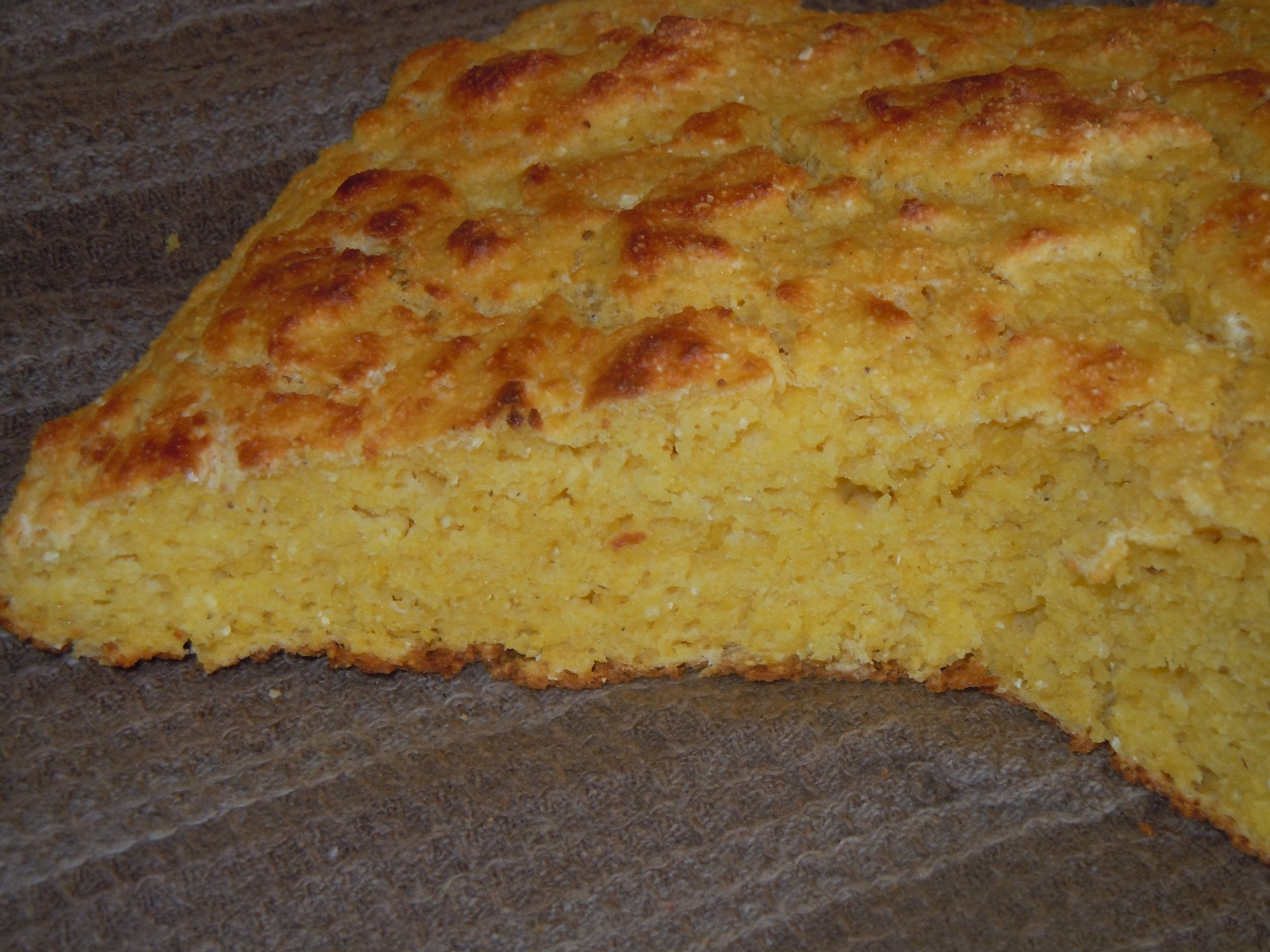
Like any Southerner and lots of other people, I’m an ardent fan of cornbread. I’ve probably tested dozens of cornbread recipes in my life, but I keep coming back to my favorite one, which uses about half cornmeal and half white flour. Since reading The Resilient Gardener, I’m making some moves toward utilizing more staples that I could eventually produce for myself. I don’t grow field corn currently, but I might in the future, and besides, I reason that using a higher percentage of corn might give a purer corn flavor. Certainly, the less white flour we eat the better, and the cornmeal that I buy is whole-grain. I would also add that if there’s one thing we do really well in the US it’s grow corn, so growing better types and using them in better ways is not a bad idea on a national as well as personal level.
Right now I’m experimenting with lots of different cornmeals, and they offer a range of flavors, colors, and antioxidants, but my husband loves the cheerful sunny color of yellow cornbread, so that’s what I chose for my first experiment in more-corn cornbread. I use a fine meal ground from flour corn, and this type of cornmeal definitely tastes better with some sugar in the recipe, but leave it out if you insist.
I must say that I really liked the flavor and texture and it rose nicely. I was afraid that I might get a corn-brick, but the texture was only slightly more dense than my usual recipe. Try it. My next cornbread recipe will be all-corn, and I’ll keep you posted on how it comes out.
Mostly-corn Cornbread
3 cups fine yellow cornmeal- whole-grain meal ground fairly recently is important to the flavor.
1/2 cup all-purpose white flour
2 teaspoons salt
2 teaspoons baking powder (our altitude is about 5000 feet. Down lower, you might need twice this much leavening)
4 tablespoons sugar (see below)
2 1/2 cups buttermilk
4 eggs
3 tablespoons butter
Preheat the oven to 425 degrees, and put a 12″ cast-iron skillet in to heat. You could also use another type of pan if it’s heavy and will hold heat. Mix all the dry ingredients in one bowl. In another bowl beat the eggs enough to blend them and stir in the buttermilk. When the oven reaches temp, take out the skillet and throw in the butter cut in pats. It will melt quickly and proceed to burn if you don’t have everything else standing ready. Stir the wet ingredients rapidly into the dry ingredients. Don’t worry that some smallish lumps remain. Pour the batter immediately into the skillet and put it back in the oven. Bake until done, testing with a cake tester or knife blade to be sure the middle is finished. Remove from the oven, and have a rack ready. Invert the pan and the bread will fall out onto your waiting oven-gloved hand. Now invert the bread again onto the rack, so it ends up right side up. Now it can cool a little without the bottom crust, which you took pains to make crisp, getting soggy. Eat in bliss, with butter and good raw honey.
Regarding the sugar, my favorite with corn is a specialty sugar called Heavenly Sugar. I get it at my local Co-op. It’s a whole-cane juice product like sucanet but without the strong flavor, and it perfectly accentuates the flavor of good cornmeal.
The Resilient Gardener is a book that I can’t seem to shut up about. Anybody interested in the issue of personal food security should read it. Here in the Southwest, where corn and squash are traditional crops well-suited to our climate, it’s especially relevant. I am continually impressed with the asides that suddenly make sense of something I’ve puzzled over. For instance, I’ve often wondered why some cornbread tastes bad to me with sugar in it, and some tastes bad without it. Ms. Deppe points out that flour corns taste better with some sugar, and flint corns taste better without it. Simple, really, as long as you have real knowledge of your ingredients.
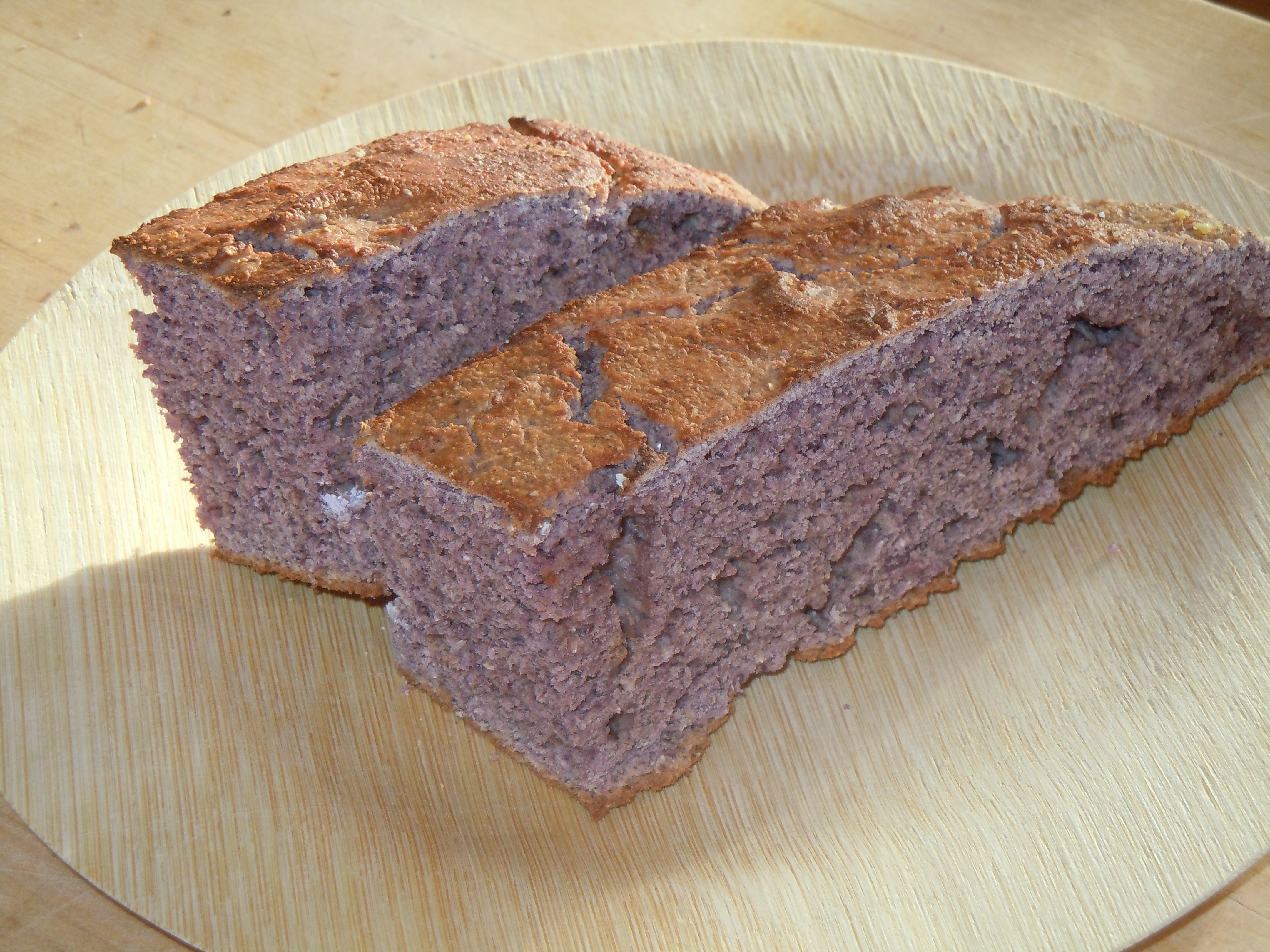
Addendum: I’m trying this recipe with a lot of different cornmeals, because it lets the flavor of the corn be foremost and it’s surprising what flavor differences there are. Below is the same recipe made with fresh blue cornmeal. The good part is that it’s very flavorful, with a deep earthy taste, and packed with fiber and antioxidants. The bad part is, well, it’s, uh, blue. You will have to decide for yourself whether that bothers you. I’ll be interested to see how red and purple cornbread turn out..
 My urban homestead