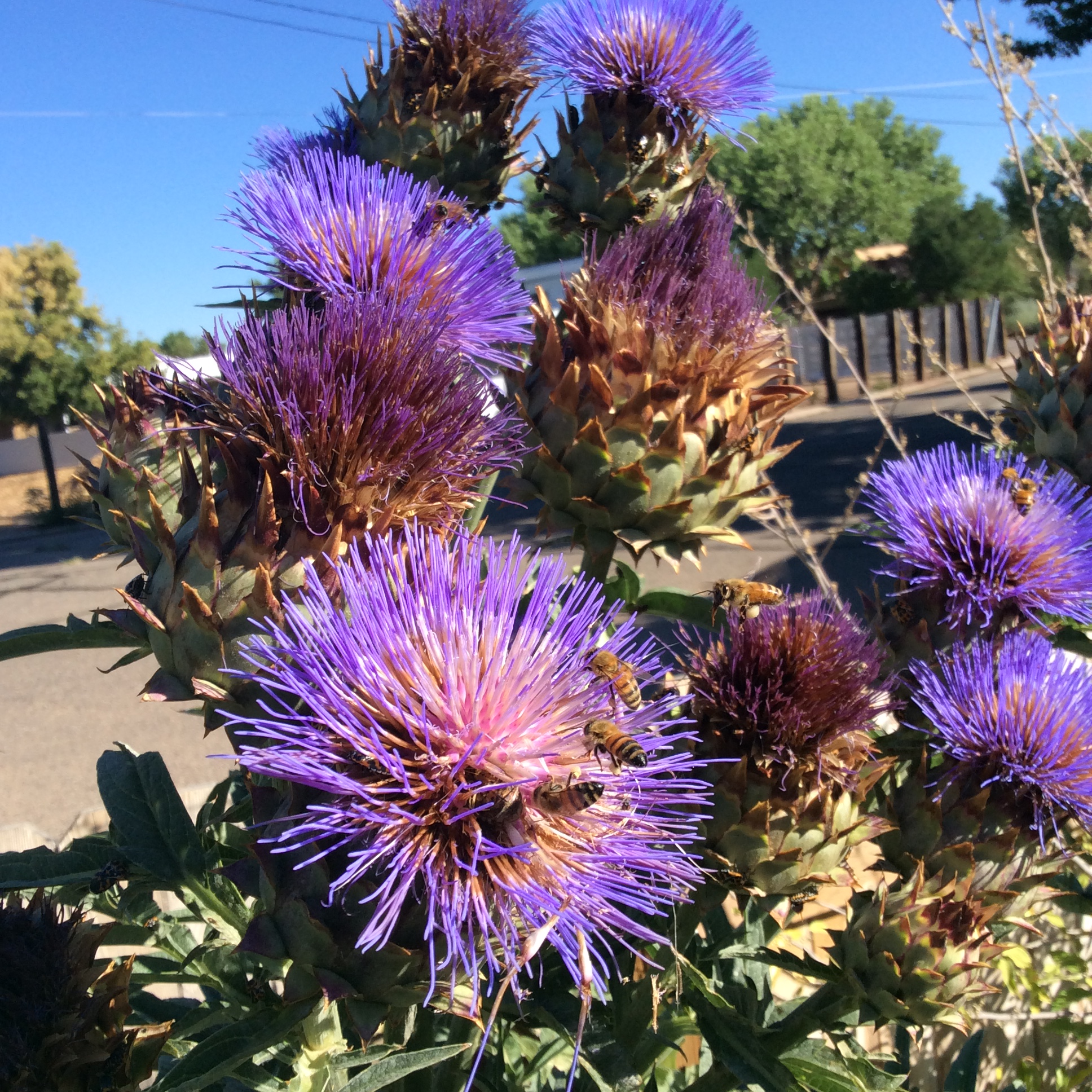
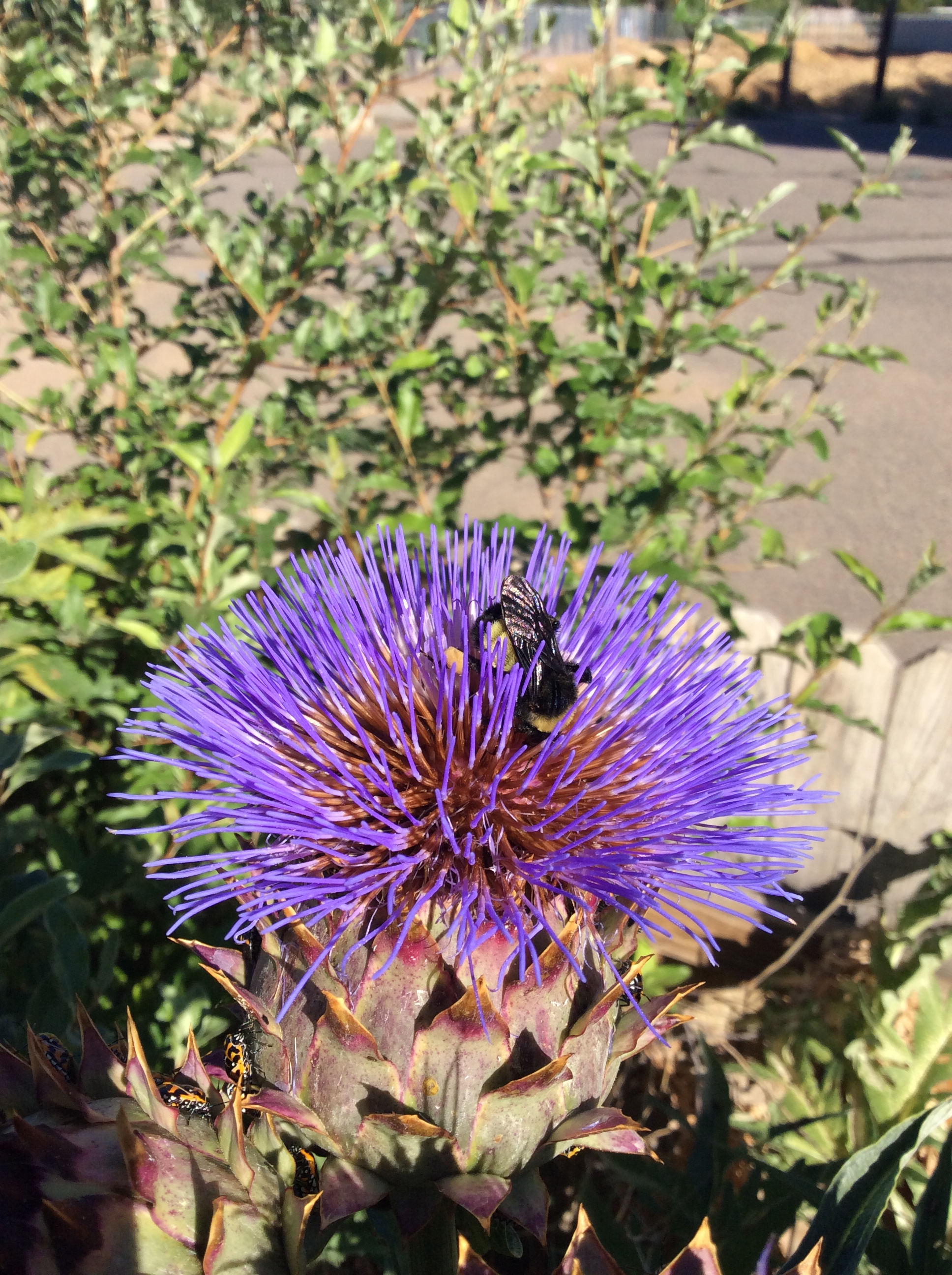
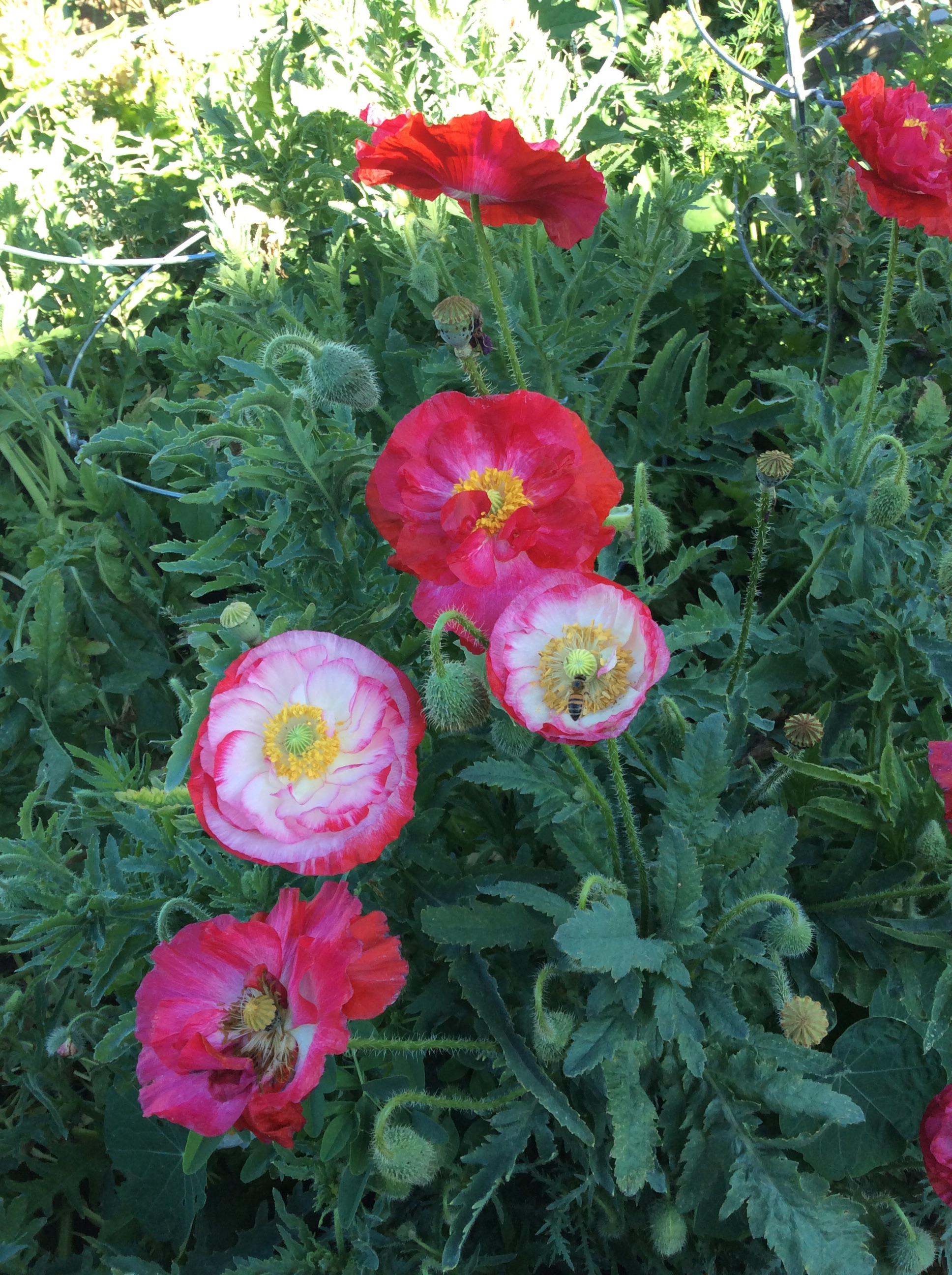
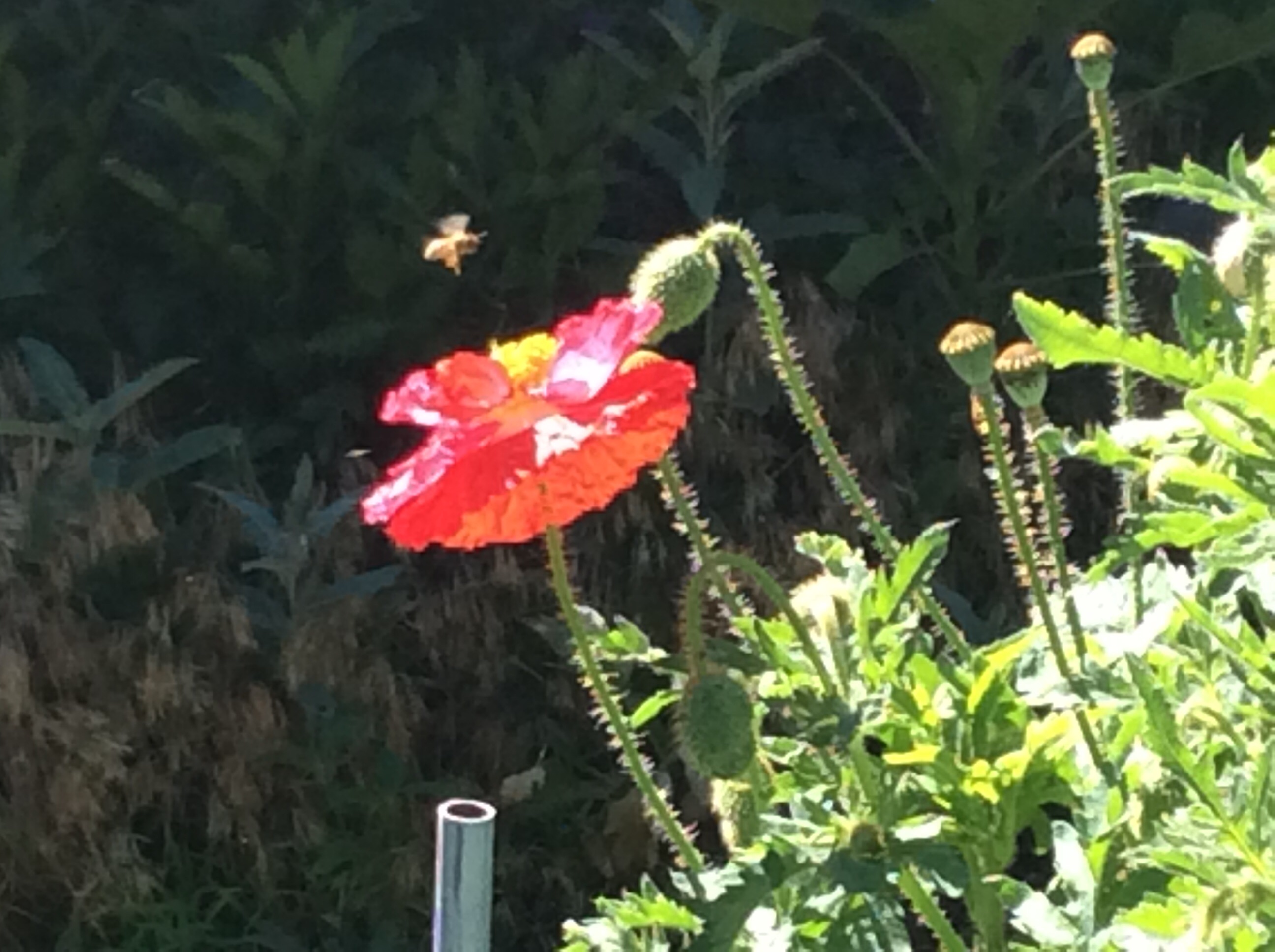
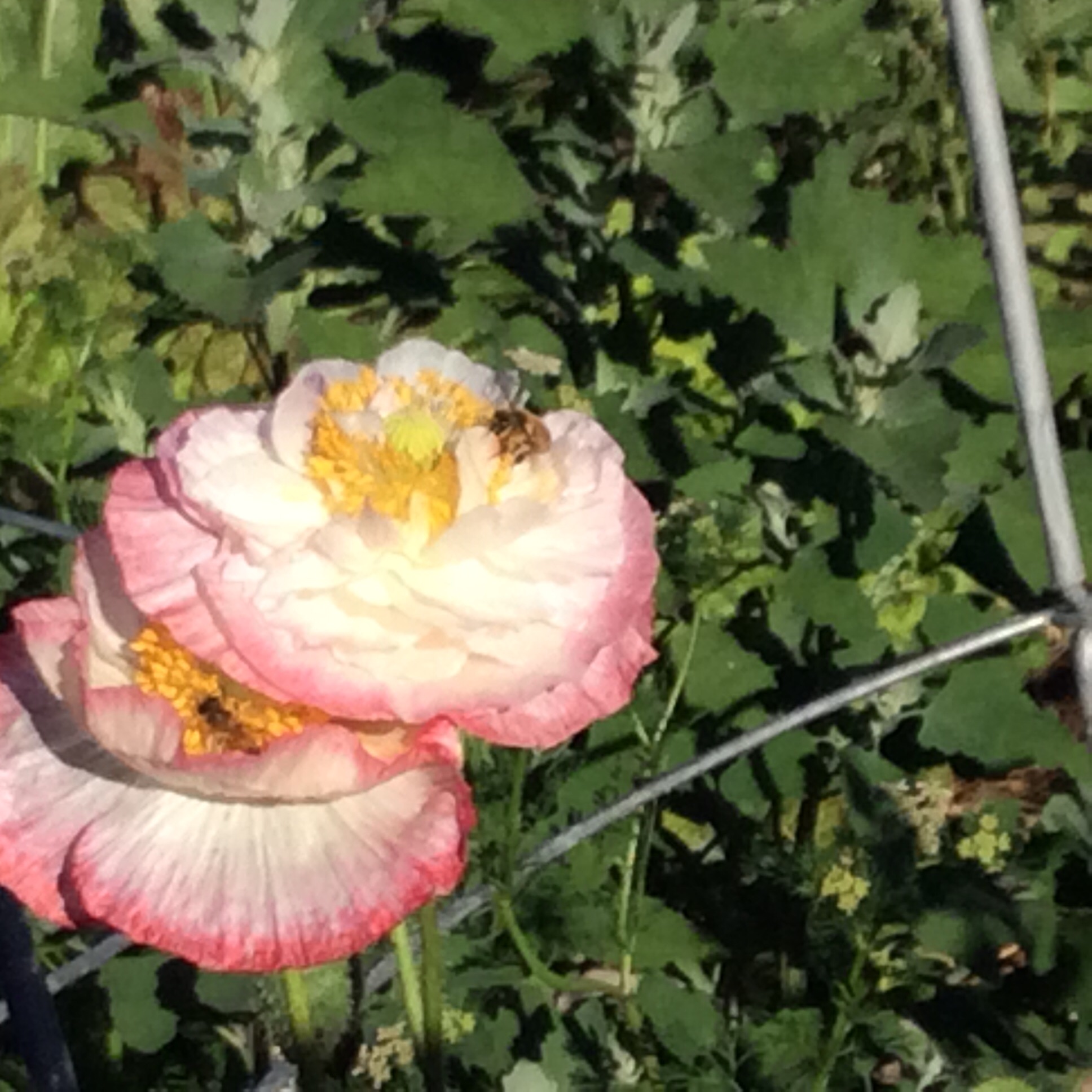
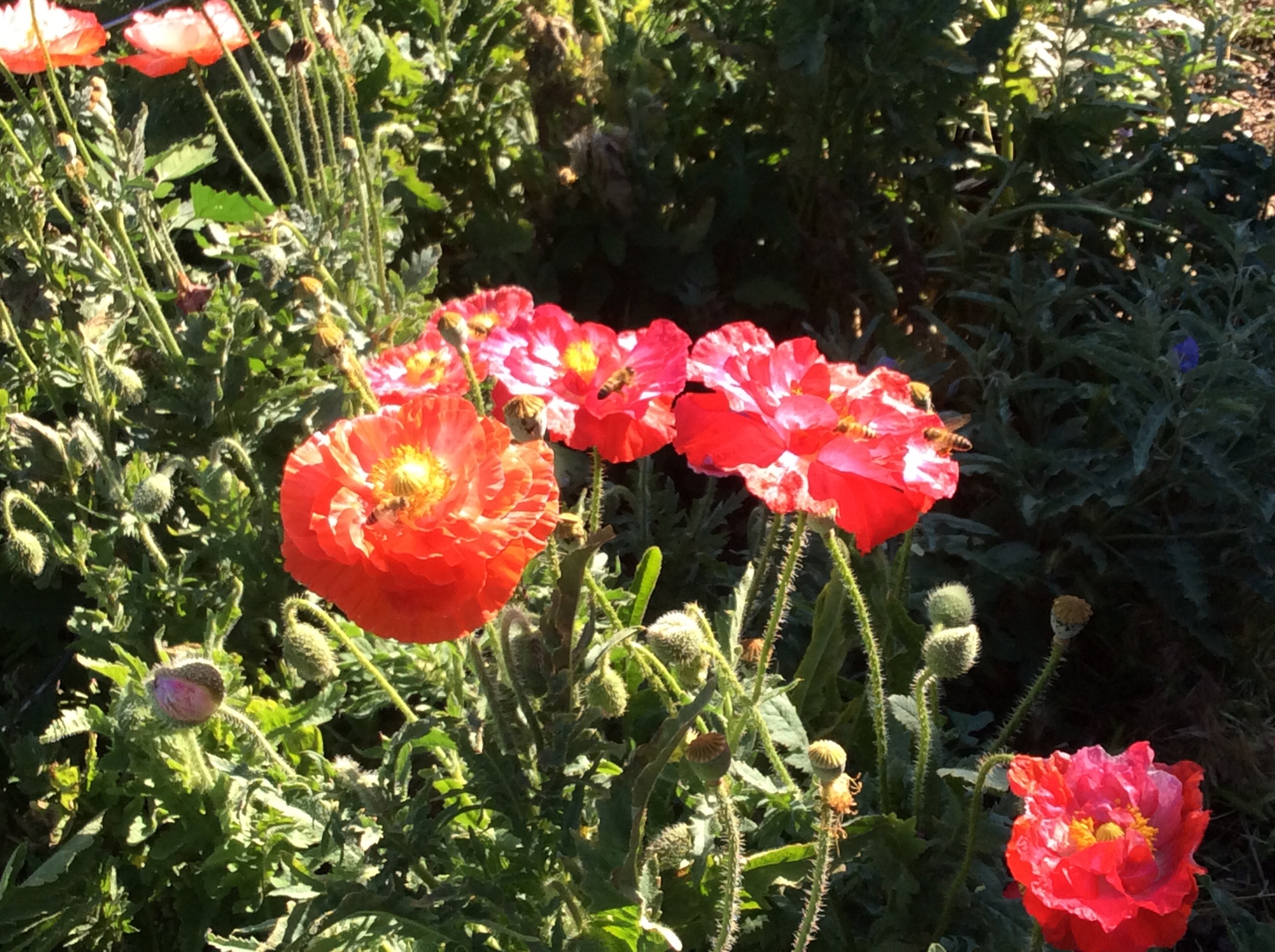
When I think about our country’s independence, I think about personal independence and how important food supply is to that. In maintaining a steady home food supply, one of the things you need is a steady supply of feed for your pollinators. I have been paying a lot of attention to trying to have a steady supply of nectary plants throughout the summer, and in our hot desert summer that can be difficult. Currently, the poppies are pretty much finished blooming, and I find that cardoons and artichokes are extraordinarily attractive to bees when allowed to flower. I have a number of cardoon plants that grow beautifully in our hot summer and alkaline soil but have not turned out to be much good for eating; one day soon I will post on that depressing topic. But the plants more than earn their keep by feeding my bees in fiery July.
Keep the pollinators in your thoughts when you do any yard planning and planting. Remember that they are extremely sensitive to sprays, and in my opinion there is not a good justification for a home gardener to use insecticide sprays in the garden. Look around your neighborhood in July and August and see what is blooming or ready to bloom, and think about providing some of it for the bees and wasps. Right now cardoons are front and center in my garden, cutting celery that I allowed to bloom is drawing beneficial tiny predatory wasps in large numbers, and sunflowers are just starting. I planted a few cannas this year in order to do kitchen experiments with the bulbs in the fall, and as long as they are kept well mulched and given some water they sail through the heat, and those flowers also seem attractive to bees.
Bless our bees, because oh, how we need them.
 My urban homestead