5
Jul
Posted by wooddogs3 in edible landscaping, front yard gardening, sustainable, urban homesteading. Tagged: bees, beneficial wasps, honeybees, nectary plants, pollinators, predatory wasps. 5 comments
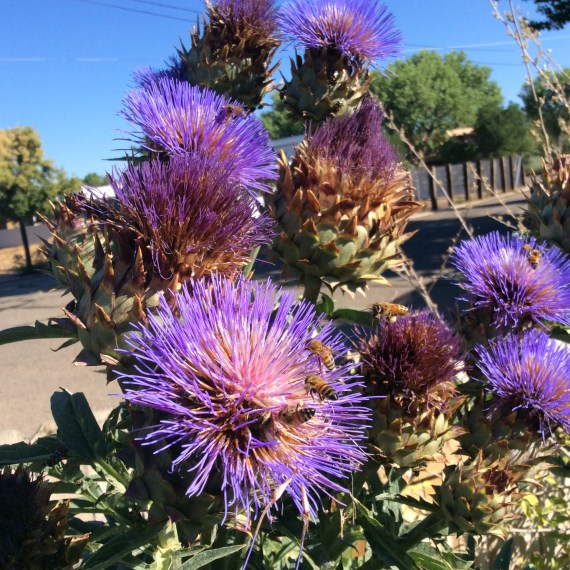
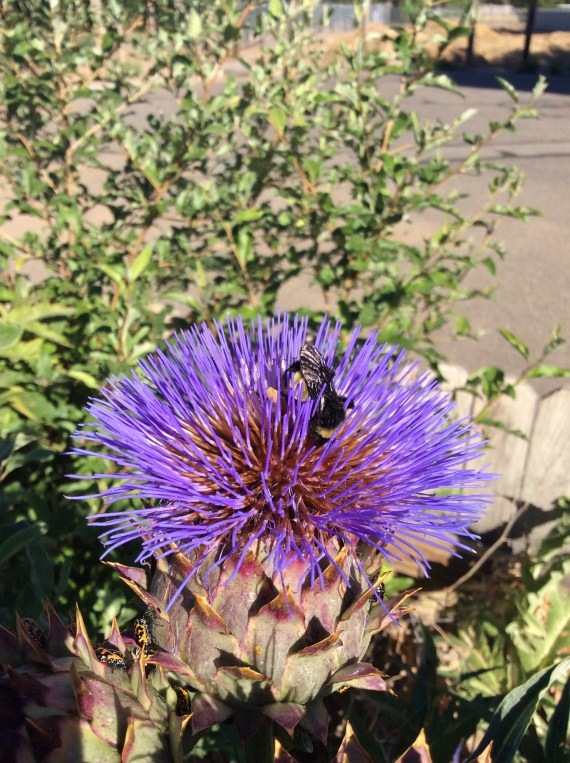
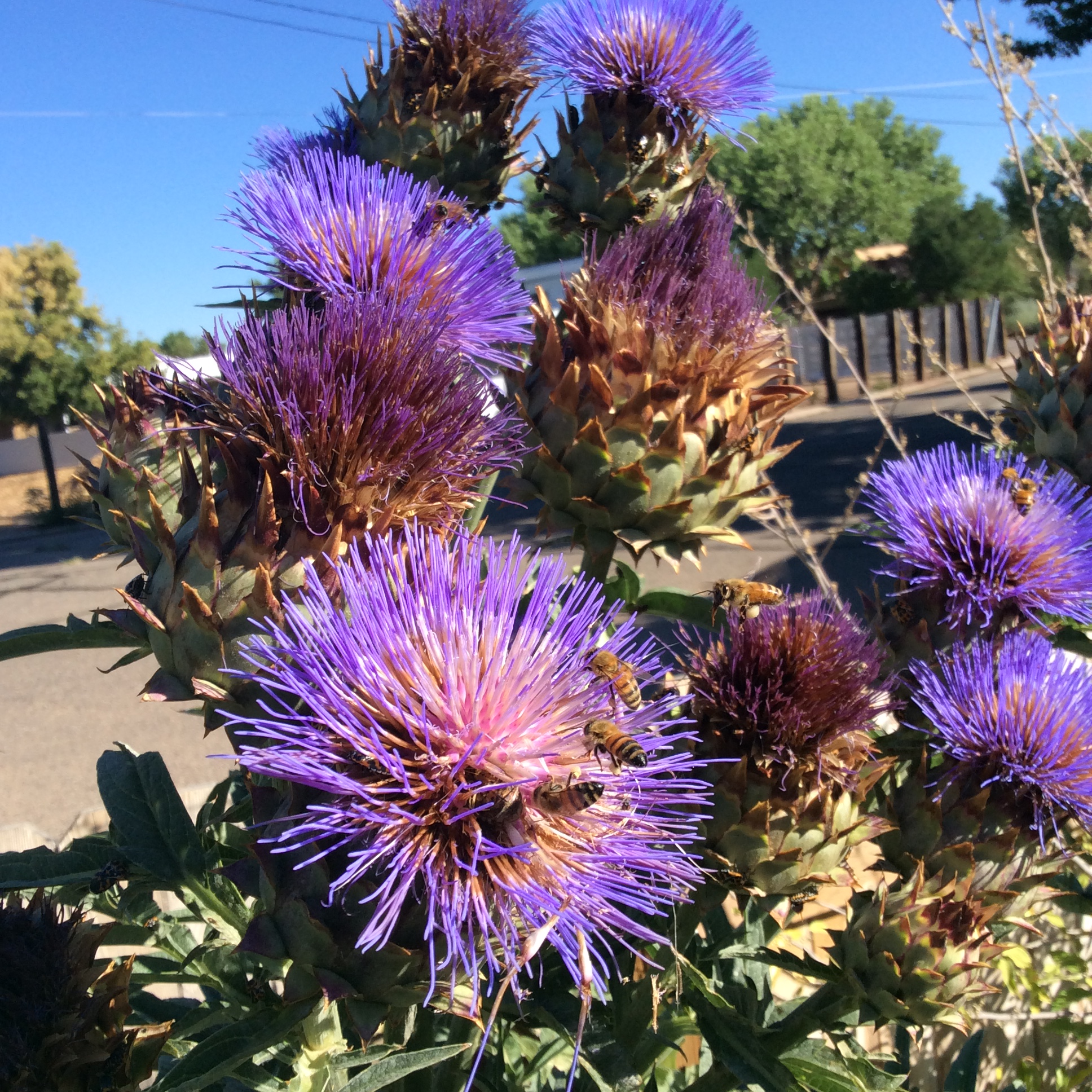
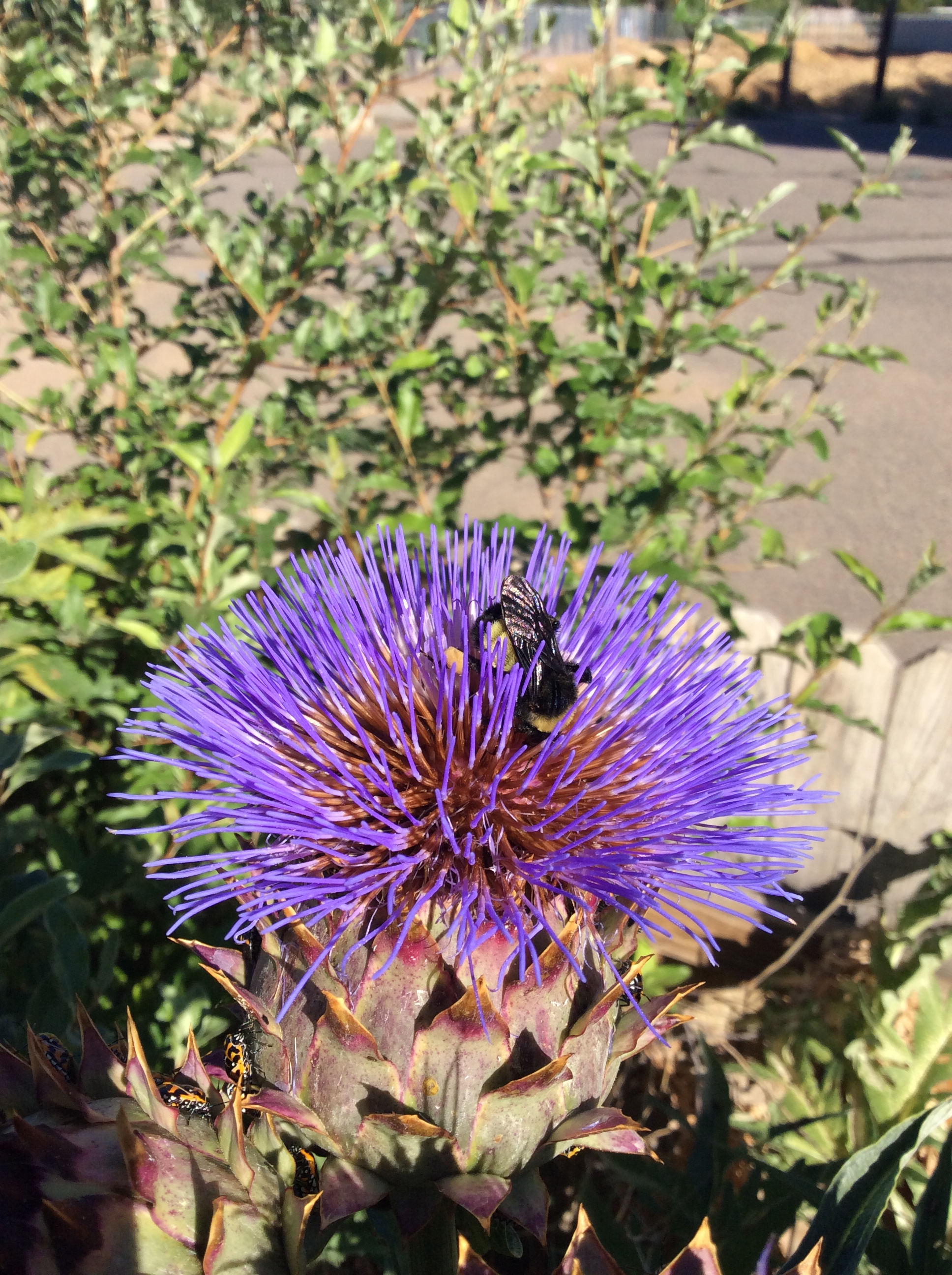
When I think about our country’s independence, I think about personal independence and how important food supply is to that. In maintaining a steady home food supply, one of the things you need is a steady supply of feed for your pollinators. I have been paying a lot of attention to trying to have a steady supply of nectary plants throughout the summer, and in our hot desert summer that can be difficult. Currently, the poppies are pretty much finished blooming, and I find that cardoons and artichokes are extraordinarily attractive to bees when allowed to flower. I have a number of cardoon plants that grow beautifully in our hot summer and alkaline soil but have not turned out to be much good for eating; one day soon I will post on that depressing topic. But the plants more than earn their keep by feeding my bees in fiery July.
Keep the pollinators in your thoughts when you do any yard planning and planting. Remember that they are extremely sensitive to sprays, and in my opinion there is not a good justification for a home gardener to use insecticide sprays in the garden. Look around your neighborhood in July and August and see what is blooming or ready to bloom, and think about providing some of it for the bees and wasps. Right now cardoons are front and center in my garden, cutting celery that I allowed to bloom is drawing beneficial tiny predatory wasps in large numbers, and sunflowers are just starting. I planted a few cannas this year in order to do kitchen experiments with the bulbs in the fall, and as long as they are kept well mulched and given some water they sail through the heat, and those flowers also seem attractive to bees.
Bless our bees, because oh, how we need them.
21
Jun
Posted by wooddogs3 in front yard gardening, passing pleasures, urban farm animals. Tagged: bee forage, beehive, bees, pollination, pollinators, Shirley poppies. Leave a comment
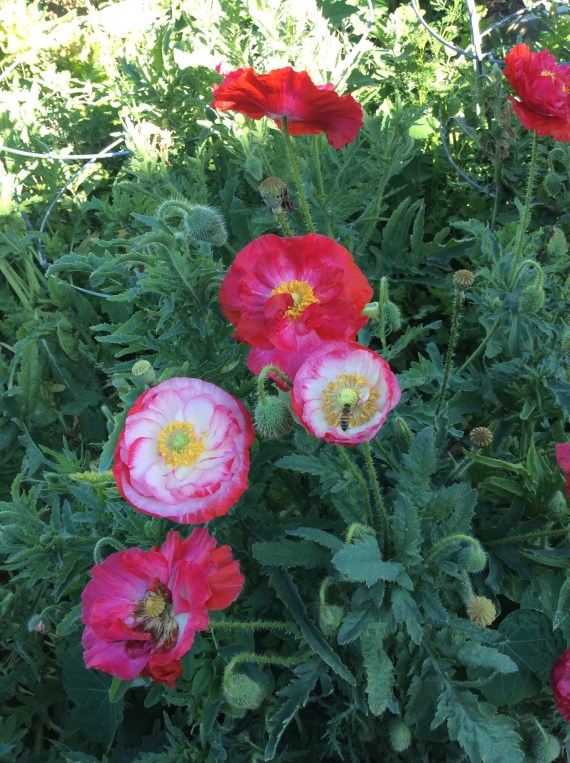
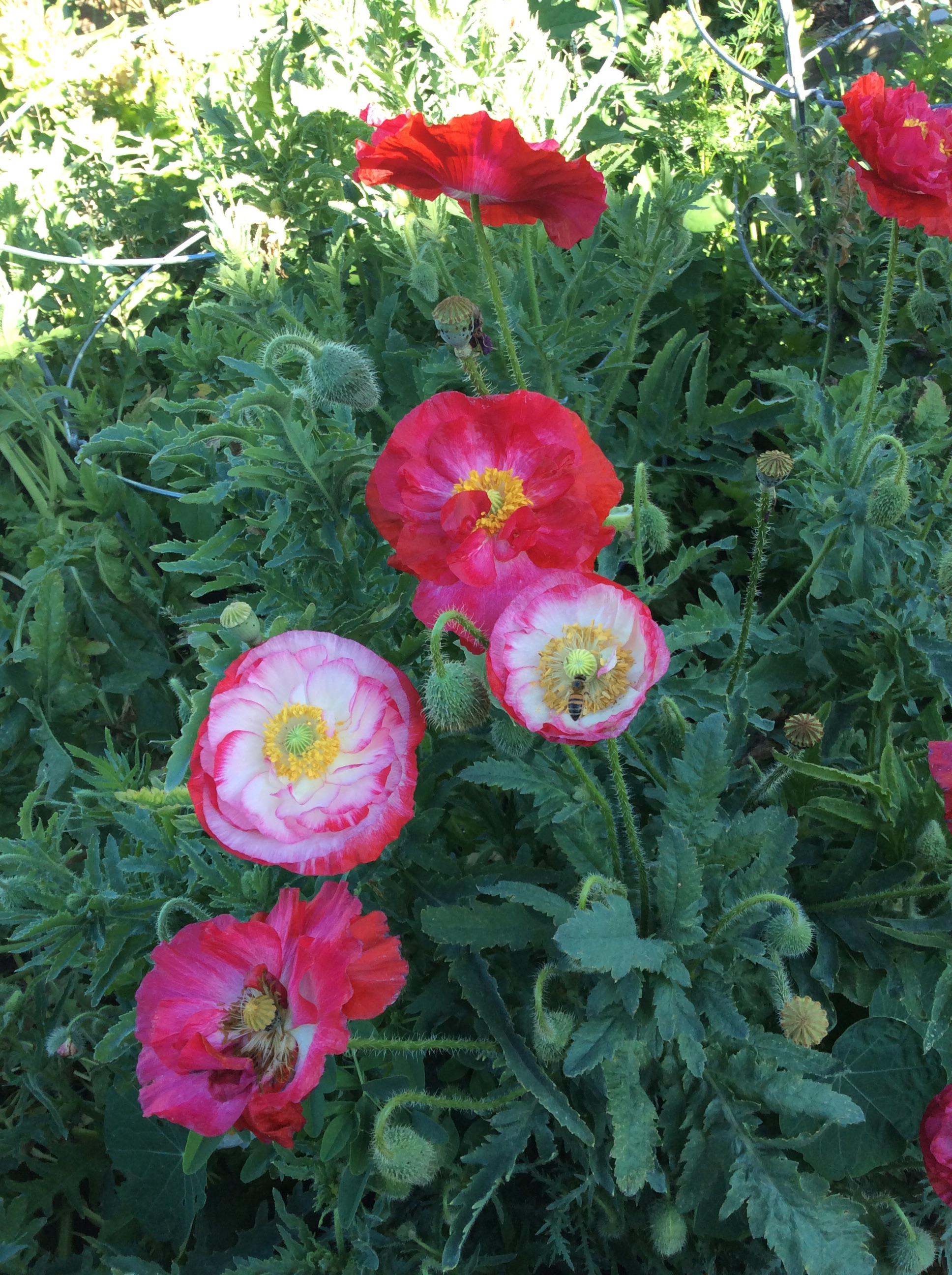
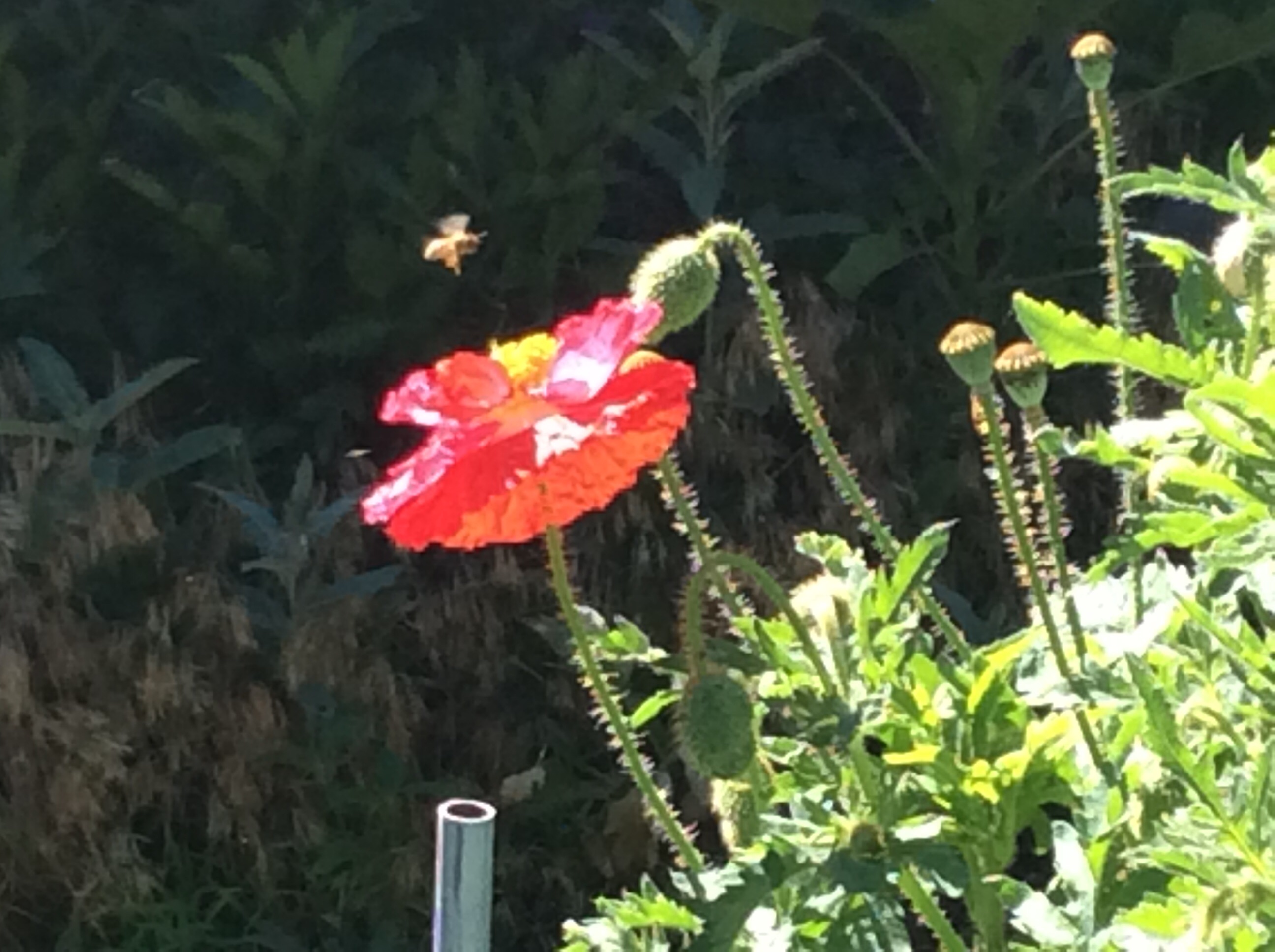
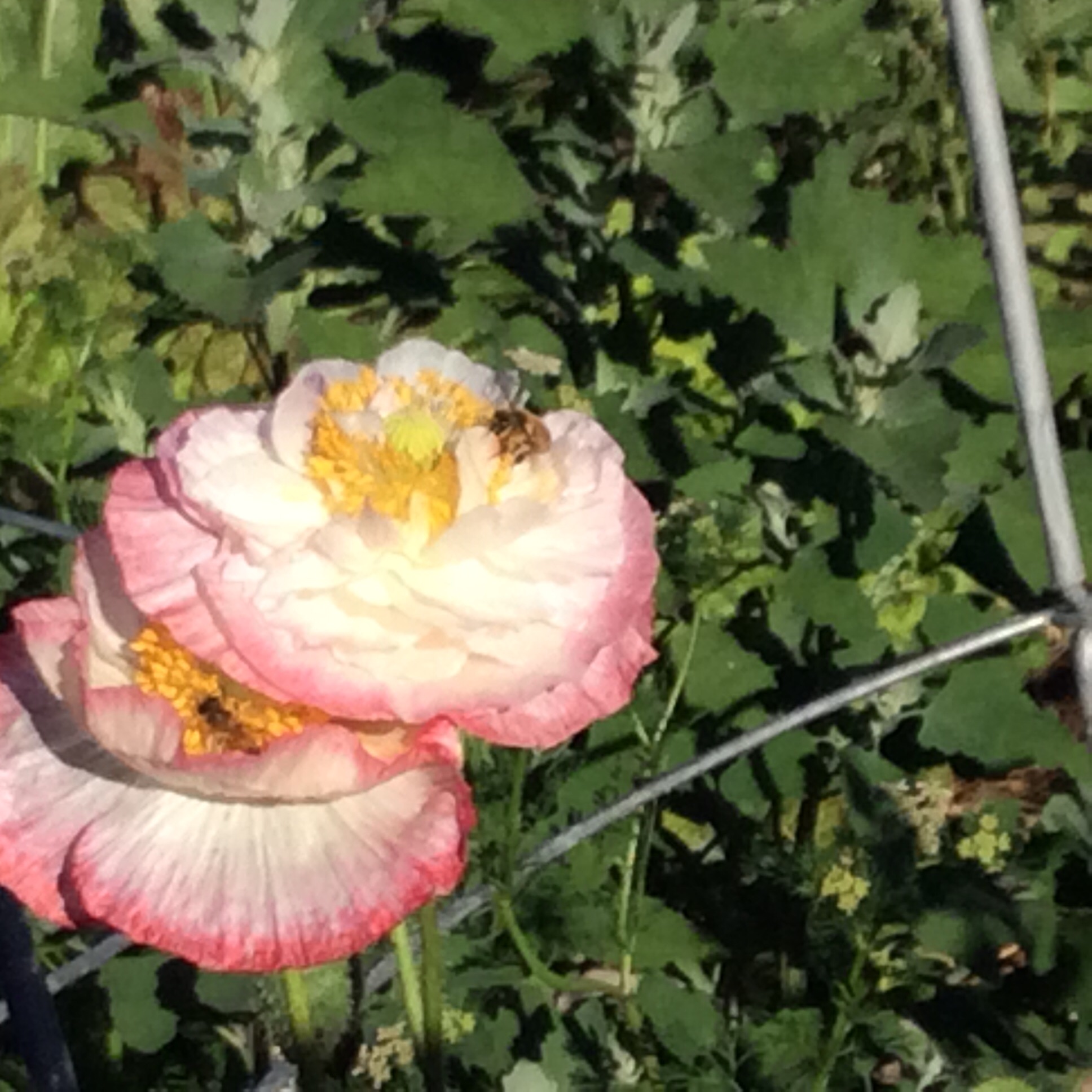
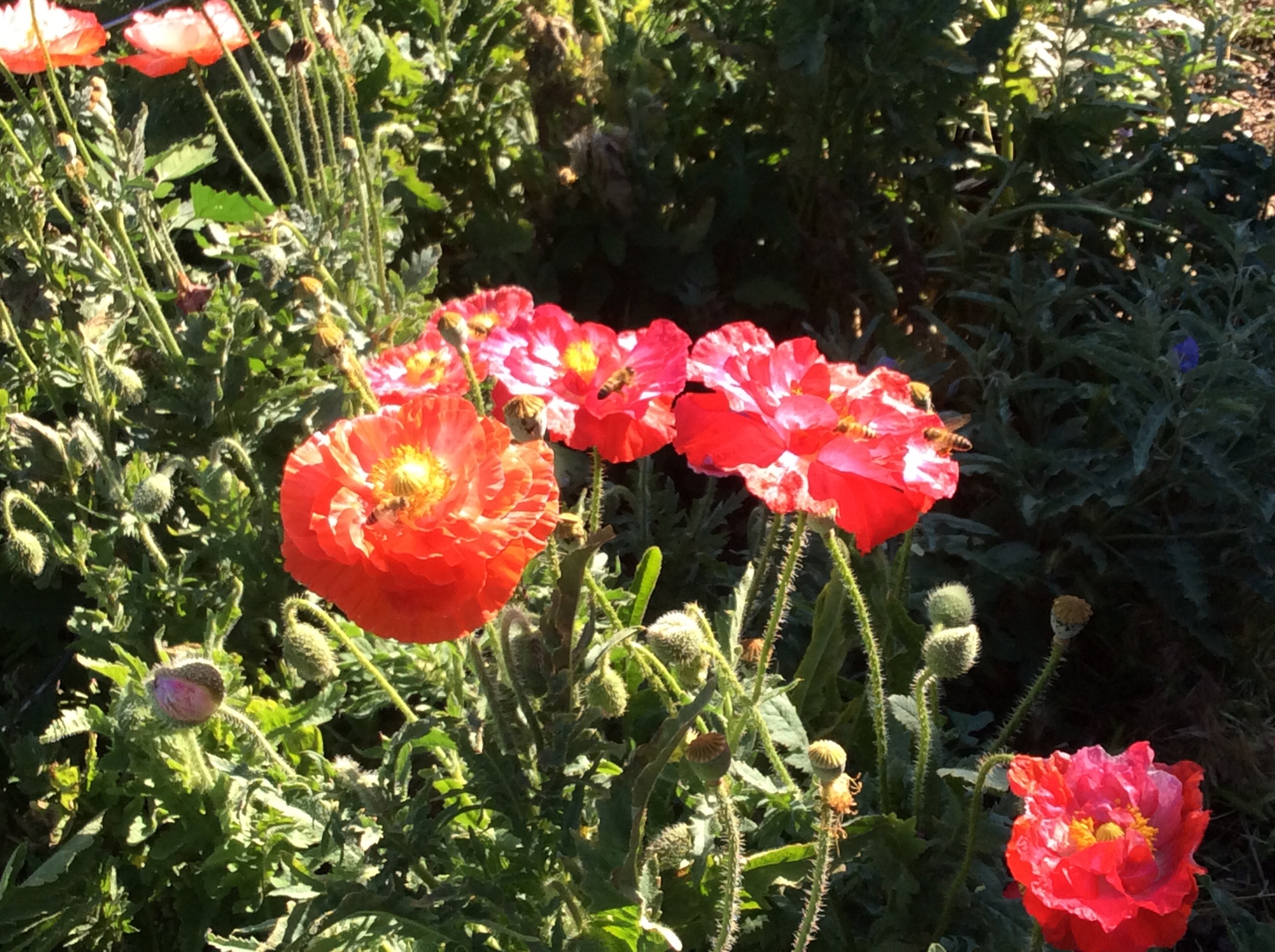
Surely everyone knows by now about the bee/pollinator crisis, and all I plan to mention here is that we gardeners can do a bit to maintain the bees that we have left. If you want your fruit trees and squash to bear, then bees are a personal issue for you, and the best things that you can do for them are garden without any insecticide sprays (the drift from which can spread a long way and is very toxic to bees) and feed them. This year I’ve managed to keep a succession of plants blooming that are attractive to bees, but by far their favorite is the common Shirley poppy, available in nearly every seed catalog. While the weather is still cold, scatter the fine tiny seed around in spots where the poppies can get big and bushy in midsummer, keep the area watered and weeded, and let them do their effulgently gorgeous thing. I scatter the seeds around my tomato bed in late winter, they hog the bed in June, and then can be pulled out after blooming to give the tomatoes breathing room. Every morning they lift my spirits twice: first when I catch sight of them and again when I get closer and hear the continual hum of bees working. I am thinking of getting a beehive so that the third thrill can occur when I see them filling combs.
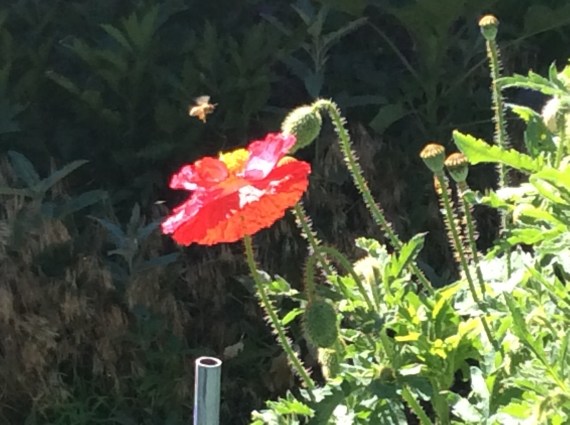
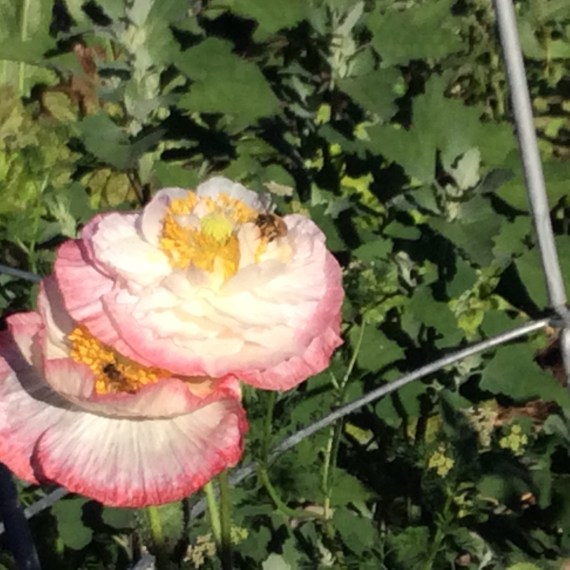
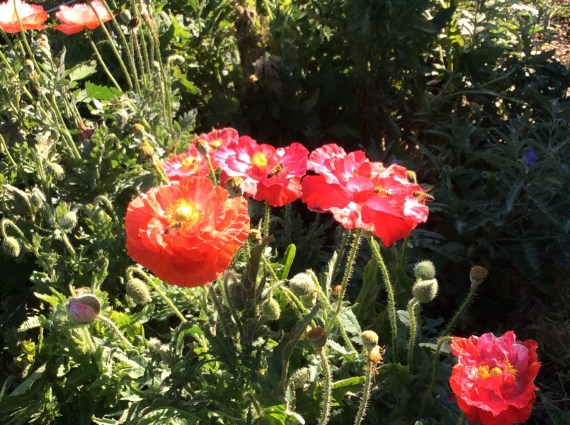
I should add that the leaves of Papaver rhoeas are edible in cooked greens mixtures, but they are no great shakes, so think of this plant as food for the bees, not you.
30
Aug
Posted by wooddogs3 in front yard gardening, greens, herbs, urban homesteading. Tagged: amaranth, bees, cancer, Cucurbita moschata, edible wild plants, husky, lambs-quarters, mallow, priorities, purslane, sunflowers, urban homesteading, wild birds, wild food. 1 comment
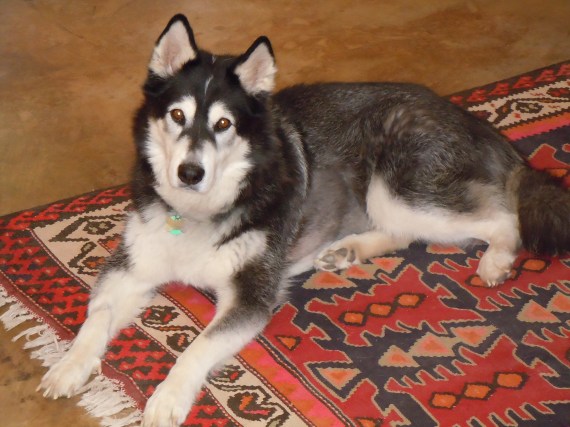
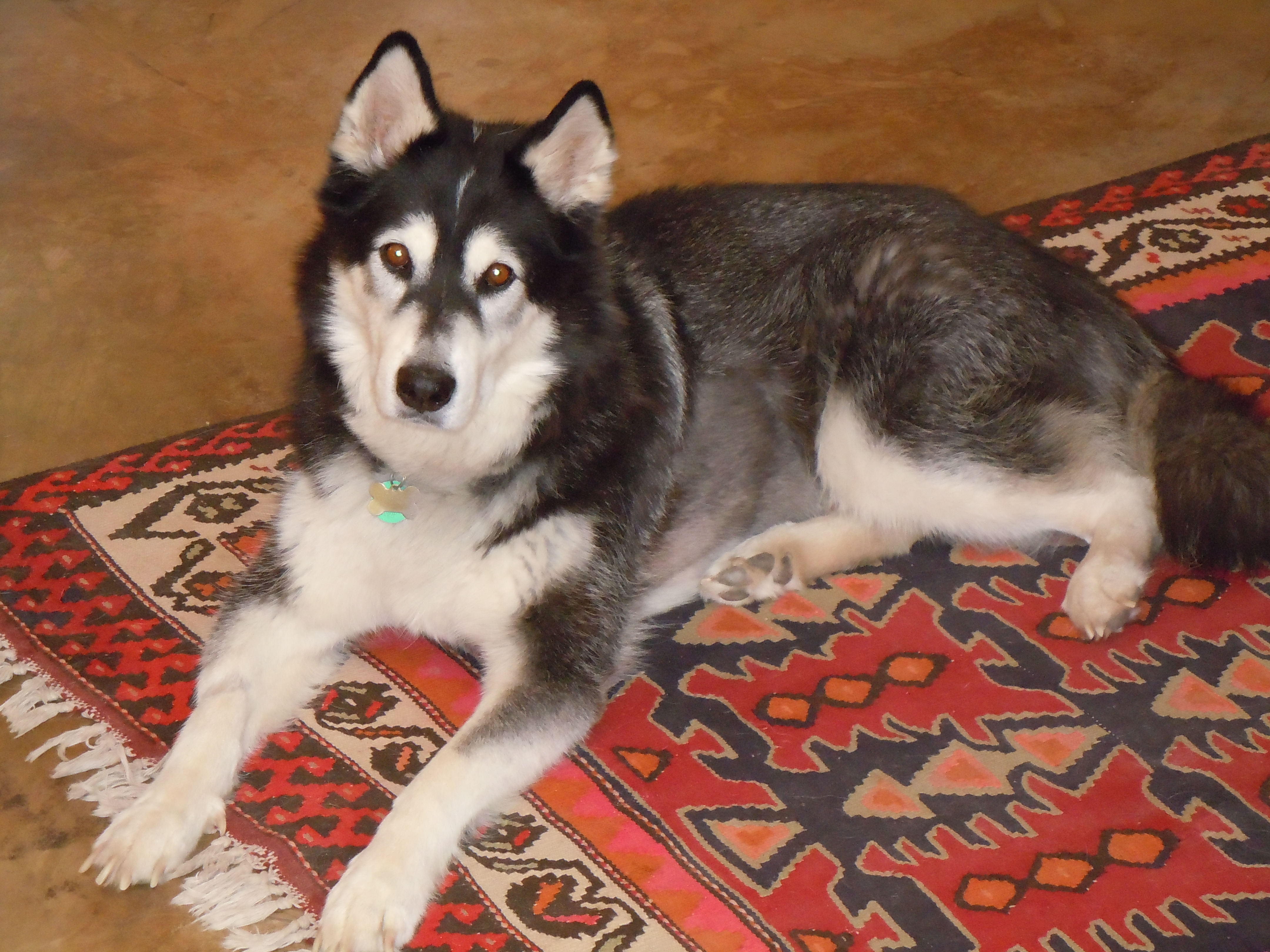
In urban homesteading as in the rest of life, it’s never possible to know what the future holds. In early July as I was planning and starting my fall/winter garden, my very beloved husky was diagnosed with metastatic cancer and a short life expectancy. Thanks to the care of a wonderful canine oncologist he is free of pain and enjoying his last weeks, but it rapidly became clear to me that the fall garden was not going to be a priority after all, both because of his care needs and because I want to spend all the time that I can with him. Weeding, planting, and the constant ongoing care that a garden needs came to a sudden halt.
So, what to do about the garden? I was soon able to identify the vegetables that flourish on neglect. Corn did well, and we gorged on fresh sweet corn regularly, although the last planting was too young to take the neglect and so our corn season ended early. Sweet potatoes have been unstoppable. Swiss chard has done well, and the winter squash is out to eat the world. We have a problem with borers in our area, so this year I limited myself to squash of the C. moschata variety, which are rumored to be resistant to them. The vines are producing well and not a single one has shown that sudden disheartening wilting that heralds the squash borer. My enthusiasm for edible weeds really paid off, as we ate greens dishes full of lambs-quarters, mallow, amaranth, and purslane. I always let some of my spring crop of arugula go to seed, and a self-sown fall crop is coming up to supply our salad bowl. Self-sown chicory is showing up here and there. Dandelions have grown a foot across, and are too bitter to eat now but after a few frosts they’ll be perfect for braising. Mallow enjoys heat and neglect and even offers pretty purple flowers if you grow the Malva sylvestris type. The wild-type daylilies are spreading happily and will supply spring shoots. Peruvian purple potatoes are healthy and strong. They form tubers late, but in a couple of months we expect to be eating a lot of them. Cherry and paste tomatoes are winding their way through the general melee and producing a surprising number of tomatoes.
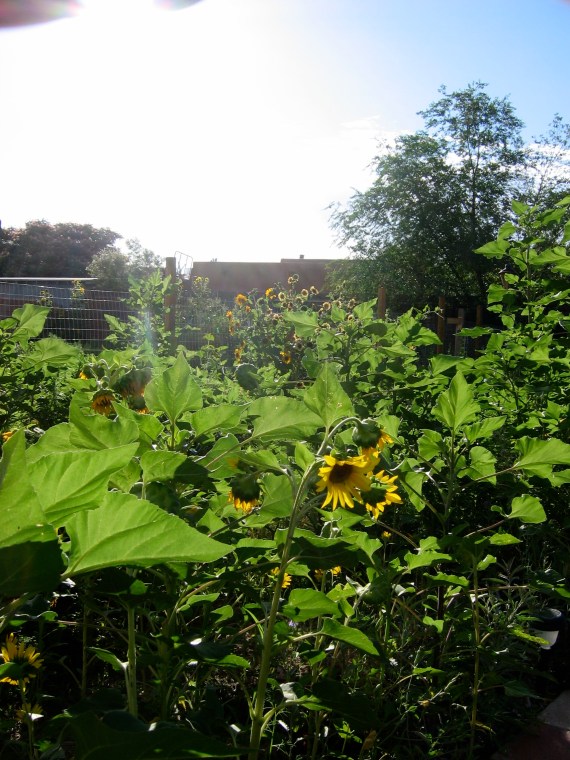
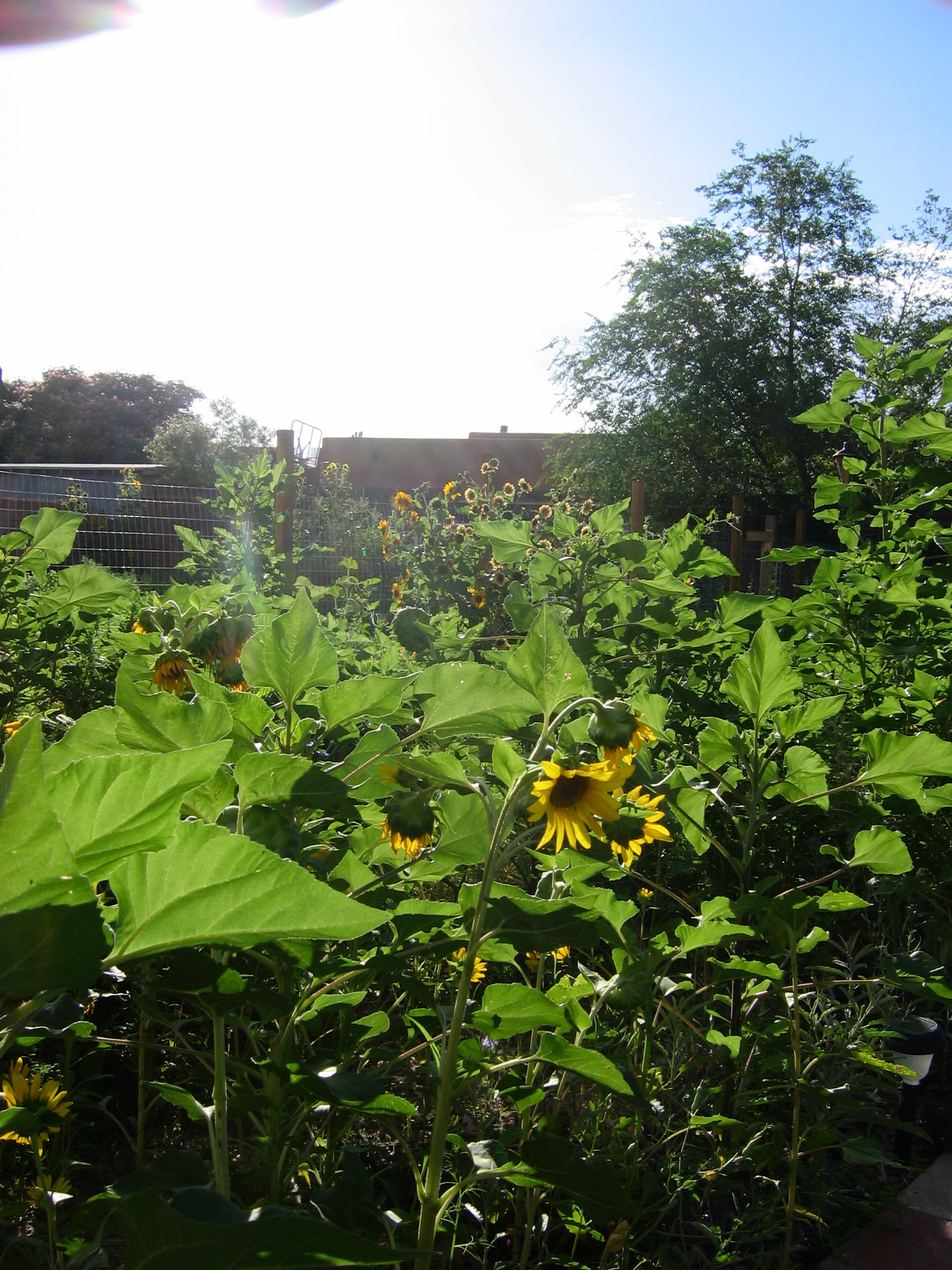
At the time that my dog was diagnosed there were hundreds of wild sunflower seedlings all around the property, and I decided to let them grow unmolested, thinking that they would eventually supply green matter for mulch and would keep worse weeds from taking over. We now have a sunflower forest twelve feet high on two sides of the house, and the beauty of the flowers lights up the days. They also attract thousands of bees to the open flowers, and the ripening seeds have drawn hundreds of goldfinches to my yard. Hummingbirds strafe each other over my head, and my husky spends his good days wandering in his own private jungle.
To me the spirit of urban homesteading is one of making do as best we can despite uncontrollable circumstances. It’s a spirit that sets priorities and says “First things first.” My priorities right now are clear, and there are more important things then a carefully planned winter garden. To feed the bees and birds and to find my life unexpectedly full of bright color, flashing movement, wild life,and even good homegrown food although not the food that I had planned on is a gift that I hope I won’t forget.
 My urban homestead