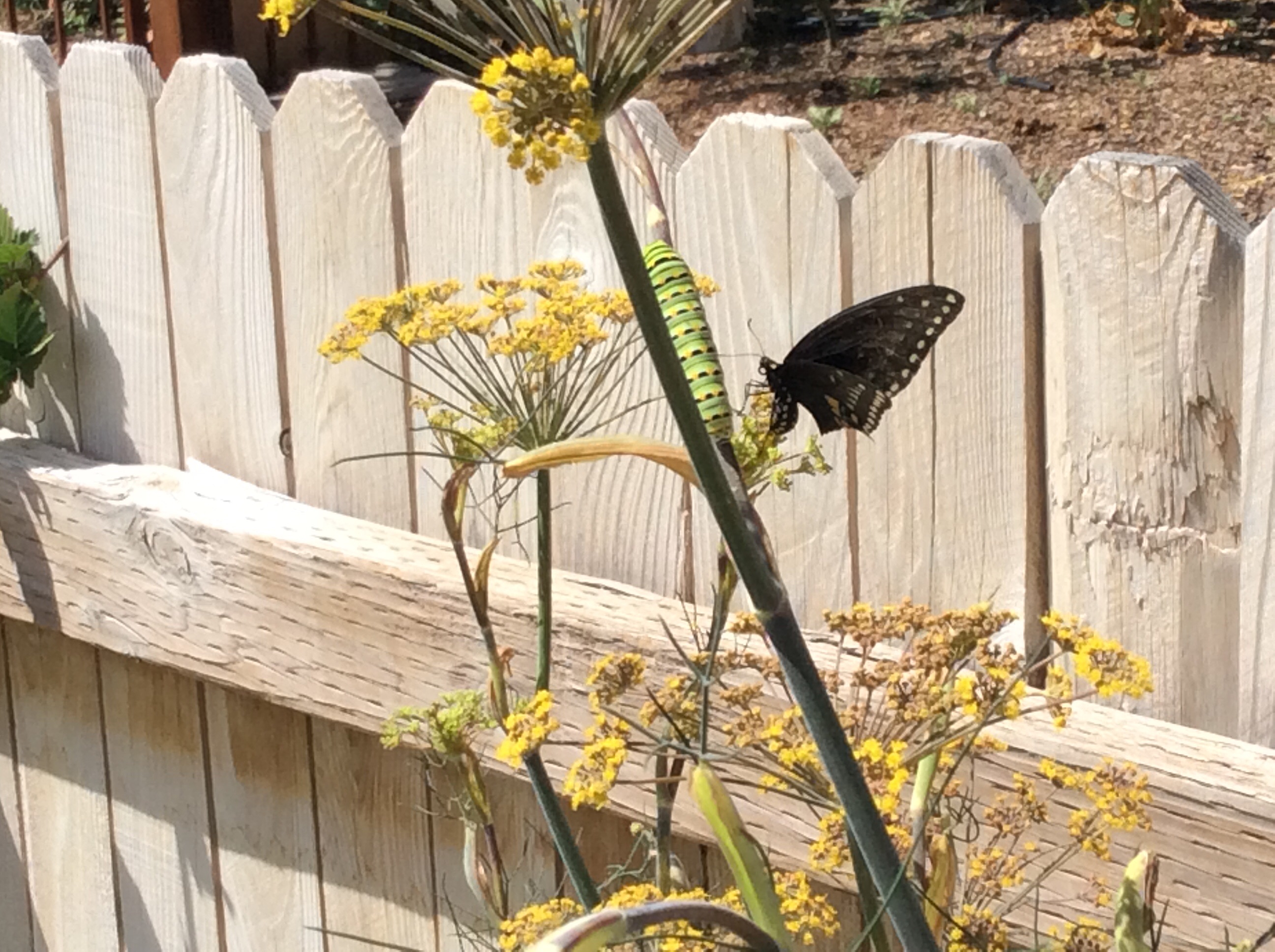
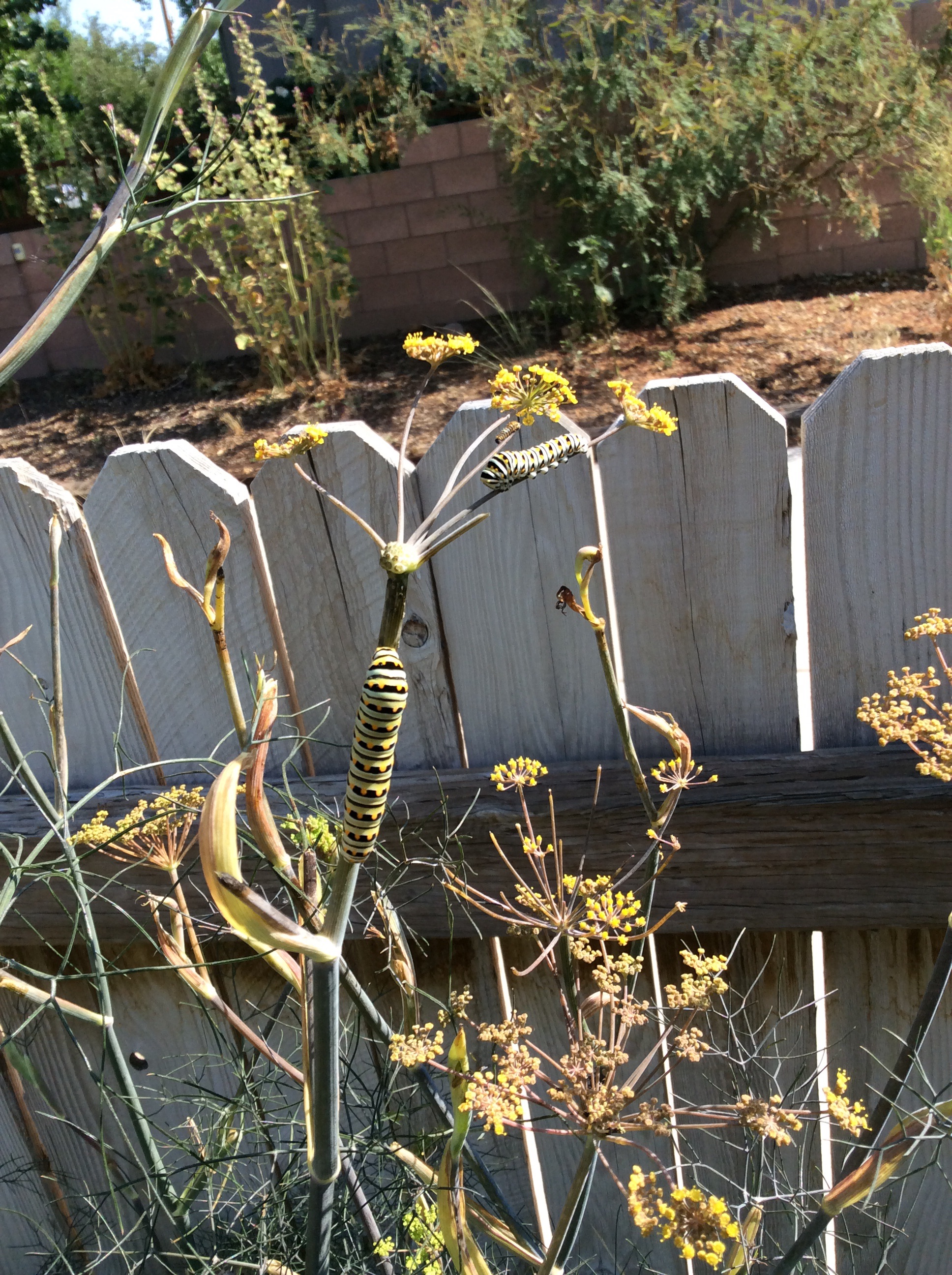
One of the lovely fringe benefits of gardening organically is that you support a lot of wildlife. Just this morning when I went out to inspect my garden, I noticed anise swallowtails around the flowers and their caterpillars on the fennel.
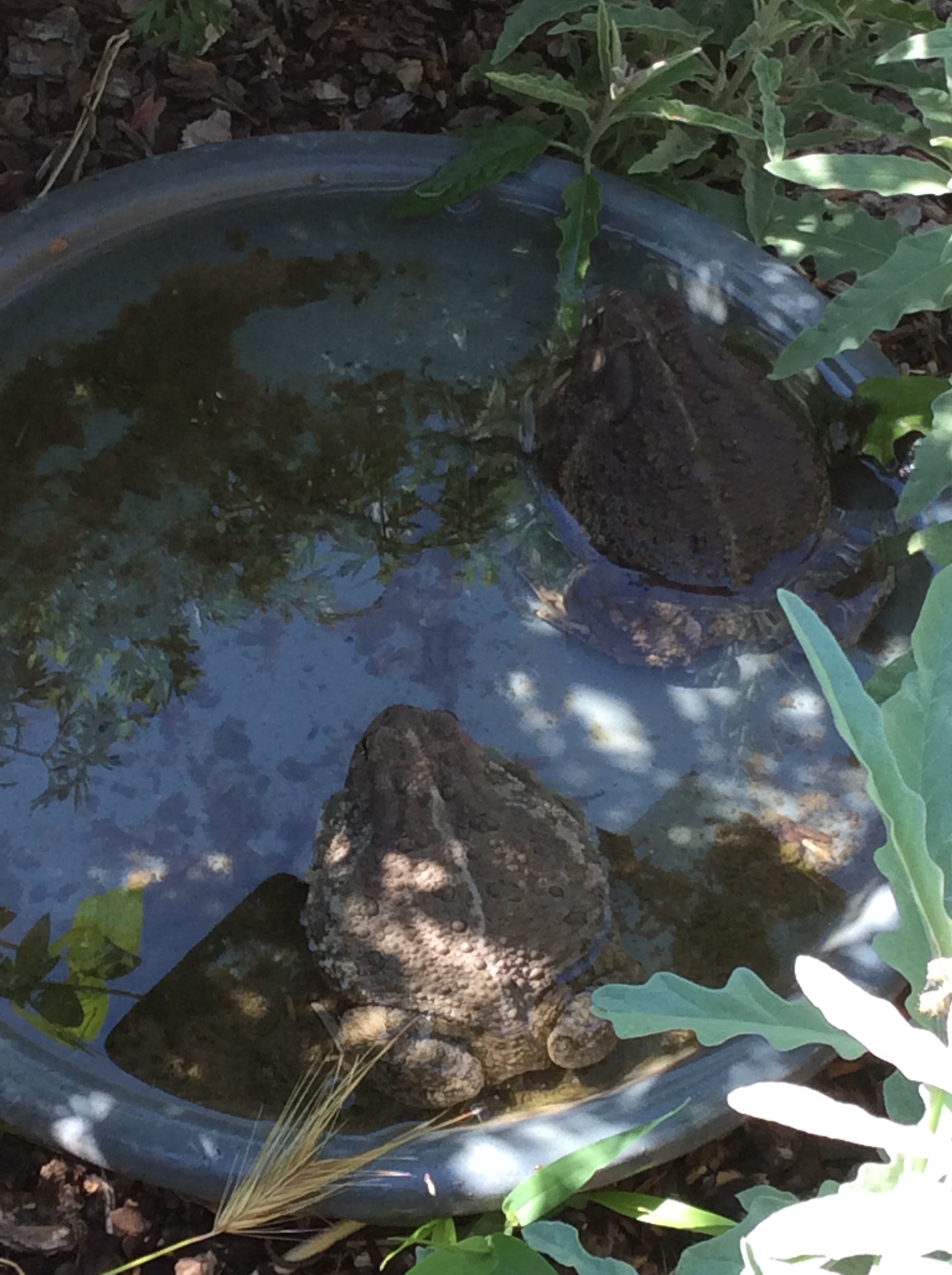
I put a birdbath on the ground in a shady spot yesterday and filled it with water, and this morning my spa was in use:
Coyotes pass through my yard (had to have the chickens’ run roofed over,) red-tailed hawks soar overhead, Cooper’s Hawks hunt among my neighbor’s trees, bees of all kinds visit the flowers, whiptail lizards scuttle among the plants, and sometimes a huge raccoon comes around to stare longingly at the chickens. Under my feet untold billions of microbes churn the soil. Invite Nature to dance and she’ll take you up on it.
27 Jun
Wildlife in the Suburban Garden
22 Jun
Fennel in the Garden and Kitchen; a Nose-to-Tail Herb
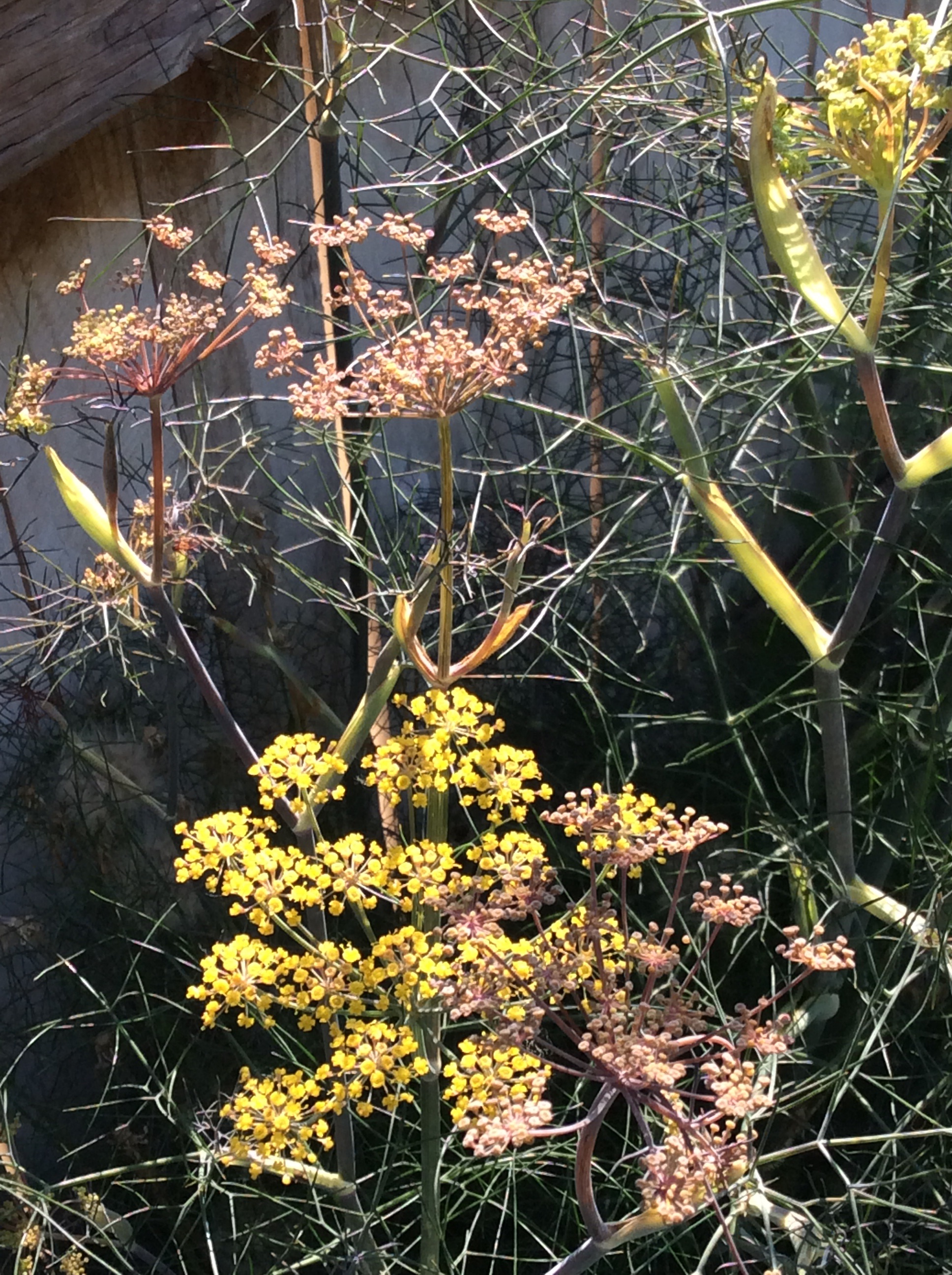

Fennel carries the true taste of summer. I love fennel and always have it around, and my favorite form, the only variety that I keep these days, is the subtly metallic bronze fennel. If you want fennel bulbs you will have to grow a bulbing type, but my interest is in other parts of the plant so the bronze suits all my purposes.
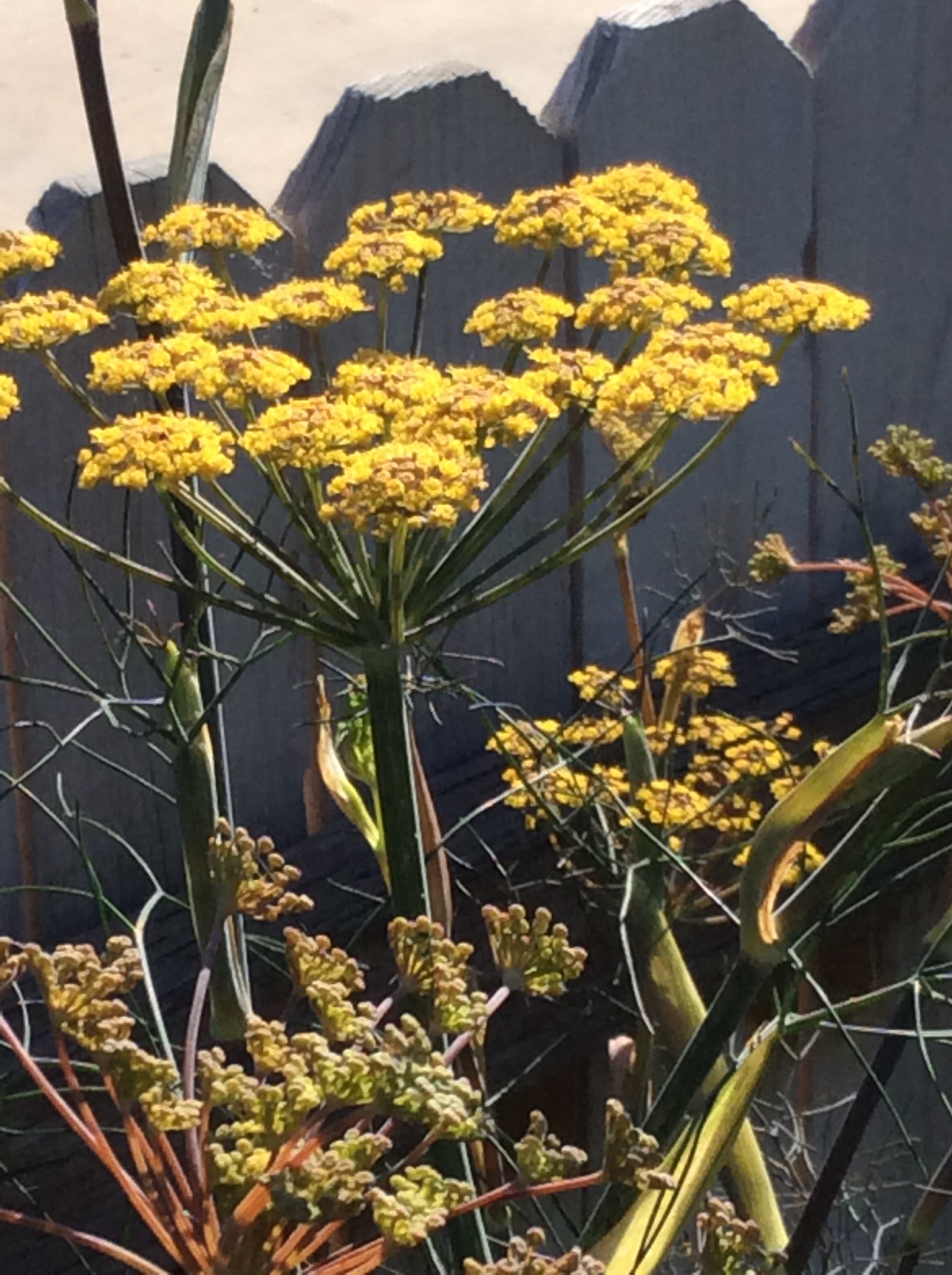
The first pleasure it offers is aesthetic: this is a lovely plant to have around. The color isn’t really bronze but a soft coppery-purple, and when hung with drops from a summer rain it is nothing short of breathtaking, in a quiet way. When dry, it is furry like a cat until the stalks form, and a little later the umbels of tiny yellow-green blooms look surprisingly pretty against the darker background. It would pass muster as a front yard edible in the most exacting neighborhood.
Second, it is beautifully aromatic. I brush my hand down a frond every time I pass it to inhale the anise-y scent.
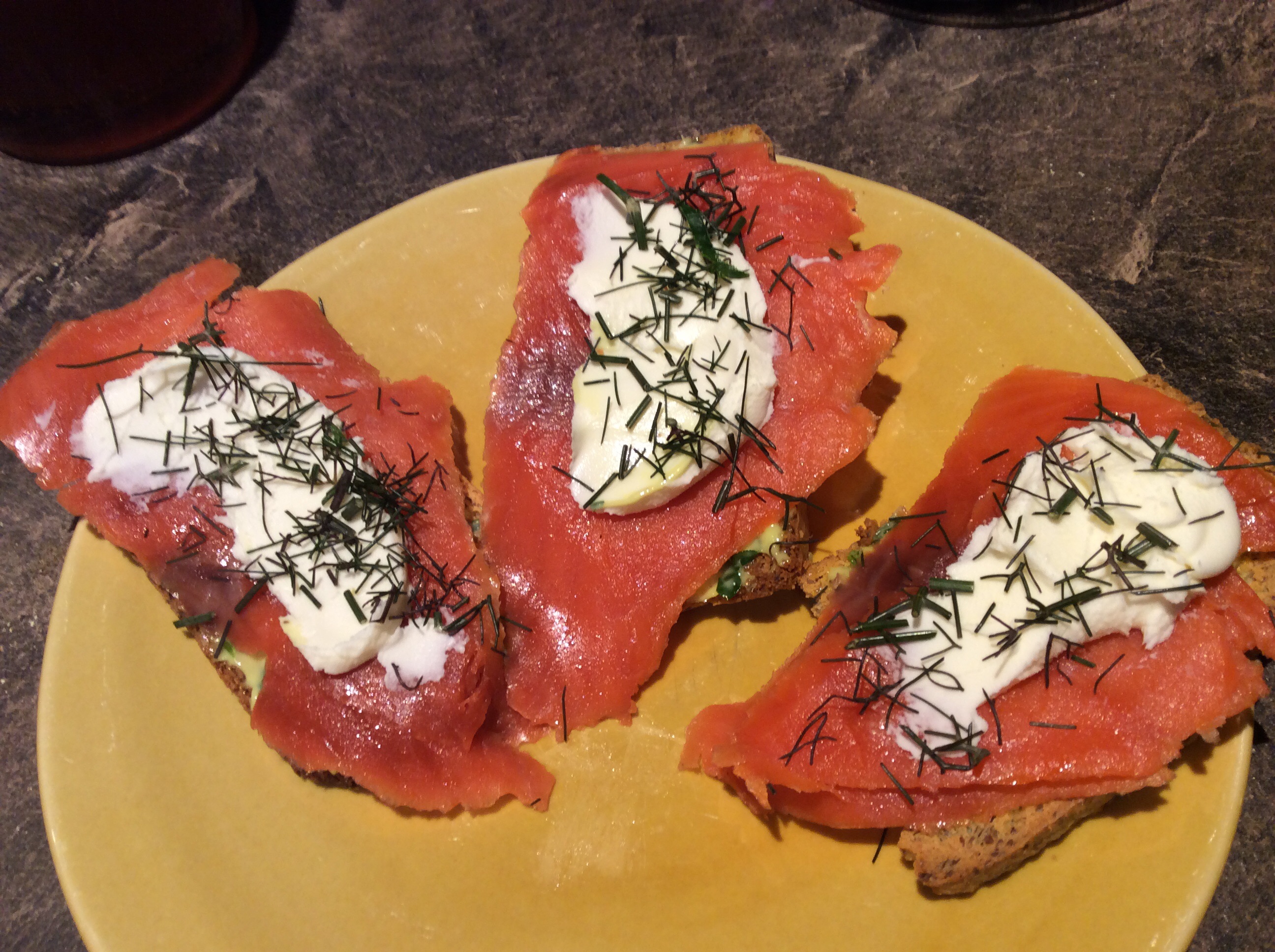
Third, it’s delicious. I can’t understand why so few people eat their bronze fennel. I admit that my main use of it is to chew up a frond while weeding or doing other garden tasks. The resiny rush is succeeded by a taste of intense sweetness and herbal licorice. I realized years ago, when going through a Greek cookbook binge, that fennel and not dill is a primary seasoning herb for horta, the greens mixture that forms a part of so many Cretan meals and snacks. A generous handful of chopped fennel fronds, sautéed with other aromatics, gives the right flavor to a batch of greens mixture. Chopped fronds are also an essential part of fish marinades and rubs, in my view, and can be delicious on chicken. A little dab of herb salad, made from chopped bronze fennel and chives or garlic chives and dressed with a very good vinaigrette, is good as a seasoning garnish alongside fish or chicken. Chopped fennel fronds are lovely in mayonnaise to sit atop grilled salmon, or yo dress cold fish salad. When grilling fish, consider putting the larger stems of fennel across the grill to make aromatic smoke. I love a small handful of chopped fronds in salads. This is a nose-to-tail herb, since besides using the leaves and stalks you can collect the pollen if you have enough plants (fennel pollen is a common aromatic seasoning in Tuscany,) and the seeds can also be collected for culinary use. One cookbook writer said that she made an anise-flavored pesto from blanched bronze fennel fronds, and that sounds delicious too, although I haven’t tried it yet. On days when I’ve worked late in the garden and the late sunset finds me hot and dirty and with a poor appetite from the heat, I can throw together smoked salmon crostinis with fennel:
Cut a few diagonal slices off a good baguette or, if you are ketogenic, cut a few thin slices of ketogenic coconut bread. Toast them, spread with green mayo Or your own favorite tarragon-seasoned mayonnaise, put on one thick or two thin slices of smoked wild-caught sockeye salmon, smear with some mascarpone or creme fraiche, and top each with a couple of generous pinches of chopped fennel. It takes five minutes, it’s cool and soothing, and yum.
Incidentally, I remember reading somewhere long ago that fennel stalks coated with tallow were burned to summon good witches, and mullein stalks were used the same way to summon bad witches, unless maybe it was the other way around. So if you want to try it, you’ll need to get straight which is which. But I can say from experience that a couple of dried fennel stalks tossed on a dying fire in the fall give a lovely aromatic end to the evening that doesn’t summon anything but contentment and sleep.
21 Jun
The Bee Banquet
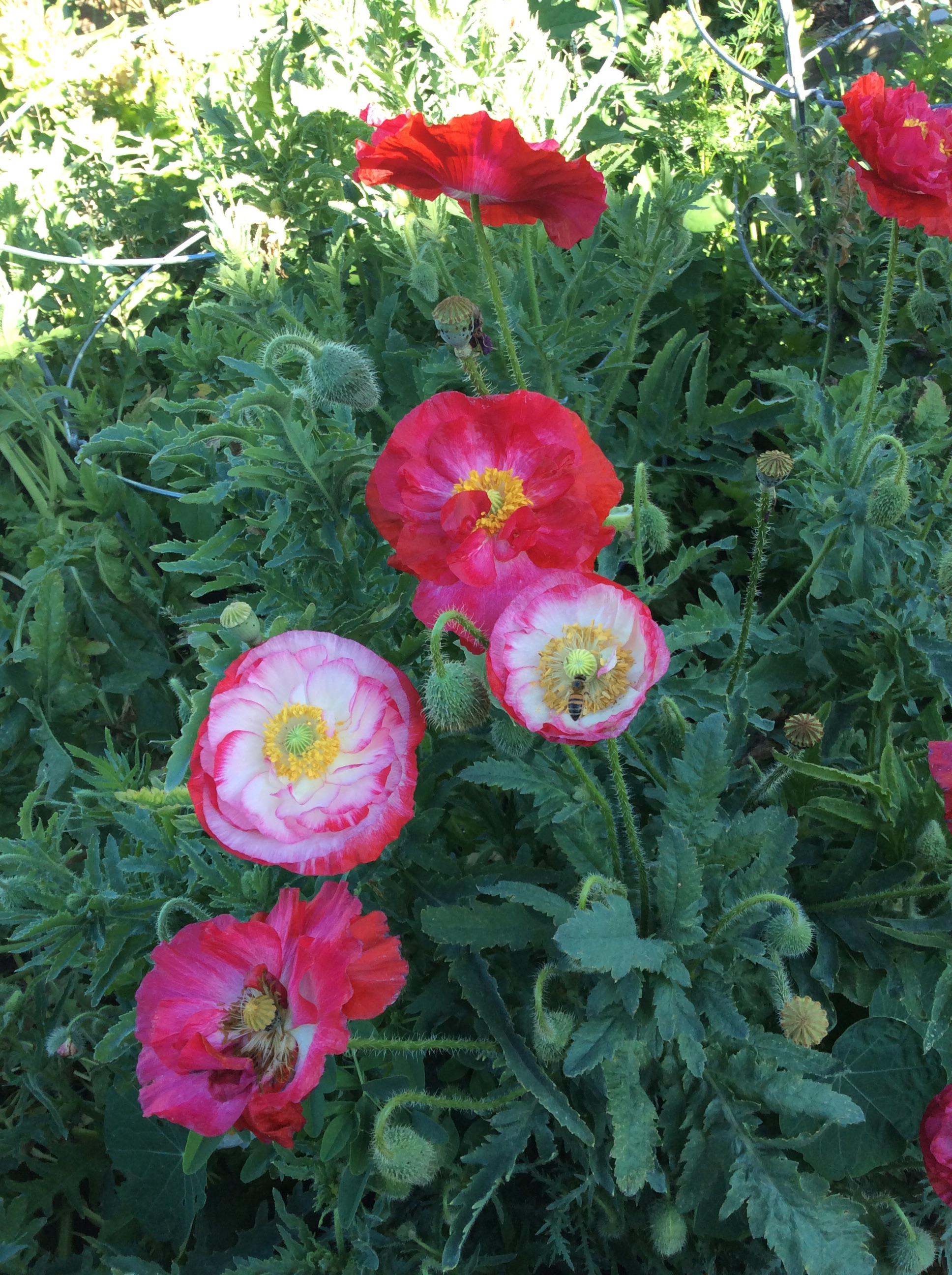
Surely everyone knows by now about the bee/pollinator crisis, and all I plan to mention here is that we gardeners can do a bit to maintain the bees that we have left. If you want your fruit trees and squash to bear, then bees are a personal issue for you, and the best things that you can do for them are garden without any insecticide sprays (the drift from which can spread a long way and is very toxic to bees) and feed them. This year I’ve managed to keep a succession of plants blooming that are attractive to bees, but by far their favorite is the common Shirley poppy, available in nearly every seed catalog. While the weather is still cold, scatter the fine tiny seed around in spots where the poppies can get big and bushy in midsummer, keep the area watered and weeded, and let them do their effulgently gorgeous thing. I scatter the seeds around my tomato bed in late winter, they hog the bed in June, and then can be pulled out after blooming to give the tomatoes breathing room. Every morning they lift my spirits twice: first when I catch sight of them and again when I get closer and hear the continual hum of bees working. I am thinking of getting a beehive so that the third thrill can occur when I see them filling combs.
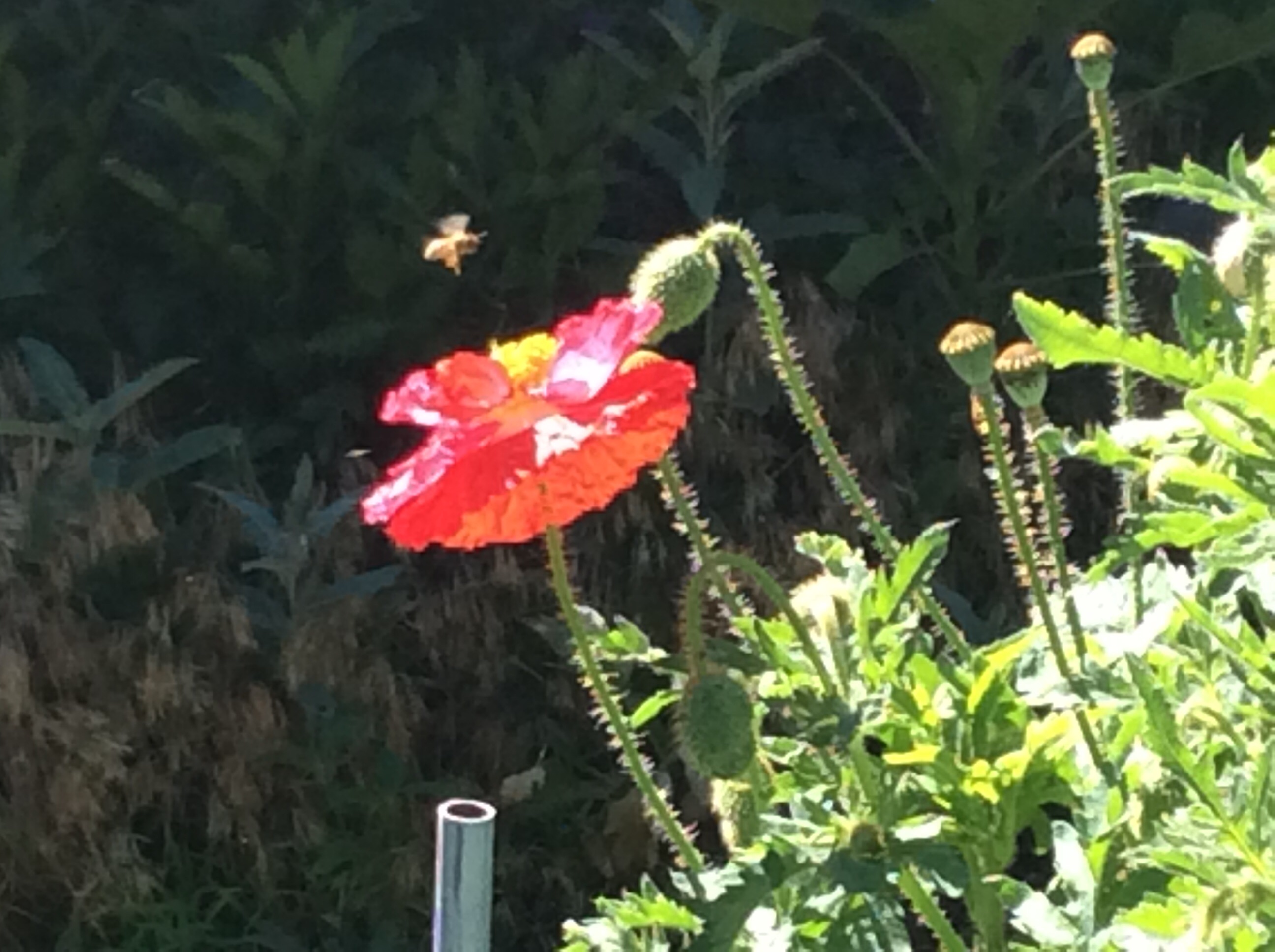
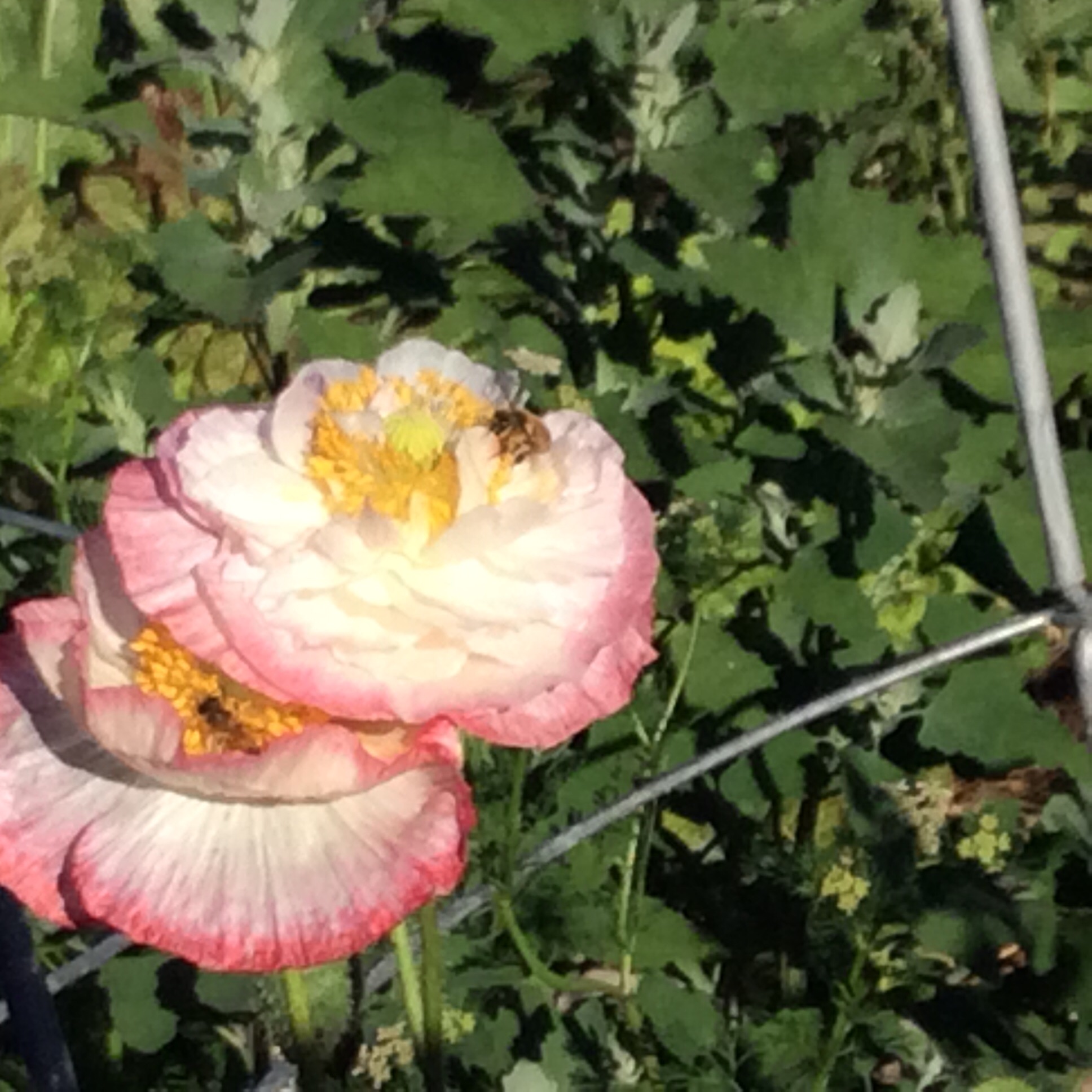
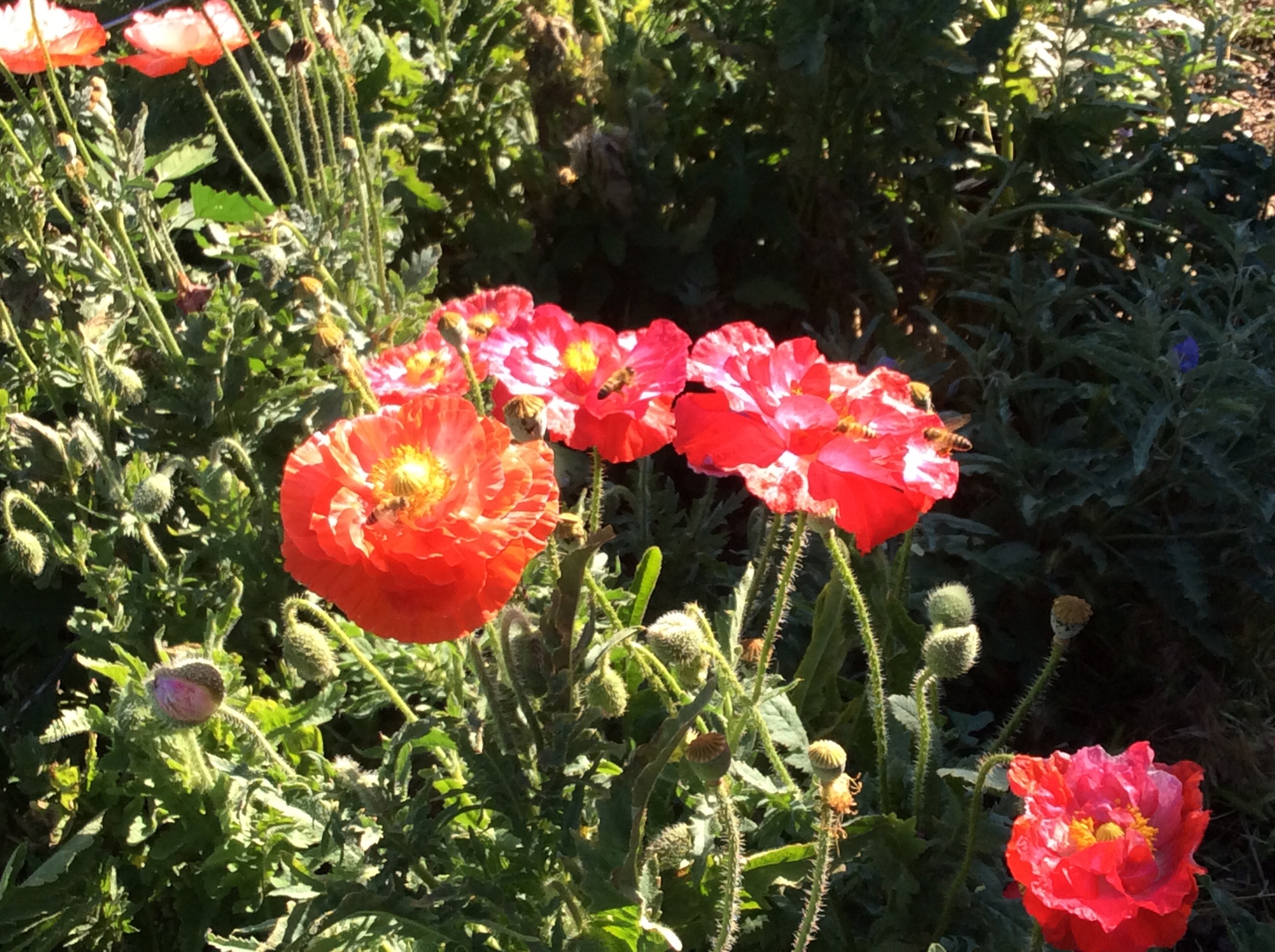
I should add that the leaves of Papaver rhoeas are edible in cooked greens mixtures, but they are no great shakes, so think of this plant as food for the bees, not you.
20 Jun
The I Hate Kale Cookbook
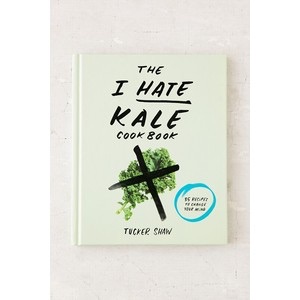
As much as I love lengthy and pontifical books about food, and glorious pictures that make me faint with hunger, there is room in my heart for small practical cookbooks with no frills and good recipes. Tucker Shaw’s I Hate Kale Cookbook is such a book. If you are an aspiring greens-eater, or even if you’re already pretty damn good at it, this book will help you eat more kale. There are useful tips for dealing with its special texture and 35 basic recipes that work, from which you can spin endless variations. In strict point of fact I would say that some are techniques rather than recipes, but never mind if they get more superfood down the hatch. Right about now, when the kale looms large in the garden and farmer’s market stalls are solid green, you need this book.
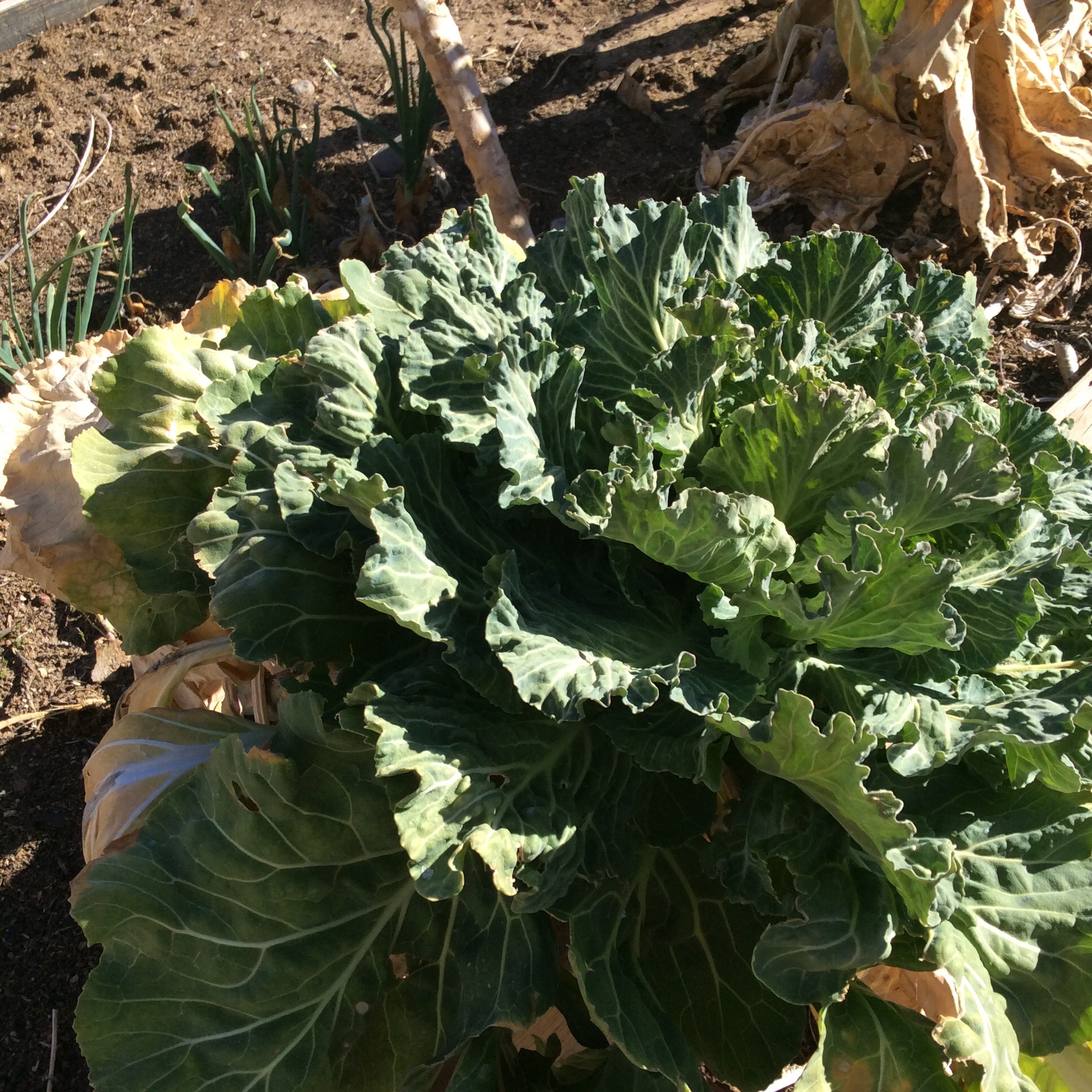
Shown above is the early spring growth of Portugese kale, also known as tronchuda. If you are going to have kale all summer and fall and again in the spring, you will need versatile recipes.
 My urban homestead