The Plant That I Can’t Do Without

image

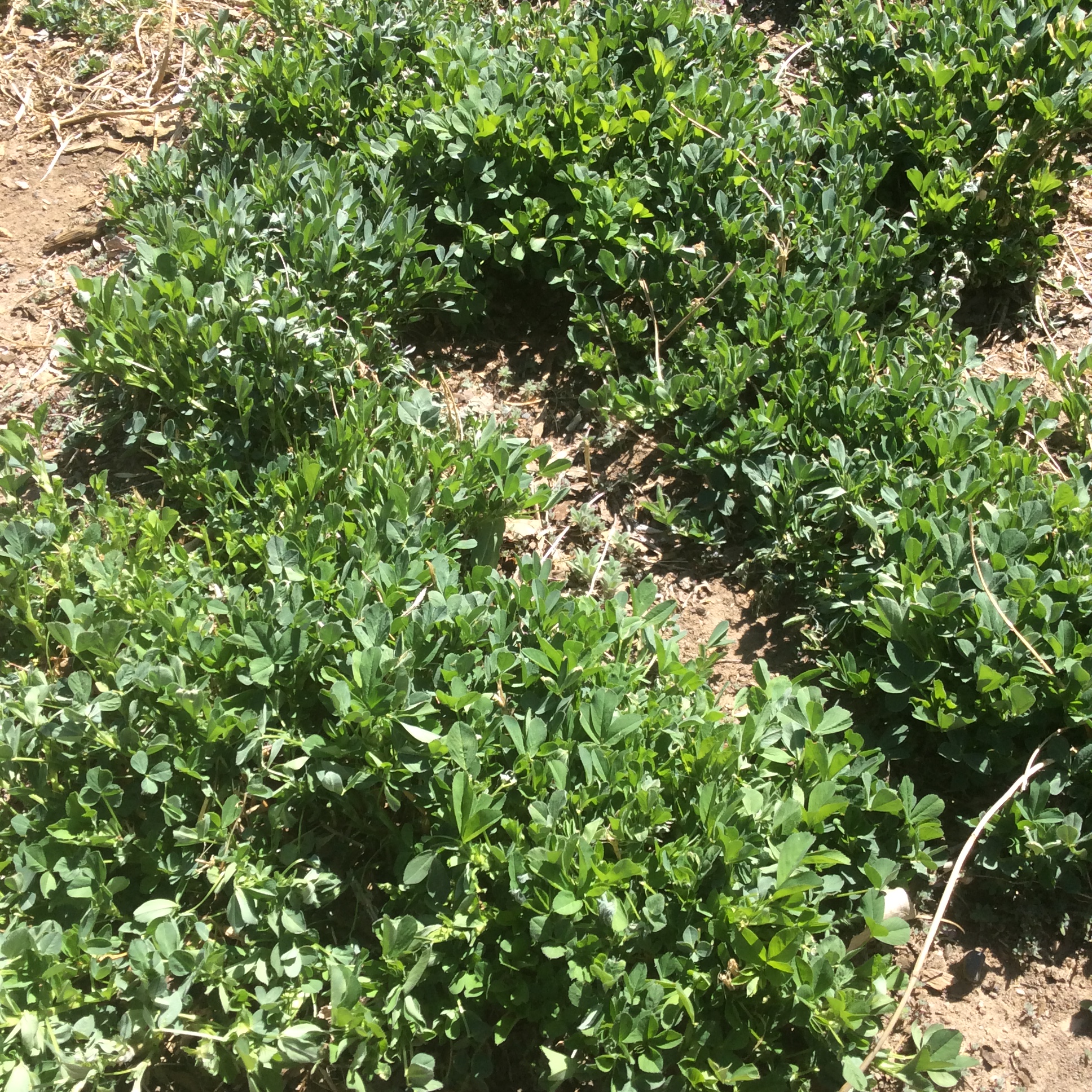
If I were a poet, I would write a hymn to alfalfa.  This workhorse plant is now all over my small property, improving soil and feeding the animals and indirectly feeding me.  For the first couple of years I labored fruitlessly to try to grow enough grass or clover to make a picnic circle, but ultimately I gave up and seeded the area with alfalfa.  What a gain in utility.  Alfalfa thrives in my alkaline soil. Its roots are reported to go down as much as 30 feet deep, and it is fairly drought resistant.  It is a bit sparse the first year but then fills out nicely. It fixes nitrogen and improves the soil. Early in the spring, usually by mid-March in my area, the vibrant green leaves are forming clumps.  It is a remarkably nutritious green, however I don’t usually eat it myself, although I will clip a few tender leaves off the tips and put them in cooked greens mixtures.  Chickens love fresh alfalfa, and it is quite astounding how much of it they will eat. Of course, this is providing all sorts of nutrients and greatly increasing the beta-carotene and omega-3 fatty acids in the egg yolks.  The yolks are beautifully vibrant orange. I grab handfuls of stems and cut them close to the ground with scissors, then go to the chicken pens and cut the stems into lengths 1 to 2 inches long, to make the plant easier for the hens to eat.  They start jumping against the door as soon as they see the alfalfa coming.   My goat relishes a handful of fresh alfalfa as a snack, although mostly she eats dried alfalfa hay.  I have little patches of alfalfa all over the yard now, wherever I had a bare space to fill, and I let at least one patch go to flower for the pleasure of seeing the bees mob the blue-purple blossoms.  I would estimate that each clump is cut four to six times between March and October.

I still wish that I had a lush smooth clover lawn to picnic on; alfalfa is clumpy and by the end of the season it is stiff with all the stems that you cut. You can’t sit right down on it.   But a large sheepskin in between you and the alfalfa makes it a much more comfortable resting place, and it is far more useful and durable than clover. Currently I’m experimenting with planting fruiting trees and berries into the alfalfa patches to see how they coexist. My hope is that the alfalfa will provide some nitrogen for the trees. I hope to report back in a year or two.

If I think about my property as a factory, alfalfa is mining the nutrients from the subsoil, combining them with water, carbon dioxide, and sunlight to make edible food, and transporting the food to the general marketplace at the soil surface. The chickens are eating from the market, breaking down the 16-carbon omega-3 fatty acids found in plants, and re-forming them into 18 carbon omega-3s that people can readily utilize, as well as making proteins and concentrating caratinoids and other nutrients. They contribute eggs and sometimes meat back to the common marketplace, where I “buy” the foody products with my labor and feed input, and happily devour them. It’s a beautiful chain.
image

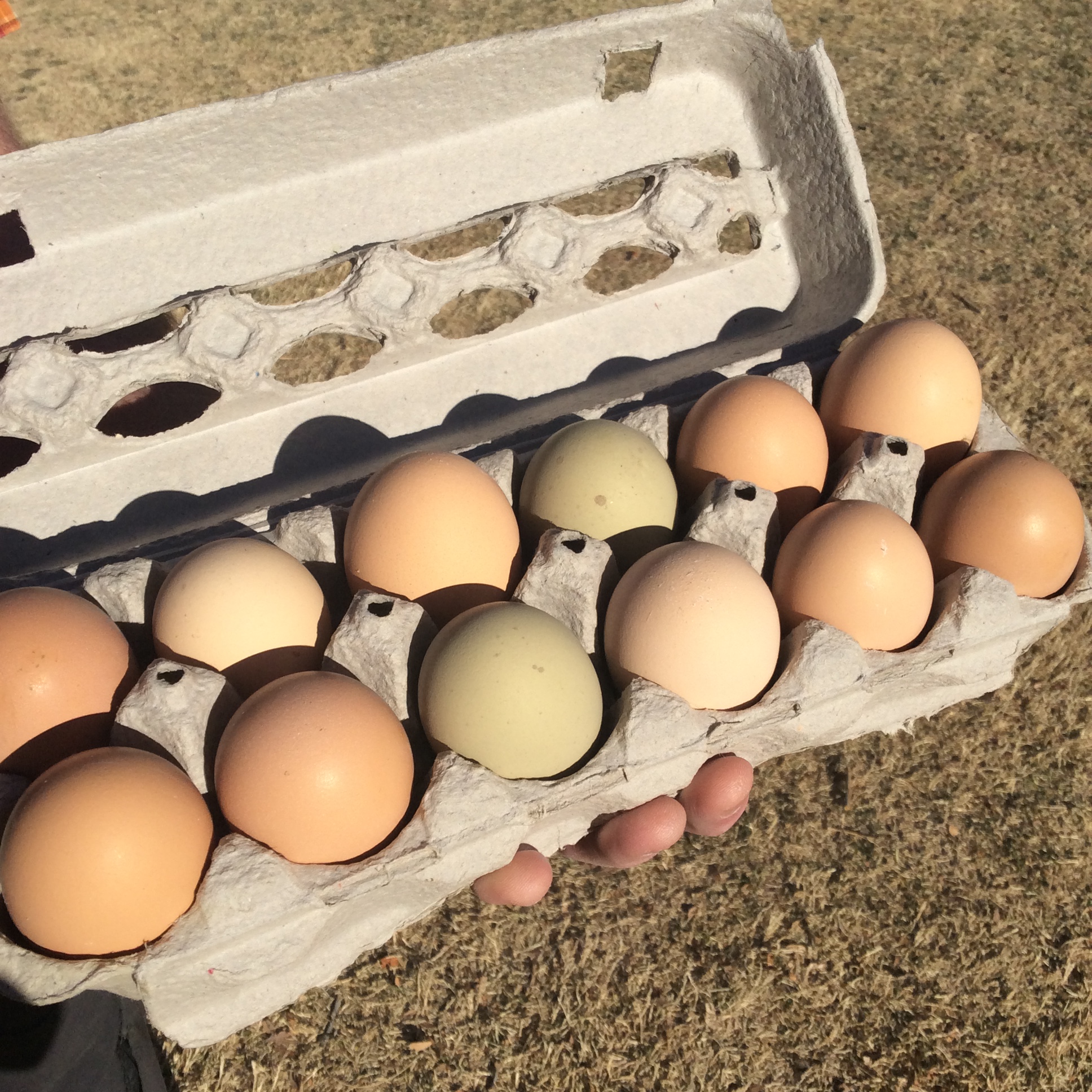
These delicious eggs can be thought of as little bombs full of all the nutrients in alfalfa. But they are much easier for people to eat.
Sweet Spring Onions

image

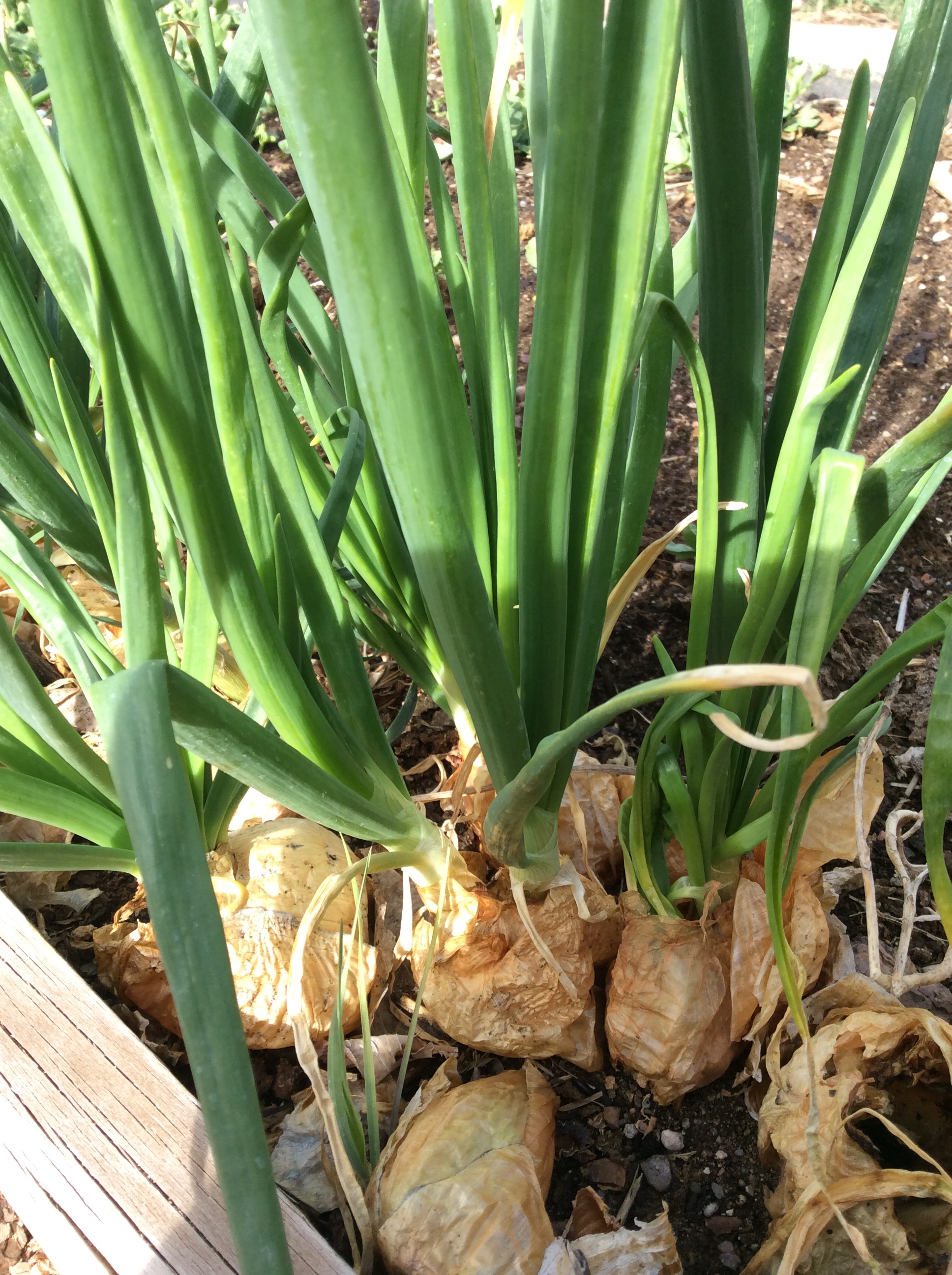
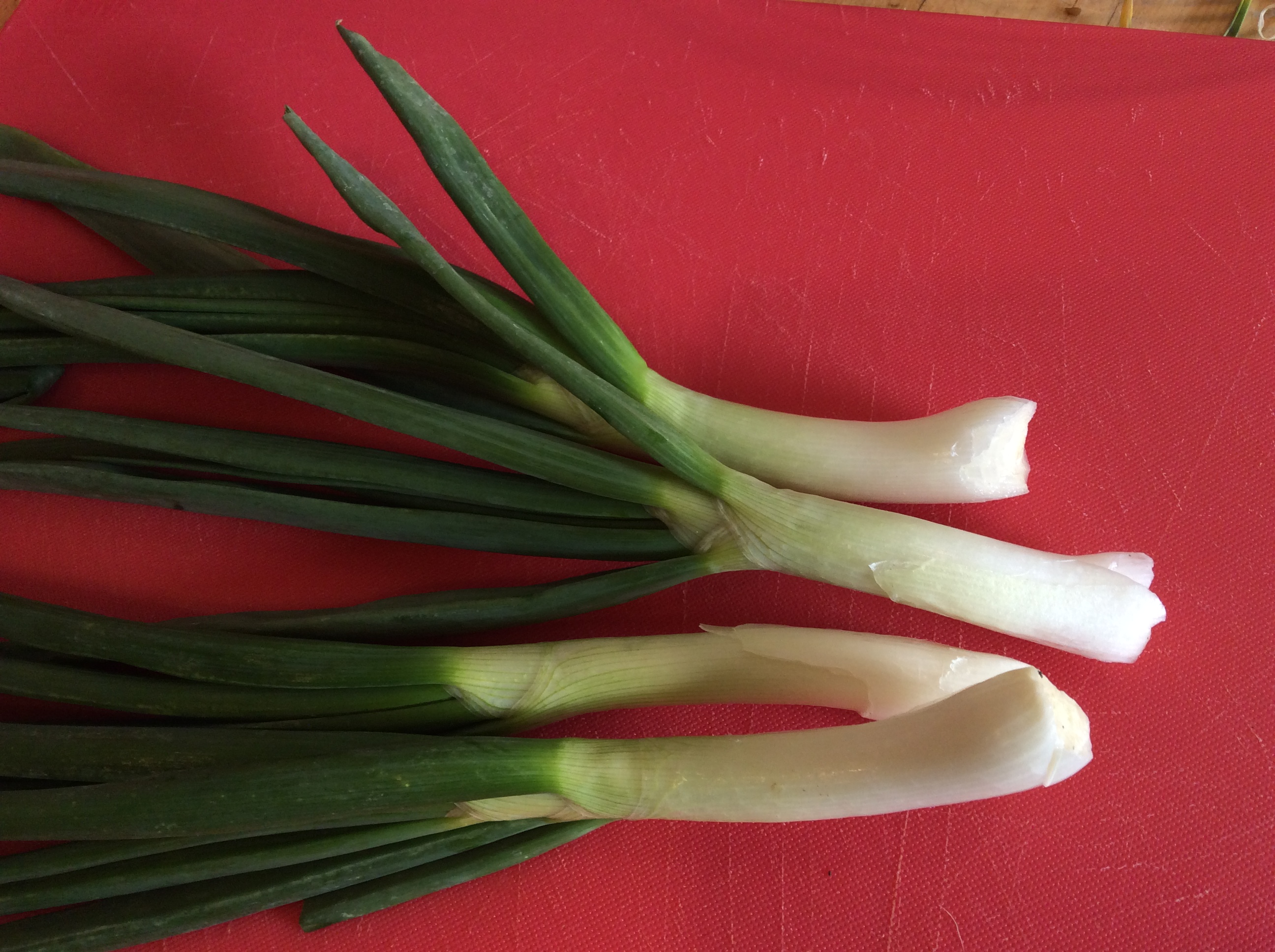
Sometimes it’s possible to gain benefit from distraction. In the spring I usually buy some  plants of the sweet onion variety Candy, because I like them for scallions in midsummer. Last summer one short row of them got away from me and matured, and since I was focused on other things at the time, I never got around to harvesting them. Early this spring they began to sprout in place, and now each of the original bulbs has produced 3-5 large sweet scallions as thick as my thumb. These are lovely as a vegetable, sliced in cross section and stewed in butter over medium-low heat with some salt until done. They are superb brushed with olive oil and grilled over coals until cooked through, taking care to keep the heat low so that they don’t burn, which happens easily. One or two grilled on the stove in a grill pan would make a nice cook’s treat while you’re cooking other things.  They need to be eaten as soon as they’re a good size, before they start to produce a flowerscape. The scapes are edible too, but personally I don’t care for the texture and usually use them to flavor broth.

I plan to harvest all but one scallion from each cluster and leave the remaining ones to mature, picking off the scapes and leaving the bulbs in place over the winter, to see if I can get a similar harvest next spring. A self-perpetuating patch of Candy onions would be a great way to greet spring.

image

The Joys of Spring: Goumis

image

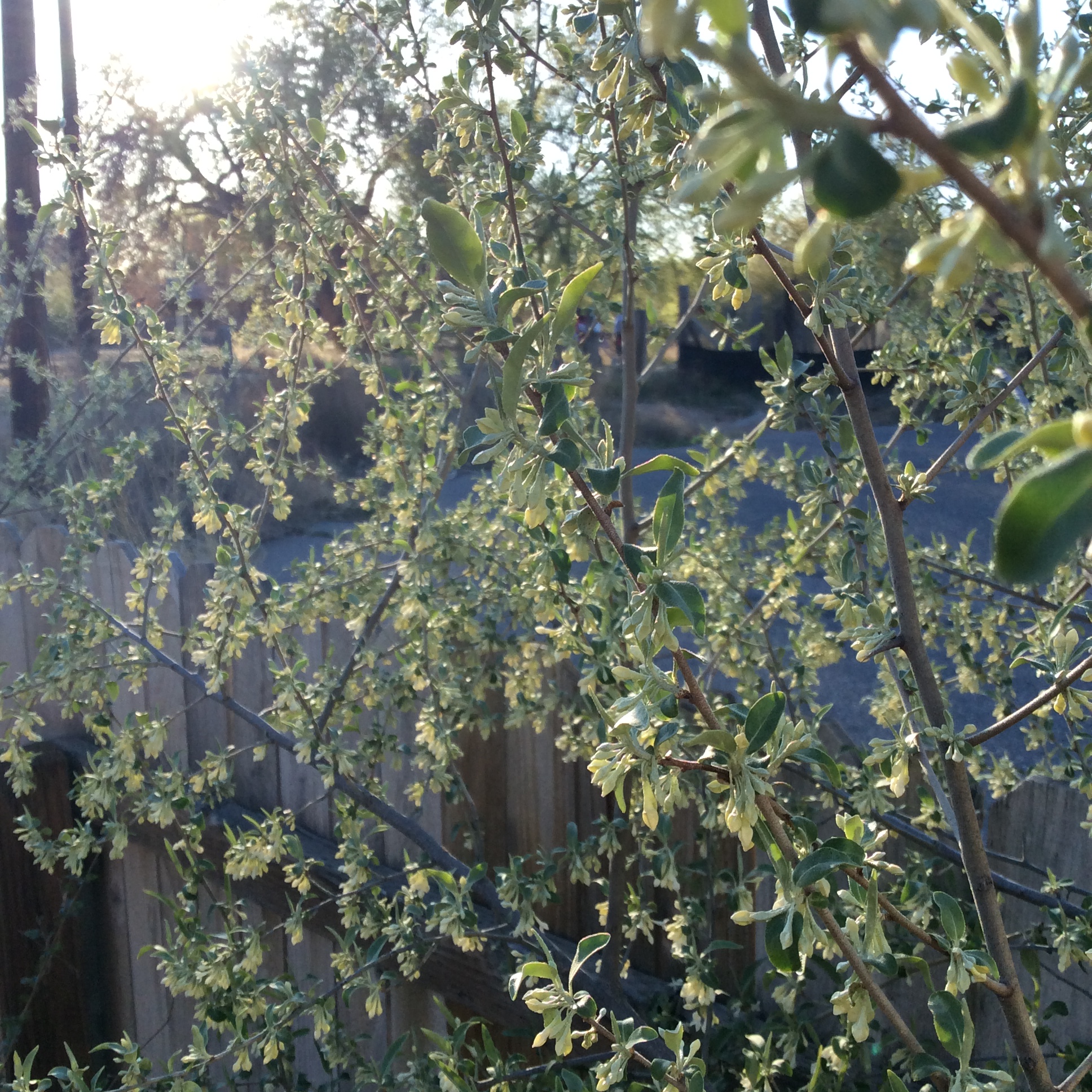
A few years ago I began a project to grow fruits that offered maximum antioxidants with minimum carbohydrates, in other words fruits very different from the swollen sugar-pops that fill the American grocery store. I had been reading with great interest about Goumi berries because genus Eleagnus thrives in my area with relatively little water. I planted three of them, and over the next two years they got a bit bigger but nothing much happened. Last year, their third year, they grew over 5 feet tall and one produced three tiny berries. Hardly an exciting outcome. But this year they have already earned their place; all three are covered with scads of small discreet blossoms and when the sun hits them, the scent that they throw all over my front yard is indescribable. It has the honeyed spicy sweetness that characterizes Russian olives in bloom, but without the grape Koolaid note. Utterly delicious. They are humming with bees, and I do wonder what Goumi honey would taste like.

The bush seldom tops six feet, and unlike their relatives the Russian olives and autumn olives, they are thornless.  They are nitrogen fixers and tolerate my poor alkaline soil, and are not demanding about water. I soak mine every two or three weeks and ignore them the rest of the time. They are not dangerously invasive like their cousins. I hope that later in the year I’ll be reporting on fruit production and quality. The berries have a high lycopene content and the seeds inside contain a quantity of omega-3 fatty acids.  But even if I had no interest in the fruit, they would be the stars of my early spring yard. Sometimes my message is a simple one: grow this plant, you’ll like it.

Chicken Skin Genius

image

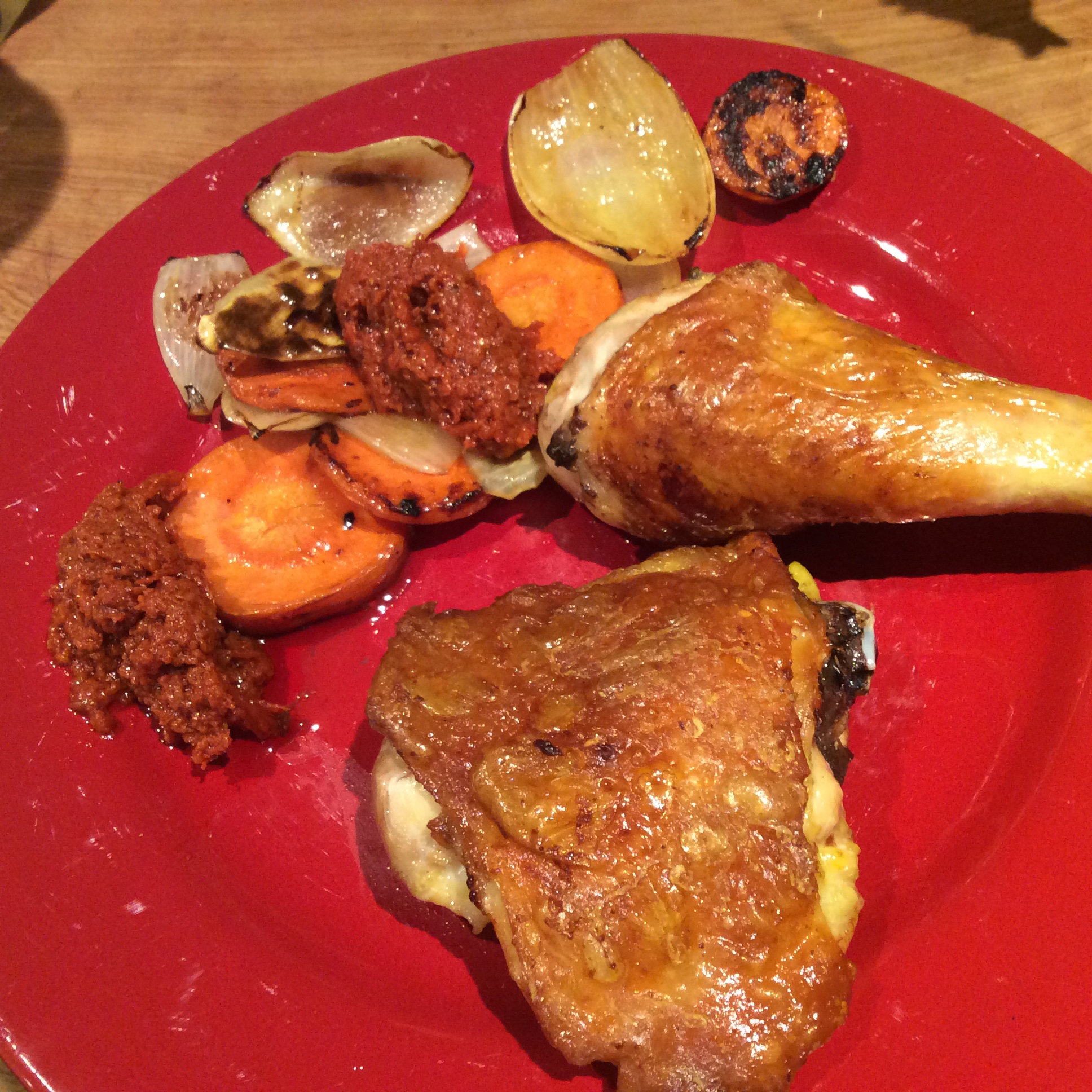
When I learn something new at the stove, I get absurdly excited. And I am especially excited about a good way to crisp chicken skin.  I feed my meat birds very carefully with a lot of greens to produce the highest possible level of caratinoids and omega-3 fatty acids, and many of those nutrients are in the skin.  So of course I want to make the skin as enticing as possible. Besides, it is the best tasting part of the chicken.  A simple tip that I learned in the Genius Recipes section on the wonderful Food 52 website involves seasoning chicken, preferably thighs and legs, and frying the chicken slowly skin side down in nothing more than its own fat or a small amount of olive oil.   I have not tried it with white meat, and wings might be too irregular to cook well this way.  In brief, I season drumsticks and thighs with salt and pepper, refrigerate them overnight, and when ready to cook I heat my cast-iron skillet over medium low heat.  I rub the chicken pieces  lightly with olive oil and put them in the skillet skin side down. Then, I do other things and forget about them.  In 15 or 20 minutes, the skin is done to a beautiful deep crispy crunchy brown.  Work a spatula under each piece taking care to keep the skin intact, flip the chicken and continue cooking skin side up until done through.  Simple as that. The skin is quite glorious in its unabashed simplicity.  You do need to be in the kitchen to turn the heat down if necessary  but for the most part you can concentrate on other things.  Serve any reasonable vegetable on the side.  If you want to deglaze the pan with white wine and chicken broth and boil it down and finish with butter to make a pretty wonderful bit of pan juice, offer the juice on the side or set the chicken in a pool of it. Don’t pour it over the skin or  it will lose its crispness. Sometimes it’s fun to pare a meal down to very simple components. Besides, it makes me wish that chickens were all skin.