Pleasures of the Grill: Oyster (and other) Mushrooms

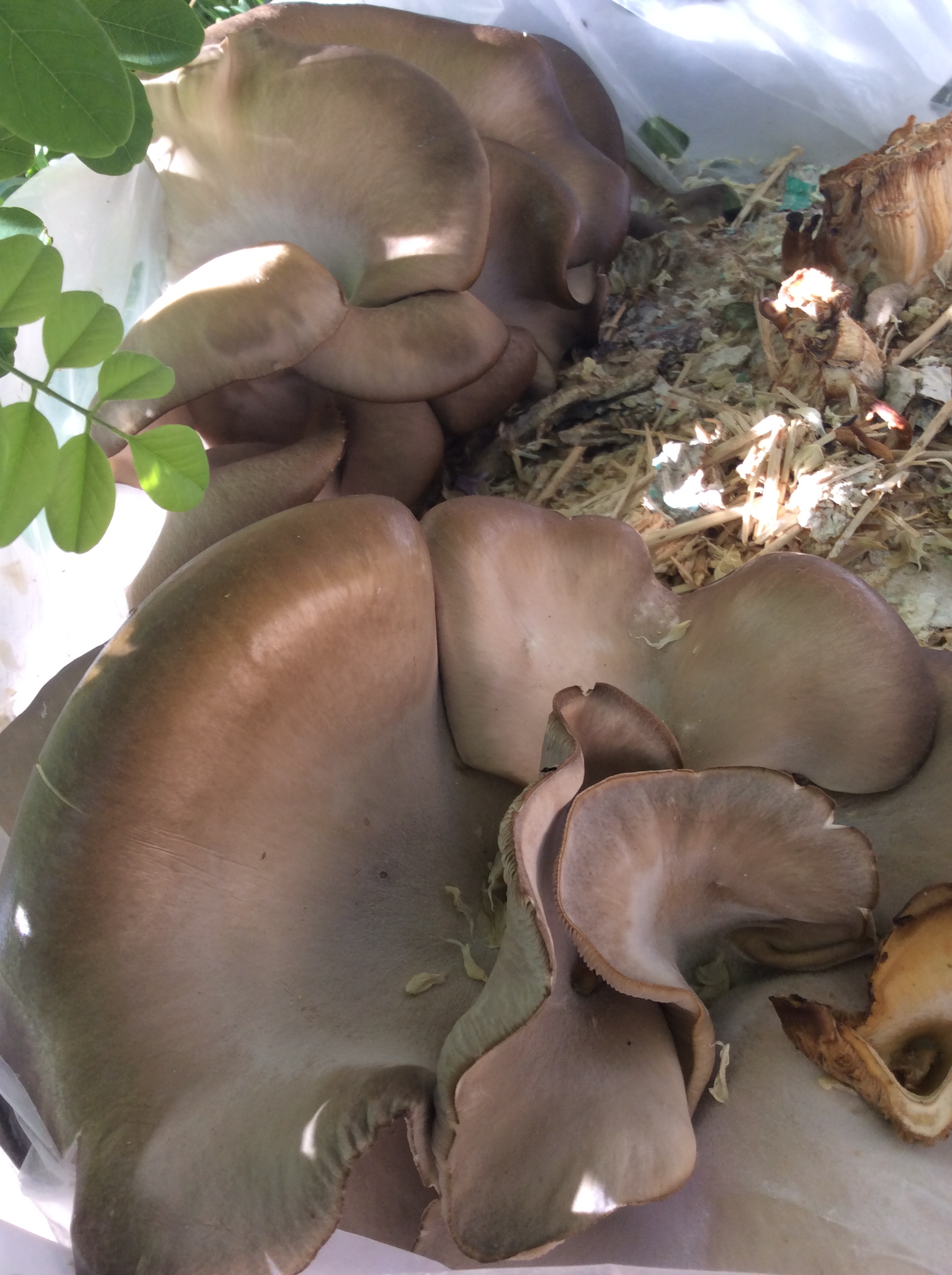
A family member was admiring a picture of my oyster mushrooms, up to 8″ across, and asked if they were too big to eat. Not if you like to grill. I love a plateful of giant oyster mushrooms, as long as they were still fresh and moist and not dried out when picked. The big ones have leathery bases and need to have the stem (technically a stipe) trimmed off to the extent that a little semi-circle is taken out of the base.
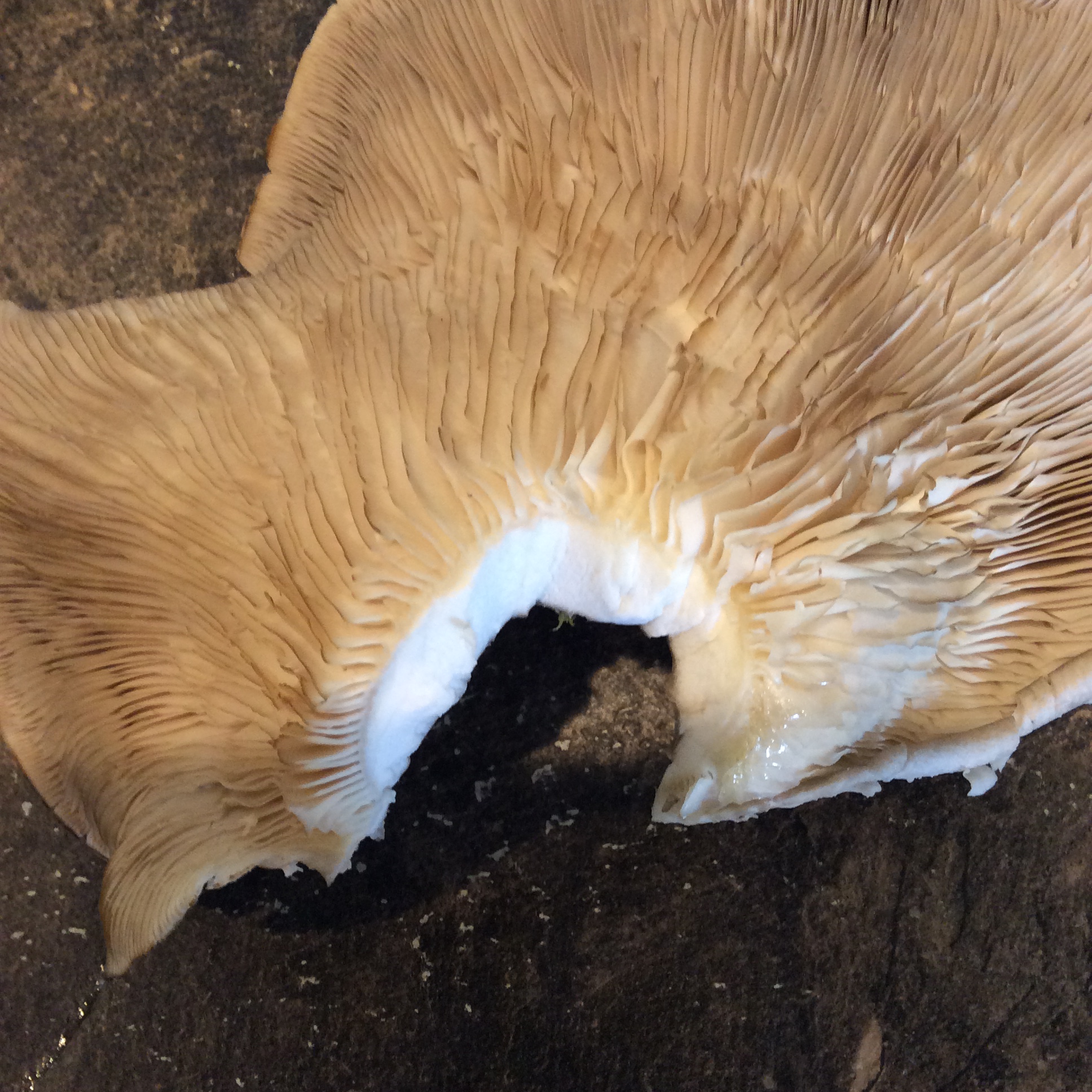
Now the toughest part is gone. Clean the rest and rub it on both sides with basic steak marinade. Make sure that the marinade gets up in the gills, since this helps keep them moist while cooking. Sprinkle the gill side with a good smoked salt.

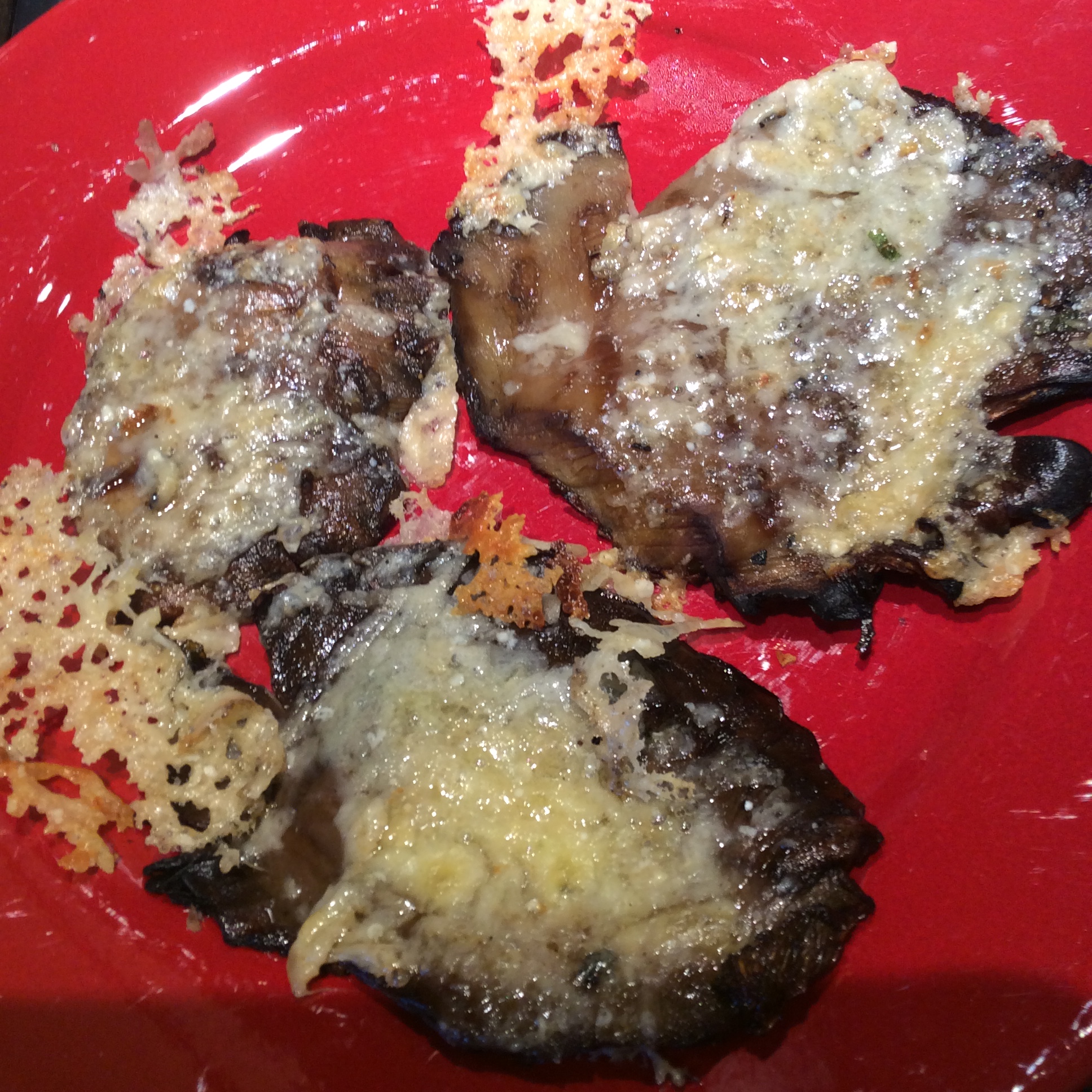
Heat the grill to about 300 degrees and sear nicely on the upper side. Turn and cook on the gill side until done, turning them 90 degrees midway if you want nice crosshatched sear marks. Meanwhile, preheat the broiler. Put the caps on a baking sheet lined with parchment paper, gill side down. Sprinkle lavishly with grated Parmesan, making sure to sprinkle the areas of bare parchment paper to make the lacy garnish. Broil, turning the pan as necessary, until the cheese is just beginning to brown. Eat.
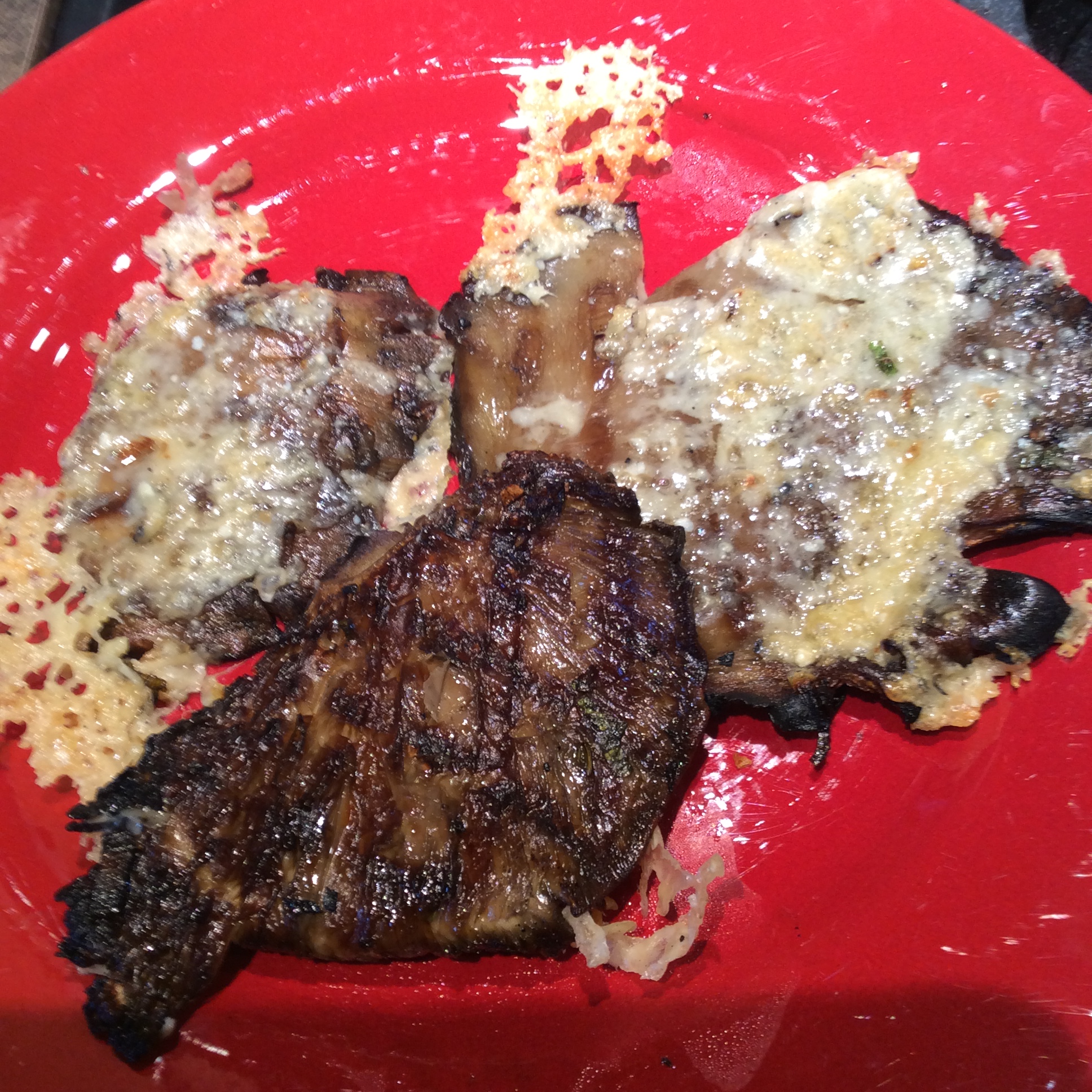
The argument could be made that there’s no point in fussing with crosshatched grill marks since they’re on the bottom and don’t show. This is a fair point, but in good spring weather it’s a pleasure to fuss a bit at the grill.

This is a good meal to share with vegetarians if you don’t use any fish sauce in the marinade. In my opinion the final cheese crusting adds a lot to the flavor and so it isn’t ideal for vegans, but try it if you feel so inclined. If you don’t have oyster mushrooms try portobellos, which come alive with some seasoning. If you find really big meaty fresh shiitakes, they are ideal for grilling whole. If you’re lucky enough to find some porcinis  in the woods or market in the fall, they are superb sliced thickly and grilled.
Backyard Mushrooms

For years I moaned and carried on about my inability to grow mushrooms as an integrated part of my urban homestead, and now I can’t stop them. All winter I grew oyster mushrooms in the garage on a substrate of recycled paper, and last month I put the theoretically depleted basket of substrate outside in the shade with the thought that when I got around to it, I would break up the broken-down paper and incorporate it into my mulch. Instead, the basket was within range of a sprinkler that I was using every other day to help some new plants get started, and produced another three pounds of mushrooms. So this might not  exactly be the Pacific Northwest around here, but the adaptable oyster didn’t care.

So my point is, as the Gangsta Gardener says, just plant shit. Plant what you would like to eat and don’t give up. Plants and fungi are resilient survivors and may astonish you at some point, even after initial disheartening failures.

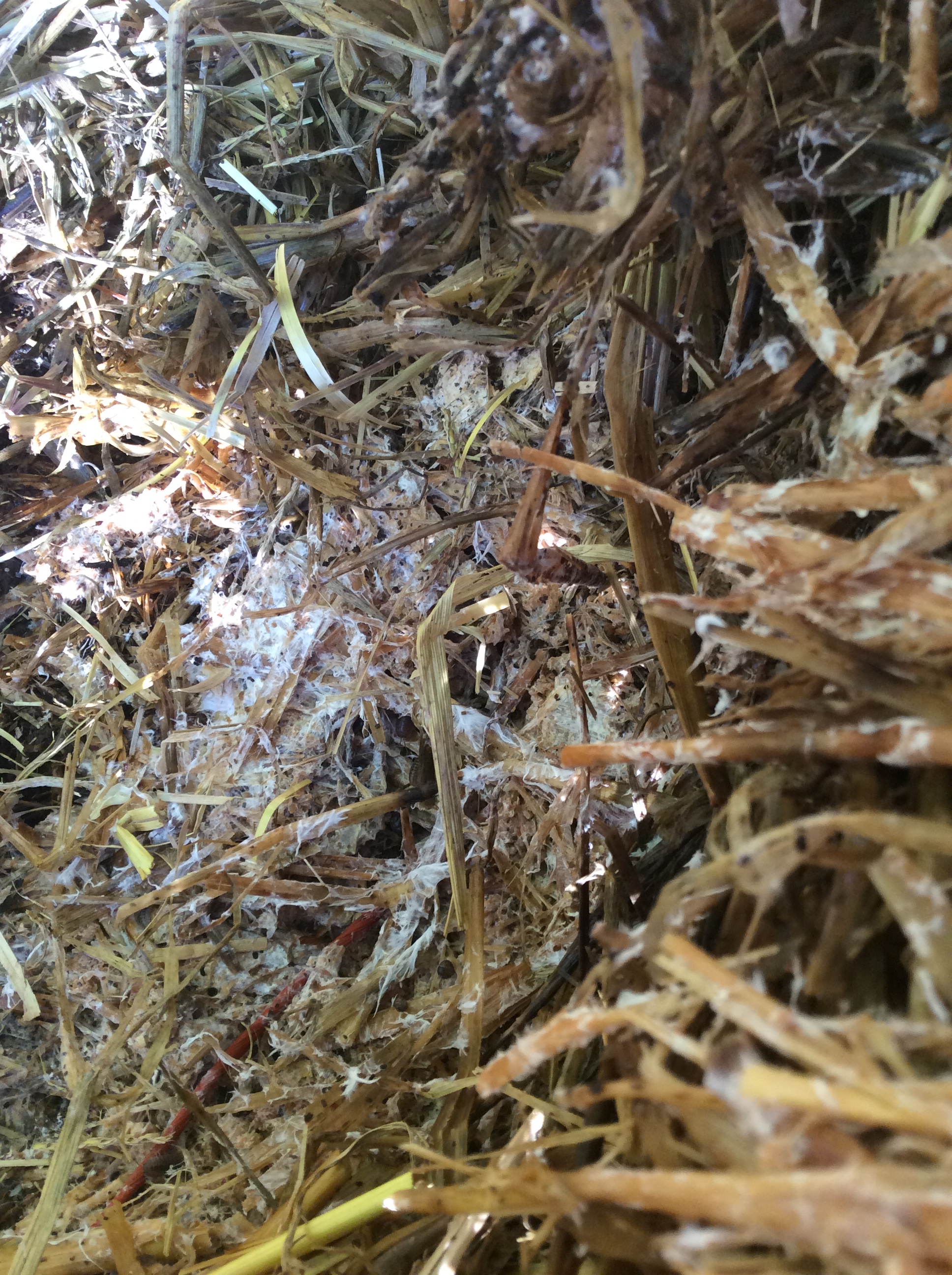
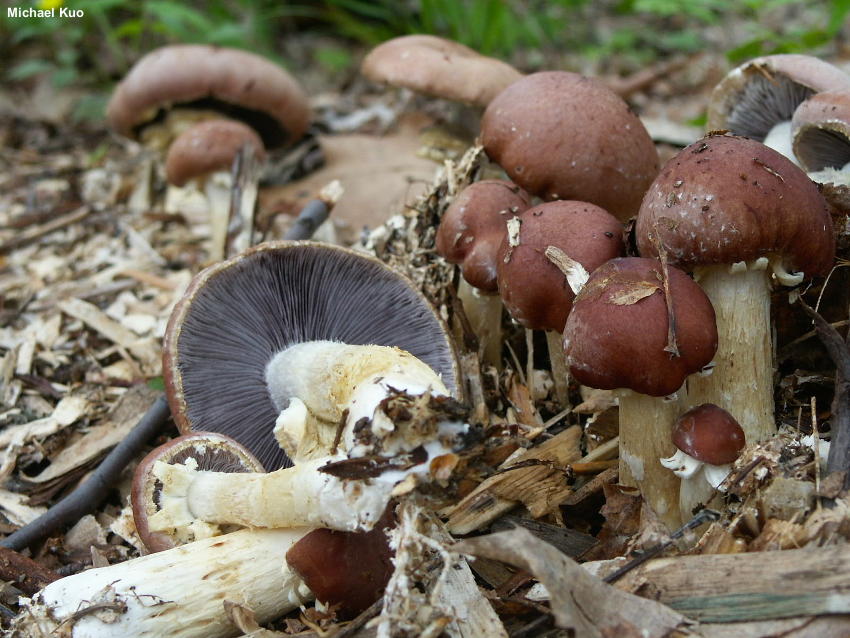
The role of fungi in a healthy ecosystem is far-reaching and worth reading about. They are valuable beyond measure whether you can directly eat them or not. But my greed and gluttony makes me most interested in the edibles. Pleurotis ostreatus, the common oyster mushroom,  is vigorous and highly adaptable and also delicious, which works out well for my purposes. But I am experimenting with some other types. In an area of deep straw and mulch I put spawn of the wine cap mushroom, Stropharia rugosa-annulata, and it seems to be sending mycelia out through the straw. In August I’ll find out if it will fruit for me.

The mycelium above may grow into the mushrooms below:

DCF 1.0

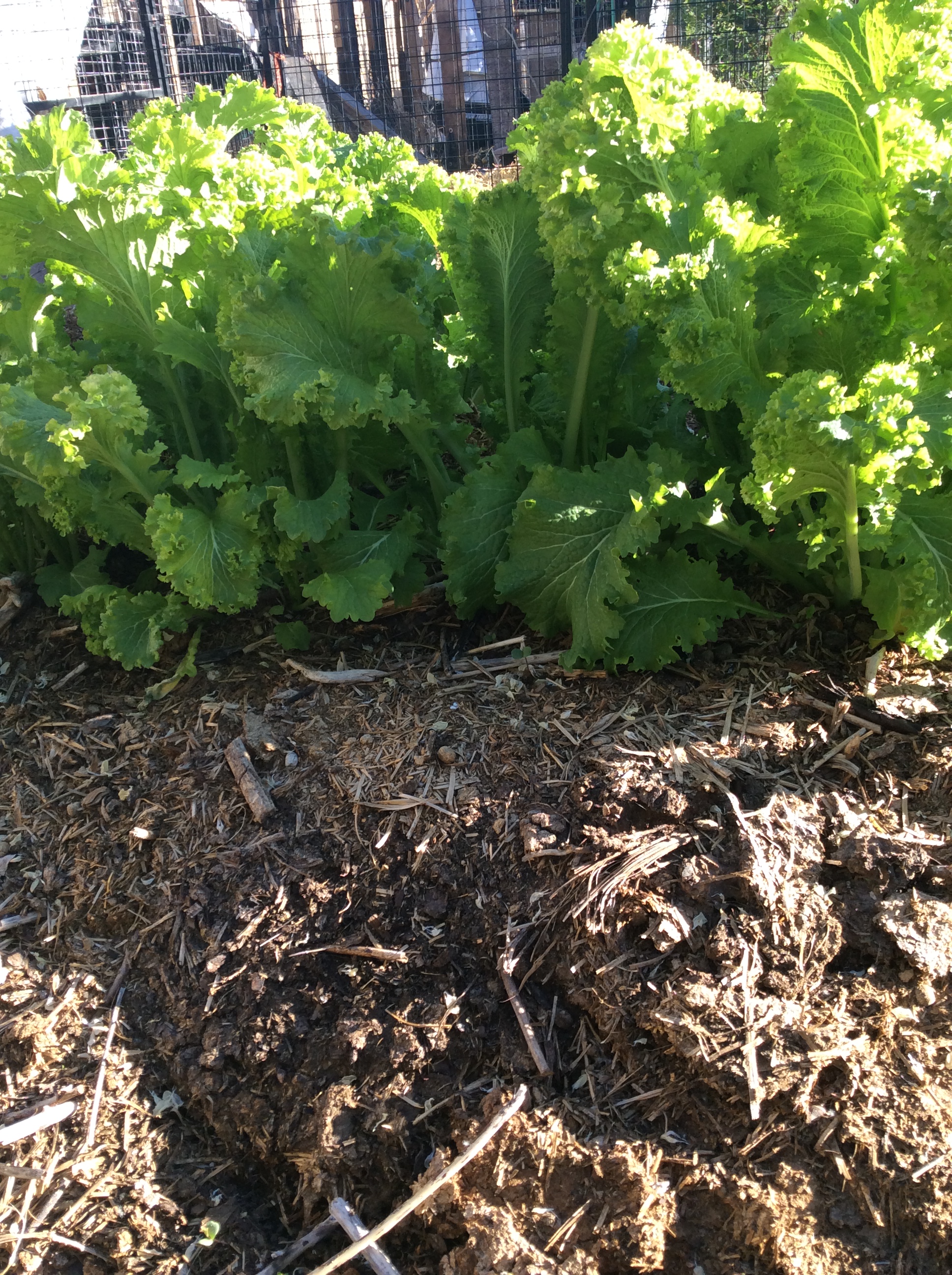
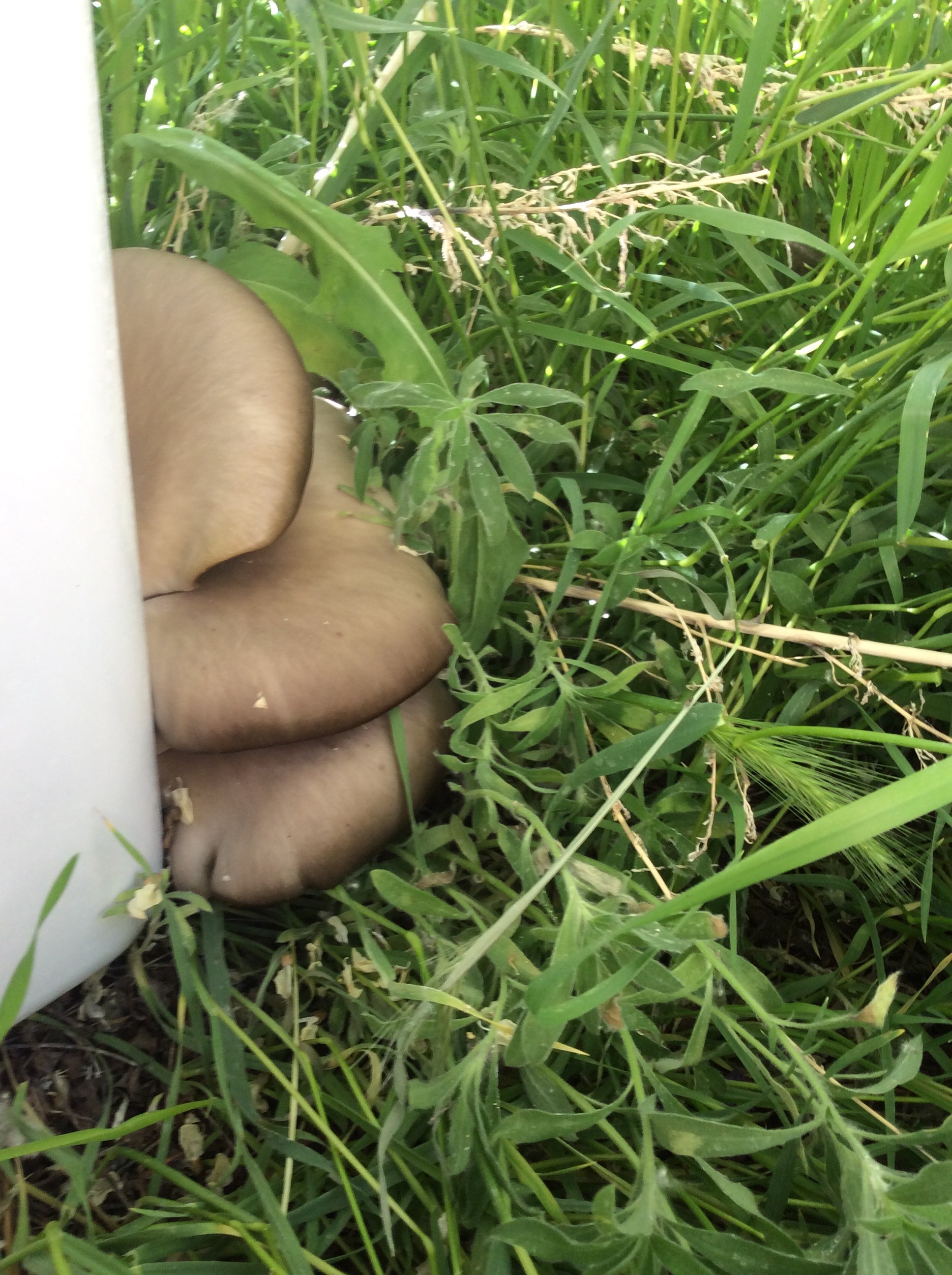
Every year I make a new bed by putting down layers of cardboard and nontoxic paper recyclables and piling up a year’s worth of goat bedding on top. This is a mixture of goat manure and the alfalfa that she eats, and is as hot a compost material as you will find, so I do this in late fall or early winter, wet it down thoroughly, and let it compost in place over the winter. In spring, I start planting into it.  Generally, the first year I use hearty healthy unstoppable plants, such as mustard for greens and summer squash. They always flourish, and by the second year of the compost is finely broken down and will grow pretty much anything. This year I planted spawn of the almond agaricus mushroom, a compost-loving mushroom, into a first-year bed and will see what happens. But I was interested to note that a small shelf of oyster mushrooms poked out the side a couple of weeks ago. The oyster mushroom is not “supposed” to tolerate full sun or hot compost. To which I can only say, tell that to the oyster mushroom.

If you’re interested in learning more about offbeat ways of growing mushrooms, Mycelial Mayhem is a delightful romp through the casual side of mushroom growing. Mycelium Running is a classic about the role of fungi in ecology.

Eating from the Shade

I wrote yesterday about how I finally have some shade on my property and a few of the things I’m growing there. I am trying hostas, British blackcurrants,  Cornus mas, Good King Henry, cow parsnip, milkweed, oyster mushrooms, and a number of other edibles  that can’t withstand full desert sun. I have planted fair-sized patches of hostas, but the oldest of them are only a year old, so when the tightly furled and appetizing-looking “hostons” appeared above ground this spring, I reluctantly decided that the plants were too young to harvest and left them strictly alone. Fortunately my friend Luke at Mortaltree blog is not so limited,  and he has kindly given me permission to re-blog his post on hostas and Solomon’s seal in the permaculture kitchen. I can’t resist pointing out that these very ornamental species are just about perfect for front yard gardening and suburban gardening generally.

Food from shade: solomon’s seal and hosta shoots.

Urban Homestead Trees: Black Locust

When I moved to my current property eight years ago, the house sat on half an acre of adobe clay, punctuated here and there with construction rubble and overgrown with tumbleweeds. There was one pitiful trashy elm about 20 feet high, and nothing else. After putting a fence around the perimeter, my next project was to put in some trees.

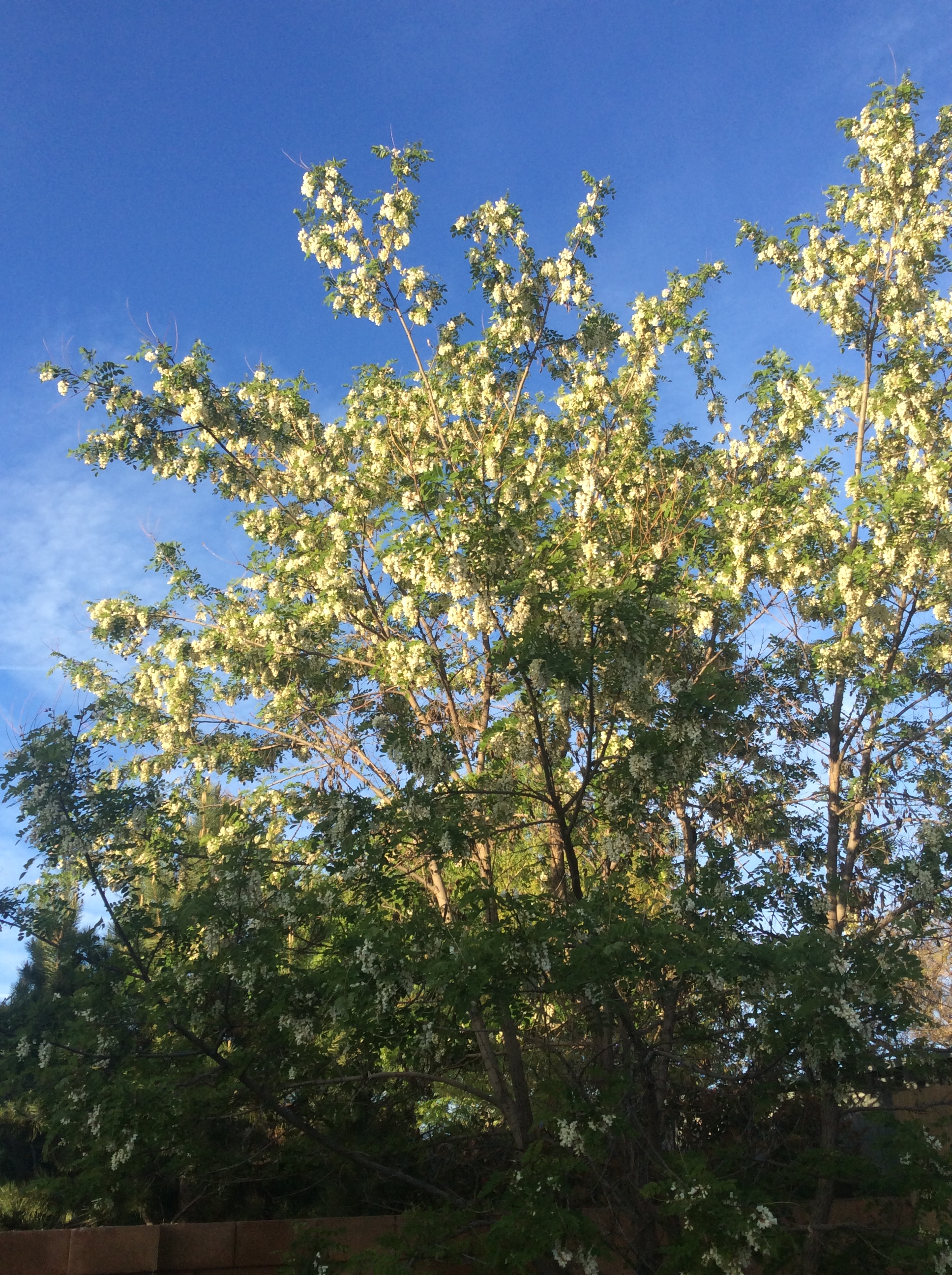
Mostly I chose fruit trees, along with one almond tree, but I left one back corner for a black locust, Robinia pseudoacacia, which may be my favorite tree. It is fiercely thorny, toxic except for the blossoms, suckers badly, and tends to shed limbs disconcertingly and hazardously as it gets older. But for a week in April it is glorious beyond belief, covered with white flowers, casting the scent of lilies for hundreds of feet around, and so filled with bees that the entire tree hums. I hope never to be without a black locust again.

It also fixes nitrogen, which may benefit my soil, but its main advantage  the rest of the growing season is that it casts perfect lacy shade for growing plants that can’t tolerate the desert sun. Now that I have some light shade to work with, I’m finally able to grow milkweed and oca and groundnuts (apios) and cow parsnip and a number of other plants that used to shrivel and die as soon as the first hot days hit. I have never had any luck growing mushrooms outdoors here, but I’m trying again in the shade of the black locust, and the results are wonderful.

The blossoms of black locust are nice on salads, and can be battered and fried, but deep frying is one kind of cooking that I don’t go in for, so I don’t know much about it. The rest of the plant is toxic. My goat got out once and ate some without apparent harm, but that may have been luck. So try to site it away from livestock and in an area where a falling limb as it ages won’t be a disaster.