Archive for the ‘wild food’ Category

Fall and Winter Leaves II: Nettles

Nettles are one of my favorite greens, and one of the most nutritious plants around, so treating them with the respect and care that helps you avoid stings is definitely worth the trouble. I have a thriving nettle patch in a corner of my yard that I don’t routinely have to visit, so I have always harvested the new greens in the spring and then assiduously ignored the nettle patch for the rest of the year.  This is partly because I get interested in other things, but mostly because as a child, when I first started foraging to the intense dismay of my parents, my mother wisely bought me a set of Euell Gibbons books so that I would not poison myself.  Mr. Gibbons wrote eulogistically about nettles, but cautioned his readers that after the spring flush they develop oxalate crystals and are gritty and inedible.  I believed every word he wrote, and so I never tried them after they were about a foot high.

Here in the desert, in the unwatered spot where they have to live in my yard, nettles die back beginning in July, and the stems look dead by September.  But this year we got an uncharacteristic long heavy rainstorm in late September, and to my surprise the dead nettle stems began to leaf out again.  This week I noticed a mat of fresh nettle leaves, and told myself that no doubt they would be gritty, exactly as Euell had predicted.  But I did gather a couple of quarts (using leather gloves) of nettle sprigs and tried cooking them. They were exactly as verdant tasting as the spring greens, and neither gritty nor tough.  Now that I know this, I will try to remember to cut my nettle patch back when it dies in the hottest late summer weather, and begin to water in September so that the late fall shoots will be easier to pick.

Cooked greens in the refrigerator are an appetizing snack or light meal waiting to happen.  Today I didn’t particularly feel like eating a heavy lunch, but I did want something, and I wanted it to be healthy. I had a cup of blanched nettle greens hanging out in the refrigerator, and half a cup or so of leftover cooked cauliflower rice, so I grabbed two large scallions out of the walking onion patch and picked three large carrot leaves off the last remaining carrots.  The garlic that I planted in late summer is sprouting, so I picked one stalk that was about 6 inches high  to use as green garlic.  The fresh green stuff was chopped and sautéed in butter until cooked through, then the cooked nettles and cooked cauliflower rice were added along with about 2 cups of canned chicken broth and half a cup of heavy cream.  You could certainly leave this as a chunky soup, but I decided that I wanted a cream soup, and put the little potful in my Vitamix blender. About a minute later, it was completely creamy and thickened. I poured it back in the cooking pan, added a little water to thin it to a good consistency, simmered for 10 minutes, salted to taste, and ate it with a spoon full of drained yogurt on top to supply a subtle acidic element.  The entire process, including grabbing the green stuff from the yard, took about 15 minutes. This is a pretty small time investment for something as absurdly healthy as nettle soup.

Needless to say, vary to suit your own taste. Cooked cauliflower is a surprisingly good creamy thickening agent, and if you are vegan you could use olive oil for the initial sauté  and vegetable broth for the cooking liquid, and leave the cream out or substitute nut milk. It could be finished with a few drops of lemon juice instead of drained yogurt. Vegetarians can change the broth and leave everything else the same. As written it is a delicately flavored and very comforting soup, perfect for days when fate is being unkind, but if you want something more emphatic  you can start playing with herbs.  If you don’t happen to have a nettle patch, use some other leafy green. Have fun in your kitchen and make the result work for you.  My mother objects to my greens soups on the undeniable grounds that they are green, but if you have a prejudice against the color green in food I do hope that you will get over it, because it is the marker for some of the healthiest food that you can possibly eat.

And by the way, Euell Gibbons wasn’t right about everything, but his foraging books are still well worth reading for their palpable joy in the outdoors.  In one plant essay he says that wild foods are his way of taking communion with nature and the Author of nature, and I think this sums it up.
Wild Safety

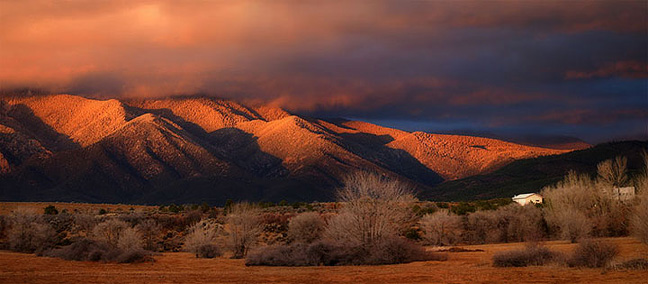
Geraint Smith Photography

At the close of another foraging season,  I’m thinking a lot about how lucky I am to live in a place so beautiful that it is continually drawing  me outdoors. Those of us who live in the southwest tend to cherish the wild spaces, and I can honestly say that some of my most joyous and reverent moments have come when I was alone in the mountains.

I hope that most people feel the same way about their own region, and that makes this a good time to talk about safety in the wild places.  Everyone knows that tracking and backpacking require careful safety preparations. What is often ignored is that even short hikes need forethought and planning. An online friend of mine posted about this recently  and caused me to reflect on the time that I was taking a half day hike into terrain  that I would have sworn I knew like the back of my hand, confidently went off the trail to forage, and after a while realized that I was good and lost.  I had few provisions with me because it was a short hike in a familiar area, and to compound the problem, I had not bothered to inform anybody about where I was going because I would be back before they ever got the message. Don’t do this. I did figure my way out,  but it could just as easily have turned into an embarrassing and expensive rescue that was a real waste of Forest Service time. Or worse.

So, in my view, the following are the absolute bare minimum in the way of provisions for safety on day hikes. They belong on your person, not in your vehicle, because what if you can’t find your vehicle?

1. Adequate water. By adequate, I mean more than you think you need.

2.  Adequate warmth. A featherweight metallic “space blanket“ is surprisingly warm and keeps the wind off your skin. A way to start a fire is a real necessity, but don’t  rely completely on fire, because if it rains you’re sunk.

3. A way to locate yourself and to signal, and adequate battery back-up.  If you should be injured, knowing how to find your way back is rather cold comfort if you can’t actually do the walking. Be sure you know how to use your emergency signal.

4. Crucial: A reliable person who knows where you are going and roughly when you will be back, and will actually do something about it and alert the right authority  if you don’t return in a fairly timely manner.  Exact location is often unknown, but you certainly know the general area that you are going to. If you should have to use your emergency signal, it won’t do you much good if you are signaling to empty air.

Shelter, warmth and water are much more important in immediate terms than food, but something that tastes good is cheering.  Any experienced forager can find something to prevent starvation most places in most seasons, but it may need preparation that your situation does not permit. Even for short day hikes I carry dark chocolate in my backpack because, in an emergency, it would give me the will to live 😉.

If you can, take a wilderness survival course. Few things increase your wilderness confidence as much as assessing your surroundings and concluding that you could live for days to weeks if you had to. A man I was told about, a military veteran who finds civilian life pretty difficult, once went overnight camping with his dog and the dog got lost. No way would he leave without his dog, so  he spent a couple of days tracking the dog through the wilderness, collecting water from streams when he found them and hunting small game with his pistol for food. He found his dog and they made their way back over a few more days, with him now hunting for two. Both got home safely, and, per my informant, the veteran commented wistfully that it was one of the best weeks of his life. You don’t want to have to survive in the wilderness, but it’s a good idea to know how to do it.

Natural Chaos

A garden bed with edible weeds in glorious (?) array

For a brief period earlier this year I had a lovely young helper in the garden, and he was a sponge for any information about plants and animals and a joy to have around. At one point, as he talked about how much he wanted a “yard farm” of his own, he looked around my yard and said thoughtfully “But mine will always be neat as a pin.” He didn’t say “by contrast,” but the implication was clear, and quite true.

Well, if there is one thing my urban homestead is not, it’s neat as a pin. Nature grows and blooms. Nature also surges, intrudes, overwhelms, dies back, regrows,  creeps, climbs, and insidiously gets Her own way. The gardener plays a part in natural chaos too; all the photos of lovely front yard veggie gardens that you see in magazines are taken before harvest. The gardener cuts the glowing rainbow chard, harvests the multicolored row of lettuces, picks the crimson tomatoes, and plucks the shiny apples, and suddenly things aren’t so camera-ready. Admittedly, many are neater than mine, since many gardeners lack my taste for edible weeds and my belief that nearly any plant has a purpose.  But if you want to get the most that you can get out of gardening, a degree of chaos tolerance may be a useful asset.

My blogging friend Luke of the Mortaltree blog summed this up so superbly that, with his permission, I’m linking to his post on the subject. So please hit this link and read his post “Taste of Chaos,” which really sums up the land-healing experience:

Taste of chaos

Green Odds and Ends

On my occasional staycations I have time to interact with my garden and kitchen in a leisurely way. I have time to notice things. Unfortunately, some of what I notice is at best a call to action and, at worst, a problem unfolding itself.

Take lambsquarters. This  weed is a real nutritional powerhouse, and also is happy to take over your world if you allow it.   I have written in the past about how to make it behave itself, and I do wish that I had followed my own good advice this year. But I foolishly let some plants go to bloom, which means that the leaves are scant and seeds will shower on my garden soon.

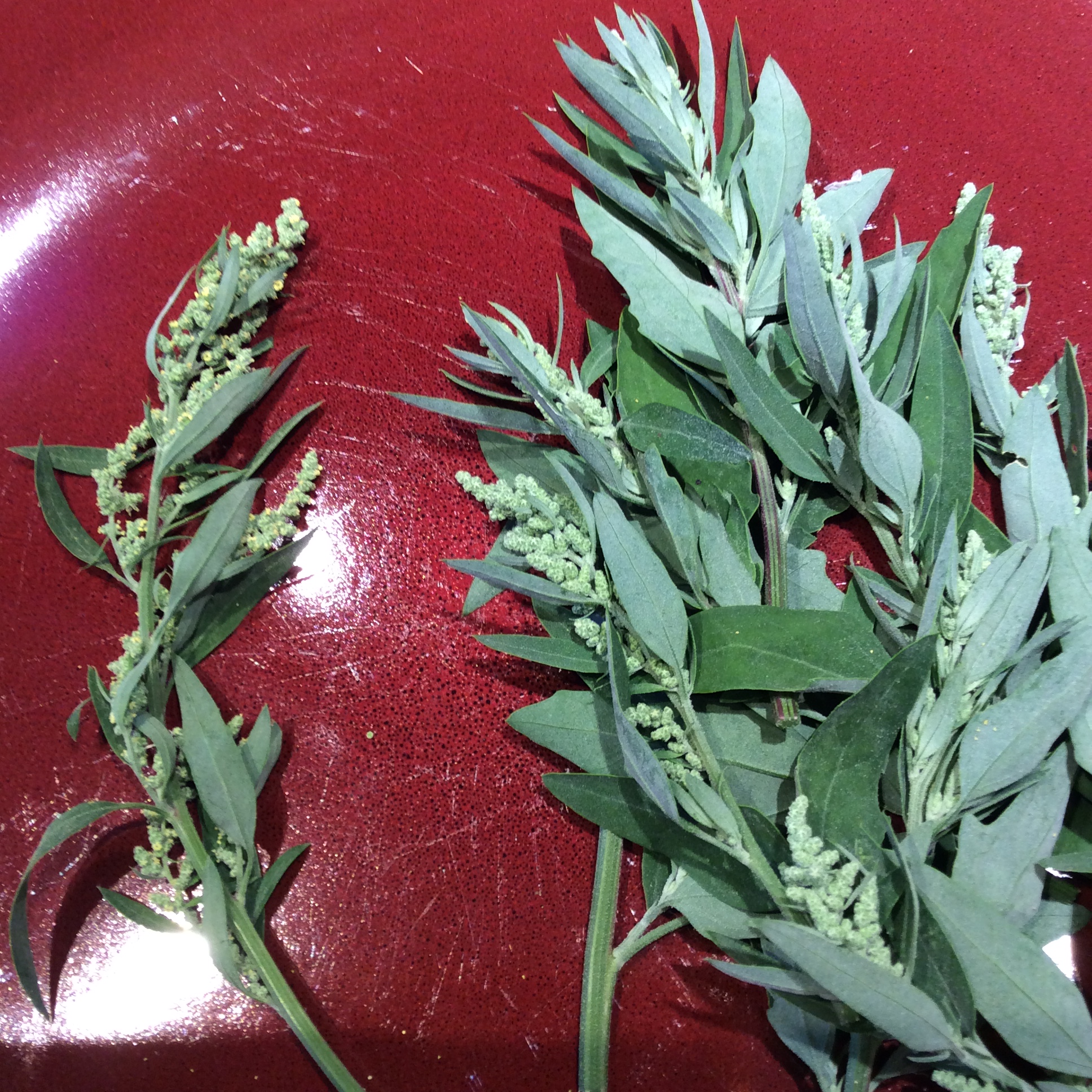
Well, all is far from lost, because Chenopodium album is still producing something edible. Notice the branch tips and you will see the clustered buds ready to pick and cook. This common weed is a true nose-to-tail vegetable.

To the right above, you see tightly packed buds, perfect for cooking. The single branch to the left shows looser formation and tiny little yellow stamens, indicating that it’s gone to flower. It’s still edible at this stage but the stem is tougher. A little later the seeds start forming and, to my taste, a slight unpleasant bitterness develops and the stems get noticeably tough, so I try to eat it up before that point, but the seed clusters look a lot like the initial bud clusters. Chew a bit raw if you want to be sure. If it tastes mild and green but not bitter, and the stem can be snapped in your fingers without undue effort, it’s kitchen-ready.

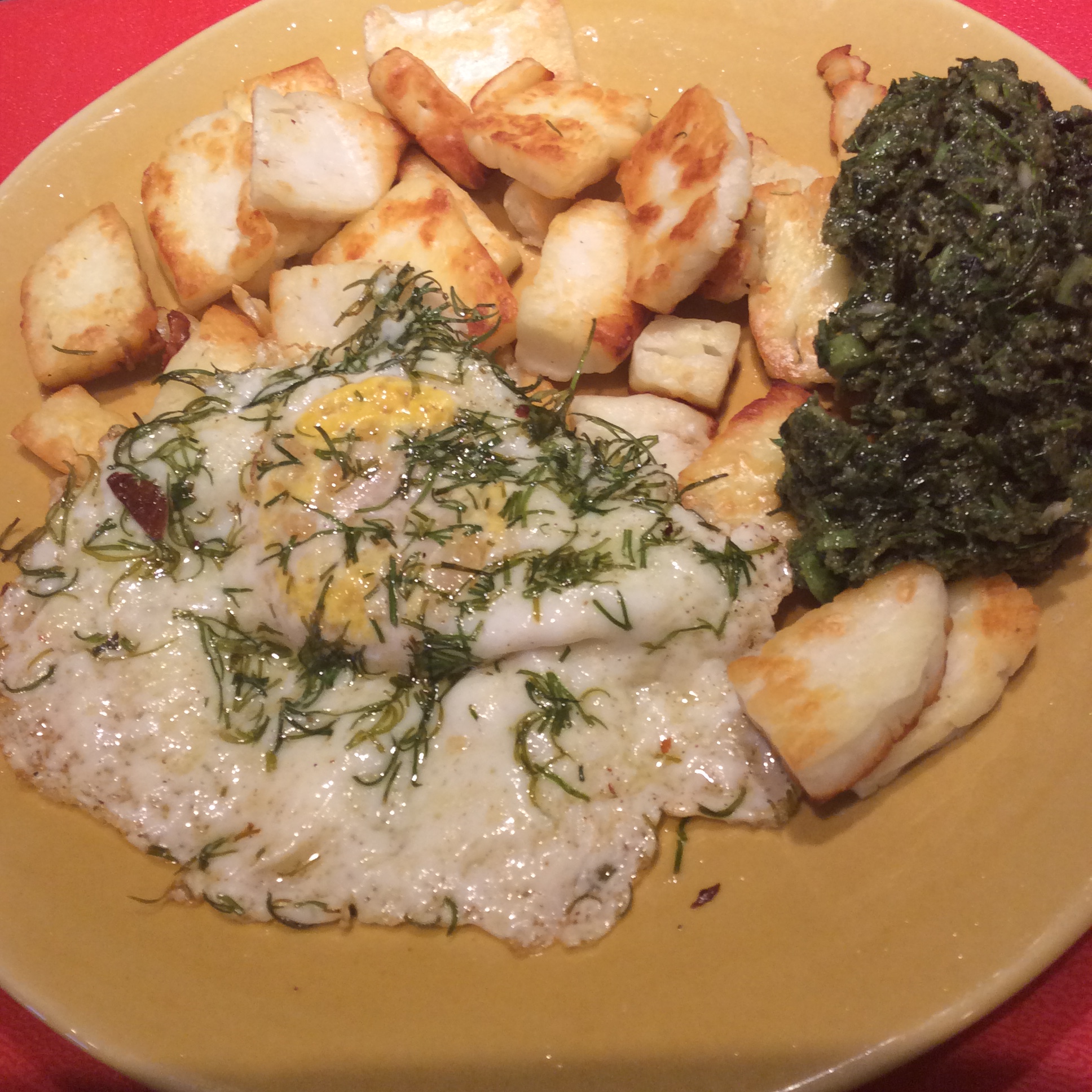
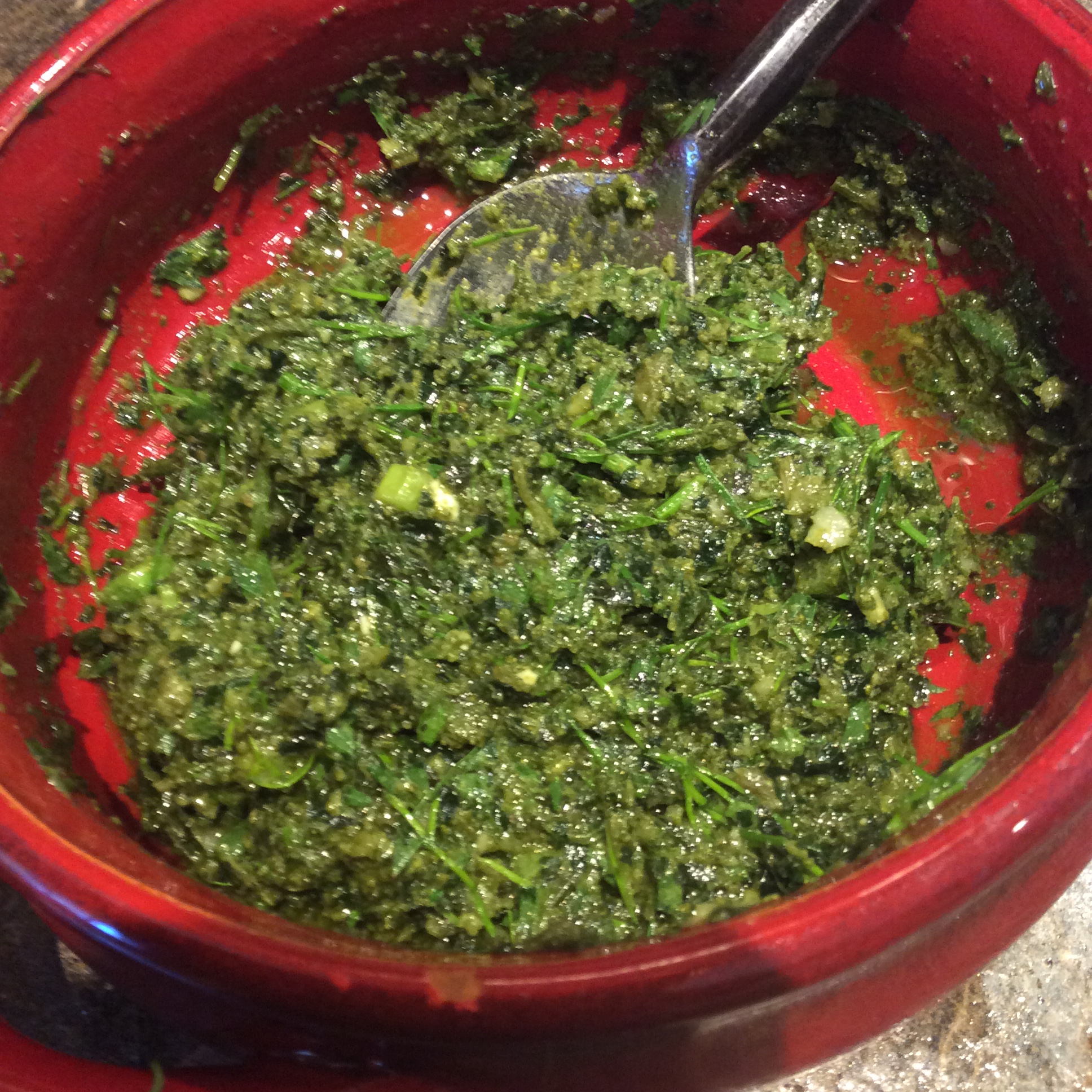
Steam or cook in a skillet in a little good olive oil until done to your taste, season with salt and freshly ground pepper, and eat. I steamed a batch for dinner and had some leftovers the next day, enough for one but there were two of us, which is how I came to use the cooked leftovers as the basis for a thick pesto to eat with halloumi and eggs.

The lambsquarters buds are very mild, so I chose a handful of fresh dill leaves to be the dominant seasoning, and some young carrot leaves chopped finely for the bright fresh green element (my parsley didn’t do well this year.) I put a clove of garlic in the mini-prep, added 1/3 cup of olive oil and the juice of half a lemon, ground in the cooked lambsquarters buds, and then turned it into a dish and stirred in the chopped dill and carrot leaves to avoid too fine a texture. Add more olive oil or lemon juice if called for, salt and pepper to taste, and it’s ready to serve alongside nearly anything. If you don’t like dill, use something else. Only fresh herbs are appropriate for this type of vegetable-relish.

After frying the halloumi in olive oil, I decided to fry an egg apiece in the remaining hot olive oil. To add a little pizazz I dropped two generous pinches of chopped dill leaves in two places in the hot skillet, then immediately broke two fresh eggs on top of them. Flip the eggs after a minute and cook to preferred doneness.  Those who are only familiar with the fusty-musty dried dillweed may be surprised how much they like fresh dill in this context.

I’m curious about the nutritional content of this lambsquarters-broccoli but there isn’t any available data. So I can only say that the leaves are powerfully nutritious and the buds probably are too. And wherever you may go in your life, short of prison, lambsquarters will be there. At times when I worry about the future, it’s comforting to think that if I’m ancient and beyond digging and planting, lambsquarters will grow just fine and will be on the menu as long as I can totter to the kitchen.