Archive for the ‘Uncategorized’ Category

Kitchen Staples: Spaetzle


This is the time of year for warming and filling meals, but often there isn’t much time to fuss with an elaborate dish. This is when I rely on stews like the short rib braise above or my favorite “Sort-of Paprikash.” If you’re a vegetarian, stews of mushrooms and cream are satisfyingly meaty. Stews are wonderful to make ahead, and they hang out happily in the refrigerator for a few days, improving all the while if they were good to begin with. You want a good carbohydrate on the plate to absorb the rich juices and minimize your meat consumption, and one of my very favorites is spaetzle. It’s delicious, and much quicker and easier than homemade noodles. To male spaetzle efficiently you need a spaetzle maker, which is a $15 gadget readily available by mail order. Sometimes you can find one at local kitchenware stores.

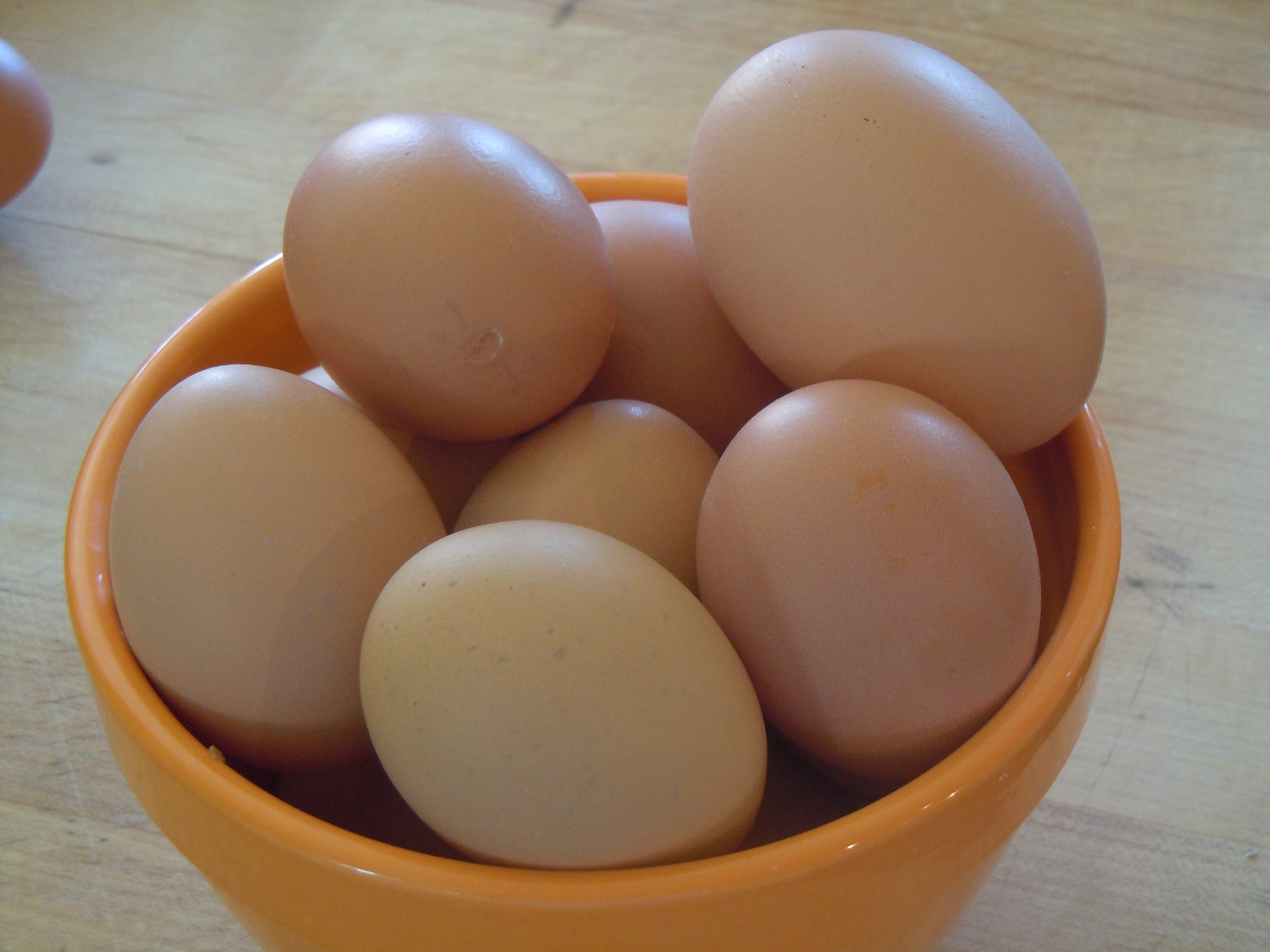
I have recently started using a new recipe because I have lovely fresh eggs coming in from my chickens, and the new recipe uses more of the ingredient I grow myself, eggs, and less of the one I don’t, milk. Remember to make the dough at least half an hour before you want to cook it.

For enough to feed four people very generously:

3 cups unbleached flour

6 eggs

1 teaspoon salt

1/2- 3/4 cup of milk

1/4 cup melted butter

Put the flour and salt in a bowl. Combine the beaten eggs and melted butter, pour into the bowl, and add half a cup of milk. Stir to combine. you are aiming for a thin dough which will “glop” off the end of the spoon in big lumps but which is definitely thicker than a batter. Add a little more milk if you need to. When combined, set in the refrigerator for at least half an hour to let the gluten relax. You can make it up to several hours before you need it. When ready to cook, bring a large shallow pan of salted water to a fast simmer. Fill your little devise with dough, slide the carriage back and forth, and little egg dumplings will fall into the water below. Fill the device again, and repeat until you’ve used up your dough. If the temperature of the water has dropped a lot, turn up the heat, but a hard boil will break up the dumplings. When they float, they’re done. Usually this takes about 5 minutes. Bite one to make sure that it isn’t soggy in the middle. Drain and serve with stew or rich meat juices on top.

Here’s something I learned in a cooking class in Sonoma, and it really works: after draining, you can spread the spaetzle out on a clean baking sheet and set them aside to cool. They will now keep for a day or two in the refrigerator, and can be reheated when you need them. If anything, they taste better than when eaten immediately. They can also be heated by frying in a big skillet with some clarified butter, so that they get crisp brown crunchy spots, and this is truly good, especially if you toss in some thyme leaves and a small handful of chopped parsley.


Solstice Sunrise

It’s the day after Solstice, and the Sun rose this morning, so I guess it’s decided to stick with us for another year. Avid gardeners may start out on modern time, but after a decade or so we find ourselves living the rythm of the agricultural year. Yuletide is for feasting on our stored abundance, and it’s a wonderful time to sit by the fire and scan seed catalogs and attach some details to our hopes for the upcoming year. In a week or two I’ll be posting on my annual reassessment: what worked, what didn’t. But now is not the time for sober consideration. It’s the time to take unabashed pleasure in what worked really well.  It’s time to do something that you don’t normally do, something that makes you shiver anew with love and reverence for the natural world, not because it is all good and beautiful, but because it exists and we have the good fortune to see it.

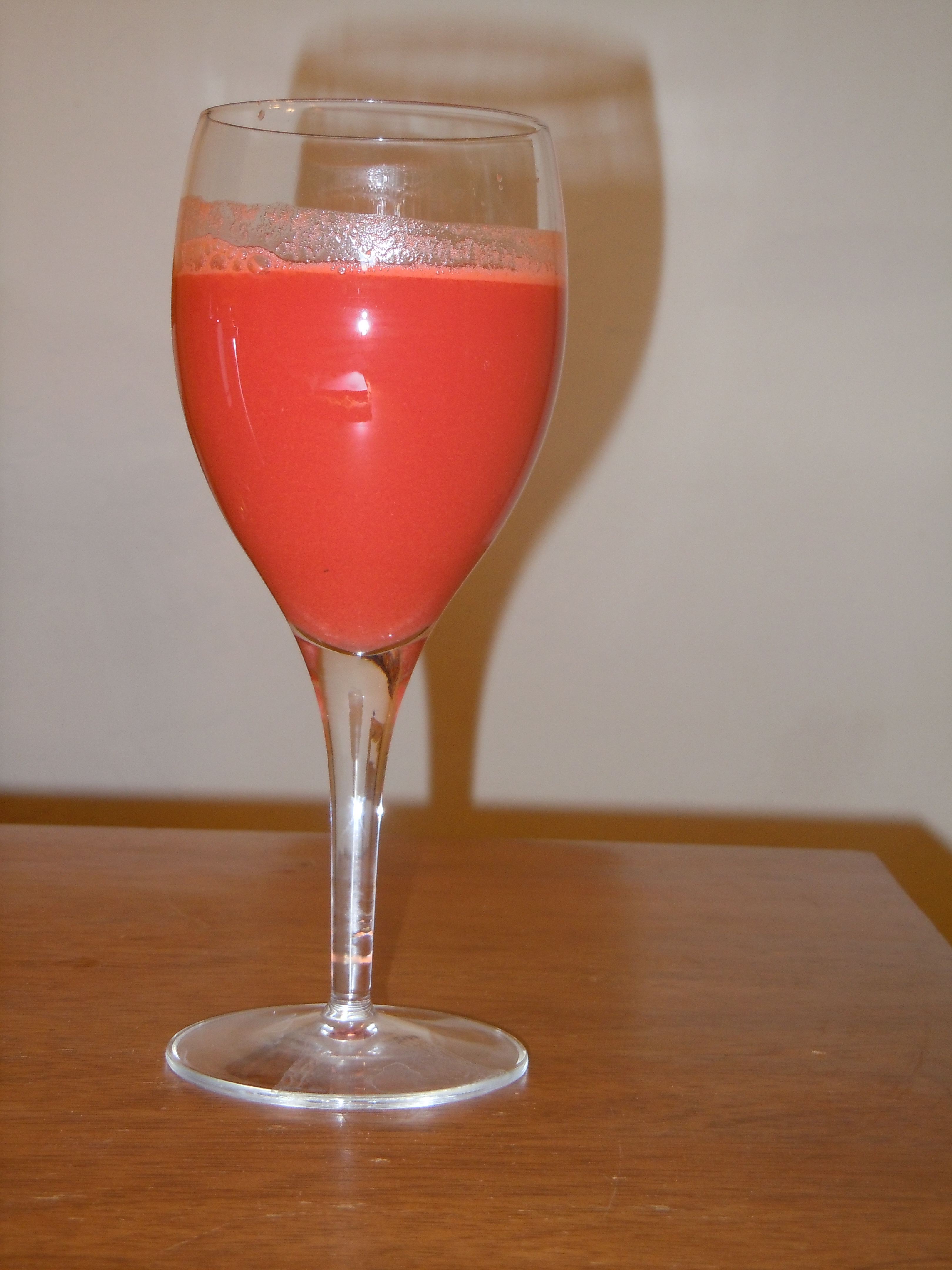
For me, feeling reverent rapture (or anything, really) before sunrise qualifies as something I don’t usually do. It takes real effort for me to function early in the morning, and a glass of fresh juice eases the effort.  A juicer puts healthy stuff in your cup quickly, and doesn’t need to be expensive. I bought a reconditioned one and it works fine. Your own stored apples and carrots, or organic ones from the store, make a great seasonal juice. Prickly pear fruits are still perfectly good on the cactuses that we have everywhere, and juicing disposes of the spine problem. One prickly pear fruit, or tuna, will give a dramatic sunrise color to two big glasses of juice. To my palate the fruits don’t have a lot of flavor, but the color is reason enough to use them.

Run four apples, four large carrots, and one prickly pear fruit (two for a deeper red rather than the sunrise shade above) through your juicer. POur the juice into a clear goblet so that the color can be admired. Drink. Dispose of the pulp by burying it in a part of the garden that animals can’t get at- many animals are drawn to fruit sugars, and you don’t want all the horrid little spines in the pulp to torment any animal, wild or tame. For the same reason, handle the pulp with a wooden spoon or thick gloves, not your bare hands.

Books Worth Reading: John Kallas on Edible Wild Plants


The holiday weekend was a great time to read in a warm spot, which reminded me that I should be sharing more of the books that I think are really helpful. I should add that I don’t accept free review copies; whenever I review a book, I paid the same price for it that you will. I think that this is essential to an accurate judgment of the value-for-money aspect of the books that I recommend.
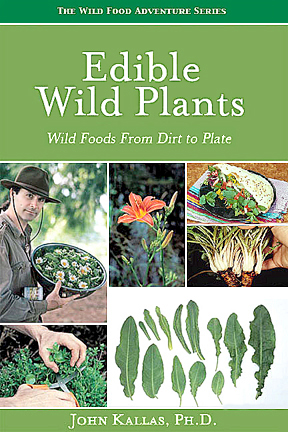
With that in mind, John Kallas’s Edible Wild Plants: Wild Foods from Dirt to Plate is a very good value if you want to get started in foraging. I get a lot of inquiries about wild foods, and this is a book that I can recommend without reservation to any beginner; if you read and pay attention, you will learn to collect a number of common plants safely and prepare them well. Kallas concentrates on leafy greens which are found in most parts of the country, and he organizes them by flavor category in addition to giving accurate botanical and ID information. This is a lot more useful and practical than you might realize if you aren’t accustomed to foraging for greens. A well-balanced dish of greens needs a range of flavor notes, as well as a base of mild greens to build upon, and as you learn the plants from Kallas you will learn the notable aspects of their flavors. In my opinion, nearly any experienced forager could pick up a tip or two here, about preparation if not about identification.
Only greens and shoots are found in this book. If this seems too limited, keep in mind that most of us aren’t going to spend the time needed to forage and prepare wild staples, at least not most of the time. It’s romantic to read about gathering wild rice or arrowroot, or to imagine spending a clear autumn day gathering and storing fruit or nuts, but the wild foods that are widely available throughout much of the country for much of the year and that you can forage in a few minutes on your way home from work are mostly greens and shoots. Besides, if most of us were to make one change in our diets and maintain it, the addition of more green veggies would be a good one to pick. If foraging gets you to eat more leafy greens, this is a good thing.
If, like me, you’re a Kindle addict, this book is available on Kindle. I use the Kindle app on my Ipad so that I can see the photos in color. I daydream about eventually having a large collection of good foraging books on one e-device that I can carry around in my backpack, but unfortunately most of the wild-foods books available for Kindle are not of high quality. This one is.
DR. Kallas’s website can be found here if you’d like to order the book directly from him. You can also read his reviews of foraging books, and his thoughtful comments are invaluable when deciding what books you want to add to your collection.

Kitchen Staples: fresh pasta


Now that my chickens are laying and I have all these lovely fresh eggs around, I’m trotting out all my recipes that use up eggs. One of my very favorites is fresh pasta, and I can’t think of any kitchen skill more worth acquiring than pasta-making.
I used to make and roll pasta entirely by hand, and so I made it about twice a year. If you want to do it all by hand, you can get directions from any of several excellent cookbooks, and I particularly recommend The Splendid Table or Essentials of classic Italian cooking. My own current method is (surprise!) a lot more rough and ready, and relies on my Kitchenaid mixer. If you have one, get the pasta roller attachment (expensive but it works really well) and you’re all set. I use the Pro 600 mixer. I don’t know if the lighter ones will do the job. This is still a time-consuming undertaking, best suited to those relaxed weekend days that I think of as Domestic Goddess days, but it’s worth investing some time for a really delicious result.
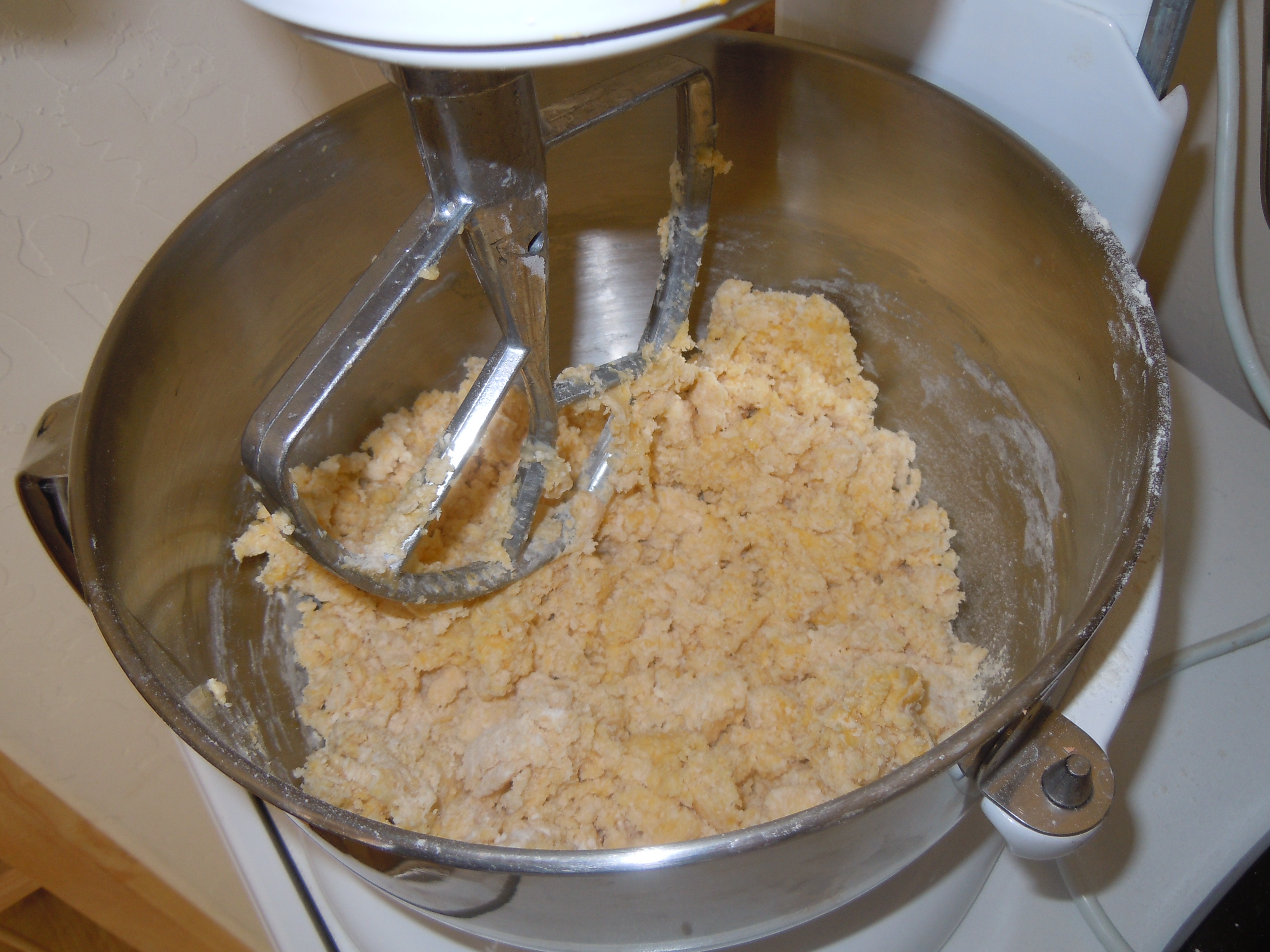
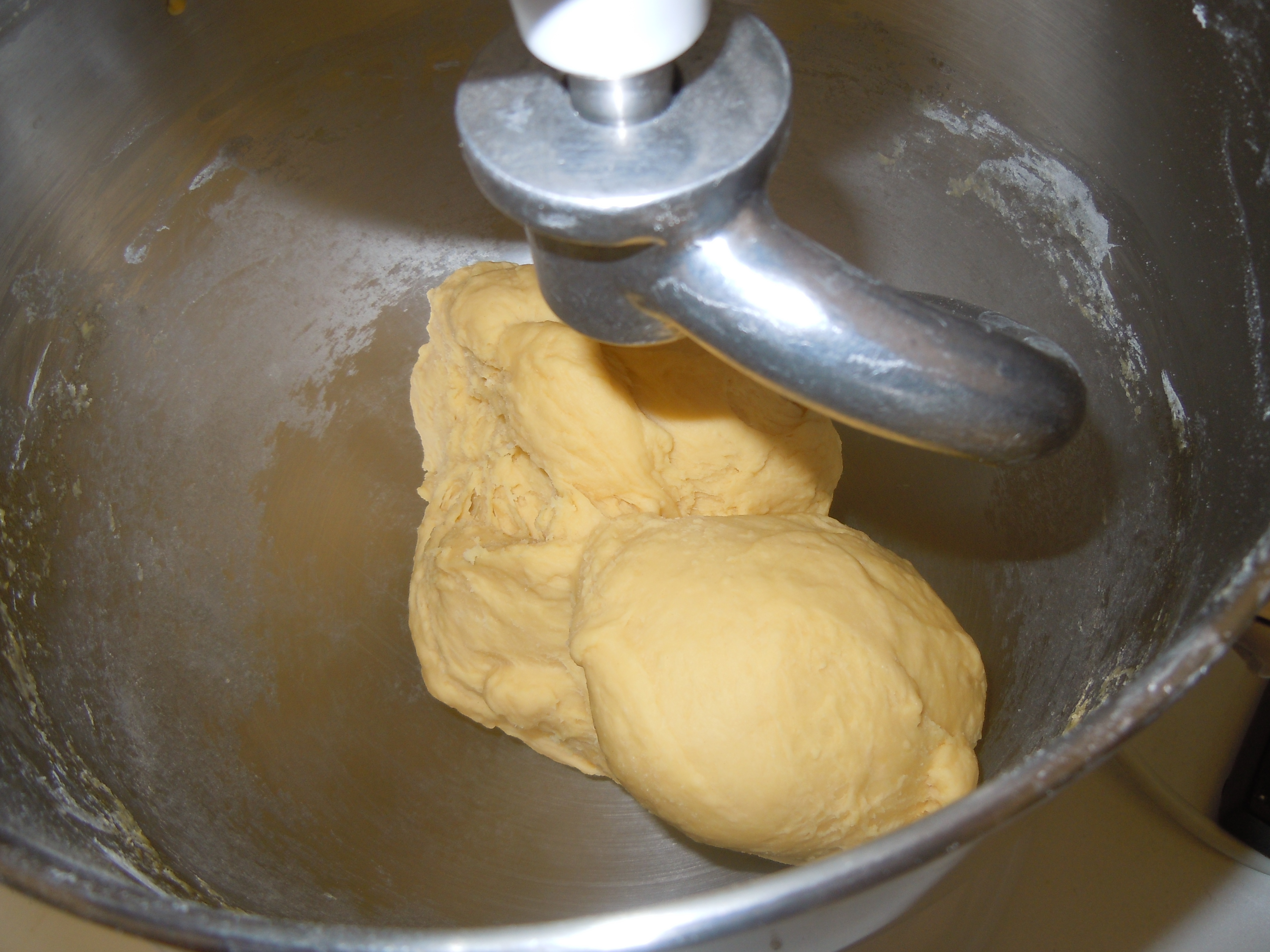
The quality of the eggs is important. If you don’t have your own hens, make an effort to get real free-range eggs (not the supermarket kind.) Start with the bowl in place on the mixer and the regular mixing blade. I usually start with three cups of flour, which makes 4 main-course servings or at least 6 first-course servings. Have about six eggs handy. Put the flour in the bowl, crack one egg into the mixing bowl, and start running the mixer at the lowest speed. After the first egg is incorporated, about half a minute, crack in the next one. Keep adding eggs until you have yellow shreds of moist-looking dough and some dry “crumbs” in the bowl, as shown here. Usually I use five eggs, but a lot depends on the flour, the size of the eggs, and the weather. If the dough won’t come together smoothly when you switch to the dough hook, add another egg and try again.

Now switch to the dough hook. Run the mixer at the lowest possible speed until the dough comes together into a ball on the hook, and keep kneading for at least five minutes. This is where I don’t know if the light models will work. Even my pro model strains pretty hard. It’s a stiff dough, much harder to handle than bread dough.

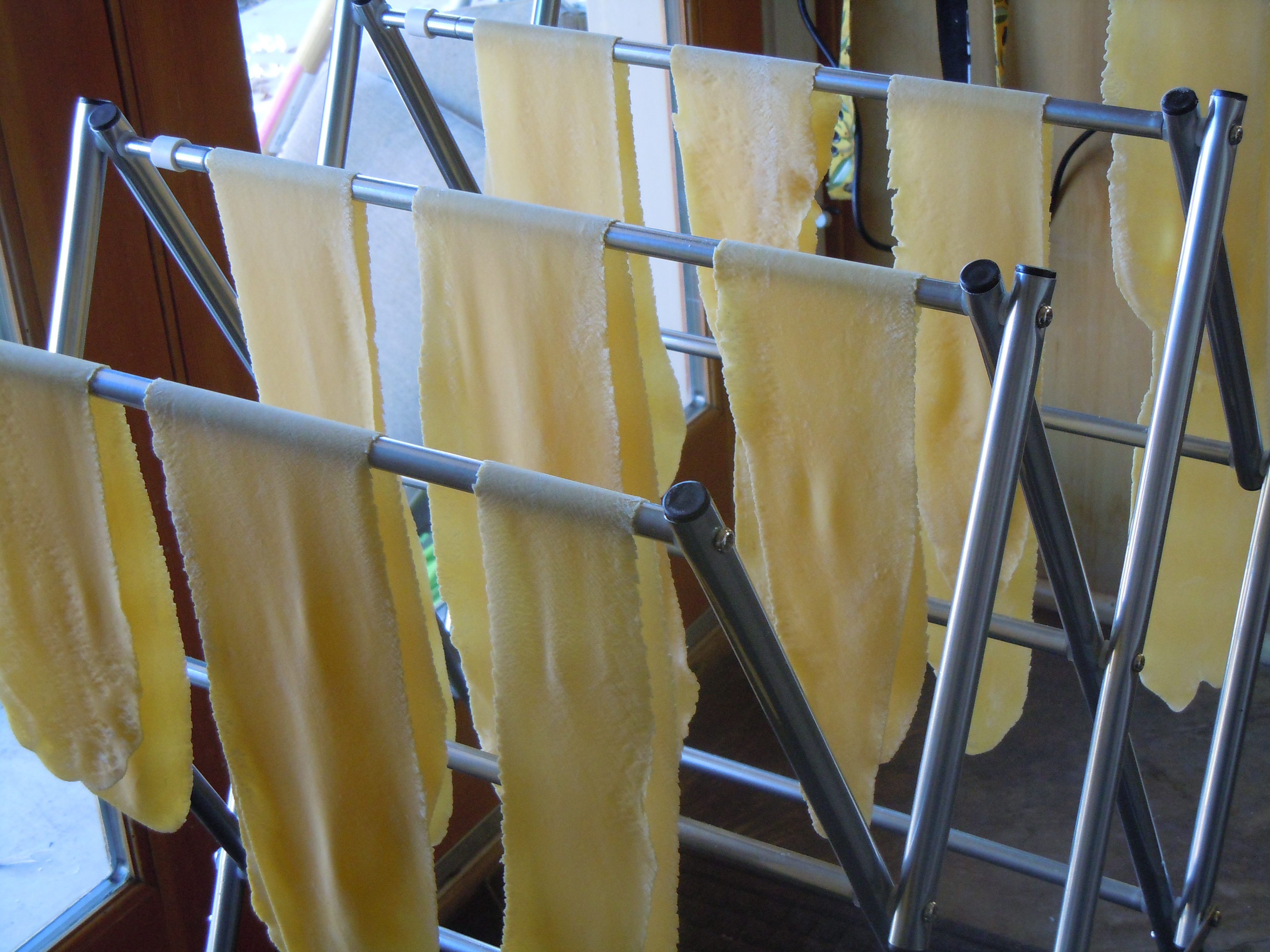
When the dough is smooth and thoroughly kneaded, dust the ball lightly with flour, wrap it in plastic wrap, and put it in the refrigerator for at least an hour and up to eight hours. When ready to roll it out, attach the pasta roller attachment. Cut the ball of dough into pieces about the size of a lemon, and dust each lightly with flour. SEt the rollers as wide as they will go, start the mixer at lowest speed, and start feeding the balls of dough through. I like to do all the balls through the widest setting, then all through the next setting down, etc. Now this is where a trick comes in handy. You are going to need a lot of hanging room for the sheets of dough. Wooden racks are sold for this purpose, but I got a metal laundry-drying rack instead and took the nylon mesh “shelf” off the top. It’s easy to clean due to the smooth surface, HOlds a lot more than most wooden racks, and folds away neatly when not in use. The sheets of pasta look absurdly charming hanging from their rack.

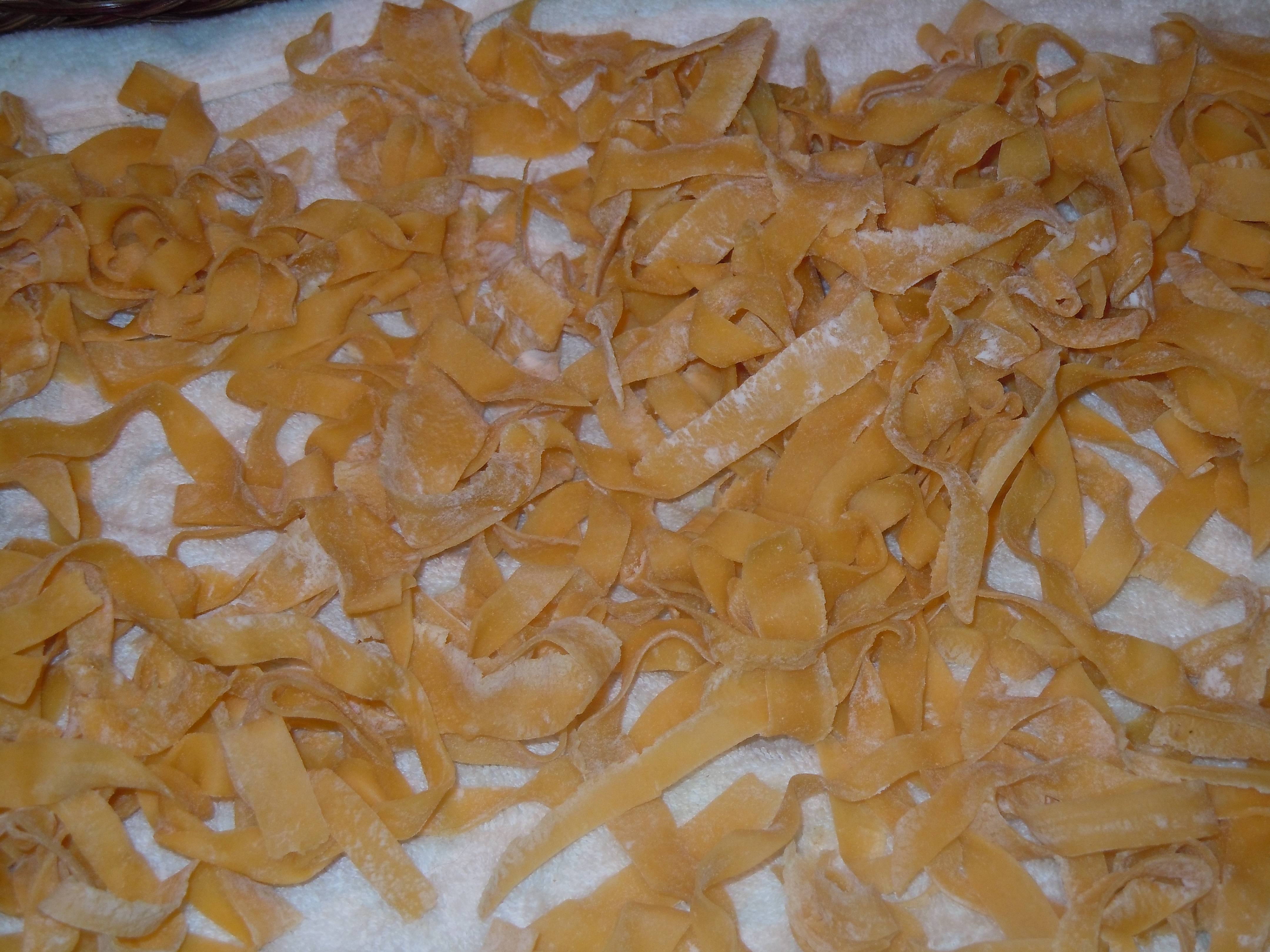
When they are all as thin as you want them, let them hang until somewhat leathery. This may be 15 minutes or may be an hour, depending on humidity, breeze, etc. When they are leathery but can still be folded without cracking, you are ready to cut the sheets into noodles. The pasta roller has an attachment that will do it for you, but I greatly prefer to do this step by hand. I like the unevenness that results, and I can cut anything from thin linguine to very wide papardelle, depending on the meal that I have planned. Work on a lightly floured surface, roll the sheets around your hand to form cylinders, and cut across to make noodles, as wide or thin as you like. Unfold them and lay out on clean dishtowels spread on the counter for the purpose.

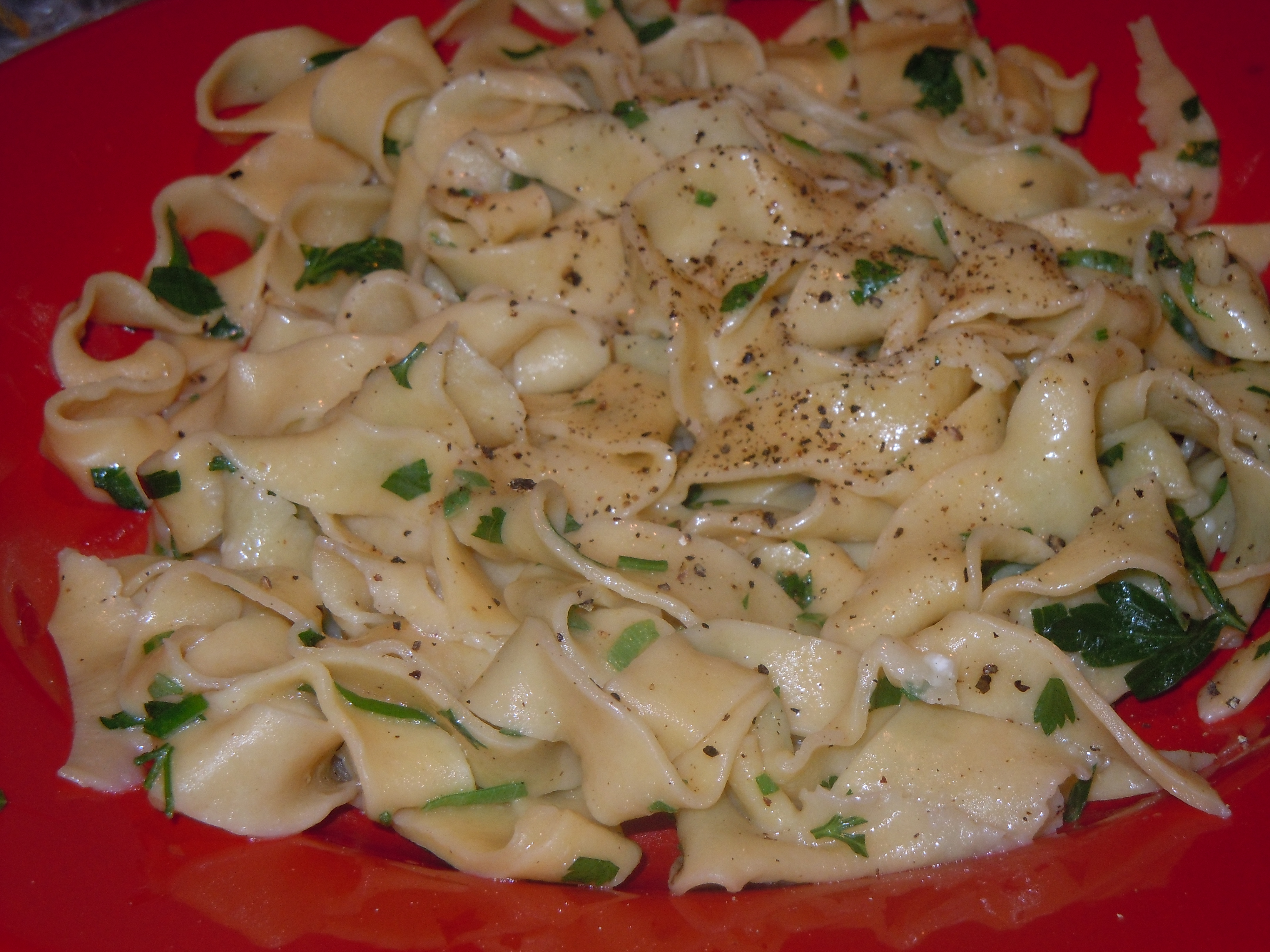
Cook soon for best quality, use plenty of salted water, and start testing for doneness as soon as the water returns to a boil. Sauce them simply to let their quality shine. In the near future I’ll post on my favorite mushroom sauce for fresh pasta, but for your first effort you might want to dress them with butter, cracked pepper, some chopped parsley, and the best Parmesan you can find. There is no simpler, or better, flavor.