Archive for the ‘Uncategorized’ Category

The Pollo Real Chicken: A real chicken, indeed


As you may know if you’ve seen my post on The Meaty Issue, I started raising my own meat chickens this summer. The results have been thrilling, but I have been hesitant to write about my kitchen experiments with them because most readers don’t grow their own and wouldn’t have access to this kind of chicken. This problem has now been solved because our local growers of pastured chickens, Pollo Real, have returned to the local farmers’ markets. Their French Label Rouge chickens are absolutely the best that I know of besides my own, and the pasture-raising is humane, environmentally friendly, and results in higher omega-3 content and a better taste. There is no such thing as a completely grass-fed chicken- they just aren’t able to survive on pasture alone- but these chickens have access to all the things that chickens naturally eat. Look for the Pollo Real booth at the Albuquerque downtown market on Saturday mornings and at the Corrales market on Sunday mornings. Ask them about their CSA, and please be sure to tell them that Heather at My Urban Homestead sent you. I want our local ethical growers to know that I’m recommending them.

The first time you get hold of a really good chicken, roast it fairly plainly and enjoy the meaty, nonmushy texture and the full flavor. My favorite method is this:
24 hours before you plan to roast the chicken, salt it generously inside and out or (my preference) put it in a large plastic bag with a brine made from half a gallon of water and half a cup of salt. If just salted, leave it in the refrigerator until ready to cook. If brined, leave it in the bag of brine in the refrigerator overnight, and in the morning pour the brine down the drain. Return the chicken to the bag and put it back in the refrigerator until ready to cook. This lets the added salt and liquid distribute themselves more evenly throughout the flesh.

When ready to make dinner, preheat the oven to 375 degrees. Smash two cloves of garlic in a mortar and pestle or chop them finely, add a tablespoon or two of white wine, a teaspoon of freshly ground black pepper, and two tablespoons of chopped fresh tarragon or one tablespoon of chopped fresh thyme. Rub the paste over the chicken inside and out, cut a lemon in half and stick it in the cavity, truss the chicken, and put it breast down in a baking pan. Pour about half a cup of good white wine in the baking pan and set in the hot oven. Roast for half an hour, and meanwhile cut some cleaned potatoes into chunks about an inch on a side. After half an hour take the pan out, turn the chicken breast side up, rub all visible skin well with good butter, and add a little more water if needed to keep the bottom of the pan lightly filmed with liquid. Roast until done, basting with more butter every 15 minutes. When the chicken is done, remove to a platter to rest for 15 minutes and, if the potatoes aren’t done, return them to the oven until they are. Pile them around the chicken and carve the chicken at the table. Pass the pan juices in a gravy boat. A salad and a good bottle of wine are all that you need to complete the meal.

What does “roast until done” mean? Well, it all depends on the size of your chicken. An oven thermometer is an absolute necessity, and oven heat can still vary depending on how often you open the oven. I have been cooking chickens for 30+ years and I roast them until the drumstick wiggles just right in its socket, but this isn’t something that can be conveyed in writing. so it’s safest to use a good meat thermometer and roast until it reads 170 degrees in the thickest part of the thigh. Even so, prick the thigh and check for any pink juices running onto the platter. If pink shows, return it to the oven until the juices run clear. Roasting a chicken well is a skill worth mastering. I aspire to roast a chicken on a spit next to a hot wood fire, but I haven’t tried it yet. If you have, leave a comment to let me know how it worked out. For that matter, every enthusiastic cook has a favorite way of roasting a chicken, so feel free to leave yours in the comments. And please, support our great local growers and farmers!

Local readers, your input is needed!


A reader who is moving to Albuquerque soon left the following comment on my “About Us” page:
“My husband just accepted a job in Albuquerque that starts in Nov, 2011 so we’ll be moving there from Northern Colorado. We currently raise/sell goats, chickens, and pigs for meat. We also sell eggs. (Our other critters are 4 llamas, and 2 sheep). I garden for our own eating pleasure and am striving to be more self-sufficient each year.
Would any of you be willing to take part in a conversation regarding raising farm animals in the Albuquerque area? Do you have contacts or websites that I should be sure to check out?
Some of my questions are as follows:
Chickens don’t like to lay eggs in extreme temperatures (too cold/too hot). How do you handle this in ABQ?
Is there a market for meat goats? (Boer goats)
Pigs: do you know of anyone who raises pigs to market weight and sells to local friends/neighbors that I might talk with? Do you need to compensate in any way for the heat?
Thanks for getting me excited about the Albuquerque area and starting our new adventure!”
Becky – Meadow Muffin Acres – Loveland, CO

I’m going to invite my local readers in Albuquerque to respond to Becky’s questions. Please leave a comment if you know anything that would be helpful to her. My own responses are as follows:
1. I haven’t had any major temperature-related issues with my laying hens. They lay almost all the way through the winter, with a lull in late December and early January, and they slow down a little during the hottest months, July and August, but even during the most scorching seasons I get three or four eggs a day from my six hens.
2. I don’t know how much market there is for goats, but it seems worth a try, especially if they were grass-and-browse raised, because there’s a substantial market for grassfed meats here.
3. I no longer know anyone who raises pigs, more’s the pity, but there would be a good market for them. I would definitely be one of your buyers! I used to know a family who raised pigs just a few miles south of Albuquerque, and they told me that a mud wallow was essential to keep the pigs cooler on hot days. Access to shade was also essential, and on the hottest afternoons their son used to go out and spray down the pigs with the hose. The pigs loved it, and would keep trying to shove their way into the stream.
4. If you are looking for other farm-based business opportunities, a micro chicken-processing facility would be well worth considering. Many of us like to raise our own meat chickens but on a single-household scale the plucker and scalder that make butchering efficient just aren’t affordable. When I had a farm in upstate New York there was a couple who had the equipment and would process chickens for the rest of us, and it was a huge convenience. I would happily work with anyone who had the set-up to process my chickens, as well as pay for the processing. So keep it in mind!
The people at the Urban Store have their finger on the local pulse when it comes to this sort of enterprise, so I would definitely give Kathy a call or email her from their website. All best wishes to you, and welcome to town.

Good Businesses: The Urban Store


Although my readers come from all over (even Kuwait, if you can believe it,) I try to keep an eye out for businesses and services that are of interest to my local readers here in Albuquerque. One of my most interesting findings so far is The Urban Store, at 3209 Silver Ave SE. Kathy and Chuck promote all things having to do with sustainability. Their mantra is “Grow, Eat, Return.” Grow good healthy local food, eat it, and return whatever’s left to the soil in a clean and usable form to grow more food and keep the cycle going.
When I first looked around the shop, I said to Kathy “You have all the stuff that really works.” After tiresome (and expensive) experimenting, I’ve found a lot of “green gadgets” that work and a lot of others that don’t. At the Urban Store the experimenting has been done for you, which will save you considerable time and money in the long run. They carry the Naturemill Composter, as well as a great variety of less high-tech composting systems. They have the books written by experienced people who actually know their stuff, and they don’t have the glossy but inaccurate ones thrown together to capitalize on the current fads. They have dehydrators and yogurt makers and cheesemaking supplies and kits to make organic wine and beer. They have an assortment of really well-crafted gardening tools, and shelves of bulk seeds, vermicomposting setups and solar ovens and lots more.
Now here’s the stuff that fascinates me: they work cooperatively with Desert Plastics, a local firm, to make rainbarrels and a wonderful micro-vegetable garden called the Urban Garden. This device, shown below, enables anyone to grow vegetables anywhere. It is cast from resin with UV inhibitors, and comes in 21 colors. It has its own drip system and drainage, and comes with 2 covers for protection from cold or blistering sun. The components are 100% recyclable. It is lighter and more durable than wood (which they also sell.) You can buy just the garden for $295, or for $400 they will deliver it to your site, fill it with organic soil, plant it with seeds for the veggies that you prefer, and give you some organic bug treatments and lots of training in how to micro-garden. The Urban Grower can make a garden out of a patio, balcony, or hard piece of ground that would be too much trouble to dig. They also carry rainbarrels, both stock and custom, and at next week’s Coop Tour they will be debuting a cast resin chicken coop. I’ll be there to take a look, because a chicken coop that’s easy to clean would hold a lot of appeal for me.


This store places a lot of emphasis on teaching, and in fact they will come to your site to consult on how to do whatever sustainable project you want to do.
I won’t use the term “green business,” because that has become a tired and overused marketing phrase with little meaning. Instead, I refer to “good businesses,” the sort that enrich our community and allow us to live better than we could without them. This is a good, even a great, business. You can visit them online, but it will be more fun to stop in and talk with them about how you’d like to make your life a little more sustainable. Whatever you have in mind, odds are that they already know a lot about it and can help you. And have fun! Ultimately, all this is not about giving-up in a grimly austere spirit. It’s about pleasure, and about how much you can have, and how good you can feel about what you do.

The Weed You Need: Edible Wild Plants in Your Garden


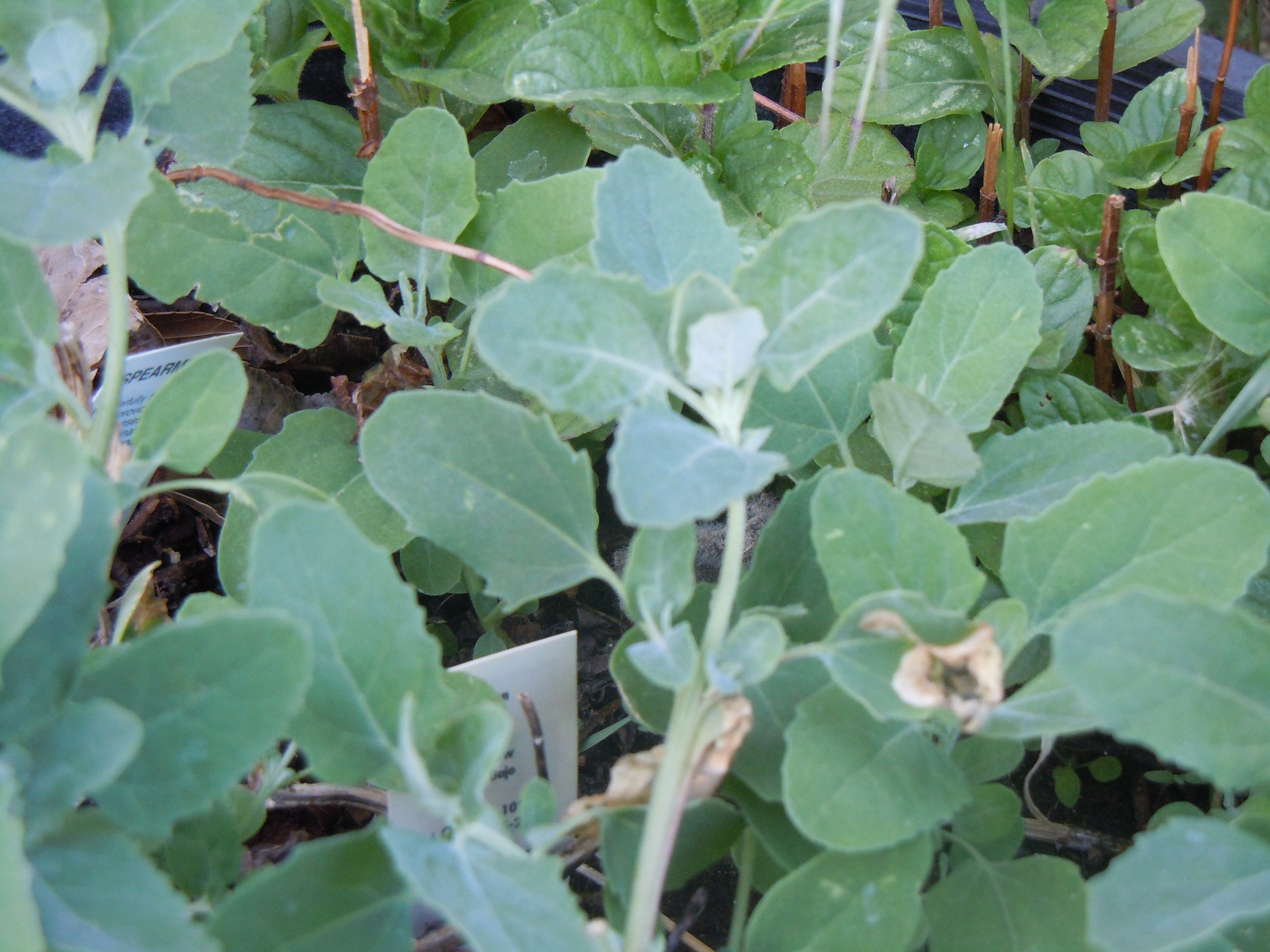
Lambs-quarters seedlings
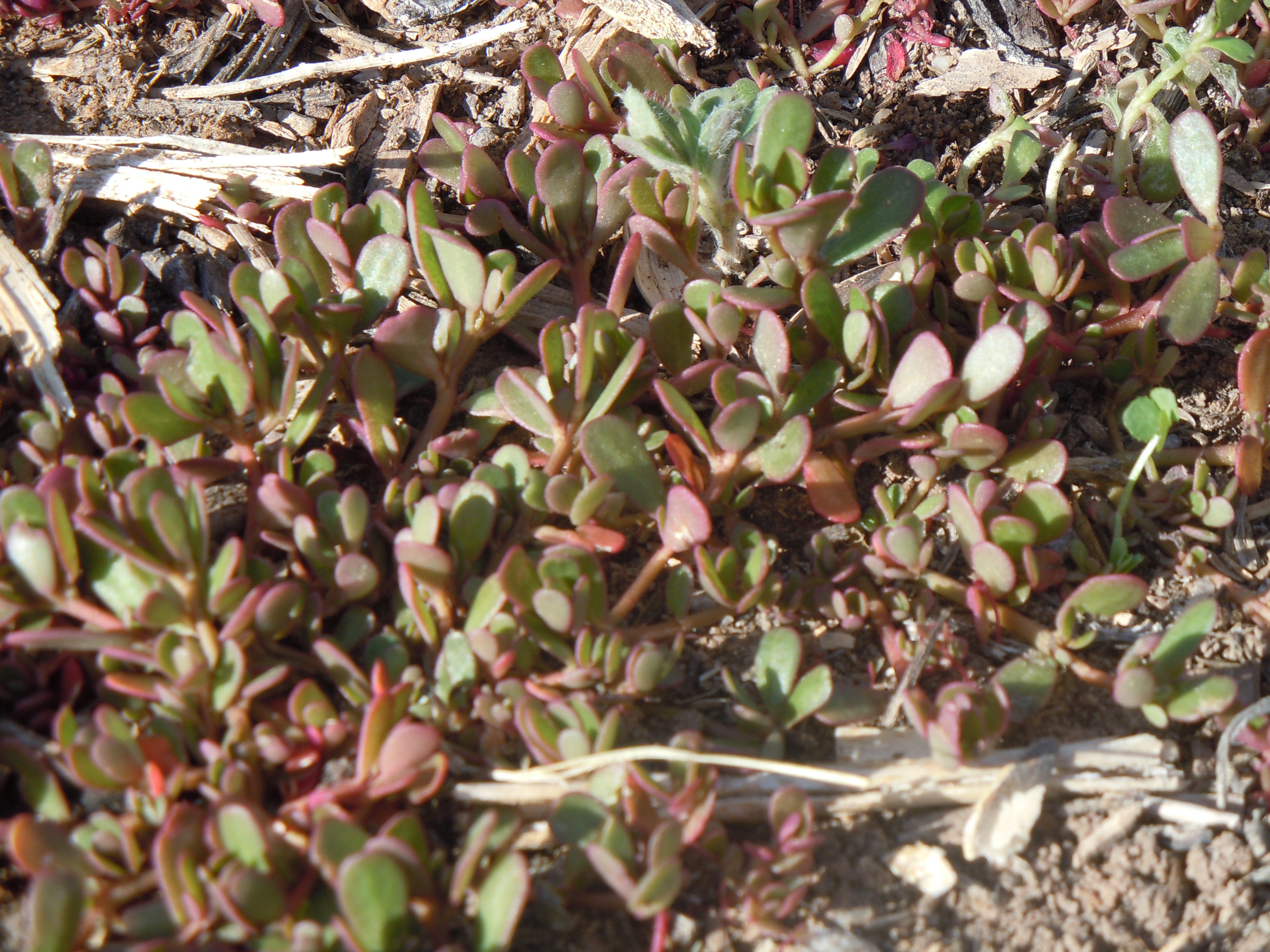
Here in New Mexico we have a trio of useful weeds that make delicious greens during the summer heat. In fact, I suspect that most pieces of the continent that aren’t actually submerged have these three. Lambs-quarters, amaranth, and purslane are ultra-nutritious, mild and pleasant in flavor, and take nearly any sort of abuse. They come along in that order; right now lambs-quarters in my yard is nearly ready to harvest, amaranth seedlings are about an inch high, and purslane seedlings are a fine mist on the ground. The reason to learn to recognize them now is so you don’t weed them out. They are shown here in seedling stages, but never rely on one source to identify a wild plant unfamiliar to you, at least not if you intend to eat it. Get a good foraging book (anything by Samuel Thayer or John Kallas will have the info that you need) and double-check yourself. Then, harvest and eat. These three are easy to use. Lambs-quarters is my favorite, but I’d hate to be without any of the three. I generally blanch them for two minutes in boiling salted water in an open pot, drain and press out all moisture, and chop, then proceed in any of dozens of ways or freeze them in vacuum-sealed bags for winter. Lambs-quarters and amaranth can be eaten by themselves with great pleasure, but personally I find purslane a little slimy by itself and prefer it as no more than 25% of a greens mixture. It’s full of omega-3 fatty acids, though, so don’t neglect it. Click the “greens” category on my sidebar and scroll through some ideas to get you going. Be careful not to let them overwhelm your garden plants. Amaranth and Lambs-quarters can grow six feet high and three across in good garden soil, and they can crowd out nearly any other plant that you might be trying to grow. Leave one of each to go to seed, and pull the others before they take over. I can’t think of anything nicer that most people could do for their health than eat more leafy greens. If you have chickens, be sure to give them all the nutritious weeds that they can eat. My dogs love cooked greens too, although of course they are given only limited quantities.
I can cut the tender tips several times per plant, but these are wild annuals and they do what wild annuals do, which is make huge quantities of seed before winter. When the days shorten, they will go to seed. I’ve tried planting seed in late summer to extend the harvest, and the new plants went to seed before they were six inches tall.  They haven’t been bred for our purposes, and I say thank goodness something hasn’t. Their season is a long and generous one, so enjoy it. Spread some seedheads in any neglected areas that you aren’t using, and you’ll benefit next year.

Amaranth seedling

Purslane seedling