Archive for the ‘Uncategorized’ Category

Fennel in the Garden and Kitchen; a Nose-to-Tail Herb

image
image
Fennel carries the true taste of summer. I love fennel and always have it around, and my favorite form, the only variety that I keep these days, is the subtly metallic bronze fennel. If you want fennel bulbs you will have to grow a bulbing type, but my interest is in other parts of the plant so the bronze suits all my purposes.
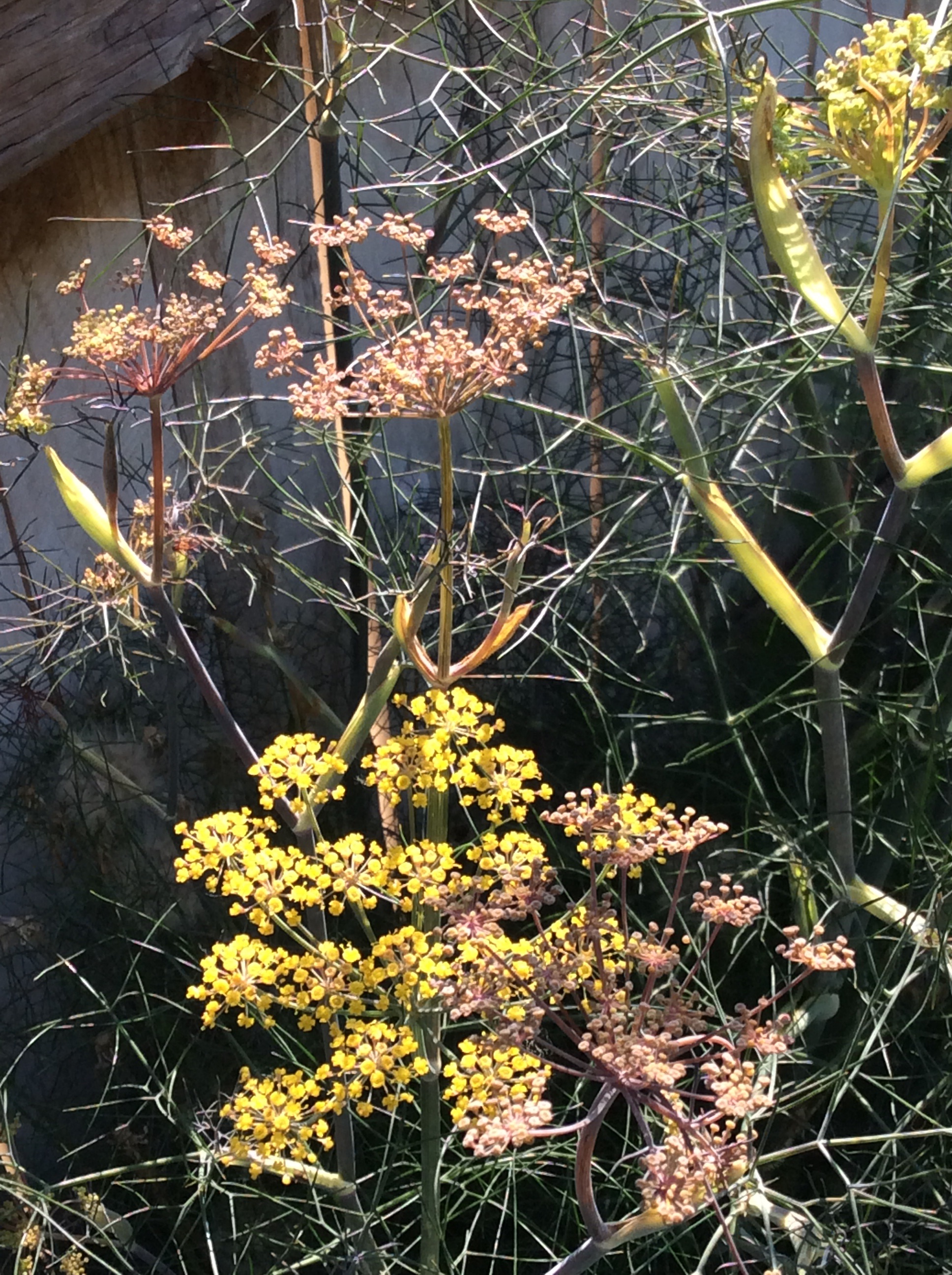
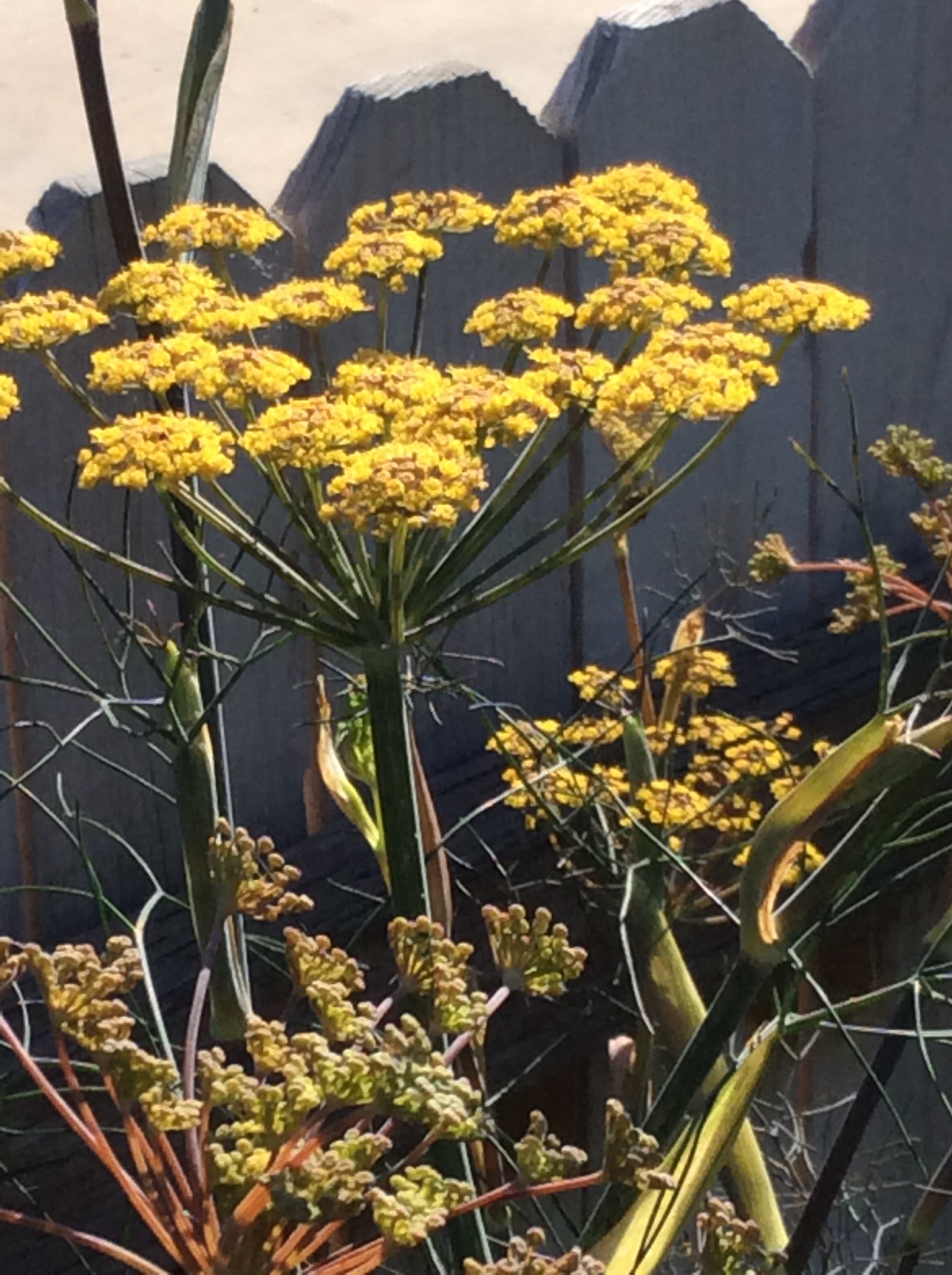
The first pleasure it offers is aesthetic: this is a lovely plant to have around. The color isn’t really bronze but a soft coppery-purple, and when hung with drops from a summer rain it is nothing short of breathtaking, in a quiet way. When dry, it is furry like a cat until the stalks form, and a little later the umbels of tiny yellow-green blooms look surprisingly pretty against the darker background. It would pass muster as a front yard edible in the most exacting neighborhood.
Second, it is beautifully aromatic. I brush my hand down a frond every time I pass it to inhale the anise-y scent.
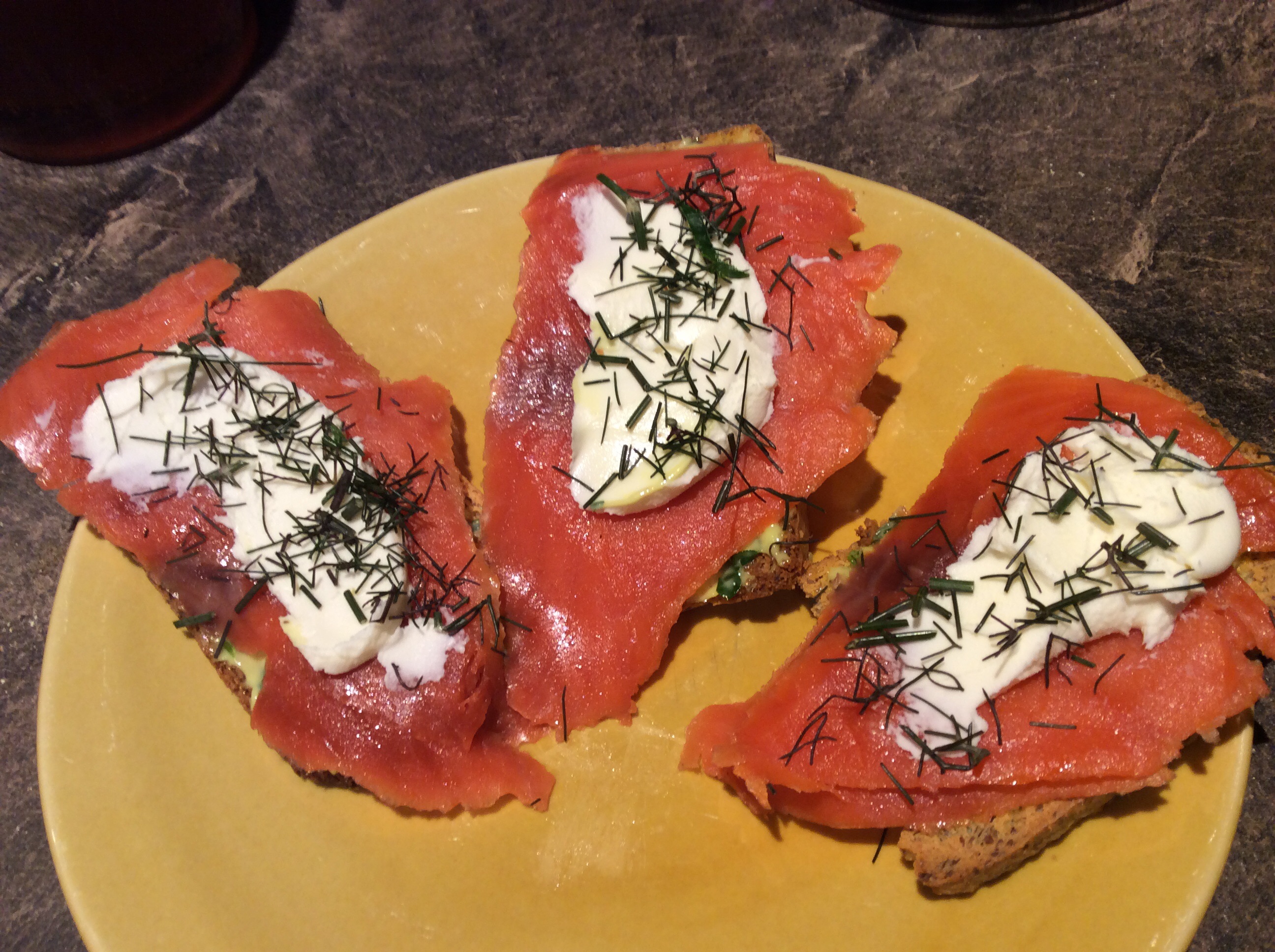
Third, it’s delicious. I can’t understand why so few people eat their bronze fennel. I admit that my main use of it is to chew up a frond while weeding or doing other garden tasks. The resiny rush is succeeded by a taste of intense sweetness and herbal licorice. I realized years ago, when going through a Greek cookbook binge, that fennel and not dill is a primary seasoning herb for horta, the greens mixture that forms a part of so many Cretan meals and snacks. A generous handful of chopped fennel fronds, sautéed with other aromatics, gives the right flavor to a batch of greens mixture. Chopped fronds are also an essential part of fish marinades and rubs, in my view, and can be delicious on chicken. A little dab of herb salad, made from chopped bronze fennel and chives or garlic chives and dressed with a very good vinaigrette, is good as a seasoning garnish alongside fish or chicken. Chopped fennel fronds are lovely in mayonnaise to sit atop grilled salmon, or yo dress cold fish salad. When grilling fish, consider putting the larger stems of fennel across the grill to make aromatic smoke. I love a small handful of chopped fronds in salads. This is a nose-to-tail herb, since besides using the leaves and stalks you can collect the pollen if you have enough plants (fennel pollen is a common aromatic seasoning in Tuscany,) and the seeds can also be collected for culinary use. One cookbook writer said that she made an anise-flavored pesto from blanched bronze fennel fronds, and that sounds delicious too, although I haven’t tried it yet. On days when I’ve worked late in the garden and the late sunset finds me hot and dirty and with a poor appetite from the heat, I can throw together smoked salmon crostinis with fennel:

Cut a few diagonal slices off a good baguette or, if you are ketogenic, cut a few thin slices of ketogenic coconut bread. Toast them, spread with green mayo Or your own favorite tarragon-seasoned mayonnaise, put on one thick or two thin slices of smoked wild-caught sockeye salmon, smear with some mascarpone or creme fraiche, and top each with a couple of generous pinches of  chopped fennel. It takes five minutes, it’s cool and soothing, and yum.
image
Incidentally, I remember reading somewhere long ago that fennel stalks coated with tallow were burned to summon good witches, and mullein stalks were used the same way to summon bad witches, unless maybe it was the other way around. So if you want to try it, you’ll need to get straight which is which. But I can say from experience that a couple of dried fennel stalks tossed on a dying fire in the fall give a lovely aromatic end to the evening that doesn’t summon anything but contentment and sleep.
image

Breeding Your Own Landrace

image
A plant variety is carefully selected to be as uniform as possible, so that each plant you grow of that variety will resemble the others fairly closely, with allowances for growing conditions.A landrace is a different and more chaotic and vibrant thing. A landrace is expected to have a high degree of variability, with the idea that you can plant it in a variety of different conditions and at least some of the plants will grow under those conditions. One way to look at a landrace is that it’s the widely varied genetic material from which varieties can be selected. So why would you want a non uniform seed stock? Well, does your weather change from one growing season to the next? Some members of your landrace will take the changes in stride. If you move, your landrace will go with you, and you will get some plants that adapt well to your new location. Hardcore survivalist types want landraces that can adapt to the challenges of a post-catastrophe area. Those of us who think in terms of smaller catastrophes still want to know that in a bad or atypical growing year our garden food supply will come shining through, or at least some of it will.

Currently I am trying to create my own overwintering brassica landrace. Overwintering doesn’t sound like a big deal among the brassicas, because many of them will overwinter in very cold climates, but our desert climate is a little different. Our winters are very dry and windy, and we have no snow cover, and so many plants like kale that overwinter well under snow will desiccate to death in our conditions.

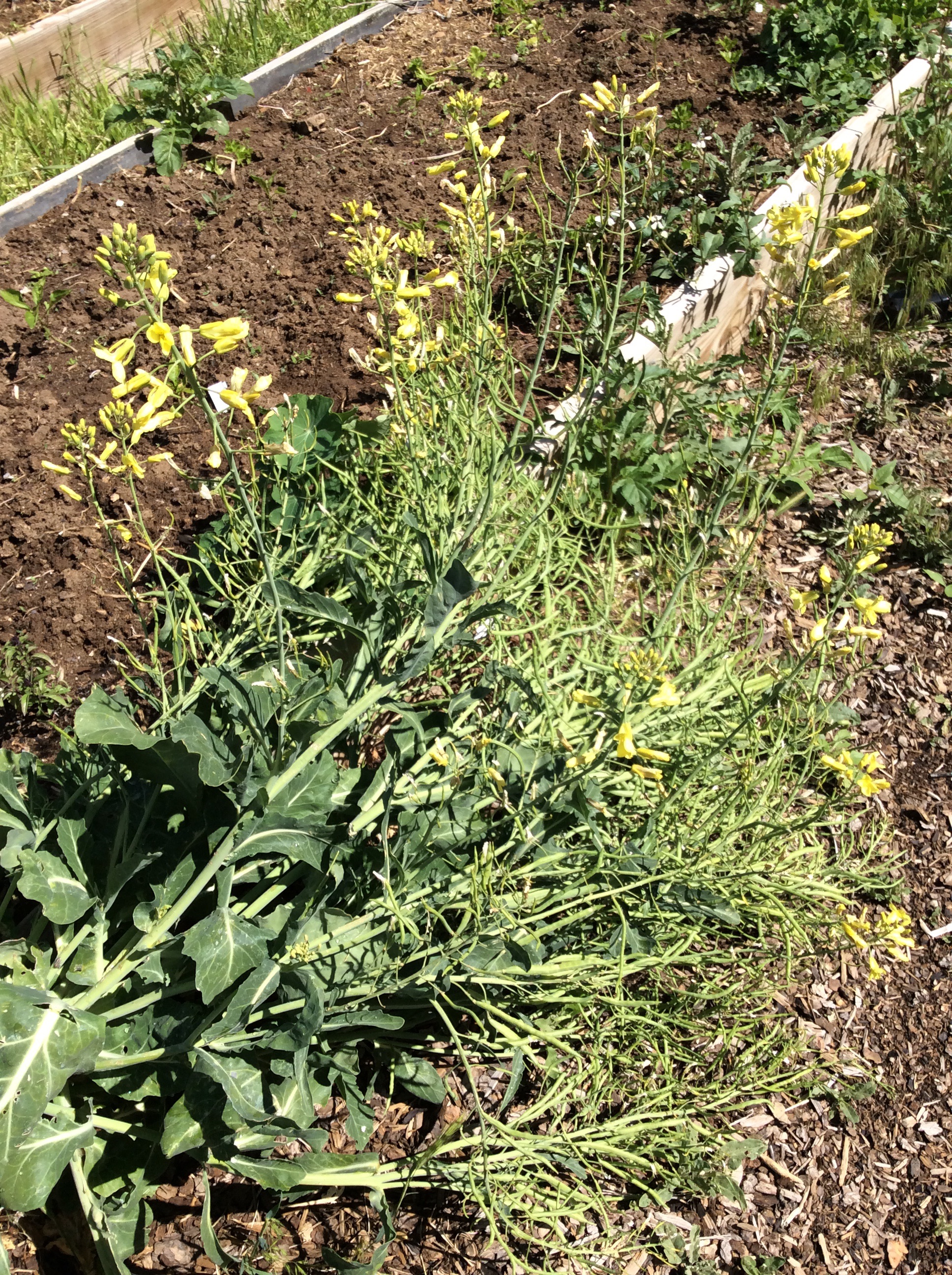
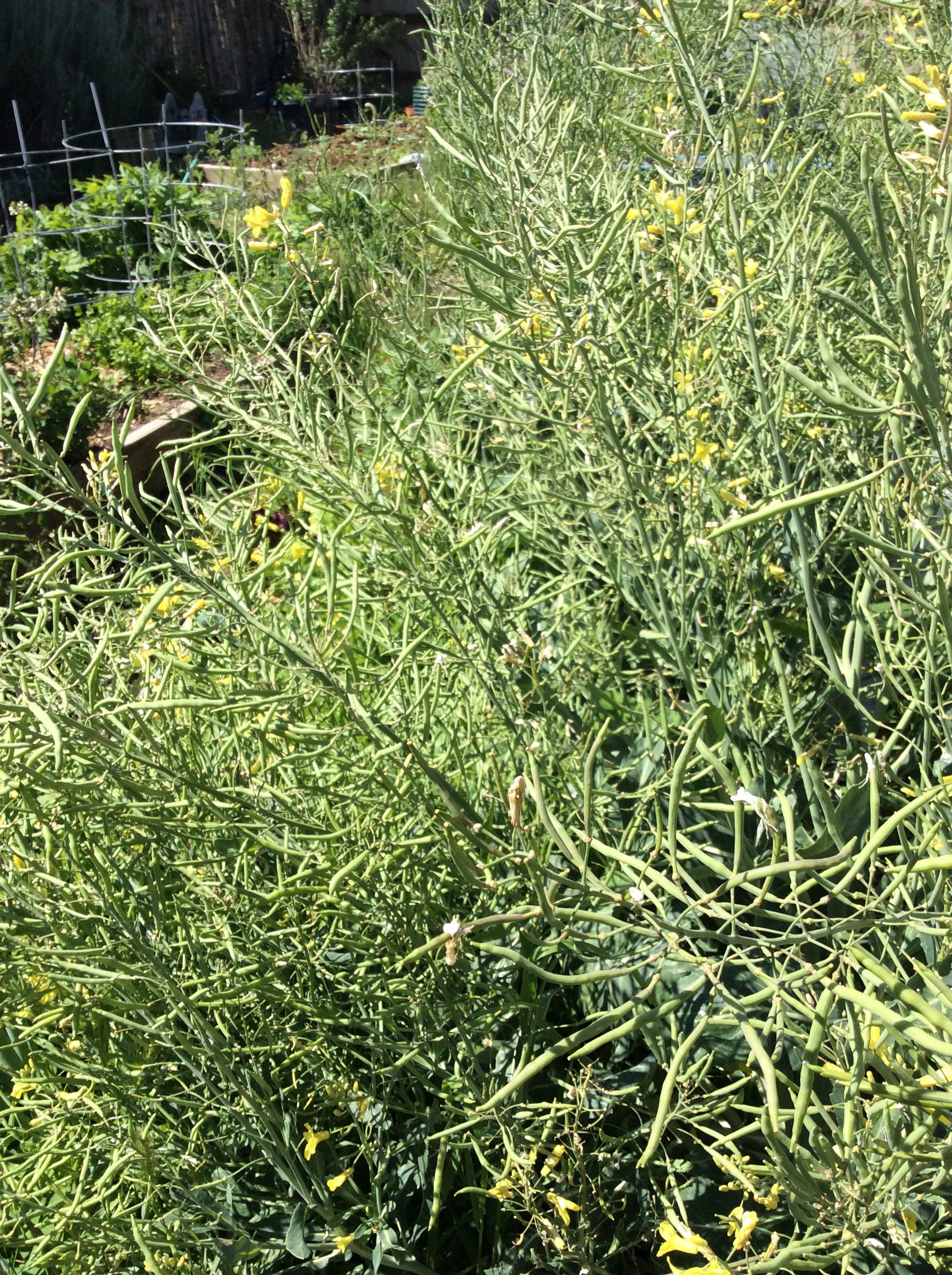
I started my project last year, by planting four different brassicas and leaving them in place over winter to see which ones survived. I chose to start with collards, Portuguese kale, Tuscan kale,and sprouting broccoli. Selection this spring was easy, because only one of the four survived. The Portuguese kale (also known as Tronchuda) came through the winter and put out a very nice crop of leaves during the late February and March “hunger gap.” I cooked some of the leaves to make sure that they were tasty, and they were sweet, mild, and very good.I let the plants go to flower, and found that bees mobbed the light yellow flowers. The buds were also a good addition to vegetable stir-fries, although they have to be picked small because they toughen quickly, and of course you have to leave a lot of them on the plant to get your seeds. The plants get huge as they set seed, and I trained them into the paths so as not to lose too much bed space. I let a spring planted broccoli go to flower at the same time, to try to introduce more genetic variability, and let the bees do the cross pollination. The plants set thousands of seedpods each, and I found that when the seedpods are about 2 inches long and very slender, they make a very nice stir-fry, with much the same flavor as the leaves but a different texture. Currently the seeds are ripening on the plants, and when they are dry I will plant some for fall eating and send them through the winter to see how they fare.

I hope to end up with plants with at least some variability. We do have a number of wild brassicas that grow in the area, so a little bit of outbreeding could occur even if I had not let the broccoli into the mix, and variability is what I’m after. Selection comes later; right now my interest is in having brassicas that overwinter in our difficult climate but aren’t uniform, and might even provide specimens that I want to select and stabilize for different purposes, maybe one type for hunger gap leaves and one type for masses of buds, for example. I have already spent happy hours researching the possibilities, and happy time is among the benefits that my garden provides.

image


Leftovers Wraps for One

image
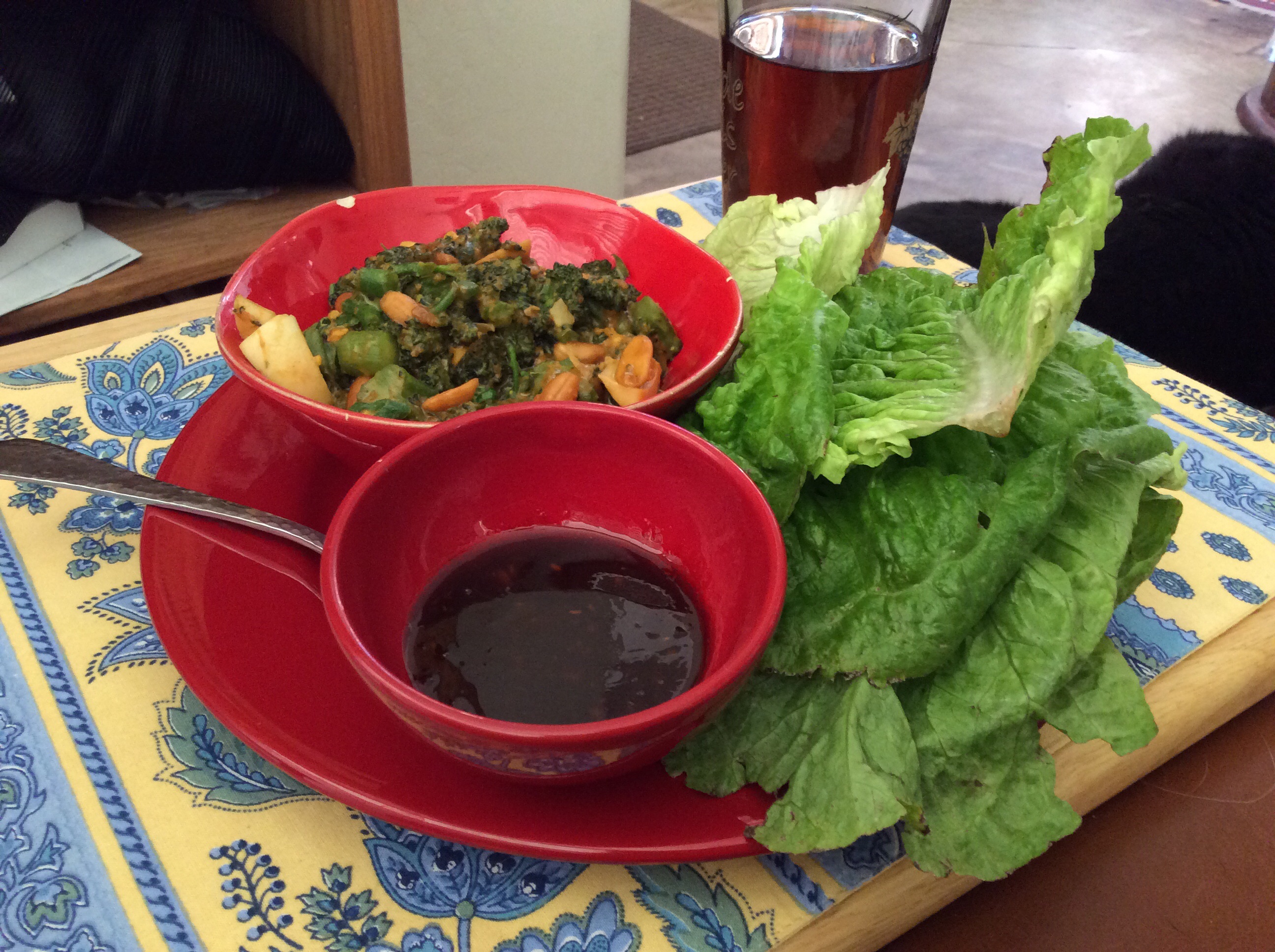
After I ate last night’s broccoli side shoots for one, I had several shoots left over, and tonight I pulled them out of the refrigerator for another veggie dinner. I also had last night’s Semi-Korean dipping sauce chilled, a couple of leftover hard-boiled eggs, a handful of roasted peanuts in my snack bag, and a head of romaine lettuce in the garden begging to be used. With the addition of a green onion from the onion row, my meal came together.
First I rinsed the biggest outer leaves of the lettuce quickly and set them in the dish rack to drain. Next, I thinly sliced the white part of the green onion while a small heavy saucepan heated up. I sliced the green parts separately, and chopped the cooked broccoli and eggs roughly. By this time the pot was hot, and I put in 2 tablespoons or so of oil and threw in the onion whites. They sizzled furiously as I stirred for about one minute, then the peanuts went in. After another minute, I added the chopped broccoli and about a quarter cup of the sauce, plus a glug of good soy sauce from the bottle that hangs out by my stove. After about one more minute of stir-frying, I turned the heat to medium, cooked just until the broccoli was hot, and stirred in the green onions. The chopped eggs were tossed in after the pot was removed from the stove. It was plated, wrapped in the romaine leaves a spoonful at a time, drizzled with more of the sauce, and eaten. Prep time and cook time together totaled twenty minutes.
Cooking for yourself is a great time to go improvisational because if something goes wrong you can shrug and, in a worst-case scenario, eat something else. That’s not so bad. And odds are that you will make some delightful discoveries along the way. The more you think through your available ingredients, putting them together on your mental palate, the less likely you are to make awkward combinations. And I want to put in a plug for prepping vegetables and possibly cooking at least some of them as soon as they hit your kitchen, so that you have fodder for really fast, really good meals. I recommend that any aspiring improvisational cook, or for that matter any cook, read Tamar Adler’s An Everlasting Meal. It’s a delightful read and a quick education in skilled use of leftovers.
Incidentally, when you find a sauce that suits you like my sort-of-Korean sauce suits me, make it in larger batches, keep it in the refrigerator, and see how many different ways you can use and enjoy it.

Gather Ye Nitrogen While Ye May: Desert Bird-of-Paradise

image
Caesalpinia gilliesii, the Desert Bird-of-Paradise, is a spectacular plant. It is native to South America but is naturalized throughout the Southwest. It would probably grow in other places. It thrives on our alkaline soil, baking desert sun, and low rainfall. It’s gorgeous in bloom and neat-looking when not in bloom. It seeds itself around but is easily eradicated where not wanted. It provides filtered shade to other plants. And it fixes nitrogen. Quite a set of advantages.
I’m making use of it on a dry, hot, unirrigated strip of south-facing land along my driveway where I want to grow goji berries. The goji plants struggled and mostly died at first, but as seed-sown bird-of-paradise takes hold and provides them with some shade and nitrogen, the gojis are getting a new lease on life and have finally put out some berries. I trudge the hose over and give everything a deep soaking about once every 3-4 weeks.
image
For years I struggled with Caragena arborescans, which is the darling of the permaculturists but simply will not grow well, or at all, for me. Now I have Caesalpinia instead. No part of it is edible but it helps edibles grow. It has survived 10 degrees Fahrenheit with no problems. In Britian they do have hardiness issues with it, and I think it won’t tolerate wet feet. For dry gardens it works beautifully.
So look around you and see what nitrogen-fixers thrive in your area and grow without pampering. Use them. Don’t fuss with the ones that are determined to die.