Archive for the ‘Uncategorized’ Category

The Squash Chronicles I: Ambitious Summer Squash

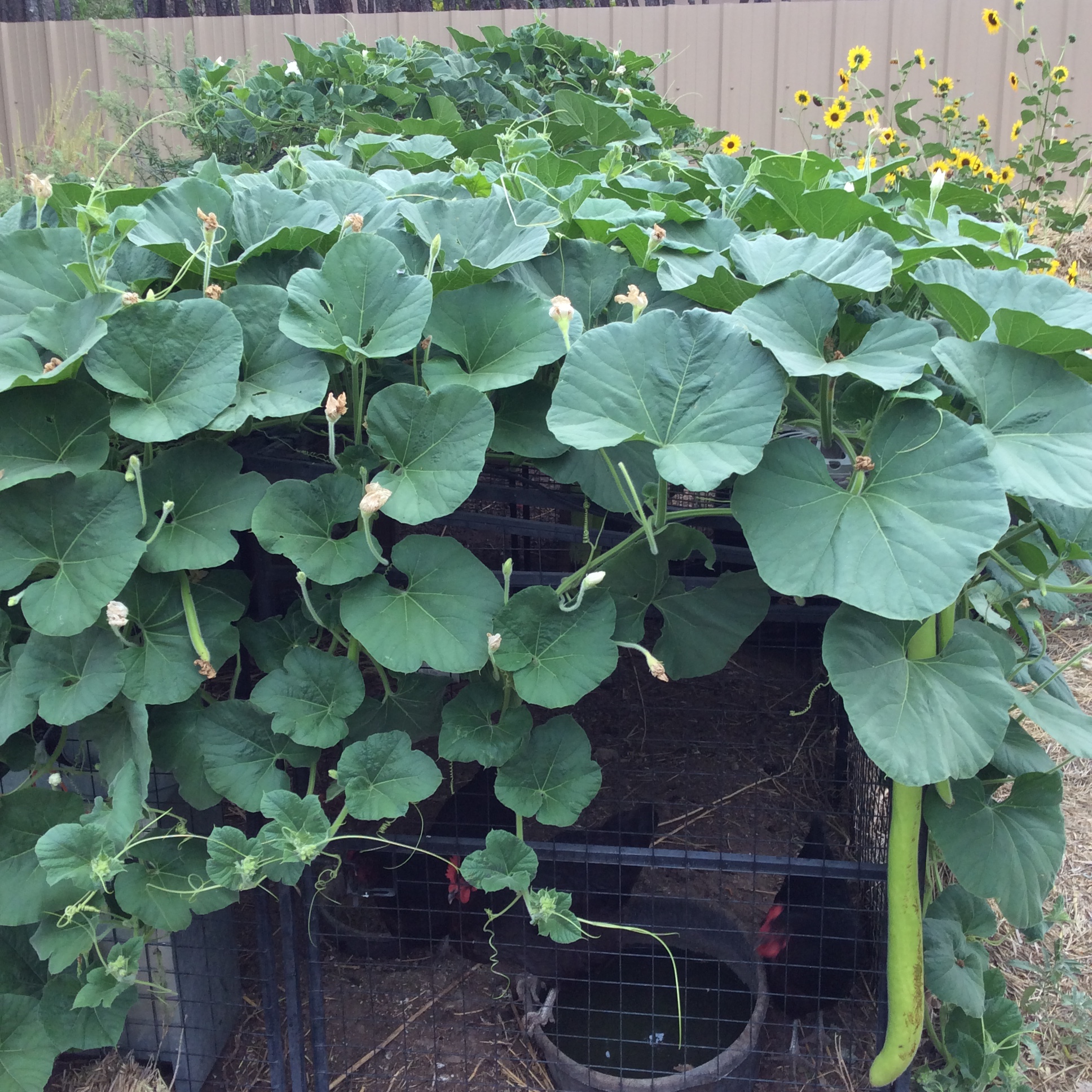
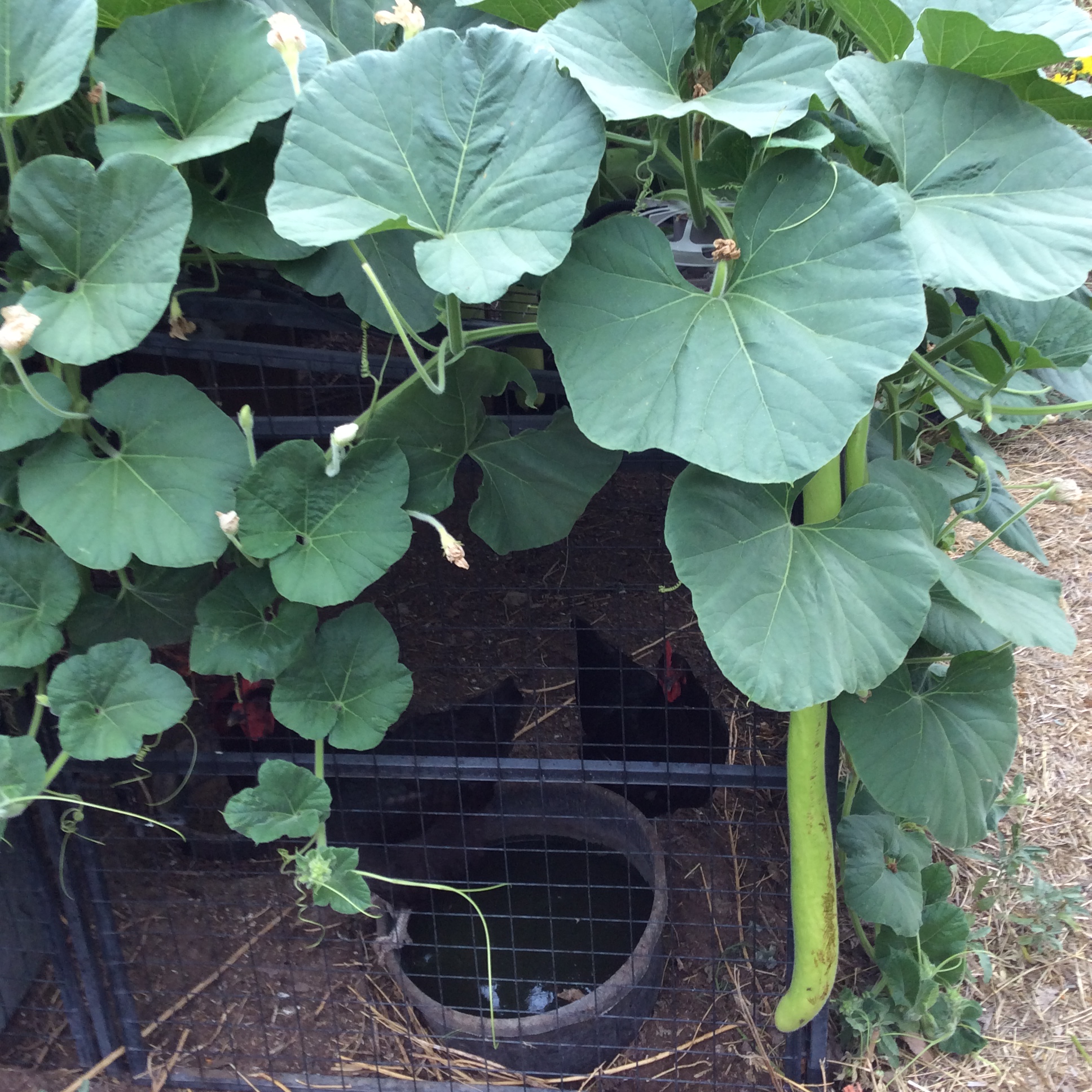
Every year  I lose my zucchini to diseases in late summer, despite the fact that I always plant whatever is most highly touted for disease resistance. This year I decided to try some new squash types  and see if I could overcome the disease issues, and still get some summer squash. The two I planted were Thai bottle squash and Italian Serpiente squash, both from the entrancing Baker Creek seed catalog.   I planted a couple of seeds of each in the compost pile next to the chicken coop, and thinned to one plant of each when they were small.  The results were as you see above; they are quite frighteningly successful. The vines are up to 30′ long, so be prepared.  They covered the chicken coop in nothing flat, providing some nice shade for the hens, and I was amused to note that wherever squash formed hanging down into the chicken run, the hens would jump up and peck them down to stubs.

Both can be picked at any point when your thumbnail will still penetrate the skin without significant pressure, and used just like zucchini.  They taste like zucchini, by which I mean they really have very little taste and need some help from seasonings.  When cooking any summer squash I prefer to slice it, salt heavily, and let it sit for 30 minutes to an hour and then squeeze out the large amounts of excess water by wringing the squash slices in a dish towel. Proceed to cook any way you like.
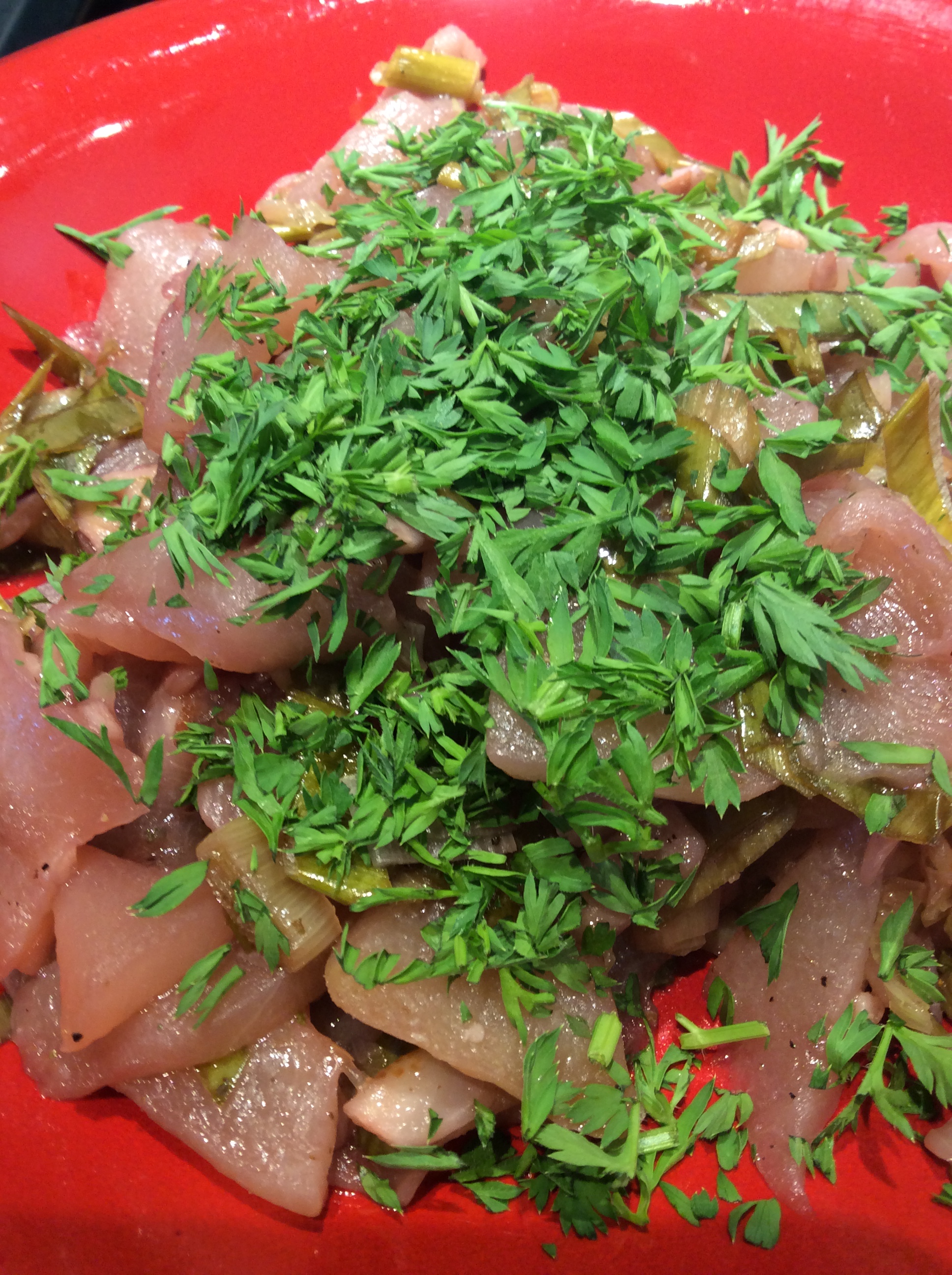
I like to make low-carb wrap bread out of  summer squash, and I’ll write about that in the near future, but today I want to encourage you to try marinated squash. Slice up one zucchini or a comparably sized chunk of a serpiente or bottle squash or whatever, salt heavily, and let sit 30 minutes or so. Meanwhile, chop a clove of garlic and slice a scallion or two thinly and put in a bowl large enough to hold the squash with half a cup of very good red wine vinegar. Add a half teaspoon of salt ( most of the salt you put on the squash will be squeezed away with its liquid) and herbs to taste. I like a few sprigs’ worth of thyme leaves.  Wring the squash slices out thoroughly in a clean dish towel, then fry in olive oil until the texture is the way you like it, which for me is done but not mushy. Dump the hot cooked squash slices in the bowl, stir the vinegar mixture through, and let cool to room temp, stirring a few times to distribute the seasonings. It can be made ahead and sit for a few hours, or refrigerated until needed, but do let it warm to room temp before serving.  When you are ready to serve, drain off all the excess vinegar,  pressing a bit to get any excess liquid out,  and toss with a quarter cup or so of your best olive oil and maybe add a small handful of chopped parsley or chopped young carrot leaves.  I like this as a side dish, and if you have some roasted pinenuts to sprinkle over the top, that adds deliciousness. Some crumbled queso  fresco would turn it into a light lunch, and it could be tucked into a wrap bread and eaten with a dip of seasoned yogurt or hummus for a more substantial meal  that would suit plant-based or vegetarian inclinations. Using a mildly sweet late harvest vinegar or adding a dash of honey, and finishing with chopped roasted salted pistachios would give the dish an interesting Sardinian sweet-and-sour turn.

As you can see above, the use of red wine vinegar gives the dish a pinkish cast that some people might object to. I use red wine vinegar because I make my own and love the flavor, but if it bothers you just use white wine vinegar instead.

The whole concept of a cooked vegetable salad goes as beautifully with Asian meals as with western style dinners. Try using rice vinegar and palm sugar or sweetener of your choice, adding a few teaspoons of chopped ginger along with  the garlic, and garnishing with scallions. Some slivered chiles would be great if you like heat,  and a handful of chopped cilantro would make a pretty and tasty garnish.


Fish: An Easy Evening


Most of the time I love being an urban homesteader, and it’s a great pleasure to produce as much food as I can on my home ground. But there are times that I don’t want to start my meal with butchering and foraging. I just want to take it easy. But I still want something very healthy and very good, and I want to support the businesses that make my community even better.
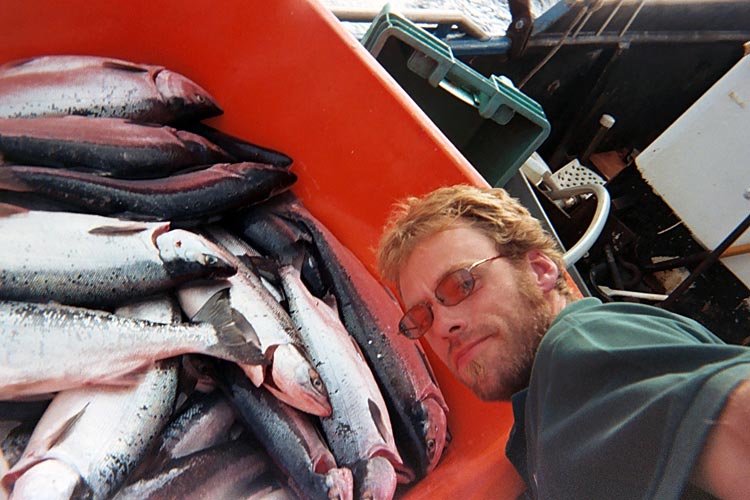
In the Albuquerque and Phoenix areas, it’s a very good idea to get to know the Fishhuggers, Kenny and Brenna and their family. In the summer Kenny fishes in Alaska, and they sell wild Alaskan salmon, halibut, and various other fish. They also sell grassfed beef from the family ranch, and it’s the best grassfed meat available in our area because they keep the cattle long enough to put on healthy, delicious fat. They also handle some excellent pork and a variety of other healthy products. Check their website to see where they are currently selling, and ask what they have. I have been buying from them for enough years to watch their son grow from small child to accomplished salesman in his own right.
Wherever you live, find a trustworthy source and keep some healthy fish in the freezer. Nothing is quicker and easier to cook than fish. When you sense that your day is sliding out of control, start thawing it or planning how to thaw it when you get home. Keep a reserve of veggies in the pantry that can be used on a second’s notice and need no prepping. I keep grilled artichoke hearts in oil and sun-dried tomatoes in oil. Grab some chimichurri out of the refrigerator, or make some in five minutes if you keep the ingredients on hand.
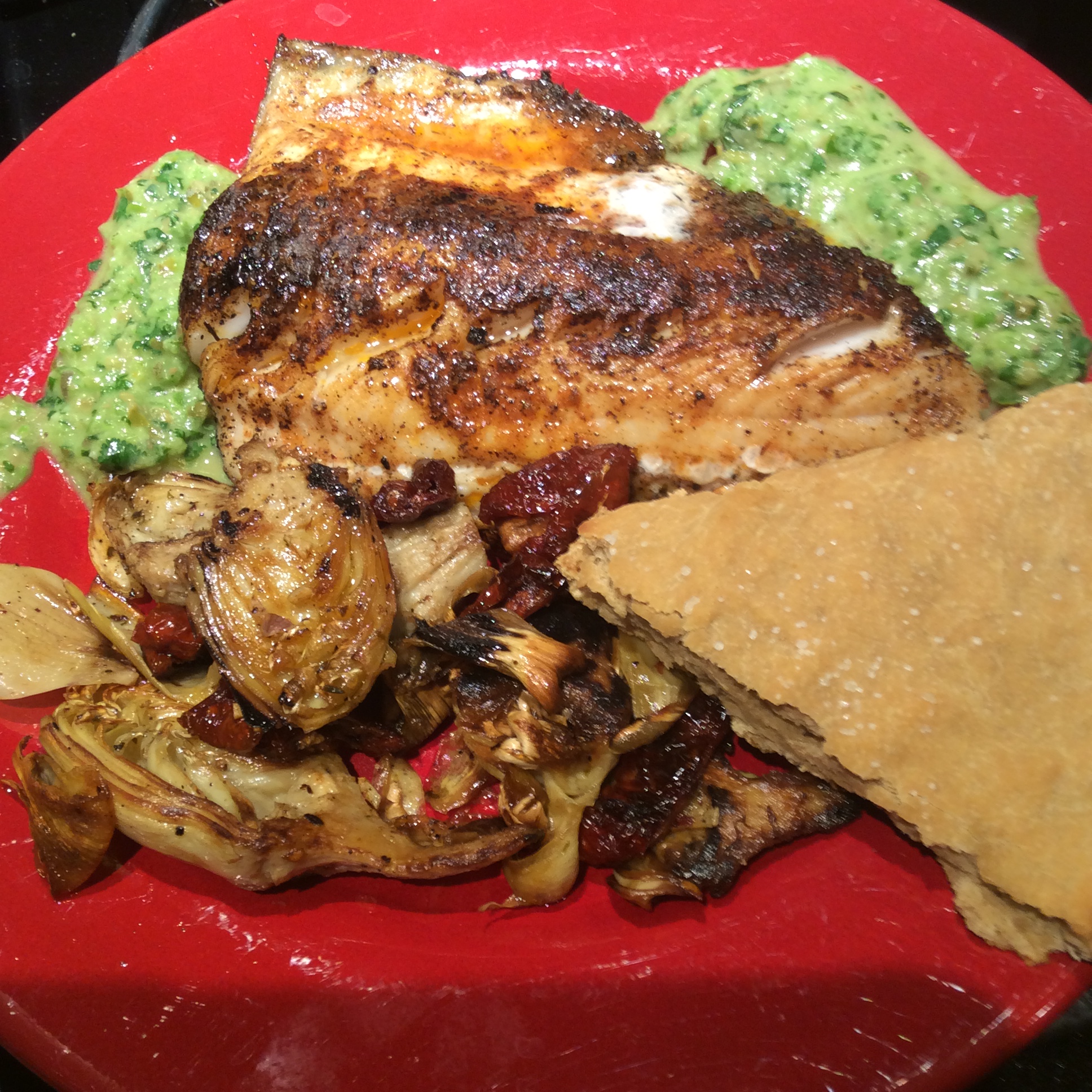
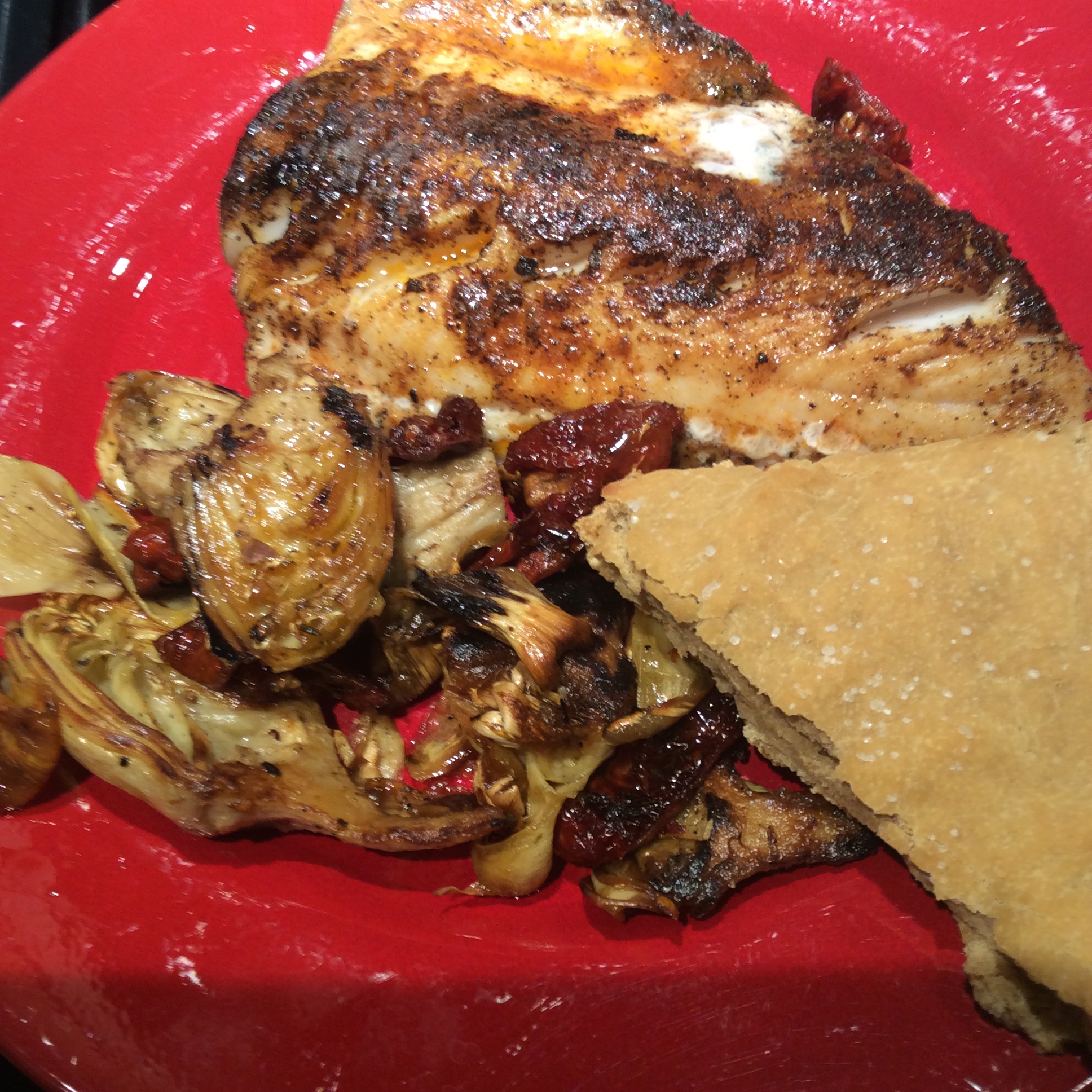
For this particular meal, choose good-sized fillet pieces of any firm white fish. Sprinkle the thawed sections with salt and your favorite fish seasoning; as a Louisiana native, I always use Chef Paul’s Blackened Redfish Magic. Heat a heavy skillet over high heat, sear the fish well on both sides, and move to a 300 degree oven to finish. While the fish is baking, rinse the skillet quickly, drain artichokes and sun-dried tomatoes or whatever veggies you’re using, heat the skillet over medium-high heat, add some very good olive oil, and start lightly browning the veggies. Between stirs, chop two fresh cloves of garlic to add a more authentic flavor. When the veggies are lightly browned turn the heat to low, toss in the chopped garlic, and stir frequently until the garlic is cooked but not at all browned. Turn the heat off and check the fish.

Personally, I loathe overcooked fish. When it will just separate into large, moist and juicy flakes with firm application of a fork, it’s done. Don’t cook it another second. Move it out of the hot pan onto plates, add the veggies, and scoop chimichurri wherever it looks best on the plate. Add a wedge of flatbread if you like. I’m low-carb so mine is made with oat fiber.

I think this is a red wine meal, but then I think every meal is a red wine meal. If you are a beer drinker, you may prefer beer. Either way, toast your dinner partner with joy and confidence, and remember that with every bite you are preventing the fast-food hordes from swarming into your kitchen.

The First Tomatoes

I still love all kinds of grilled vegetables. This post is from 2009, when bread was still on my menu, but I pass it on for those with no blood sugar problems.

wooddogs3's avatarMy urban homestead

july 2009 009
A grill offers wonderful vegetable cooking options. It’s a pity that most people only cook meat on their grills, because grilled vegetables make wonderful and satisfying summer meals. If you are a grilling enthusiast, or would like to become one, I highly recommend the elegant cookbook by Francis Mallmann Seven Fires: Grilling the Argentine Way. My husband, the family grill-wallah, was intrigued by the directions for Burnt Tomatoes, and set out to make a great tomato sandwich. All the hot work stays outside, and your kitchen is spared. Of course you can buy tomatoes at the Farmers Market if you don’t grow them yourself, but if you plant a few around your house, you’re likely to realize why they were grown as an ornamental even back when they were thought to be poisonous.
july 2009 004
Click here for the recipe!

View original post 455 more words

Baked Feta

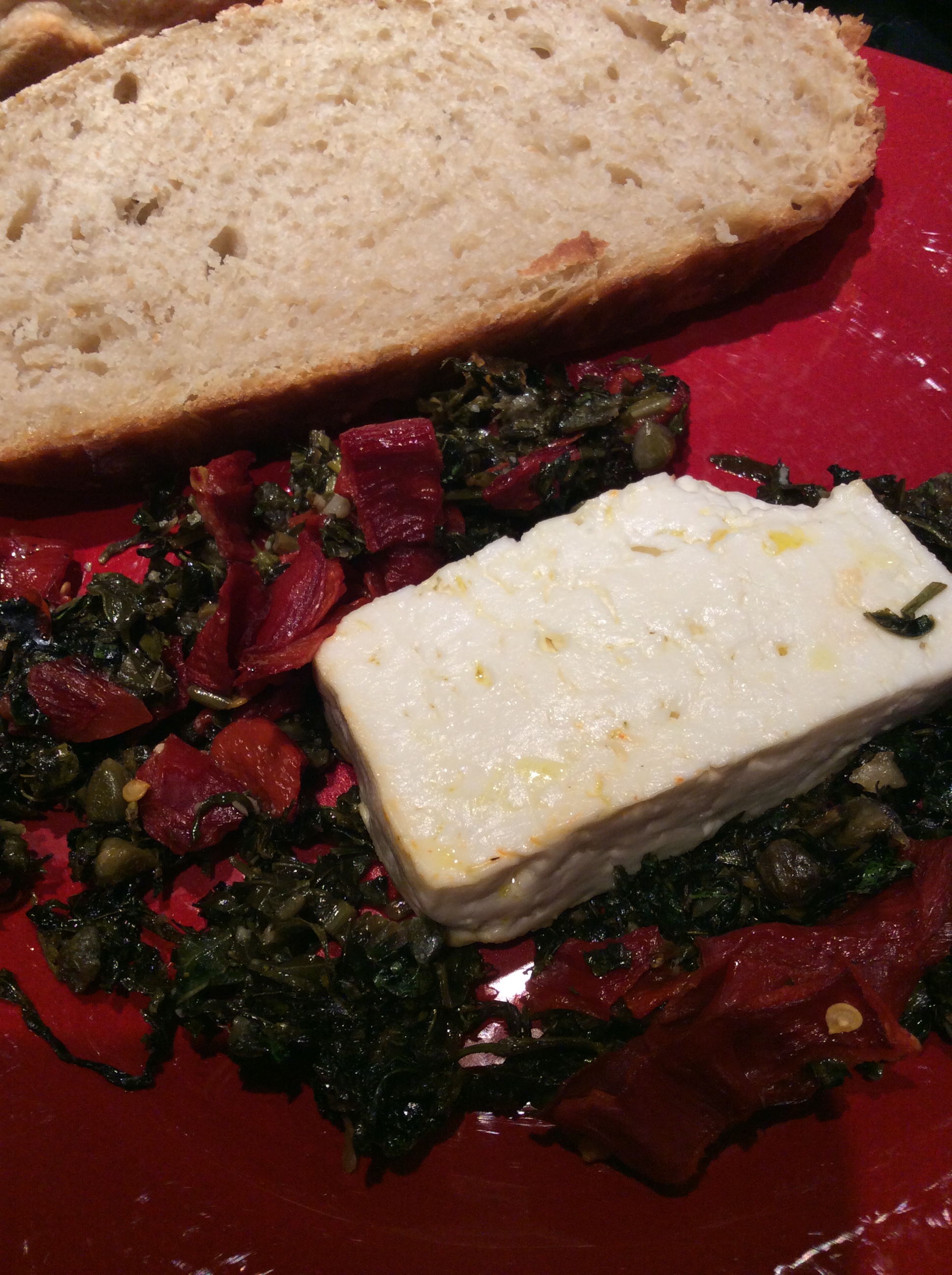
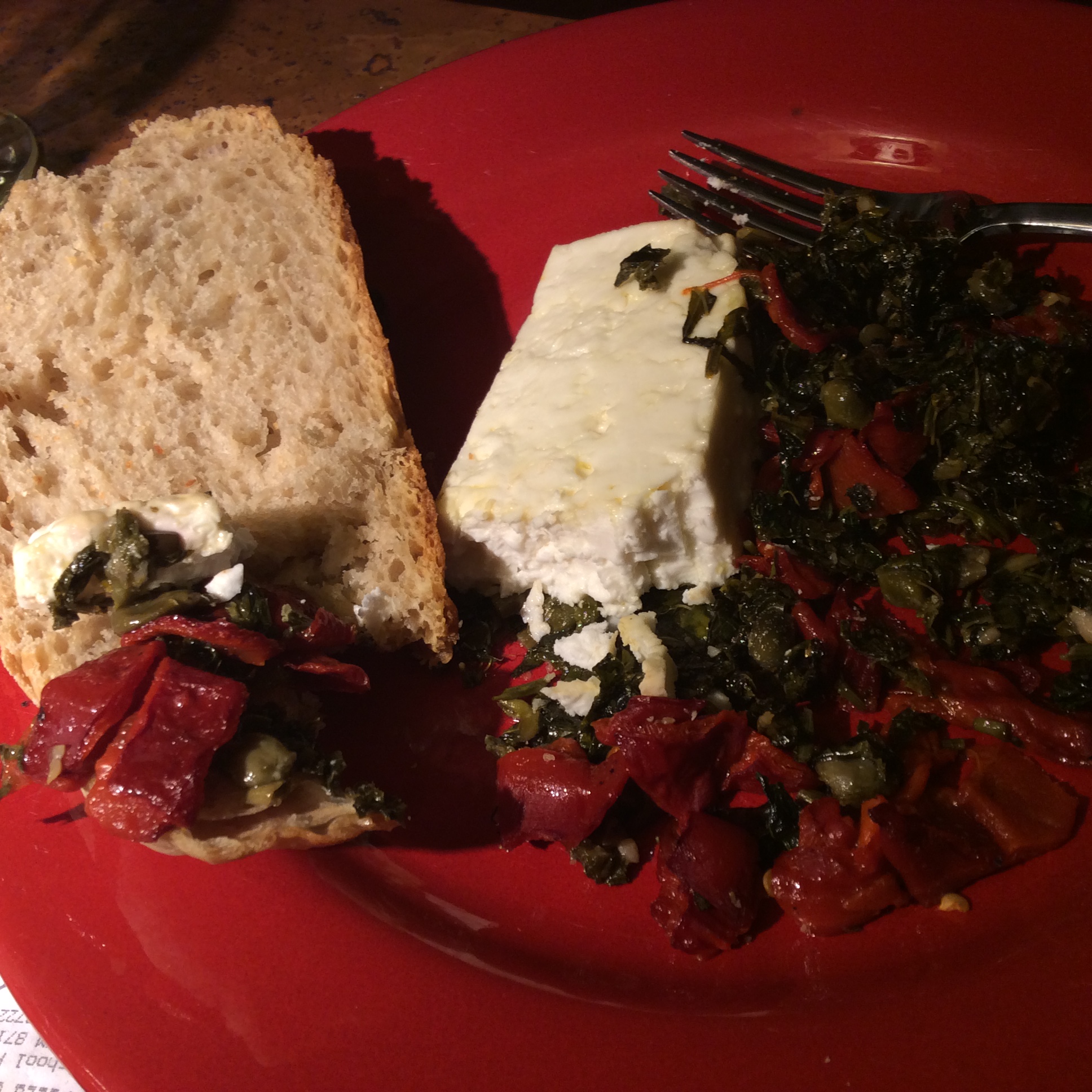
I love the texture that feta acquires when baked, firm and compact and steak-like and very different from its crumbly fresh incarnation,  and I love to season it with assortments of garden and wild greens gathered as the inspiration strikes.

For this infinitely adaptable recipe, you will need a quarter cup of drained capers, two cloves of garlic, a quart loosely packed of very flavorful chopped greens and herbs, plenty of extra virgin olive oil, and a block of feta sized according to your appetite. This dish can be anything from a meze to a full meal, depending on the size of the feta block. Just be sure that it’s high quality; this is a good time to check out your local Middle Eastern import store. Cut two “steaks” of the desired size, being careful not to crumble them.

Have ready olive oil, two cloves of garlic chopped, and a handful (maybe 1/4 cup) of capers, rinsed of brine and squeezed dry. An optional but very pretty addition is some red pepper, roasted, peeled, and chopped, or some red chiles roasted, peeled, and sliced.

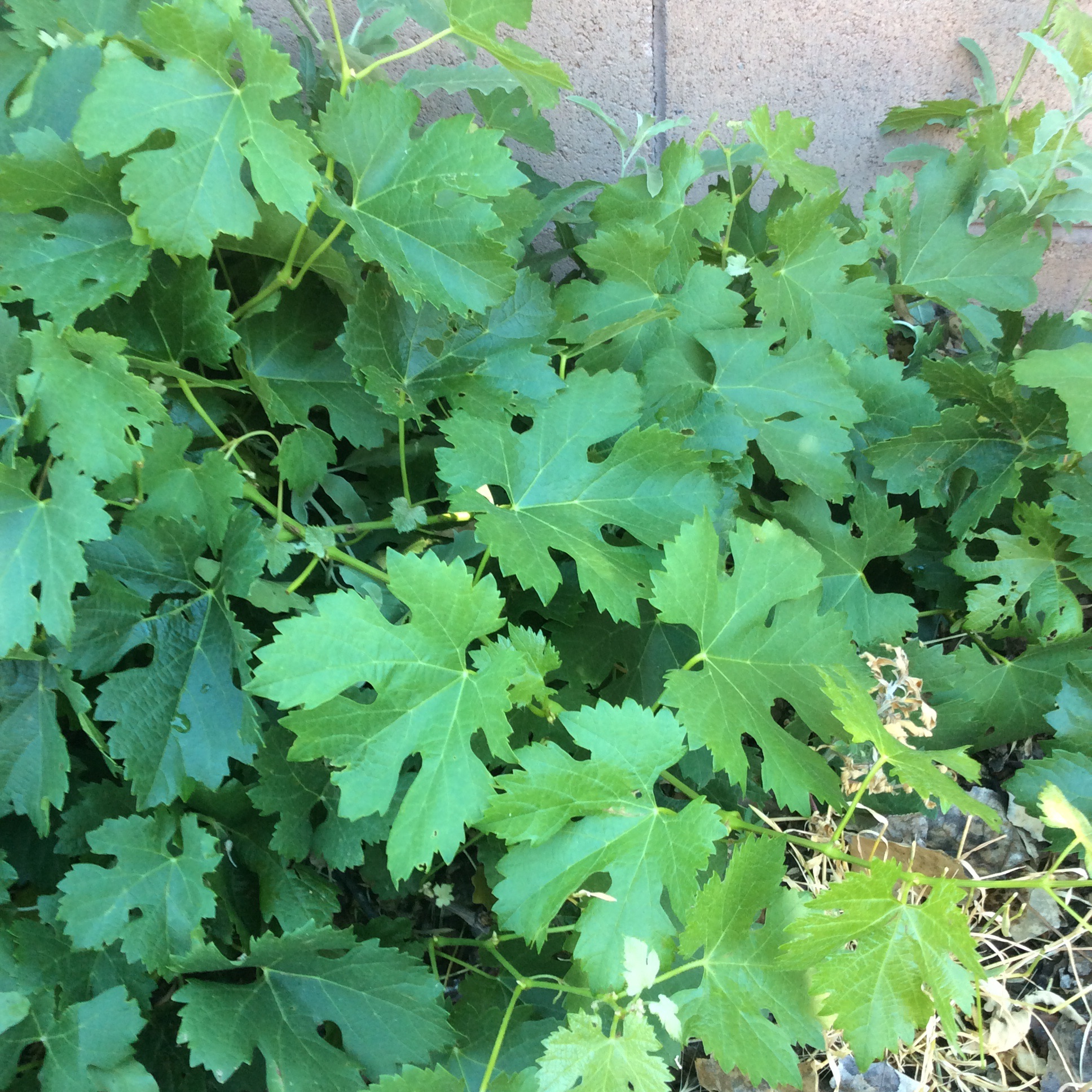
Next, choose your greens. I decided that I wanted the flavor to be bright, tart, and lemony as well as herbal, so I started with 15 good-sized wine grape leaves. If you are going to use fresh grape leaves, please read my post on choosing grape leaves first, because some are unchewable and will ruin your meal.

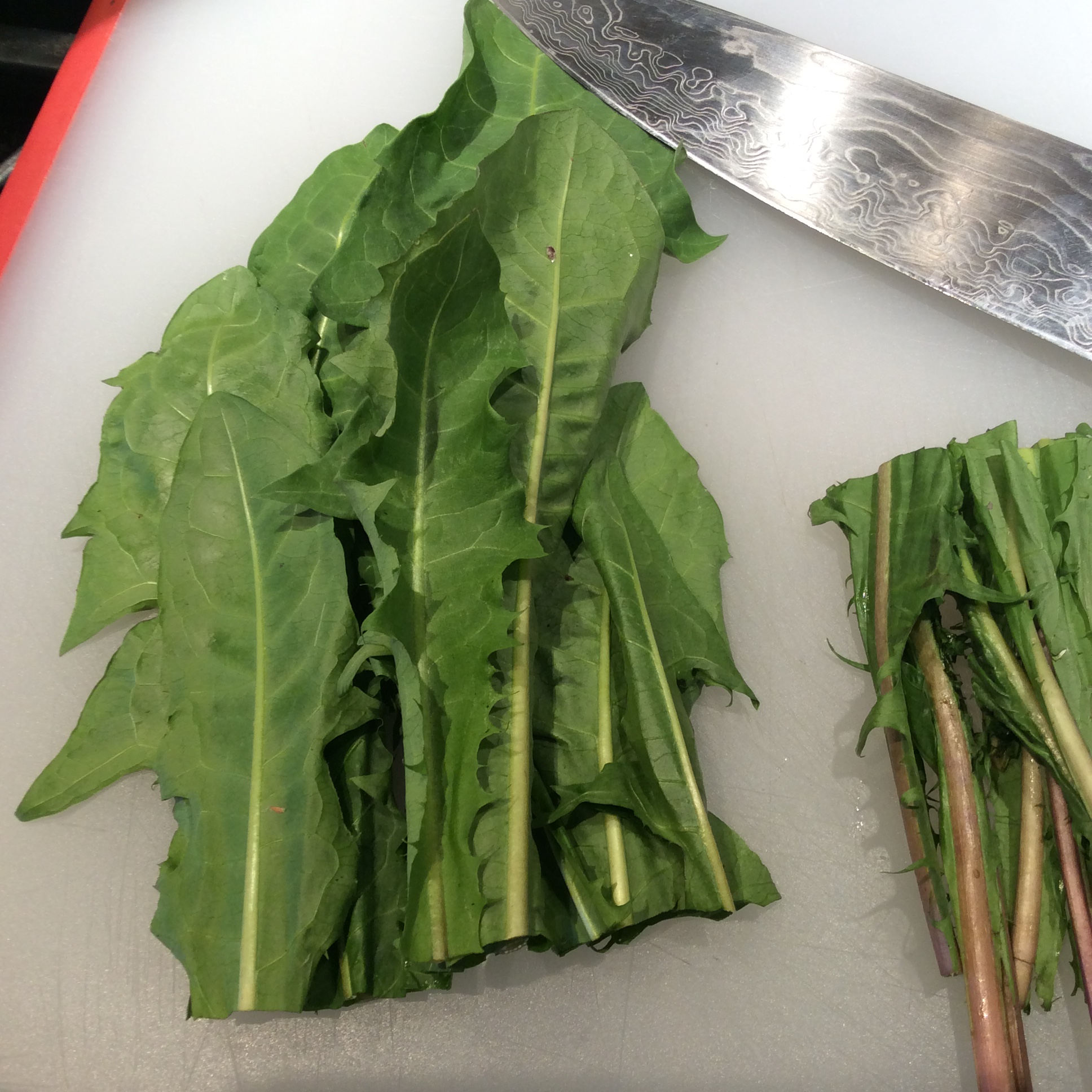
I added dandelion leaves, the new ones that have grown after the plant bloomed, which are tender and only slightly bitter. I used about a dozen, cutting the stringy ends off as shown.

Then a double handful of mulberry shoots, using only the ones that are new, bright grass-green, and snap off easily with very little use of force.

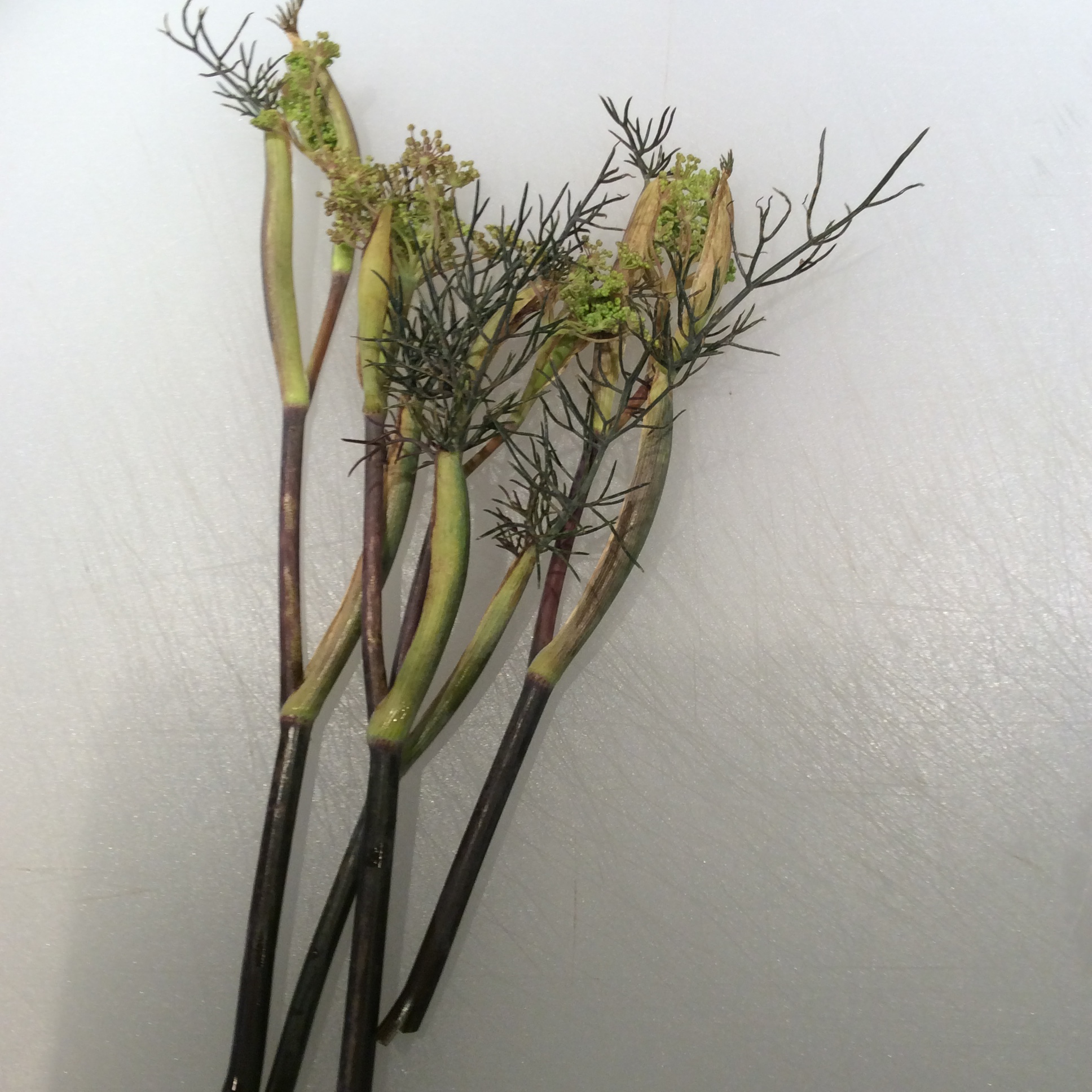
Finally, some fennel shoots, the top of the bloomscape as shown, before the flowers emerge and open. The stalks are tender, nonwoody, and wonderfully anise flavored at this stage. Once the flowers emerge, the stems become woody.

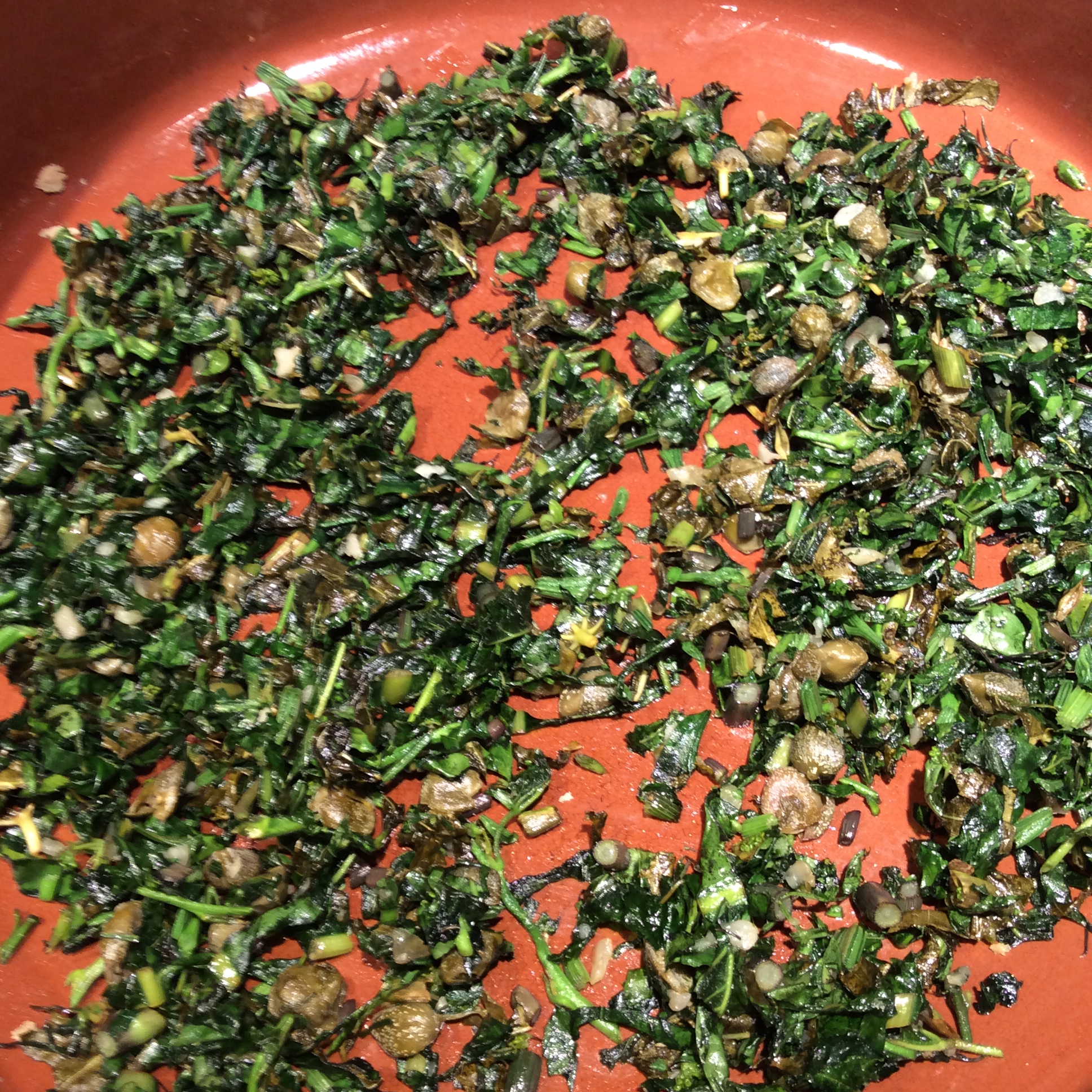
Wash all your greens and sliver them in fine cross-section. make sure the fennel shoots are cut in fine slices less than a quarter inch thick. Preheat the oven to 350. You will start cooking on the stove, but if you use a Spanish cazuela it can go right into the oven for the second step. Heat the dish and sauté the garlic in olive oil until just cooked but not at all colored. Put in all the greens and the capers and cook, stirring frequently, until the greens are cooked and soft. Taste for salt, but salt it on the light side, since you are going to add feta.

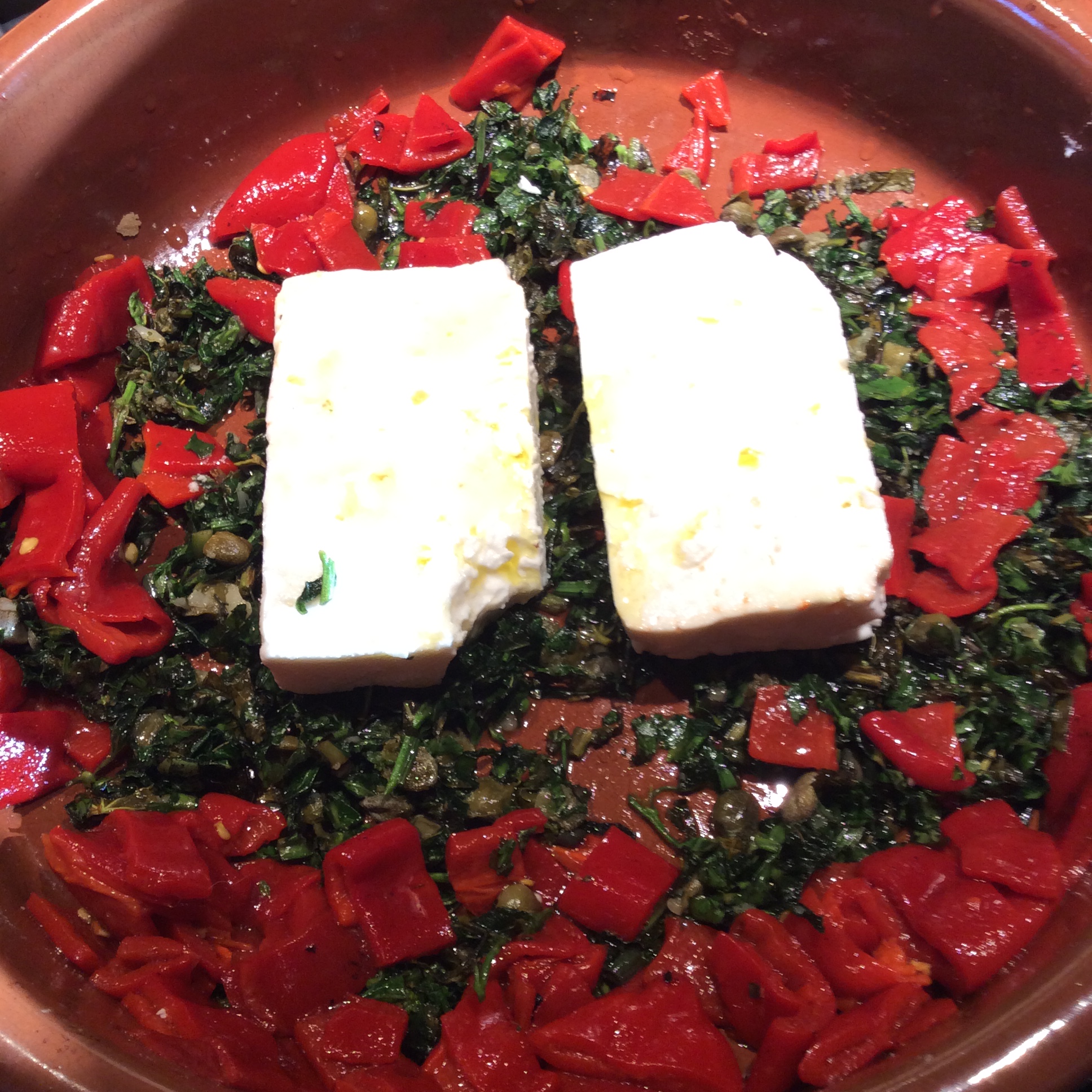
When they just begin to fry in the oil, remove from heat and scatter the red peppers or red chiles around the edges, then put the feta “steaks” in the middle and drizzle olive oil over all.

Bake at least 15 minutes or until the herbs and peppers look all cooked together, probably about 15 minutes. The cheese might color slightly at the edges but won’t brown. If you like it to brown, run under a hot broiler for a minute, taking care not to let the greens burn. Serve with sourdough bread if you can have it, or with a salad alongside.

I am sometimes the target (quite fairly, I might add) of complaints about imprecision. “A double handful,” the precisionists cry, what on earth is that? I reply that it’s the amount you have, and if you don’t have any, you probably have something just as good. I cut my eyeteeth on Elizabeth David recipes with her terse, one-cook-to-another directions, and I hate the mindless insistence of “precisely 1/8 teaspoon” sort of directions.  “But drizzle with olive oil, how much do you mean?” Somewhere I read the story of a new wife being taught a recipe by her Greek mother-in-law, whose directions included “Then close your eyes and pour in olive oil.” That’s how much I mean.