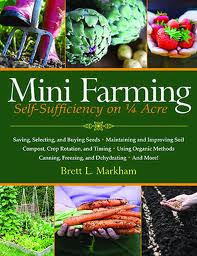
Mini Farming is about producing as much food as possible from as little space as possible. It covers a number of ways to produce food, including vegetable and fruit growing and raising chickens for eggs and meat. It goes into great detail about soil amendment so that your plants will grow. You may not want to garden in this precise fashion, and I’m with you there, since my own gardening methods are more slapdash. But it’s good to know some rules before you start breaking them. It is a very practical book, offering an astounding amount of information per dollar. The author has clearly done these things himself; sadly, this is not always the case in homesteading books. He is careful to tell you what you need to know. A pet peeve of mine is the number of homesteading books that purport to teach you how to raise animals for meat, then when the time comes to harvest the meat they go coy and soft-focus and say “Be sure to have an expert show you how to do the killing.” What nonsense. You may not have anyone available to demonstrate, or a self-elected “expert” may do such an awful job that you think you’ll never eat meat again. A good book can describe the process and ready you for what you will encounter every step of the way. This book tells you exactly how to kill and butcher a chicken as quickly and humanely as possible. If you are going to raise meat birds, read it even if you plan to have a more experienced person help you, so that you understand beforehand what’s going to happen. This is a great value and a good book for the serious “yard farmer.”
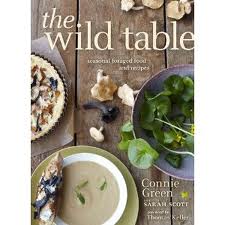
I do not ever accept free review copies of the books that appear on my blog. I buy them at my local independent bookstore, paying the price that you are likely to pay. Books like this make me realize why I set that policy. This is a very beautiful book, and the recipes are top-notch. But if you’re buying it because you are interested in wild foods, you need to know a few things:
1. A lot of the wild foods described are mushrooms, which many foragers prefer to avoid.
2. This is not a book about how to forage. You’ll need a couple of good foraging instructional books for that.
3. If you’re one of my local Albuquerque readers, a lot of the foods described don’t grow wild around here.
In short, this is a great coffee-table book and a fine high-end cookbook, and if you love to spend time in the kitchen trying to find the greatest height to which a foraged food can be brought, you’ll love this book. If you love to gaze upon exquisite (and expensive) glossy photos of resplendent food, you’ll love this book. I love this book. But $40 is a price that makes me stop and think hard about value for money, and I can’t honestly say that it represents great value for money. If I had gotten it free, I might unconsciously gloss over that part. I’m glad I bought it, but if your goal is to learn to forage, this is not the book for you.
Archive for the ‘sustainable’ Category
29 Jan
My Bookshelf: Efficient Gardening and the foraging gourmet
18 Jan
The garden year: winners and losers
Like most gardeners, I try a lot of new stuff every year. Some of it fails, some is good enough to make a nice novelty but not good enough to make the long-term cut, and some new items become a part of my regular line-up.
This was a tough year for my garden, and everything that survived deserves some credit. The blistering heat, unusual for this area, and a lot of neglect on my part due to other pressing matters made for a veritable Darwinian demo of natural selection in action.
A special Most Tolerant Vegetable award goes to sweet potatoes. They might get an award for Most Nutritious Vegetable, too, and possibly for Most Delicious Vegetable. No matter what kind I plant, they seem to flourish. I pick so many of the leaves off for greens and salads that it’s a wonder they survive, but I got a very nice crop of roots too. I tend to like the dry yellow types better than the moister orange types, but the latter are healthier to eat, so plant both. Can’t beat ’em. Grow plenty.
The other winners were:
Squash: Waltham Butternut, Chiriman and Kikuza, three C. moschata subtypes. They were resistant to borers, laughed off squash bugs, and soaked up the heat. All had delicious flesh when cured, a little on the moist side but sweet, stringless, and close in quality to my beloved Buttercup, which I can’t grow here because the borers always get it. They were watered irregularly and tolerated that.
Greens: Malva sylvestris. This is an attractive ornamental with mauve flowers, and it makes good healthy leaves for greens in the hottest weather. I’ve chosen it over my old favorite Malva verticillata because it’s a more ornamental plant and equally good to eat. It’s less prolific, but that’s a good thing.
Chicory “Trieste sweet”. This was advertised as less bitter than other chicories, but in my garden it wasn’t. That’s fine with me, since I love the light clean bitterness of well-grown chicory in a salad, and this one was a very strong grower with pretty light green smooth leaves.
Carrot: “Purple Rain.” I love purple carrots for some reason, and the darker the better. This one fit the bill, dark purple right to the core. See chunks of it, loaded with anthocyanins, in the post “Root Vegetables Chairoscuro.”
Parsnips: “Turga.” I only grew a few, and next year I’ll be growing a lot more. They tolerated heat and drought and heavy clay soil. By December when not much else is available fresh, they’re sweet and delicious. They don’t need any special storage for the winter; just leave them in the ground and dig them whenever the ground isn’t frozen.
Potatoes: Red Norland. I adore Peruvian Purple potatoes and have always grown a lot of them, but this year they were a complete crop failure, while ordinary Red Norlands came through shining, as they always do. So experiment all you like with exotic potatoes, but have a few hills of the Old Reliable. Even if you don’t have room to grow main crop potatoes for storage, you’ll want a few hills to dig for gossamer-skinned new potatoes.
Spinach: America. This very old hybrid is still going strong. Not as big as some, not as smooth as some, not as savoyed as some, it just produced lots of tasty leaves in cold weather and in hot, unruffled by the changes that nature threw at it.
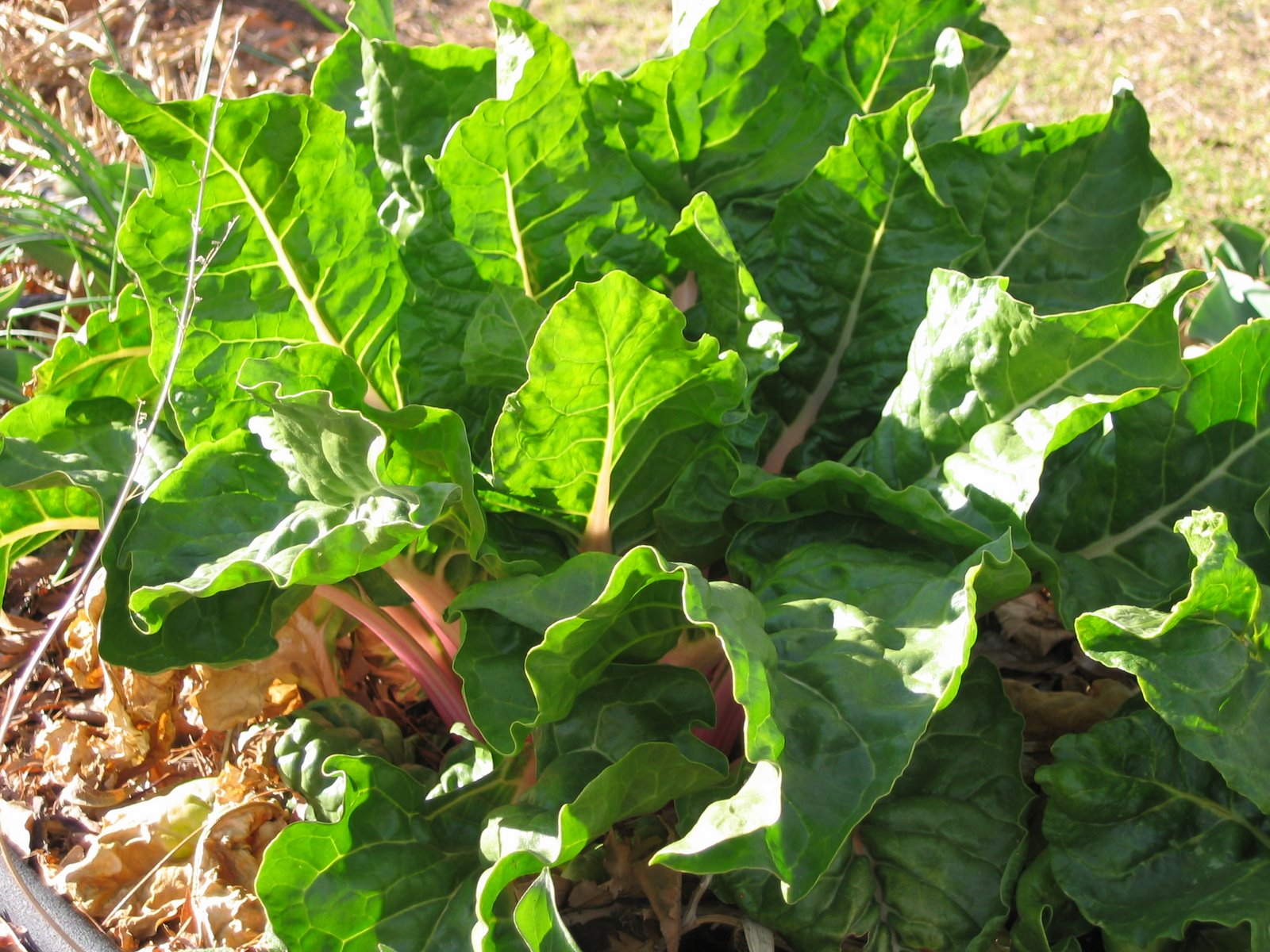
Swiss chard: Fordhook Giant. For years I flirted with the multicolor types, but they don’t produce as well as this old stalwart, and I grow leafy greens to eat, not to look at. It mixes nicely with flowers.
The losers:
Squash: Sucrine de berry and Musque de Provence. Both had come highly recommended by the catalog for flavor and lack of fiber, and unfortunately both were just awful. Both had stringy unpleasant flesh, and Musque had very little sweetness or flavor of any kind while Sucrine was watery and had a strong unpleasant scent and taste that one taster described as “Squnk.” Both were vine-ripened and cured for two months, so I can only assume that the seedstock was not pure, but since I rely on winter squash for a lot of my winter vegetable supply, I can’t take a chance on them again. They are quite decorative on the end of my dining room table, and the chickens will eat the flesh if I bake it for them, but that wasn’t my plan for my squash supply.
Summer squash: Trombocino. This is a vining summer squash that gets high marks for flavor in some catalogs. I can only say that in my garden it was hugely prolific but had no flavor at all. I’ll be going back to some zucchinis that I like better to eat.
Mirliton These are a common vegetable in Louisiana where I grew up, and they love heat, so I thought that if I supplied water they would do well here. Unfortunately, they shriveled in our dry heat. They might do better if given some shade, and I’ll probably try that this summer.
Milk thistle: I was bamboozled by some foragers into introducing this pernicious weed to my yard. It’s very pretty in an architectural way, but the leaves are touchy to pick, prickle removal is somewhat tedious, and the green that you’re left with doesn’t taste that great. The flavor isn’t bad, but certainly it isn’t anything I’d go out of my way to eat. And once having introduced them, they take hold with frightening avidity. Better not to get started with them. By the way, some people on the Internet say that if you boil the leaves, they can be eaten prickles and all, to which I say “Bah.” Further, I say that they’ve never really tried it. I would buy a ticket to watch one of those people eat a plate of thistle boiled stickers-and-all.
22 Dec
Solstice Sunrise
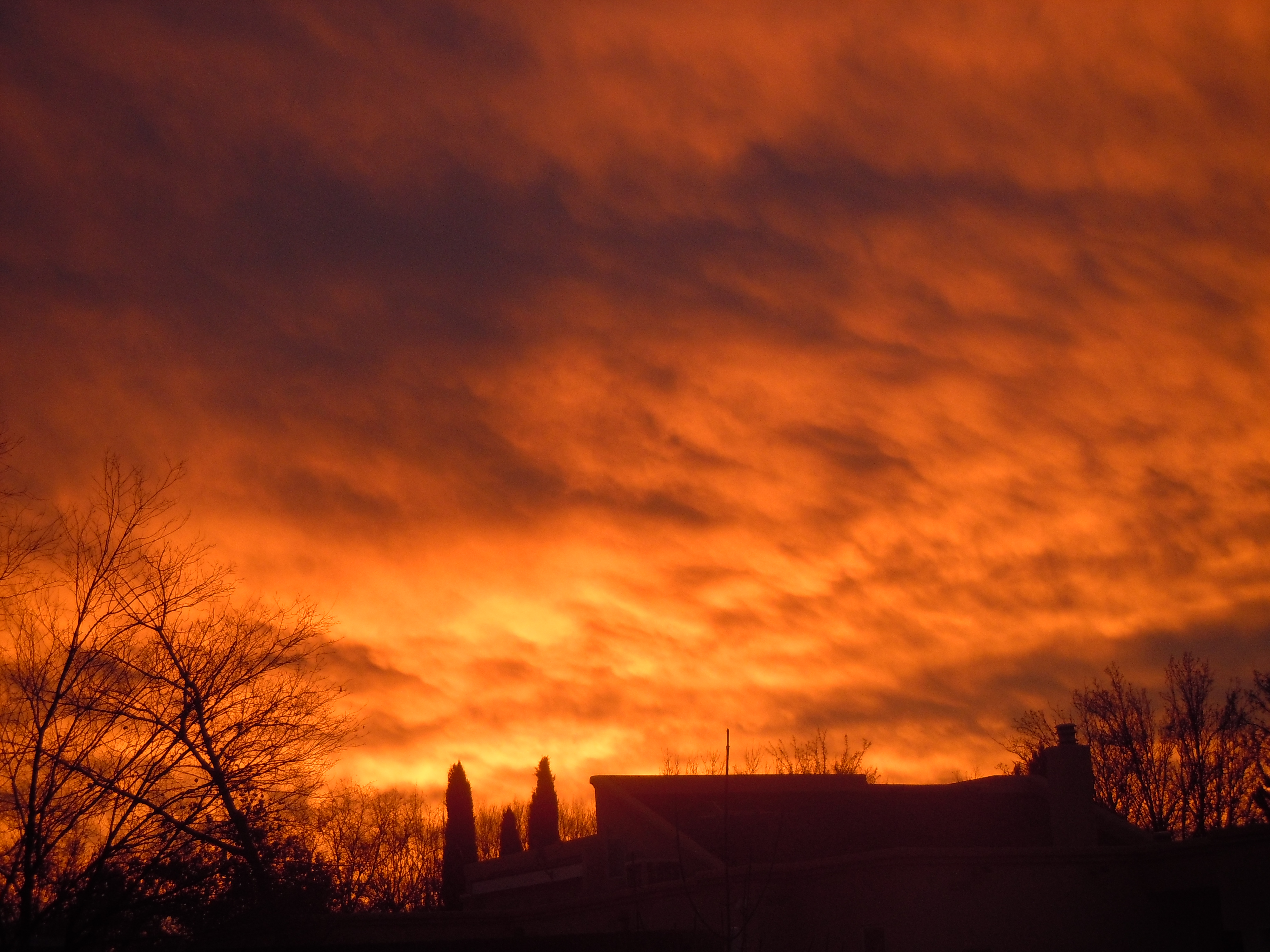
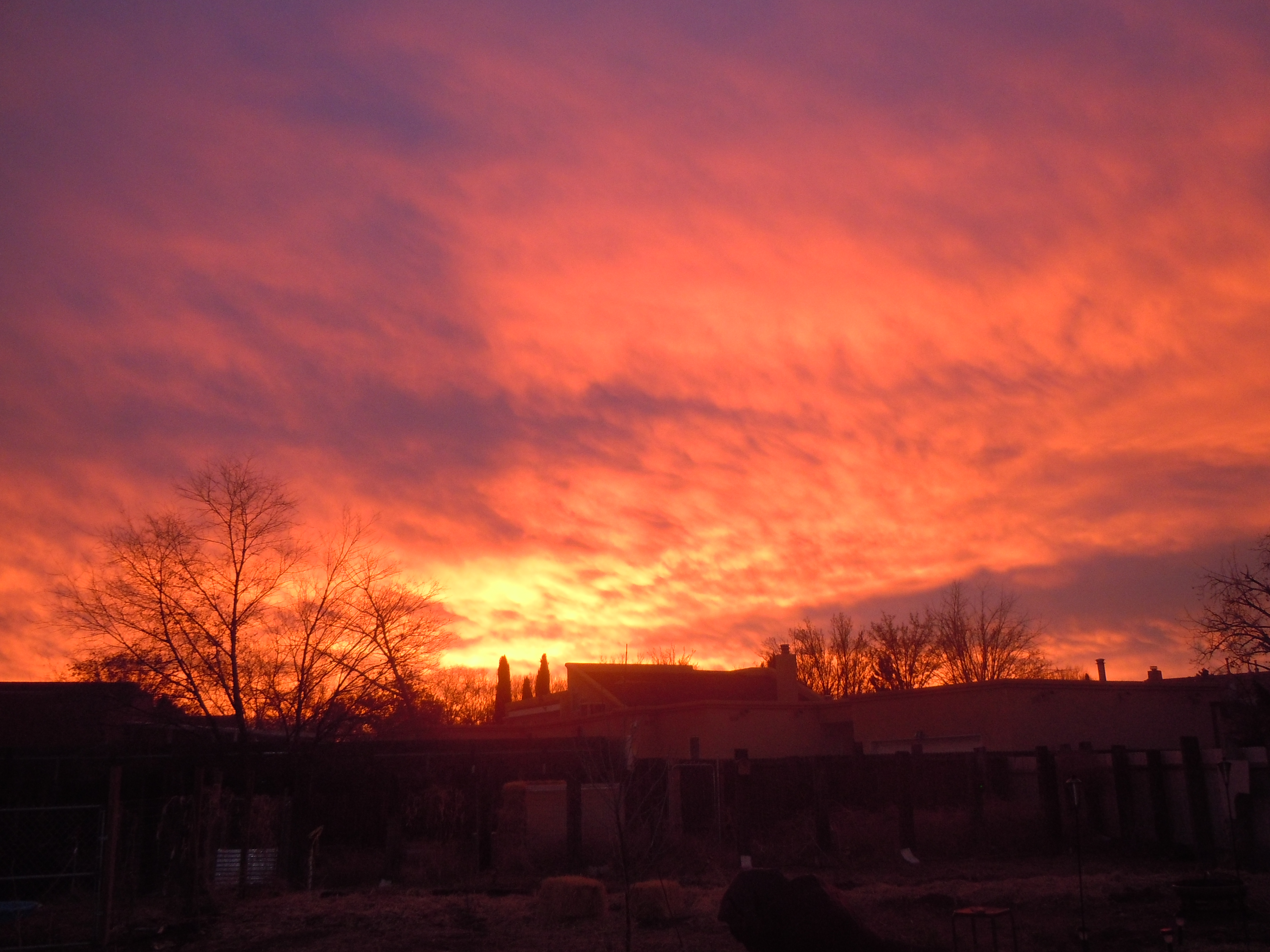
It’s the day after Solstice, and the Sun rose this morning, so I guess it’s decided to stick with us for another year. Avid gardeners may start out on modern time, but after a decade or so we find ourselves living the rythm of the agricultural year. Yuletide is for feasting on our stored abundance, and it’s a wonderful time to sit by the fire and scan seed catalogs and attach some details to our hopes for the upcoming year. In a week or two I’ll be posting on my annual reassessment: what worked, what didn’t. But now is not the time for sober consideration. It’s the time to take unabashed pleasure in what worked really well. It’s time to do something that you don’t normally do, something that makes you shiver anew with love and reverence for the natural world, not because it is all good and beautiful, but because it exists and we have the good fortune to see it.
For me, feeling reverent rapture (or anything, really) before sunrise qualifies as something I don’t usually do. It takes real effort for me to function early in the morning, and a glass of fresh juice eases the effort. A juicer puts healthy stuff in your cup quickly, and doesn’t need to be expensive. I bought a reconditioned one and it works fine. Your own stored apples and carrots, or organic ones from the store, make a great seasonal juice. Prickly pear fruits are still perfectly good on the cactuses that we have everywhere, and juicing disposes of the spine problem. One prickly pear fruit, or tuna, will give a dramatic sunrise color to two big glasses of juice. To my palate the fruits don’t have a lot of flavor, but the color is reason enough to use them.
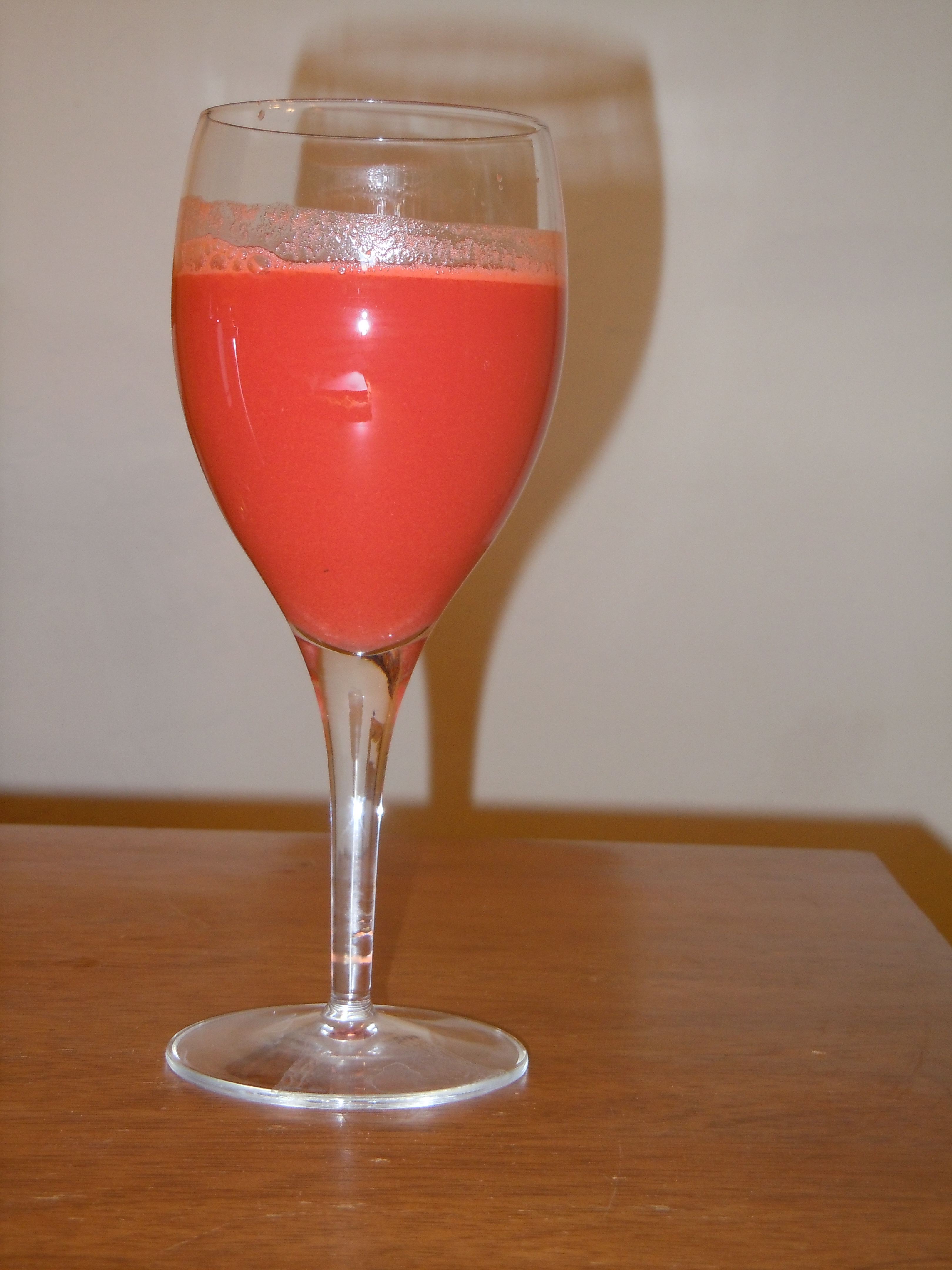
Run four apples, four large carrots, and one prickly pear fruit (two for a deeper red rather than the sunrise shade above) through your juicer. POur the juice into a clear goblet so that the color can be admired. Drink. Dispose of the pulp by burying it in a part of the garden that animals can’t get at- many animals are drawn to fruit sugars, and you don’t want all the horrid little spines in the pulp to torment any animal, wild or tame. For the same reason, handle the pulp with a wooden spoon or thick gloves, not your bare hands.
13 Dec
Organic Matters
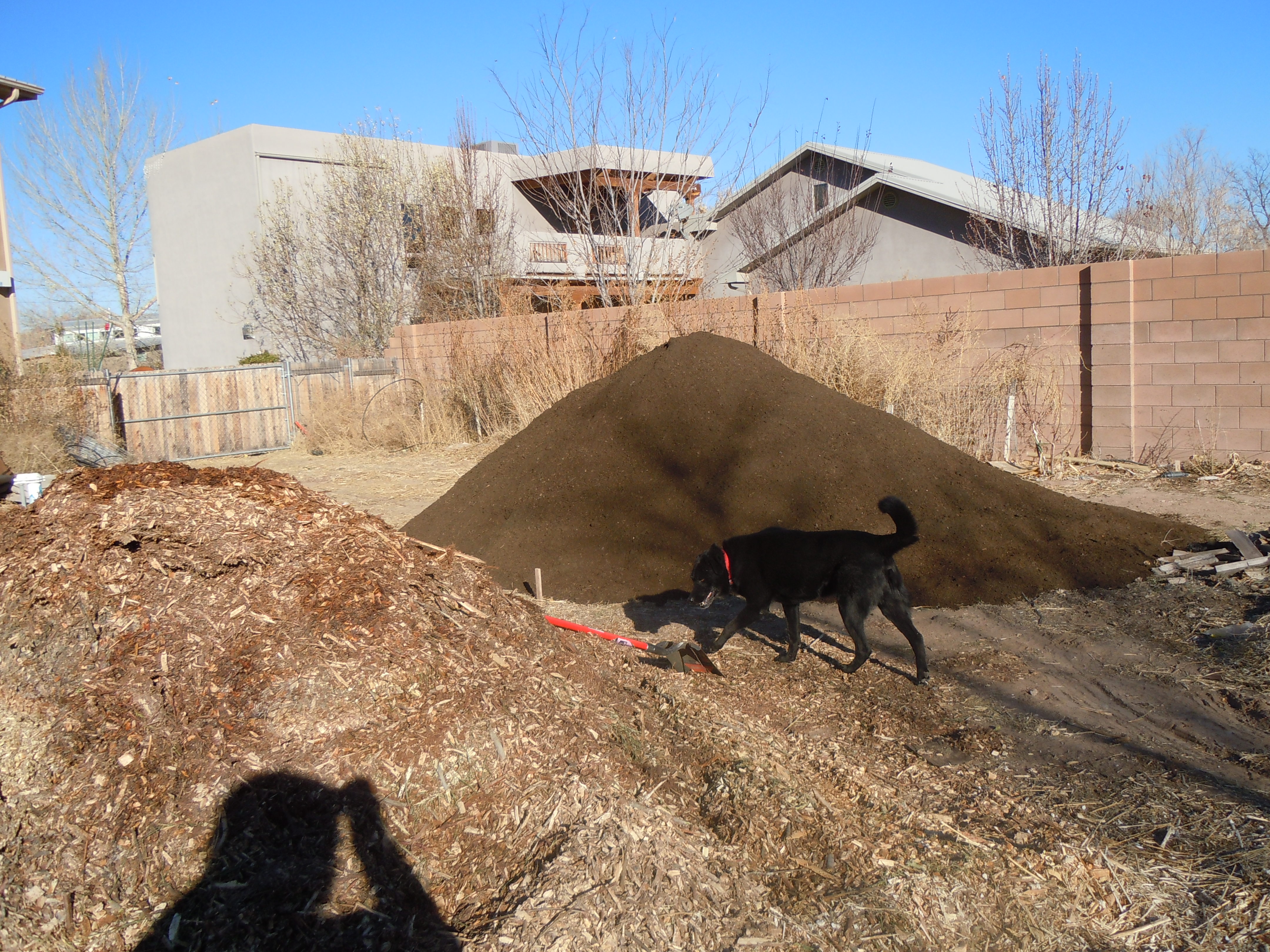
The soil at our new house, like many urban soils, was unpromising at best. Rocky, compacted, and highly alkaline, the only thing that really wanted to grow in it was tumbleweed. With compost, gypsum, and sheet-mulching it’s already a lot better and improving steadily. Beginning gardeners may be amazed at the sheer quantities needed. To emphasize the point of using enough, I’m illustrating the winter Grand Tetons of my backyard, Mt. Shredder and Mt. Manure. It might look like a lot, but it will be gone by spring. Over the winter I’ll gradually spread the compost and work it into the growing areas, and mulch paths with the bark chips. If you don’t have room for big heaps, you can get compost in bags, but get plenty. Apply gypsum per the results of your soil test, and you’re set for a successful growing season.
Didn’t get a soil test? I have to admit that I didn’t either. On soil that hasn’t been gardened before, I apply gypsum according to the directions on the bag, putting a little more where I’ll be growing calcium-lovers like broccoli and spinach. I also use extra on the potato patch, to get the pH down into a range that the potatoes can tolerate. Where soils are acidic I’d be using lime instead, but our very alkaline high-desert soils usually need a dose of gypsum to make them liveable for vegetables. Then I put on a scientifically determined amount of compost: all I can afford. Unless it’s really well aged, I keep it off the potato area. Instead, I dig all my neighbors’ discarded leaves into that area. No doubt it leads to comment when I remove the leaf bags on the night before green waste pick-up day, but as I see it, worse things could be said about me, so I’m lucky if people are only talking about my leaf-snatching habits. Needless to say, nothing should be touched unless it’s set out by the curb for pick-up. When in doubt, ask. But there’s no reason to pass up free organic matter that others are trying to get rid of. Think of yourself as the Guerilla Gardener, and you may feel dashing instead of disheveled and a bit silly.
 My urban homestead