Archive for the ‘Perennial edibles’ Category

Living in Interesting Times: Tough Herbs


Joyous Ostara/Passover/Easter, happy Spring, or whatever you choose to celebrate when life is returning to the soil. “Spring is Christ, raising dead plants from their shrouds” Rumi said, and any ordinary yard shows us the truth of it.  These are strange times indeed, and the best way to keep yourself safe is to stay home when not working. Gardeners and permaculturists are used to staying home, and have plenty to stay home for. This is the glory season for greens and herbs.

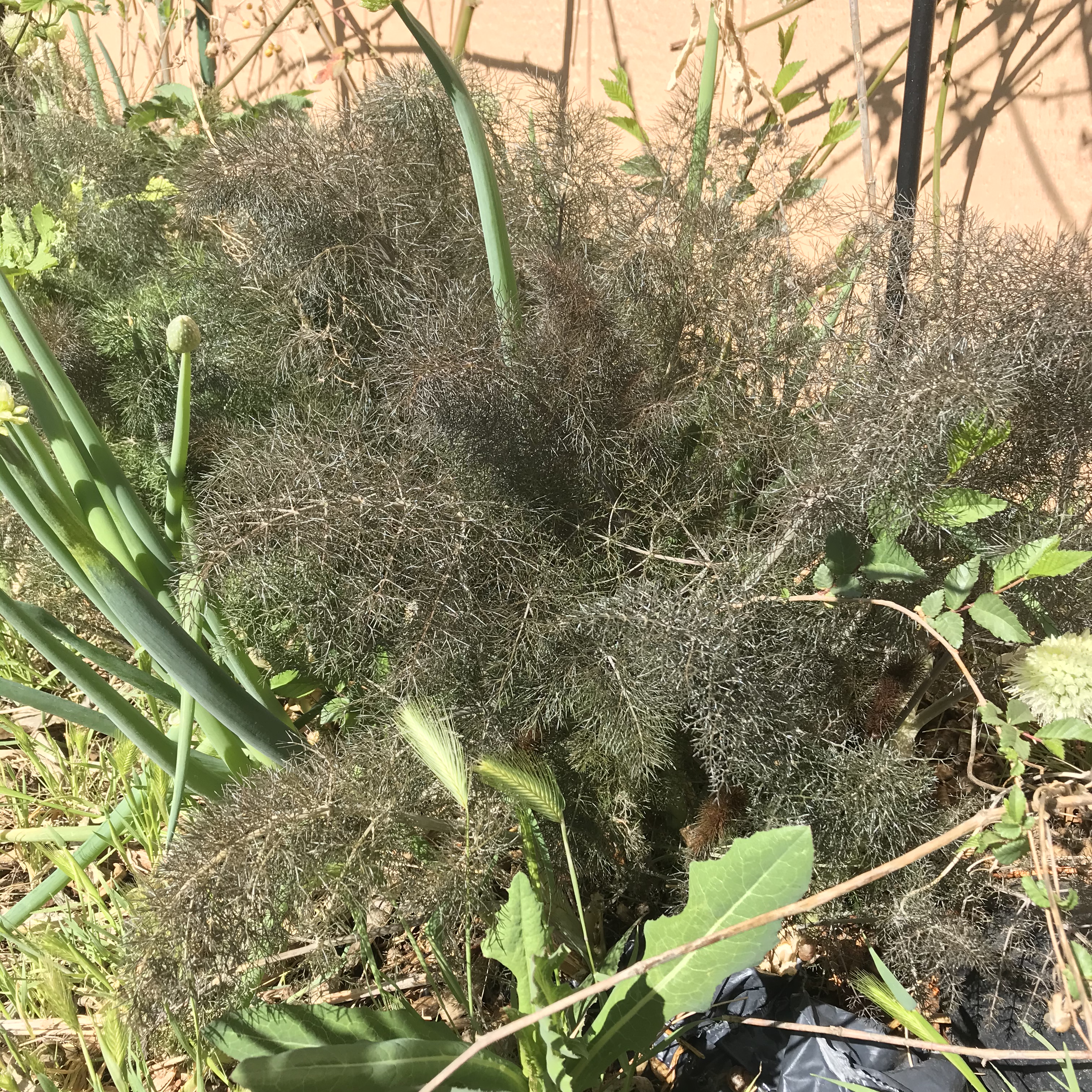
I have written before about one of my favorite plants, bronze fennel, and you can find that post here. Today I’ll just remind you that it is very ornamental most of the time and you can easily sneak it past your homeowners association if you are unlucky enough to have one. Pollinating insects adore it, and so do I. It will take two or three years to reach a good size, so start now.
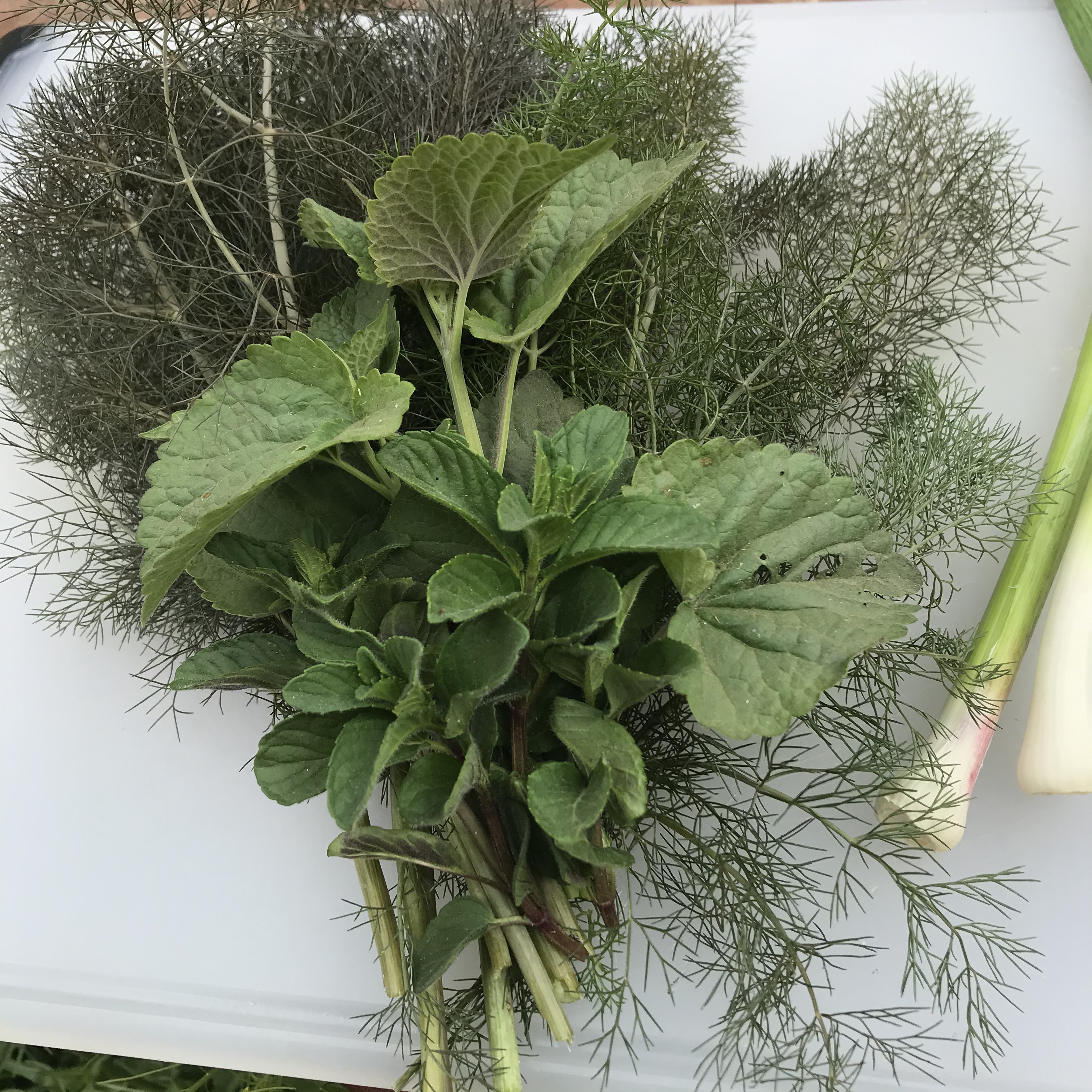
in the spring I like to make herb pesto used to have on hand for all kinds of seasoning uses. Essentially, pesto involves garlic in some form, herb leaves, nuts of some kind, and olive oil. I typically add the cheese at a later stage.

Don’t make pesto just by throwing together all the herbs you have. Herbs have strong flavors, and some contemplative tasting, sniffing, and thinking is called for to make sure you have a coherent and appealing flavor picture. I made this one yesterday morning, picking the  fennel first, and decided to go with the anise flavor and chose anise hyssop and a fruity mint, a couple of stout sprigs of each, and two stalks of green garlic.

in my opinion, proper pestos are made with a mortar and pestle. Use the food processor if you must, but please, don’t even think about using the blender. Blended leaves all acquire an off, grassy taste. Wash the herbs, remove tough stems, chop the leaves coarsely, and peel the green garlic down to tender parts and finely slice it crosswise. Pound the garlic in the mortar with a good pinch of salt until it is pretty thoroughly crushed, then add the chopped leaves and pound to a chunky paste. Then add nuts of your choice and decide how finely to crush them. The herbs had a Sardinian taste so I added roasted salted pistachio kernels and pounded them only until coarsely crushed. Pound in a little really good herbaceous olive oil, then stir in more oil to the consistency that you want. Check for salt.
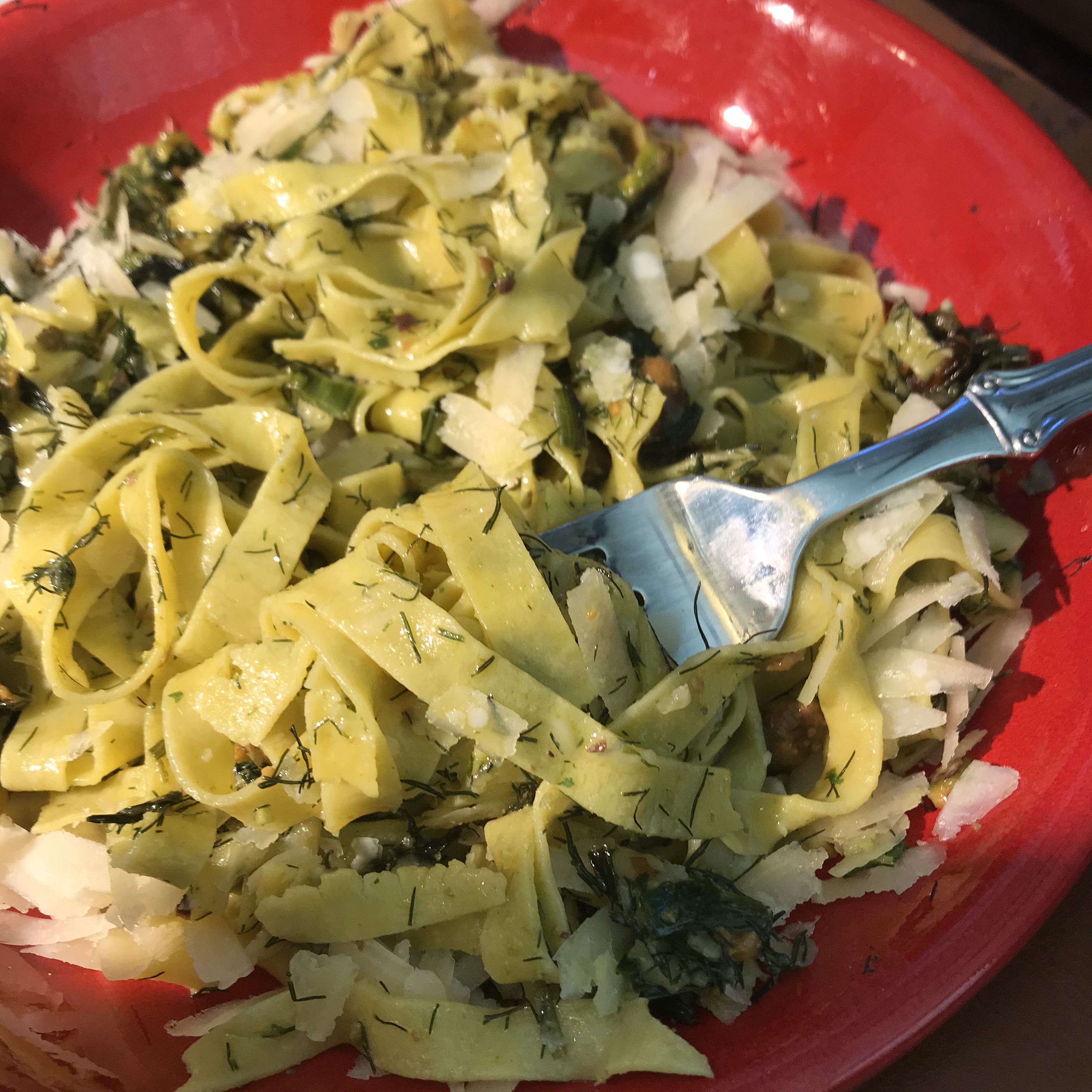
It smelled so good that I was eager to eat some right away, so for lunch we had fresh handmade egg linguine with half the herb pesto, a couple of glugs of additional olive oil, and some top notch Parmesan. Yum. The rest of the pesto went in a jar, and later that day I stirred up some sourdough bread dough and left it to rise in the refrigerator overnight.
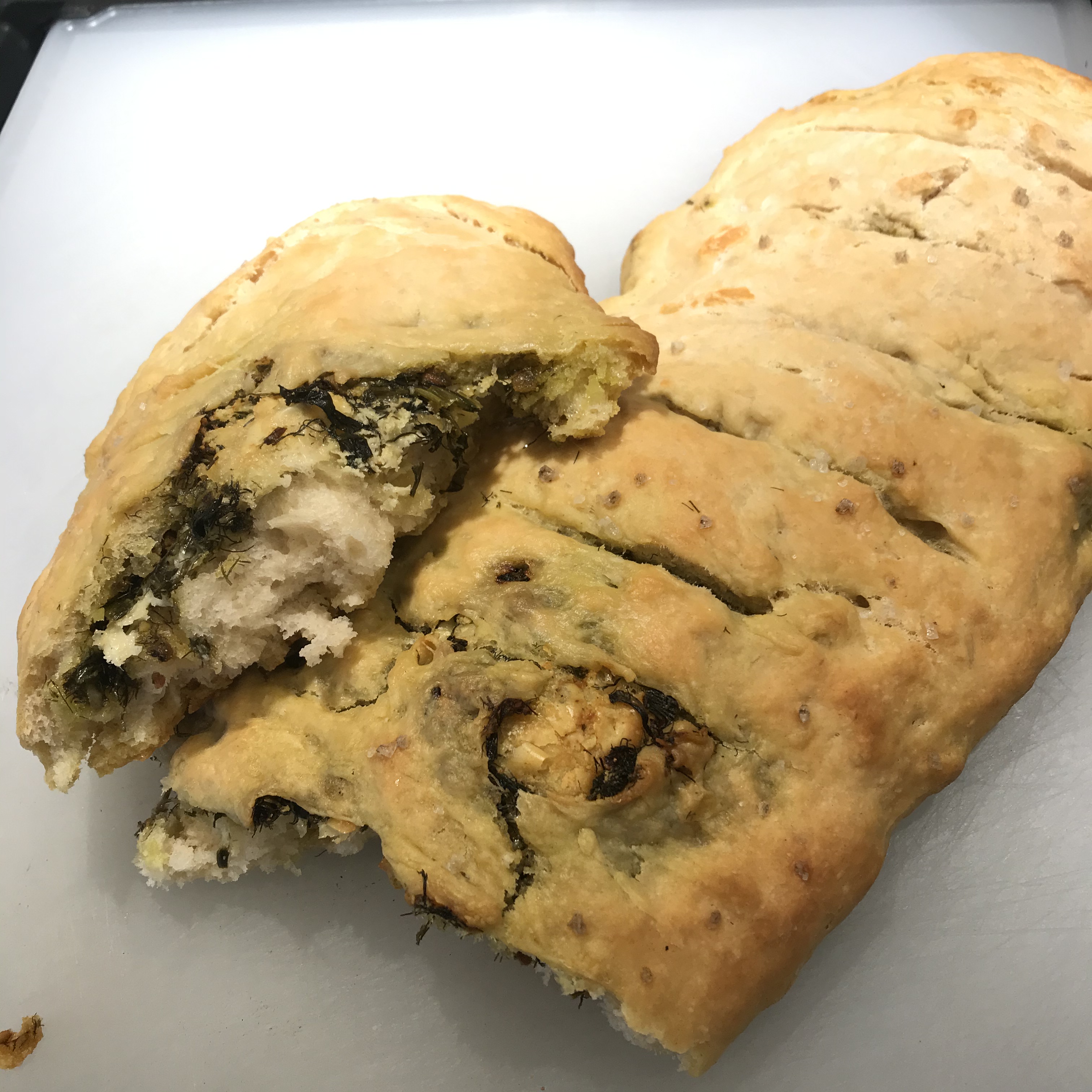
The next day I took the dough out of the refrigerator mid-morning and let it come to room temperature for a couple of hours. Then I patted a loaf’s worth of the dough out into a large somewhat erratic rectangle on an oiled board, smeared it thickly with the rest of the pesto, and then topped it with grated Romano. This was rolled into a long loaf and left to rise on a baking sheet, then slashed across the top, brushed with more olive oil, and baked in a preheated 425 degree oven until done. After cooling on a rack for 15 minutes, it was ready to break into beautiful fragrant chunks and eat as an Easter lunch full of the flavors of the season. Butter was excessive, but that didn’t stop us.

The amount of pesto to make is a very individual decision. The flavor of this one is subtler than it sounds, and I picked a nice sized bouquet of fennel leaves and ended up with about a cup of pesto, divided between the two dishes here.
Living in Interesting Times: Spring Greens

This is a very strange time for everyone. As a healthcare provider, I know how much there is to worry about. I know that not everyone can isolate themselves from exposure, and not everyone has the luxury (and it is a luxury) of the money and space to store some crisis supplies. Not everyone has the luxury of a job right now, by a long shot. If you do, appreciate what you have and help others if you possibly can.

At this as at other tough times, I find myself thinking back to growing up in Louisiana. In hurricane country people were used to regular interruptions of basic services and kept on hand what they needed to get through 2-3 weeks. They helped each other and they followed the hurricane directives. So respect the restrictions we operate under right now and do the best you can not to be part of the problem.

Narrowing this down to the garden, there is nothing as comforting as being able to get some food from your own yard. There’s an egg shortage, but my chickens are laying, supplying us and a few colleagues and neighbors with at least some eggs. Rice and beans and seasonings are in the pantry, and if you always keep herbs in the garden and a few ham hocks in the freezer, you have the means to make things taste good.
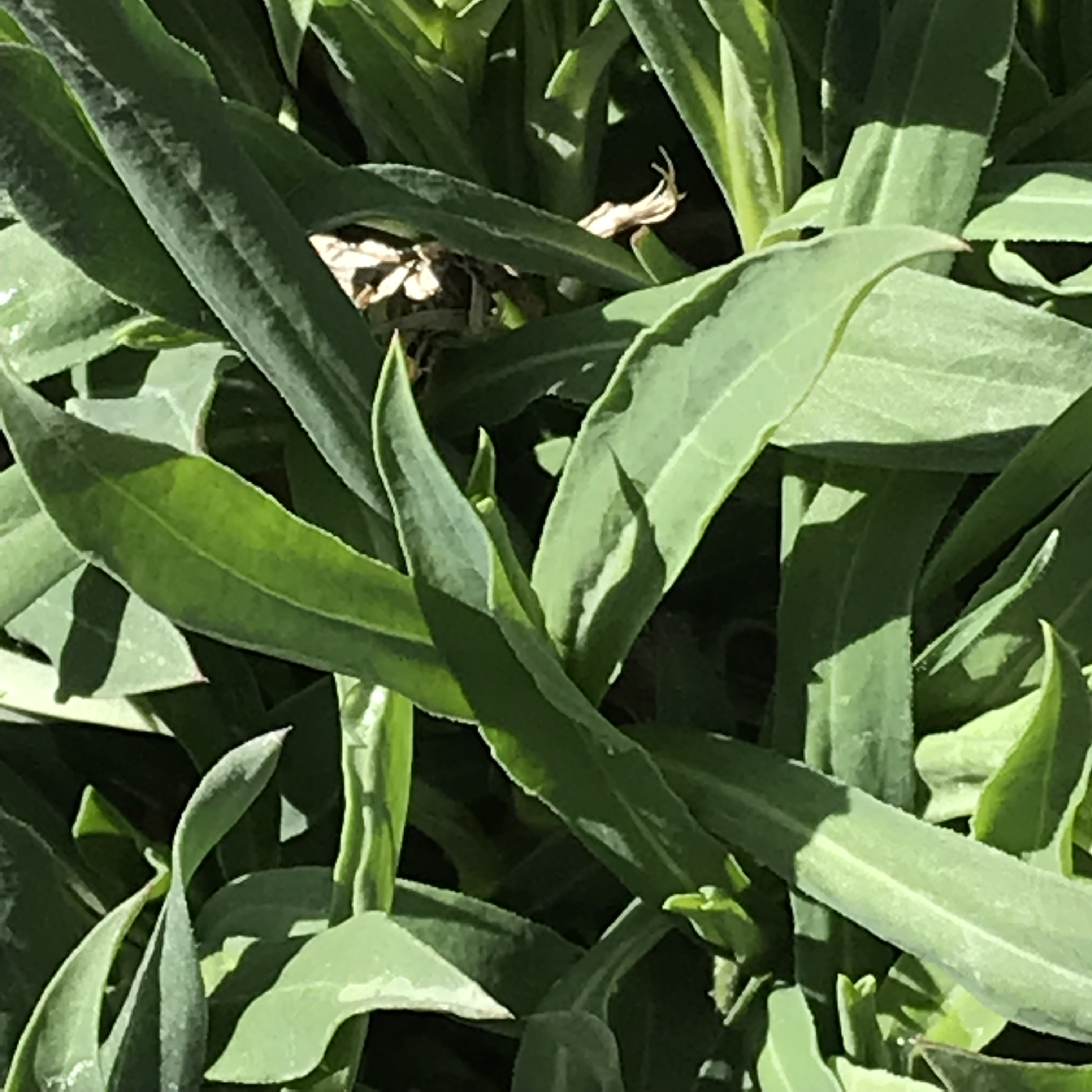
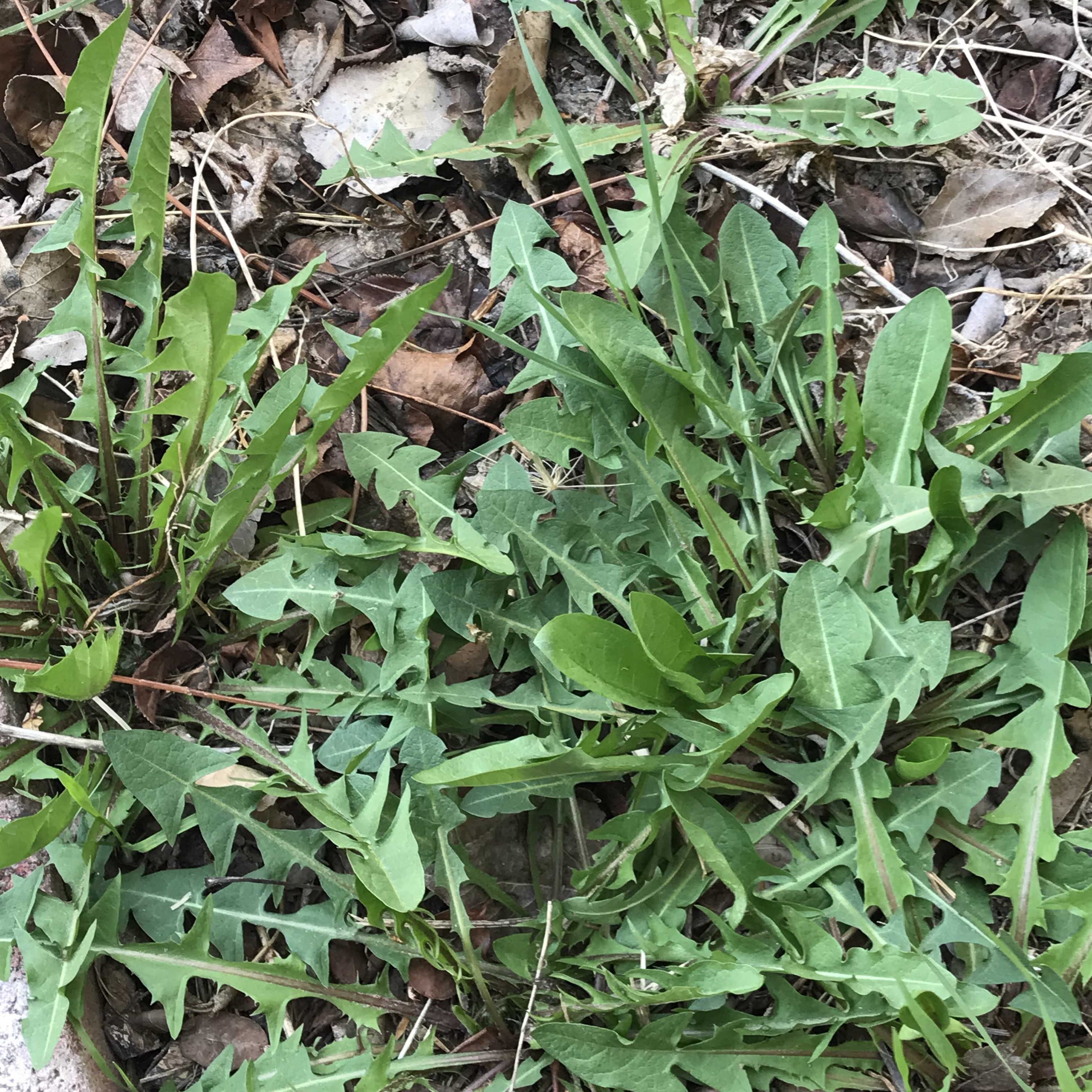
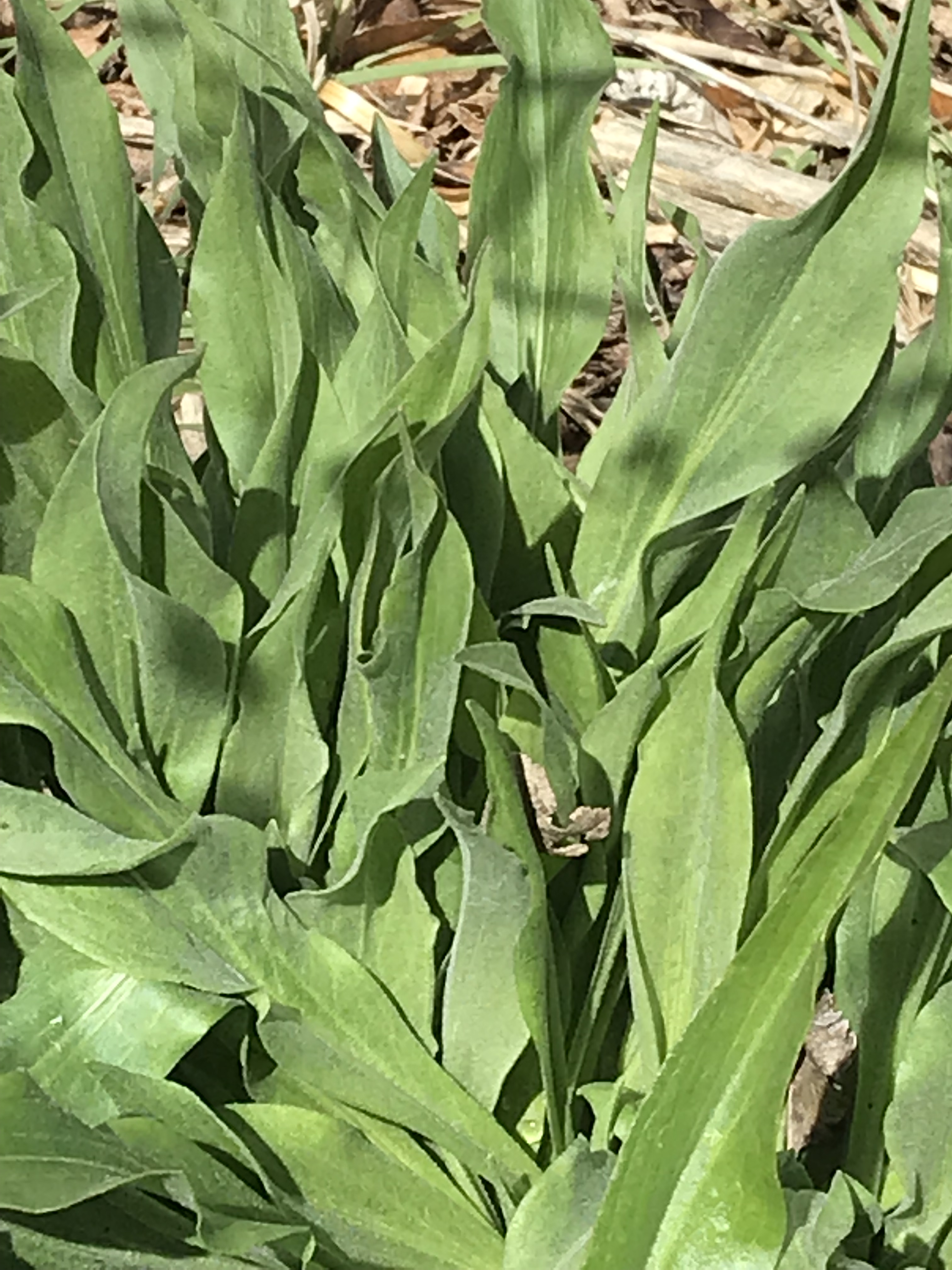
This is a great time to learn to use your weeds if you haven’t already. I actually had to buy seeds to have dandelions, but once you have them they are faithful kitchen friends every spring. If you don’t care for bitter greens, mix them with milder greens like nettles, scorzonera, bladder campion, and salsify, all growing lustily in my yard right now and all perfectly delicious when cooked. If you don’t know these unstoppable weeds, learn about them and plant them now or learn where they grow. Then spring will be a time of abundance, regardless of what’s going on in the greater world, and the less need you have for outside groceries, the more there are for someone else. Seal and freeze the extra to eat another time. If you have a patch of Egyptian or other perennial onions, you’ll always have seasoning on hand, and a handful of chopped oil-cured olives adds delicious umami.


Mixed cooked greens in the refrigerator can be eaten in tortillas with cheese, used to top rice with some butter and meat juices, or (most deliciously, in my view) spread on toasted sourdough bread and topped with fluffy grated flakes of good Parmesan.
After that will come the meaty delicious leaves from last year’s chard plants, mulberry sprigs, hops shoots, and who knows what all. This may be the year that I finally try cooking the newest Siberian elm leaves, instead of feeding them all to the animals. I’ll comb my foraging and permaculture books for other things I haven’t tried yet.

The reason to do all this is not that there is no food in stores. There’s lots of food, with strange exceptions currently caused by hoarding more than any actual lack of supply. The reason is to take yourself out of the hoarding mentality and into a frame of mind to nourish yourself well and realize that you will act responsibly and do as well as you can. Life is uncertain and COVID-19 even more so. Everyone is at risk right now, but if we are staying home responsibly when not working and minimizing risk to ourselves and others we’ll feel better. If we feel that we can get things for elderly friends and relatives so that they can isolate more effectively, we’ll feel better. And staying home to garden, tend animals, and forage in the yard feels a lot better than sitting around watching television.

The Siberian Elm and Our New Ecosystem

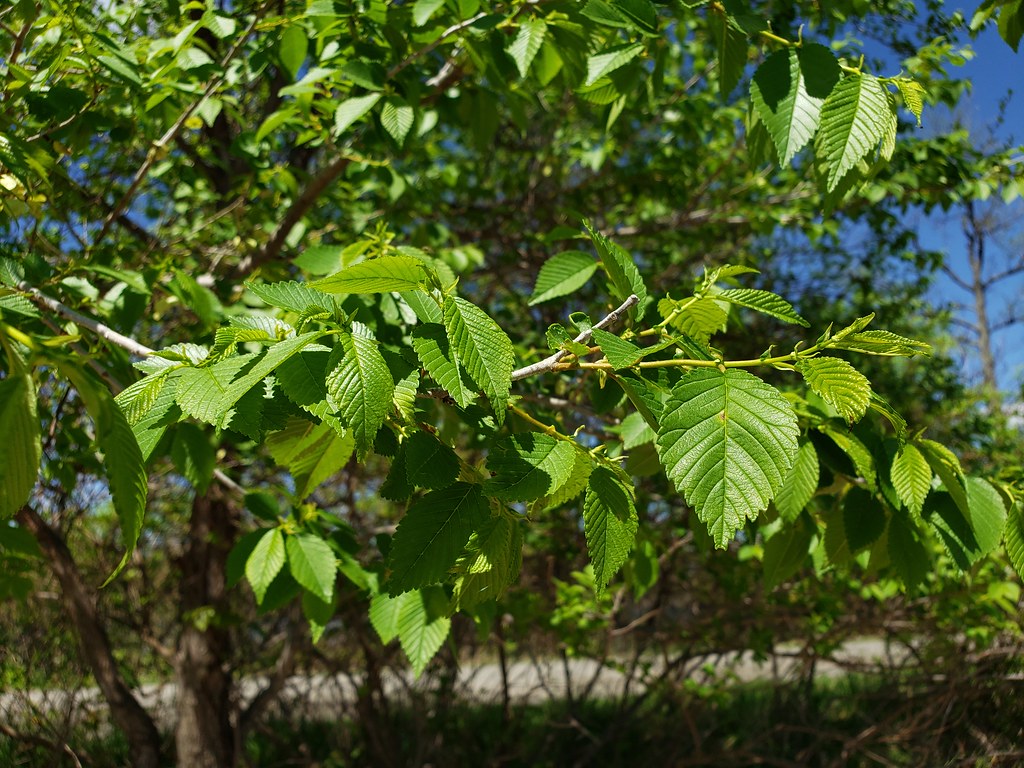
When I write about the uses of invasives, I can usually count on getting a lot of hate. So I’ll say this up front: I am thoroughly acquainted with the awful side of the Siberian Elm, Ulmus pumila. It invades inexorably, grows indefatigably, sucks up groundwater needed by our beautiful native cottonwoods, and is generally regarded as a trash tree. It’s changed the entire ecology of the Rio Grande bosque. I get all that.

But here’s the thing: while pamphlets and online sites are devoted to how to battle the Siberian elm, the battle is over and this tree has already won the war. It’s everywhere, and it cannot be eradicated.  So as I see it, we might as well look at whether we can use it well. And since I only write about my own small home ground, I am not looking at how to use hundreds of acres of it well, but how to use it on a half acre.  It grows lustily even in our dry desert climate, and there are large areas where it is the only green thing around, so I feel a certain gratitude to it. But I don’t allow it inside my yard because I want other trees there, and because as soon as I step outside my gate, it’s everywhere.

For me, its food uses are limited. I’ve written before about the edible samaras, or seed cases,  and I won’t say more here except that they have a pleasant green mild taste and are produced in unbelievable quantities every spring, and the chickens like them as much as I do.  As I get further into permaculture I’m experimenting more with tree leaves that have culinary uses, but I can’t find anything much about Siberian elm leaves except on the wonderful site Eat the Weeds, where I find that the young leaves are edible cooked. I admit that this doesn’t sound enterprising on my part, but I haven’t tried it yet. I have so many other green things to eat that it will probably be some time before I make this experiment.  I can’t find any nutritional analysis even about their use as fodder, although I did find one reference stating that they might be a potential source of higher-protein forage for animals.

But when it comes to nutritious forage, I typically let my beloved old dairy goat Magnolia make her own decisions. And there is no question that Siberian elm is her favorite food and one of the few foods that she never gets tired of.  So over the years I have been letting Siberian elms grow up along my longest fenceline, and cutting them back above the top of the fence. New branches grow at astounding speed below the cuts, and Maggie chows them down as an almost exclusive diet all summer long. She is naturally on the thin side, but loses no weight during the 6-7 months of her elm diet, and her enthusiasm never fails. The usual life-span of a domestic goat is 9-11 years and she is pushing 13, so I don’t think it’s done her a bit of harm. The feed is free, as local as it gets, and gives me plenty of mostly unwanted exercise with the cutting and hauling. The trunks occupy the space along the hot baking hell of the open space, and I don’t give them any water so they’re surviving on what they can find on their own. There’s no doubt that they look scraggly between cuttings, but I can tolerate that to see Maggie so happy. And if I ever get hungry enough I’ll try eating them myself.

The hens also love the leaves when young and tender. They might eat the tougher late summer leaves if cut up, but I don’t bother when there are so many other greens for them.

I’m largely talking about animal feed here, but whenever I allude to possible human uses I feel compelled to say a few common-sense things about wild and unfamiliar foods:

1. Never assume that because an animal can eat it, you can eat it. Goats in particular are able to eat some plants that are toxic to other animals including humans. Magnolia’s metabolism is wired differently than mine.

2. Never assume that because one part is edible, the whole plant is edible. Black locust blossoms and elder flowers are delicious, but the leaves and stems are toxic. There is no substitute for studying reliable authorities.

3. Never assume that because other people including reliable authorities can eat it, you can eat it. Test a small amount of any new food, and wait a day before trying more.

A Quick Note on Bamboo

I love bamboo shoots, and several years ago I bought two plants of Phyllostachys dulcis, the famously invasive and delicious sweetshoot bamboo. I enriched the soil, planted and mulched, supplied plenty of water, and waited confidently for them to invade, so that I could start eating. Four years later the two plants are a scraggly 5’ tall each. Each year one or the other, but not both, makes exactly one spindly shoot which often follows a kamikaze trajectory toward the goat paddock.   In all this time, I have eaten exactly one bamboo shoot. It was very good, but a pretty poor return on investment.

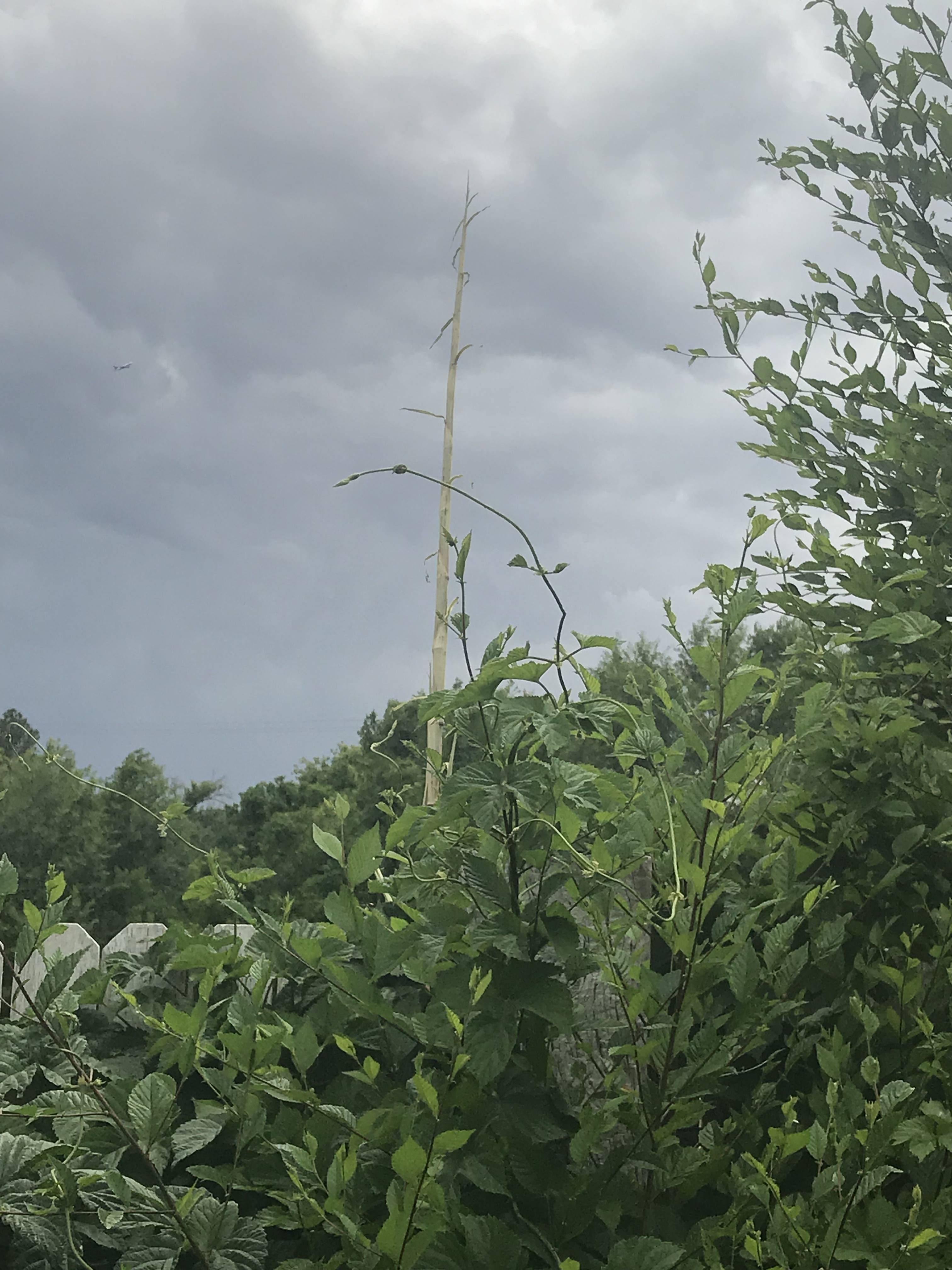
This May, after a few days of absence from the garden, I was looking along the fence row inspecting hops vines  when outside my fence, in the desert open space, I saw a startlingly robust bamboo shoot almost 20 feet tall.  Phyllostachys dulcis is spreading out into an area that is impacted, alkaline, and gets only our natural rainfall, which is 10 to 11 inches per year.  In short, it is a bamboo’s version of Hell, and yet this is where my expensive and pampered plants have chosen to stake their claim.

Plants are naturally perverse, and the more you want a particular plant to flourish, the more perverse it typically becomes.  It is as if they thumb their noses at the whole concept of domestication.  But next spring I will watch the desert strip outside the fence and see if the miracle repeats itself. If so, I may finally harvest enough bamboo shoots to be worthwhile.  If it finally begins to behave like a real invasive, I can always take my goat out on a leash to teach P. dulcis some manners.

I should add that if you don’t live in the desert, you can’t afford to be cavalier about invasive plants. Be aware of your neighbors, don’t invade their space unintentionally, and if you plant an invasive bamboo you really need to create proper rhizome barriers. My P. dulcis  plants have a foraging goat between them and any neighbors, and the part of the open space they are growing into actually belongs to my property. I doubt that they can get far on 11” of water annually, but if they show truly invasive behavior out there I have room to make a concrete barrier.  I have never seen a bamboo get out of hand here in the desert, and don’t anticipate it happening now, but I’ll act assertively if it does.