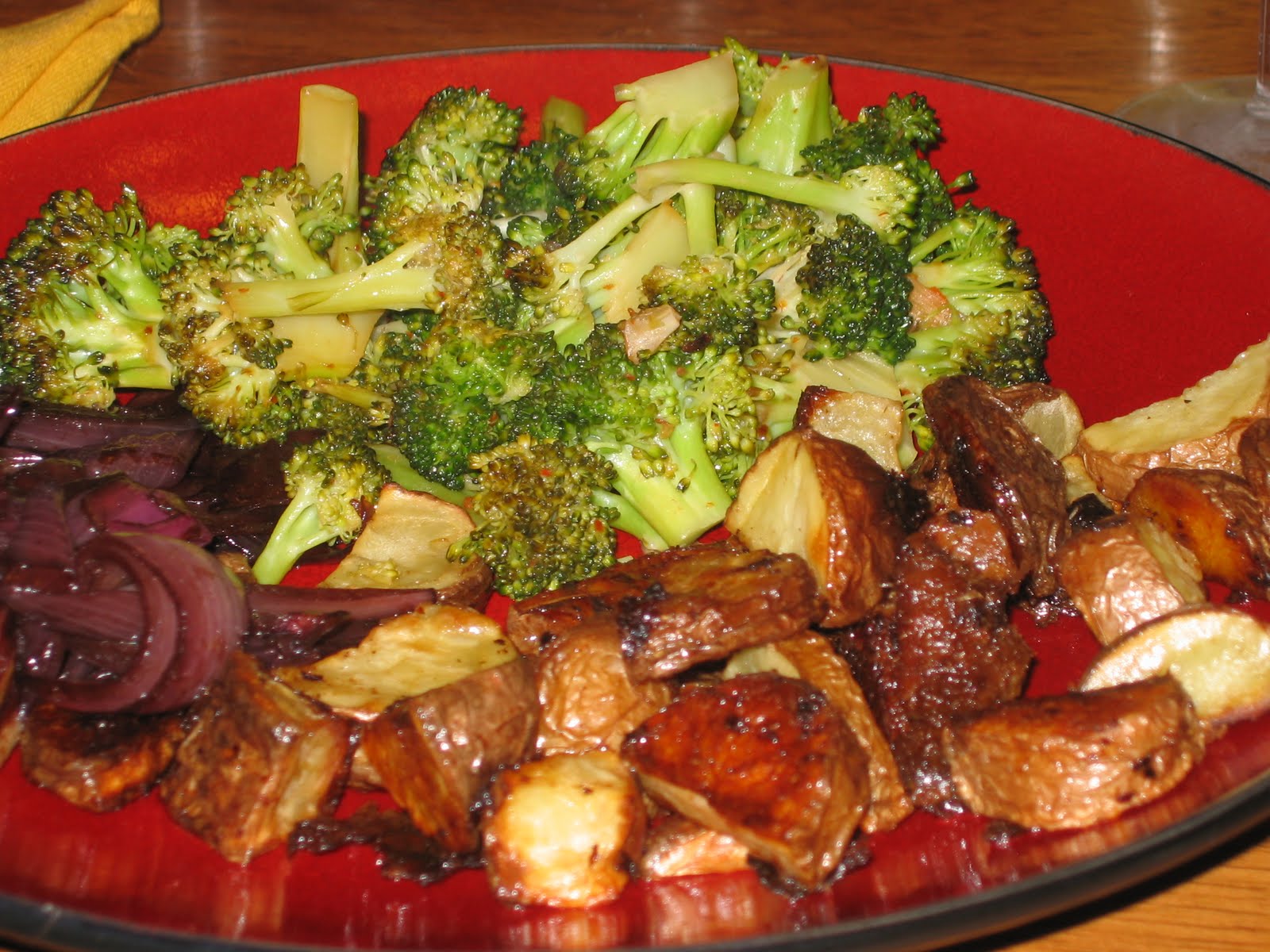
Recently a reader contacted me about how to transition to a diet of “all real food.” Expense and time were real concerns for him, as they are for most of us. Well, there’s no question that if you’ve been eating a lot of convenience and supermarket food, real food is likely to be more expensive. You will be making more things from scratch, so it will take more time, too. So my first piece of advice is: don’t make a New Year’s resolution to change your whole diet. I am very mistrustful of New Year’s resolutions; in fact I am mistrustful of any statement that anyone is going to make sudden sweeping changes in their way of being in the world and maintain those changes over time. Personally, my transition in food and lifestyle took place over years, with one step building on the previous ones, and no one change so huge that I couldn’t maintain it until it became a habit.
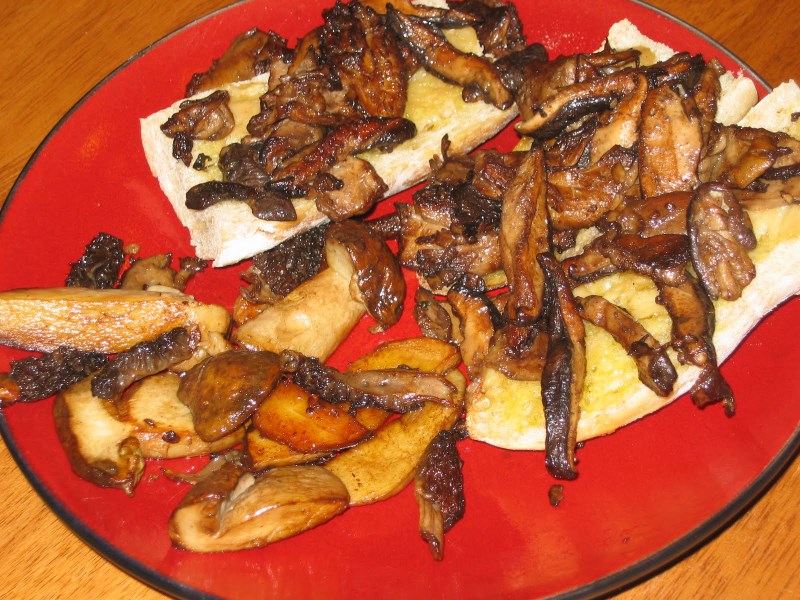
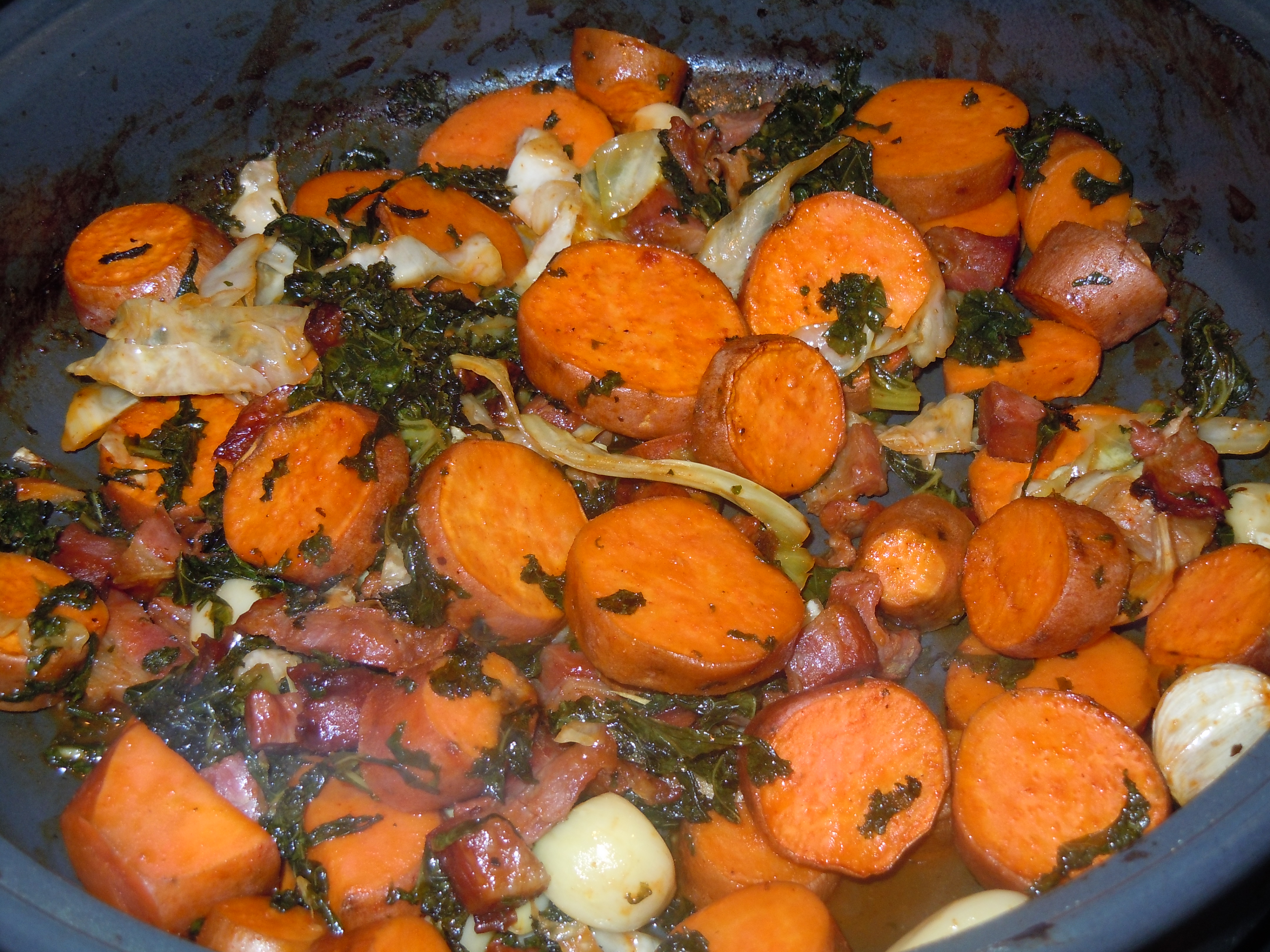
So here’s how I would approach this change: eat more vegetables. Fill your plate with them. Twice a week or so, make two or three simple vegetable dishes for dinner, and don’t have any meat available. On the other nights, offer a small amount of meat and lots of vegetables. A loaf of good bread is a great way to center the table for all-vegetable dinners, and at first you can buy the bread and transition to home-baked later on if you want to. Heat the bread up and have butter or olive oil available to make it festive. Let your vegetable meal be a celebration. Learn a few simple whole-grain dishes and use them as “grounding and centering” dishes to offer some variety from bread. Don’t forget vegetable pasta dishes, which are delicious and appeal to kids. Buy your vegetables wherever you usually shop, and learn to cook them in ways that taste really good. Notice that at this first stage you do not torment yourself by trying to grow all your own food, eat local only, or eat organic only. You just cook the veggies that are readily available to you in ways that work for you. Pay special attention to learning to cook leafy greens in ways that you really like. They are abundantly good for your health, and if you take up gardening later on, they are among the easiest things to grow, but they are also the most likely to sit in the garden unused if you don’t have your kitchen techniques down pat. When you and your family are used to eating lots of vegetables, you can add more whole-grain dishes, or go organic, or shop at the farmers’ market when possible.

If you make this your first step toward a whole-foods diet, you won’t save much money initially because CAFO meat at the supermarket is cheap, but you won’t spend more than usual. Invest a very little bit of money in a really good vegetable cookbook; a wonderful and inexpensive one is Fast, Fresh, and Green by Susie Middleton. Check out my “vegetable dinners” category, too.
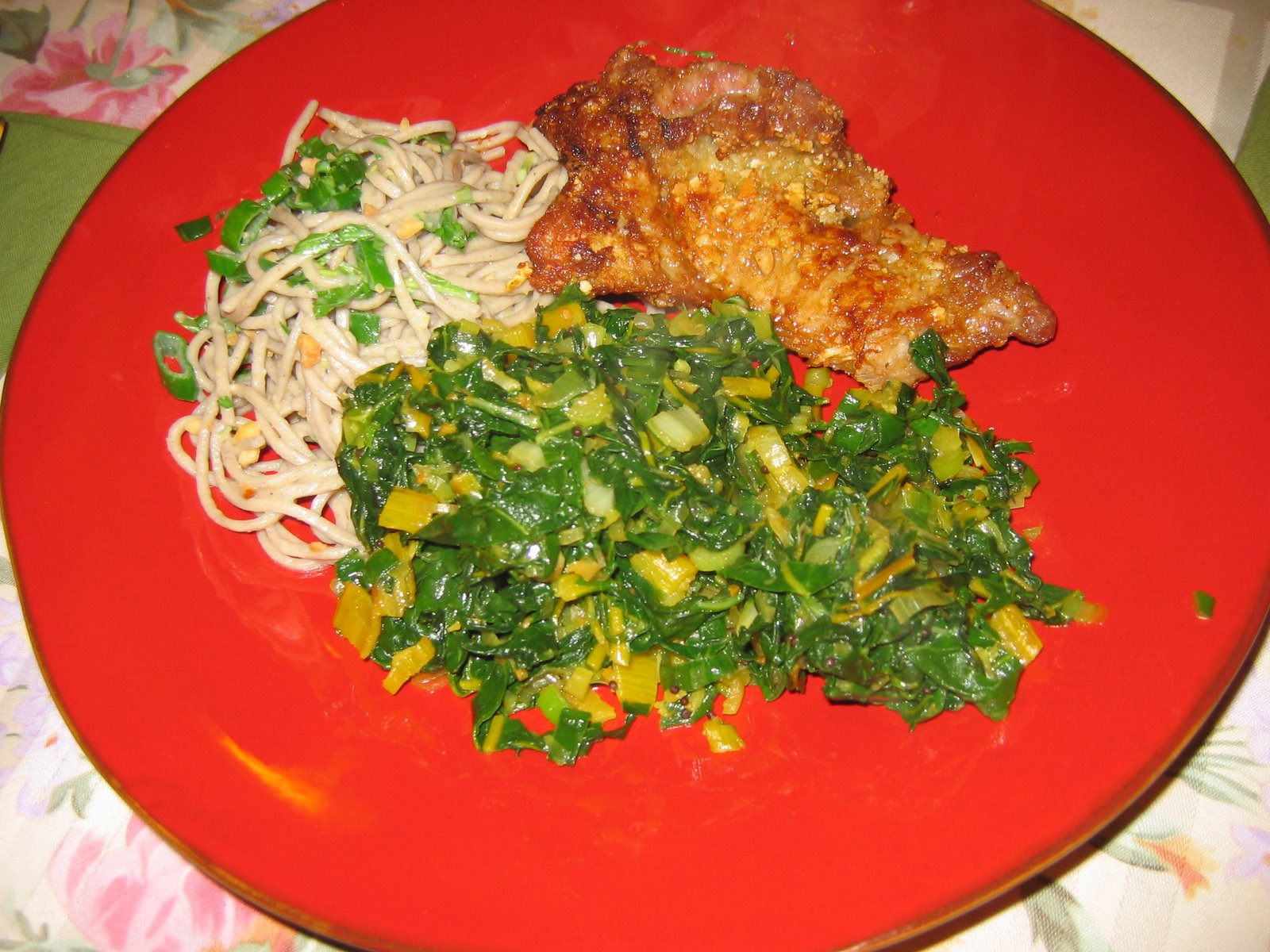
When you and your family are really loving your veggies and you can turn out vegetable dishes smoothly and without kitchen trauma, and plates heavy with vegetables look just right to you, take the next step. Enlist your family in deciding what the next step will be. If you use a lot of dairy products, organic dairy might be a good step. Or consider a backyard garden, or a farmers’ market excursion once a week in season, or more whole grains, or whatever. Bear in mind that truly ethical meats are going to be expensive, and if you just substitute them for the supermarket kind in the amounts you are used to eating, you are in for a nasty surprise when you add up the bills. I don’t suggest changing to them until you have formed the habit of eating small amounts of meat and making veggies the biggest part of your meal.
Don’t forget breakfast. Cook a pot of wild rice or red quinoa ahead of time and heat up enough for breakfast, topping it with some butter and maple syrup or honey. This is a treat even for people who don’t like “health” foods.
I don’t believe that negative energy is ever very helpful. Don’t berate yourself for the things you aren’t doing, just be appreciative of the positive changes that you’re making. If you need to pick up a quart of milk at the convenience store some night, don’t go crazy over it. If unexpected events change your life for a while, respond to them as needed, and then go back to your new way. Somewhere along the way, read or reread The Omnivore’s Dilemma, still head and shoulders above other books about factory-farming systems and, in my view, much better than Pollan’s subsequent books at helping you remember why you are making these changes. Love your food, and enjoy your mealtimes, and step will follow naturally on step. Have fun, and happy New Year!
Archive for the ‘home food production’ Category
2 Jan
Vegetable dinners: Starting the new year
29 Dec
Kitchen Staples: Spaetzle

This is the time of year for warming and filling meals, but often there isn’t much time to fuss with an elaborate dish. This is when I rely on stews like the short rib braise above or my favorite “Sort-of Paprikash.” If you’re a vegetarian, stews of mushrooms and cream are satisfyingly meaty. Stews are wonderful to make ahead, and they hang out happily in the refrigerator for a few days, improving all the while if they were good to begin with. You want a good carbohydrate on the plate to absorb the rich juices and minimize your meat consumption, and one of my very favorites is spaetzle. It’s delicious, and much quicker and easier than homemade noodles. To male spaetzle efficiently you need a spaetzle maker, which is a $15 gadget readily available by mail order. Sometimes you can find one at local kitchenware stores.
I have recently started using a new recipe because I have lovely fresh eggs coming in from my chickens, and the new recipe uses more of the ingredient I grow myself, eggs, and less of the one I don’t, milk. Remember to make the dough at least half an hour before you want to cook it.
For enough to feed four people very generously:
3 cups unbleached flour
6 eggs
1 teaspoon salt
1/2- 3/4 cup of milk
1/4 cup melted butter
Put the flour and salt in a bowl. Combine the beaten eggs and melted butter, pour into the bowl, and add half a cup of milk. Stir to combine. you are aiming for a thin dough which will “glop” off the end of the spoon in big lumps but which is definitely thicker than a batter. Add a little more milk if you need to. When combined, set in the refrigerator for at least half an hour to let the gluten relax. You can make it up to several hours before you need it. When ready to cook, bring a large shallow pan of salted water to a fast simmer. Fill your little devise with dough, slide the carriage back and forth, and little egg dumplings will fall into the water below. Fill the device again, and repeat until you’ve used up your dough. If the temperature of the water has dropped a lot, turn up the heat, but a hard boil will break up the dumplings. When they float, they’re done. Usually this takes about 5 minutes. Bite one to make sure that it isn’t soggy in the middle. Drain and serve with stew or rich meat juices on top.
Here’s something I learned in a cooking class in Sonoma, and it really works: after draining, you can spread the spaetzle out on a clean baking sheet and set them aside to cool. They will now keep for a day or two in the refrigerator, and can be reheated when you need them. If anything, they taste better than when eaten immediately. They can also be heated by frying in a big skillet with some clarified butter, so that they get crisp brown crunchy spots, and this is truly good, especially if you toss in some thyme leaves and a small handful of chopped parsley.
22 Dec
Solstice Sunrise


It’s the day after Solstice, and the Sun rose this morning, so I guess it’s decided to stick with us for another year. Avid gardeners may start out on modern time, but after a decade or so we find ourselves living the rythm of the agricultural year. Yuletide is for feasting on our stored abundance, and it’s a wonderful time to sit by the fire and scan seed catalogs and attach some details to our hopes for the upcoming year. In a week or two I’ll be posting on my annual reassessment: what worked, what didn’t. But now is not the time for sober consideration. It’s the time to take unabashed pleasure in what worked really well. It’s time to do something that you don’t normally do, something that makes you shiver anew with love and reverence for the natural world, not because it is all good and beautiful, but because it exists and we have the good fortune to see it.
For me, feeling reverent rapture (or anything, really) before sunrise qualifies as something I don’t usually do. It takes real effort for me to function early in the morning, and a glass of fresh juice eases the effort. A juicer puts healthy stuff in your cup quickly, and doesn’t need to be expensive. I bought a reconditioned one and it works fine. Your own stored apples and carrots, or organic ones from the store, make a great seasonal juice. Prickly pear fruits are still perfectly good on the cactuses that we have everywhere, and juicing disposes of the spine problem. One prickly pear fruit, or tuna, will give a dramatic sunrise color to two big glasses of juice. To my palate the fruits don’t have a lot of flavor, but the color is reason enough to use them.

Run four apples, four large carrots, and one prickly pear fruit (two for a deeper red rather than the sunrise shade above) through your juicer. POur the juice into a clear goblet so that the color can be admired. Drink. Dispose of the pulp by burying it in a part of the garden that animals can’t get at- many animals are drawn to fruit sugars, and you don’t want all the horrid little spines in the pulp to torment any animal, wild or tame. For the same reason, handle the pulp with a wooden spoon or thick gloves, not your bare hands.
13 Dec
Organic Matters
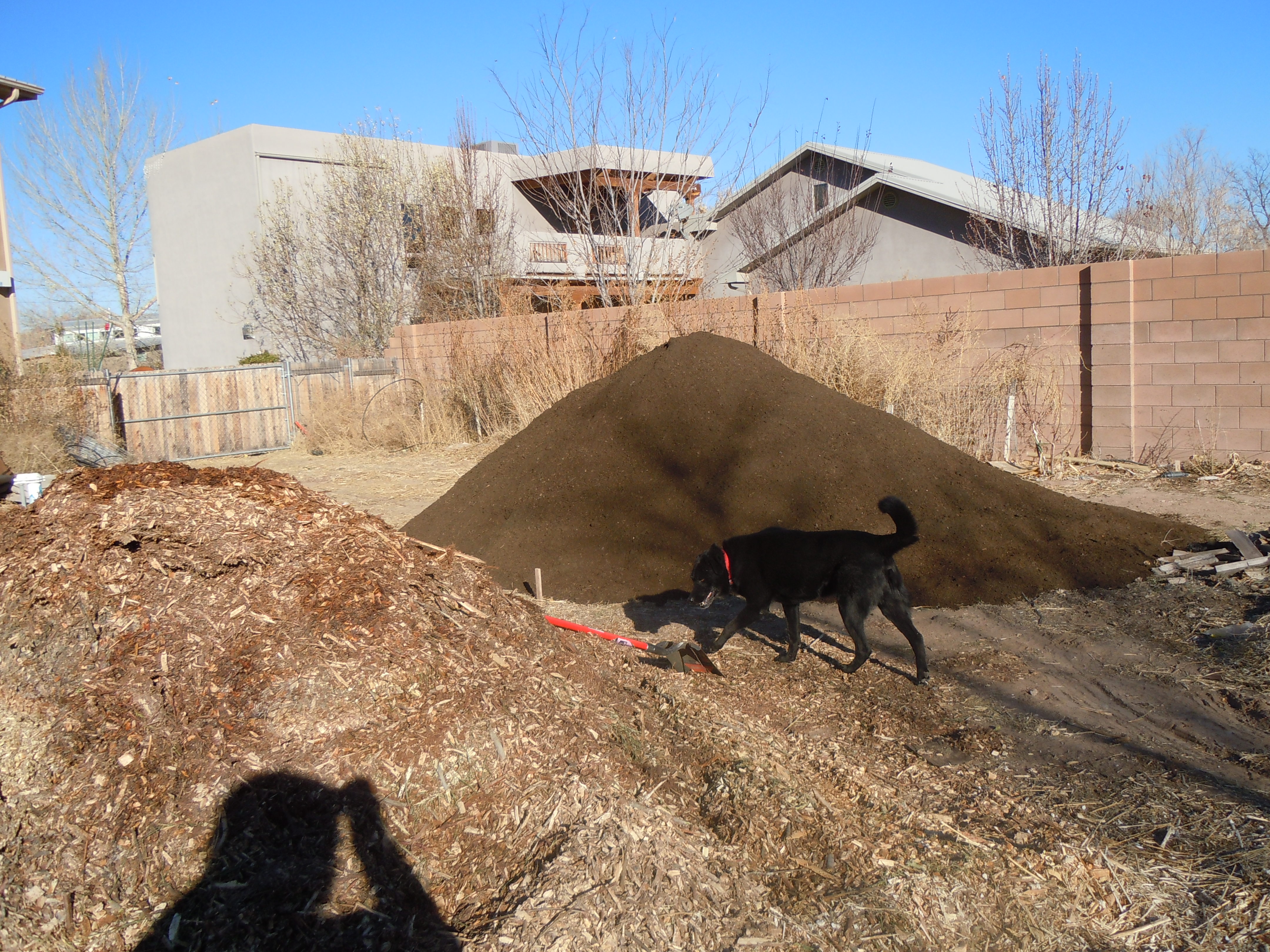
The soil at our new house, like many urban soils, was unpromising at best. Rocky, compacted, and highly alkaline, the only thing that really wanted to grow in it was tumbleweed. With compost, gypsum, and sheet-mulching it’s already a lot better and improving steadily. Beginning gardeners may be amazed at the sheer quantities needed. To emphasize the point of using enough, I’m illustrating the winter Grand Tetons of my backyard, Mt. Shredder and Mt. Manure. It might look like a lot, but it will be gone by spring. Over the winter I’ll gradually spread the compost and work it into the growing areas, and mulch paths with the bark chips. If you don’t have room for big heaps, you can get compost in bags, but get plenty. Apply gypsum per the results of your soil test, and you’re set for a successful growing season.
Didn’t get a soil test? I have to admit that I didn’t either. On soil that hasn’t been gardened before, I apply gypsum according to the directions on the bag, putting a little more where I’ll be growing calcium-lovers like broccoli and spinach. I also use extra on the potato patch, to get the pH down into a range that the potatoes can tolerate. Where soils are acidic I’d be using lime instead, but our very alkaline high-desert soils usually need a dose of gypsum to make them liveable for vegetables. Then I put on a scientifically determined amount of compost: all I can afford. Unless it’s really well aged, I keep it off the potato area. Instead, I dig all my neighbors’ discarded leaves into that area. No doubt it leads to comment when I remove the leaf bags on the night before green waste pick-up day, but as I see it, worse things could be said about me, so I’m lucky if people are only talking about my leaf-snatching habits. Needless to say, nothing should be touched unless it’s set out by the curb for pick-up. When in doubt, ask. But there’s no reason to pass up free organic matter that others are trying to get rid of. Think of yourself as the Guerilla Gardener, and you may feel dashing instead of disheveled and a bit silly.
 My urban homestead