Archive for the ‘home food production’ Category

Admitting What Didn’t Work

image

image
As a gardener/ farmer with a city lot, my rate-limiting step is space, and things that don’t work need to be given up and the space given to something else. This time of year, I’m often busy dealing with things that didn’t work and freeing up their real estate for other purposes.

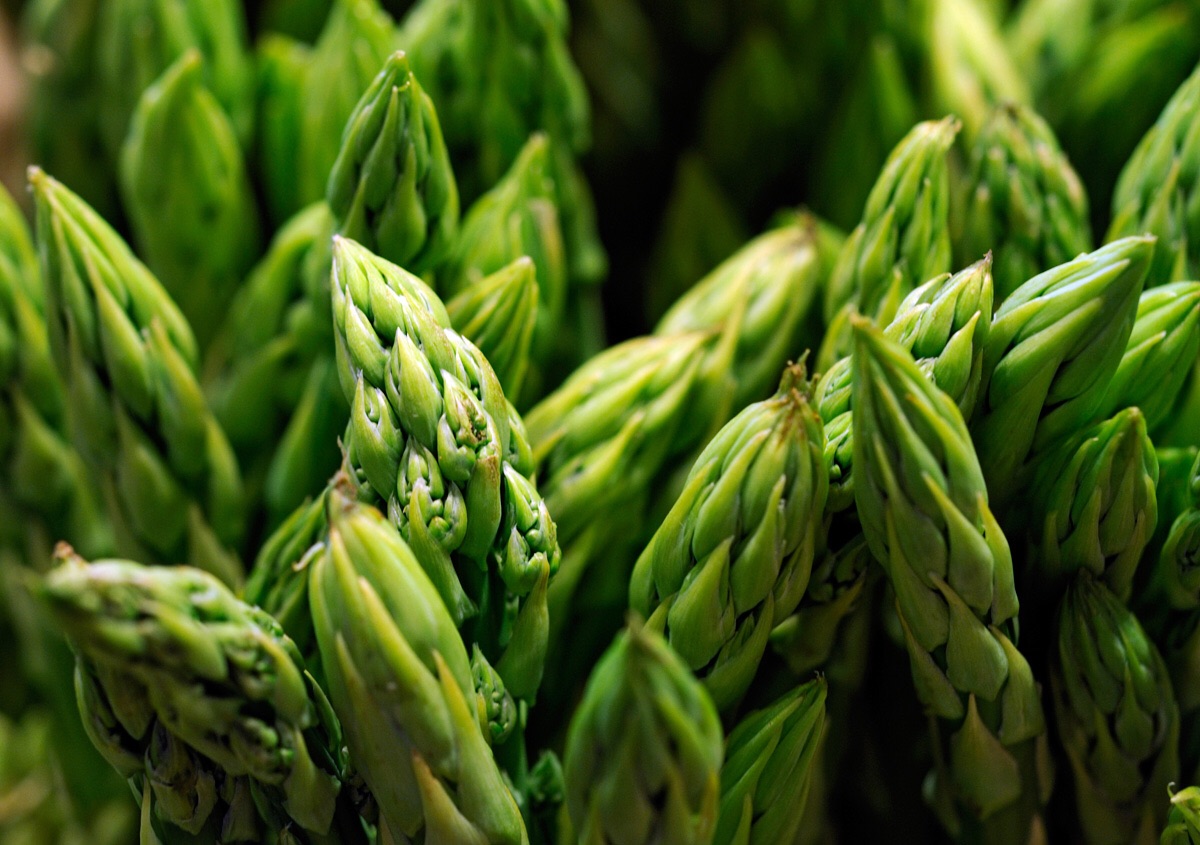
Take my effort to create an asparagus bed with minimal work. The spot where I wanted to establish this long-lived perennial was awful, not to put too fine a point on it. The workers who built the house parked their trucks on it and used it as a dumping spot for leftover cement and other choice debris. The ground was packed hard as concrete, weeds wouldn’t grow there, and it promised hours of backbreaking work.

I decided to use less laborious methods to heal that area, and I planned to take two years to do it. In year 1, I built a long, low compost heap on my future asparagus bed. I used straw and chicken manure, layered it up about two feet high, and it heated well. I ended up with about four inches of pure finished compost over the entire bed, which I left to cool off completely over the winter.

Year 2, I stirred the surface of the compost and planted daikon and oats. The idea was that the oats would provide organic matter and the daikon would pierce and break up the hard pan beneath and make drainage channels through it for the plantings to follow. I supplied water, and the mixture grew well and looked healthy. Again, I left it over the winter to break down.

This year, year 3, I ordered my asparagus starts. On the first warm day in early February, I went out to the bed-to-be with my spading fork, to gloat over the results of my strategy.

What I found was a thin mat of organic matter, bound together by roots, over impenetrable hard stuff. The oats had made a thick mat of roots a few inches thick, and the daikon had turned at right angles when they encountered the hardened mess beneath and grown sideways
along the bottom of the compost.

So, finally, I did what I had to do and double-dug the bed, using a pick to break up the hard conglomerate and incorporating organic matter 18 inches deep. It took an entire back-breaking weekend. Now my bed is mellowing, ready for the asparagus roots to be planted in March.

Does this mean that labor-saving methods of gardening don’t work? No, it just means that everything depends on the situation. Study your situation, and be aware that some areas can’t be repaired without putting in a lot of sweat equity. Is it worth it? If you want fresh food and want to leave a piece of land better than you found it, the answer is an emphatic “yes.”

Welcome back, and notes on the Ketogenic diet

image

I’ve been MIA for a long time, and I appreciate the kindness of those readers who tactfully enquired about my whereabouts. The main reason was a series of deaths among my nearest and dearest that made 2013-14 seem like The Years That Everybody Died. Change and death are inevitable, and so are grief and railing against fate. Many thanks to those of you who are still with me.

Another change had a happier outcome. I developed clear signs and lab results indicating that the inexorable progression to type 2 diabetes had begun, and this started me wondering whether it really was inexorable. The answer, almost three years later, is an enthusiastic “No way!” After fooling around with various unsuccessful interventions, I finally took the plunge and went on an ultra low carbohydrate (ketogenic) diet, and after the first awful month of withdrawing from all my beloved toxins, it’s been great. Good energy, bubbling good health, and freedom from food cravings don’t come from medications, they come from consciously made lifestyle choices. Even more than I thought before, we choose our health. My menu of food choices includes meat, poultry, fish, seafood, green vegetables and some others, mushrooms, cheese, cream, strained yogurt, coconut milk, and nuts. Plenty to choose from, and plenty to season it with.

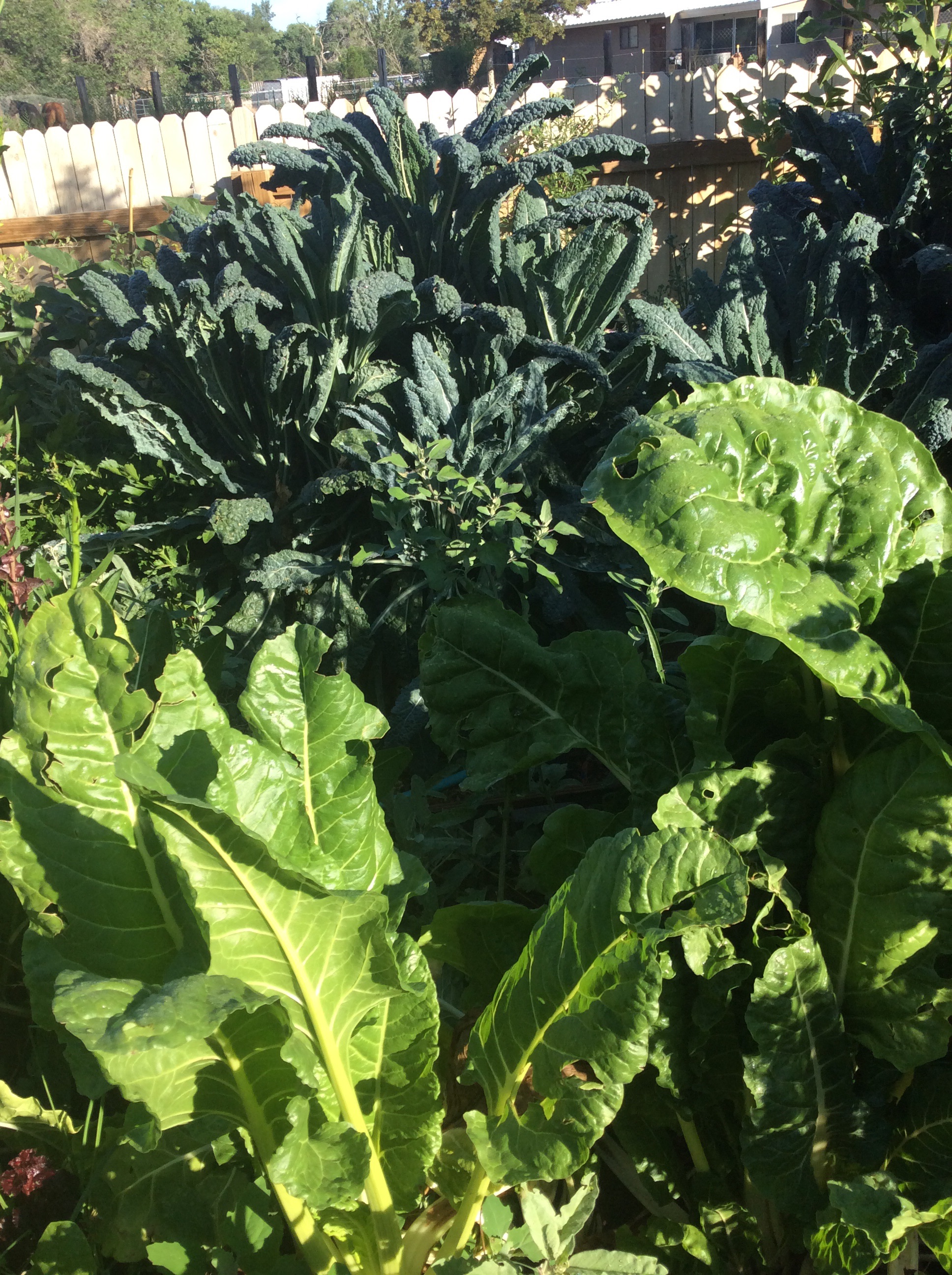
So some of my recipes will be a little different now, but the role of home food production is even more important than before. Green vegetables are an even bigger part of my diet now, and I want the best deep-organic stuff that I can get. Good meats are vital, and I produce my own where I reasonably can. I probably couldn’t afford to buy foods of this quality in the amounts that I eat them. This is the perfect time of year to plan your season of growing and foraging, so in the next post we’ll start thinking about what to grow and what to read.
image

Oh, and don’t forget:

image

Kitchen Staples: homemade Worcestershire sauce


Many years ago, chef Emeril Lagasse published his recipe for homemade Worcestershire sauce, and although some pretty perverse versions of it have made their way around the web, the original was awfully good. Over time, though, I’ve come up with a version of it that I like even better. It’s great as a sauce for burgers or roast chicken, used to season vegetables, or used to cook vegetables. It also has a lot of healthy stuff in it and is a rich amalgam of all things umami. In many ways it’s like the old “mushroom catsup” of an earlier America, a potently flavored brew that has nothing in common with the bright red ketchup we know today. Winter is fading away, so make it now, when simmering something all evening still seems like a good idea.
The bad news is that, if you don’t grow horseradish, you will have to locate some fresh horseradish root. Many upscale groceries and food co-ops have it or can order it. There is no substitute, and without it the sauce is banal and bland and you’d be better advised to spend your evening doing something else. When you do locate some, buy twice as much by weight as you need, hack the root you bought in half, and plant half. Water it well. Simple as that. Horseradish can get big and invasive, but if you keep using the roots, that won’t happen. Also, the anchovies aren’t optional, so this sauce is not for vegetarians and vegans. This is a time when I have to give up all pretense of flexibility and ask that you please, just once, make it exactly the way it’s written. After that, fool with the recipe all you like. This makes a lot, and you can cut it in half for the first try, but if you want to have some to give away, the larger amount is no extra trouble to make.
You will need:
8 ounces of anchovy fillets in olive oil (for reasons of economy, I buy the Roland anchovy fillets from Spain in 1 pound cans to make this sauce.They can be found at restaurant supply warehouses and are both inexpensive and good.)
1 gallon of decent red wine (5 standard wine bottles.) The Mondavi Woodbridge reds work well. You are going to concentrate it, so you don’t want anything that you’d be unwilling to drink a glass of.
1/2 pound of fresh horseradish, peeled and finely grated.
3 cups of dark or amber agave nectar
10 dried shitake mushrooms (from an Asian grocery)
2 lemons
1/4 cup coarsely minced garlic
3 large onions, sliced
1/4 cup olive oil
6 whole cloves
5 sprigs fresh thyme
2 whole chipotle chiles in adobo
1 tablespoon sea salt, plus more to taste
1 tablespoon fine black pepper, freshly ground

Pour the red wine into a large pot, bring to a boil, and boil fast until reduced by half, to 2 quarts. I stick a wooden spoon in the wine while it’s heating, mark the level with a pencil, and then can measure roughly when it’s reduced by half. While it reduces, heat the oil in a large skillet and saute the onions. When they turn translucent, add the agrlic and saute until the garlic is somewhat cooked but don’t let it color. Grate the zest off the lemon, squeeze the juice out, and discard the pith. Pat the anchovies (as a mass, not one by one) with a paper towel to get any excessive oil off them. Use a large mortar and pestle to break up the dried shitake mushrooms into chunks about half an inch across.
When the wine is reduced by half, add the sauteed onion mixture, the anchovies, the broken shitake mushrooms, the chile, the lemon zest and juice, the horseradish, the agave nectar, the salt, and the thyme and cloves. Simmer over low heat for about 2 and a half hours, stirring and tasting periodically.When it’s slightly thickened and tastes right (by which I mean “tastes really good,” strain out the solids, pressing as hard as you can on the mass in the strainer to get out all the liquid. Add the fresh black pepper to the strained fluid, starting with about half the tablespoon and tasting as you add until you find the amount that you like. I don’t like it too sweet, but if you want yours sweeter, add a little more agave nectar. Pour the sauce into clean old wine bottles, cork tightly, and store in the refrigerator. It won’t keep at room temp unless you heat=process it in canning jars, which I think is too much trouble. I have sometimes made a hasty meal of cooked rice or grains from the refrigerator, heated quickly and dressed with a little butter and a few dashes of this sauce. Yum.
If you find that you want it a little more sharp, you can boil the wine down to 1.5 quarts and add two cups of best quality red wine vinegar, then continue as above.

The Urban Goat


Goats are a practical dairy animal to have in a small setting, and they are delightful company, but there are a few things to keep in mind before you run out and get some. If you have a job as well as an urban-farming impulse, pay close attention to the timesaving techniques listed here.
1. Goats require excellent fencing, because they prefer brush, shrubs, and trees to grass and will destroy your plantings if they get a chance. The fencing also has to be sturdy enough to protect them from other people’s dogs, as well as coyotes and other wildlings.
2. Contrary to popular belief, they don’t “eat anything,” and in fact are picky eaters who can be expensive to feed.
3. They are very productive. This doesn’t sound like a problem until your refrigerator is crammed with mason jars of milk and you have no time to do anything useful with it.
4. To have milk, they have to have babies, and you have to have a plan for what to do with the babies.
With that in mind, here’s how I manage my “yard goats.”
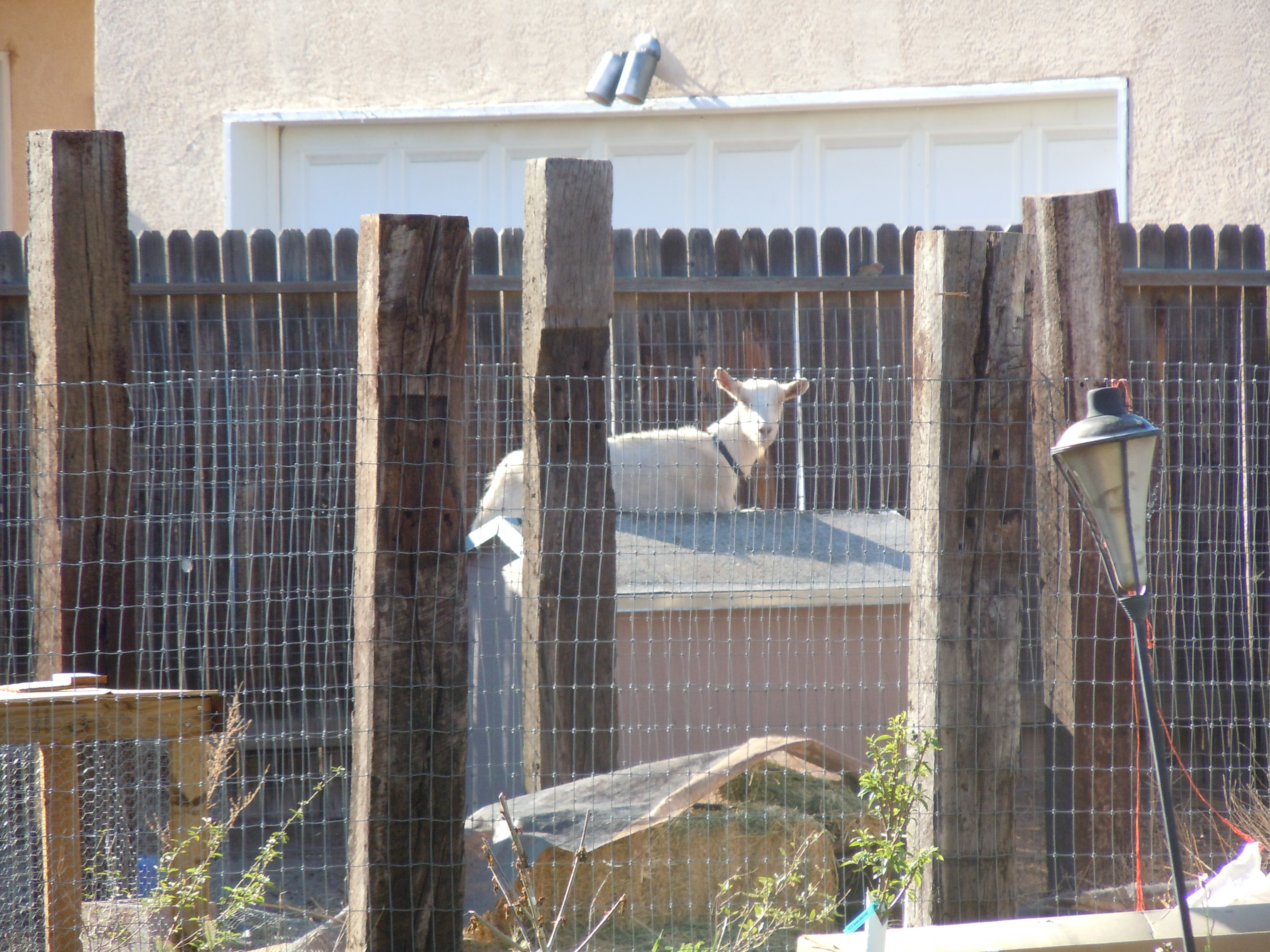
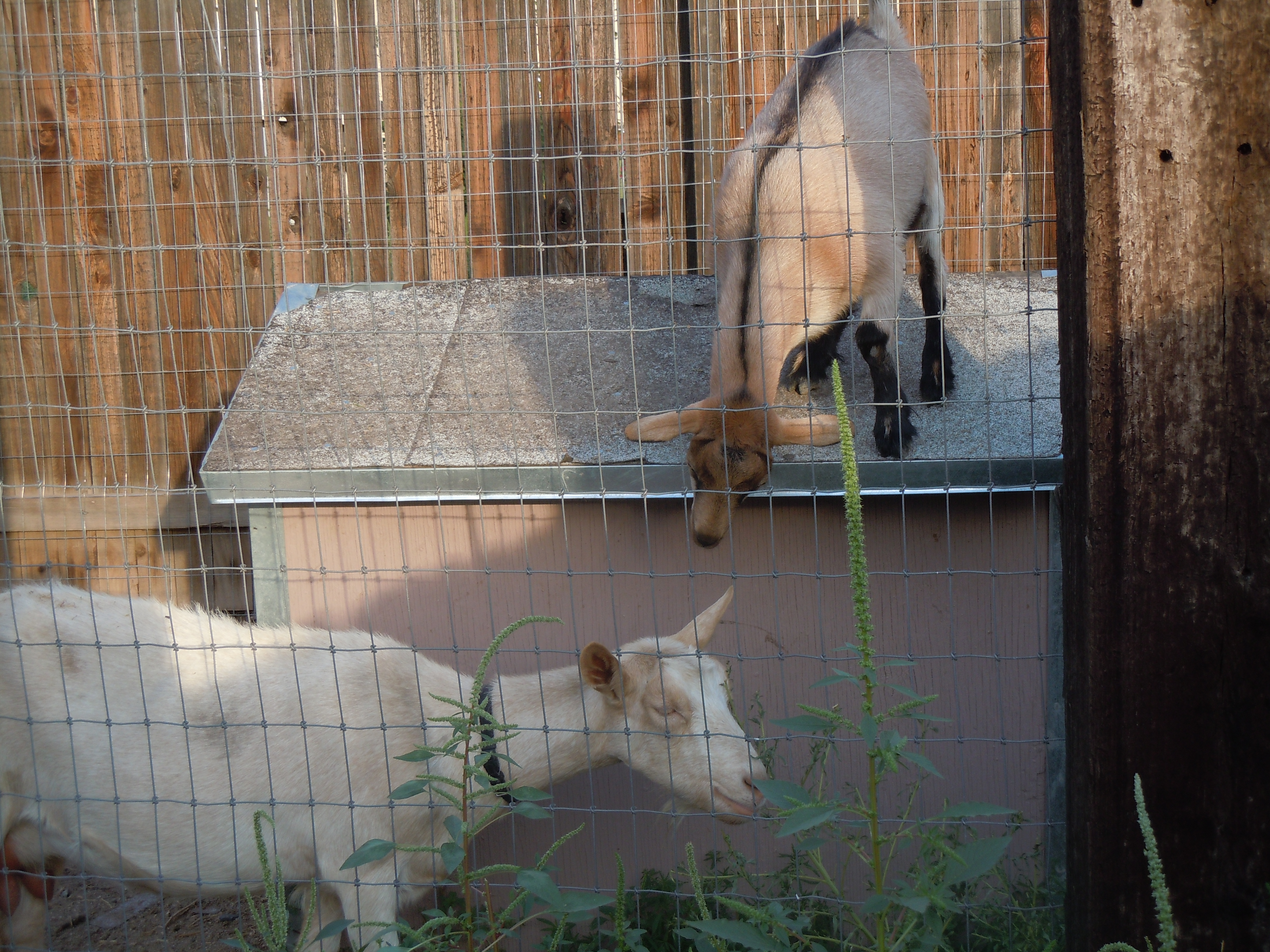
They have a long thin pen, about 8 feet by 50 feet, very well fenced. There is an inside fence and gate allowing the paddock to be subdivided 1/3 to 2/3rds.
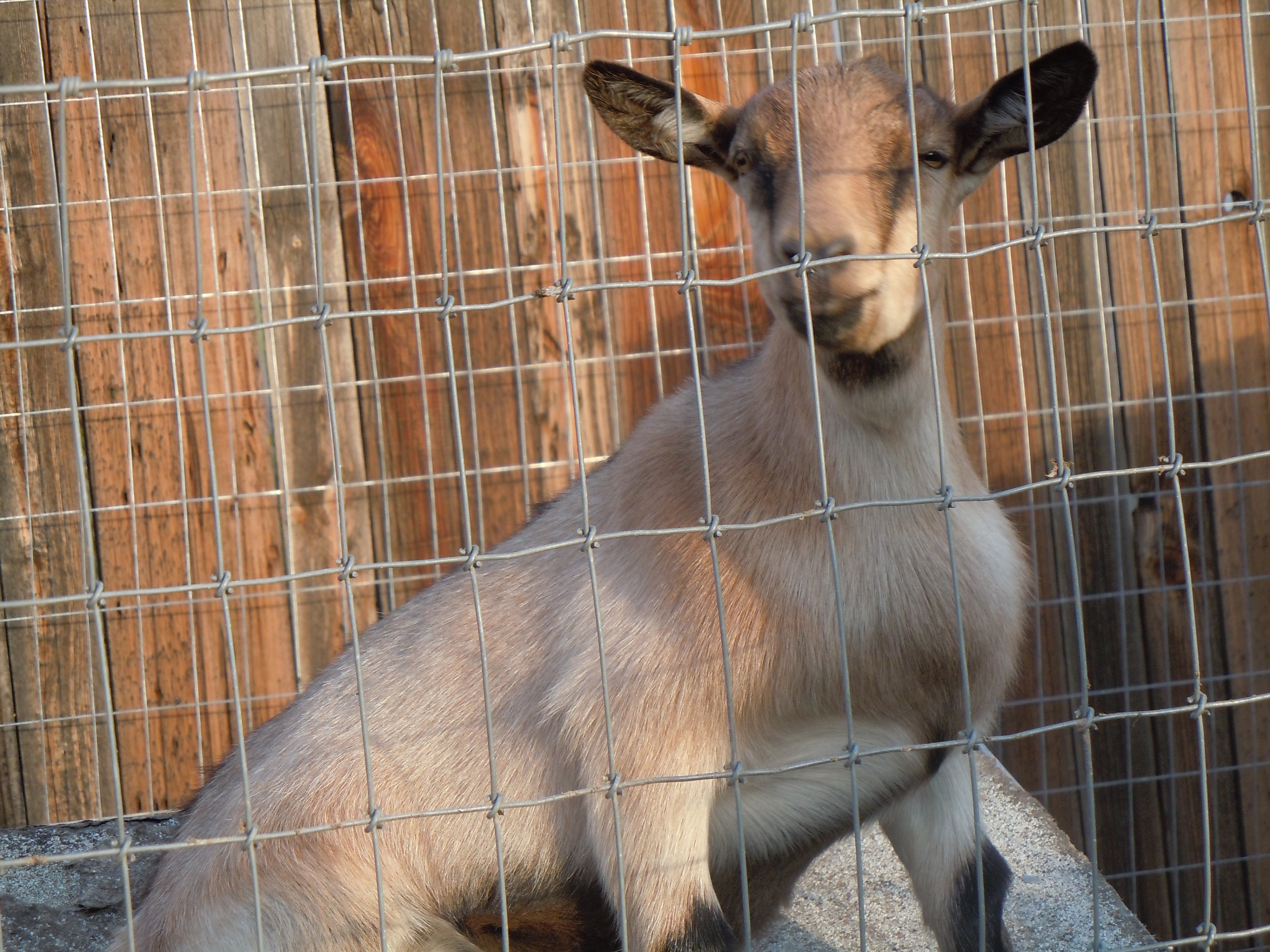
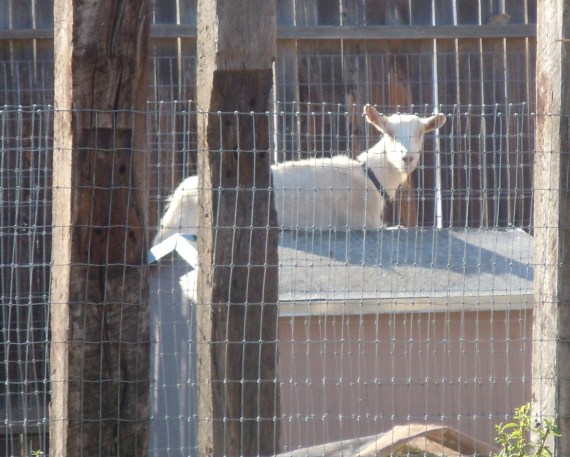
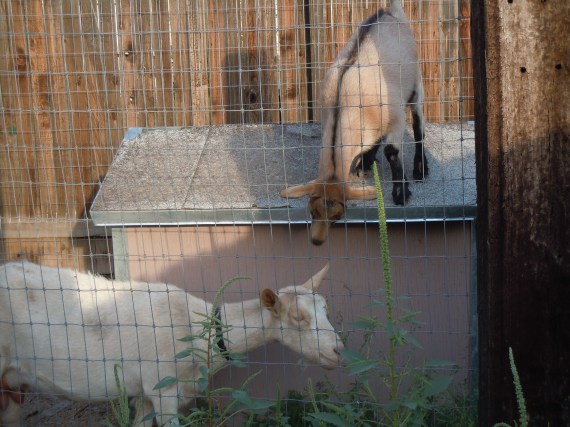
Housing is a large old wooden doghouse. They go inside in wet weather, but most of the time they lounge and sleep on the roof.
The bulk of their diet is good alfalfa. During the green season I cut armloads of Siberian elm branches and various weeds for them. I take care to know all the toxic weeds in my area so that I can avoid them, and there are some perfectly wholesome plants that they won’t touch. In late pregnancy and when in milk, they get a daily grain ration. I would like to produce milk completely on green feed, but they get too thin, so I haven’t pushed it. All grain ration needs to be formulated specifically for goats, since they have exacting mineral requirements.
They get routine clostridium and tetanus vaccinations yearly, twice for kids.

I don’t invest in milking stands or other expensive equipment. I just chain the doe to her feeding post, kneel down on a pat of straw, and milk directly into a stainless steel milk strainer with filter in place; this is set in the mouth of a sanitized mason jar, and I have a second jar ready. The jar, filter in place, is set in a clean food-grade plastic bucket to prevent kicking and to avoid any contact with the ground. Each jar is capped as soon as it’s full, and I put them in the refrigerator as soon as I’m done. This only works with quart jars, because they are small enough to cool rapidly in the refrigerator. If you use bigger containers, you would need to chill the containers quickly in an ice bath. This adds up to more hassle and expense. I prefer to keep it simple. I use standard udder wipes to clean the udder before milking, but I don’t dip the teats afterwards because the babies are going to be nursing.

Now here’s the part that is a little unusual compared to standard practices. I only milk once a day. This is because my career doesn’t allow me the luxury of milking twice daily and bottle-raising the kids. So I let the kids grow as nature intended. After the does freshen (give birth,) I leave the kids with mama full-time and milk out any excess milk once a day. For the first two weeks, I feed the milk to the chickens because it contains colostrum. There isn’t a lot of milk these first two weeks anyway. After that the milk supply will gradually increase, reaching full production after two months. I continue to milk once a day, and about a month after the birth, when the kids are growing fast and drinking nearly all the milk, I start to shut the kids in the small end of the pen for about 12 hours a day. I do this in the morning before going to work, and in the evening I milk and then let mom and kids back together overnight. Both doe and kids have access to all the alfalfa they can eat, and the doe gets a grain ration while being milked.

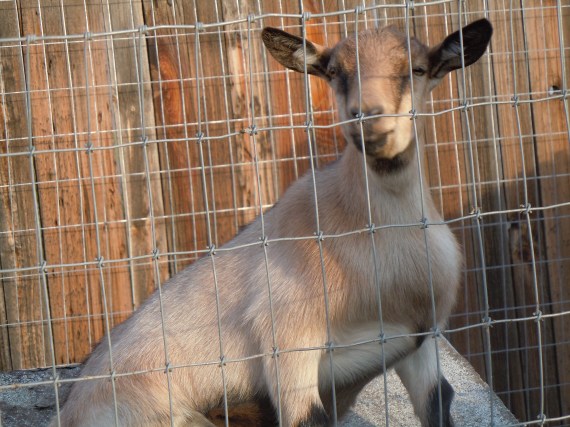
By the time the kids are two months old, I can take a day off milking here and there if I want to, just by not separating them in the morning. If I have to go out of town, doe and kids stay together and, as long as a reliable person feeds them, they do fine until I get back. Managed in this way, my Saanan doe Magnolia gives two quarts of milk a day plus what her offspring drink, and the kids are raised with no trouble to me, which seems like a good deal. After about 8 months the doe will start kicking the kids away when they try to nurse, but at this point I’m ready to quit for the year anyway, so I let her dry up. Along the way she’s been bred, and we can all wait quietly through the winter for the next batch of kids. It wouldn’t work commercially, when a steady supply is crucial, but it suits me fine to be free of milking chores during the short days of winter.

If you are thinking of getting goats, keep those kids in mind, because you have to do something with them. You may be able to place the females as “yard goats” for others, but about half your kids will be male and the only real market for them is for meat. If you don’t eat them yourself, someone else is likely to. Goat is one of the most widely eaten meats on the planet, and the meat of young goats is delicious, so do consider having your excess kids butchered for your own use. It’s a good healthy meat source

To get milk you need babies, and to get babies you need access to a buck. In my opinion, it is unwise even to think of keeping a buck in an urban or suburban setting. They smell terrible in breeding season, and your family and neighbors will not appreciate it. This is the sort of thing that gives urban homesteading a bad name. Find a breeder with a buck, or pair up with a rural pal who is willing to keep a buck.

Set a firm limit on how many goats you are going to keep, and stick to it. For me, that limit is two adult does, with kids in season, but no additional goats kept over the winter. And get the wonderful cookbook Goat, to help you stick to your limit.