Archive for the ‘front yard gardening’ Category

Continual change

image

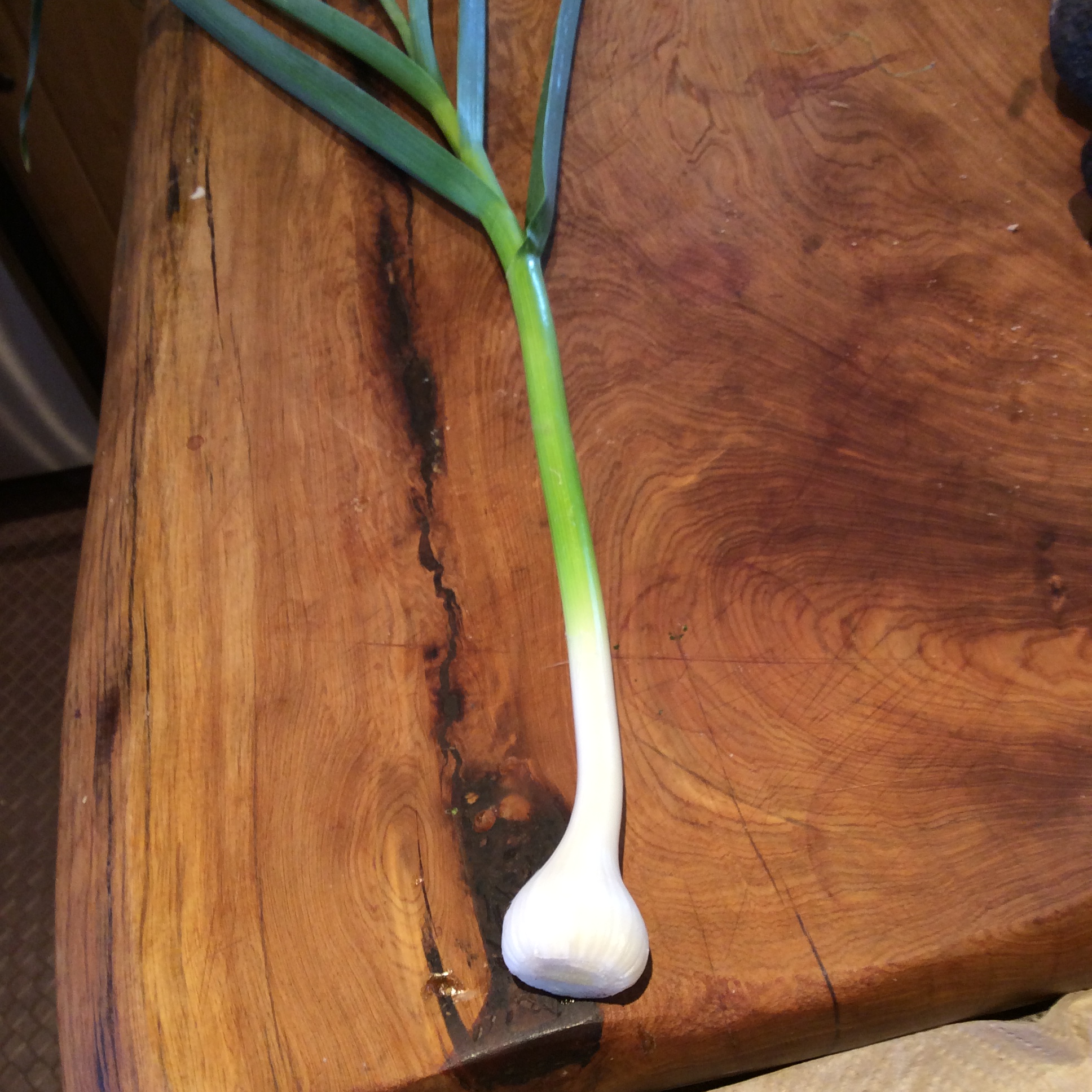
Everything not busy growing is busy decaying. In a garden, change is the constant.  The produce that you have to work with is continually changing, and your technique has to adjust to it.  Right now in my garden, for instance, the green garlic has begun to form bulbs and the stalk is elongating considerably, forming the scape inside.  The tissue that will become the papery skin of the bulbs is still soft, and the entire plant is still usable as green garlic.  In fact, that has a somewhat stronger taste of garlic then it did in earlier stages. Just be aware that you need to cut it in fine slices across,  less than a quarter inch if possible, and sauté it longer in olive oil or butter and maybe a little water to help the leaves soften. At this stage I plan on 25-30 minutes over medium-low heat to let the leaves soften, sweeten, and develop flavor.   If you want to try dehydrating it to use as a seasoning later, this is the perfect stage. Just slice it thinly, put it in your dehydrator until thoroughly dry, and then powder it for later use if desired.

Your other ingredients are in constant flux throughout the season too. Watch them, handle them, taste them, and see where you need to adjust your technique to suit their current maturity level.

The Shoots of Spring

image

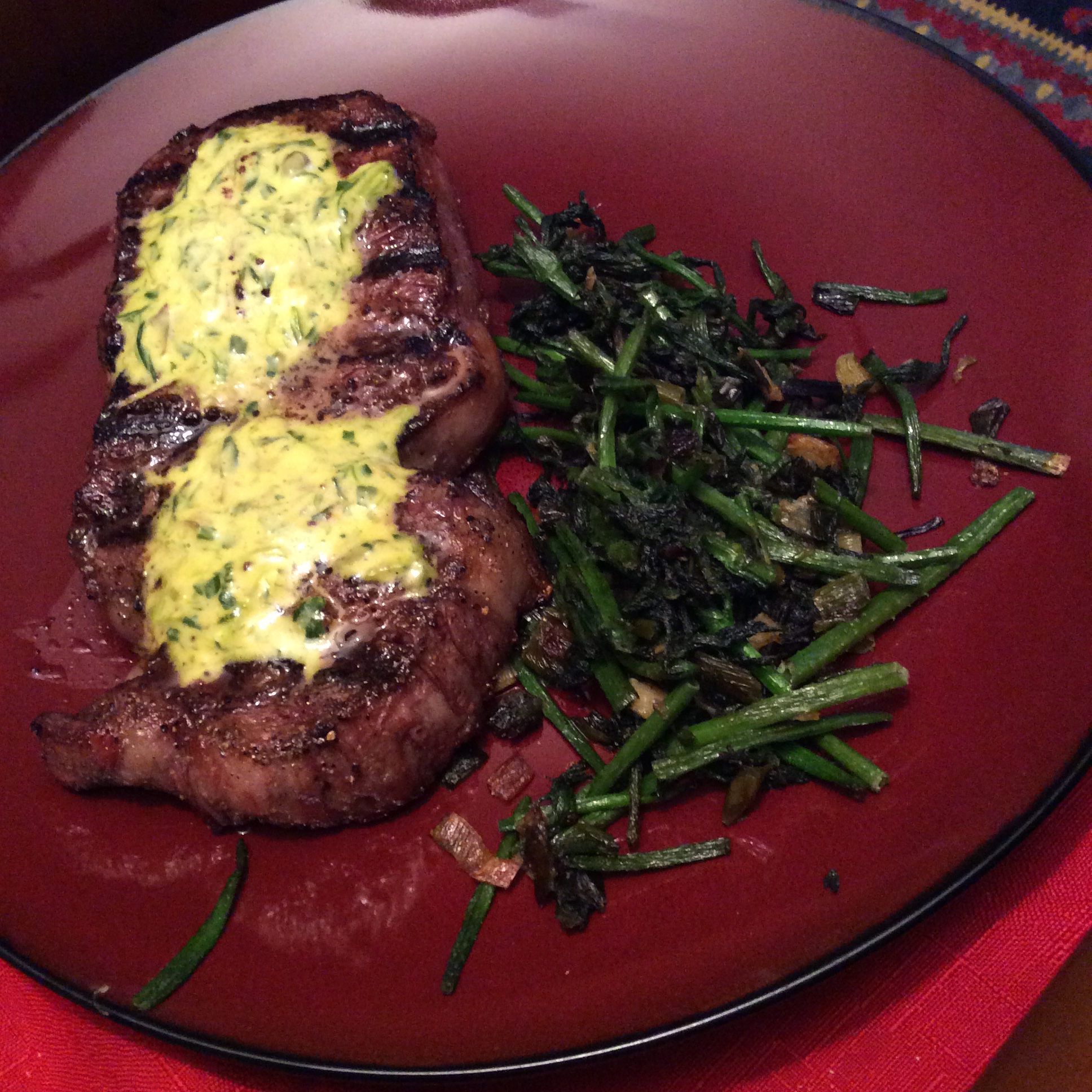
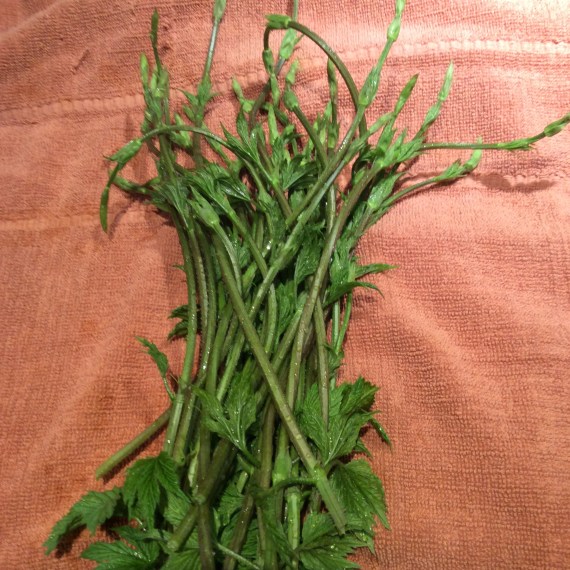
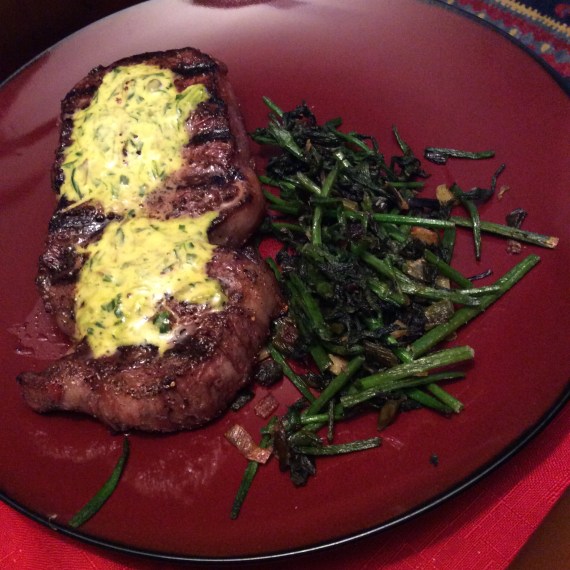
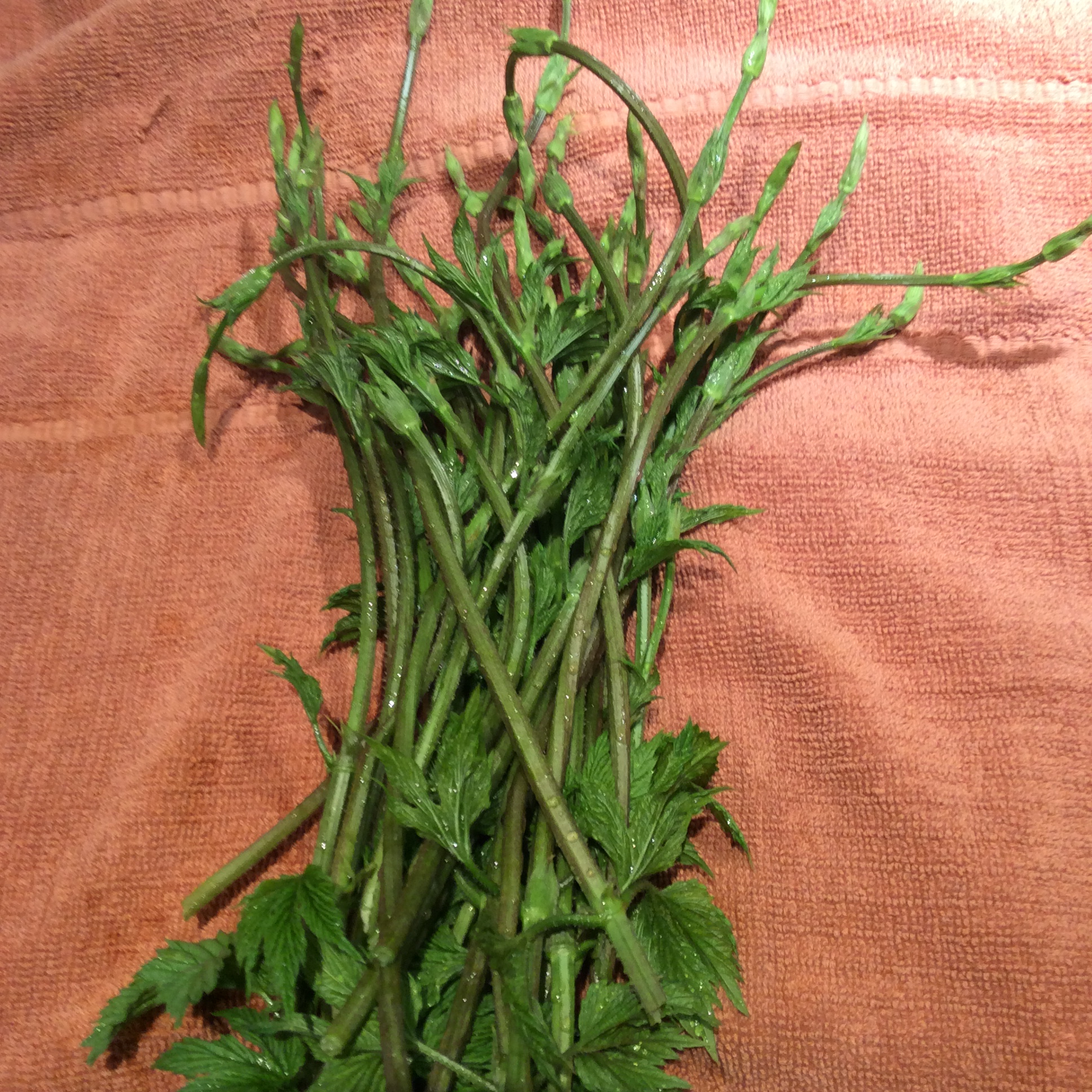
This is the great season for hops shoots. I gather a large handful every day or two, taking care to snap them off where the stem is tender and brittle. I wash them, cut the bundle crosswise in pieces about an inch long, toss in a hot skillet with a generous amount of good olive oil, and sauté over medium-high heat, turning frequently, until the stems are tender and  some of the leaves are brown and crisp. Add salt and serve. They have a “wild” and slightly bitter flavor which I love alongside very flavorful meaty main dishes.
image

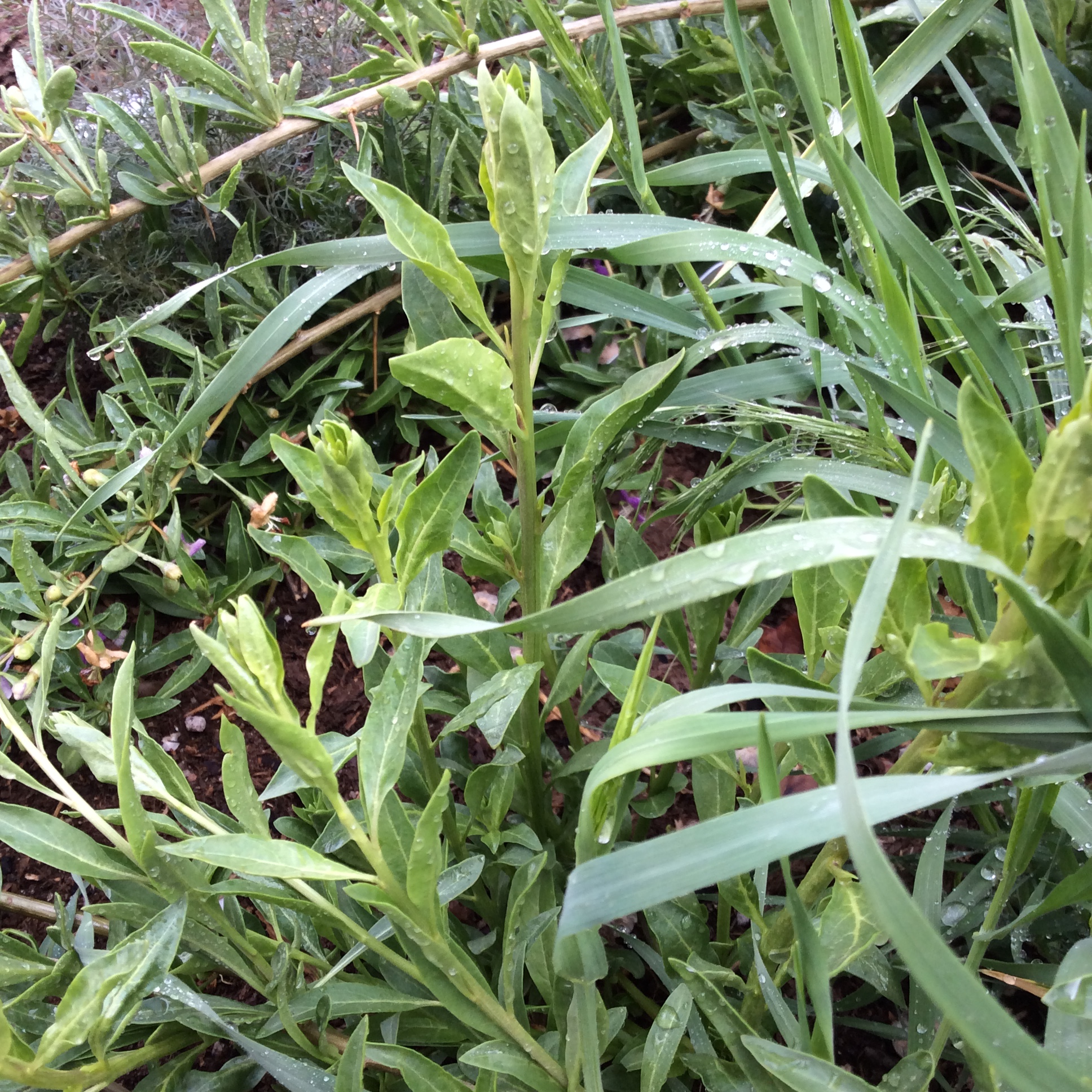
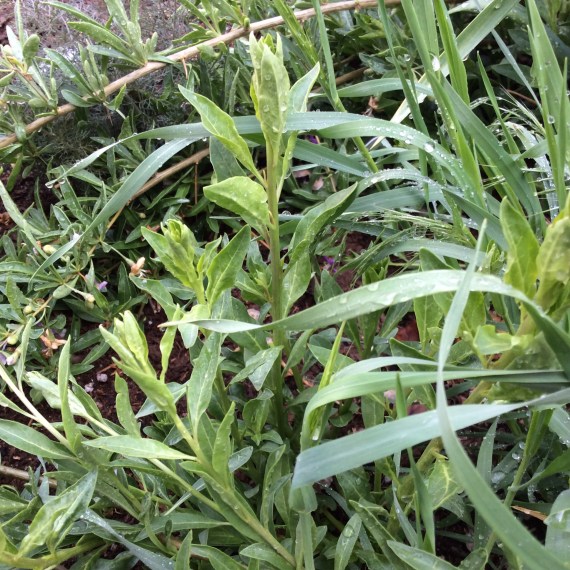
This spring I started to experiment with other shoots. I have been eyeing the invasive tendencies of my goji bushes, which routinely send suckers out 10 feet to send a shoot up right where I don’t want another goji plant. They are turning up everywhere as the weather warms.
image

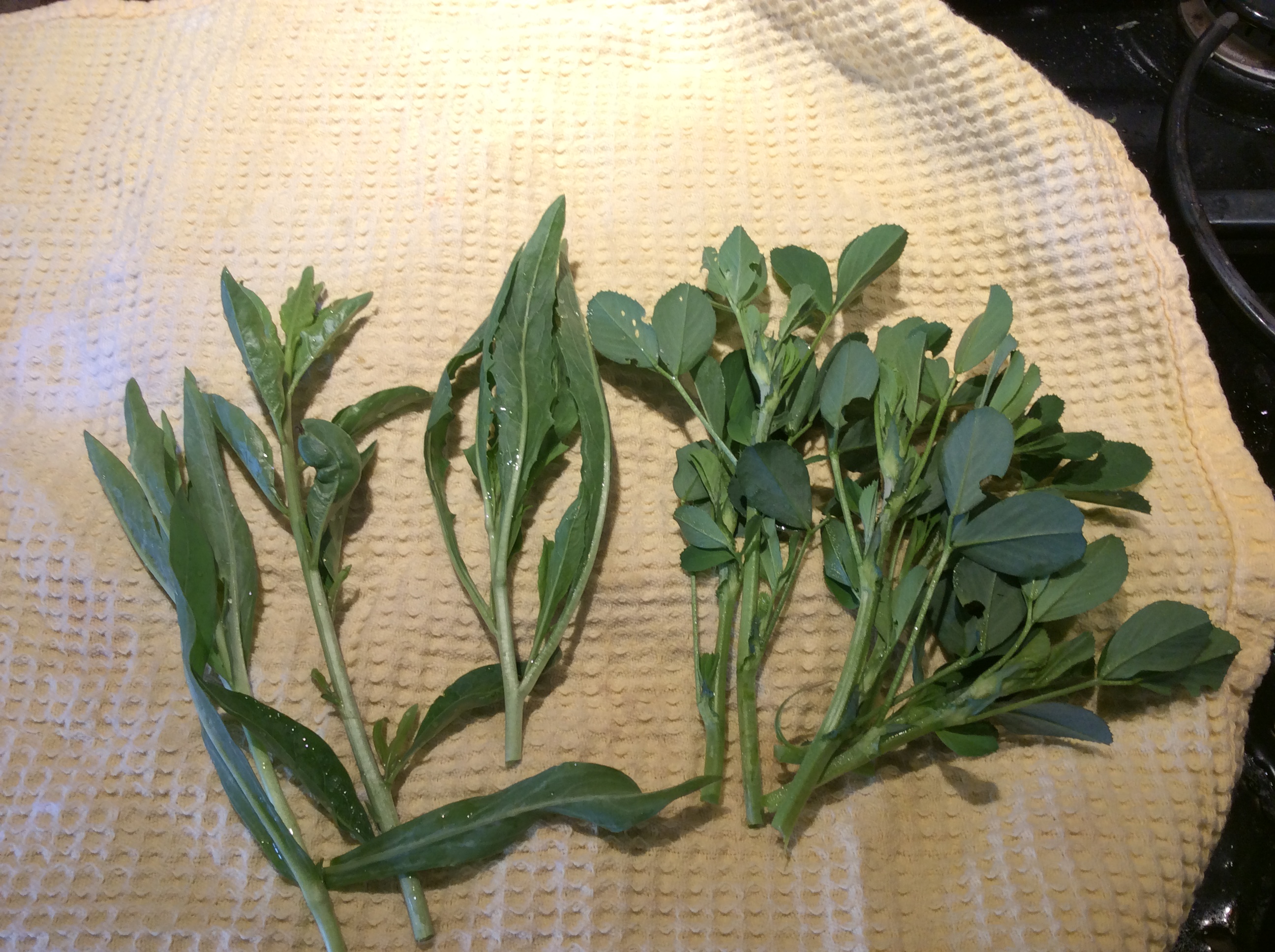
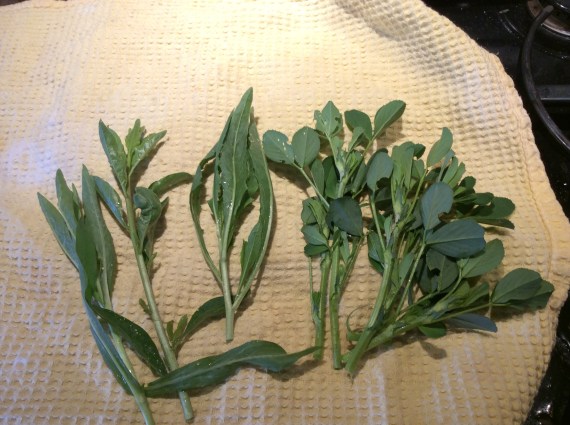
I knew that their foliage was edible but had never been much impressed with the taste, and there aren’t many leaves per bush. The shoots, on the other hand, are bulkier than the leaves, green, tender, and a nuisance unless removed. Yesterday I gathered young shoots of  silene (bladder campion,) goji berry bush, perennial arugula, and alfalfa to experiment with ( shown L to R below.) I wouldn’t try cooking with any shoot that didn’t break off with a clean, brittle snap. You don’t want them woody.
image

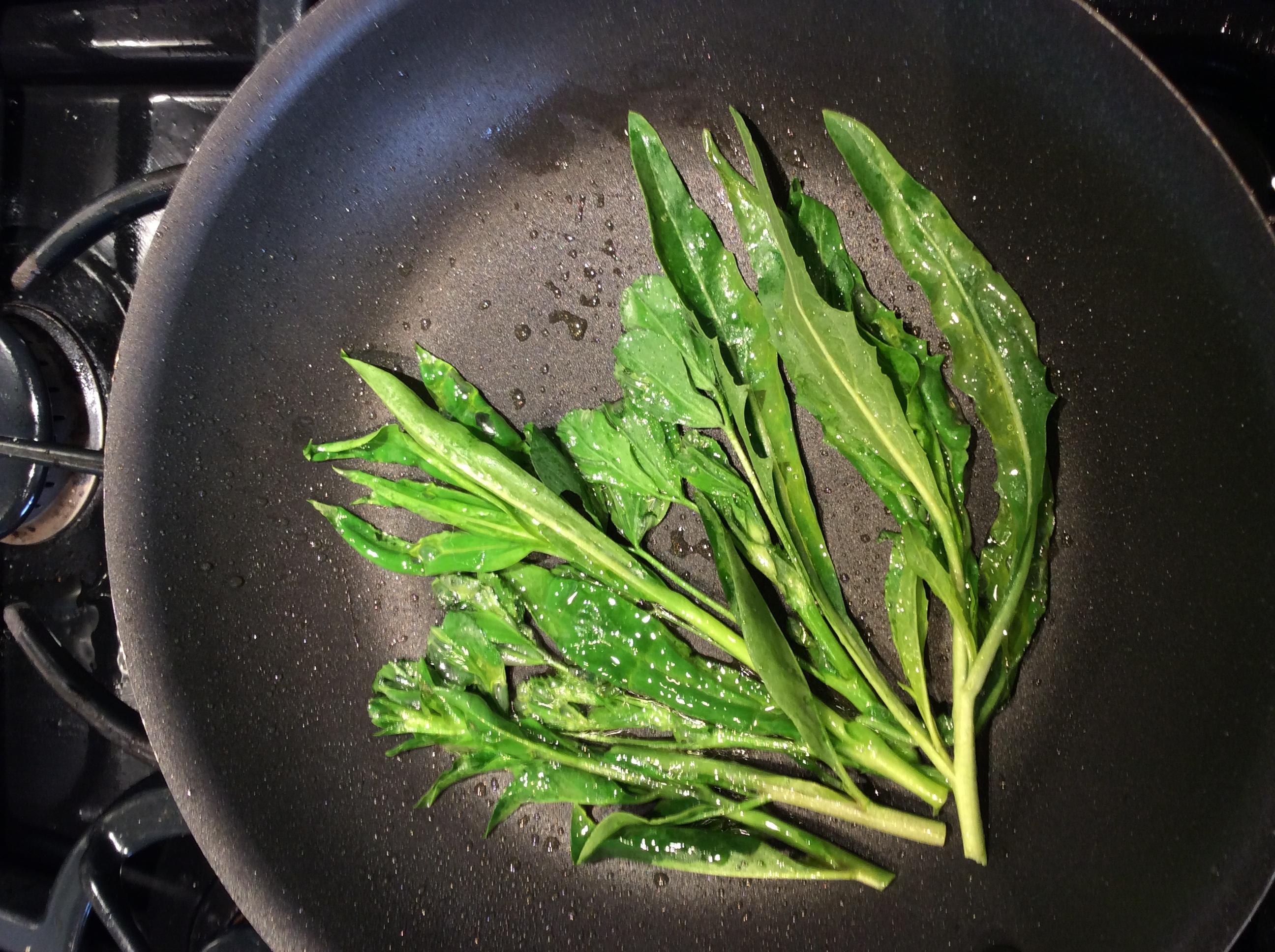
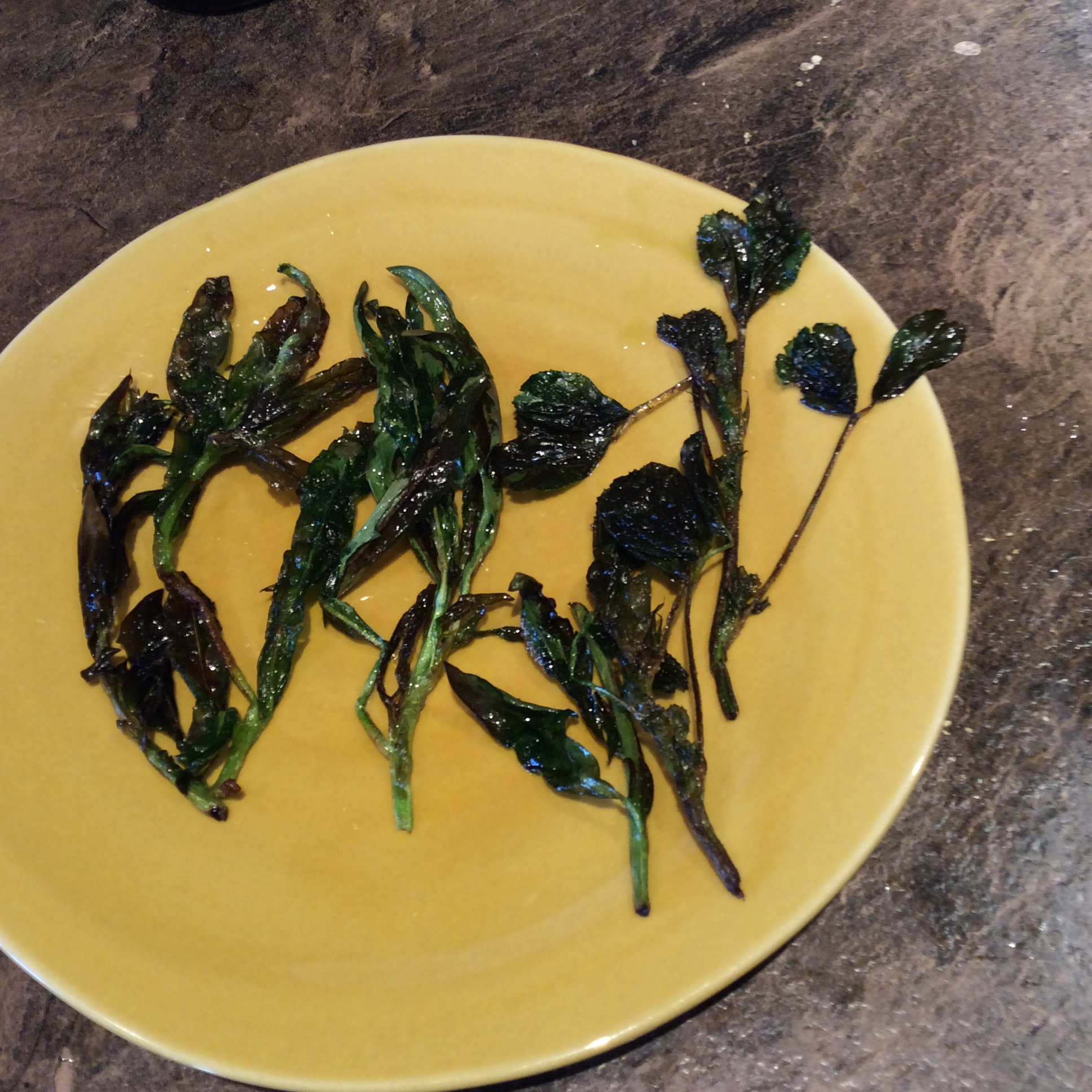
I didn’t cut them up, just washed them and let them drain. Then they were put in a skillet with some olive oil and fried over medium-high heat until the leaves were crisp and browned. I would guess that it was about two minutes a side. Watch carefully; the line between browned and burned is crossed in milliseconds.
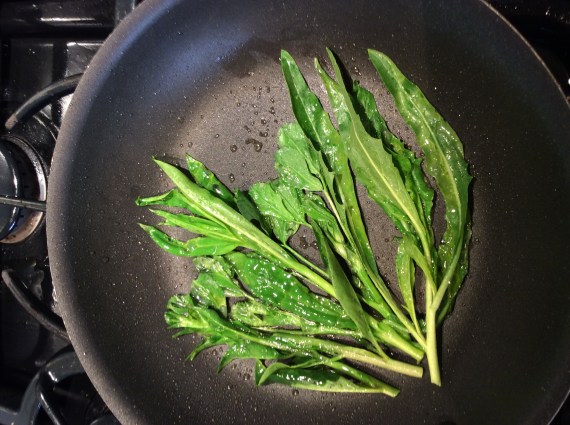
image

They were drained on paper towels, salted, and eaten.
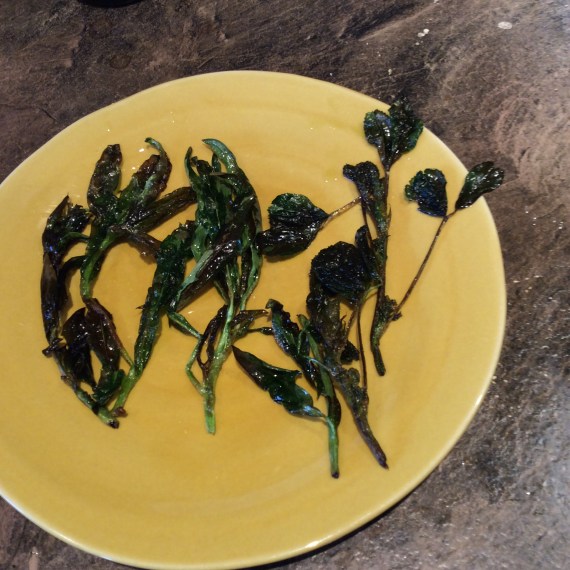
image

They were actually a rich brown in spots, not black as they appear in my photo. The alfalfa and silene shoots were crisp and pleasant enough to eat, but all I could taste was olive oil and salt. I had used a wonderful olive oil so I didn’t mind that, but I do like a vegetable to taste of itself.  The stars were the goji and perennial arugula shoots. The hot and mustardy flavor of perennial arugula was tamed and made interesting but not excessive, and the goji shoots had an herbal flavor and a delightful texture. I will definitely cook them again. I can easily cook them for my husband and myself, but they need lots of room in the skillet to crisp, so I don’t think it’s practical to make them for more than two people. They are too fragile to withstand being dipped into anything, and are best eaten on their own. They are a passing fancy and to be enjoyed as such.

I only wish that all my invasives could be dealt with by eating them.

There are many other shoots to consider, and this is a time of year for perennial veggies to shine. Meaty young milkweed shoots should be wonderful. It has taken me three years to get a milkweed patch to germinate so mine are still spindly infants, but if you live in an area where it occurs naturally, do give it a try. Asparagus, the classic shoot, is wonderful when pan-fried like this. Young slender green onions can be treated this way with good effect, and green garlic could be great, although in this one use I would use only the white part, since the leaves can seem stringy if not chopped in cross-section. I will soon be experimenting with shoots of young wild lettuce as it starts to bolt. I think these would need to be blanched first to reduce bitterness, but I’m not sure yet.  I’m very fond of using the fresh tender shoot-tips of coppiced mulberries as a green, and I think they would be very good given this treatment, but they don’t come along until about June, so it will be a while before I find out. See here for a discussion of the ins and outs of selecting and eating mulberry leaves.  The young second-year stems of chard leaves that emerge when an overwintered plant sprouts in the spring, before it starts bolting to seed,  might be good for this, trimmed of their green leafy bits and maybe cut in inch-long chunks if they seem a bit on the stringy side. And I have written before about using the young flowering shoots of scorzonera this way, and they are definitely the highest culinary incarnation of that tough perennial.

I often mention Cook’s Treats, the series of improvisational tapas for one that I enjoy in the kitchen when nobody’s looking and I’m doing other things. Four or five tasty shoots, thrown in your smallest skillet with olive oil while you’re working on other things, make a great cook’s nibble. You will need to give them your undivided attention for a few minutes and that’s all, which fits well into the rhythm if many kitchen tasks.
Wild or Cultivated? Both. Also Delicious.

image

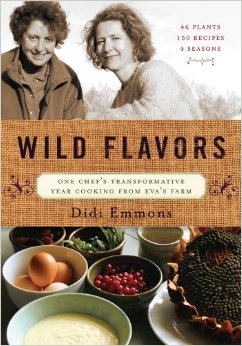
As a general rule, I try not to review cookbooks until I have owned them for at least a year.  I buy them at retail, paying the same price that my readers will eventually pay, and then I read them, cook from them and think about them.   Many cookbooks that seemed very enticing when I first brought them home are relegated to distant shelves a year later.

This one still has a prominent place at my bedside, which is my favorite place for reading and thinking about food. Chef Emmons  writes about a year that she spent cooking from a wildly varied organic vegetable farm, Eva’s Farm.  This farm seems to be doing on a very large scale what I am trying to do on my property on a very small scale, i.e. there is a little bit of everything and no clear line between the cultivated plants and the wildlings.  Lambsquarters and nettles are given the same culinary consideration as spinach and chard, but there is no particular emphasis on their wildness; they’re just there.  This is absolutely as it should be, in my view. The difference between a cultivated plant and a weed is a rather slight one.

The recipes read as an ongoing series of seasonal improvisations on the level of “see it growing, cook it, eat it.”  They certainly work if you want to follow them closely, but in my view are better read as a vision of the garden through the eye of a cook, who might see infinite possibilities but can only cook one of them at a time. There is an emphasis on frugality but not an obsession with it. The use of herbs in lavish free-form ways is a delightful subtext. The sidebars are full of interesting thoughts about farming, cooking, and just being alive. The recipes include meat and dairy products and, in general, everything that might grow on a vegetable farm or be bartered for.

In brief, I love this book, use it, and recommend it. I put it aside this winter, but when the first greens showed above ground, it was back at my bedside. It looks a bit worn and has a food stain on the cover, which tends to distinguish the cookbooks that I read from the ones that I use.

The Plant That I Can’t Do Without

image

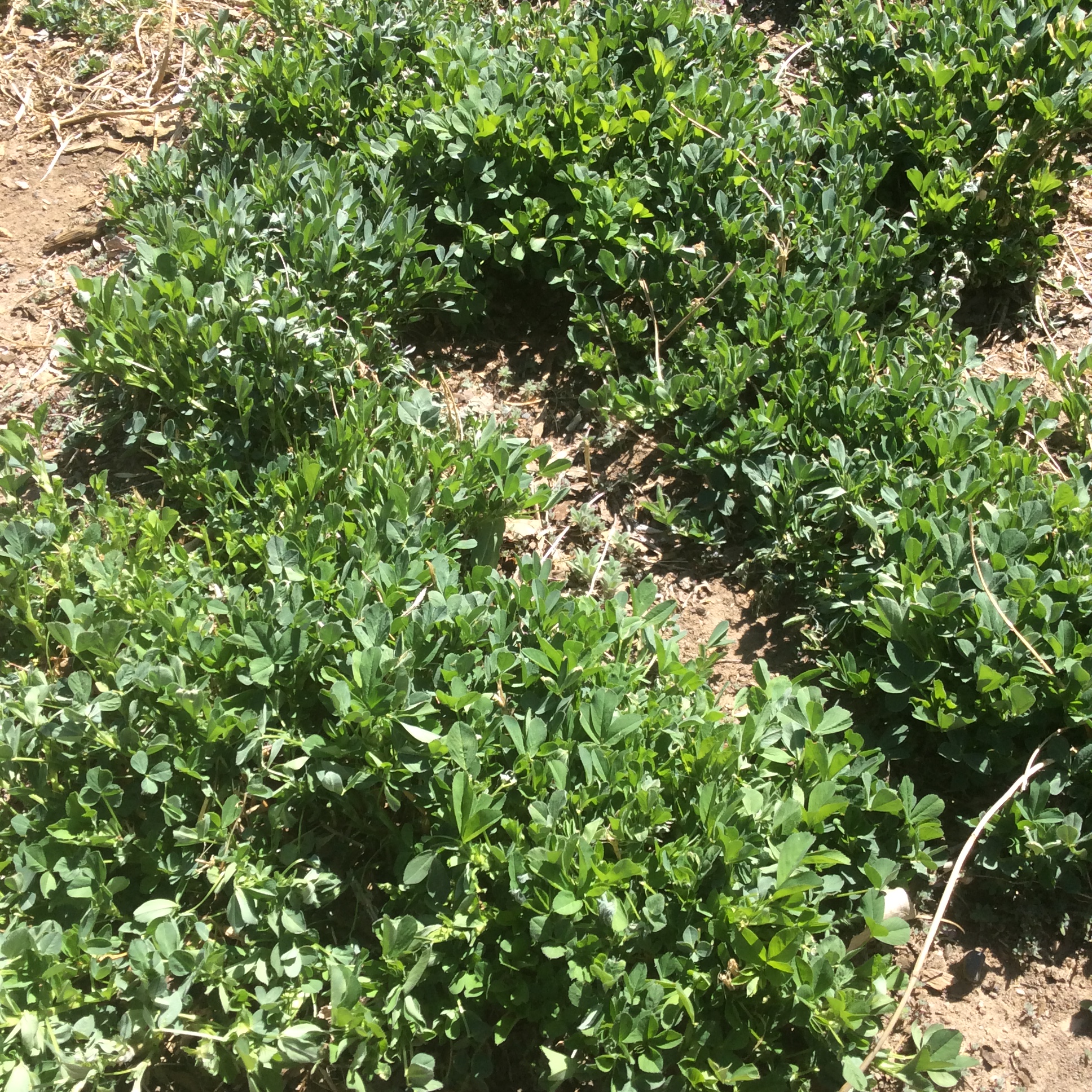
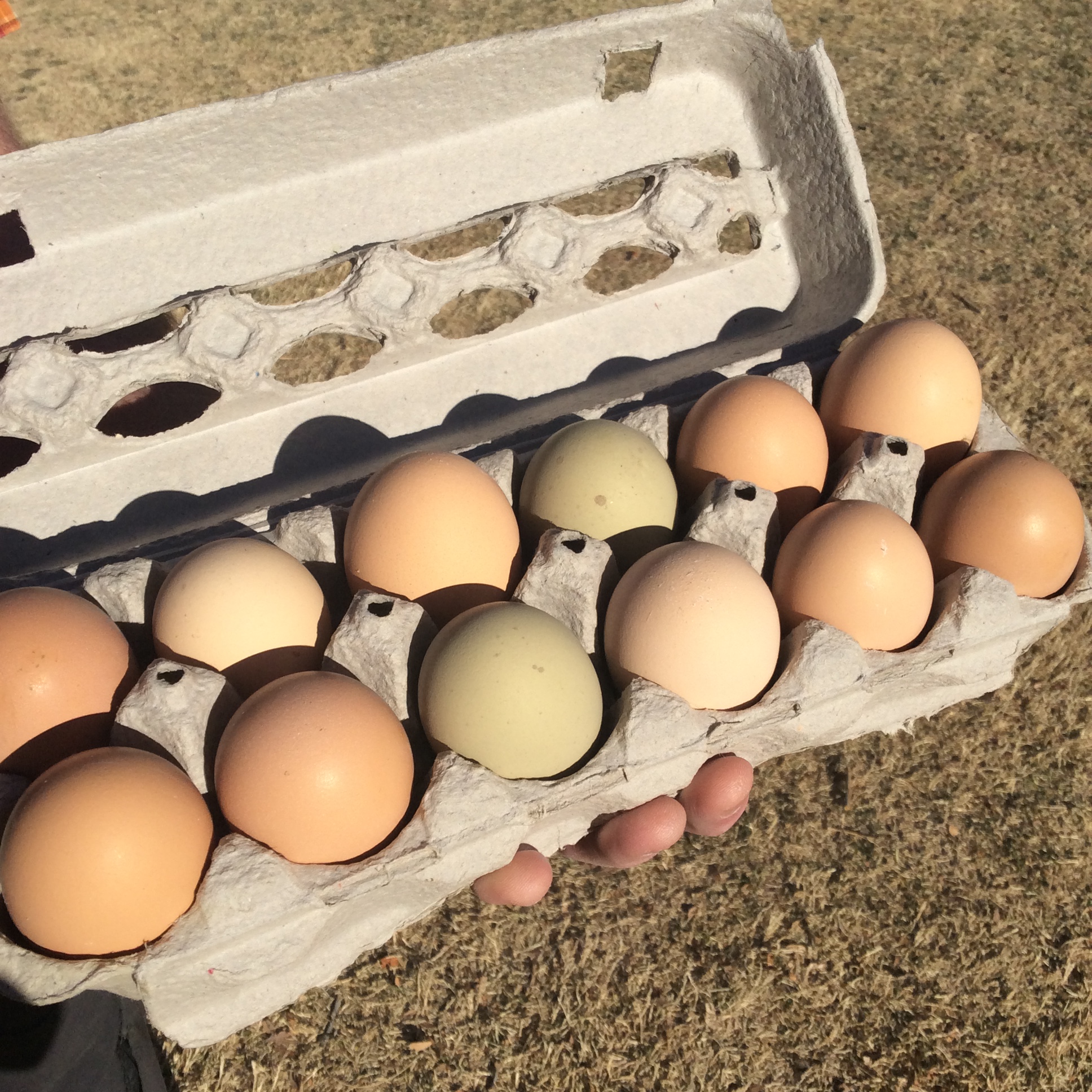
If I were a poet, I would write a hymn to alfalfa.  This workhorse plant is now all over my small property, improving soil and feeding the animals and indirectly feeding me.  For the first couple of years I labored fruitlessly to try to grow enough grass or clover to make a picnic circle, but ultimately I gave up and seeded the area with alfalfa.  What a gain in utility.  Alfalfa thrives in my alkaline soil. Its roots are reported to go down as much as 30 feet deep, and it is fairly drought resistant.  It is a bit sparse the first year but then fills out nicely. It fixes nitrogen and improves the soil. Early in the spring, usually by mid-March in my area, the vibrant green leaves are forming clumps.  It is a remarkably nutritious green, however I don’t usually eat it myself, although I will clip a few tender leaves off the tips and put them in cooked greens mixtures.  Chickens love fresh alfalfa, and it is quite astounding how much of it they will eat. Of course, this is providing all sorts of nutrients and greatly increasing the beta-carotene and omega-3 fatty acids in the egg yolks.  The yolks are beautifully vibrant orange. I grab handfuls of stems and cut them close to the ground with scissors, then go to the chicken pens and cut the stems into lengths 1 to 2 inches long, to make the plant easier for the hens to eat.  They start jumping against the door as soon as they see the alfalfa coming.   My goat relishes a handful of fresh alfalfa as a snack, although mostly she eats dried alfalfa hay.  I have little patches of alfalfa all over the yard now, wherever I had a bare space to fill, and I let at least one patch go to flower for the pleasure of seeing the bees mob the blue-purple blossoms.  I would estimate that each clump is cut four to six times between March and October.

I still wish that I had a lush smooth clover lawn to picnic on; alfalfa is clumpy and by the end of the season it is stiff with all the stems that you cut. You can’t sit right down on it.   But a large sheepskin in between you and the alfalfa makes it a much more comfortable resting place, and it is far more useful and durable than clover. Currently I’m experimenting with planting fruiting trees and berries into the alfalfa patches to see how they coexist. My hope is that the alfalfa will provide some nitrogen for the trees. I hope to report back in a year or two.

If I think about my property as a factory, alfalfa is mining the nutrients from the subsoil, combining them with water, carbon dioxide, and sunlight to make edible food, and transporting the food to the general marketplace at the soil surface. The chickens are eating from the market, breaking down the 16-carbon omega-3 fatty acids found in plants, and re-forming them into 18 carbon omega-3s that people can readily utilize, as well as making proteins and concentrating caratinoids and other nutrients. They contribute eggs and sometimes meat back to the common marketplace, where I “buy” the foody products with my labor and feed input, and happily devour them. It’s a beautiful chain.

image

These delicious eggs can be thought of as little bombs full of all the nutrients in alfalfa. But they are much easier for people to eat.