Archive for the ‘front yard gardening’ Category

Bold Scrambled Eggs, and Notes on Egyptian Onions

I love Indian food and cook it frequently, and I especially love the simple dishes that make quick meals in Indian homes. This is a cuisine that vegetarians should get to know well, since the population of India is about 40% vegetarian and vegetable dishes abound. But it can seem daunting to view the ingredient list of many Indian recipes, and the toasting and grinding of spices for each dish can require more time than is available.

So start with simple scrambled eggs. These are loaded with bold flavor, and easy to make. I lean low-carb so I eat them plain, but you can scoop them up with warm parathas or warmed-over naan from last night’s take-out, or pat out squash flatbread thin and use that. It’s always a good investment in your health to use the best eggs that you can lay hands on if you don’t keep your own hens. Check out the farmer’s market and get eggs from hens that have been fed a lot of greens, since bugs and leaves are a big part of the natural diet of a hen.

The only out-of-the-ordinary prep that you need to do is to toast some whole cumin seeds in a dry skillet just until they are fragrant and a little darker and then grind them in a spice grinder. In the summer I do a tablespoon at a time so that I always have a bit on hand, but don’t make too much because once toasted and ground it doesn’t stay fresh for long.

Be sure to add salt to the vegetables as they cook, as directed. This is part of getting them to soften properly and assures that they are seasoned through.

For two hungry people, you’ll need:

3 eggs and three egg yolks, or 4 eggs if you prefer, beaten a bit

4 large green onions or a bunch of the little grocery store type, cut in 1/4″ slices crosswise, whites and greens kept separate

Ghee, 2-3 tablespoons, or neutral oil of your preference

one small bunch of cilantro, washed and chopped finely crosswise, stems and leafy parts kept separate

one teaspoon of ground toasted cumin seed

Heat the ghee in a skillet, and add the white parts of the green onions with a good pinch of salt and sauté over medium-high heat until cooked through but not browned. Add the onion greens and the cilantro stems and another small pinch of salt and cook until the onion greens look softened; taste one to be sure that they have become pleasant to eat. Add the beaten eggs and yolks and cook, turning over with a spatula, until they are cooked to your preference. Taste for salt and add more if indicated. Add half the cilantro leaves and the toasted ground cumin to the pan and stir to distribute, serve, and top with the remaining cilantro leaves.

This is great as part of an Indian brunch for two as shown above, or by itself as a quick easy meal that can be on the plate in 15 minutes if you have the ingredients handy. You can also make a mini version in your smallest skillet with one big green onion, a few stalks of cilantro, and one egg, if you aren’t hungry enough for a meal but want a nutritious snack.

If you love green onions and want to have them around throughout the growing season, my blogging friend Luke has helped me figure out how to do it with Egyptian, or walking, onions. Once you have these sturdy onions, you have them. To get started, I ordered a hundred top-set bulbs off Etsy one fall when they were plentiful. It’s a bit of an investment by gardening standards, but it’s a one-time thing. Choose an area with good rich soil that gets plenty of sun and water. When the top set bulbs arrive, plant 20 of them and keep the rest in a cool dry place well away from direct sun, with excellent air circulation. No plastic bags. The following spring, when the ones you planted in the fall are about 6″ high, plant 20 more. Keep going in like fashion until you have succession-planted them all. If I notice the ones in the storage box sprouting, I put the box in the refrigerator until they are all planted.
When the fall planting is over a foot tall, but has not yet sent up the tough inedible central stalk that forms the top bulbs, start harvesting. This is important: snap or cut them at the soil surface rather than pulling them out. The bulb and roots that you left in the ground will sprout a few new green onions for later in the year. After managing your patch this way for a year, they will get so thick that they are pretty well defended against weeds and you will need to start pulling some out by the roots to prevent overcrowding. At that point, you can also start deciding when to let some go long enough to form top bulbs, and you can either start a new succession bed or give them to a friend who wants to try it.
At this point I let mine perpetuate themselves from the ground and rarely let them form topsets. I keep two smaller beds, one in full sun and one in partial shade, and they yield at different times and keep a fairly good succession going with minimal input from me except harvesting and cooking.

I do top-dress periodically with well-rotted goat manure and kelp meal. I’m a great believer in kelp meal, for bringing back onto the land some of the trace minerals that we washed off it into the ocean. I strongly prefer the organic Icelandic kelp meal from Thorvin, because it is harvested from an area of the ocean tested for heavy metals and some of the other nasties that we are washing into the water. I don’t want a closed system on my tiny urban farm, because any trace mineral deficiencies that existed wouldn’t get corrected. The Thorvin meal would get pretty expensive on a commercial scale, but for the small urban homesteader it’s a healthy investment. I also use it generously as a supplement for my chickens and goat. For the chickens I mix some into any moist food that they like to eat, such as any leftover cooked greens or wilted salads, and for the goat I mix it with organic blackstrap molasses to make a treat that she will trample me to get.


The Squash Chronicles I: Ambitious Summer Squash

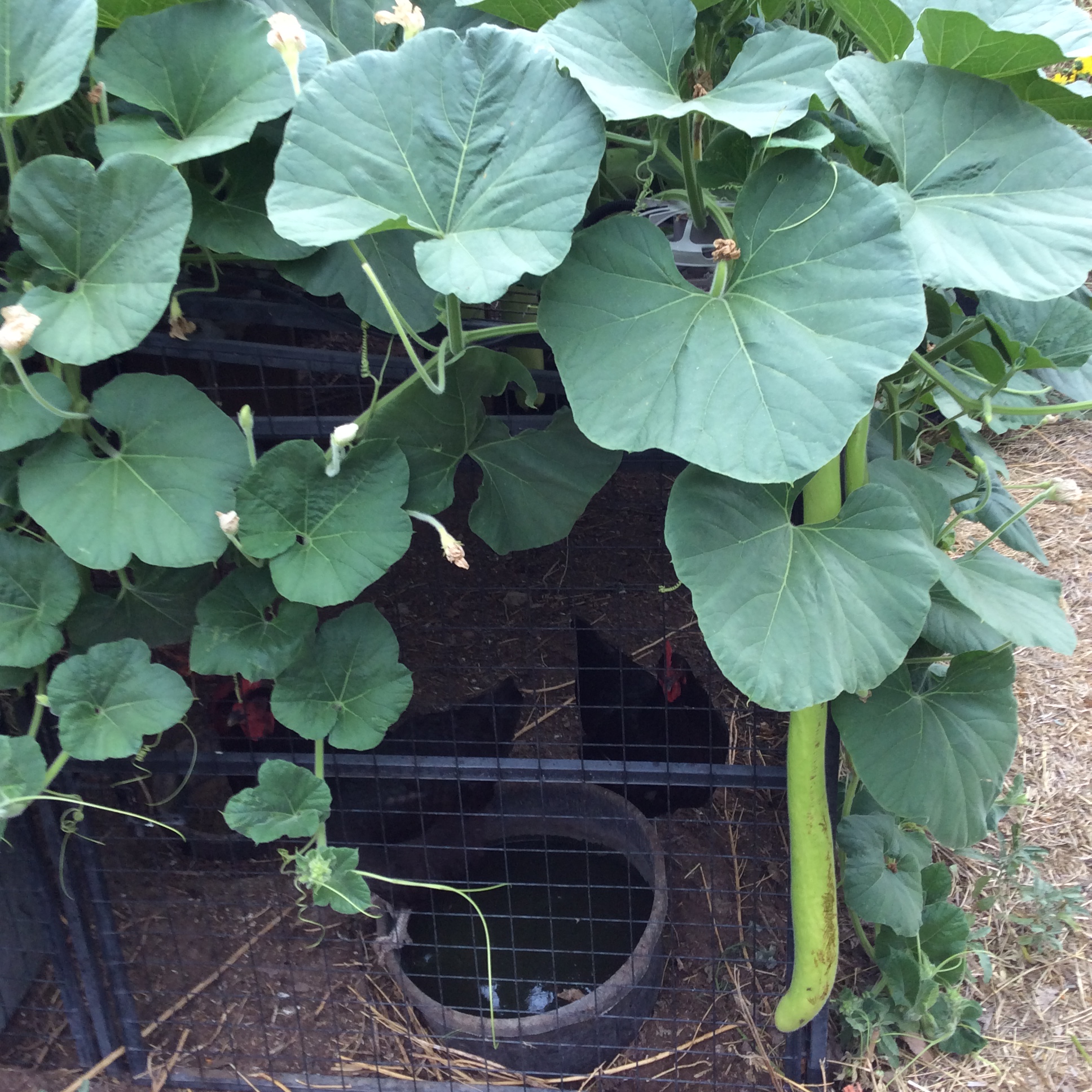
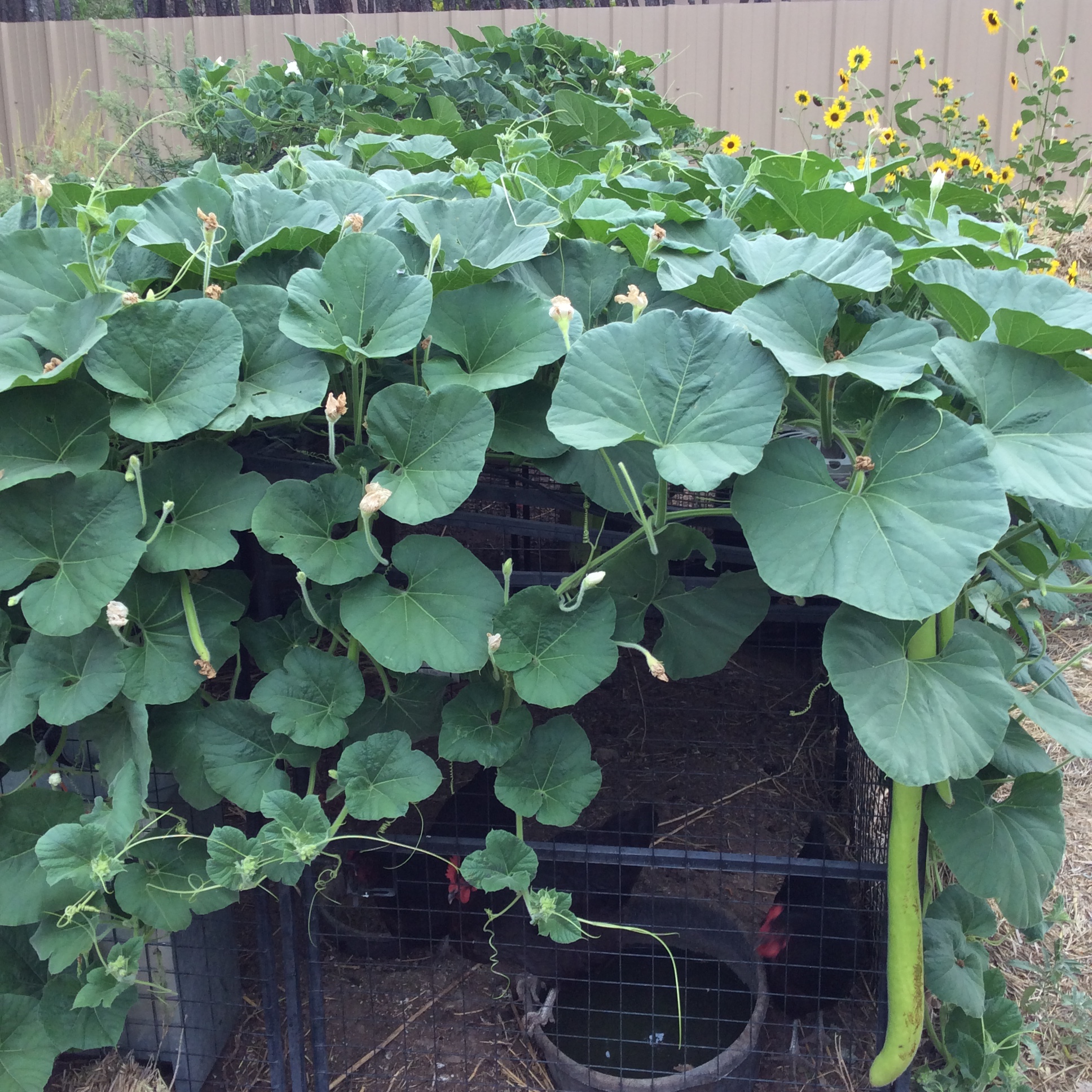
Every year  I lose my zucchini to diseases in late summer, despite the fact that I always plant whatever is most highly touted for disease resistance. This year I decided to try some new squash types  and see if I could overcome the disease issues, and still get some summer squash. The two I planted were Thai bottle squash and Italian Serpiente squash, both from the entrancing Baker Creek seed catalog.   I planted a couple of seeds of each in the compost pile next to the chicken coop, and thinned to one plant of each when they were small.  The results were as you see above; they are quite frighteningly successful. The vines are up to 30′ long, so be prepared.  They covered the chicken coop in nothing flat, providing some nice shade for the hens, and I was amused to note that wherever squash formed hanging down into the chicken run, the hens would jump up and peck them down to stubs.

Both can be picked at any point when your thumbnail will still penetrate the skin without significant pressure, and used just like zucchini.  They taste like zucchini, by which I mean they really have very little taste and need some help from seasonings.  When cooking any summer squash I prefer to slice it, salt heavily, and let it sit for 30 minutes to an hour and then squeeze out the large amounts of excess water by wringing the squash slices in a dish towel. Proceed to cook any way you like.

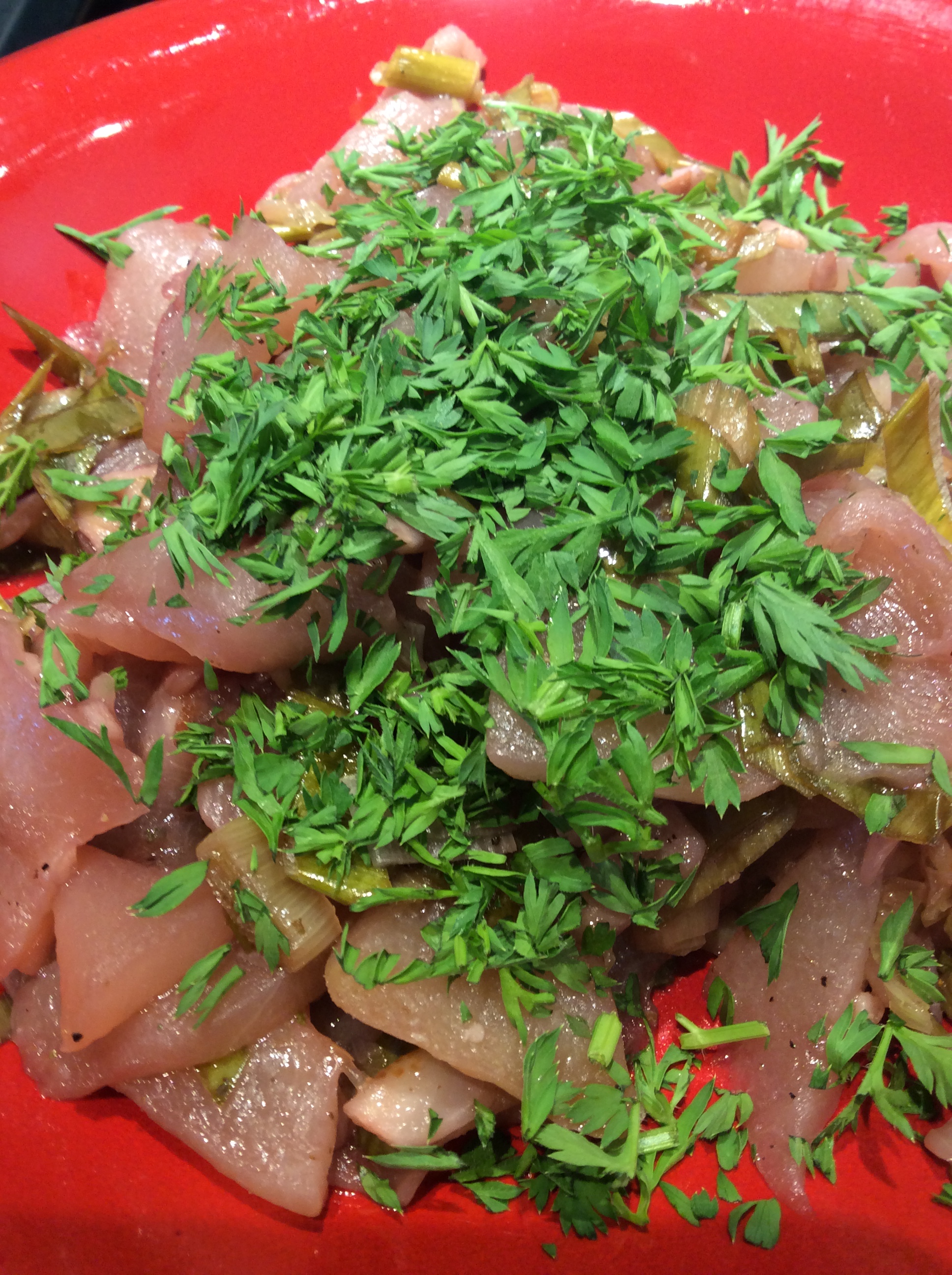
I like to make low-carb wrap bread out of  summer squash, and I’ll write about that in the near future, but today I want to encourage you to try marinated squash. Slice up one zucchini or a comparably sized chunk of a serpiente or bottle squash or whatever, salt heavily, and let sit 30 minutes or so. Meanwhile, chop a clove of garlic and slice a scallion or two thinly and put in a bowl large enough to hold the squash with half a cup of very good red wine vinegar. Add a half teaspoon of salt ( most of the salt you put on the squash will be squeezed away with its liquid) and herbs to taste. I like a few sprigs’ worth of thyme leaves.  Wring the squash slices out thoroughly in a clean dish towel, then fry in olive oil until the texture is the way you like it, which for me is done but not mushy. Dump the hot cooked squash slices in the bowl, stir the vinegar mixture through, and let cool to room temp, stirring a few times to distribute the seasonings. It can be made ahead and sit for a few hours, or refrigerated until needed, but do let it warm to room temp before serving.  When you are ready to serve, drain off all the excess vinegar,  pressing a bit to get any excess liquid out,  and toss with a quarter cup or so of your best olive oil and maybe add a small handful of chopped parsley or chopped young carrot leaves.  I like this as a side dish, and if you have some roasted pinenuts to sprinkle over the top, that adds deliciousness. Some crumbled queso  fresco would turn it into a light lunch, and it could be tucked into a wrap bread and eaten with a dip of seasoned yogurt or hummus for a more substantial meal  that would suit plant-based or vegetarian inclinations. Using a mildly sweet late harvest vinegar or adding a dash of honey, and finishing with chopped roasted salted pistachios would give the dish an interesting Sardinian sweet-and-sour turn.

As you can see above, the use of red wine vinegar gives the dish a pinkish cast that some people might object to. I use red wine vinegar because I make my own and love the flavor, but if it bothers you just use white wine vinegar instead.

The whole concept of a cooked vegetable salad goes as beautifully with Asian meals as with western style dinners. Try using rice vinegar and palm sugar or sweetener of your choice, adding a few teaspoons of chopped ginger along with  the garlic, and garnishing with scallions. Some slivered chiles would be great if you like heat,  and a handful of chopped cilantro would make a pretty and tasty garnish.


Of Spruce and Steaks

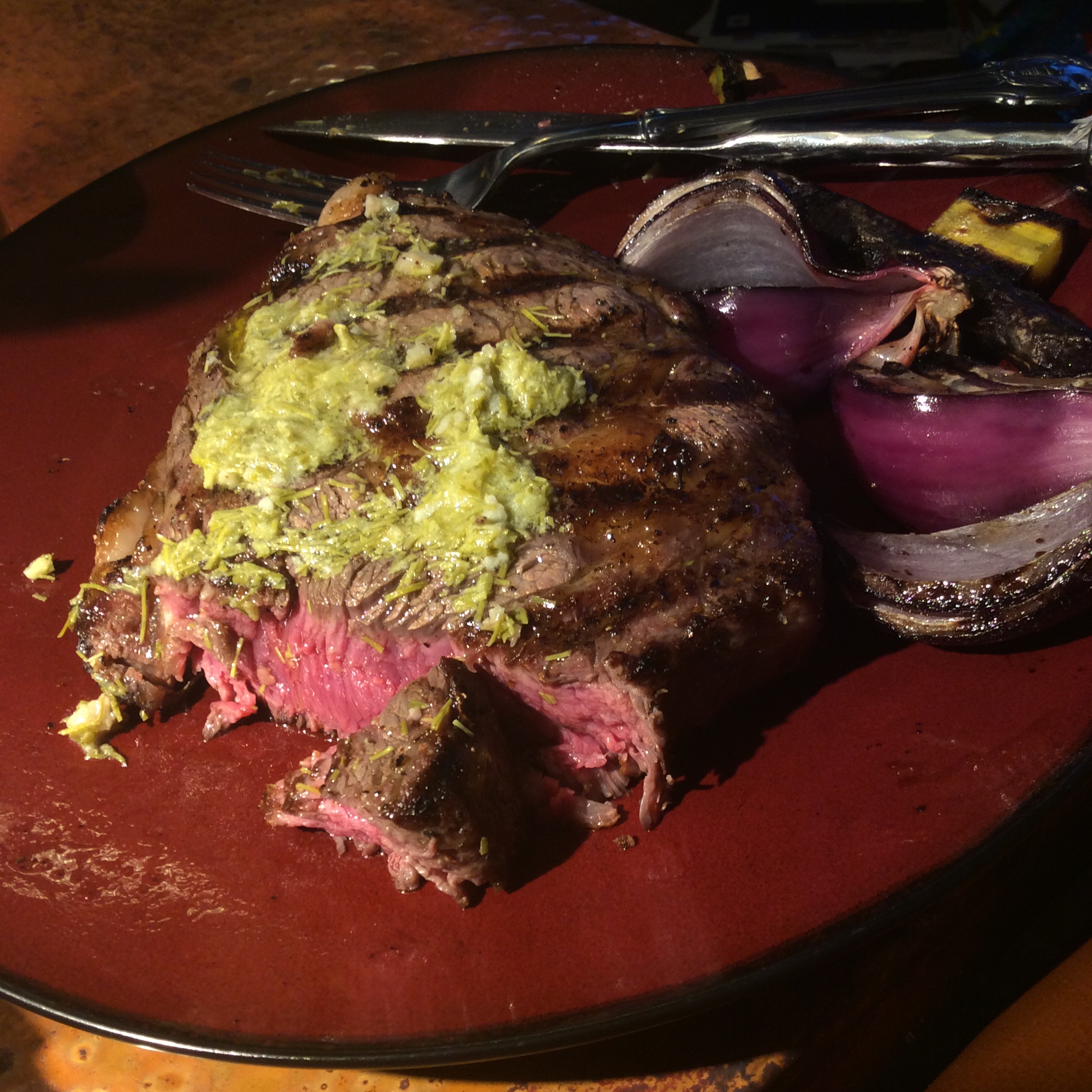
Every now and then I love a really good dry-aged ribeye on the grill,  and one of my favorite accompaniments is spruce tip butter.  The young growing tips of spruce trees in the spring have a fascinating array of flavors, ranging from bright and citrusy to something close to turpentine. I wander along my favorite trails tasting in until I find one that is on the spicy citrusy side, and  bring home the tips to chop and sauté in good butter for a few minutes. The spruce tip butter can then be frozen for use later in the year.  I like to freeze it in pats the size of large ice cubes, so that one pat is plenty of finishing butter for two steaks.  The frozen butter can be put on the steak for the last minute of grilling, and as the steak is finished for five minutes in a 200° oven it will finish melting luxuriously into the top.  If you happened to grill some onions along with the steak, this butter is delicious on them too, and it is a way of bringing your spring time hikes home for the rest of the year.

There aren’t many spruce trees in my area so this compound butter is the only thing that I make with the few tips that I have available, but if you have more trees available, you can consider other uses for the tips, such as spruce beer or Hank Shaw’s spruce tip syrup.


Baked Feta

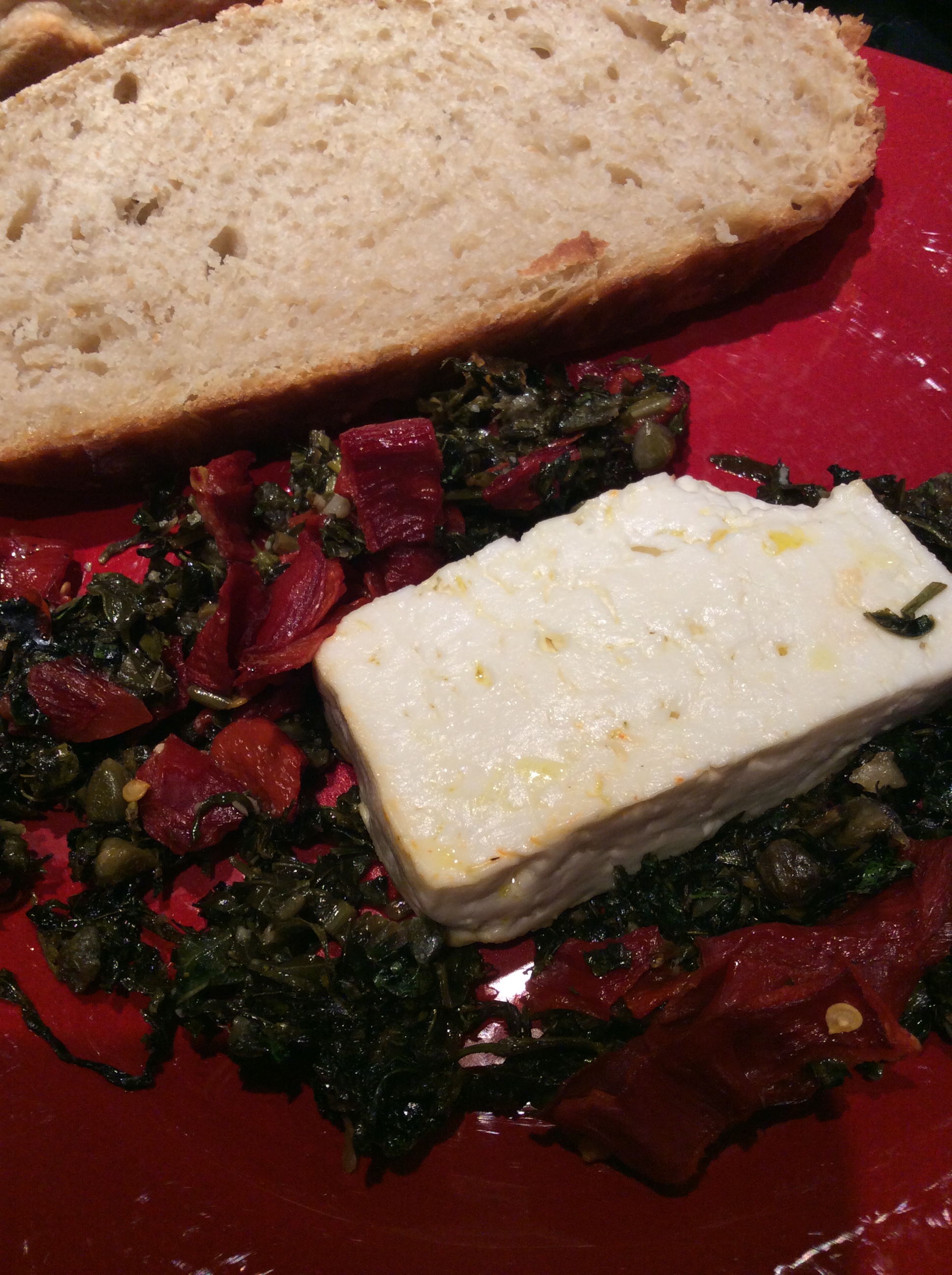
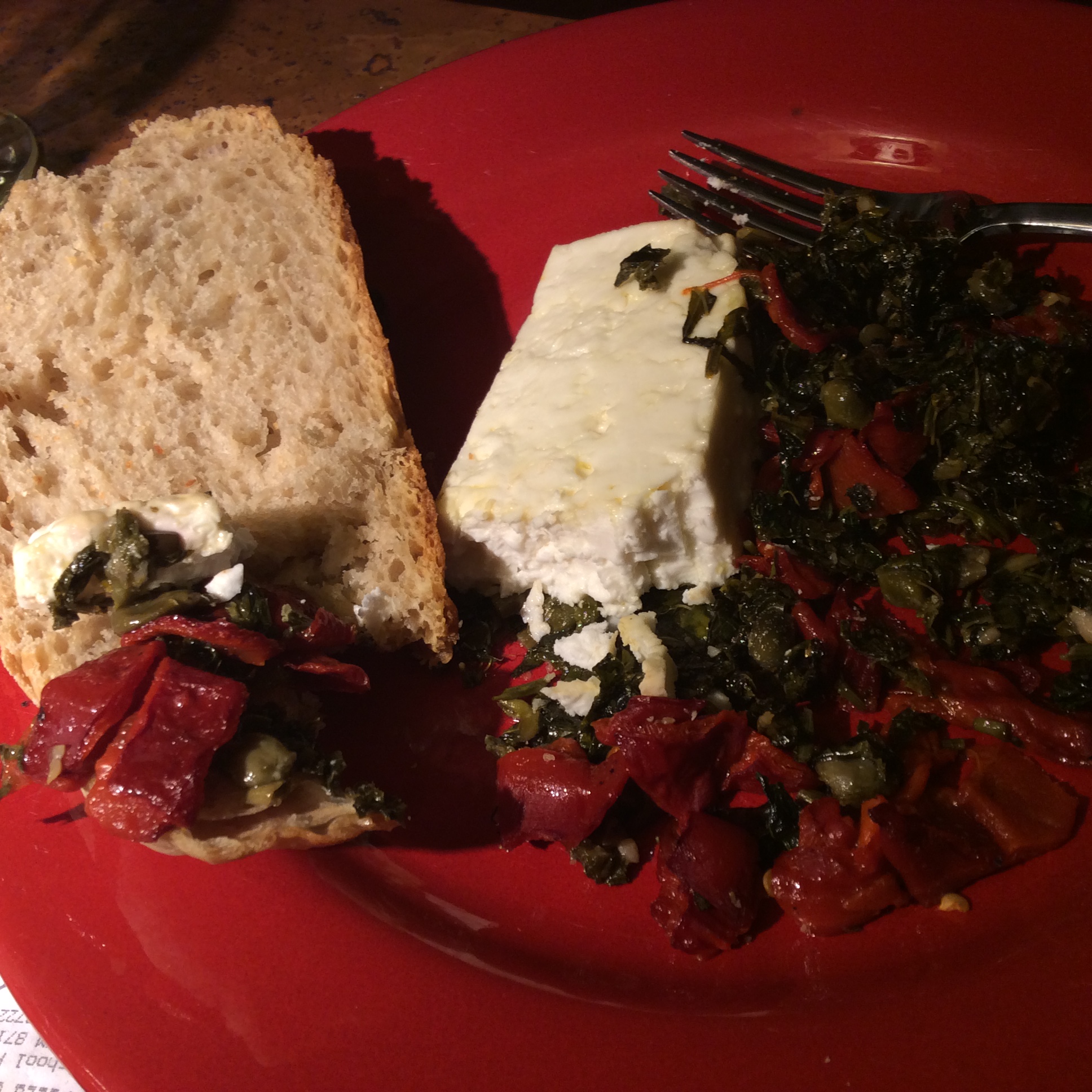
I love the texture that feta acquires when baked, firm and compact and steak-like and very different from its crumbly fresh incarnation,  and I love to season it with assortments of garden and wild greens gathered as the inspiration strikes.

For this infinitely adaptable recipe, you will need a quarter cup of drained capers, two cloves of garlic, a quart loosely packed of very flavorful chopped greens and herbs, plenty of extra virgin olive oil, and a block of feta sized according to your appetite. This dish can be anything from a meze to a full meal, depending on the size of the feta block. Just be sure that it’s high quality; this is a good time to check out your local Middle Eastern import store. Cut two “steaks” of the desired size, being careful not to crumble them.

Have ready olive oil, two cloves of garlic chopped, and a handful (maybe 1/4 cup) of capers, rinsed of brine and squeezed dry. An optional but very pretty addition is some red pepper, roasted, peeled, and chopped, or some red chiles roasted, peeled, and sliced.

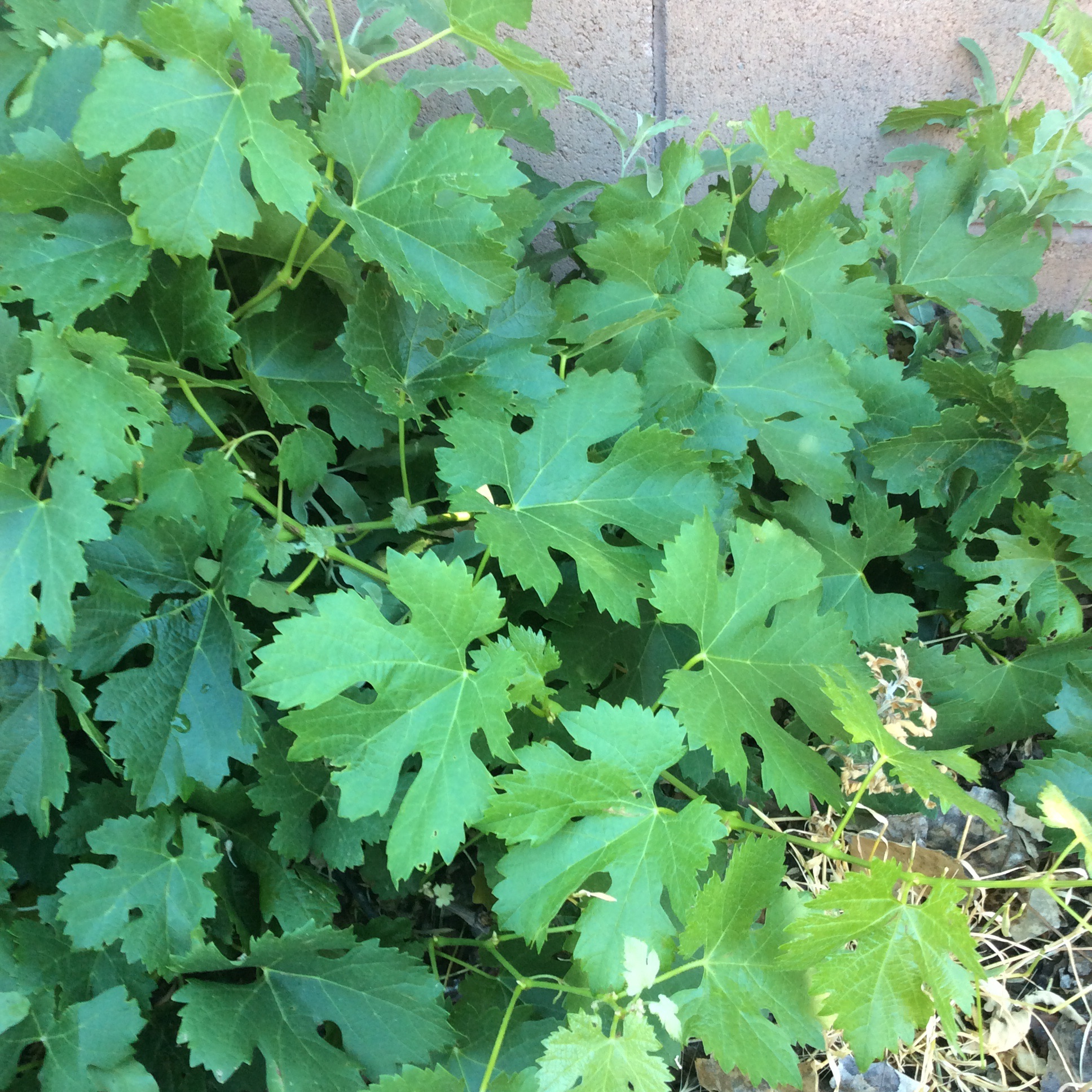
Next, choose your greens. I decided that I wanted the flavor to be bright, tart, and lemony as well as herbal, so I started with 15 good-sized wine grape leaves. If you are going to use fresh grape leaves, please read my post on choosing grape leaves first, because some are unchewable and will ruin your meal.

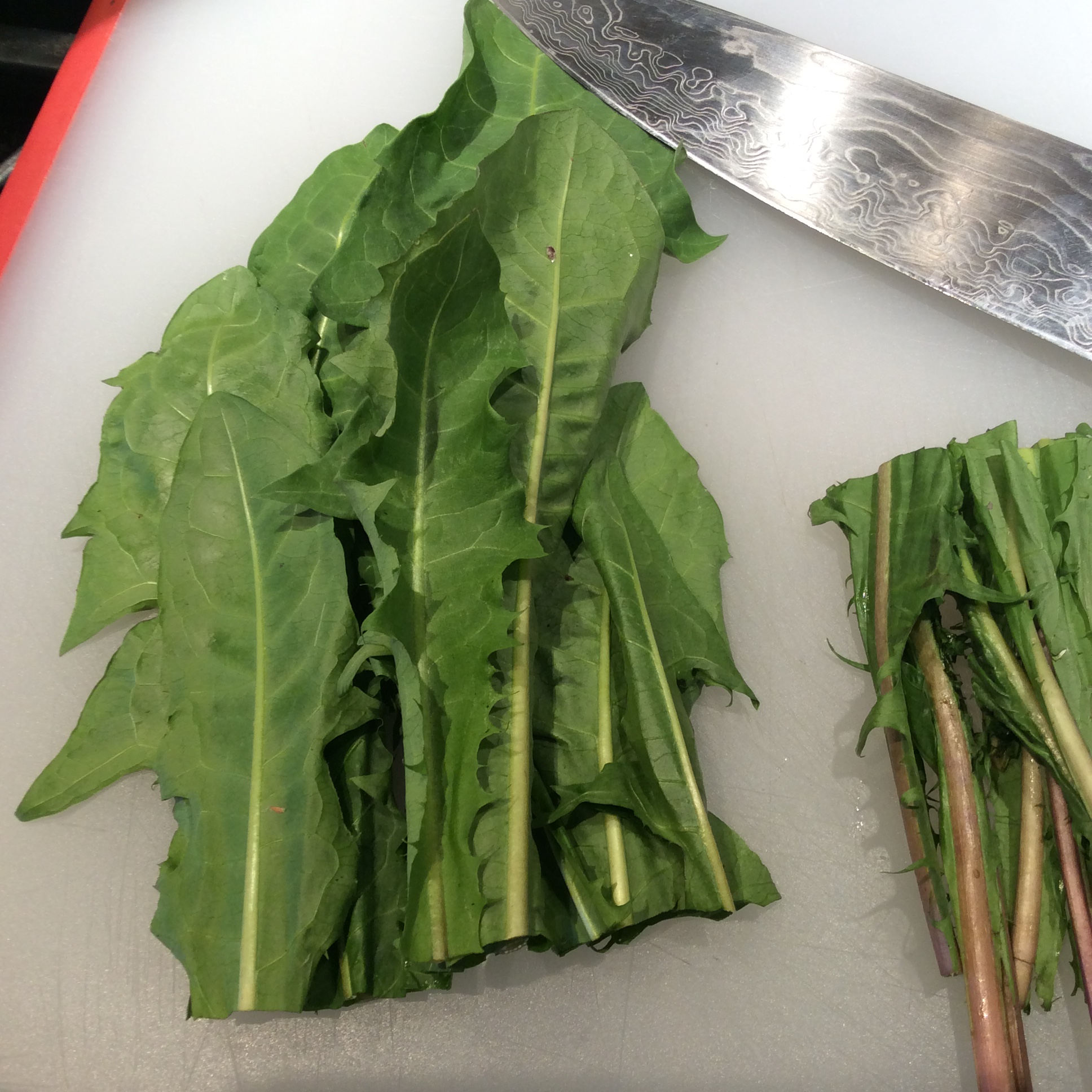
I added dandelion leaves, the new ones that have grown after the plant bloomed, which are tender and only slightly bitter. I used about a dozen, cutting the stringy ends off as shown.

Then a double handful of mulberry shoots, using only the ones that are new, bright grass-green, and snap off easily with very little use of force.

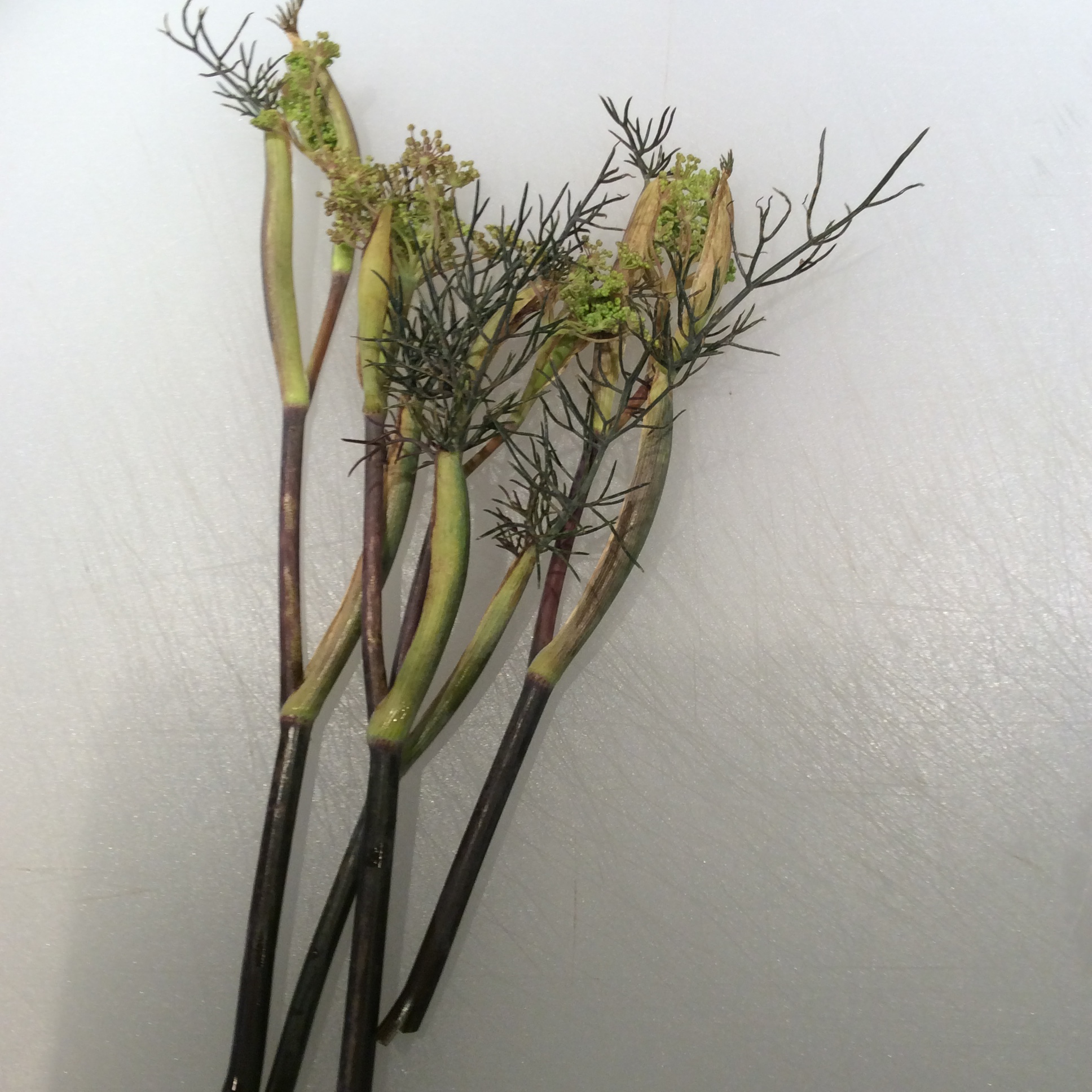
Finally, some fennel shoots, the top of the bloomscape as shown, before the flowers emerge and open. The stalks are tender, nonwoody, and wonderfully anise flavored at this stage. Once the flowers emerge, the stems become woody.

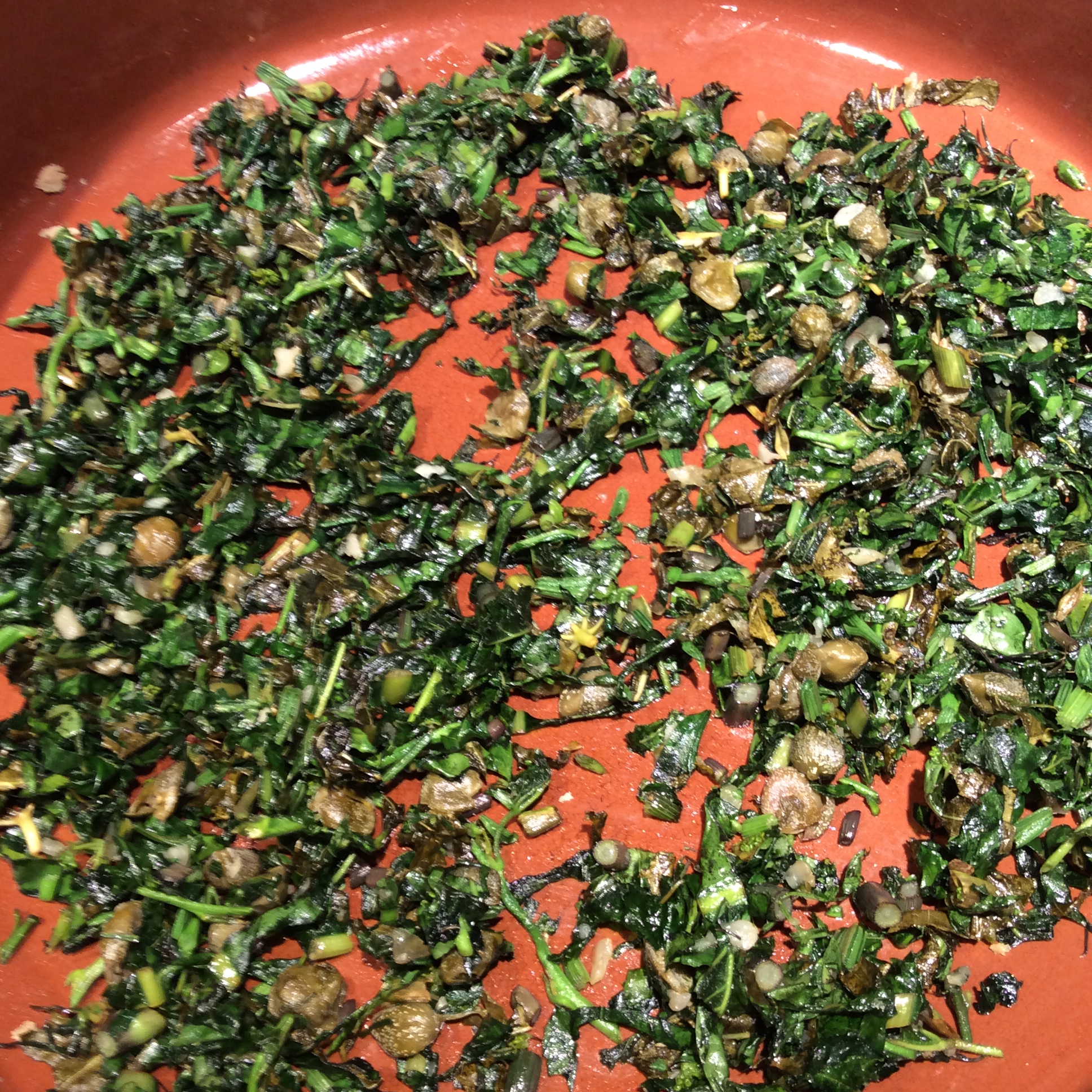
Wash all your greens and sliver them in fine cross-section. make sure the fennel shoots are cut in fine slices less than a quarter inch thick. Preheat the oven to 350. You will start cooking on the stove, but if you use a Spanish cazuela it can go right into the oven for the second step. Heat the dish and sauté the garlic in olive oil until just cooked but not at all colored. Put in all the greens and the capers and cook, stirring frequently, until the greens are cooked and soft. Taste for salt, but salt it on the light side, since you are going to add feta.

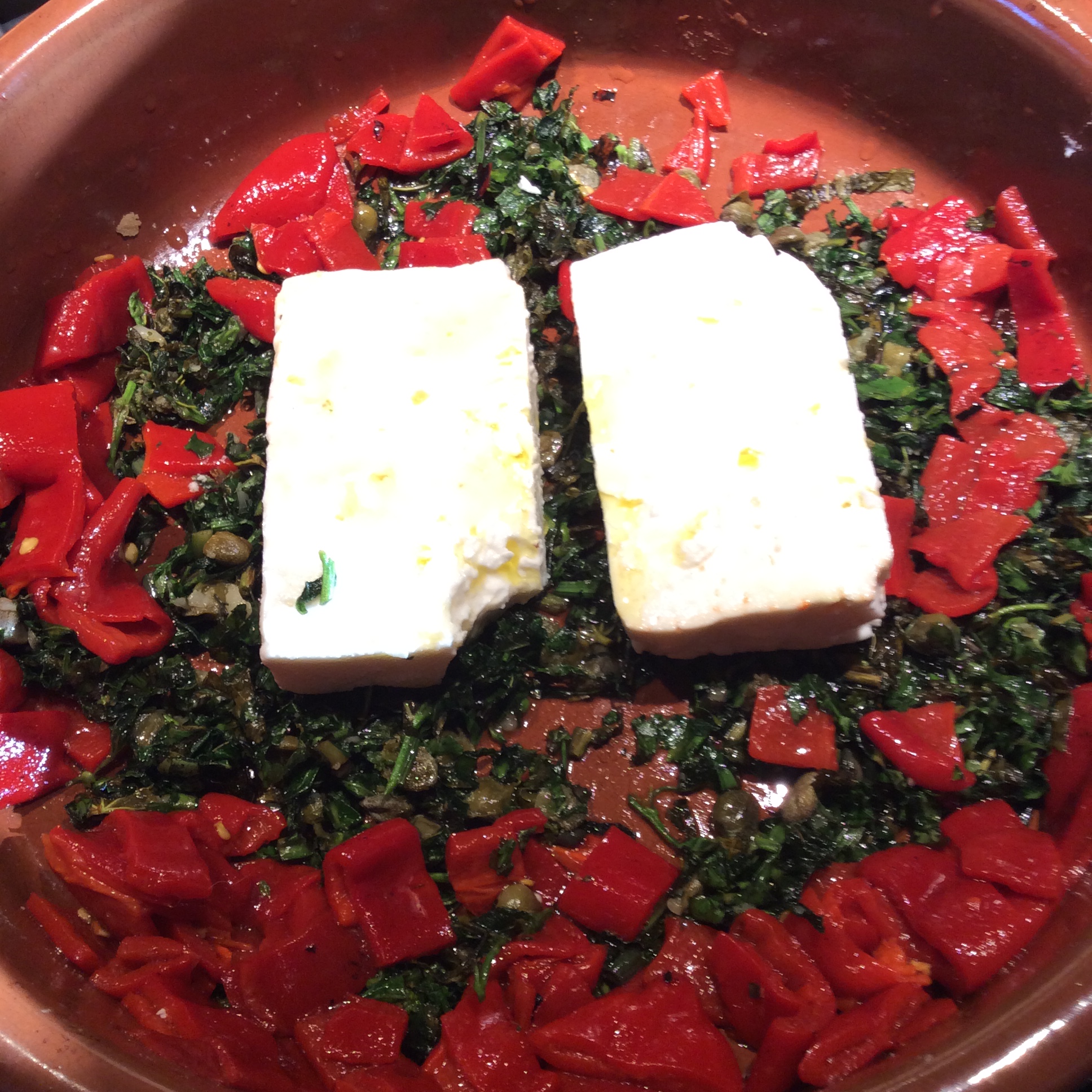
When they just begin to fry in the oil, remove from heat and scatter the red peppers or red chiles around the edges, then put the feta “steaks” in the middle and drizzle olive oil over all.

Bake at least 15 minutes or until the herbs and peppers look all cooked together, probably about 15 minutes. The cheese might color slightly at the edges but won’t brown. If you like it to brown, run under a hot broiler for a minute, taking care not to let the greens burn. Serve with sourdough bread if you can have it, or with a salad alongside.

I am sometimes the target (quite fairly, I might add) of complaints about imprecision. “A double handful,” the precisionists cry, what on earth is that? I reply that it’s the amount you have, and if you don’t have any, you probably have something just as good. I cut my eyeteeth on Elizabeth David recipes with her terse, one-cook-to-another directions, and I hate the mindless insistence of “precisely 1/8 teaspoon” sort of directions.  “But drizzle with olive oil, how much do you mean?” Somewhere I read the story of a new wife being taught a recipe by her Greek mother-in-law, whose directions included “Then close your eyes and pour in olive oil.” That’s how much I mean.