Archive for the ‘edible landscaping’ Category

The Squash Chronicles I: Ambitious Summer Squash

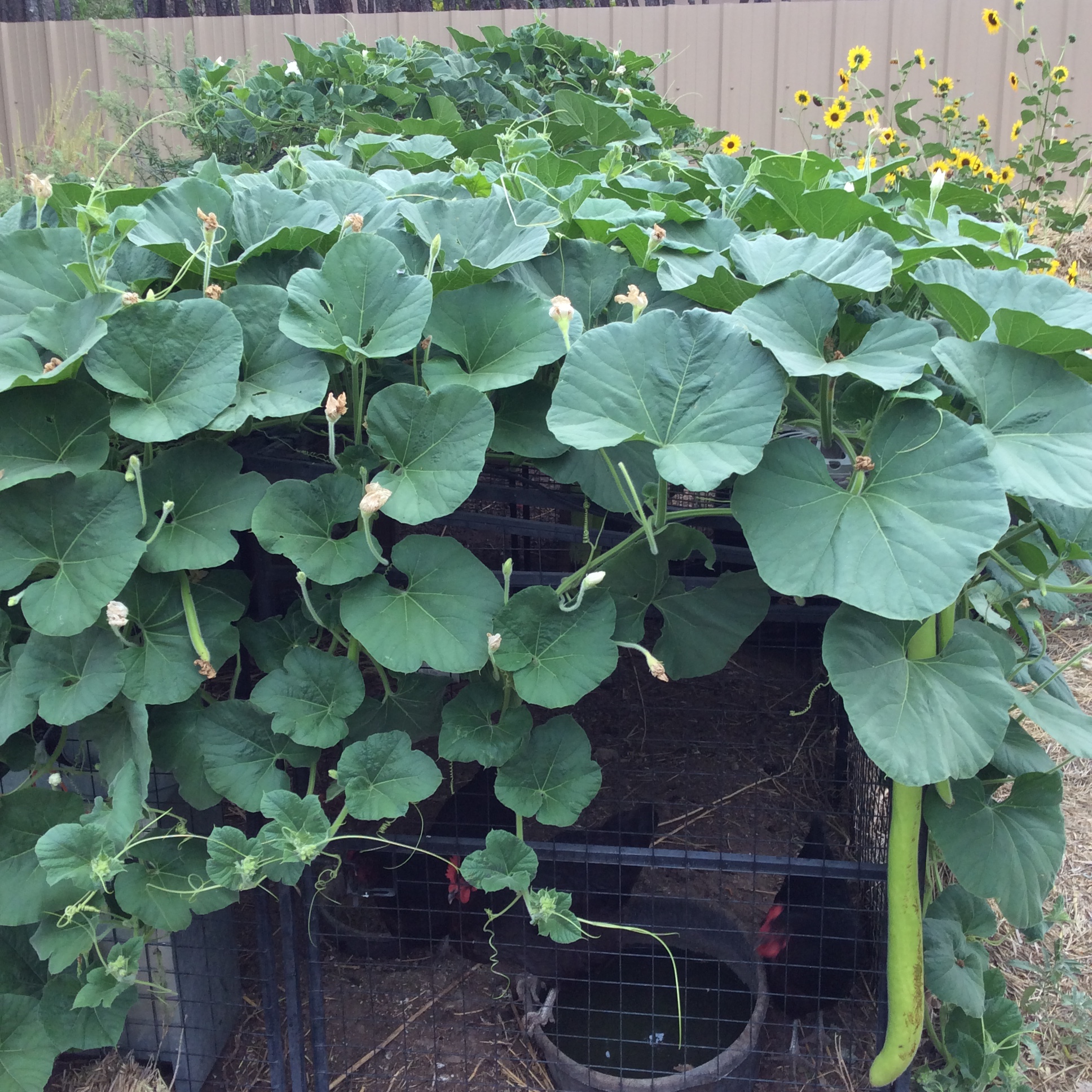
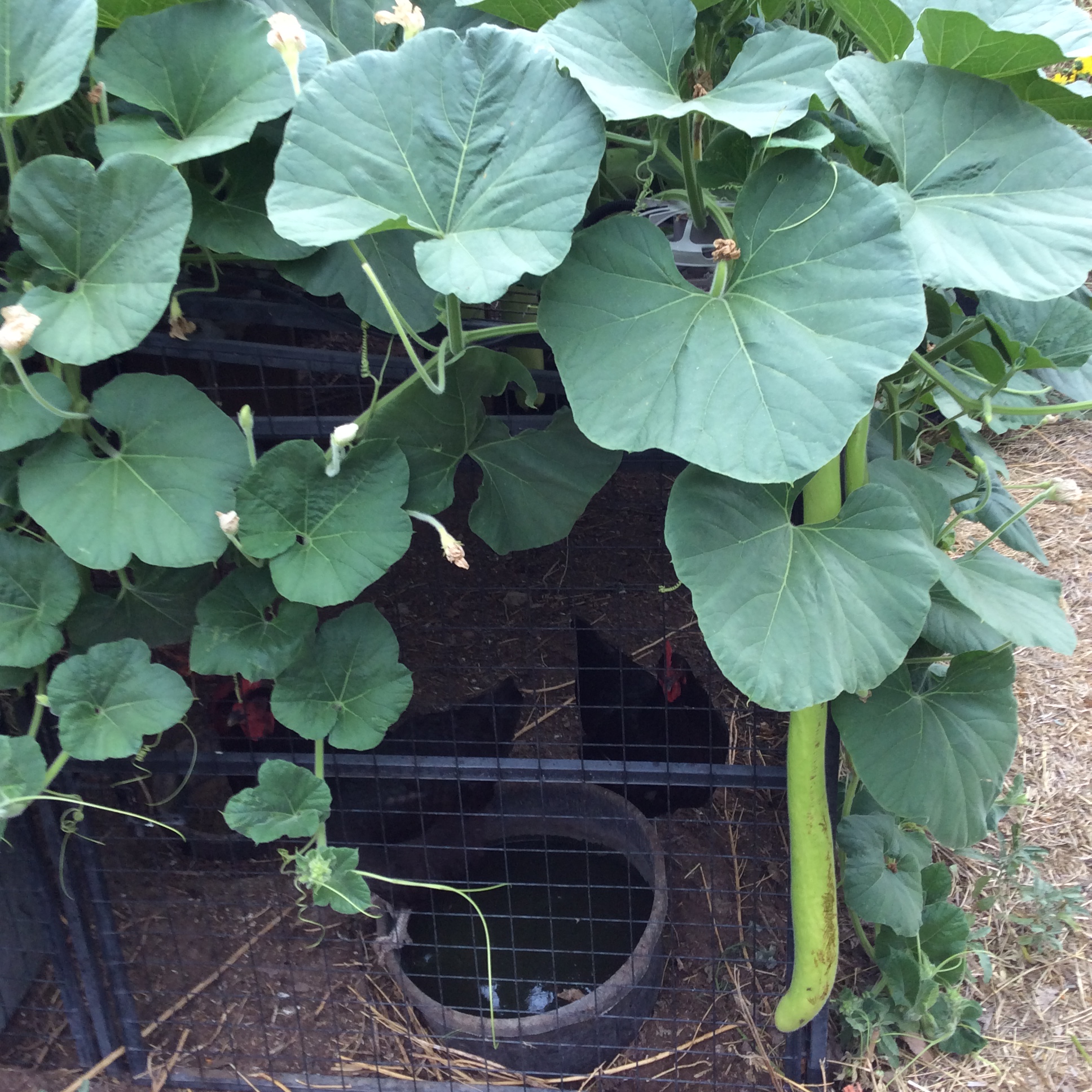
Every year  I lose my zucchini to diseases in late summer, despite the fact that I always plant whatever is most highly touted for disease resistance. This year I decided to try some new squash types  and see if I could overcome the disease issues, and still get some summer squash. The two I planted were Thai bottle squash and Italian Serpiente squash, both from the entrancing Baker Creek seed catalog.   I planted a couple of seeds of each in the compost pile next to the chicken coop, and thinned to one plant of each when they were small.  The results were as you see above; they are quite frighteningly successful. The vines are up to 30′ long, so be prepared.  They covered the chicken coop in nothing flat, providing some nice shade for the hens, and I was amused to note that wherever squash formed hanging down into the chicken run, the hens would jump up and peck them down to stubs.

Both can be picked at any point when your thumbnail will still penetrate the skin without significant pressure, and used just like zucchini.  They taste like zucchini, by which I mean they really have very little taste and need some help from seasonings.  When cooking any summer squash I prefer to slice it, salt heavily, and let it sit for 30 minutes to an hour and then squeeze out the large amounts of excess water by wringing the squash slices in a dish towel. Proceed to cook any way you like.
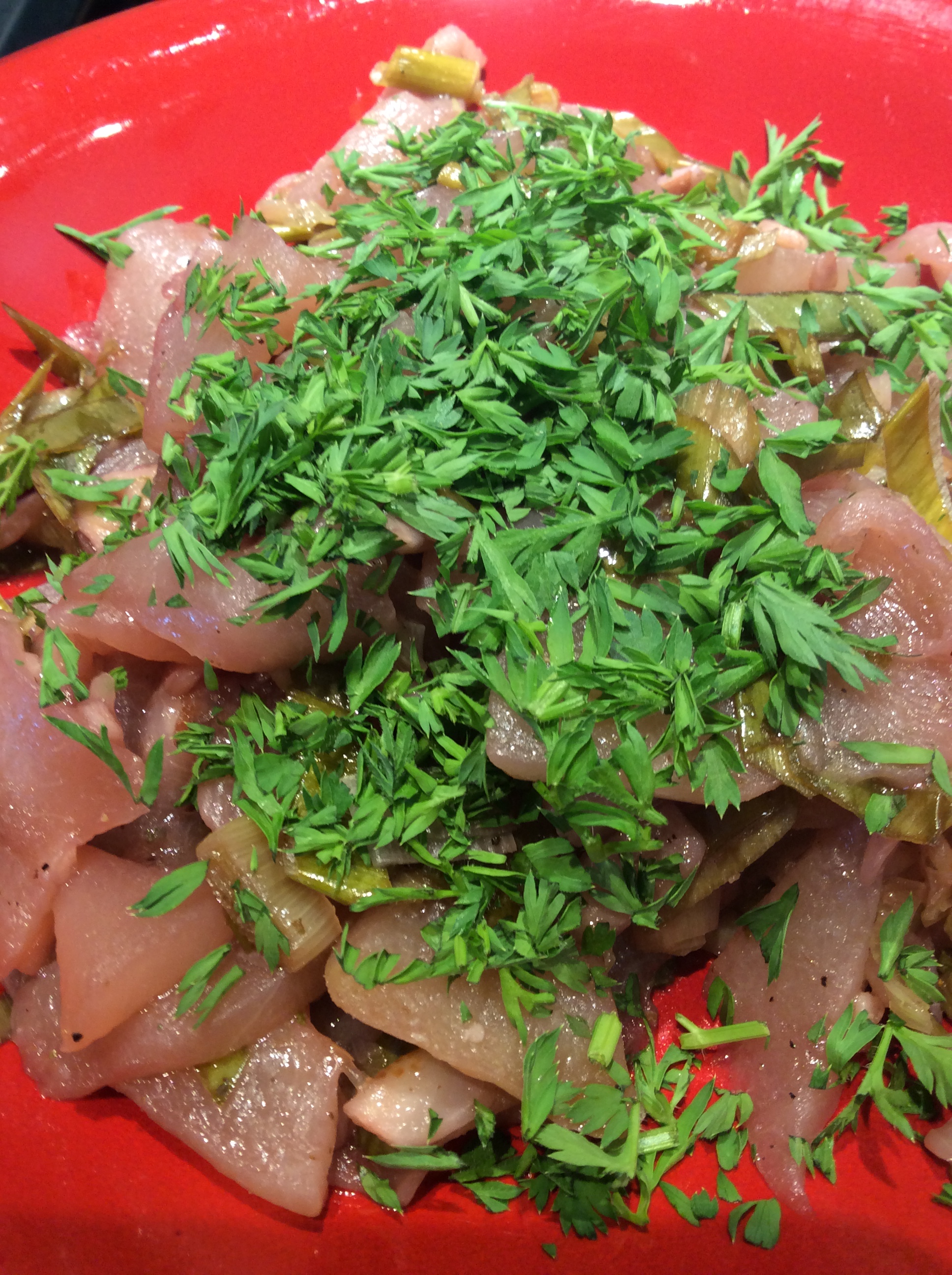
I like to make low-carb wrap bread out of  summer squash, and I’ll write about that in the near future, but today I want to encourage you to try marinated squash. Slice up one zucchini or a comparably sized chunk of a serpiente or bottle squash or whatever, salt heavily, and let sit 30 minutes or so. Meanwhile, chop a clove of garlic and slice a scallion or two thinly and put in a bowl large enough to hold the squash with half a cup of very good red wine vinegar. Add a half teaspoon of salt ( most of the salt you put on the squash will be squeezed away with its liquid) and herbs to taste. I like a few sprigs’ worth of thyme leaves.  Wring the squash slices out thoroughly in a clean dish towel, then fry in olive oil until the texture is the way you like it, which for me is done but not mushy. Dump the hot cooked squash slices in the bowl, stir the vinegar mixture through, and let cool to room temp, stirring a few times to distribute the seasonings. It can be made ahead and sit for a few hours, or refrigerated until needed, but do let it warm to room temp before serving.  When you are ready to serve, drain off all the excess vinegar,  pressing a bit to get any excess liquid out,  and toss with a quarter cup or so of your best olive oil and maybe add a small handful of chopped parsley or chopped young carrot leaves.  I like this as a side dish, and if you have some roasted pinenuts to sprinkle over the top, that adds deliciousness. Some crumbled queso  fresco would turn it into a light lunch, and it could be tucked into a wrap bread and eaten with a dip of seasoned yogurt or hummus for a more substantial meal  that would suit plant-based or vegetarian inclinations. Using a mildly sweet late harvest vinegar or adding a dash of honey, and finishing with chopped roasted salted pistachios would give the dish an interesting Sardinian sweet-and-sour turn.

As you can see above, the use of red wine vinegar gives the dish a pinkish cast that some people might object to. I use red wine vinegar because I make my own and love the flavor, but if it bothers you just use white wine vinegar instead.

The whole concept of a cooked vegetable salad goes as beautifully with Asian meals as with western style dinners. Try using rice vinegar and palm sugar or sweetener of your choice, adding a few teaspoons of chopped ginger along with  the garlic, and garnishing with scallions. Some slivered chiles would be great if you like heat,  and a handful of chopped cilantro would make a pretty and tasty garnish.


Of Spruce and Steaks

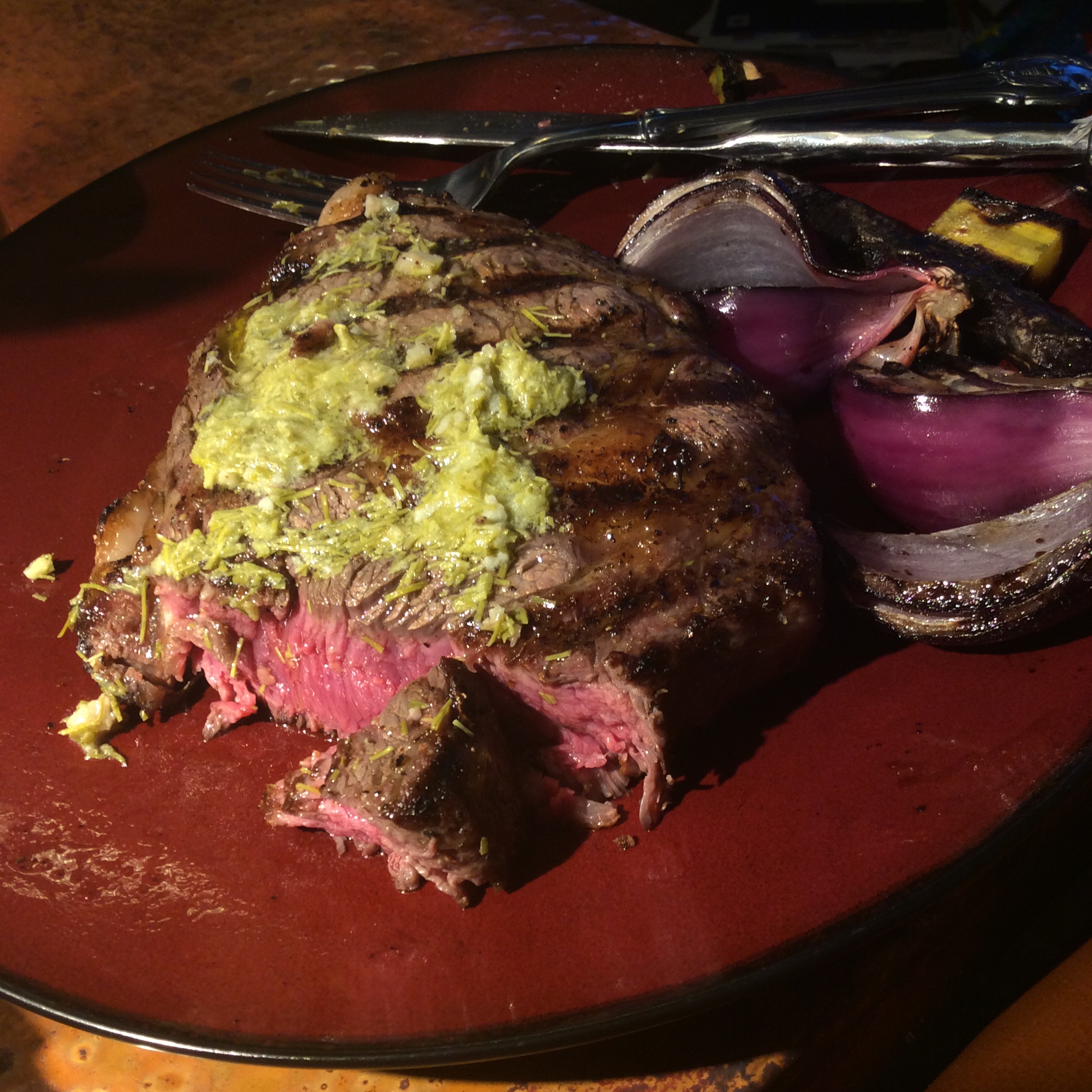
Every now and then I love a really good dry-aged ribeye on the grill,  and one of my favorite accompaniments is spruce tip butter.  The young growing tips of spruce trees in the spring have a fascinating array of flavors, ranging from bright and citrusy to something close to turpentine. I wander along my favorite trails tasting in until I find one that is on the spicy citrusy side, and  bring home the tips to chop and sauté in good butter for a few minutes. The spruce tip butter can then be frozen for use later in the year.  I like to freeze it in pats the size of large ice cubes, so that one pat is plenty of finishing butter for two steaks.  The frozen butter can be put on the steak for the last minute of grilling, and as the steak is finished for five minutes in a 200° oven it will finish melting luxuriously into the top.  If you happened to grill some onions along with the steak, this butter is delicious on them too, and it is a way of bringing your spring time hikes home for the rest of the year.

There aren’t many spruce trees in my area so this compound butter is the only thing that I make with the few tips that I have available, but if you have more trees available, you can consider other uses for the tips, such as spruce beer or Hank Shaw’s spruce tip syrup.


Pork Belly: Theme and Variations

Recently I was checking out my local farmer’s market and saw a young man sitting in front of a card table, with a big cooler behind him but nothing that I could see indicating what he was doing there. Curious, I approached, and it turned out that he was from Polk’s Folly, selling pork from a few pasture-raised heritage pigs being grown on his family land. And yes, he had some pork belly to sell. I scored a three pound chunk.

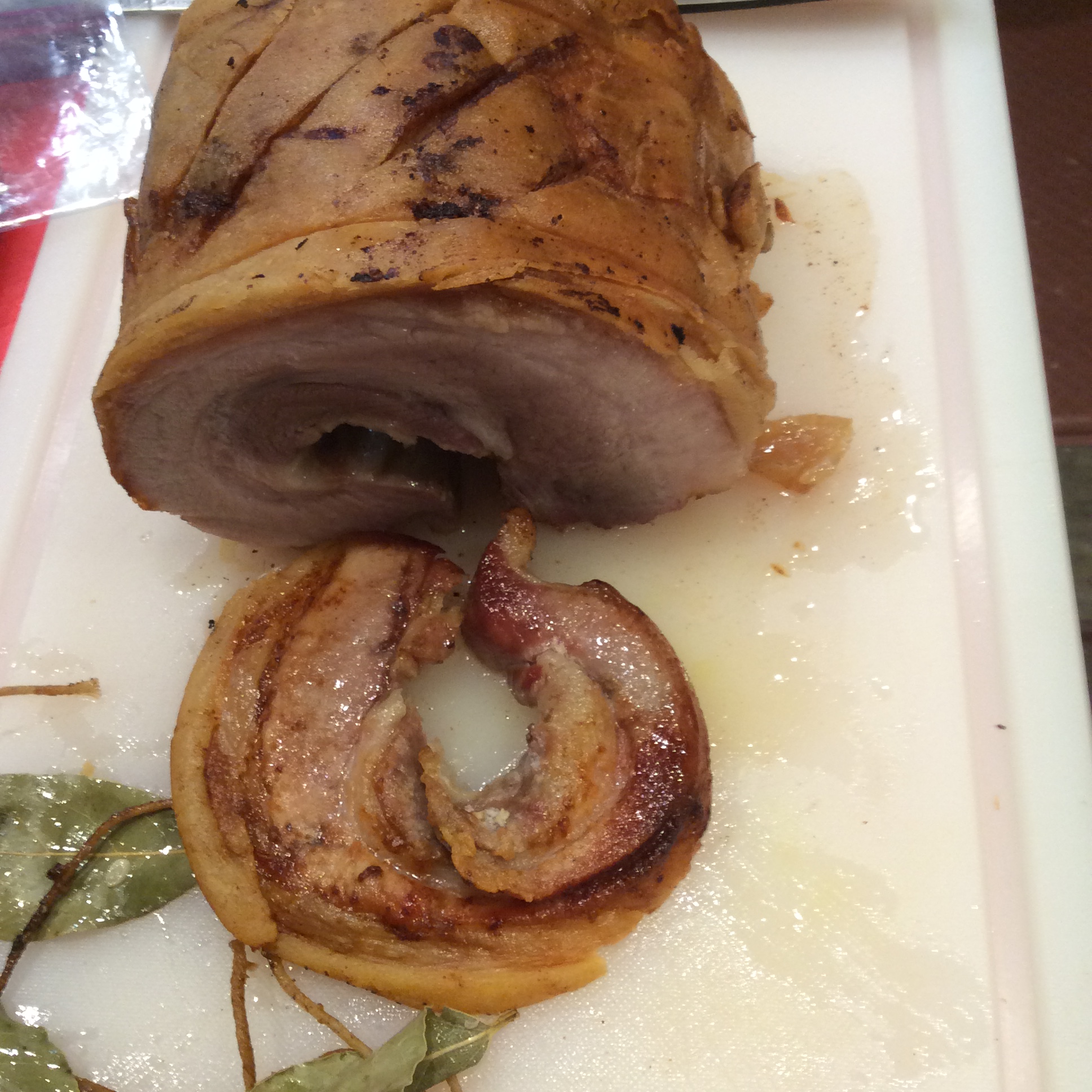
At the time I planned to make it into bacon, and so I put it in a brine of one cup salt to one gallon of water and stuck it in the refrigerator. But a couple of days later I found myself daydreaming about it and decided to cook it for dinner. I put eight bay leaves and 3 cloves’ worth of sliced garlic on the meat side, rolled it up with the skin side out and tied it with kitchen twine, put it in a cazuela with half a cup of good white wine, and roasted at 350 until done through (160 if you tend toward exact measurements,) turning up the heat to 500 right at the end to brown the skin a bit.

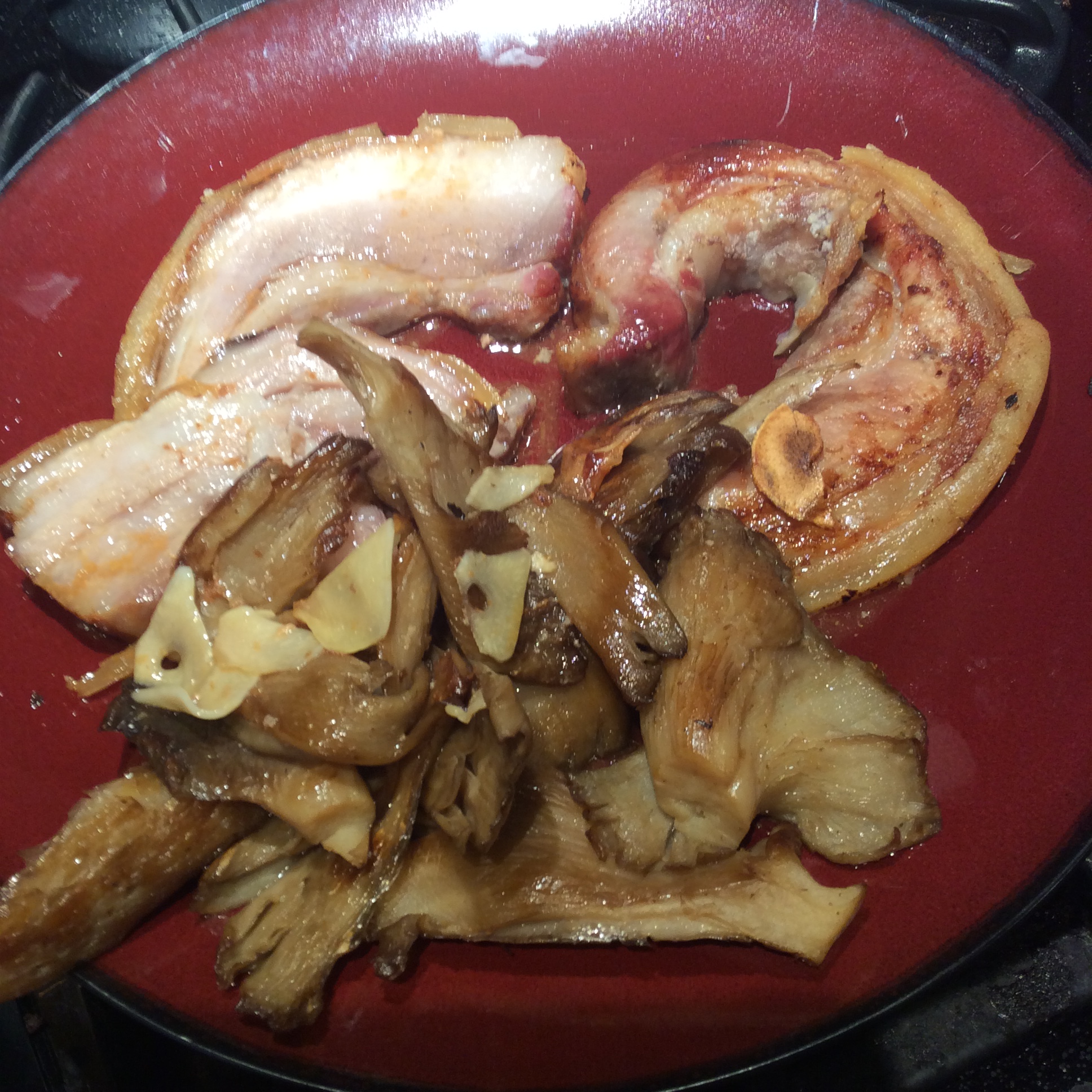
Thin slices were served with oyster mushrooms sautéed in butter and adorned with the garlic slices from inside the belly, and skimmed pan juices were poured around liberally. It was a delicious meal with a good cabernet but, for two people, just the beginning of three pounds of belly.

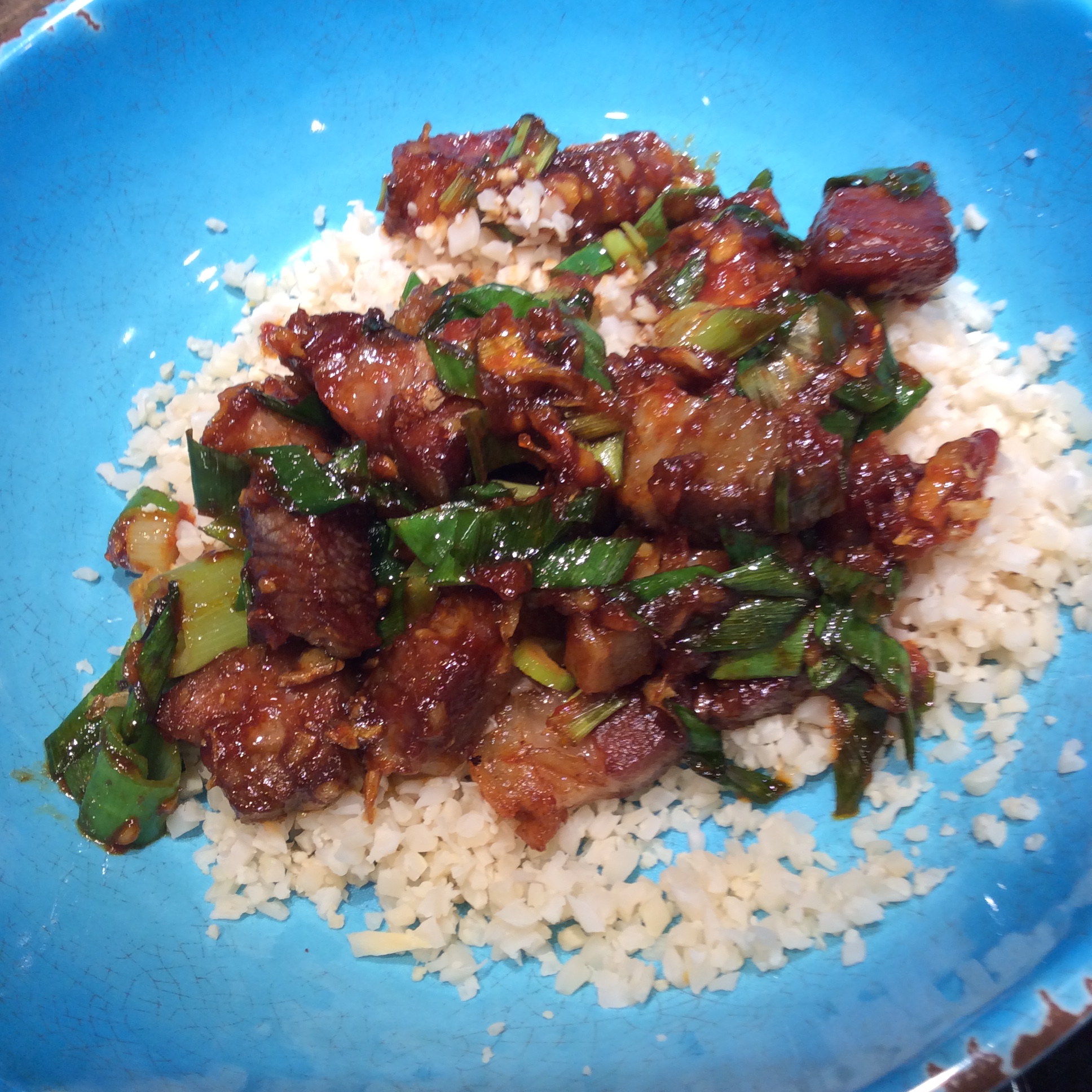
A few nights later I hauled out the belly, cut two slices about a half inch thick, and cut the strips into chunks that ended up about 1/2″ square by 1″ long. I chopped up two big cloves of garlic and a 1″ piece of ginger. A huge scallion out of the garden was cut in 1/8″ slices, white and green kept separate. I got out gochujang, soy sauce, and artificial sweetener to equal two teaspoons of sugar (of course you can use 2 teaspoons sugar if preferred.) I microwaved some cauliflower rice. The belly chunks were sautéed over medium-high heat in a wok until they were beginning to brown nicely in their own fat. Then the scallion whites were added and stir-fried for about two minutes. Next the scallion greens and the chopped garlic and ginger were added and given one further minute of stir-frying. Then a rounded tablespoon gochujang and a good squirt of of soy sauce, along with two teaspoons of sugar or the equivalent in artificial sweetener. Boil hard until the sauce comes together and glistens, less than a minute if you were using high enough heat. Serve over the cauli rice. Add some pickled veggies if you like.

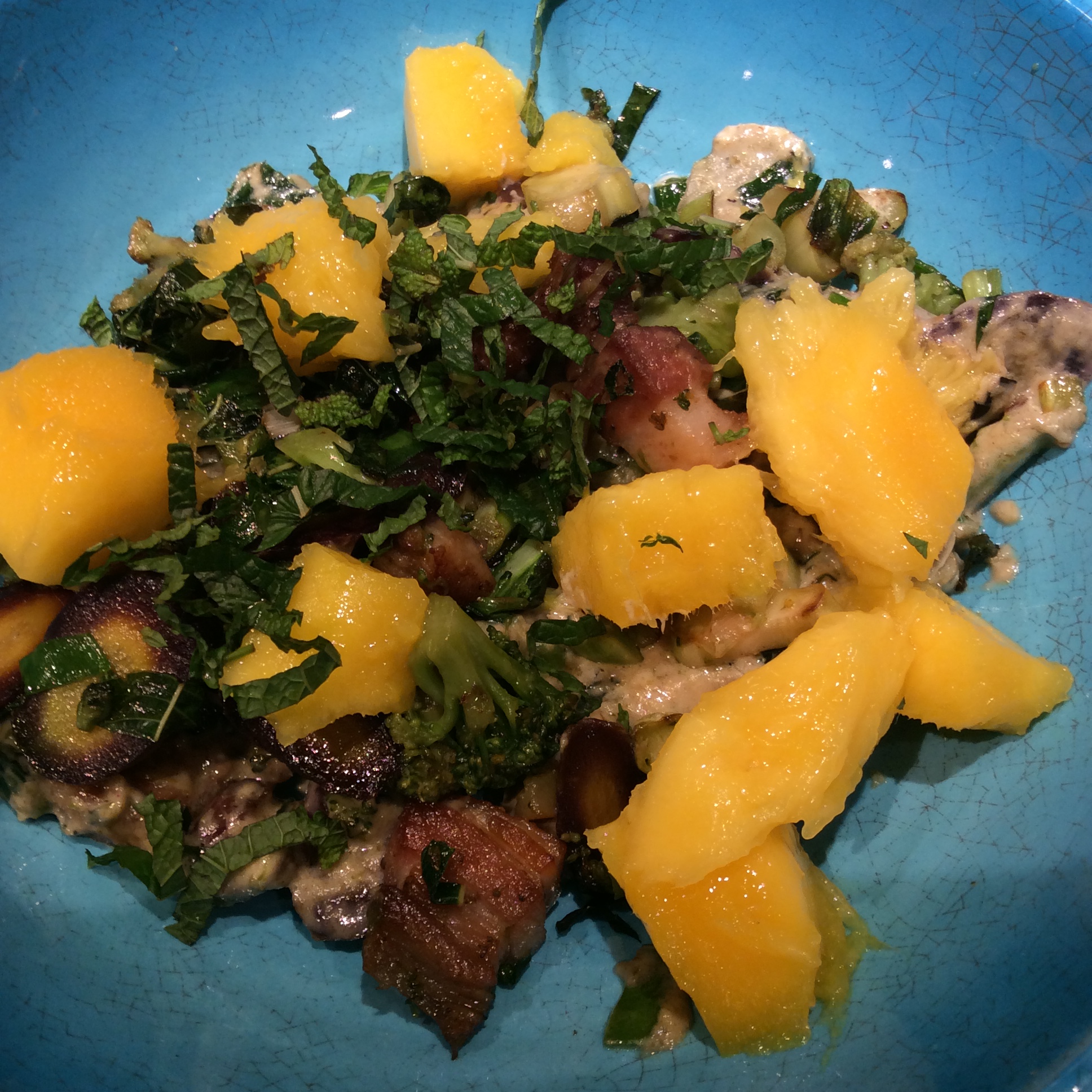
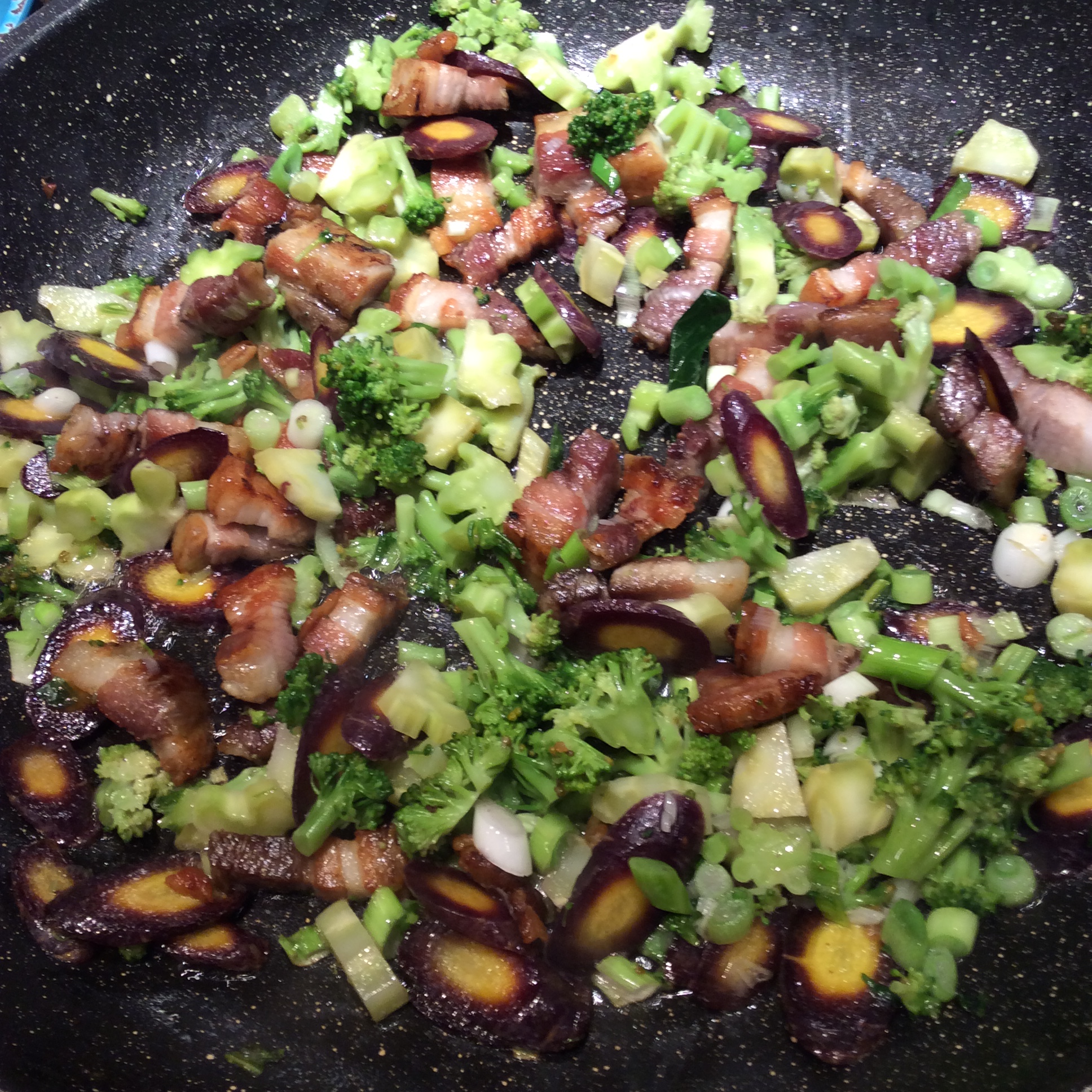
The third meal moves into Southeast Asia, one of the many parts of the world where the succulent pork belly is appreciated. One of the great treats of summer is an occasional perfect mango, and I had one ready on the counter. I was planning a Thai-style curry based on the superb Hand brand green curry paste, but ultimately decided that I wanted more veggies and less sauce. Using the inspiration of Six Seasons, I decided to make something that was a hot salad rather than a curry per se.  Besides the leftover belly, mango,  and the curry paste, ingredients were two large scallions sliced, a cup of pure coconut cream, some fish sauce and sweetener, and a wide assortment of veggies from my garden and freezer but just a handful of each, i.e. four Tuscan kale leaves slivered finely, about a third of a head of broccoli (with its peeled stem) blanched a few minutes and chopped, two small purple carrots, and a handful of chopped mint for the final garnish. This is a great place to use up any plainly cooked veggies that may be tucked into your refrigerator awaiting a purpose.

To make the “dressing,” boil  the coconut cream in a small sauce pan for a few minutes, stir in about a tablespoon of curry paste or more according to taste and boil a minute more, and add fish sauce and chosen sweetener to taste,  make in the mixture a bit on the salty sweet side because there is a large volume of veggies fruit to season.  Then set the pan aside while you finish the main ingredients.

Cut two half-inch slices off the belly and cut into lardons. Put in a skillet over medium-high heat to b own and render some fat, turning frequently. Meanwhile sort the veggies into fast-cooking and slower-cooking, putting the scallion greens in the first pile and the scallion whites in the second. When the belly chunks are browned, add in the slower-cooking veggies and stir fry until crisp-tender, add the quick-cooking veggies, and cook until thoroughly heated through. Put in a little fish sauce with the veggies but not too much, since the belly is already salted.

Now toss half the hot veggies in the saucepan with the curry sauce, plate them on two plates, put the unsauced belly and veggies on top for an unmuddied appearance, slice the peeled mango over the composition, and top with the chopped mint. Dip down into the “dressed” part of the meal with each bite. Have some Thai sriracha available for drizzling if you like.

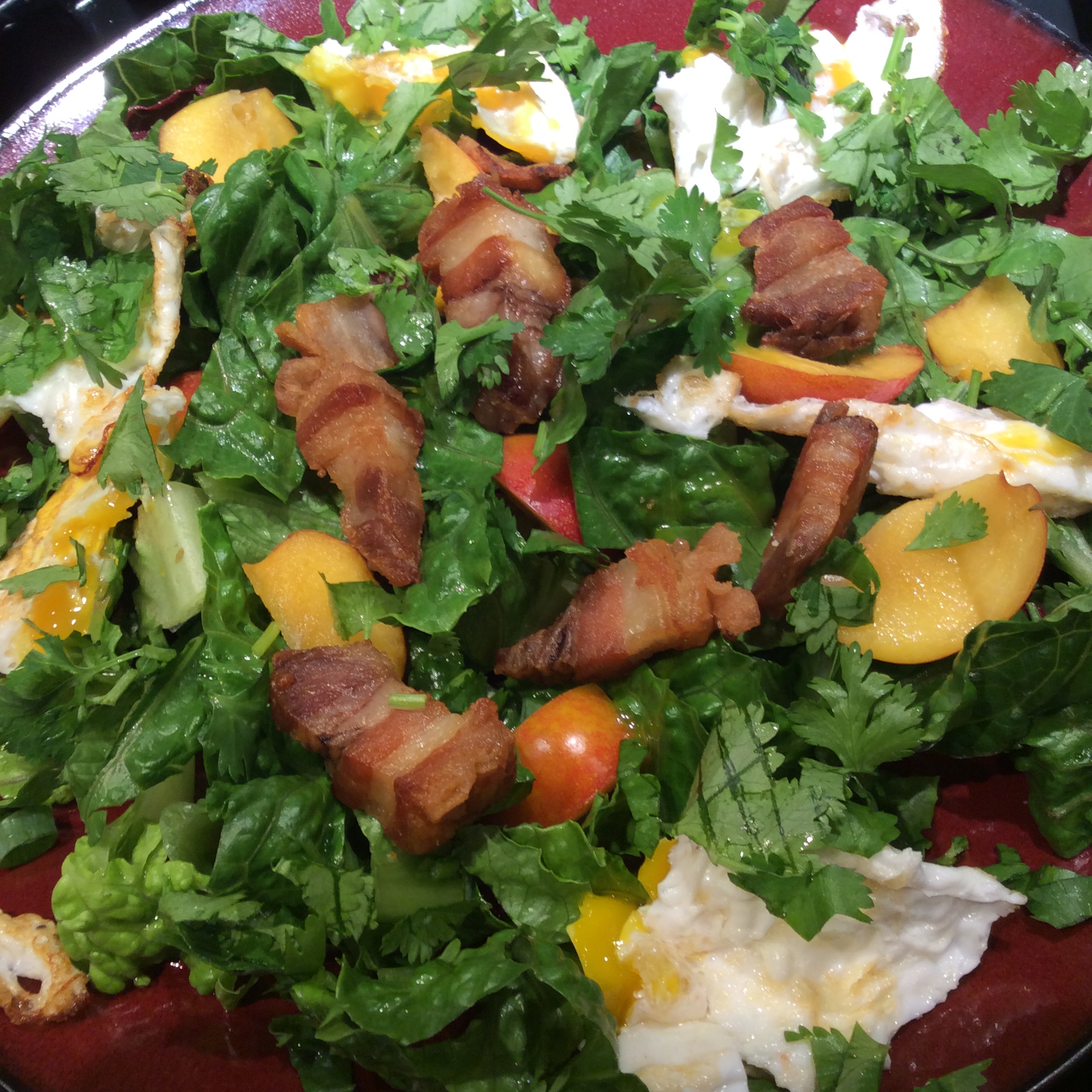
By the fourth meal, there was one strip of belly roast about 3/4″ thick still left. I decided on a Thai meat salad. Since we were quite hungry I decided to add two Thai-style fried eggs to each plate.  In addition to the belly strip and four eggs, I used a small head of Romaine lettuce, one large scallion, a generous handful of coriander leaves, and two partially ripe plums.  If you are using plums from the grocery store, it’s pretty easy. Almost any two will do and will still be somewhat green, firm, and not too sweet. Or use cherry tomatoes if you prefer.

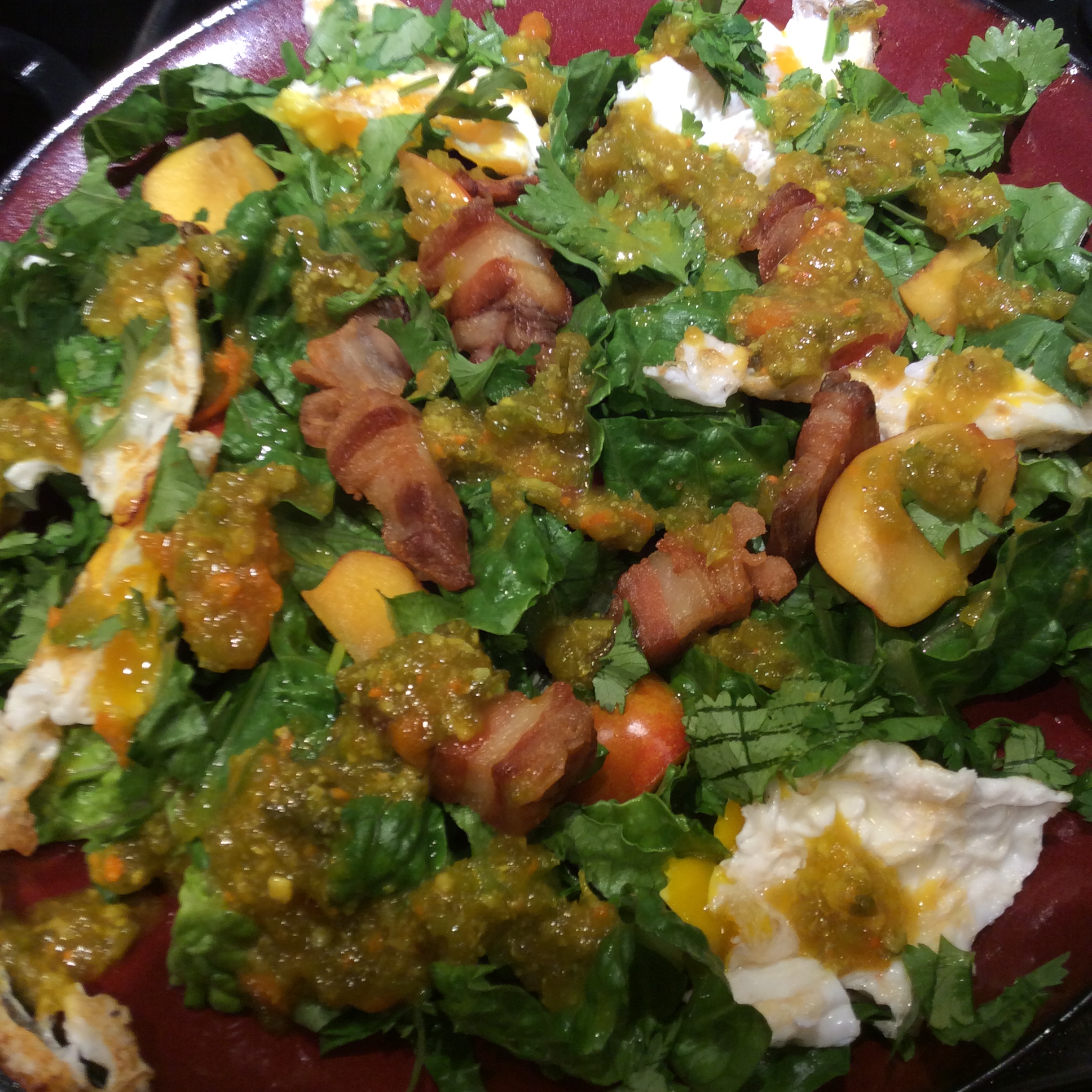
First have an appropriate dressing ready. Mine was a rather elaborate concoction based on some pickled kumquat rind that I made a month ago and ground coriander stems, but you can use the simple spicy-sweet dressing described at the bottom of the page.

Cut the belly strip into lardons and fry them in a hot skillet with a spoonful of coconut oil until browned. Remove and drain on paper towels. Add a little more coconut oil to the pan and fry the eggs over medium-high heat, turning them a few times and salting on both sides, until they are cooked through and browned around the edges. Remove and drain. Slice the romaine into strips about 1/2″ wide. Cut the plums in slices. Slice the scallion fine and chop the coriander leaves.

Plate the lettuce, cut the eggs in thirds or quarters and arrange around the edge, and put the crisp lardons in the middle. Decorate with the plum slices and scatter the scallions and coriander on top. Dress with the dressing and eat. If you had everything on hand, total elapsed time is about 15 minutes.

If you have read Tamar Adler’s marvelous book An Everlasting Meal, you know all about main dishes that keep on giving. If you haven’t read it, please do so immediately. Frugality in the kitchen is a common thought for most of us and you may already cook that way, but Ms. Adler will show you the poetry and grace of it. Cooking is in some ways a ghostly process anyway, with our great-great-grandmother’s transparent hand guiding our own, and we are further informed by the ghost of each meal contributing to the next.

Hot-sweet Thai Dressing: this  doubles as a dipping sauce and is very handy to have in the refrigerator. Finely chop four cloves of garlic and a piece of ginger about an inch long. Thinly slice a couple of Serrano or Jalapeño chiles, removing the seeds and ribs unless you’re a real heat freak. Mix the chopped and sliced stuff with half a cup of fish sauce, a quarter cup of rice vinegar, a quarter cup of water, and  two tablespoons of palm sugar or the equivalent in artificial sweetener. Let sit fifteen minutes and taste cautiously. Adjust the various elements until it tastes well-balanced to you.

Independence

On this July 4th, I am sitting after dinner contemplating the hardly-revolutionary idea that all independence is local as well as national, and neither can exist without the other. I have wonderful irreplaceable freedoms under the Constitution. I also have a little plot of land on which to grow food like the garlic shown above, a splendid local system of farmer’s markets where I can buy what I can’t grow like the  pork belly that I roasted, and a system of national forests that preserve nearby wilderness areas where I found the oyster mushrooms. Without the national systems that protect our local freedoms, none of this could be maintained.

So be conscientiously local. Grow what you can, and buy what you have to. Waste as little as you can manage. Connect with other local people. Compost and reuse as well as recycling. Support your area farmers, not just by buying their products, but by realizing that your votes can support politicians who are sympathetic to local farms. Keep it always in mind that “All politics is local.” Connect with your neighbors, even if (especially if) their political views are different from yours, because both you and your neighbors might end up with something new to think about. And love and relish this country and support its national freedoms and national programs, and refuse to consider abridgment of its freedoms or demonization of people who don’t look or sound or worship exactly like its founders. We are bigger than that.