Archive for the ‘edible landscaping’ Category

Fall and Winter Leaves I: Savoy Cabbage

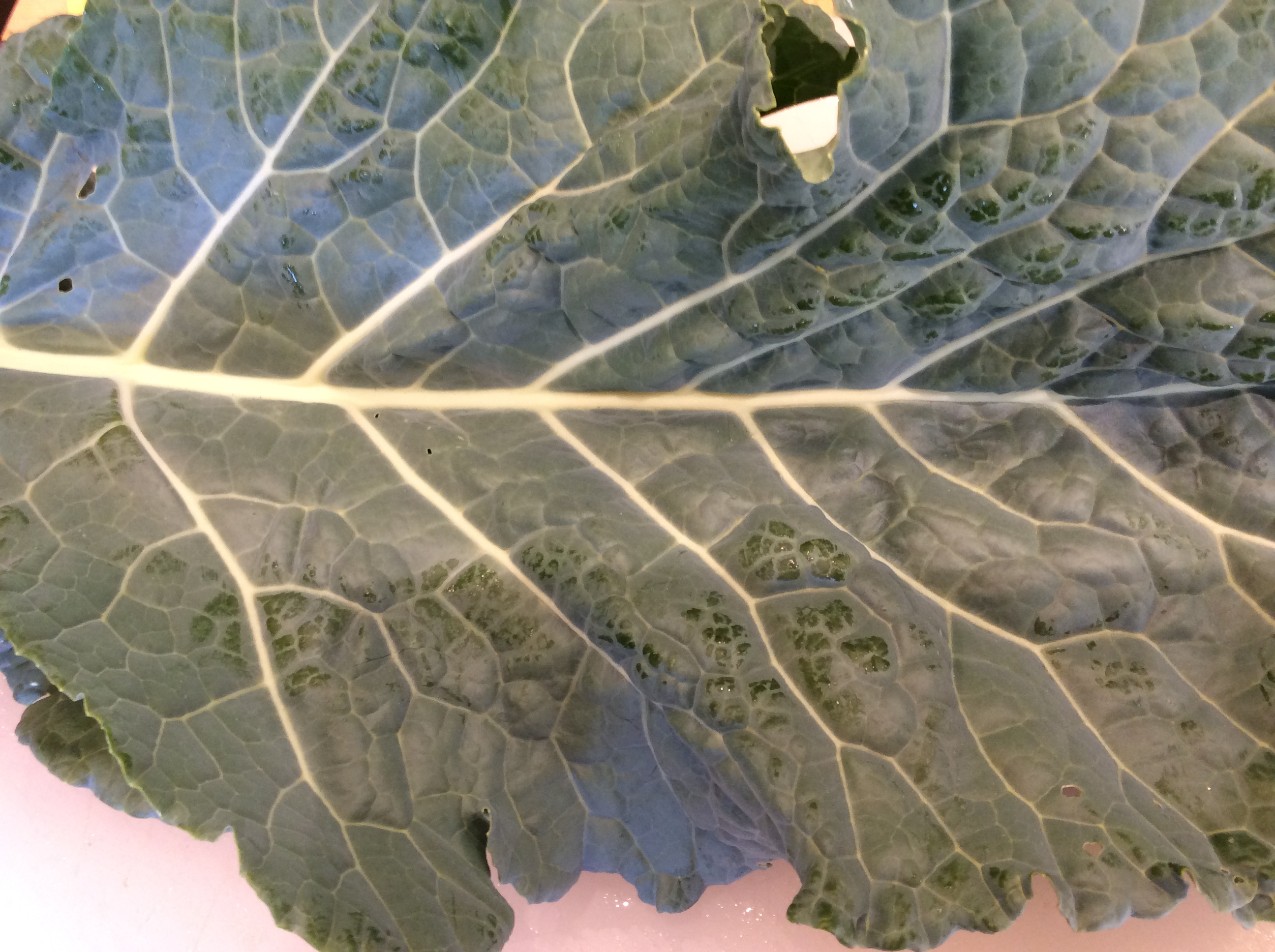
By late fall my freezers are always stuffed full, and I’ve done enough gardening for a while and am ready to sit by the stove in the evening, studying seed and nursery catalogs. But there’s always some late-season surprise in the garden to keep me interested. This year, it’s cabbage.  In late August I had a little empty space in a bed with rich soil, and a few savoy cabbage seeds that I hadn’t  remembered to  plant earlier, so I threw them in.  Most of them never germinated, because in desert country in August it’s pretty hard to keep a seedbed moist enough to start anything.  But two little seedlings did get going, and struggled through the heat and the competition, and when  the nights got cold in October they began to grow rampantly. Now they are about 4’ across. They’re thriving through the first hard frosts, but probably won’t live long enough to head up, so I started eating the leaves. To my surprise, these are the mildest and best crucifers I ever ate, far better than non-savoy cabbage, with a crisp texture, no toughness except in the veins, and no “cabbagey” aftertaste when chewed raw. They’re sweeter and milder than collards, kale, Portuguese kale, regular cabbage, or any other cabbage family green that I’ve grown. I tear the two sides off the large central stem/vein, which goes to the goat. Roll up the leaf halves, cut them in 1/4” strips across the larger veins, and then use your clean hands to massage them briskly by handfuls, planning about one minute per large leaf to soften the texture. If planning to use them raw, massage a bit longer. This massaging trick is invaluable in dealing with the more substantial leafy greens. Generally half a large leaf is plenty for one person, although real greens-lovers might eat more. Greens are full of soluble fiber and very filling.

As for how to use them, try any of the following:

Slaw, either classic or spicy Asian with ginger, scallions, and rice vinegar

As the basis for a Kale Caesar salad

Stir-fried with garlic and ginger, or with black bean sauce

Cooked like collards with bacon fat and onion and garlic, with a handful of crumbled crisp bacon over the top.

In a simple soup with ham or sausage, chicken broth, and sautéed garlic

Sauteed with leeks and finished with cream

Or try using them cut to appropriate size as a far healthier version of lettuce wraps, or whatever else you can dream up.

Like all dark leafy greens they are alarmingly healthy and likely to make you outlive your finances, so better keep saving. They are also surprisingly luxuriant and attractive in the garden, until you start cutting at them.
King Corn

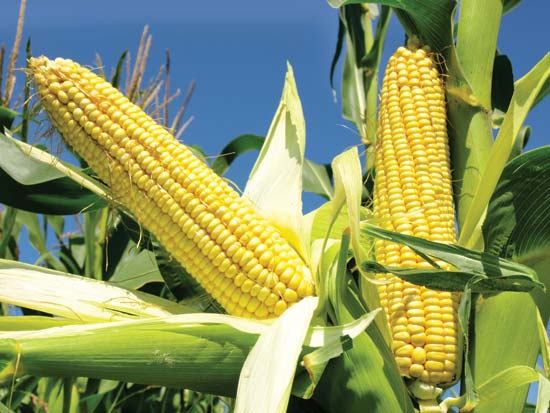
King Corn, a documentary about the supremacy of corn grown for production of sweeteners and animals in American agriculture, was released ten years ago. At the time, some reviewers considered it too low-key compared to supposedly harder-hitting documentaries like Super-Size Me! But I think that King Corn has held up a lot better than some of its more shrill and polemical contemporaries, and I am going to try to get you to watch it.

First, let’s consider whether the problem addressed is still a problem. Have rates of obesity or diabetes gone down since the movie was made in 2007? Quite the opposite. In adults age 40 to 59, obesity has risen to a stunning 41%. In 2015, 9.4% of American adults were diabetic, and another 84.1 million were considered pre-diabetic. Our scientific knowledge of the hazards of sugar in all its forms has grown by leaps and bounds, and so has our national sweetener consumption. So, uh, let’s keep talking about this.

With that in mind, I watched King Corn unfold. It is a sweet low-key film and doesn’t hammer you with a message. It just shows you things. Things like Earl Butz laying out the paradigm change to “more food, cheaper food!” Things like anhydrous ammonia being injected into the soil, and herbicides being rained onto the soil in 90 foot swaths, all to grow more corn. Things like genuine and literal mountains of corn being shoveled into confinement animal feeding operations and sweetener factories. Things like current farmers admitting that they won’t eat their own product, and the owner of a confinement cattle feeding operation saying “if the American consumer wanted grass-fed beef, then we could and would produce it.” Things like Dr. Walter Willet of Harvard, one of the greatest nutritional researchers in the world, explaining what all this means in terms of American health. Things like small American farmers going under as their neighbors consolidate to produce more and more and yet more corn. And, tragically, things like a delivery driver talking to one of the protagonists about the ultrasweet grape soda that he drank constantly when he was growing up, and about his father‘s eventual death of diabetes. “They amputated his toes first,” the driver says, “then his foot, then his leg below the knee, then above the knee. When they started cutting on his other leg, he gave up. He died.” The driver went on to say that he himself had lost a huge amount of weight just by giving up soda. I’m a doctor and this scene made me want to cry. Currently the national cost of diabetes in the US is calculated to be a stunning 105 billion per year, a figure that becomes even more remarkable when you learn that it does not include the cost of workdays lost. The cost in human suffering and loss of lifespan and healthspan is beyond calculation.

If you wonder what any of this has to do with an urban gardening and home food production blog, I would say that it’s the backbone of what I’m talking about here all the time. It simply is not possible to grow or make at home anything that is as unhealthy as most of what is sold to you in stores and restaurants. I seldom venture into large grocery stores these days, but when I do, what I see is aisle after aisle of things that are not really food. Don’t eat this stuff.  Bushels of money are being made out of messing up your health. Grow something, cook it, and eat it, or buy it directly from the person who grew it.  Take an interest in the health of the soil right around your own house. Take to heart the interview clips in King Corn that show Michael Pollan sitting and talking to the interviewer with his home garden in the background, Tuscan kale prominent.  Plant one little plot of kale, cook it six or seven different ways, and see what you like.  Use the fall and winter to start planning a small garden for spring. Find three recipes for leafy greens that you really enjoy, and make them often. Serve them to your family and friends.  This is not just a fun and loving but a subversive act.   Almost everything in our corporate food culture is designed to get you to eat things that are not good for you. There are corporations that exist to make a mint at the cost of your health,  and then other corporations that make further fortunes by making pharmaceuticals to treat your food induced health conditions and allow you to continue eating swill, but you are smart and wily and you are going to begin fighting back.

Pollinator Autumn

Fall in New Mexico is quite possibly the most beautiful season to be found anywhere in the world.  But it’s also the last hurrah for our pollinators, who have a brief time left to get a winter’s worth of provisions stored. I’ve been taking note of the plants that will help them with this last push for survival.

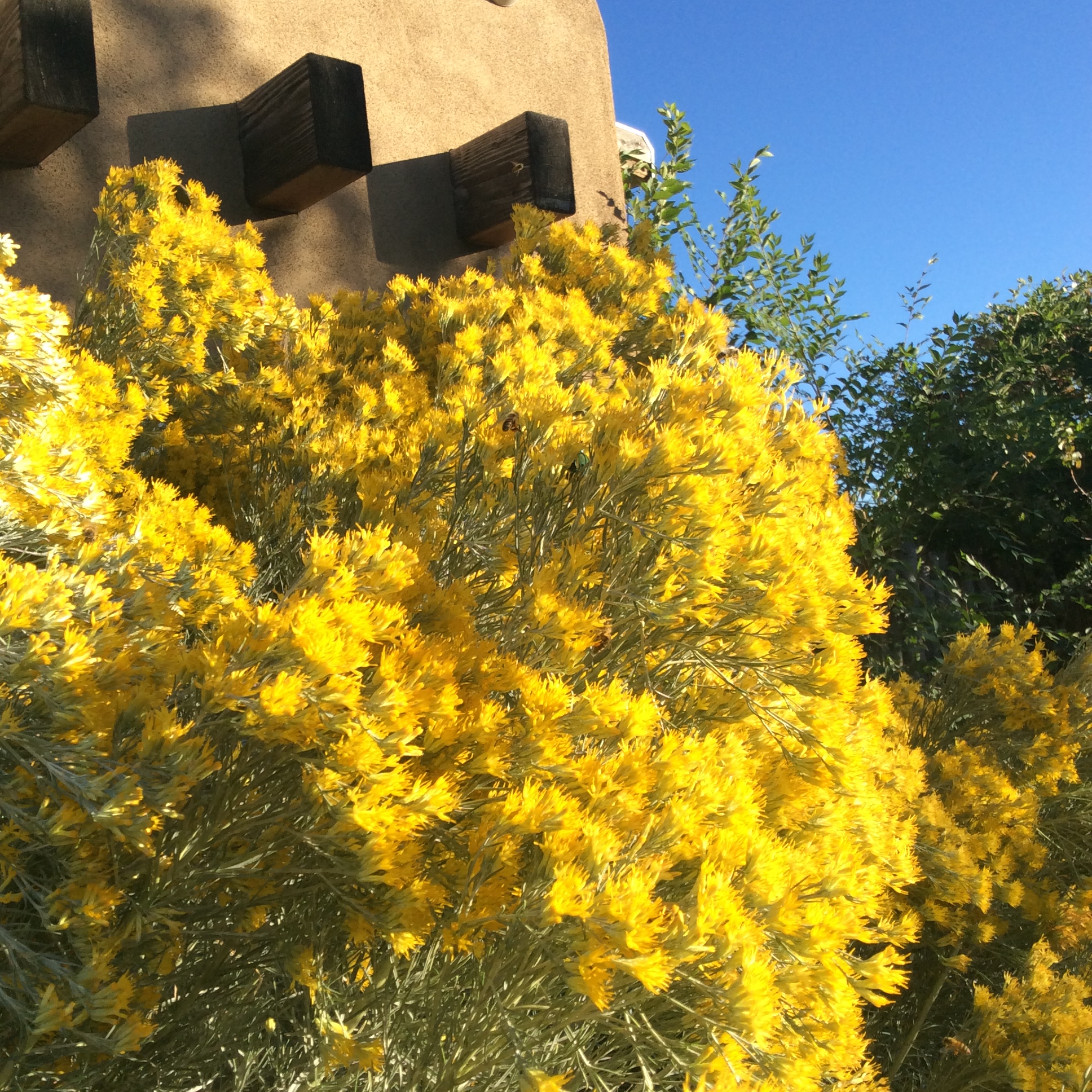
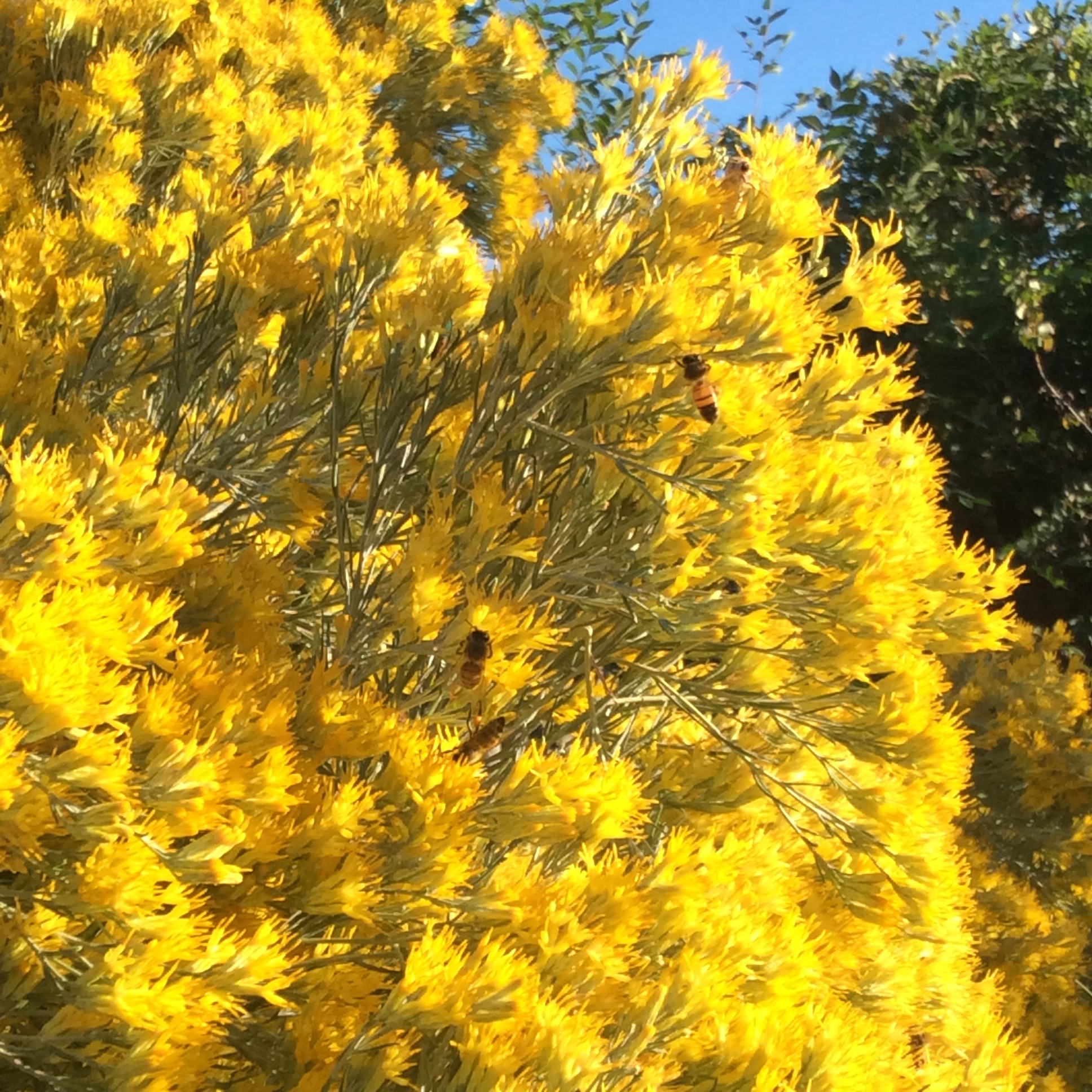
Our native chamisa, or rabbitbrush, is first and foremost. It’s in full bloom in late September and is mobbed with bees whenever the sun touches it, perhaps because in sunlight it exudes a warm heathery-polleny fragrance. Interestingly, I find honeybees working it in the early evening, hours after their forays usually stop. It self-seeds readily and gets big, so steps have to be taken to keep it under control, but find a neglected corner where it can ramp away into a great bush and it will literally hum with bees in autumn.

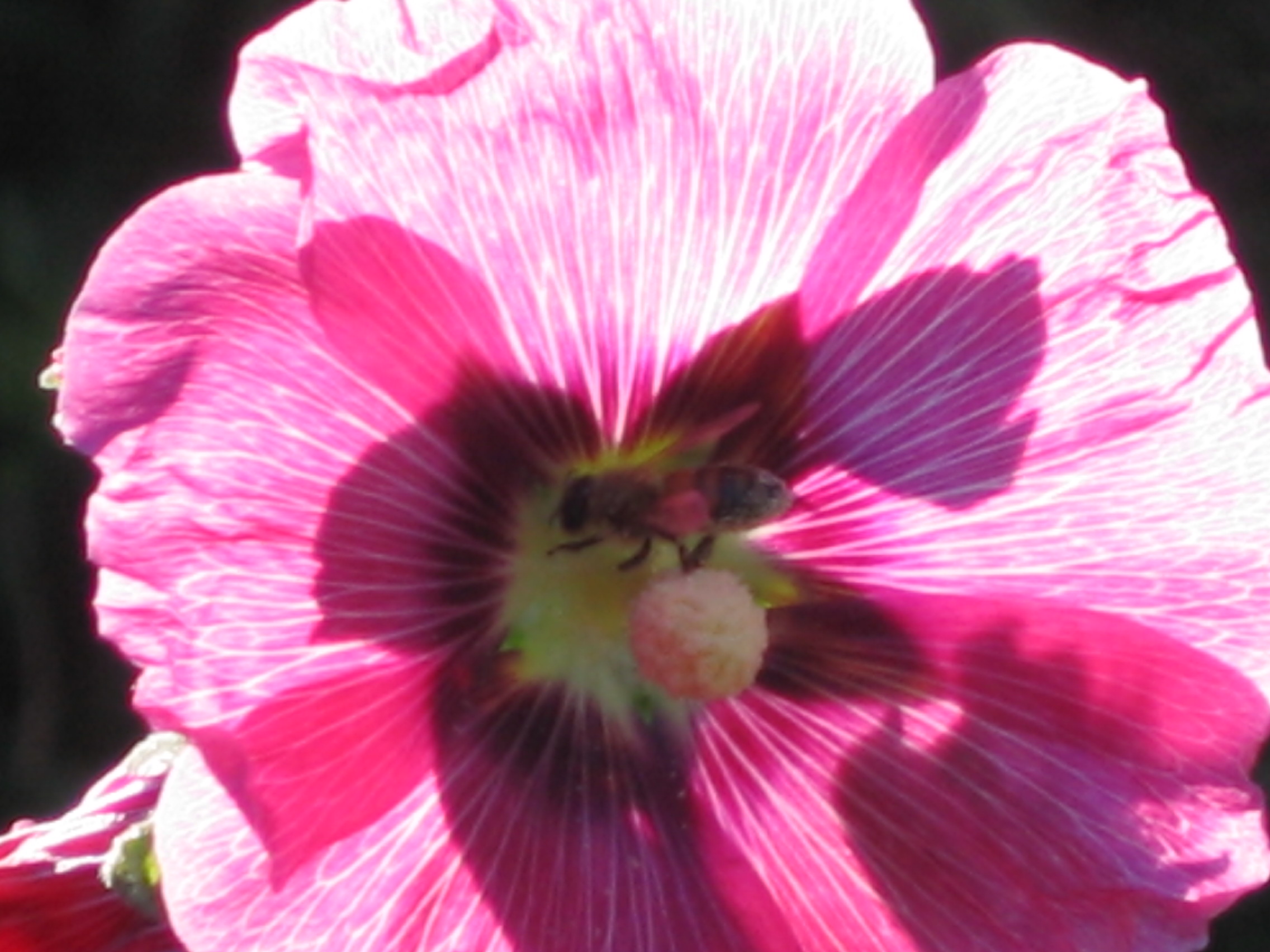
If you cut your hollyhocks back after their first bloom, they bloom again in late September and are greatly appreciated by bees. In the dry high desert they are blessedly free of the diseases that can make them unsightly in the eastern US, and they are so robustly healthy that they can become nuisances.

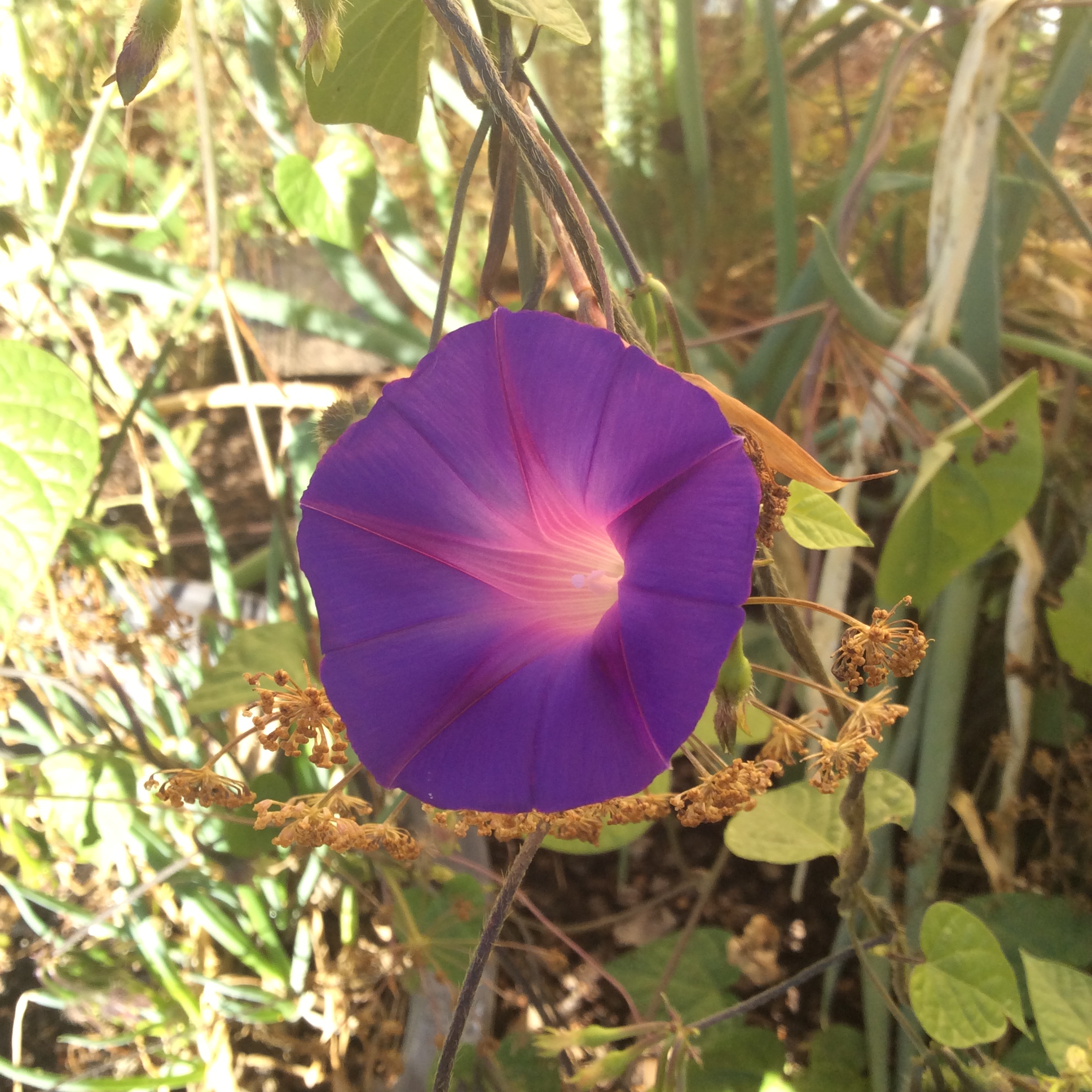
Morning glories bloom until the frosts start, and although the bees pay little attention to them earlier in the season, they are very popular in September and October.

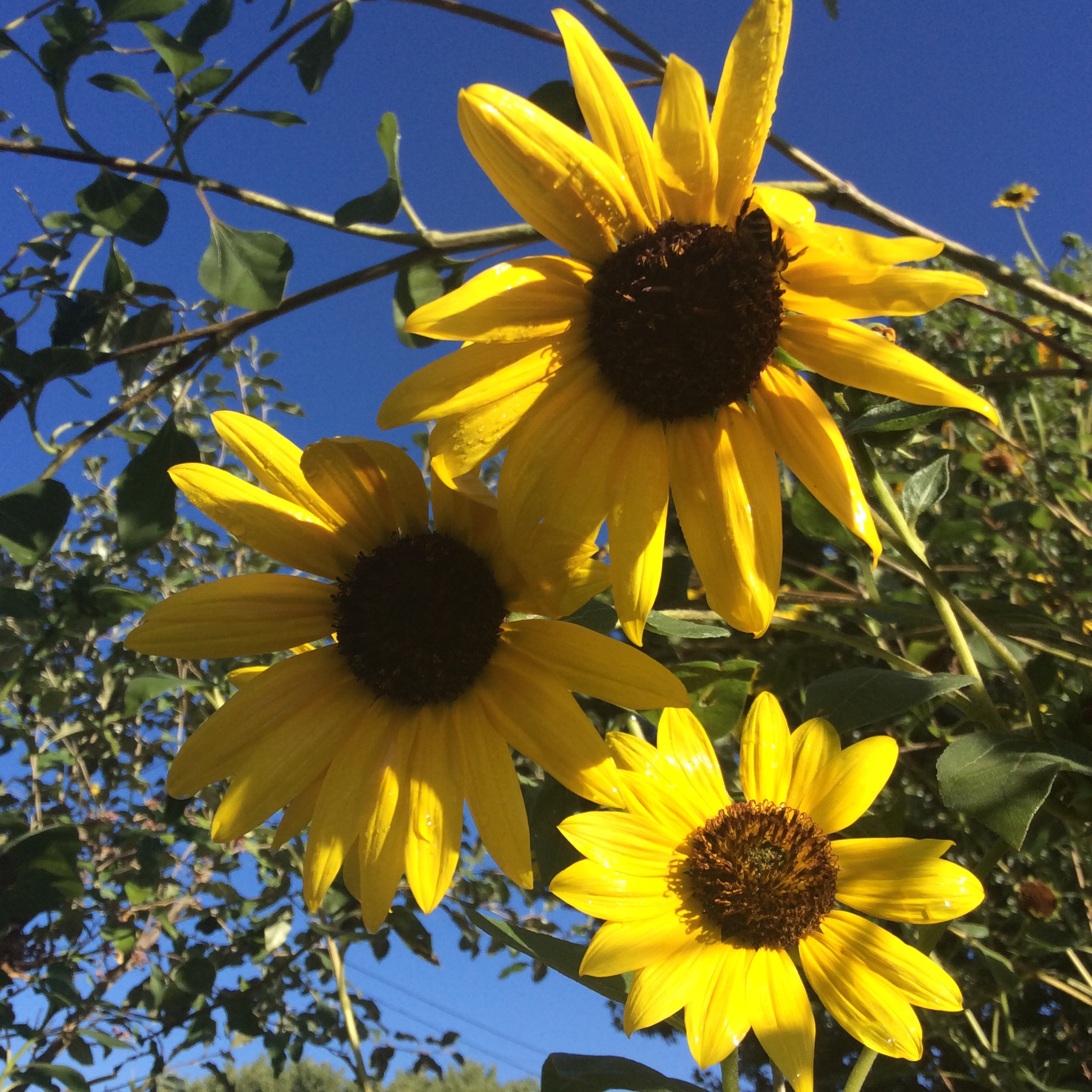
Sunflowers bloom early in our hot climate, but some always germinate late, in May or June. I make sure to let a few of these stragglers grow up, because they bloom in early Zoctober and seem especially attractive to bumblebees.

Urban homesteading is not just about growing your own food. It’s about creating viable ecological oases in urban areas. Eating some of the bounty is your privilege, but you have a billion partners in your enterprise, including your own animals, birds, toads, worms, pollinators of all kinds, fungi, and the huge array of microbes without which plants and soil, and therefore us, could not survive. The end of a growing season is a good time to stop and honor them all.

Natural Chaos

A garden bed with edible weeds in glorious (?) array

For a brief period earlier this year I had a lovely young helper in the garden, and he was a sponge for any information about plants and animals and a joy to have around. At one point, as he talked about how much he wanted a “yard farm” of his own, he looked around my yard and said thoughtfully “But mine will always be neat as a pin.” He didn’t say “by contrast,” but the implication was clear, and quite true.

Well, if there is one thing my urban homestead is not, it’s neat as a pin. Nature grows and blooms. Nature also surges, intrudes, overwhelms, dies back, regrows,  creeps, climbs, and insidiously gets Her own way. The gardener plays a part in natural chaos too; all the photos of lovely front yard veggie gardens that you see in magazines are taken before harvest. The gardener cuts the glowing rainbow chard, harvests the multicolored row of lettuces, picks the crimson tomatoes, and plucks the shiny apples, and suddenly things aren’t so camera-ready. Admittedly, many are neater than mine, since many gardeners lack my taste for edible weeds and my belief that nearly any plant has a purpose.  But if you want to get the most that you can get out of gardening, a degree of chaos tolerance may be a useful asset.

My blogging friend Luke of the Mortaltree blog summed this up so superbly that, with his permission, I’m linking to his post on the subject. So please hit this link and read his post “Taste of Chaos,” which really sums up the land-healing experience:

Taste of chaos