Archive for the ‘Cook’s treat’ Category

The Easiest Vegetable Dish Ever

image
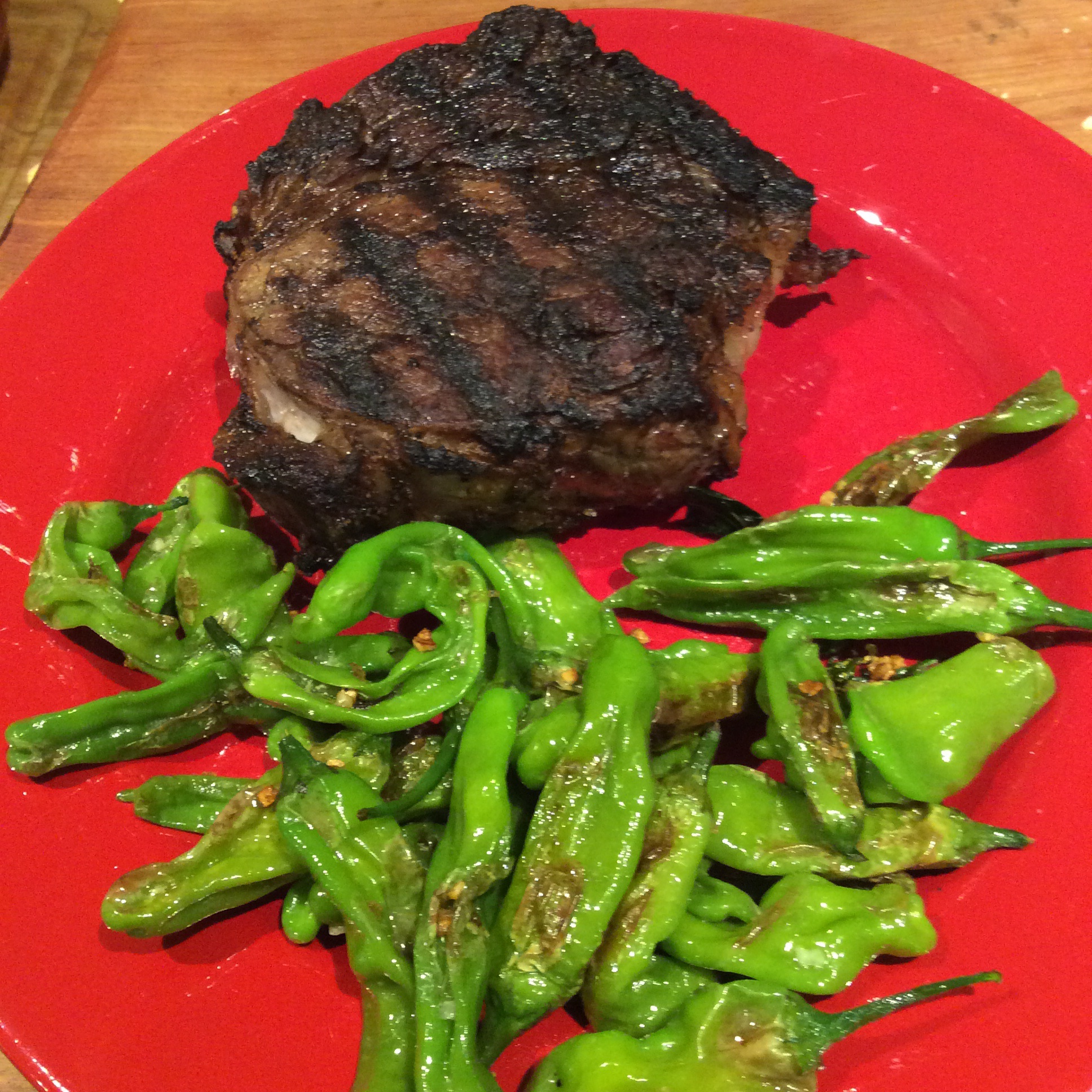
Shishito peppers are my favorite side dish for a summer steak. I put in four plants this spring, and they have provided a good mess of Shishitos for two people about every four days. Cooking them well involves three steps:
1. Pick
2. Rinse
3. Throw in a hot frying pan with a glug of good olive oil and shove around the pan with a spatula, turning them about once a minute. Keep the heat high. They will hiss and spit. When they look cooked all over, and a bit blistered in places, sprinkle generously with fleur de sel or other coarse mild salt. Pile on the plate and eat with your fingers, leaving the cap behind.

That’s it. If you are determined to elaborate, you can throw in a little finely chopped garlic for the last minute of cooking (no sooner or the garlic will burn.)

If you only have a few of them, use your smallest skillet and call them a cook’s treat, eaten privately in the kitchen. I say a serving of them is about 18. Other people may be more moderate in their tastes.
If you are a thrill-seeker you can seek out pimientos de Padron instead, but the last time I grew those, not just some but all of them were hot as blazes. So I’m giving my GI system a rest with Shishitos.
Crazy Salad

image
“‘Tis certain that fine women eat
A crazy salad with their meat…” Yeats
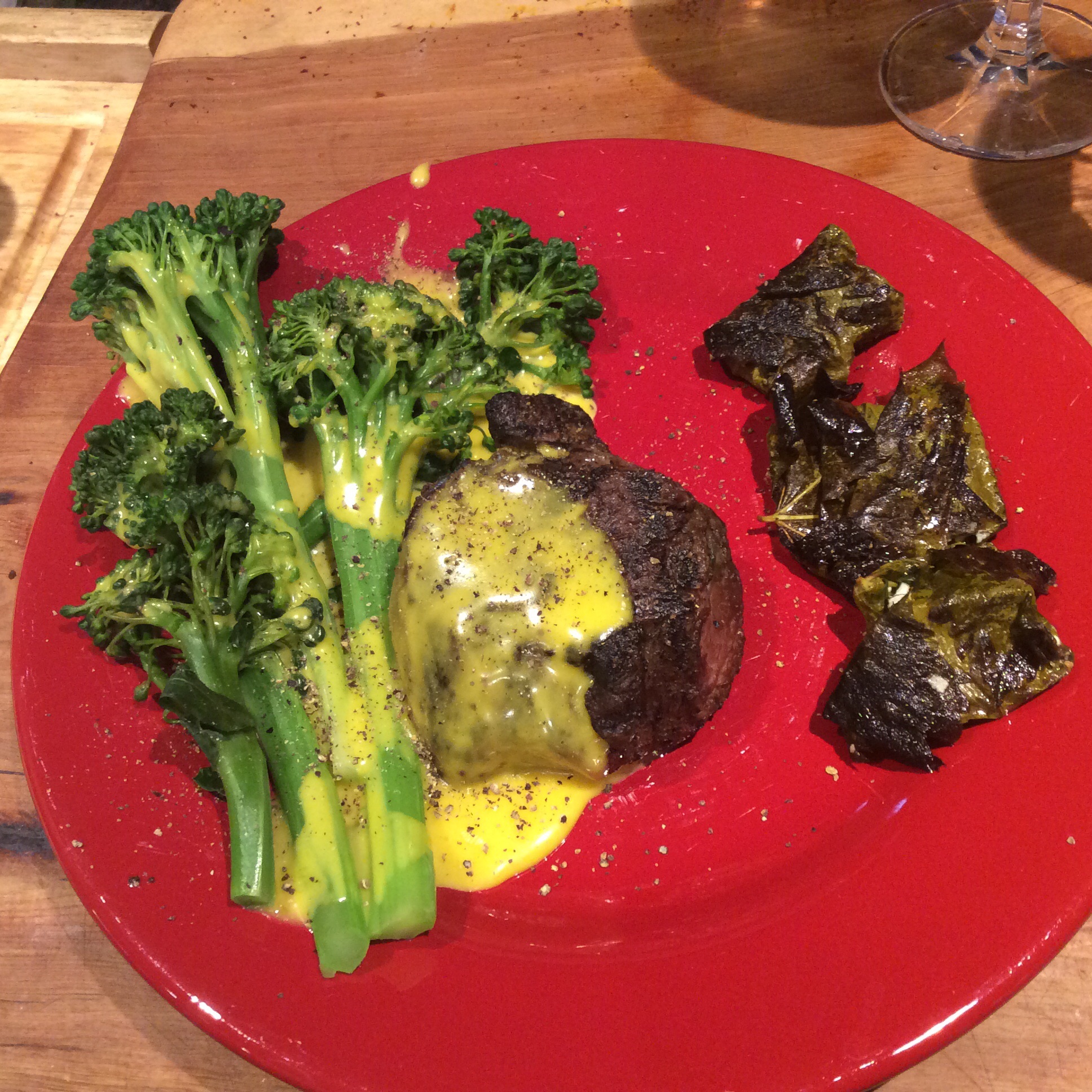
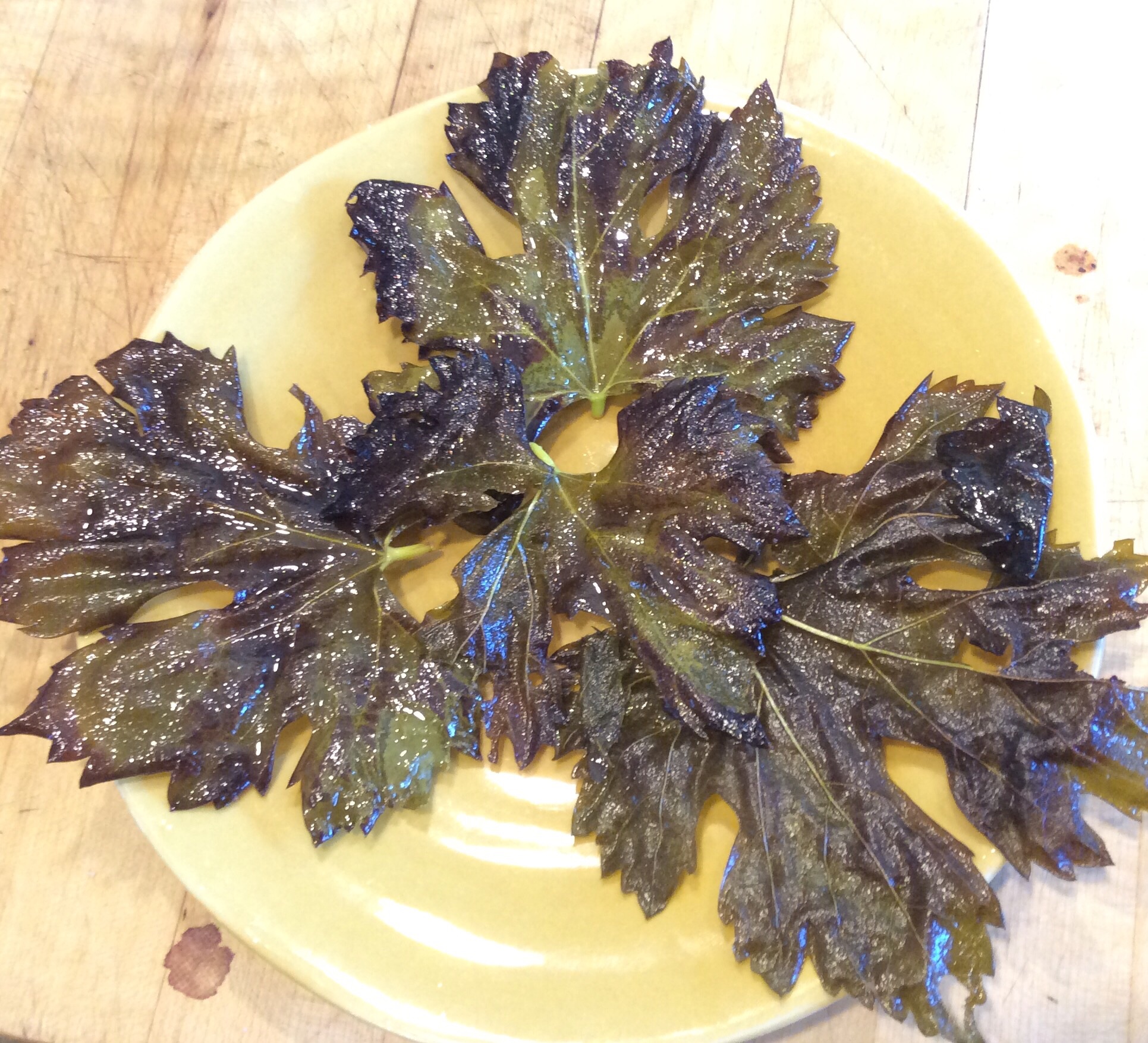
And so they do, sometimes crazier than others. The one shown above is one of my weirdest so far, and I thoroughly enjoyed it.
When cooking dolmas recently I felt the need for a Cook’s Treat, and there were some nice grape leaves left over that I had no other immediate use for. I heated my little 6″ skillet over medium heat and, when hot, brushed a grape leaf generously with good olive oil on both sides and put it flat in the hot pan, pressing down a bit with a spatula to make sure the leaf cooked evenly. Flip and repeat. Put on a paper towel and sprinkle with salt. If the heat is right, the leaf will cook in about 20 seconds or less per side, will be darkly browned in spots but not blackened anywhere, and will be crisp as an ultra-thin potato chip, with a light, delicate crunch and a hint of lemony-sorrel flavor. Have at least 3-4 extra leaves to get the heat right, but once the heat is adjusted, you can make and plate a serving in a couple of minutes. It is easy to do for two but would be fiddly for four. I like to oil all the leaves at once and then have nothing but the frying to concenrate on.
Why do it? Well, it’s different and it tastes good, at least if you like grape leaves and olive oil. The texture and flavor are not quite like anything else, and pleasant novel experiences delight me even when they’re minor. I can imagine a more substantial meze made by adding delicately spiced little fried meatballs to the plate. Little cubes of marinated feta would be another option.
Incidentally, the grape leaves that you use must be suitable for cooking. Please see my notes from my dolmas post on choosing grape leaves for cooking. A grape leaf that has papery unchewable fibers when raw will chew like a fried paper bag when fried.
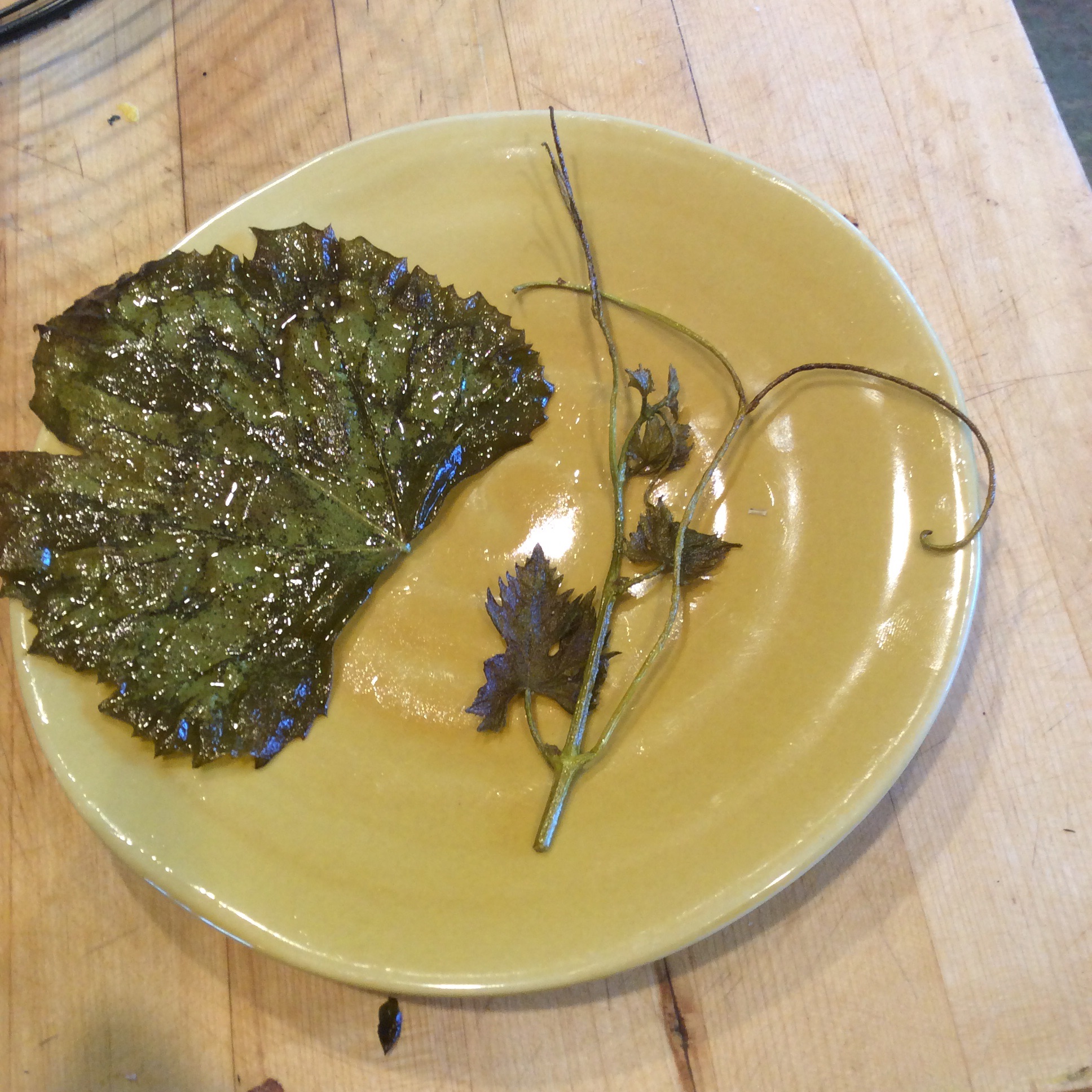
I also tried frying a pruned tendril. The stemmy part was tough chewing. It looked charming in a rather baroque way, but probably should be considered a garnish rather than part of the Crazy Salad. That said, I ate mine.
image

Unexpected Dolmas, and Notes on Grape Leaves

image
The tiny dolmas that you see on the edge of the plate above were never meant to be a post; they were meant to be a sort of amuse-bouche incorporated onto the main plate. But they were so delicious that I ended up writing about them.
They are simplicity itself. For two servings, start with eight fresh grape leaves, chosen according to the notes below. You pull a splendid chunk of Mount Vikos feta out of its wrapper, or if you have a really good locally made feta, you drain a goodly chunk of it and cut slices about half an inch thick and 1 1/2 inches long, or smaller depending on the size of your grape leaves. You need eight slices. Center each slice on a grape leaf, put a large pinch of chopped dill or chopped fresh fennel on top, and roll up the dolmas. The fresh leaves are a bit stiff and you will have to coax them. Heat up a nonstick ceramic skillet, and when it’s good and hot put in about 3 tablespoons of good olive oil. After a few seconds for the oil to heat, put in the dolmas with the last fold downward, to hold it in place. Fry until browned but not blackened, flip, and brown the other side. Serve. Eat. Simple as that. I can’t help noticing that these would make a great Cook’s Treat, a meze for one, eaten standing while working on other aspects of a large meal.

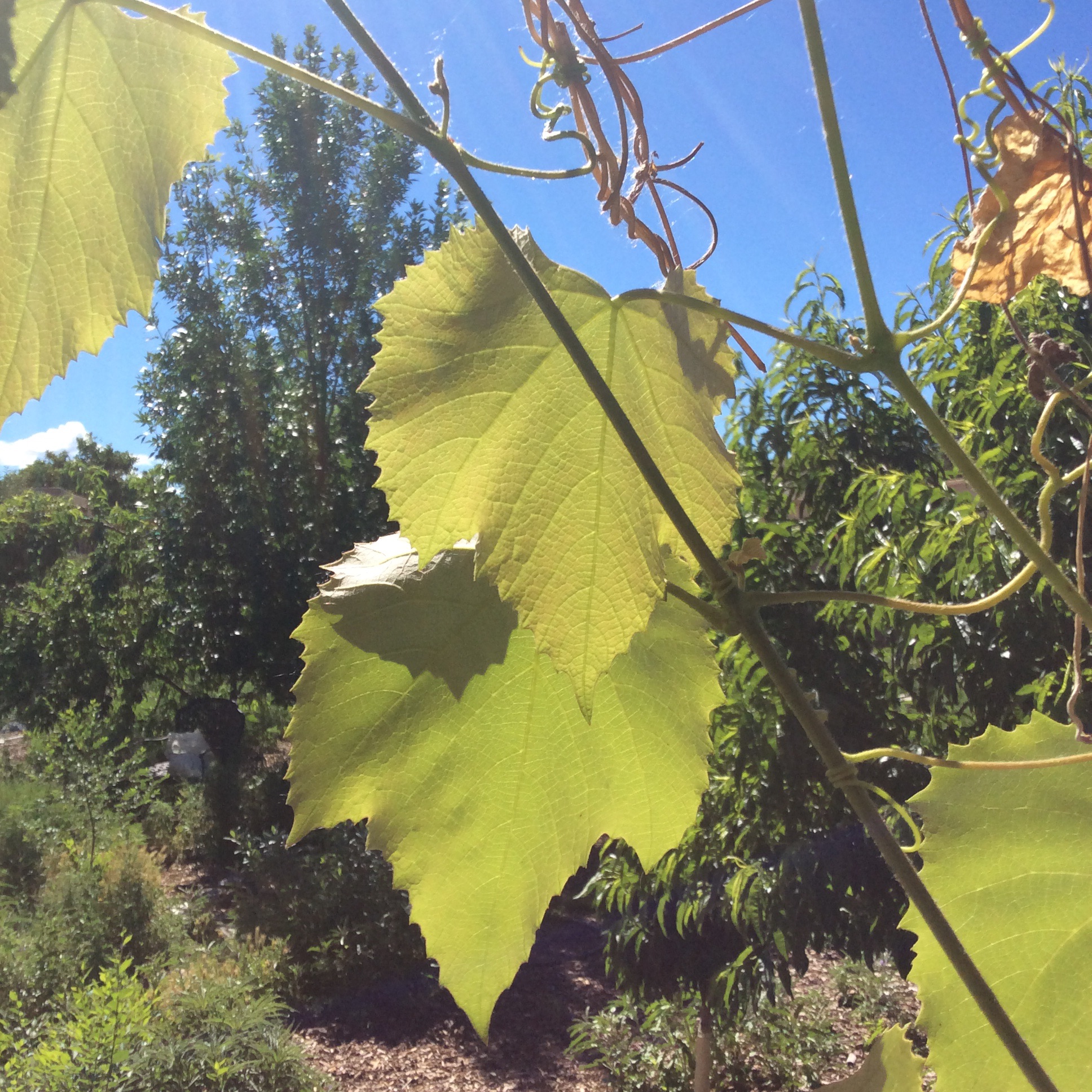
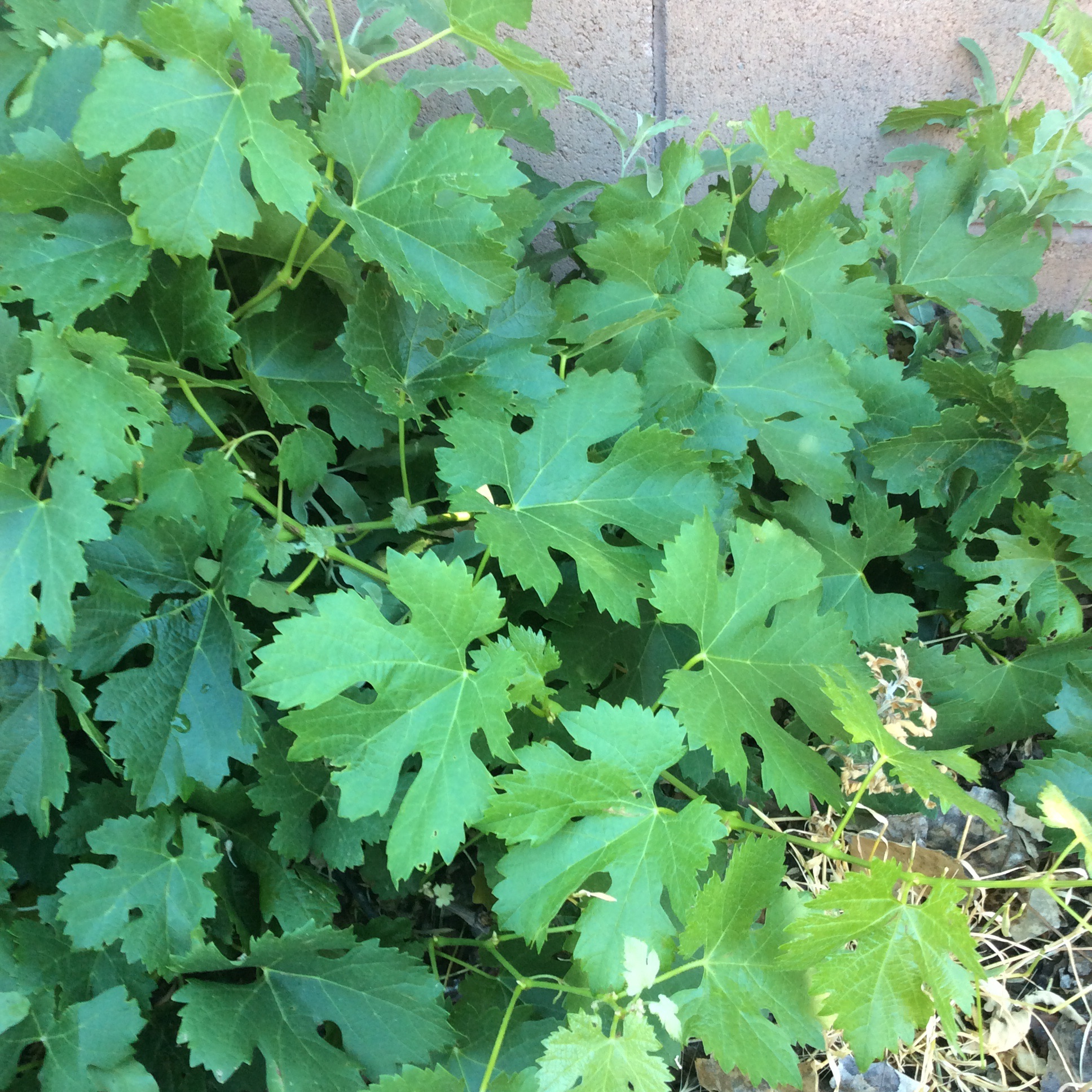
Now, about catching your grape leaves. I don’t know why some are tender and tart and others are papery and  unchewable, but I do know that it’s imperative to taste a leaf from the plant before you try to use them in cooking. I have two wine grape vines, a Syrah and a merlot, that have delicious leaves even when they have been on the vine a while, and a Concord that has totally inedible leaves even when tried very young. But I have tasted wine grape leaves that were awful, so taste your own vine or the vine that you have (legal) access to. If the leaf chews up without much of a problem, you are good to go. If you are left chewing something that feels like a papery candy wrapper to the teeth, no skill on the cook’s part will overcome this and you are better off with commercial brined grape leaves.
image

These are the leaves of my Concord vine, and they look perfect for stuffing, but don’t try to eat them unless you want an impaction.
image
These are the leaves of my Syrah grape, and they look too deeply lobed to cook with, but they are tender and sorrel-sprightly to eat.

Leftovers Wraps for One

image
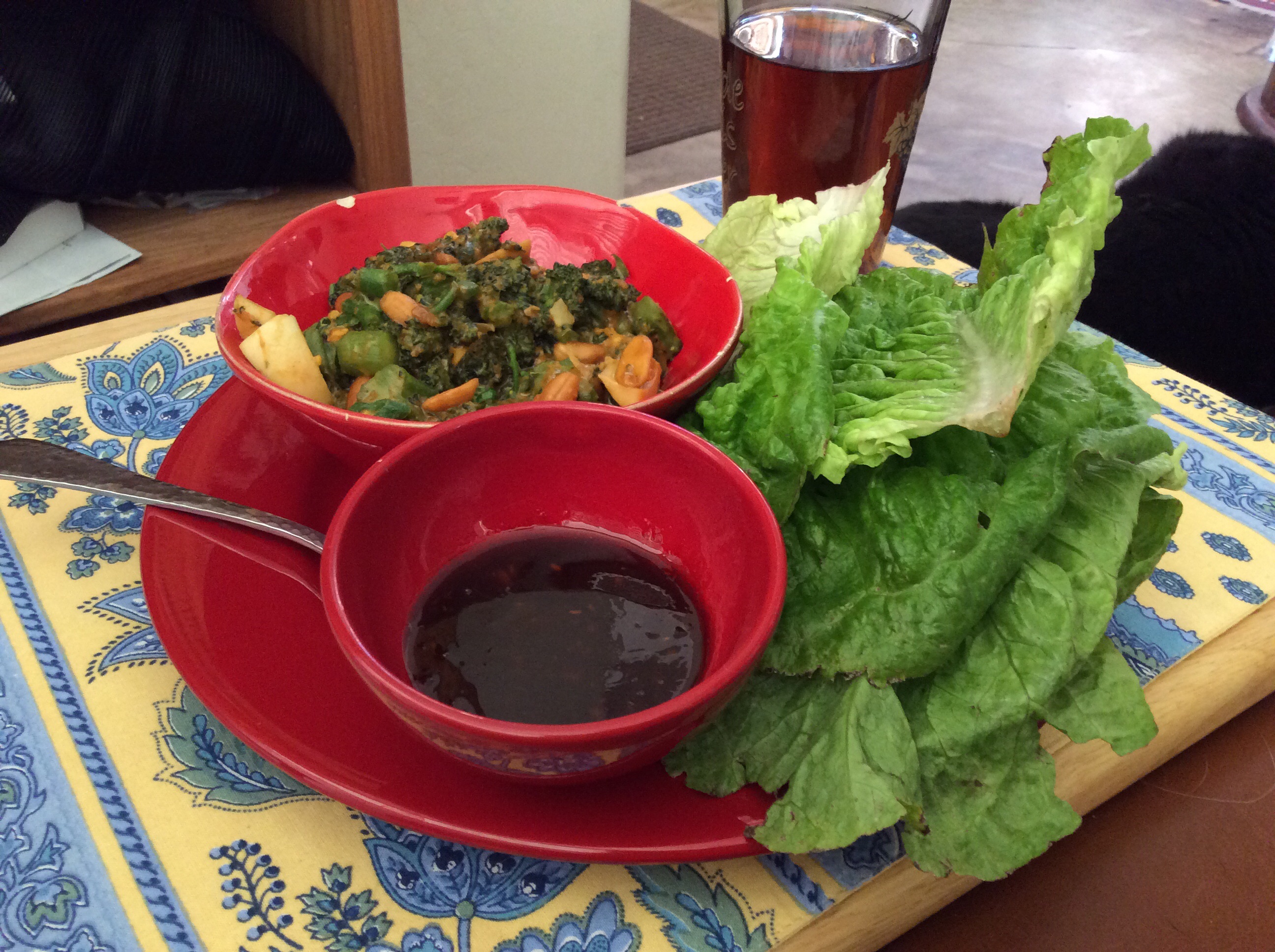
After I ate last night’s broccoli side shoots for one, I had several shoots left over, and tonight I pulled them out of the refrigerator for another veggie dinner. I also had last night’s Semi-Korean dipping sauce chilled, a couple of leftover hard-boiled eggs, a handful of roasted peanuts in my snack bag, and a head of romaine lettuce in the garden begging to be used. With the addition of a green onion from the onion row, my meal came together.
First I rinsed the biggest outer leaves of the lettuce quickly and set them in the dish rack to drain. Next, I thinly sliced the white part of the green onion while a small heavy saucepan heated up. I sliced the green parts separately, and chopped the cooked broccoli and eggs roughly. By this time the pot was hot, and I put in 2 tablespoons or so of oil and threw in the onion whites. They sizzled furiously as I stirred for about one minute, then the peanuts went in. After another minute, I added the chopped broccoli and about a quarter cup of the sauce, plus a glug of good soy sauce from the bottle that hangs out by my stove. After about one more minute of stir-frying, I turned the heat to medium, cooked just until the broccoli was hot, and stirred in the green onions. The chopped eggs were tossed in after the pot was removed from the stove. It was plated, wrapped in the romaine leaves a spoonful at a time, drizzled with more of the sauce, and eaten. Prep time and cook time together totaled twenty minutes.
Cooking for yourself is a great time to go improvisational because if something goes wrong you can shrug and, in a worst-case scenario, eat something else. That’s not so bad. And odds are that you will make some delightful discoveries along the way. The more you think through your available ingredients, putting them together on your mental palate, the less likely you are to make awkward combinations. And I want to put in a plug for prepping vegetables and possibly cooking at least some of them as soon as they hit your kitchen, so that you have fodder for really fast, really good meals. I recommend that any aspiring improvisational cook, or for that matter any cook, read Tamar Adler’s An Everlasting Meal. It’s a delightful read and a quick education in skilled use of leftovers.
Incidentally, when you find a sauce that suits you like my sort-of-Korean sauce suits me, make it in larger batches, keep it in the refrigerator, and see how many different ways you can use and enjoy it.