Archive for the ‘Cook’s treat’ Category

Fall and Winter Leaves II: Nettles

Nettles are one of my favorite greens, and one of the most nutritious plants around, so treating them with the respect and care that helps you avoid stings is definitely worth the trouble. I have a thriving nettle patch in a corner of my yard that I don’t routinely have to visit, so I have always harvested the new greens in the spring and then assiduously ignored the nettle patch for the rest of the year.  This is partly because I get interested in other things, but mostly because as a child, when I first started foraging to the intense dismay of my parents, my mother wisely bought me a set of Euell Gibbons books so that I would not poison myself.  Mr. Gibbons wrote eulogistically about nettles, but cautioned his readers that after the spring flush they develop oxalate crystals and are gritty and inedible.  I believed every word he wrote, and so I never tried them after they were about a foot high.

Here in the desert, in the unwatered spot where they have to live in my yard, nettles die back beginning in July, and the stems look dead by September.  But this year we got an uncharacteristic long heavy rainstorm in late September, and to my surprise the dead nettle stems began to leaf out again.  This week I noticed a mat of fresh nettle leaves, and told myself that no doubt they would be gritty, exactly as Euell had predicted.  But I did gather a couple of quarts (using leather gloves) of nettle sprigs and tried cooking them. They were exactly as verdant tasting as the spring greens, and neither gritty nor tough.  Now that I know this, I will try to remember to cut my nettle patch back when it dies in the hottest late summer weather, and begin to water in September so that the late fall shoots will be easier to pick.

Cooked greens in the refrigerator are an appetizing snack or light meal waiting to happen.  Today I didn’t particularly feel like eating a heavy lunch, but I did want something, and I wanted it to be healthy. I had a cup of blanched nettle greens hanging out in the refrigerator, and half a cup or so of leftover cooked cauliflower rice, so I grabbed two large scallions out of the walking onion patch and picked three large carrot leaves off the last remaining carrots.  The garlic that I planted in late summer is sprouting, so I picked one stalk that was about 6 inches high  to use as green garlic.  The fresh green stuff was chopped and sautéed in butter until cooked through, then the cooked nettles and cooked cauliflower rice were added along with about 2 cups of canned chicken broth and half a cup of heavy cream.  You could certainly leave this as a chunky soup, but I decided that I wanted a cream soup, and put the little potful in my Vitamix blender. About a minute later, it was completely creamy and thickened. I poured it back in the cooking pan, added a little water to thin it to a good consistency, simmered for 10 minutes, salted to taste, and ate it with a spoon full of drained yogurt on top to supply a subtle acidic element.  The entire process, including grabbing the green stuff from the yard, took about 15 minutes. This is a pretty small time investment for something as absurdly healthy as nettle soup.

Needless to say, vary to suit your own taste. Cooked cauliflower is a surprisingly good creamy thickening agent, and if you are vegan you could use olive oil for the initial sauté  and vegetable broth for the cooking liquid, and leave the cream out or substitute nut milk. It could be finished with a few drops of lemon juice instead of drained yogurt. Vegetarians can change the broth and leave everything else the same. As written it is a delicately flavored and very comforting soup, perfect for days when fate is being unkind, but if you want something more emphatic  you can start playing with herbs.  If you don’t happen to have a nettle patch, use some other leafy green. Have fun in your kitchen and make the result work for you.  My mother objects to my greens soups on the undeniable grounds that they are green, but if you have a prejudice against the color green in food I do hope that you will get over it, because it is the marker for some of the healthiest food that you can possibly eat.

And by the way, Euell Gibbons wasn’t right about everything, but his foraging books are still well worth reading for their palpable joy in the outdoors.  In one plant essay he says that wild foods are his way of taking communion with nature and the Author of nature, and I think this sums it up.
A Quick Thai-ish Snack

After yesterday’s brief dissertation on nam prik pao,  it occurred to me that one thing I had not really demonstrated about this Thai seasoning paste is its ability to make something very good very fast.

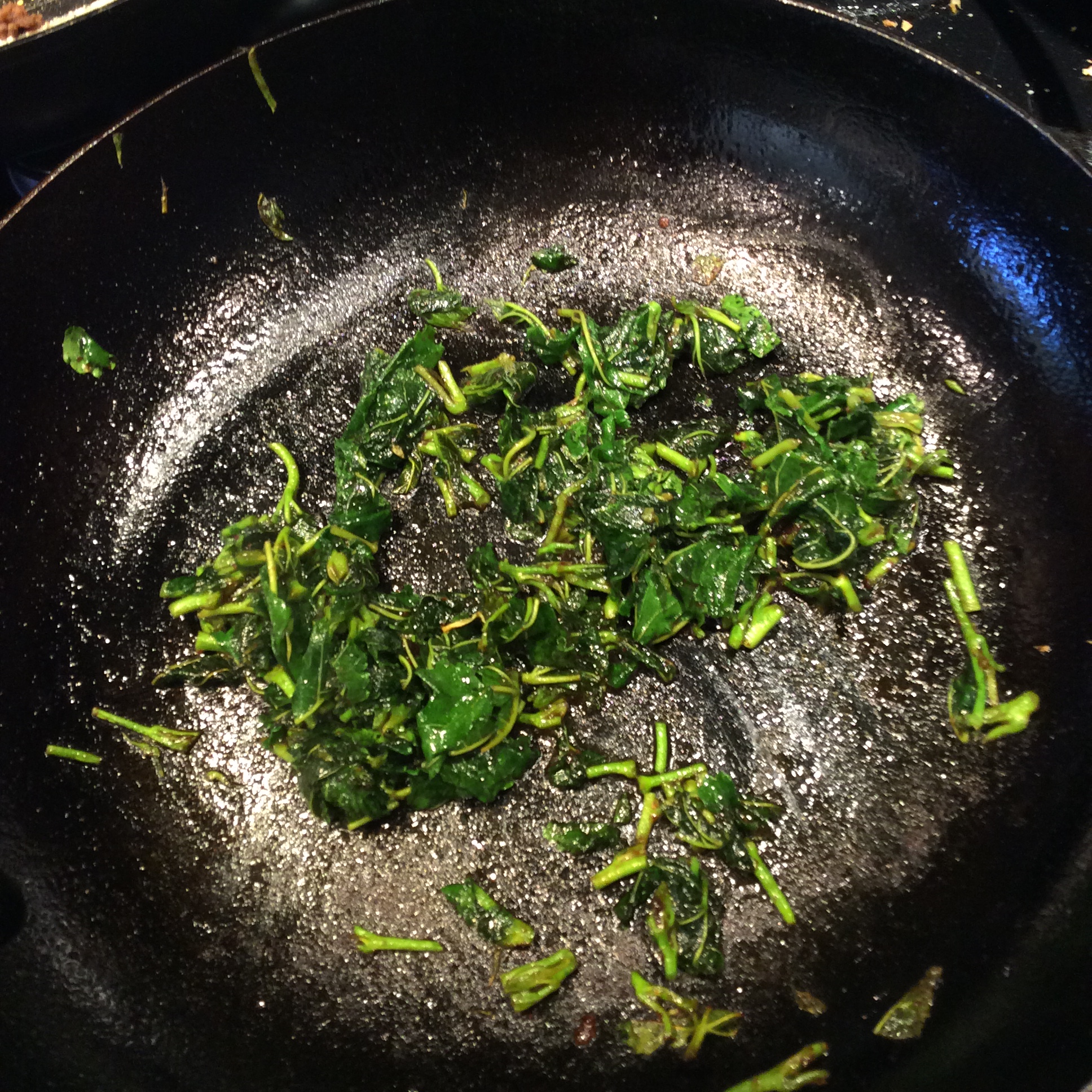
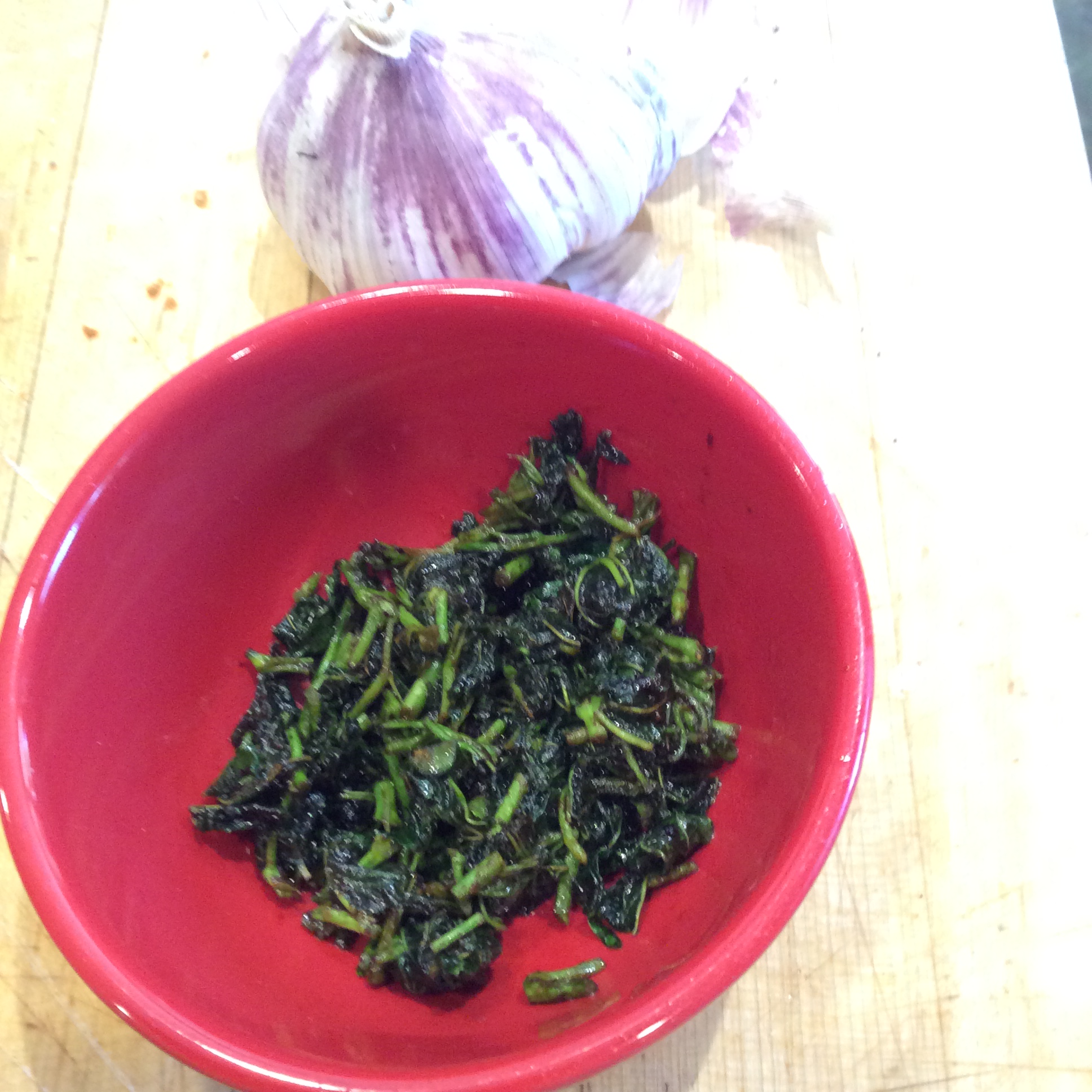
Today I was not hungry for lunch but did want something healthy in a hurry to tide me over.  I decided on a quick very small bowl of greens. I used mulberry shoots, but any rather sturdy green would do. If you use something substantial like collards or kale, one collard leaf or two kale leaves  would work for a passing snack.  For smaller leaves, a generous handful is the right spirit.

All you need is your leaves, fish sauce, a little coconut oil or other cooking fat, and nam prik pao.  Wash and chop the leaves or, if they are large and substantial, chiffonade them.   Heat your smallest skillet, put in the coconut fat and heat it briefly, and put in a heaping teaspoon of nam prik pao.  Stir it around for about 30 seconds to distribute it through the fat, throw in your greens over medium heat, and stir around for a couple of minutes, drizzling with a little bit of fish sauce but not too much because the small quantity of greens can get too salty in a hurry.  When the greens are done to the degree of tenderness that you like, put them in a little bowl and eat them.  Simple as that. You will feel a pleasant glow of virtue because of the soluble fiber and antioxidants that you have taken in, and it will taste good  and take less than five minutes. The leaves are whatever struck your eye on the way from the garden to the kitchen and took approximately a minute to gather. No fuss no bother.  You can chop some herbs on top if you want to and that will be delicious, but it will still taste awfully good without them.

You could use the same principle to make a side dish for dinner, or for that matter a main dish, and a few different Southeast Asian vegetable dishes with a cushioning bowl of rice if you can eat it make a wonderful dinner full of interesting flavors.  If you are a low-carb person, you can use cauliflower rice instead of real rice, or have both available for the various kinds of eaters at your table.   But the recipe as written is for your own private pleasure.

My Years with Cardoons

img_5066

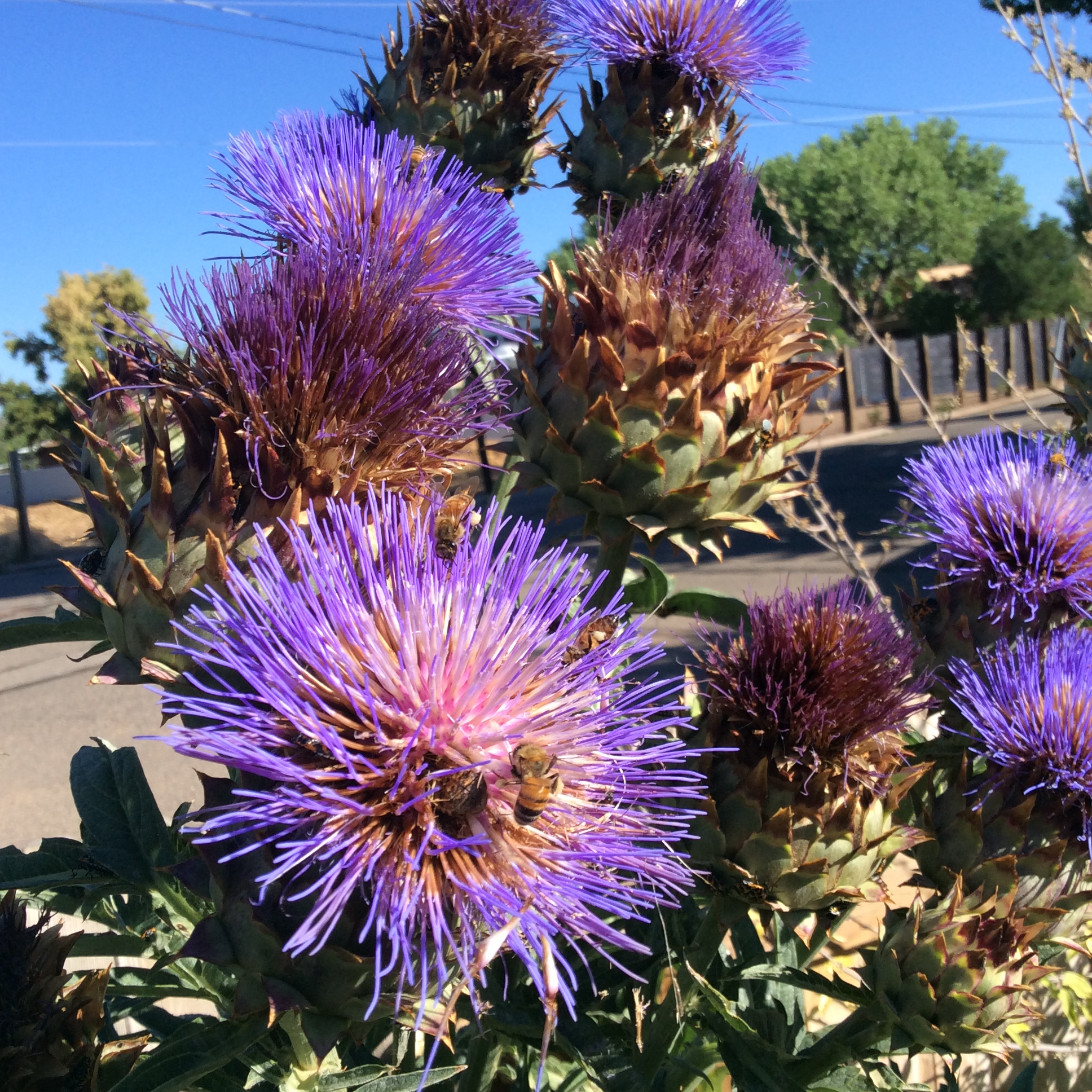
It took me a long time to learn to eat cardoons. My own cardoons, at least. I first found them in the market while honeymooning in Italy, and there they are neatly blanched, trimmed, and ready for the pot. I loved them, and ordered seeds from Italy as soon as I got home. They grow robustly in my desert climate and alkaline soil, and they are very ornamental. I had them for years before I successfully cooked them, and they were wonderful bee fodder all that time, blooming in the blasting-hot late summer when few other flowers are available to our pollinators. I tried to cook them without the tedious step of blanching the plants, and would say that this just doesn’t work.

image

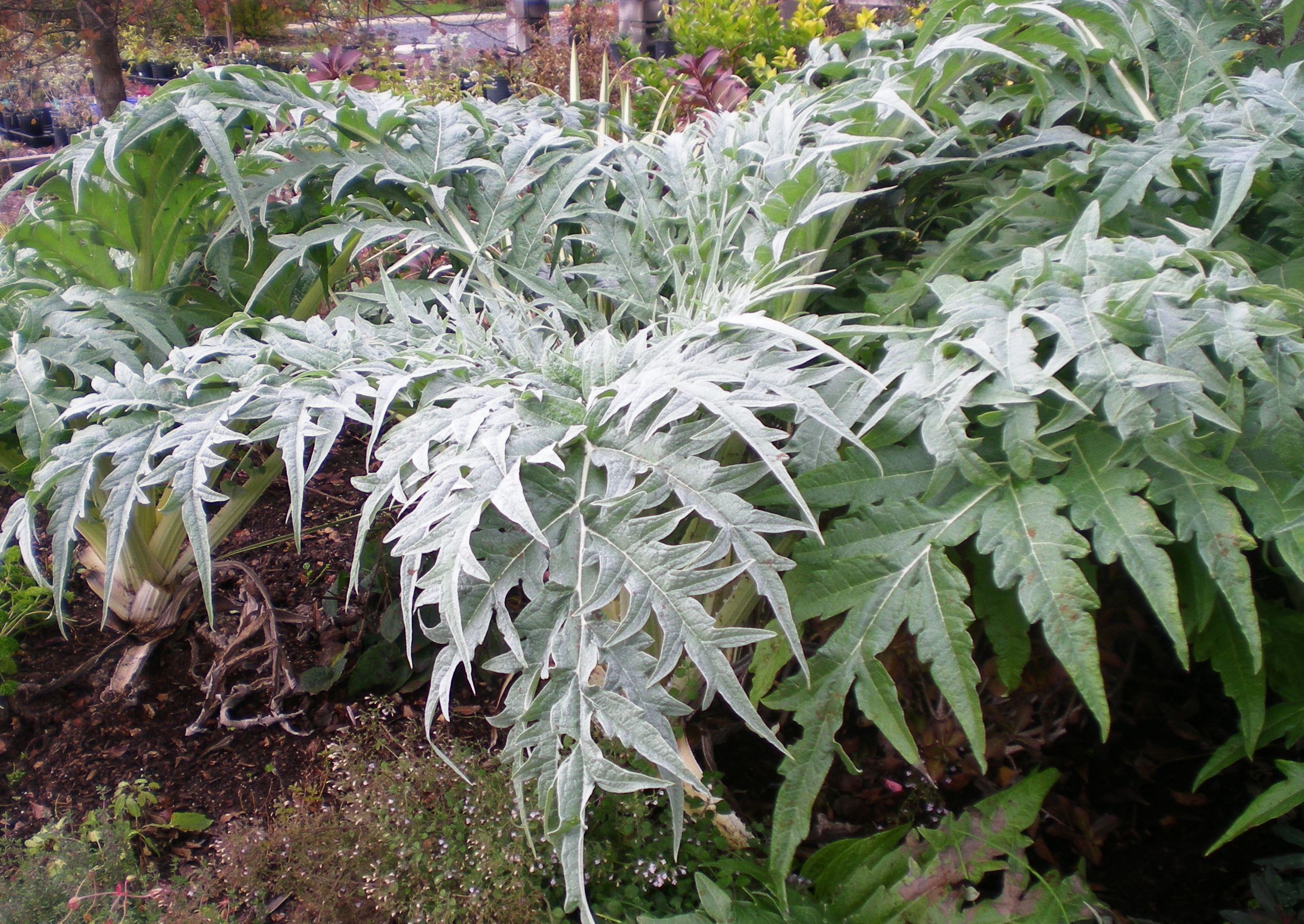
They die back unattractively after flowering, but then sprout again from the ground up. The foliage is silvery, full, and stunning in November. Unfortunately this is also the time when they’re best for eating, so mine aren’t exactly ornamental right now.

Before eating, blanch the stalks for a couple of weeks. I covered mine with some landscape cloth I had around, which is black and fuzzy and nearly lightproof while letting air and water through. You could also wrap your bundled plant in a couple of layers of corrugated cardboard, tieing it on carefully to exclude light from the stalks.

When blanched, use a sharp knife to cut the whole center out of the plant. Wear gloves, because cardoons are thistles and have nasty bristles down the edges of the leaf stalks and at the leaf margins. Cut off the leaves, leaving a bundle of stalks, and pull off any outer stalks that look ragged. My goat adores the leaves and trimmings, and since the leaves are intensely bitter, this is the best use for them.

img_5060

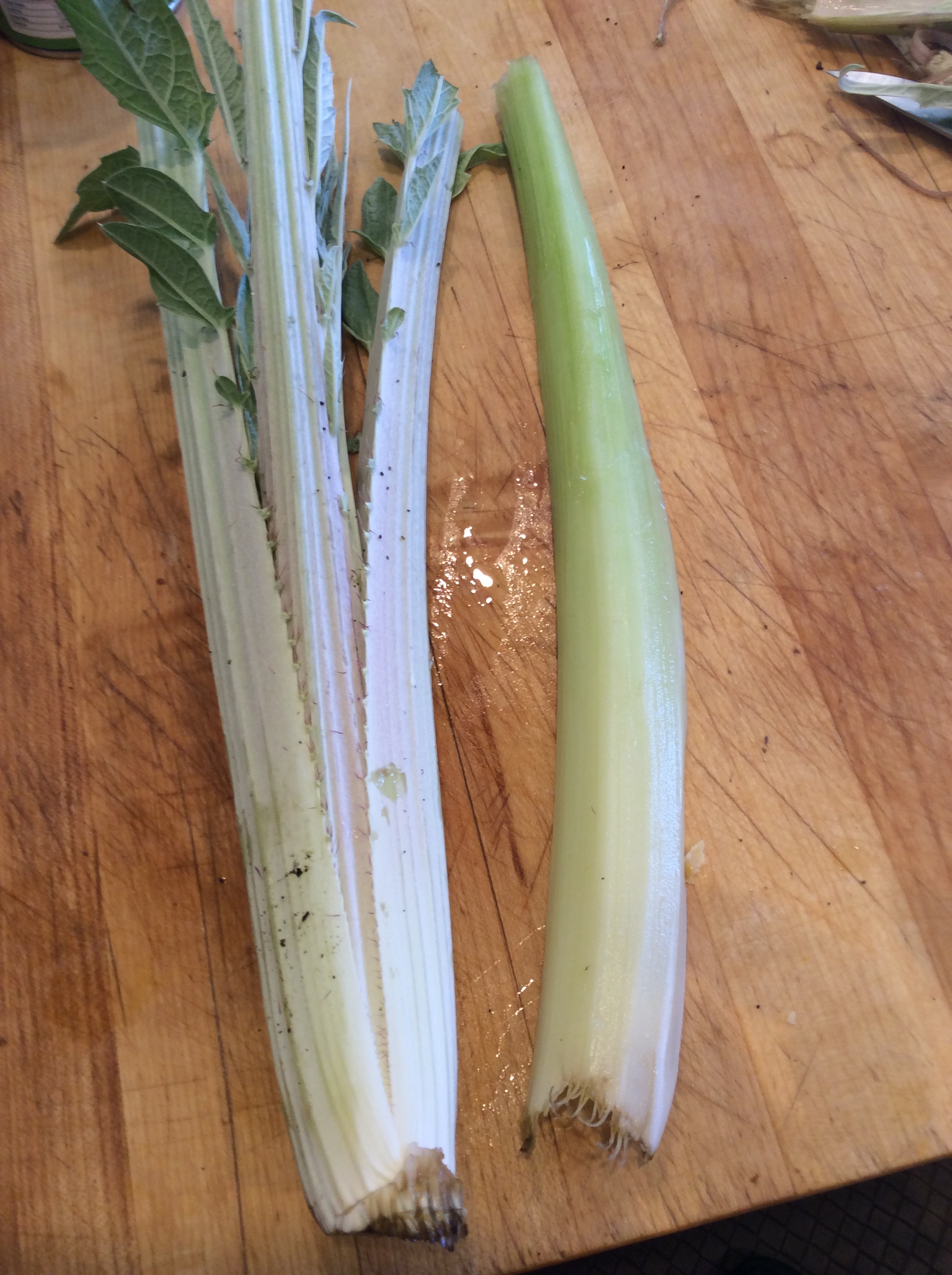
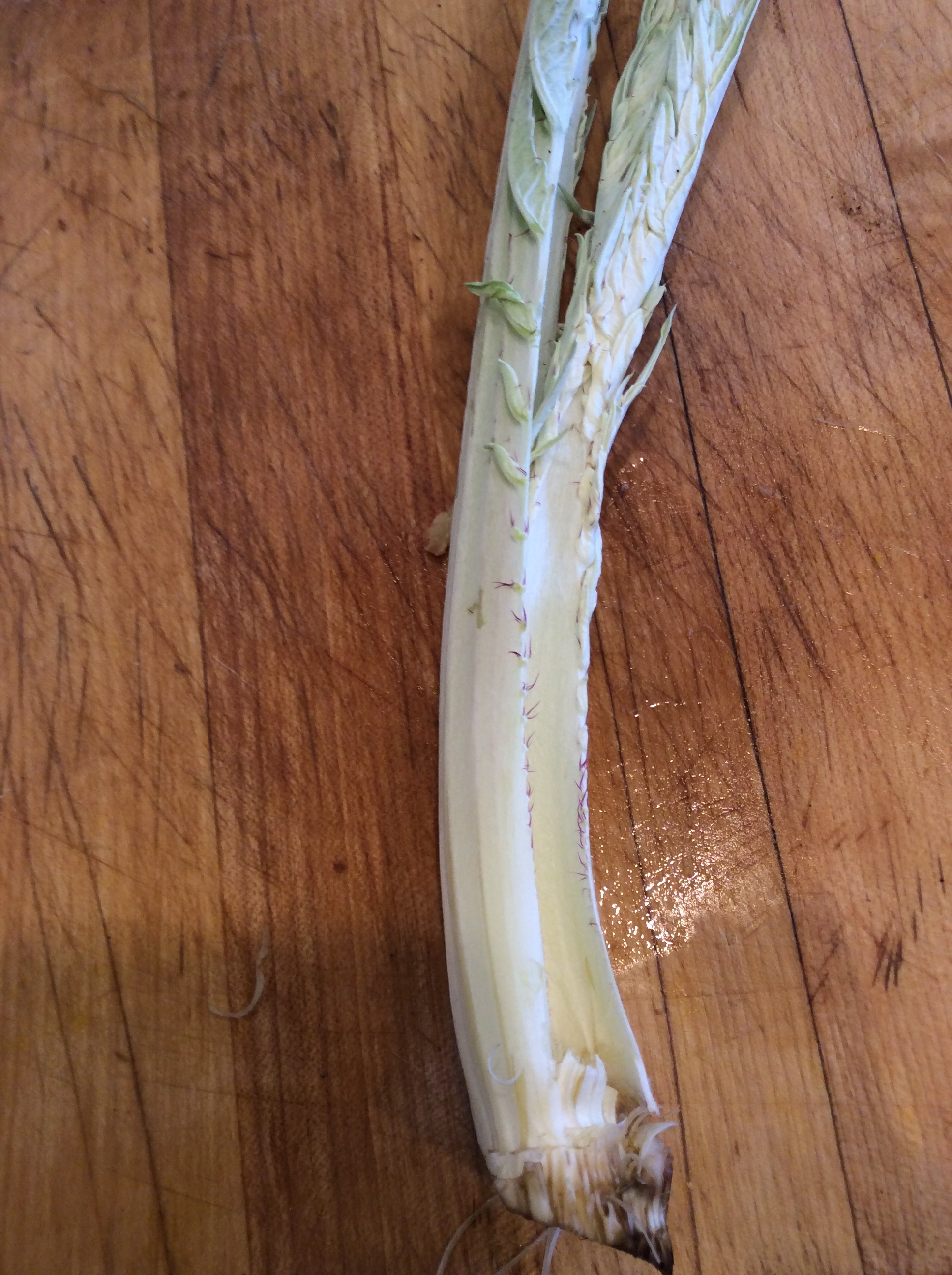
Separate the leaf stalks, wash well, and use a vegetable peeler to skim off the outer margin on each edge, where the bristles are. Now use the peeler to skin off the tough stringy part on the convex outer surface of each stem.  When you are done, they will look like the peeled stalk on the right above. The innermost stalks are tender and fairly stringless and just need the base trimmed and the row of bristles on each edge skinned off. Be sure you pull off the leaves from the center stalks, because even though they are very blanched and not bitter, they are tough even after cooking. Cut off the stalks at the point that they start to look corrugated and use everything below that.

img_5061

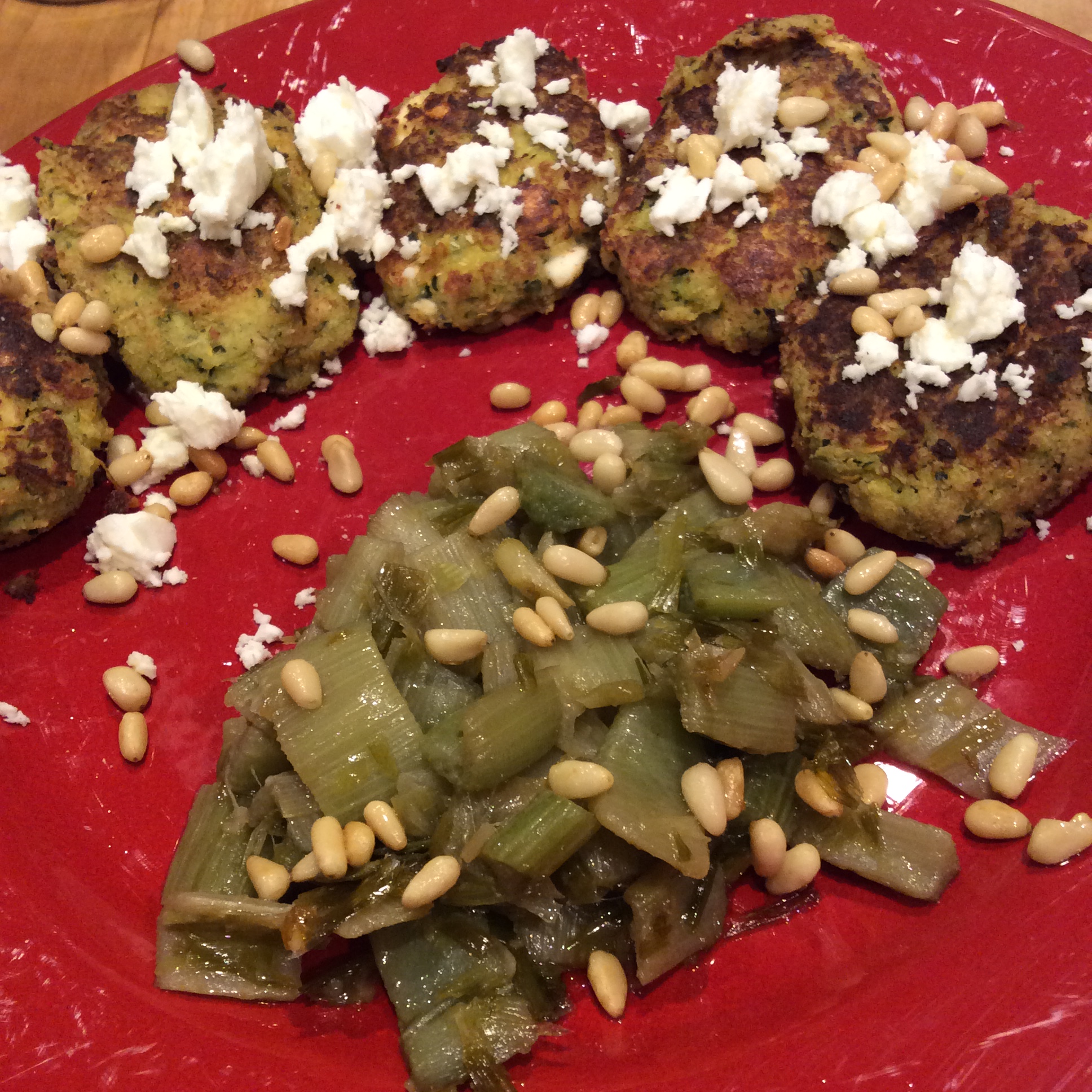
Cut the stalks in half-inch cross sections  and blanch in boiling salted water for about two minutes, then drain well and either continue cooking as you desire or refrigerate them for later.  They have a flavor rather similar to artichokes, so I gave them a bagna cauda treatment by sautéing them for about five minutes in plenty of good olive oil with a chopped clove of garlic and half a mashed anchovy fillet and a final garnish of roasted pine nuts.  Their own flavor is subtle, so don’t get too heavy handed with the seasonings.

img_5063

I think they are awfully tasty. The bad news is that one large plant, with a fair amount of preparation, makes two generous servings.  But given that they are drought tolerant, attractive, and truly carefree perennials, I don’t mind putting in some effort in the kitchen.  As for the low yield aspect, I will just work on growing more of them.

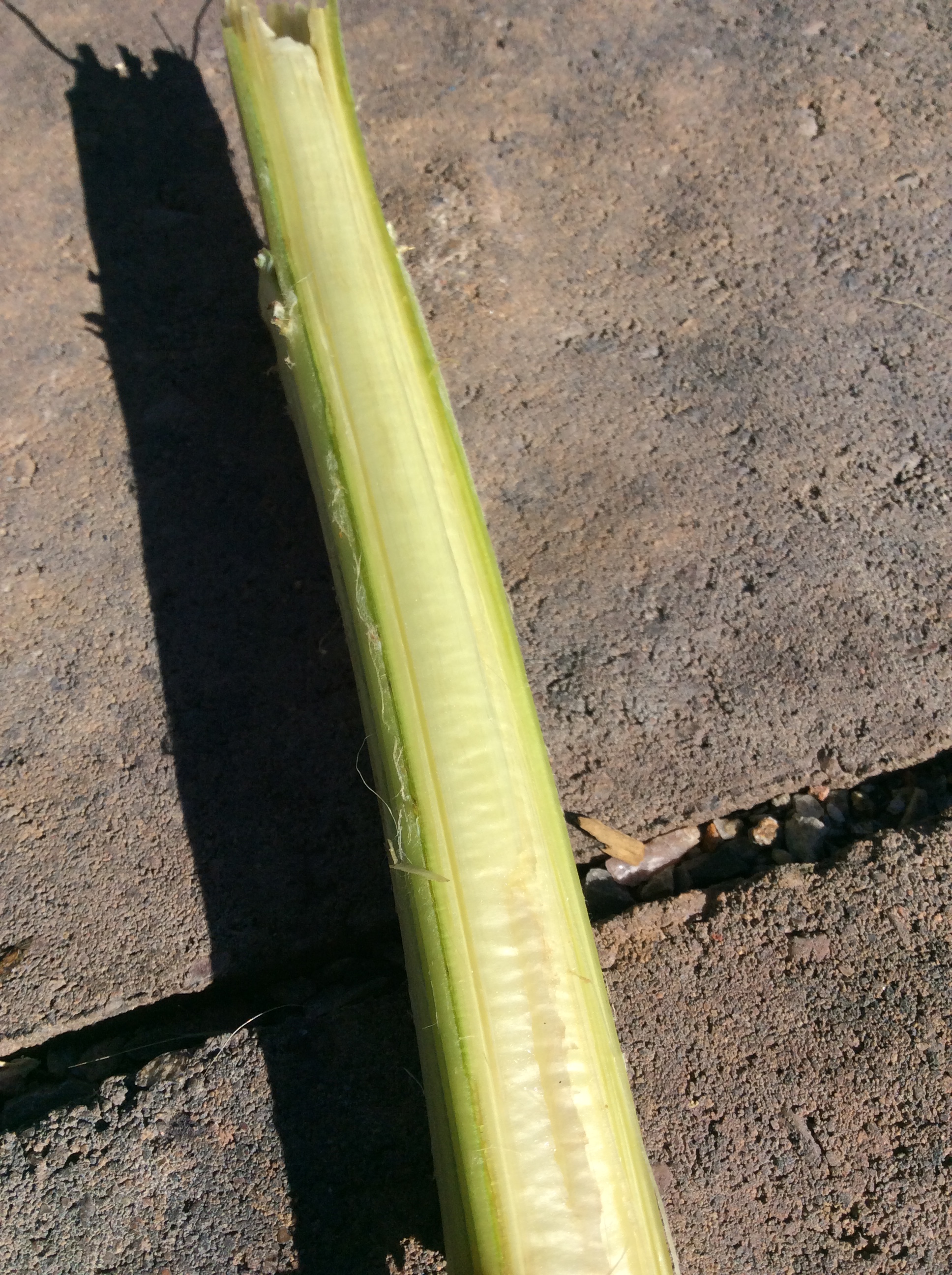
Incidentally, before they flowered last summer, I picked a flower stalk when it had lengthened to about 3 feet but before the buds started to swell. I peeled the thick tough skin off the stalk, cut it in sections about an inch long, and sautéed it in olive oil with some salt until cooked through and fairly tender.  The upper 8 to 10 inches of the stalk, when treated this way, made a delicious vegetable with a crisp texture and a pronounced artichoke flavor.  The other 2+ feet of the stock were not usable because, even when the outer tough skin is peeled away, fibers have developed in the pith itself.  But if you have a lot of cardoons and can afford to pick several stalks, this makes one really delicious vegetable. Otherwise treat the top of one stalk as a Cook’s Treat and cook it in your smallest skillet and eat it standing up in the kitchen, gloating quietly to yourself.

image


The Oyster of the Woods

image
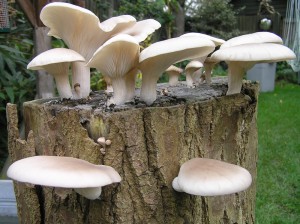
There is nothing more interesting than mushrooms. Really. An independent kingdom of organisms, they have much in common with animals and their interactions with plants are complex and often beneficial. For a wonderful read about mushrooms and their biological role, check out Paul Stamets’s Mycelium Running, and you will be wonderstruck at the hypheal hijinks going on all around you.
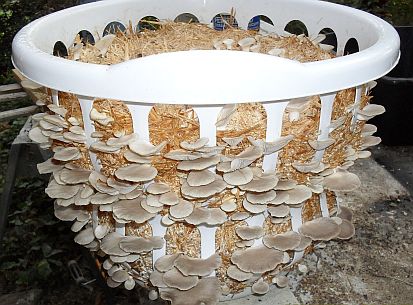
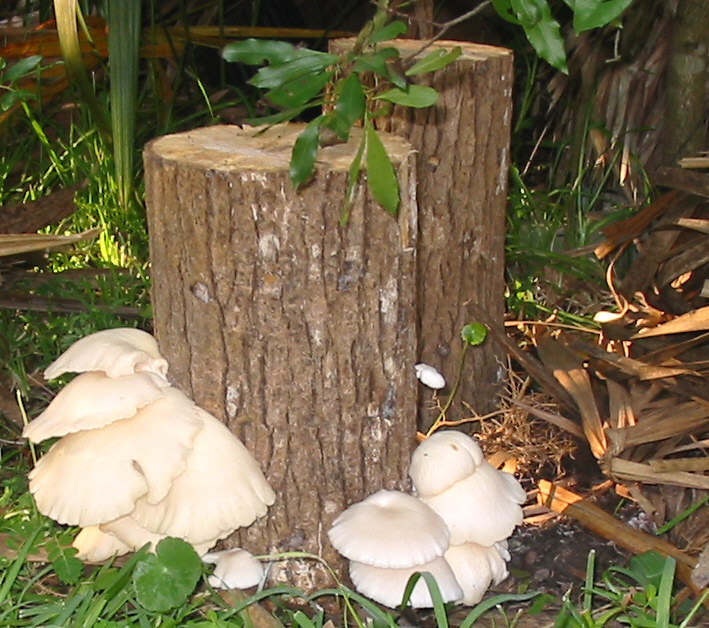
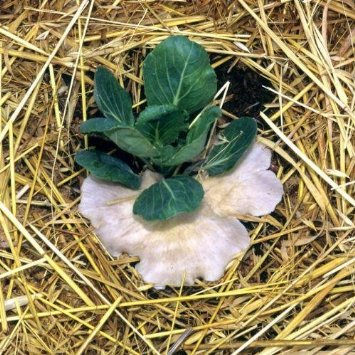
They are extremely easy to grow for everyone but me.  I am convinced that mushrooms have a very important role to play in a functioning urban homestead, even here in the high desert.  So far, however, I have been unable to make that work out in practice.  I have tried spreading the spawn among existing plantings under heavy straw mulches, and putting the spawn in piles of hard wood chips, and so far have not had any significant success, due to lack of consistent moisture, lack of shade, dry air, and insufficient attention.  I have harvested a few mushrooms, but nothing to write home about.  That is why the below images below are borrowed, to show how easily it can be done in moister climates than mine.
image

image

image

image
.
Since I have finally accepted that it’s going to take more focus than just throwing some spawn around, my next attempt will be to insert plug spawn into damp hay bales in the dense shade of my black locust tree. I have also cut down a small Siberian elm recently and have a few pieces of suitable fresh log to try drilling plug spawn into. Next August I will harvest them, or not.
Meanwhile, many farmers’ markets have a mushroom farmer or two, and oysters can be found in our river bosque here and in many woods and forests if you are a knowledgable forager and know exactly what you are picking. Mushroom foraging is not for you unless you are prepared to study it seriously and know all your local toxics. No margin for error here.
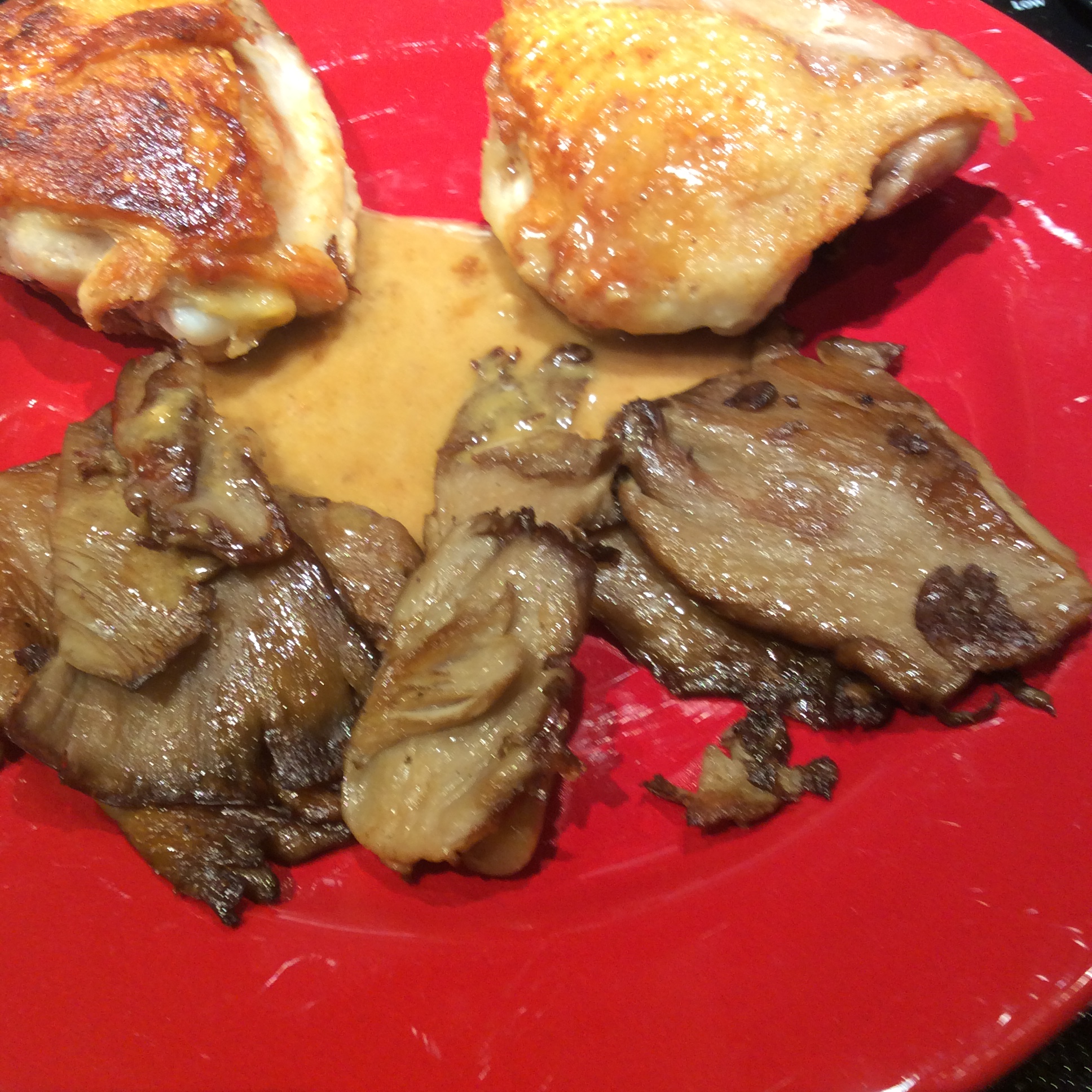
However you get hold of them, good oyster mushrooms are just delicious. I love their earthy-almondy aroma and their meaty texture. I like them best simply pan-fried with a little macadamia oil and salt, but roasting them with a bit of butter and soy is awfully good, and so is grilling them rubbed with olive oil. The addition of a little chicken glacé early in the cooking stage so that it can cook into the caps suits their meaty flavor.
For preserving, I roast them with macadamia oil and salt just to the point that they are cooked through, cool them, bag, and freeze. When wanted, they can be thawed and pan-grilled until they get some lovely brown crunchy bits. I dehydrate the clean stems as long as they’re not buggy and grind them into oyster flour to thicken mushroom sauces and soups. I admit that I also open my little bag of oyster flour just to inhale deeply and recall the woods where I found them.
Yesterday I found that I had tossed more caps with macadamia oil and salt than would fit in my roasting pans, and stuck the surplus in the dehydrator. They emerged as delicious crunchy lightly browned Oyster Crackers. Yum. I will make more of those. A small pan-grilled cap on an Oyster Cracker would make a wonderful cook’s treat. In fact, a couple of them with nothing on top made a great cook’s treat…