Archive for the ‘Books worth reading’ Category

Unforgettable Paula Wolfert: A Tribute


When I was in my early 20s and becoming aware that I was by far my happiest in the kitchen and my interest in flavor and food was on a level that was not entirely normal, America was obsessing over classic French and Italian cuisine. Anxious cooks were obsessed with anything Julia. Later there was anything Marcella. But it was an oddly joyless time. If you went to a dinner party, you were expected to talk all evening about the food. Very little ever got said about anything but the food. There was a lot of competition involved, and the kitchen ethic that I grew up with in Louisiana, that of getting over yourself and cooking something good and inviting people in to enjoy themselves and each other, did not seem to be there.
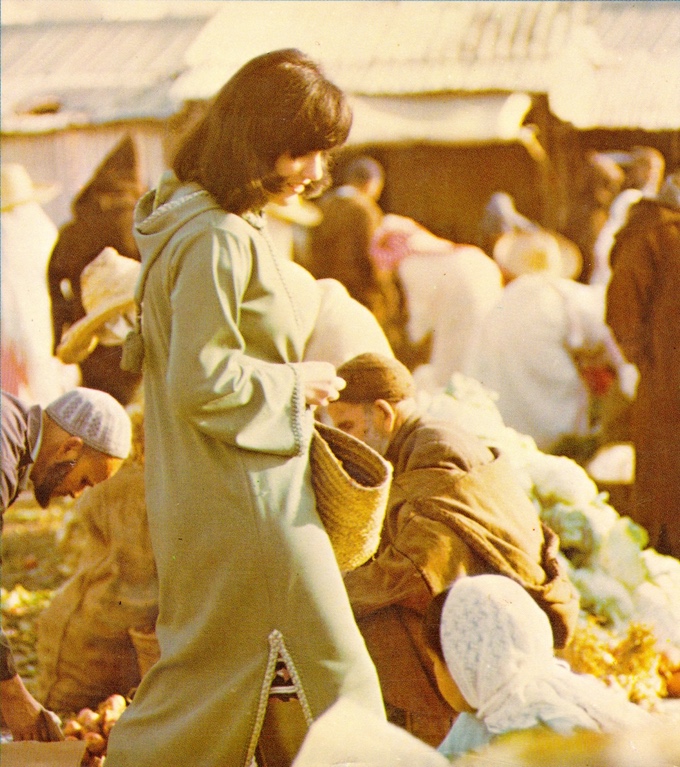
Fortunately in Manhattan in the early 80s there was joyful food to be had. I would make the very long walk to Manhattan’s Chinatown, where there were basins full of wriggling seafood and strange vegetables all along the sidewalks, and ginger and wild-looking dried things that might be fungal or might be animal, and the elderly vendors would hand me unfamiliar vegetables with the invariable instruction “cook in soup.” There were the Indian markets on Lexington Avenue, full of wonderful spices with a combined aroma that seemed like Nirvana, where a passing shopper in a gleaming sari might easily stop and spent 20 minutes telling me how she cooked greens or chappati like the ones her grandmother made. There was a Greek market on Ninth Avenue that sold green coffee beans for roasting at home and olives from enormous barrels and where the proprietor might cheerfully pass me a shot of Greek brandy as he wrote up my modest purchases, for the pleasure of watching me gasp and sputter as I tried to swallow it.
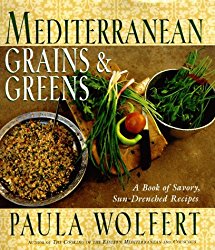
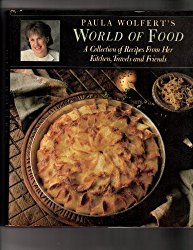
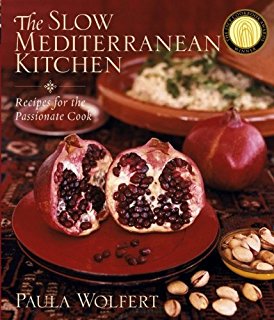
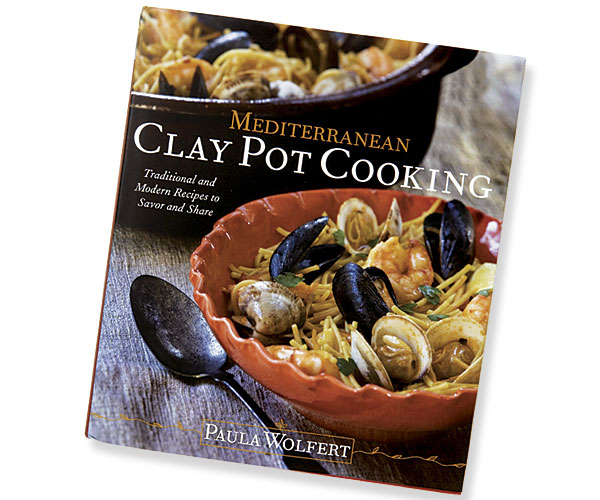
And there was Paula Wolfert. Instead of the staid rhythms of a classic cuisine, she wrote about the bold, the unexpected, and the renegade food of the world.  Her recipes were long and extremely detailed and assumed that you loved to be in the kitchen and that spending a few extra hours there was nothing but a pleasure.  She wrote about food that was not for showing off, but intended to warm and nourish people and make them incredibly happy.   Her name became a kind of secret code among enthusiastic home cooks, and we might have long pleasurable arguments about which of her books was best.  I bought my first couscoussiere, a huge tin lined copper beauty that was the glory of my kitchen and astonishingly cheap at the time because few people in America wanted one.  I preserved lemons and cooked chickpeas  and developed a serious addiction to coriander leaves and toasted my own spices and longed for an exciting life like Paula’s.  As Paula went on through various Mediterranean cuisines, I went with her, loving every minute of the journey.  My Paula Wolfert cookbooks are ragged, broken backed, and splashed with food, which is as it should be. In some cases they look less blemished, because I wore out the original copy and got a new one.

In 2013 Paula was diagnosed with Alzheimer’s disease, and consistent with her personality, she not only tried every way she could to maintain her own health but became a spokesperson for others with the illness.

The cookbook Unforgettable, with the story of Paula’s life woven through recipes that she loves, has just been published through a Kickstarter campaign, and all diehard fans will want to own it. You can find it on Amazon. But don’t forget all the other books that chronicled her passionate interests through the years and gave us recipes that we will never forget.
Even though we never met, Paula was my constant kitchen companion for decades. My hat is off to her, now and always. And by the way; best Paula Wolfert cookbook ever? Mediterranean Grains and Greens. No question. Or if you aren’t convinced, meet me in the kitchen sometime and we can have a lovely argument about it.
The Oyster of the Woods

image
There is nothing more interesting than mushrooms. Really. An independent kingdom of organisms, they have much in common with animals and their interactions with plants are complex and often beneficial. For a wonderful read about mushrooms and their biological role, check out Paul Stamets’s Mycelium Running, and you will be wonderstruck at the hypheal hijinks going on all around you.
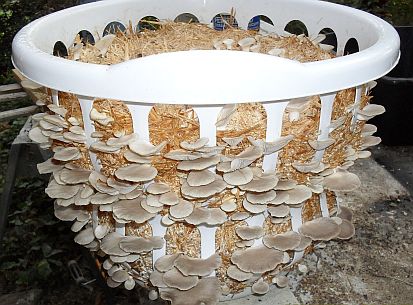
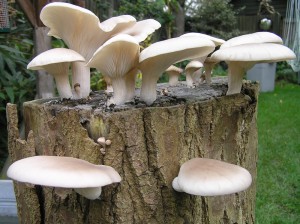
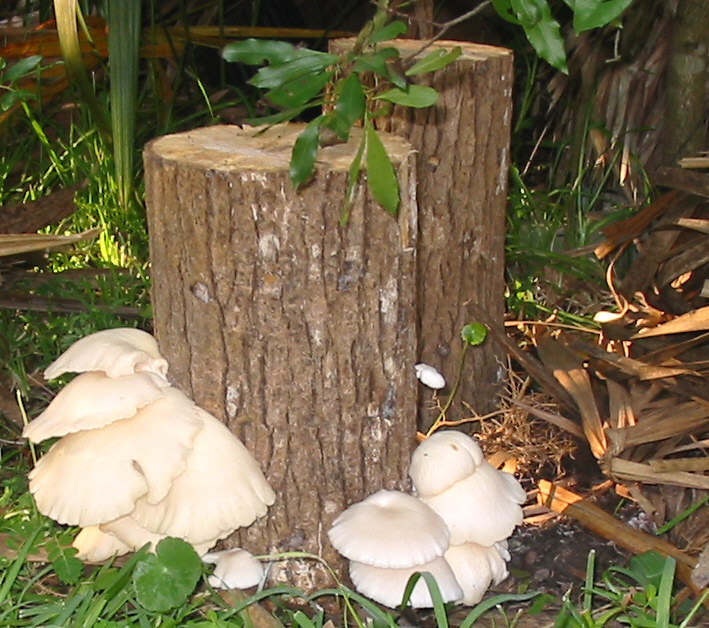
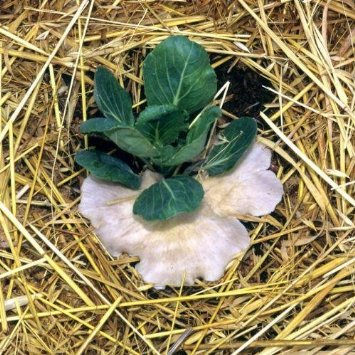
They are extremely easy to grow for everyone but me.  I am convinced that mushrooms have a very important role to play in a functioning urban homestead, even here in the high desert.  So far, however, I have been unable to make that work out in practice.  I have tried spreading the spawn among existing plantings under heavy straw mulches, and putting the spawn in piles of hard wood chips, and so far have not had any significant success, due to lack of consistent moisture, lack of shade, dry air, and insufficient attention.  I have harvested a few mushrooms, but nothing to write home about.  That is why the below images below are borrowed, to show how easily it can be done in moister climates than mine.
image

image

image

image
.
Since I have finally accepted that it’s going to take more focus than just throwing some spawn around, my next attempt will be to insert plug spawn into damp hay bales in the dense shade of my black locust tree. I have also cut down a small Siberian elm recently and have a few pieces of suitable fresh log to try drilling plug spawn into. Next August I will harvest them, or not.
Meanwhile, many farmers’ markets have a mushroom farmer or two, and oysters can be found in our river bosque here and in many woods and forests if you are a knowledgable forager and know exactly what you are picking. Mushroom foraging is not for you unless you are prepared to study it seriously and know all your local toxics. No margin for error here.
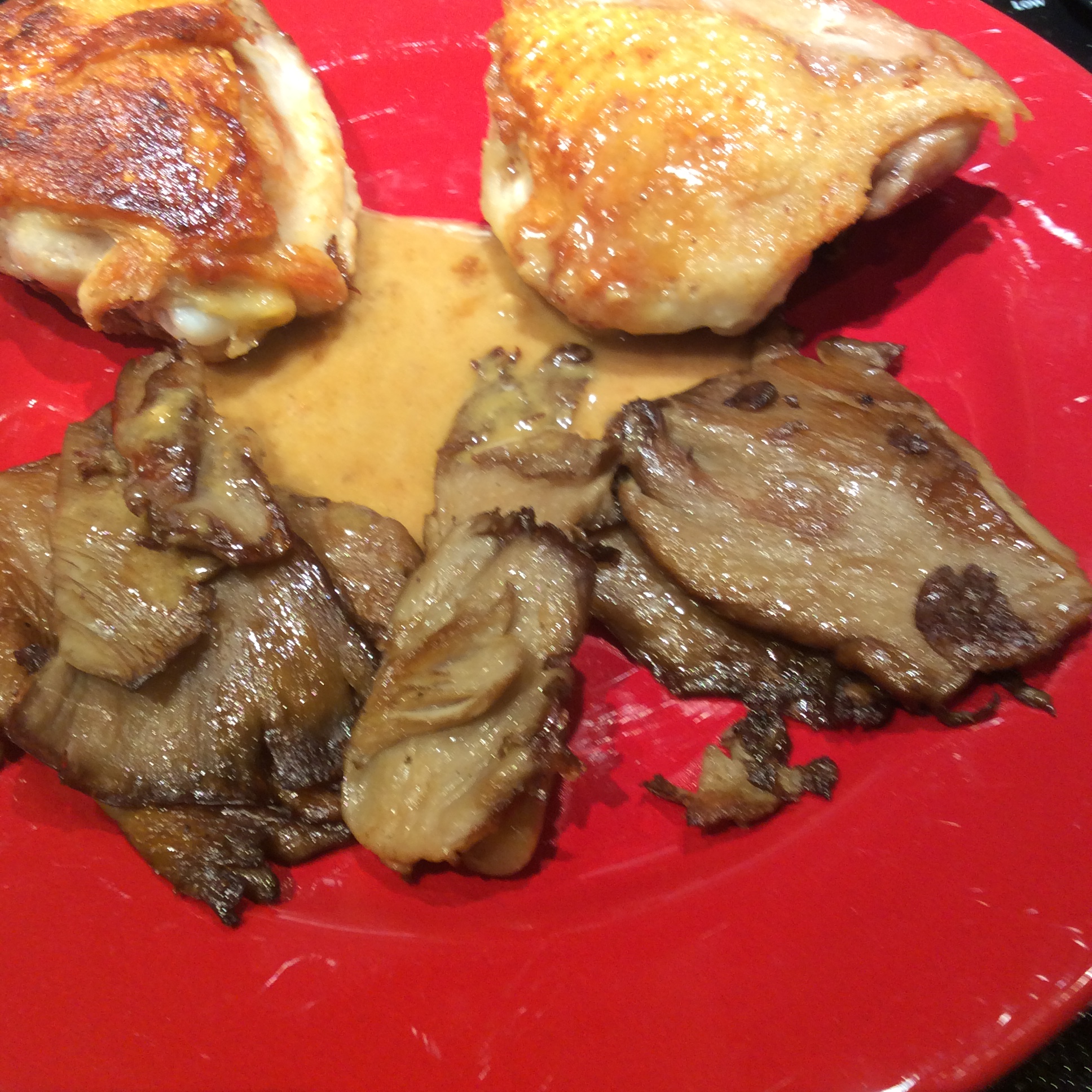
However you get hold of them, good oyster mushrooms are just delicious. I love their earthy-almondy aroma and their meaty texture. I like them best simply pan-fried with a little macadamia oil and salt, but roasting them with a bit of butter and soy is awfully good, and so is grilling them rubbed with olive oil. The addition of a little chicken glacé early in the cooking stage so that it can cook into the caps suits their meaty flavor.
For preserving, I roast them with macadamia oil and salt just to the point that they are cooked through, cool them, bag, and freeze. When wanted, they can be thawed and pan-grilled until they get some lovely brown crunchy bits. I dehydrate the clean stems as long as they’re not buggy and grind them into oyster flour to thicken mushroom sauces and soups. I admit that I also open my little bag of oyster flour just to inhale deeply and recall the woods where I found them.
Yesterday I found that I had tossed more caps with macadamia oil and salt than would fit in my roasting pans, and stuck the surplus in the dehydrator. They emerged as delicious crunchy lightly browned Oyster Crackers. Yum. I will make more of those. A small pan-grilled cap on an Oyster Cracker would make a wonderful cook’s treat. In fact, a couple of them with nothing on top made a great cook’s treat…

The Semi-Permaculture Kitchen

image
Recently I read a cookbook which I am not going to name because I was quite disappointed in it but can’t stand to pan such clearly goodhearted efforts. So I will only say that it is from my favorite publisher and has the word “permaculture” in the title. The recipes are perfectly good vegetable based recipes, similar to those in many, many other good cookbooks on the market. My disappointment is this: it concentrates on the usual annual vegetables that everybody grows, with occasional vague mentions of foraged greens or wild mushrooms, and seems to me to have very little to do with permaculture. So, uh, why call it that?
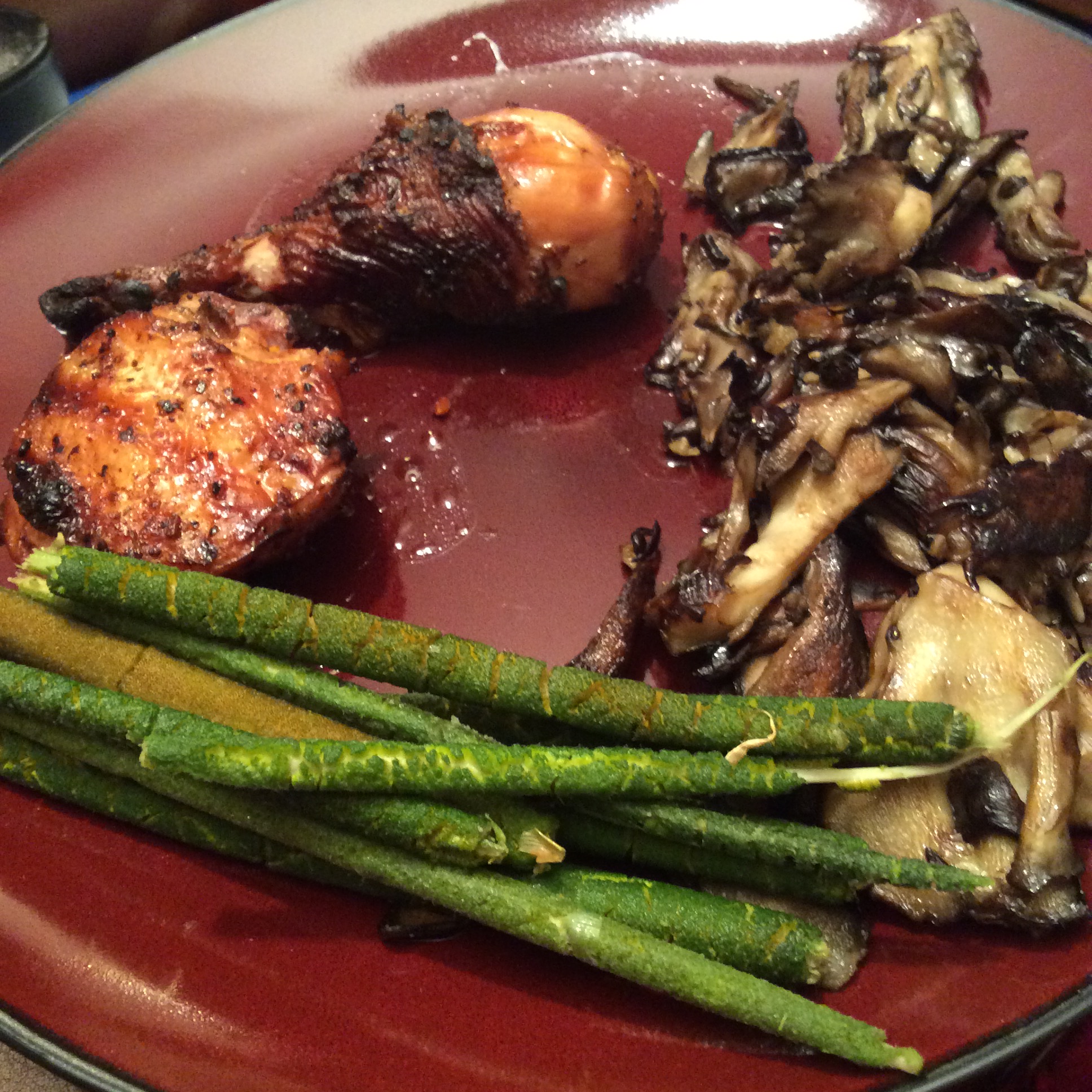
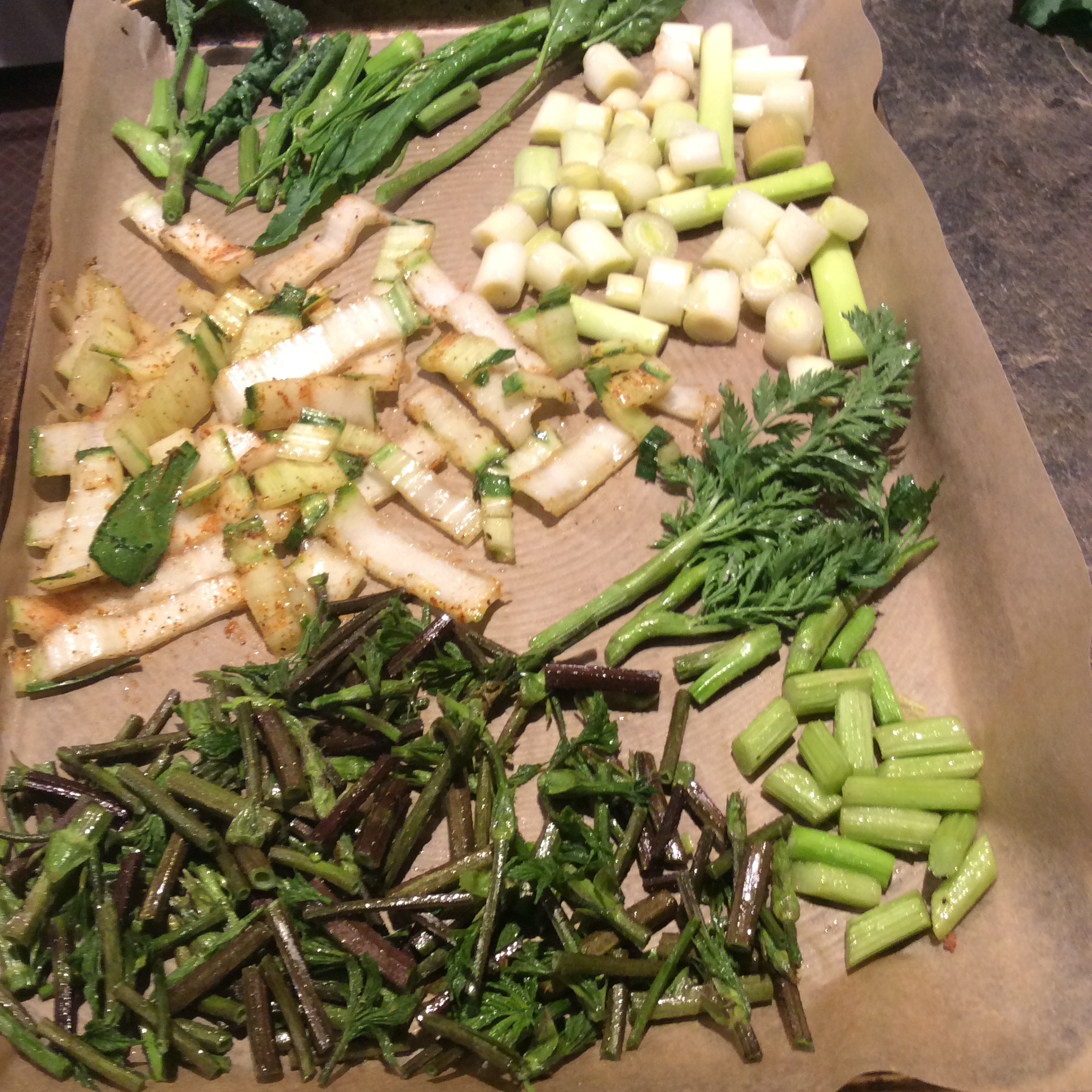
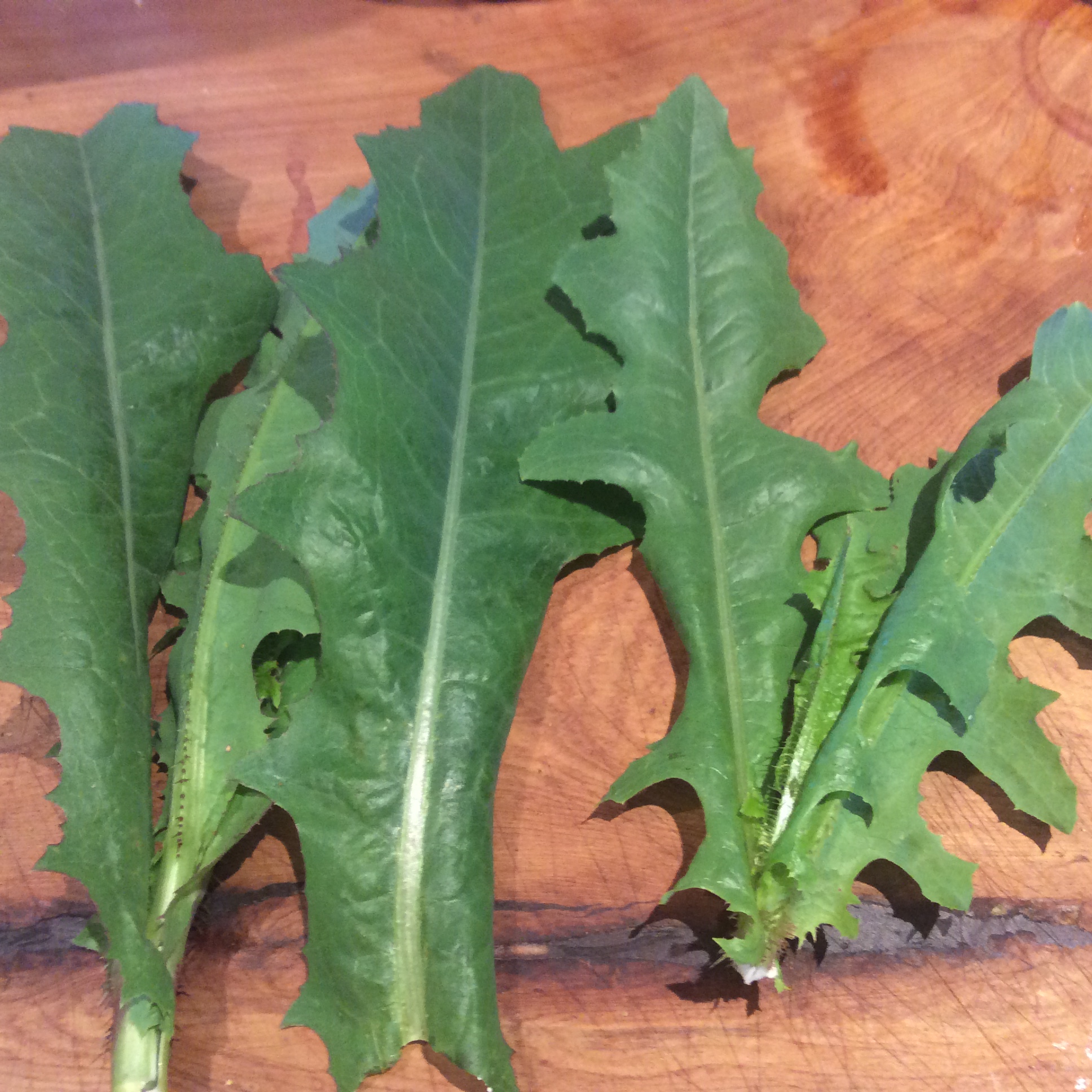
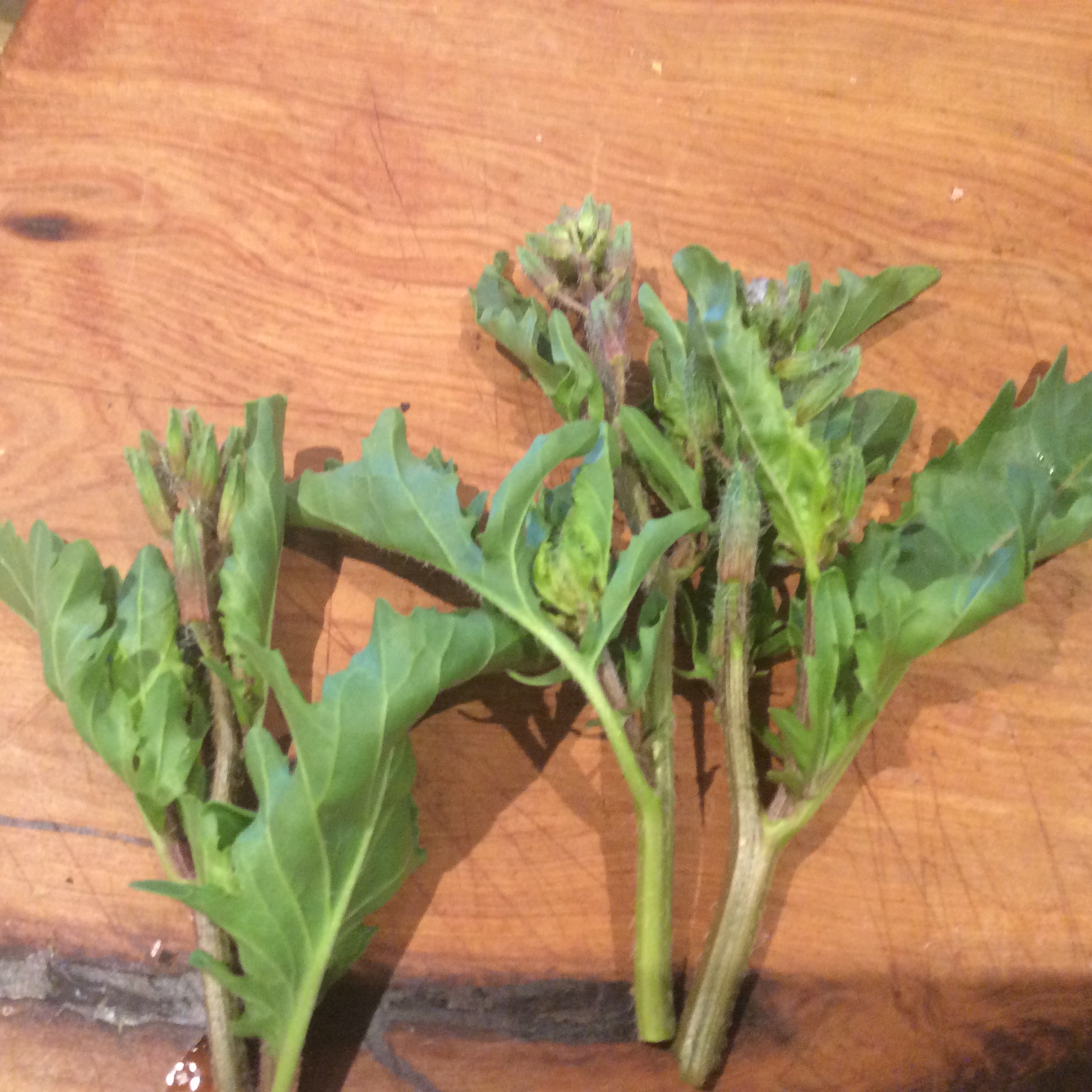
So today I’m going to indulge myself and make a plea to all potential authors, and talk about what a real permaculture cookbook would offer, with great hope that somebody knows of one or will sit down and write one. I am a semi-permaculturist at best, and even so some very strange produce indeed comes through my kitchen. Some examples: nettles, bladder campion, hops shoots, green garlic, blackberry shoots, cattails, unripe as well as ripe apples and plums, Goumi berries, clove currants, wax currants, linden leaves, mulberry leaves and unripe fruit as well as ripe berries, rau ram, ginger and turmeric leaves, radish pods, chicory leaves and roots, burdock stalks, milkweed, daylilies, hosta shoots, groundnuts (Apios americana, not peanuts,) goji shoots and berries, canna leaves and bulbs, quinces, salsify, and scorzonera as well as the more usual veggies and fruits. Bamboo shoots and the Japanese perennial vegetables Fuki and Udo should be ready to harvest in the next year or two. All these things grow well in semiwild tangles that can be managed with little or no soil disturbance after the initial planting. I would love to read a cookbook about foods like this. I would love to read knowledgable descriptions of their flavor and texture profiles and how they change through the season, how other cultures have used them, and how to make them respected at the modern table. That, to me, would be a real permaculture cookbook. I know that all over the world there are committed permaculturists working with these plants and eating them. I do hope that somebody will put it all in print. I’m hoping for a cookbook as weird and thoroughly wonderful as Baudar’s The New Wildcrafted Cuisine but devoted to the daily surprises, wild and cultivated and in-between, that can be offered by a single piece of land.

While I wait for this book to be brought to my attention, or written, I hope that you will comment with something unusual that you’ve eaten recently and what you thought of it.
image

image

image

image

Dietary Advice: so wrong for so long

image
I recently came across a piece of investigative journalism in The Guardian that I feel sums up the problems in nutritional guidelines, and how they got so screwed up, better than any other lay article that I have read. It is also a fascinating piece on how science self-corrects, but  surprisingly slowly. It is well worth a read.

I would draw attention especially to the paragraph which reads ” This [the social community of scientists] makes scientific inquiry  prone to the  eternal rules of  human social life: deference to the charismatic,  herding toward the majority opinion, punishment for deviance, and intense discomfort with admitting error.  Of course, such tendencies were exactly what the scientific method was invented to correct for, and in the long run it does a good job of it. In the long run, however, we’re all dead, quite  possibly sooner than we would  be if we hadn’t been following a diet based on poor advice.”

http://www.theguardian.com/society/2016/apr/07/the-sugar-conspiracy-robert-lustig-john-yudkin