Archive for the ‘Books worth reading’ Category

Luxury Dances With Penury

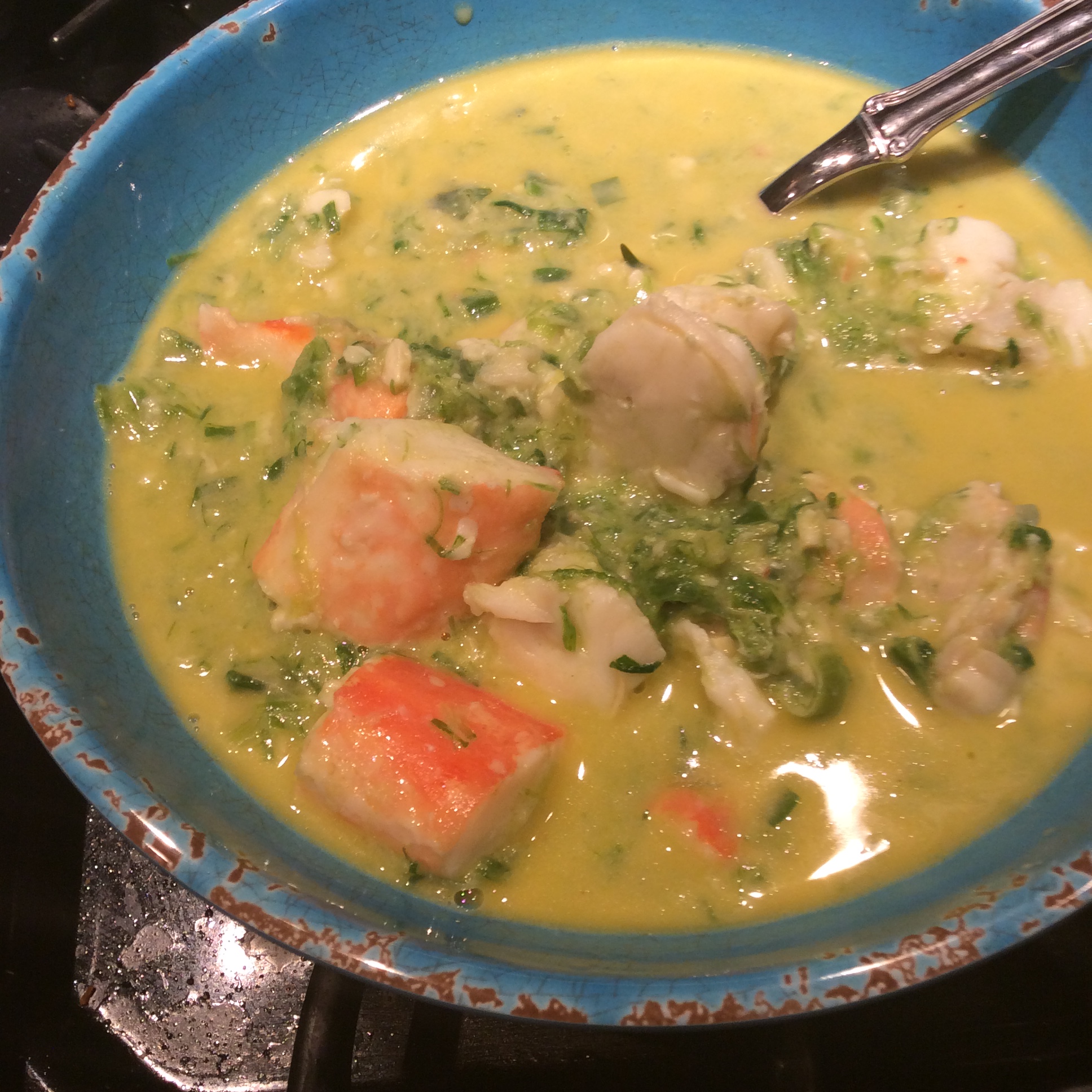
Tonight I ate one of the most extravagant meals I’ve had for a while, and somehow it led me to meditate upon thrift. The main ingredient, two legs of the highest quality Alaskan king crab I’ve come across in years, cost a bomb. But careful orchestration of other ingredients made this all come together in (reasonably) economical style.

Let’s start with the broth. I have written obsessively about the value of good broth, but that won’t stop me from doing it again. When it comes to seafood, it’s essential to remember a few basic things:

1. Seafood broth should be made from seafood, maybe with the addition of some white fish scraps but no salmon or other oily fish and no commercial clam broth. Any avid seafood eater can smell those spurious additions from a long way away.

2. You’re looking for the waste bits of otherwise excellent seafood; shrimp shells, crab shells, shrimp heads, etc. For the clean but intense broth above, I lucked into some lobster carcasses by trading Louisiana seafood stories with the proprietor of a luxury seafood shop. Accept what you are offered with glad thanksgiving.

3. Fish and seafood broth should be boiled at a furious boil for 20 minutes, not simmered for longer times. Then cool, drain, and use or freeze.

4. Build up intensity in layers. Boil, drain, cover new ingredients with the broth, and boil and drain again. You can freeze between boiling episodes. The lobster carcasses came my way over a year ago, and made a quart of rich stock. Then I thawed it and used it to boil shrimp shells, cooled it, and froze it again. Finally, it was thawed and used to boil the shells of the king crab. It was loaded with seafood flavor, but had a clean fresh taste because it was never overcooked.

Given a potent base like this, you don’t need much else. The meat of the two crab legs was cut into good-sized chunks. I used four large stout scallions from my garden, sliced crosswise at 1/4″ intervals and  whites kept separate from greens. My garden scallions are huge, and a dozen store-bought scallions would be needed to approximate them.   Other ingredients were butter, a cup of heavy cream, and three egg yolks from my backyard hens.

Sauté the white parts of the scallions in a quarter cup of butter over medium heat with a hefty pinch of salt until they are softened and translucent. Add the green parts, sauté another minute or two, and add a quart of rich seafood broth. Boil hard until reduced by about half, then add the heavy cream and bring to a boil. Taste and check for salt. Reduce heat and lay the chunks of crabmeat in the saucepan and heat through. Lift the crabmeat and some of the scallions in two soup bowls, leaving most of the broth and cream behind.

To make the egg yolk liaison, beat up the three egg yolks in a bowl, add about half a cup of the hot seafood broth from the saucepan slowly to the bowl while whisking rapidly, then pour the yolk mixture slowly into the saucepan while whisking rapidly. Let heat, whisking, just until the broth is steaming and lightly thickened. Taste. Any distinct “egg” flavor should have cooked away, and it should taste of the sea in the creamiest way.  Pour over the crab and scallions in the soup bowls, and finish each bowl with a generous pat of butter. Serve, eat, and marvel at the goodness to be found in the cosmos.

There are ways to make this even more economical. If you are a carb-eater, put a hunk of sourdough baguette in each bowl before spooning in the crab. The bread will be soaked with seafood essence and will provide elevation, so that one crab leg will serve two generously. Boiled salted fingerling potatoes or good cooked rice can be used the same way.

But in the final analysis this is a dish to make when you feel a bit flush and want to serve your love the best. It goes well with a buttery Chardonnay and a brief discussion of how lucky we are to be on the planet.

The best modern book on thrift and grace in cooking is Tamar Adler’s An Everlasting Meal. Read it, and cook on in good heart.
Pork Belly: Theme and Variations

Recently I was checking out my local farmer’s market and saw a young man sitting in front of a card table, with a big cooler behind him but nothing that I could see indicating what he was doing there. Curious, I approached, and it turned out that he was from Polk’s Folly, selling pork from a few pasture-raised heritage pigs being grown on his family land. And yes, he had some pork belly to sell. I scored a three pound chunk.

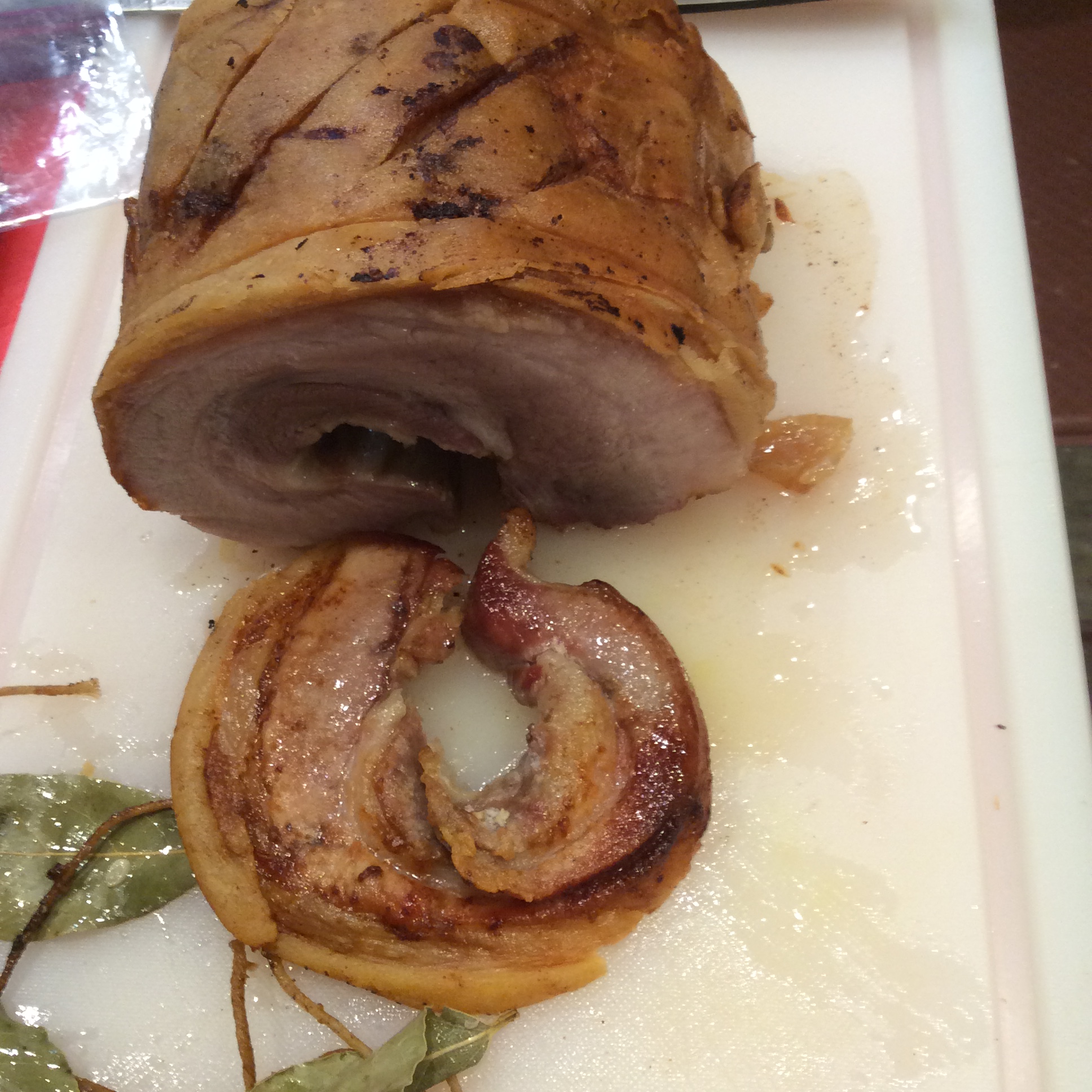
At the time I planned to make it into bacon, and so I put it in a brine of one cup salt to one gallon of water and stuck it in the refrigerator. But a couple of days later I found myself daydreaming about it and decided to cook it for dinner. I put eight bay leaves and 3 cloves’ worth of sliced garlic on the meat side, rolled it up with the skin side out and tied it with kitchen twine, put it in a cazuela with half a cup of good white wine, and roasted at 350 until done through (160 if you tend toward exact measurements,) turning up the heat to 500 right at the end to brown the skin a bit.

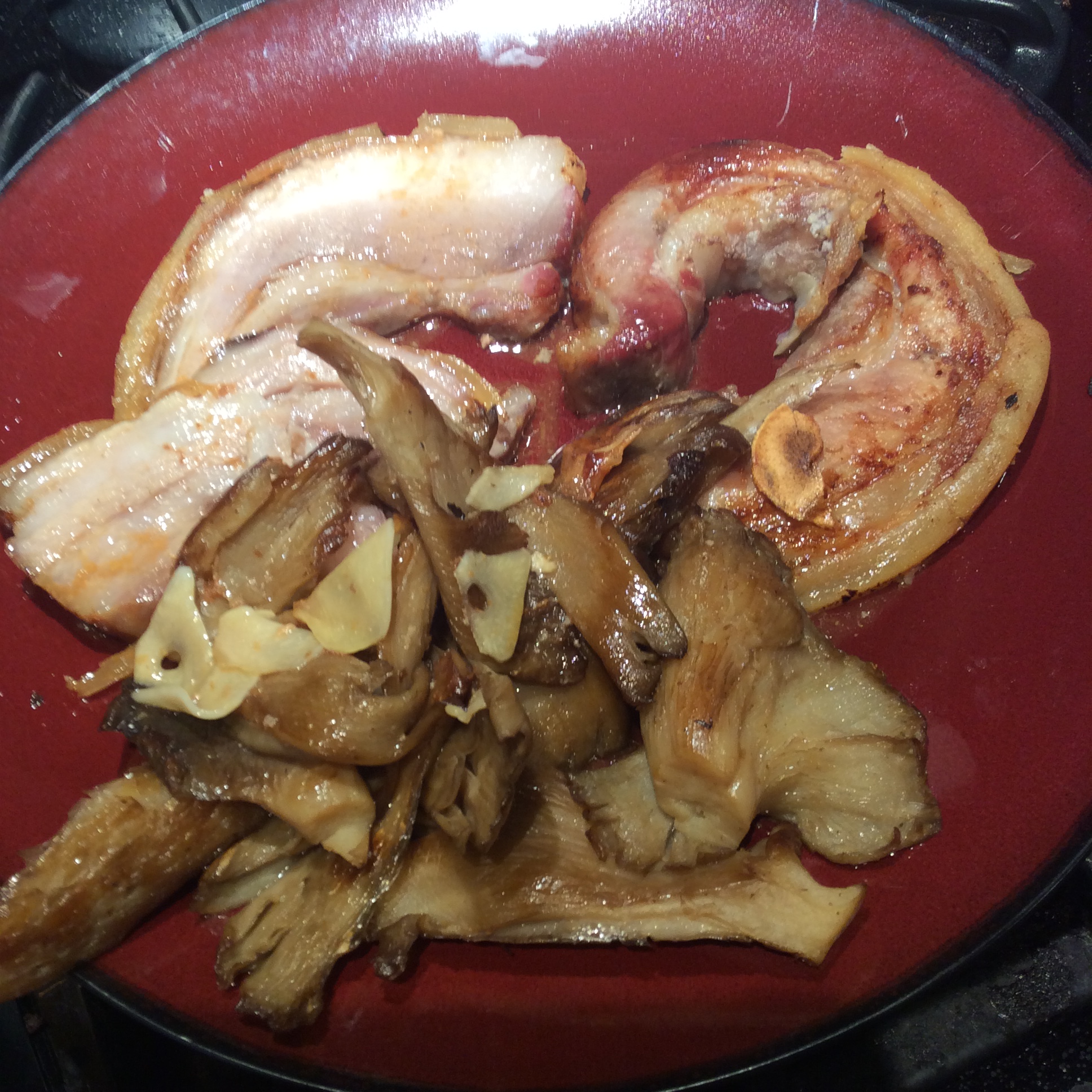
Thin slices were served with oyster mushrooms sautéed in butter and adorned with the garlic slices from inside the belly, and skimmed pan juices were poured around liberally. It was a delicious meal with a good cabernet but, for two people, just the beginning of three pounds of belly.

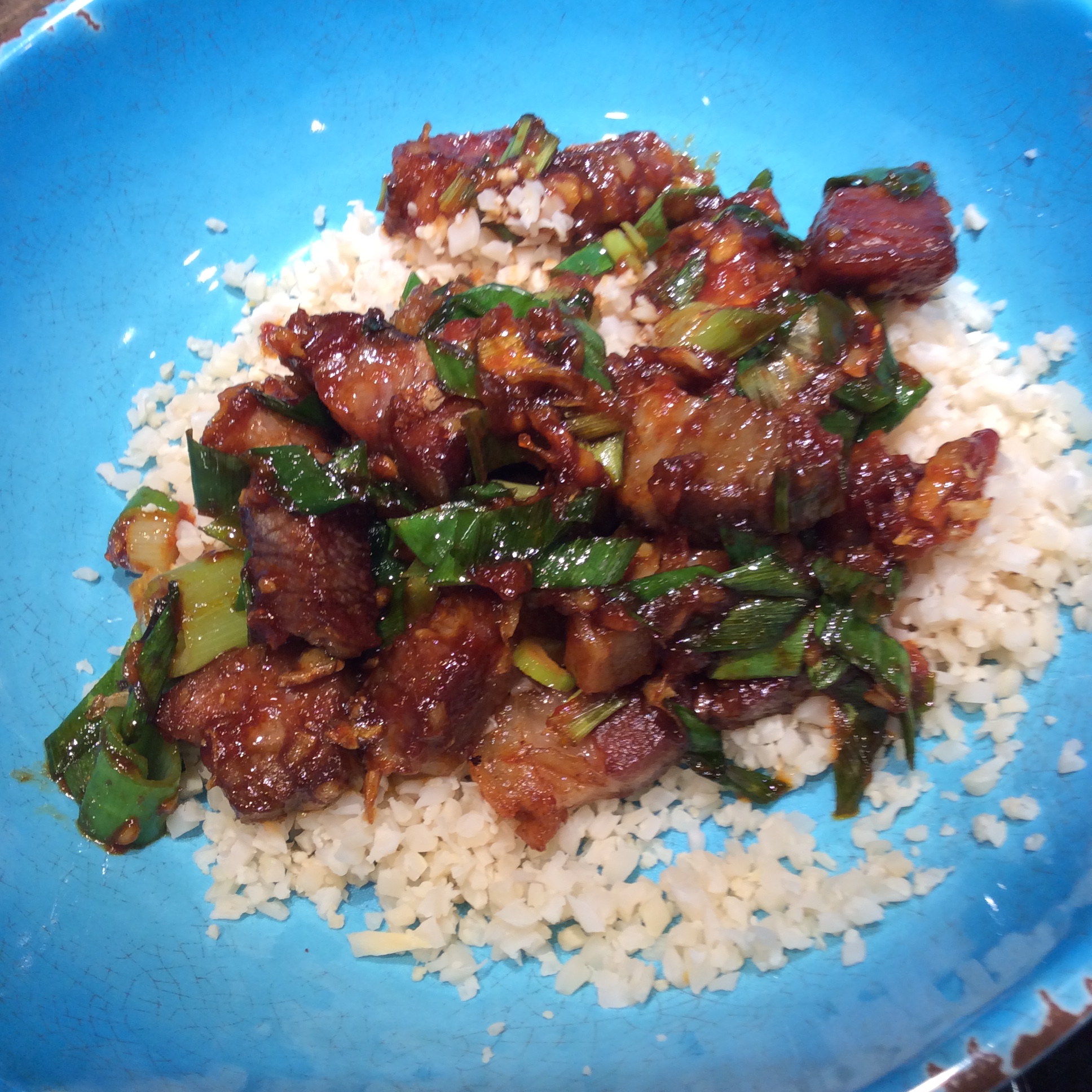
A few nights later I hauled out the belly, cut two slices about a half inch thick, and cut the strips into chunks that ended up about 1/2″ square by 1″ long. I chopped up two big cloves of garlic and a 1″ piece of ginger. A huge scallion out of the garden was cut in 1/8″ slices, white and green kept separate. I got out gochujang, soy sauce, and artificial sweetener to equal two teaspoons of sugar (of course you can use 2 teaspoons sugar if preferred.) I microwaved some cauliflower rice. The belly chunks were sautéed over medium-high heat in a wok until they were beginning to brown nicely in their own fat. Then the scallion whites were added and stir-fried for about two minutes. Next the scallion greens and the chopped garlic and ginger were added and given one further minute of stir-frying. Then a rounded tablespoon gochujang and a good squirt of of soy sauce, along with two teaspoons of sugar or the equivalent in artificial sweetener. Boil hard until the sauce comes together and glistens, less than a minute if you were using high enough heat. Serve over the cauli rice. Add some pickled veggies if you like.

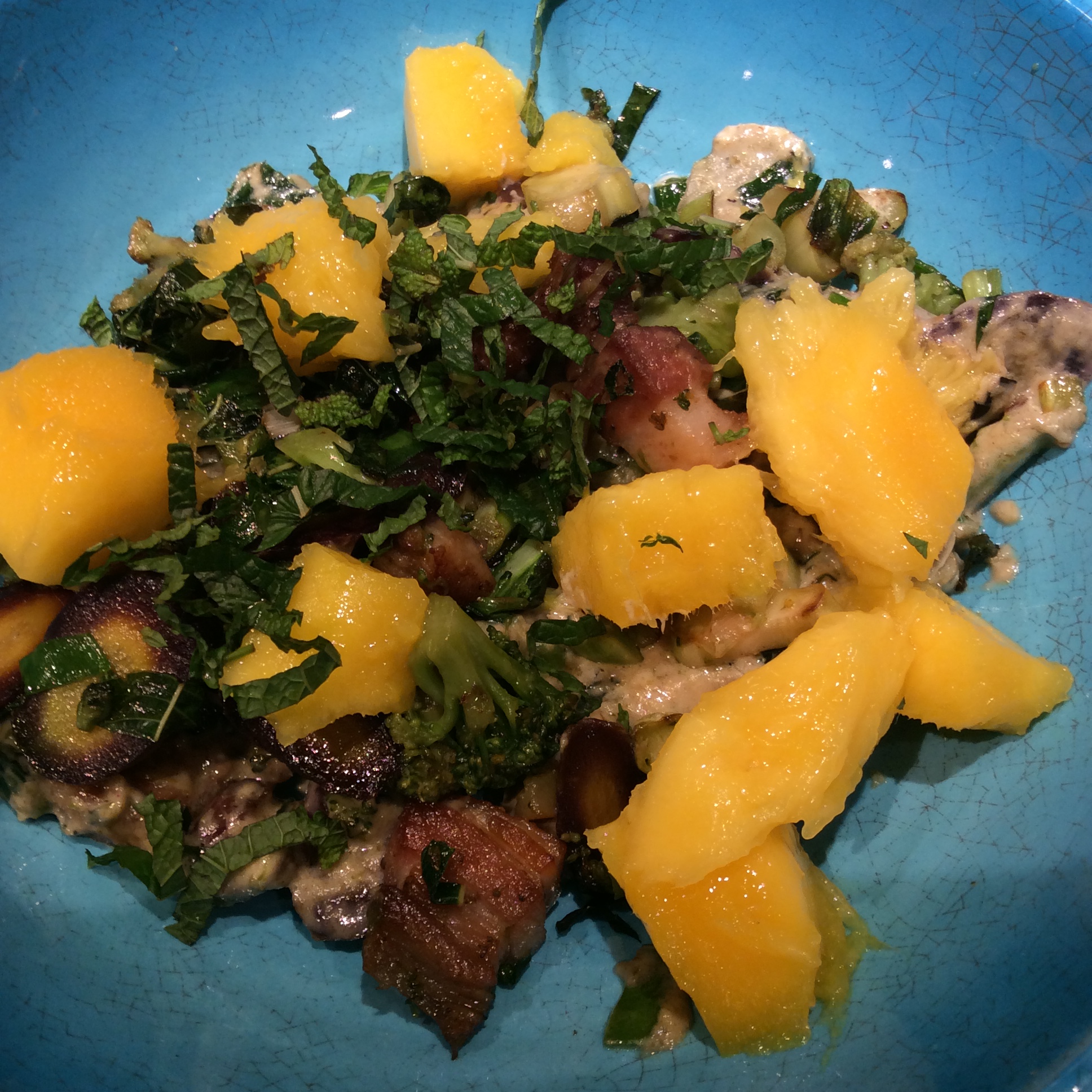
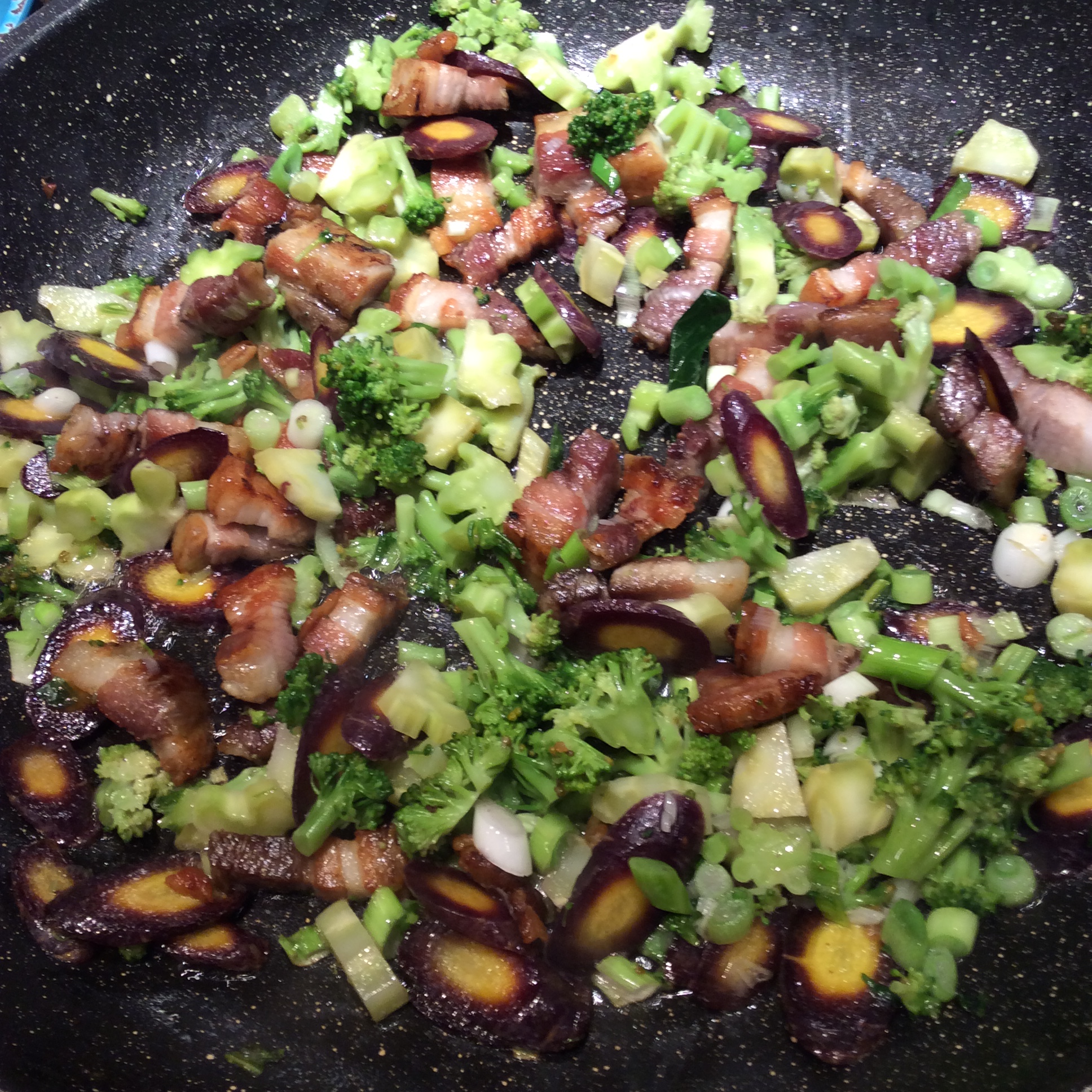
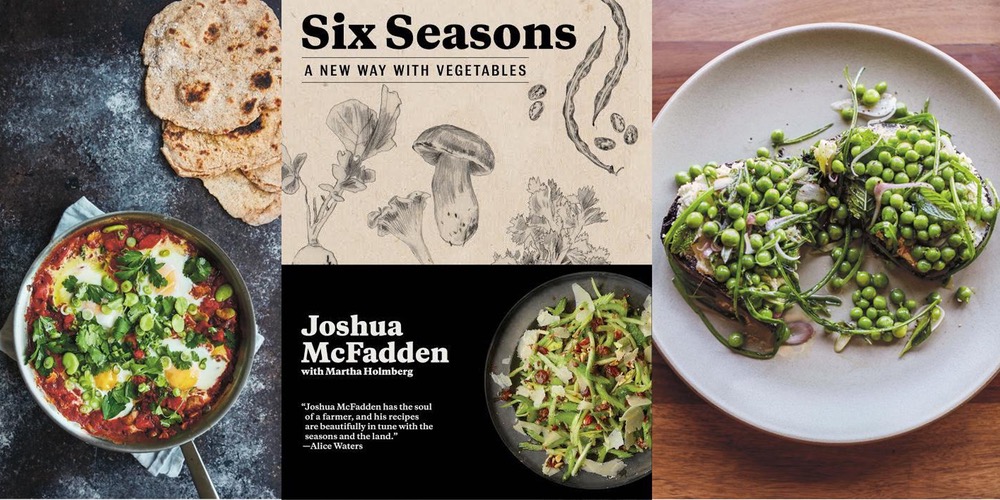
The third meal moves into Southeast Asia, one of the many parts of the world where the succulent pork belly is appreciated. One of the great treats of summer is an occasional perfect mango, and I had one ready on the counter. I was planning a Thai-style curry based on the superb Hand brand green curry paste, but ultimately decided that I wanted more veggies and less sauce. Using the inspiration of Six Seasons, I decided to make something that was a hot salad rather than a curry per se.  Besides the leftover belly, mango,  and the curry paste, ingredients were two large scallions sliced, a cup of pure coconut cream, some fish sauce and sweetener, and a wide assortment of veggies from my garden and freezer but just a handful of each, i.e. four Tuscan kale leaves slivered finely, about a third of a head of broccoli (with its peeled stem) blanched a few minutes and chopped, two small purple carrots, and a handful of chopped mint for the final garnish. This is a great place to use up any plainly cooked veggies that may be tucked into your refrigerator awaiting a purpose.

To make the “dressing,” boil  the coconut cream in a small sauce pan for a few minutes, stir in about a tablespoon of curry paste or more according to taste and boil a minute more, and add fish sauce and chosen sweetener to taste,  make in the mixture a bit on the salty sweet side because there is a large volume of veggies fruit to season.  Then set the pan aside while you finish the main ingredients.

Cut two half-inch slices off the belly and cut into lardons. Put in a skillet over medium-high heat to b own and render some fat, turning frequently. Meanwhile sort the veggies into fast-cooking and slower-cooking, putting the scallion greens in the first pile and the scallion whites in the second. When the belly chunks are browned, add in the slower-cooking veggies and stir fry until crisp-tender, add the quick-cooking veggies, and cook until thoroughly heated through. Put in a little fish sauce with the veggies but not too much, since the belly is already salted.

Now toss half the hot veggies in the saucepan with the curry sauce, plate them on two plates, put the unsauced belly and veggies on top for an unmuddied appearance, slice the peeled mango over the composition, and top with the chopped mint. Dip down into the “dressed” part of the meal with each bite. Have some Thai sriracha available for drizzling if you like.

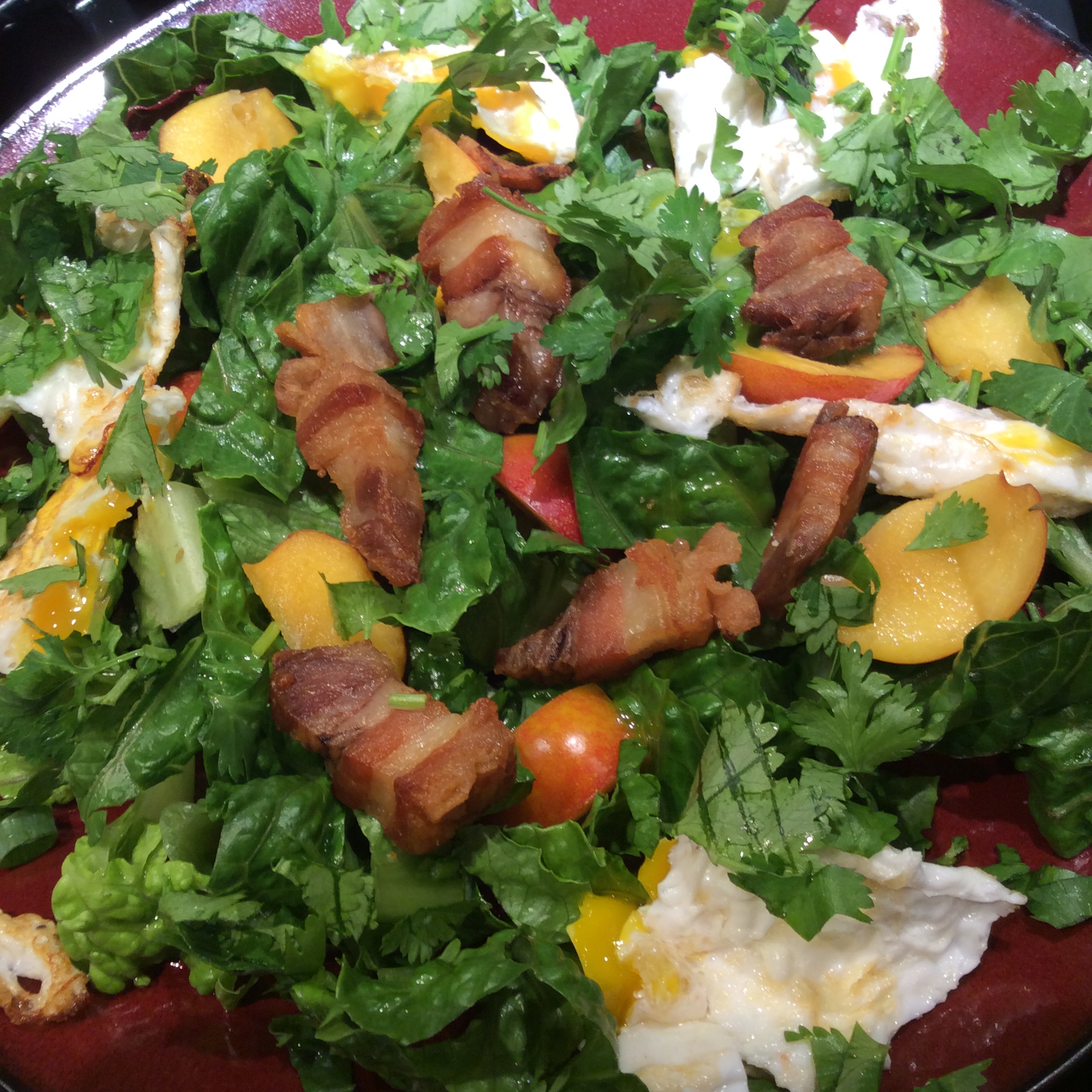
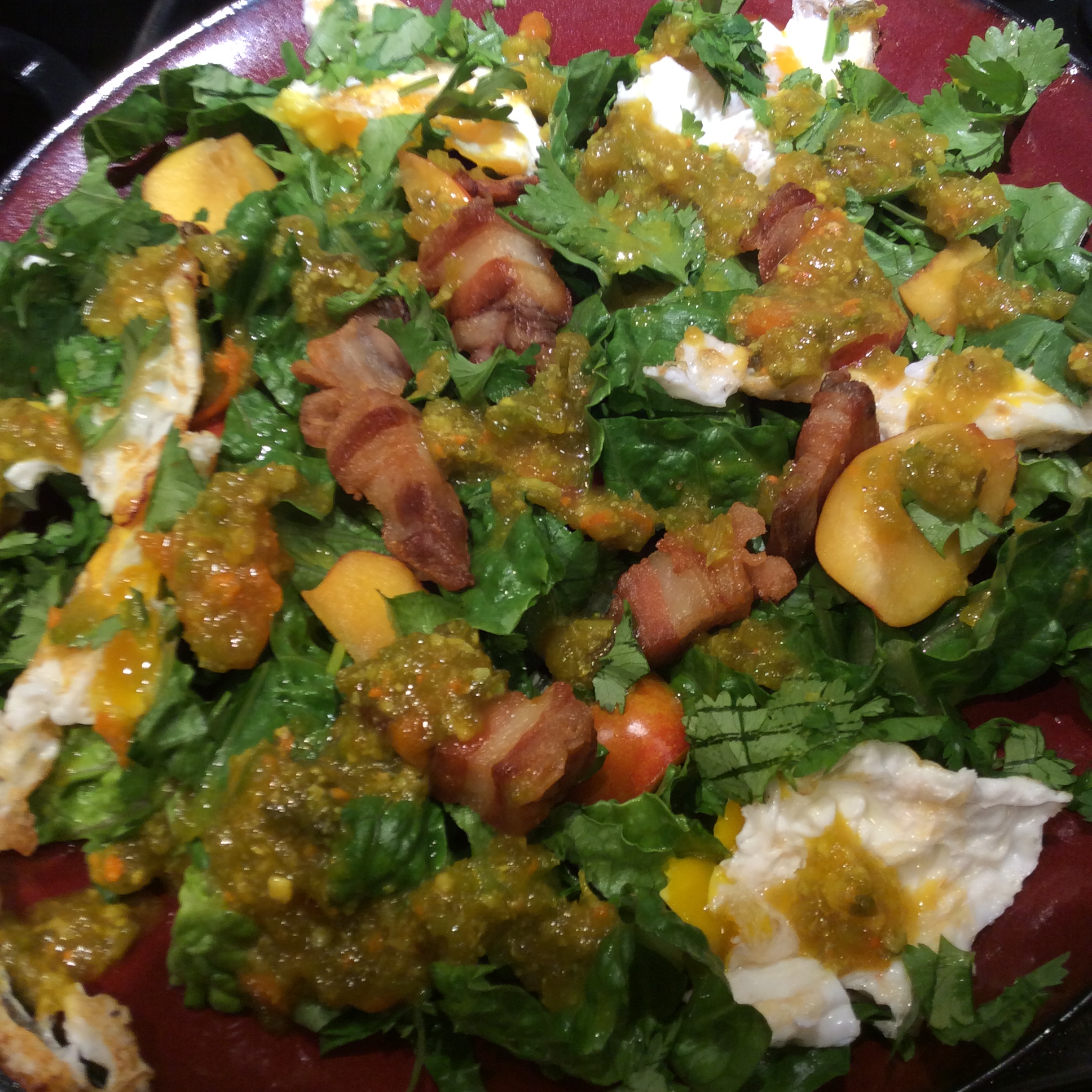
By the fourth meal, there was one strip of belly roast about 3/4″ thick still left. I decided on a Thai meat salad. Since we were quite hungry I decided to add two Thai-style fried eggs to each plate.  In addition to the belly strip and four eggs, I used a small head of Romaine lettuce, one large scallion, a generous handful of coriander leaves, and two partially ripe plums.  If you are using plums from the grocery store, it’s pretty easy. Almost any two will do and will still be somewhat green, firm, and not too sweet. Or use cherry tomatoes if you prefer.

First have an appropriate dressing ready. Mine was a rather elaborate concoction based on some pickled kumquat rind that I made a month ago and ground coriander stems, but you can use the simple spicy-sweet dressing described at the bottom of the page.

Cut the belly strip into lardons and fry them in a hot skillet with a spoonful of coconut oil until browned. Remove and drain on paper towels. Add a little more coconut oil to the pan and fry the eggs over medium-high heat, turning them a few times and salting on both sides, until they are cooked through and browned around the edges. Remove and drain. Slice the romaine into strips about 1/2″ wide. Cut the plums in slices. Slice the scallion fine and chop the coriander leaves.

Plate the lettuce, cut the eggs in thirds or quarters and arrange around the edge, and put the crisp lardons in the middle. Decorate with the plum slices and scatter the scallions and coriander on top. Dress with the dressing and eat. If you had everything on hand, total elapsed time is about 15 minutes.

If you have read Tamar Adler’s marvelous book An Everlasting Meal, you know all about main dishes that keep on giving. If you haven’t read it, please do so immediately. Frugality in the kitchen is a common thought for most of us and you may already cook that way, but Ms. Adler will show you the poetry and grace of it. Cooking is in some ways a ghostly process anyway, with our great-great-grandmother’s transparent hand guiding our own, and we are further informed by the ghost of each meal contributing to the next.

Hot-sweet Thai Dressing: this  doubles as a dipping sauce and is very handy to have in the refrigerator. Finely chop four cloves of garlic and a piece of ginger about an inch long. Thinly slice a couple of Serrano or Jalapeño chiles, removing the seeds and ribs unless you’re a real heat freak. Mix the chopped and sliced stuff with half a cup of fish sauce, a quarter cup of rice vinegar, a quarter cup of water, and  two tablespoons of palm sugar or the equivalent in artificial sweetener. Let sit fifteen minutes and taste cautiously. Adjust the various elements until it tastes well-balanced to you.

Food for Thought: A Cookbook for Cooking and for Thinking

I have been  vegetable gardening all of my adult life, and own several shelves full of vegetable cookbooks, and I have a very high bar when it comes to buying new ones.  Actually, that’s not true. I buy new ones in a fairly promiscuous fashion because that is my addiction, but I have a very high bar indeed for recommending that other people spend their hard-earned money on them.

So  here’s what I have to say about  Six Seasons: A New Way With Vegetables by Joshua McFadden: go buy it.  Now. Read it. Think about it.  It really will bring you to think in a new way about how to handle familiar vegetables.  Take salads, for instance. I like salads well enough but am almost never really excited by them.  They always seem a little predictable to me, and just throwing some meat, cheese, or eggy thing of some kind on top does not make them interesting in my view. McFadden’s  way of putting a substantial “pad” of seasoned nut butter sauce, savory seasoned whipped cream, whipped seasoned ricotta cheese, or other interesting  possibilities underneath the salad does make them seem new and like a real meal that I am happy to eat.

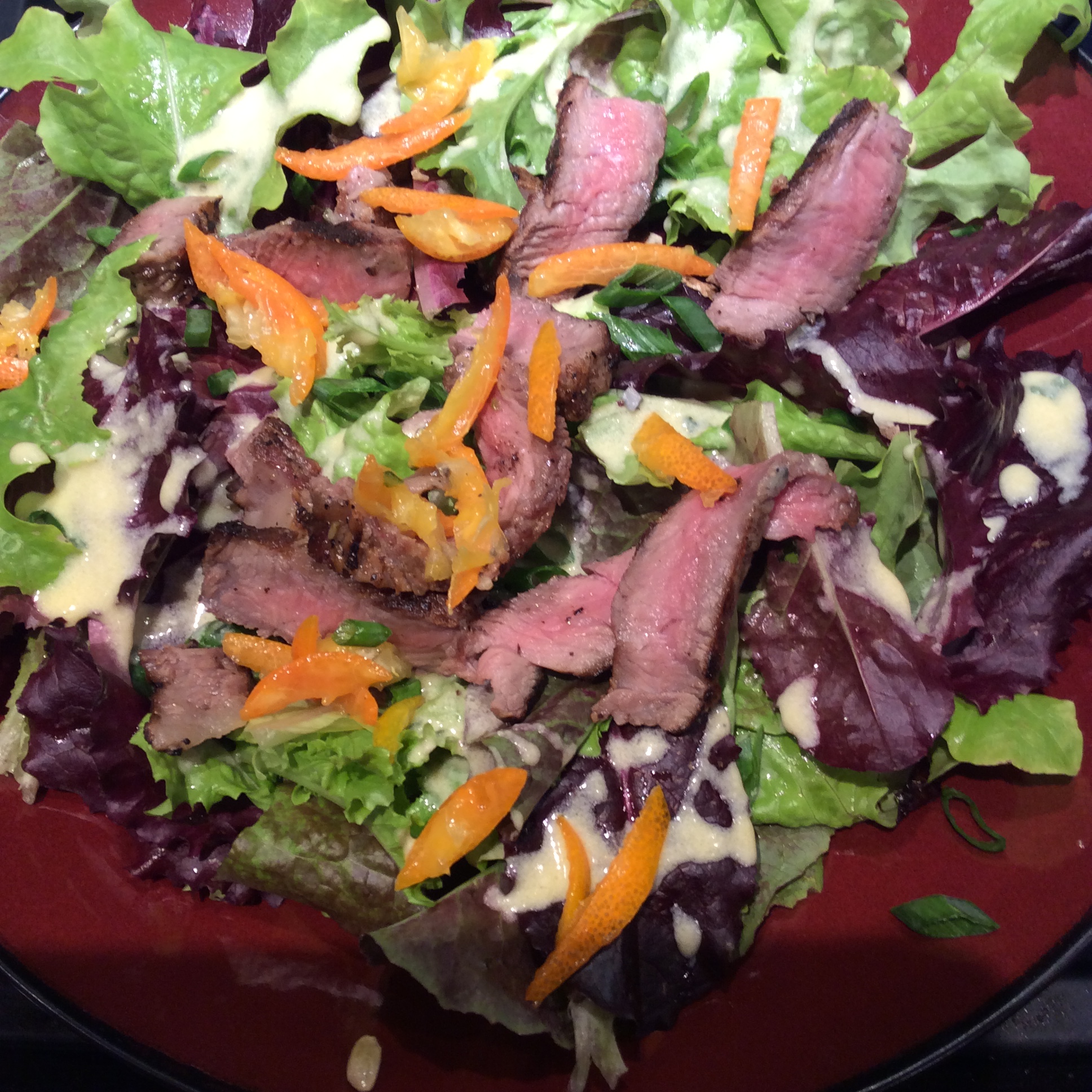
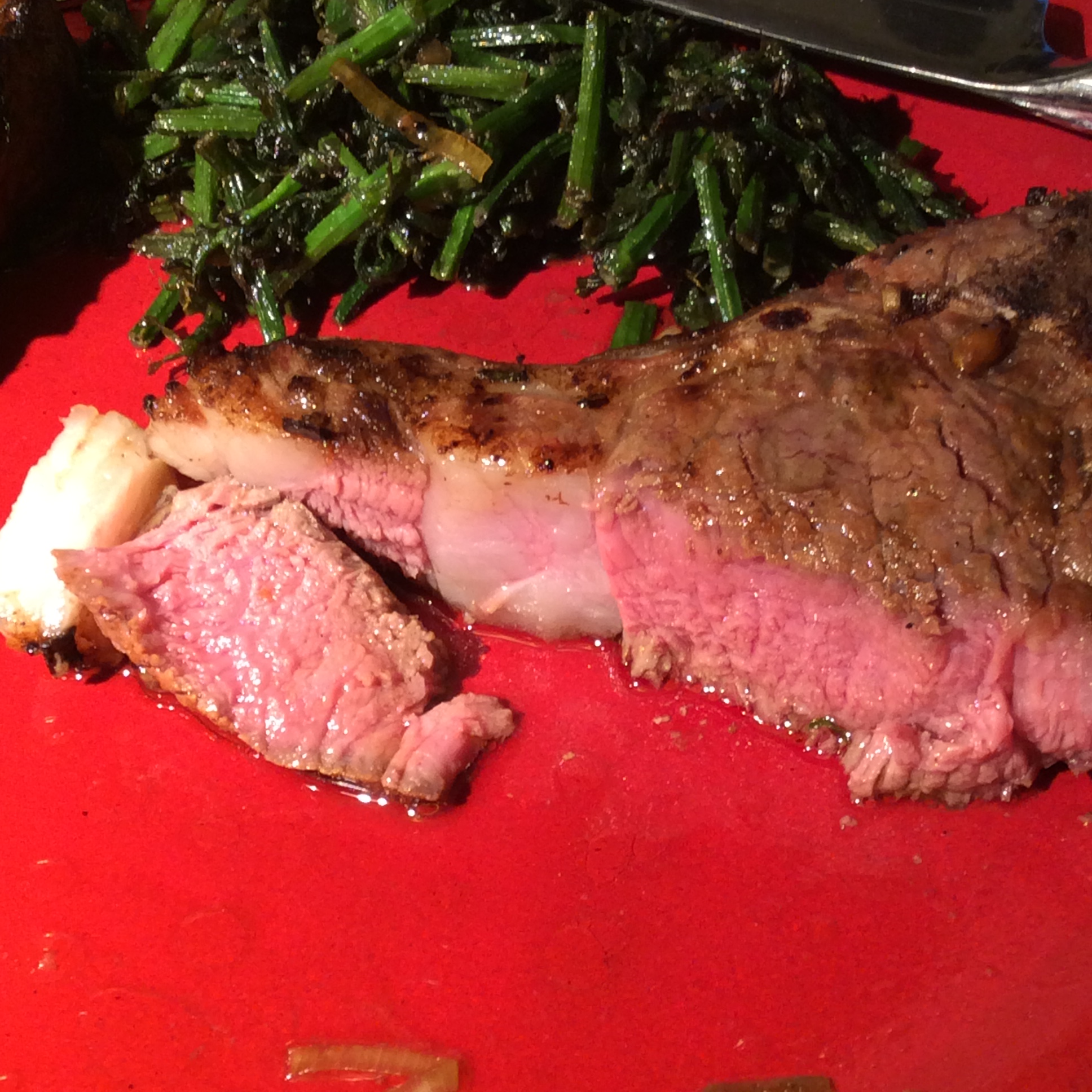
As good as the recipes are, I put this one in the “thinking cookbook” category,  i.e. an idea-rich cookbook that will affect the food you put on the table whether you were actually following a recipe from the cookbook or not.  Take the salad shown above, for example.  I had a lot of lettuce in the garden, including some dark red lettuce that still looked beautiful but had grown the slightest bit bitter  in hot weather.  I kept tasting bits of the leaves, thinking about what would make them taste good.  Ultimately, I whipped and seasoned some homegrown goat ricotta  with olive oil and salt, and smeared the plates with it, then arranged the red lettuce and some sweet green lettuce on top.  Then I put some of the ricotta mixture in the blender with an egg yolk and two cloves of roasted garlic, blended in more olive oil and some salt, and acidified it with lemon juice and white wine vinegar until it tasted just right, added some chopped marjoram because it seemed to fit in well, and used that as the dressing. I slivered shallot greens, soaked them in cold water briefly as McFadden recommends, pressed dry, and scattered them all over, and finished with warm leftover steak and bright sweet crunchy slivers of kumquat rind. The earthy rich ricotta dressing made the faintly bitter lettuce just right and complemented the steak beautifully, and dripped down to the whipped ricotta beneath to season it, while the kumquat rind added an electric zing.   Delicious and interesting to eat. It isn’t a McFadden recipe per se  but was entirely inspired by his methods and I would not have come up with it without reading his book.

The cooked vegetable recipes are very good too, as are the techniques. Just to name one, McFadden recommends grilling your vegetables “dry,” i.e. without oil, and then drizzling them with olive oil afterwards on the grounds that the burnt oil produces strange chemical flavors.   Even if you like the ones grilled in oil, I think you’ll like his method better. Try it and see.  I am also a fan of his section on pickles. These are not pickles that you can put on your shelf and keep forever. They are quick, delicate refrigerator pickles that serve as seasoning and garnish and add wonderful nuances to the flavor of vegetables.

This is a useful and excellent book at any price,  but I do wish to point out that the Kindle version is a special bargain and I highly recommend it.

Full Flavors: Hop Shoots and Goat Chops

“”Boy, I could go for some goat right now” said no American ever. But I have no idea why that is. If you are an urban or rural  homesteader you have probably considered goats because they are hardy, compact, dual-purpose, remarkably productive for their size, and extremely friendly. But you have probably thought, or been told, that the meat is strong-flavored and unappealing.

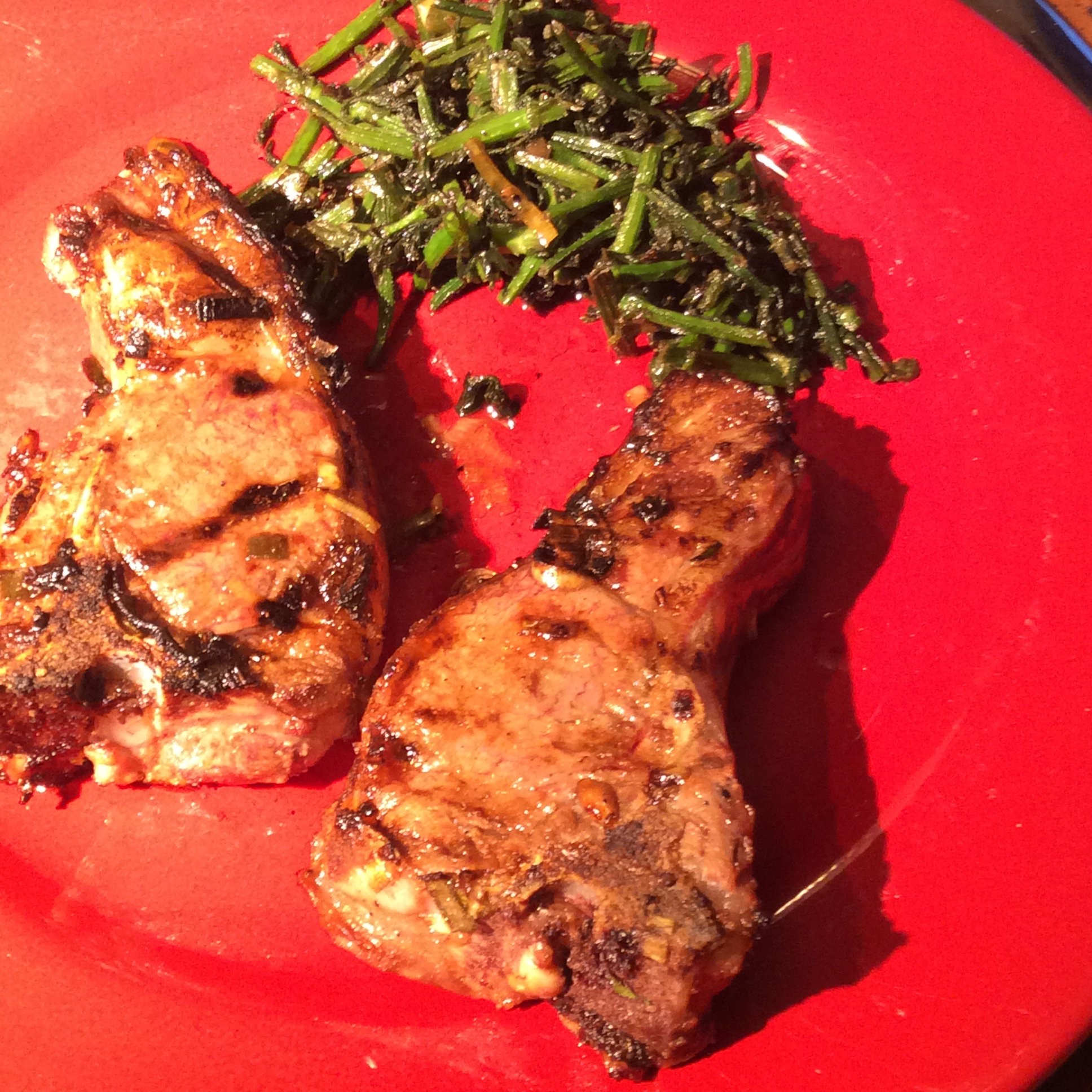
If you are dealing  with an old goat, this is certainly true, but I can’t imagine butchering an old goat. Goats under a year old are delicious, with a full robust flavor that people who shop at the supermarket can hardly imagine, but nothing that can fairly be described as gaminess. The ones that I occasionally produce for our household are 100% alfalfa-fed. If you are lucky enough to have access to such meat, cook it with respect. For the chops, that means marinating with garlic and herbs and grilling medium-rare because the meat gets tough if allowed to dry out. If you can’t get young grass-fed goat, apply the same principles to lamb chops, another meat that has not yet had the flavor bred out of it. Sear on the grill to medium-rare, let rest in a 200 degree oven for 10 minutes, and serve with a veggie that works with robust flavors, such as the pan-grilled hops shoots shown here.

I sometimes think that the direction of mainstream American agriculture is to eliminate anything that has a distinctive flavor. It’s only relatively recently that we’ve rediscovered dry-aged beef and gotten away from chicken breast, which (unless you raised it yourself) is the most tasteless and cottony part of a tasteless and cottony bird. I have tasted prime-grade beef that had no discernible beef flavor, just a fatty faint sweetness.   Spinach is sold in the baby-leaf stage when it has no intrinsic flavor. Corn is as sugary-sweet as cotton candy, with no “corn” flavor to speak of.  It makes me grateful beyond words for my tiny patch of land where I can grow hops shoots and chicory and grape leaves and wild weeds and herbs of all kinds to feed my desire for food that tastes of itself.

By the way, I cook hops shoots a lot in the spring and after trying several methods, I’ve decided that the only one worth pursuing is to cut the shoots in lengths about 1.5 inches long and stir-fry  in a hot pan with some very good olive oil, a hefty pinch of salt, and nothing else. Continue to cook, stirring intermittently, until there are browned spots and the little nascent leaves are fried crisp. This gives them the richness to accent their slight wild bitterness and makes them truly delicious. Like good goat chops, they are a feral and flavorful treat

I mentioned marinating goat and lamb, and my favorite marinade is the one that my mother used when I was growing up, with a tweak or two from me. It’s great for goat, lamb, and beef.  Tinker with it as you see fit, but at least once  try it as written here, with the finish described:

Red meat marinade:

1/2 cup good olive oil

1/2 cup soy sauce

2 tablespoons Worcestershire sauce

1 tablespoon Red Boat fish sauce or 2 mashed fillets of anchovy

2-3 crushed cloves of garlic (I prefer 3) or a couple of stalks of green garlic, sliced fine and then crushed in a mortar and pestle

a small handful of celery leaves, chopped

Mix all ingredients and let sit half an hour, then pour over chops in a dish and let marinate at least four hours and preferably overnight in the refrigerator.

Finish: remove from marinade and salt lavishly on both sides with alder-smoked salt. Sear on a hot grill to produce the ultra flavorful Maillard reactions. Lower heat and grill until done, but no more than medium-rare. Rest in a low oven. Eat and weep. The alder salt makes the meat jump into deliciousness. It’s a case of robust meeting robust and the flame of love being kindled.

If you get interested in producing a bit of your own meat or supporting a farmer who does, study the book “Goat” for more cooking inspiration. Goats and sheep produce milk and meat from land that wouldn’t support crop agriculture, and their meat still has its own distinctive and wonderful flavor. This book was published years ago but, regrettably, there is still nothing else like it.