Archive for November, 2017

The Fall Summation I: Crosnes

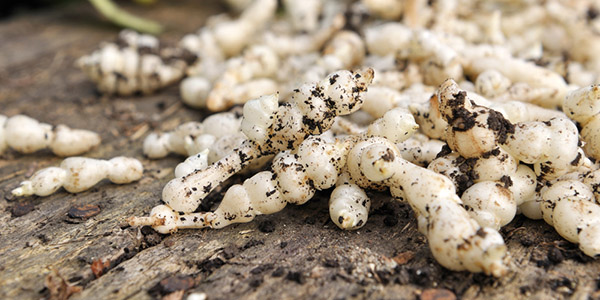
In late fall, I begin reflecting on the gardening year and what worked and what didn’t. Some things are in between. This is the first year that I experimented with crosnes, Stachys  affinis, sometimes called Chinese artichokes.  This is a small tuber-forming perennial plant, growing perhaps a foot high in a somewhat sprawling fashion. It produces tubers that, as you see above, look strikingly like grubs.

Pros:

They are perennial, although you do need to dig over the patch every year so that they don’t choke themselves out. If you are moving toward permaculture, this is appealing.

They can grow as a ground cover around other plants, although not if the necessary digging will disturb the larger plant.

The tubers have a very smooth surface and are a lot easier to clean then they look. I found that a soak in cold water, followed by a rinse with a strong stream of water, did the trick.

They are quite tasty. I was seeking a substitute for water chestnuts that I could grow at home, and I will point out quickly that they do not have the exquisite perfect crunch, the sweetness, and the flavor of fresh water chestnuts, although they are a long way above canned water chestnuts.  They lose a significant amount of their charm when cooked. I harvested a small double handful, chopped them coarsely, and put them in hot and sour soup, and although they were quite good, they had lost their crunch after a 15 minute simmer. Next time, I will throw them in just a minute before serving.  I can also imagine them being very good in salads, in steamed Chinese meatballs or dumplings, and in a lot of other places.

Cons:

I dug over a 2 square foot area to harvest a small double handful.  This was in a good patch of soil that got a fair amount of water. So I can’t imagine that they will ever be a very productive crop, although I will need to look into the  yields that other people get.

They can be hard to find. I got mine from Food Forest Farm.

So overall, for me, crosnes are not a stunning success but certainly a minor pleasure and a plant that I’m glad to have around. If you are gardening intensively, and want to get a lot of food from every square foot, they might not be for you. But if you have a patch of nice dirt that isn’t doing anything in particular, they might be just the ticket.
 

A Brilliant New Foraging Book, and notes on poisonous plants

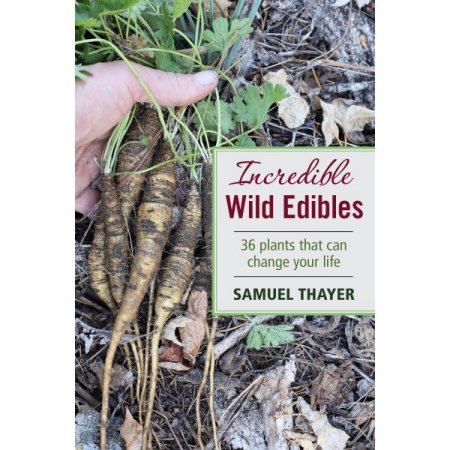
Of all the people alive whom I don’t actually know, Samuel Thayer is the one that I would most like to meet for a walk in the woods. His combination of erudition, common sense, and perspective is unique in the field. His two previous foraging books are among the most worn and frayed books on my shelves, and I’m thrilled to add a third to my foraging collection.

One of my favorite things about Thayer’s books is that there is very little repetition from one volume to another. If a plant that was thoroughly explored in one book is brought up in the next book, you can be sure that there is going to be new information that you really want to know.

Incredible Wild Edibles begins with several general-information chapters which are by no means the usual blather and which you should actually read because they concern safety, legality, and sustainability. I also recommend reading the section called The Chicken Feathers Guy, which describes how some people knock the joy right out of foraging and food preparation, for themselves and for others.

Then there are the plants. They include some which are new to me, such  as the creeping bellflower and the purple poppy mallow.  The latter is a common ornamental in my  high desert area, and I am embarrassed that I never knew it was edible. There is a good chapter on bladder campion, a weed that I admire because it’s always the last green I harvest in winter and the first green of spring.  Some of the described plants are common invasives becoming ever more common, such as fennel. How fortunate that it’s delicious. As Thayer says in the context of another invasive plant: “All this hatred directed against a plant just because it grows.”  Several varieties of mulberry are discussed, and Thayer is effortlessly erudite about their confused taxonomy.  He also mentions culinary uses of the mulberry leaves and flowers, without repeating the old wives’ tale that they are hallucinogenic. (Please, other foraging writers, stop just picking up this stuff from each other and repeating it as gospel.) The chapter on pokeweed deserves special discussion. This is the perfect example of a food that was a seasonal staple in many parts of the country, and everyone who ate it knew how to prepare it safely. Now, because it needs a preboil and because writers quake in fear of liability, they make it sound as if the plant will leap out of the ground and stab you given half a chance. Thayer gives a sensible explanation of exactly what you need to do, explains why he refuses to live in constant fear of liability, and leaves it at that. Personally I haven’t tasted poke shoots since I moved to the Southwest almost twenty years ago, but I finally got a couple of plants going last year and am looking forward to a small feast next spring. Preboiled and blanching water discarded, of course.

Now, for some brief comments on poisons.  There’s an element of real hysteria about the dangers of foraging, and strange tales are told, such as that expert Euell Gibbons died of eating a poisonous wild plant. This is nonsense; he had Marfan’s Syndrome and died of an aortic dissection, a common complication of that disease and not preventable in those days. There are some seriously poisonous plants in the world, definitely including some that will kill you. That said, most poisonings are cases of ignorant misidentification or misuse,  and if you are going to forage, you owe it to yourself and others to take your hobby seriously and get all the information you need to identify every wild plant you eat BEYOND A DOUBT and know about any special prep that it needs.  If your hobby was woodworking you would take the trouble to learn to use a saw safely, wouldn’t you? Foraging is less likely to harm you because, after all, your ancestors lived by foraging for millions of years, and you have access to a lot more information than they did. There are so many tasty wild plants that cannot reasonably be mistaken for anything poisonous that you can stick to the basics and still fill your plate much of the year. But Sam Thayer includes clear photos of all potential look-alikes and descriptions of how to tell them apart, so if you have his books, there is really not much excuse for error.

Fall and Winter Leaves II: Nettles

Nettles are one of my favorite greens, and one of the most nutritious plants around, so treating them with the respect and care that helps you avoid stings is definitely worth the trouble. I have a thriving nettle patch in a corner of my yard that I don’t routinely have to visit, so I have always harvested the new greens in the spring and then assiduously ignored the nettle patch for the rest of the year.  This is partly because I get interested in other things, but mostly because as a child, when I first started foraging to the intense dismay of my parents, my mother wisely bought me a set of Euell Gibbons books so that I would not poison myself.  Mr. Gibbons wrote eulogistically about nettles, but cautioned his readers that after the spring flush they develop oxalate crystals and are gritty and inedible.  I believed every word he wrote, and so I never tried them after they were about a foot high.

Here in the desert, in the unwatered spot where they have to live in my yard, nettles die back beginning in July, and the stems look dead by September.  But this year we got an uncharacteristic long heavy rainstorm in late September, and to my surprise the dead nettle stems began to leaf out again.  This week I noticed a mat of fresh nettle leaves, and told myself that no doubt they would be gritty, exactly as Euell had predicted.  But I did gather a couple of quarts (using leather gloves) of nettle sprigs and tried cooking them. They were exactly as verdant tasting as the spring greens, and neither gritty nor tough.  Now that I know this, I will try to remember to cut my nettle patch back when it dies in the hottest late summer weather, and begin to water in September so that the late fall shoots will be easier to pick.

Cooked greens in the refrigerator are an appetizing snack or light meal waiting to happen.  Today I didn’t particularly feel like eating a heavy lunch, but I did want something, and I wanted it to be healthy. I had a cup of blanched nettle greens hanging out in the refrigerator, and half a cup or so of leftover cooked cauliflower rice, so I grabbed two large scallions out of the walking onion patch and picked three large carrot leaves off the last remaining carrots.  The garlic that I planted in late summer is sprouting, so I picked one stalk that was about 6 inches high  to use as green garlic.  The fresh green stuff was chopped and sautéed in butter until cooked through, then the cooked nettles and cooked cauliflower rice were added along with about 2 cups of canned chicken broth and half a cup of heavy cream.  You could certainly leave this as a chunky soup, but I decided that I wanted a cream soup, and put the little potful in my Vitamix blender. About a minute later, it was completely creamy and thickened. I poured it back in the cooking pan, added a little water to thin it to a good consistency, simmered for 10 minutes, salted to taste, and ate it with a spoon full of drained yogurt on top to supply a subtle acidic element.  The entire process, including grabbing the green stuff from the yard, took about 15 minutes. This is a pretty small time investment for something as absurdly healthy as nettle soup.

Needless to say, vary to suit your own taste. Cooked cauliflower is a surprisingly good creamy thickening agent, and if you are vegan you could use olive oil for the initial sauté  and vegetable broth for the cooking liquid, and leave the cream out or substitute nut milk. It could be finished with a few drops of lemon juice instead of drained yogurt. Vegetarians can change the broth and leave everything else the same. As written it is a delicately flavored and very comforting soup, perfect for days when fate is being unkind, but if you want something more emphatic  you can start playing with herbs.  If you don’t happen to have a nettle patch, use some other leafy green. Have fun in your kitchen and make the result work for you.  My mother objects to my greens soups on the undeniable grounds that they are green, but if you have a prejudice against the color green in food I do hope that you will get over it, because it is the marker for some of the healthiest food that you can possibly eat.

And by the way, Euell Gibbons wasn’t right about everything, but his foraging books are still well worth reading for their palpable joy in the outdoors.  In one plant essay he says that wild foods are his way of taking communion with nature and the Author of nature, and I think this sums it up.

Fall and Winter Leaves I: Savoy Cabbage

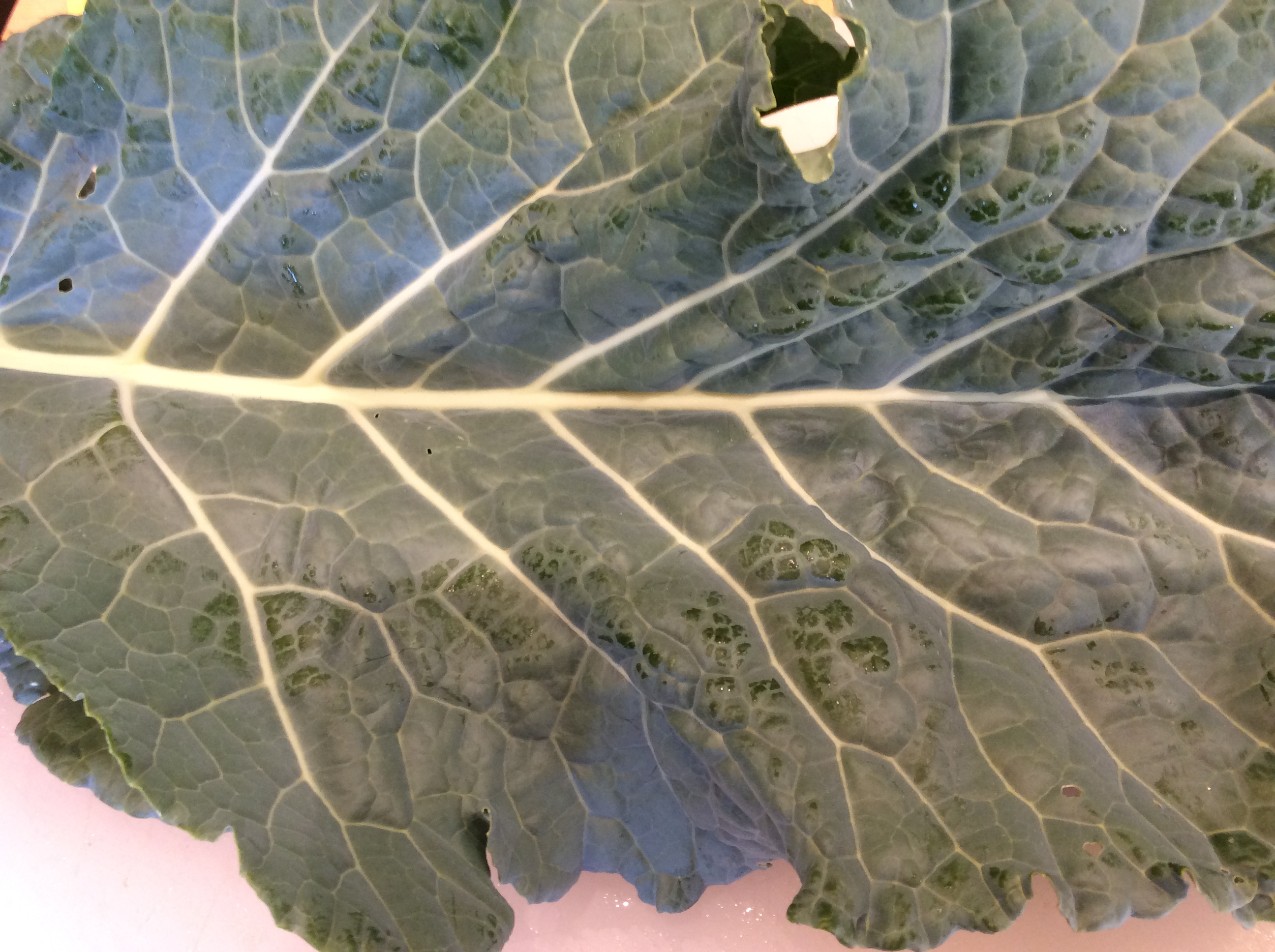
By late fall my freezers are always stuffed full, and I’ve done enough gardening for a while and am ready to sit by the stove in the evening, studying seed and nursery catalogs. But there’s always some late-season surprise in the garden to keep me interested. This year, it’s cabbage.  In late August I had a little empty space in a bed with rich soil, and a few savoy cabbage seeds that I hadn’t  remembered to  plant earlier, so I threw them in.  Most of them never germinated, because in desert country in August it’s pretty hard to keep a seedbed moist enough to start anything.  But two little seedlings did get going, and struggled through the heat and the competition, and when  the nights got cold in October they began to grow rampantly. Now they are about 4’ across. They’re thriving through the first hard frosts, but probably won’t live long enough to head up, so I started eating the leaves. To my surprise, these are the mildest and best crucifers I ever ate, far better than non-savoy cabbage, with a crisp texture, no toughness except in the veins, and no “cabbagey” aftertaste when chewed raw. They’re sweeter and milder than collards, kale, Portuguese kale, regular cabbage, or any other cabbage family green that I’ve grown. I tear the two sides off the large central stem/vein, which goes to the goat. Roll up the leaf halves, cut them in 1/4” strips across the larger veins, and then use your clean hands to massage them briskly by handfuls, planning about one minute per large leaf to soften the texture. If planning to use them raw, massage a bit longer. This massaging trick is invaluable in dealing with the more substantial leafy greens. Generally half a large leaf is plenty for one person, although real greens-lovers might eat more. Greens are full of soluble fiber and very filling.

As for how to use them, try any of the following:

Slaw, either classic or spicy Asian with ginger, scallions, and rice vinegar

As the basis for a Kale Caesar salad

Stir-fried with garlic and ginger, or with black bean sauce

Cooked like collards with bacon fat and onion and garlic, with a handful of crumbled crisp bacon over the top.

In a simple soup with ham or sausage, chicken broth, and sautéed garlic

Sauteed with leeks and finished with cream

Or try using them cut to appropriate size as a far healthier version of lettuce wraps, or whatever else you can dream up.

Like all dark leafy greens they are alarmingly healthy and likely to make you outlive your finances, so better keep saving. They are also surprisingly luxuriant and attractive in the garden, until you start cutting at them.