Archive for 2016

A Cookbook to Make You Cook

Right now I am reading two cookbooks that could hardly be more different from one another. Both are large, high quality, available only in hardcover, and gorgeously illustrated. One will make you cook, and one will make you think. The think-book will be reviewed tomorrow.

The one that will make you cook:
image

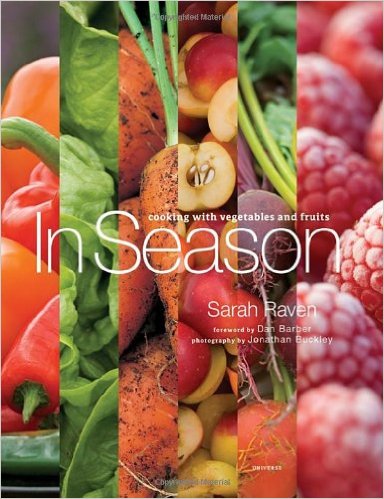
I have owned Sarah Raven’s addictive book about garden-based seasonal cooking for years. It has stood the test of time. Each spring I rediscover it, and it is on my bedside table right now. It seems to be neglected these days, which is why I’m doing my bit to get people to remember that it’s there. It is chock full of pretty photographs and, far more important, recipes that work and taste good. You can flip it open almost at random and come to a recipe that will become a kitchen favorite. It will help you cook your way through your garden or farmer’s market, and while your seasons might not correspond exactly to British seasons, you will cook through the seasons at your own pace in practice. The recipes are never tricksy or overly fussy, and lean toward full pure flavors.

Favorite recipes: Peaches with Bourbon, Romano Beans with Cream and Savory, Lamb with Thyme Tapanade, Cranberry Beans with Sage, Braised Celery, Parmesan and Walnut Crisps, scores of others.

Conclusion: buy it and cook from it. You will eat more fruits and vegetables and you will thereby be healthier and happier.
 

Flexible Romesco Sauce

image

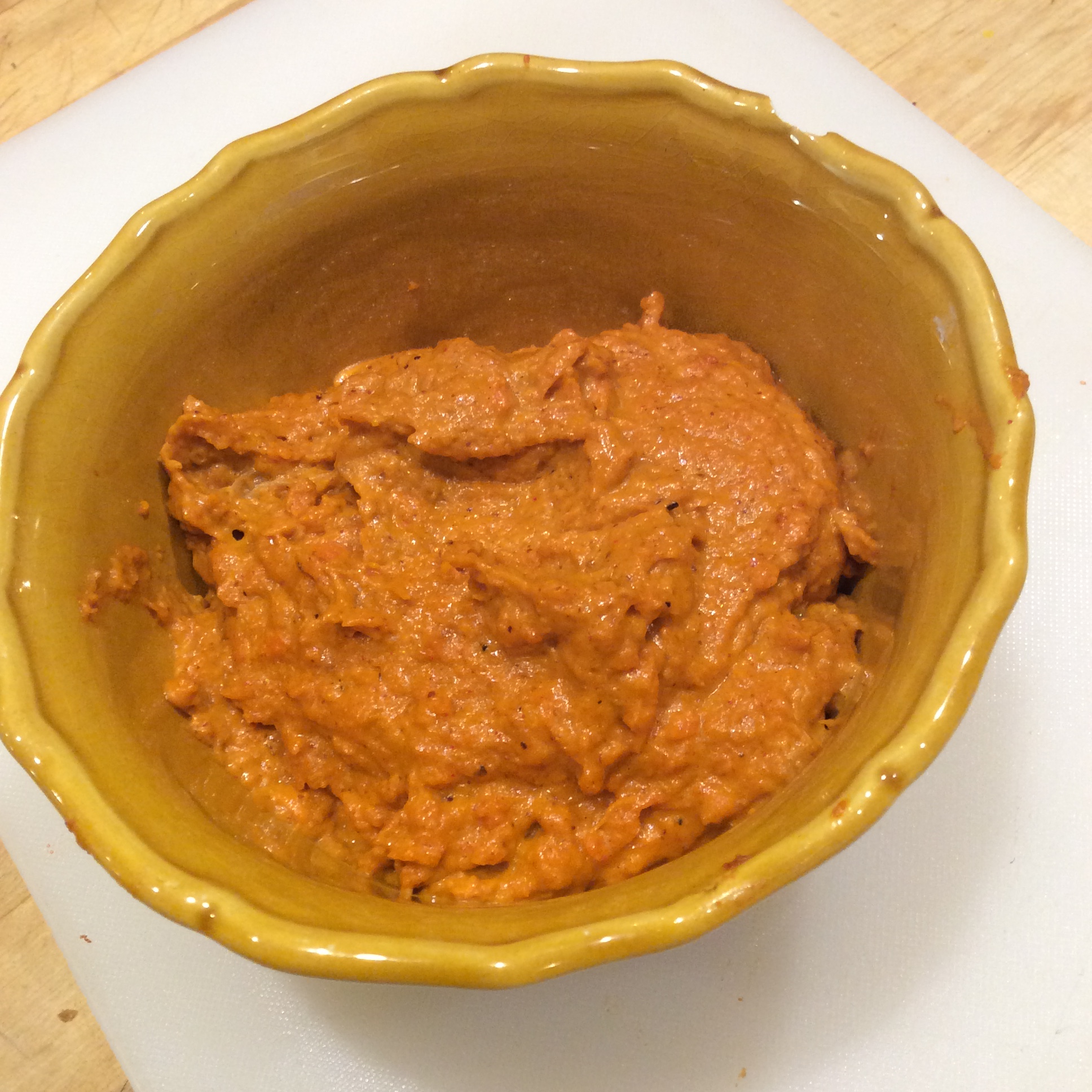
I’m a great fan of the Spanish Romesco sauce, and while I love it in its classic form, I also find its basic structure an adaptable framework that will support a lot of variations. Right now I’m digging up last year’s Autumn King carrots to make room  for a new planting. They are too tough now for eating fresh, but they are still sweet and flavorful, so I’m using some to make roasted carrot Romesco sauce.

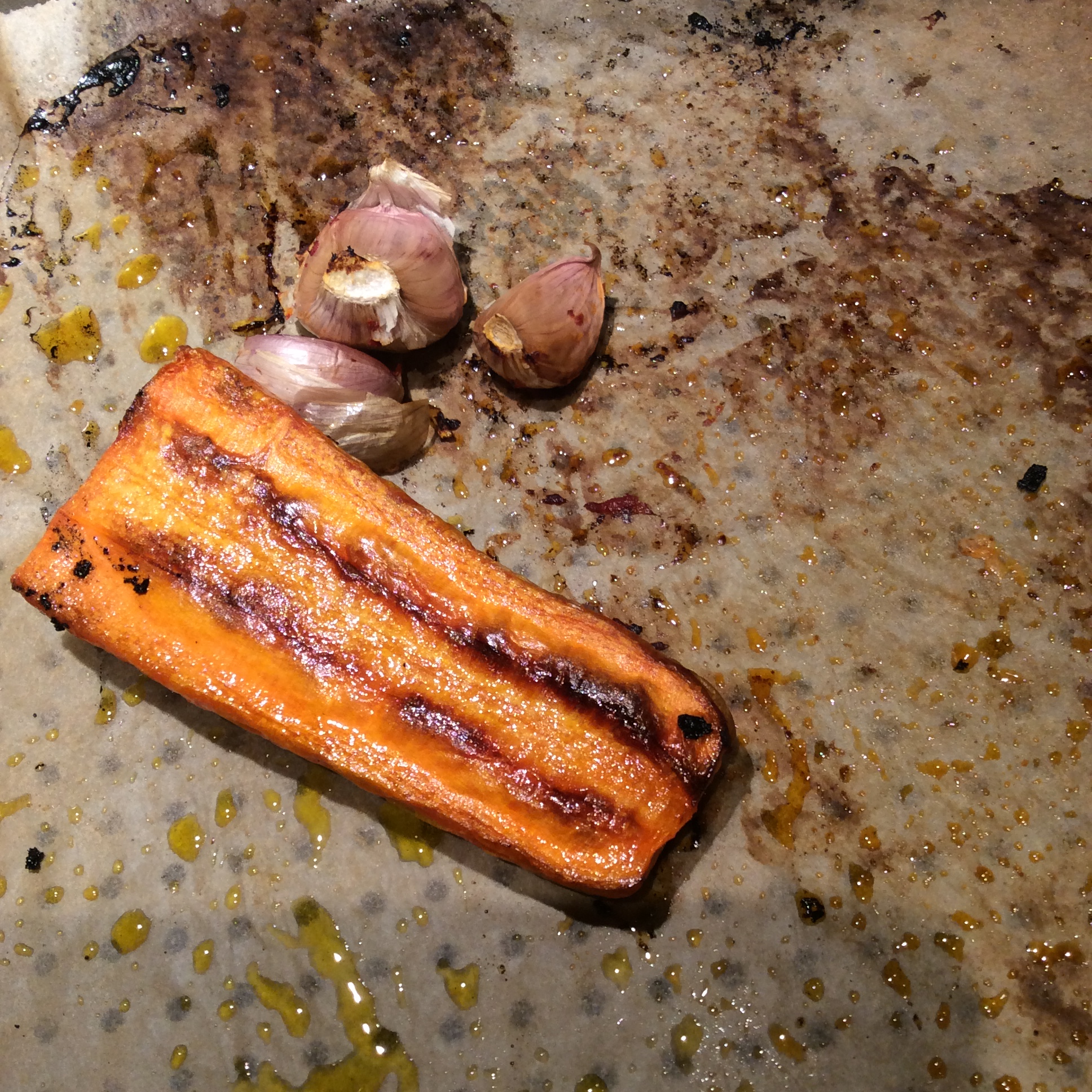
To start, turn the oven on to 500 degrees. Then one large Autumn King carrot (or two regular carrots) is cut in slices. One small onion is cut in quarters. Three cloves of garlic are separated from their head but not peeled. I use two roasted tomatoes out of my freezer, but you can put in two tomatoes, either fresh or canned plum tomatoes, to roast with the other veggies. Toss the veggies lightly in olive oil and put them on a sheet pan to roast, watching carefully because they can burn quickly.

image

When the carrot looks roasted but not burned and the onion is softened and translucent, take the veggies out. Skin the onion and peel the garlic cloves. Put all the roasted stuff in the food processor with half a cup of roasted almonds and grind as finely as possible. If you are using pre-roasted tomatoes, add them now and grind with the rest. Add two teaspoons of any of the following chiles: ground red New Mexico chile, or Spanish Nora chile, or half Spanish smoked Pimenton and half ground chipotle chile. This last mixture adds a beautiful heat and smoky edge, and is my own favorite. Process, and add two tablespoons of either lemon juice or sherry vinegar. I prefer the sherry vinegar, but a Romesco with lemon can be good with shrimp. Now add really good olive oil until the mixture comes together as a somewhat loose paste. Add more chile if needed. Salt to taste; it’s a condiment, and I like it on the salty side. Serve with roasted vegetables, or meat or chicken roasted rather plainly, or slices of baguette, or cold shrimp, or blackened fish, or nearly anything.

There are lots of other possibilities for a good flexible Romesco.  Roasted peeled red peppers are traditional. Roasted winter squash or sweet potato might be good, and I can imagine using roasted kale or chard leaves for a really dark, earthy, and healthy version. In my opinion the roasted tomatoes are necessary, but I’ve seen recipes that don’t include them. Some people prefer toasted bread crumbs to nuts to add body. And I can’t tell you how much sauce this will make, because I don’t know how much olive oil will taste right to you.

image

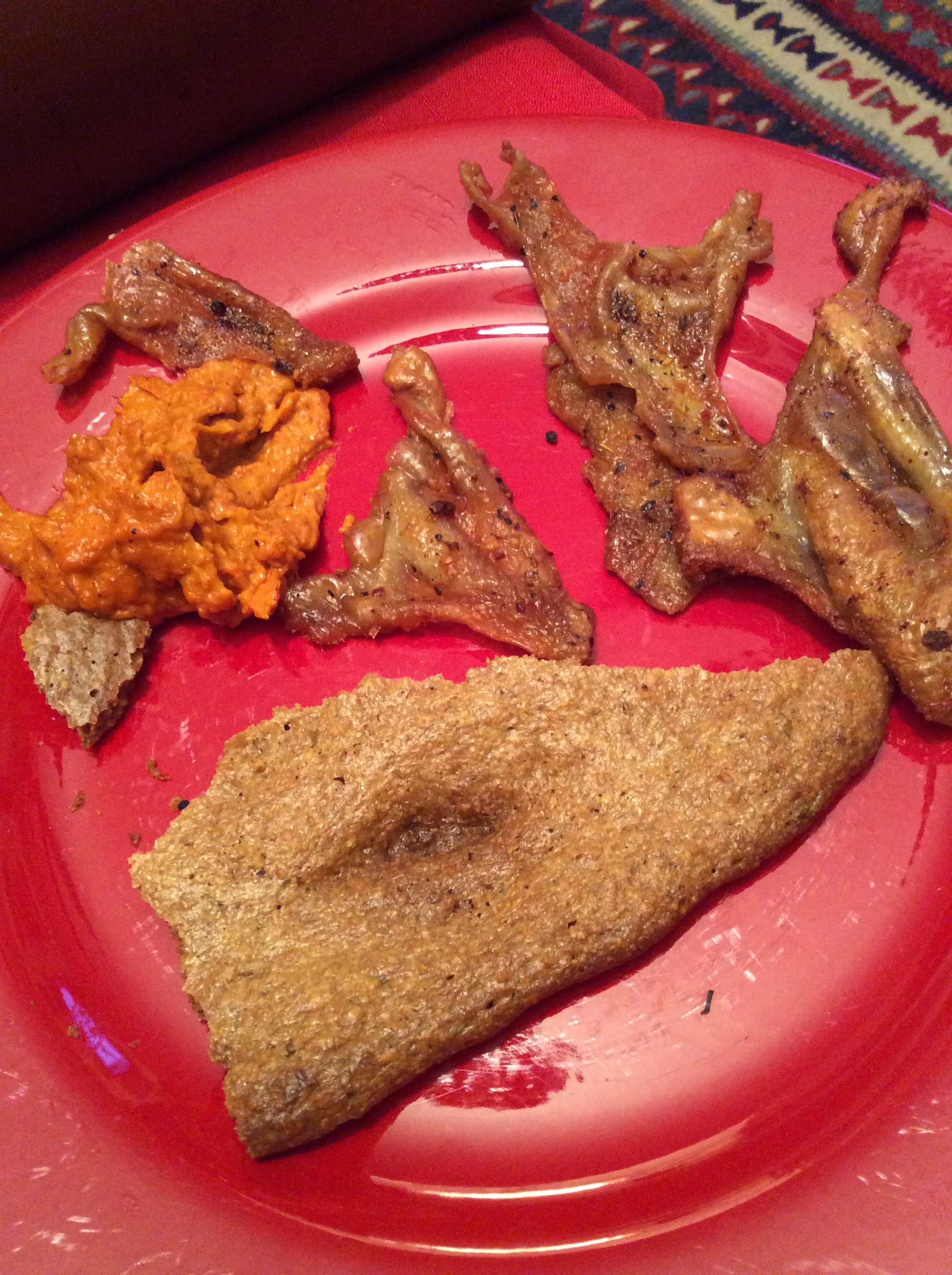
I recently ate it with tiny crisp-fried bits of chicken and low-carb flaxseed focaccia and it was very, very good.

Wild or Cultivated? Both. Also Delicious.

image

As a general rule, I try not to review cookbooks until I have owned them for at least a year.  I buy them at retail, paying the same price that my readers will eventually pay, and then I read them, cook from them and think about them.   Many cookbooks that seemed very enticing when I first brought them home are relegated to distant shelves a year later.

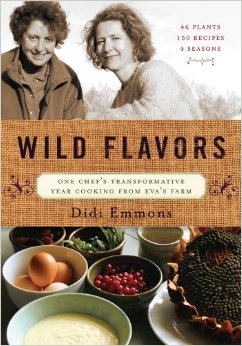
This one still has a prominent place at my bedside, which is my favorite place for reading and thinking about food. Chef Emmons  writes about a year that she spent cooking from a wildly varied organic vegetable farm, Eva’s Farm.  This farm seems to be doing on a very large scale what I am trying to do on my property on a very small scale, i.e. there is a little bit of everything and no clear line between the cultivated plants and the wildlings.  Lambsquarters and nettles are given the same culinary consideration as spinach and chard, but there is no particular emphasis on their wildness; they’re just there.  This is absolutely as it should be, in my view. The difference between a cultivated plant and a weed is a rather slight one.

The recipes read as an ongoing series of seasonal improvisations on the level of “see it growing, cook it, eat it.”  They certainly work if you want to follow them closely, but in my view are better read as a vision of the garden through the eye of a cook, who might see infinite possibilities but can only cook one of them at a time. There is an emphasis on frugality but not an obsession with it. The use of herbs in lavish free-form ways is a delightful subtext. The sidebars are full of interesting thoughts about farming, cooking, and just being alive. The recipes include meat and dairy products and, in general, everything that might grow on a vegetable farm or be bartered for.

In brief, I love this book, use it, and recommend it. I put it aside this winter, but when the first greens showed above ground, it was back at my bedside. It looks a bit worn and has a food stain on the cover, which tends to distinguish the cookbooks that I read from the ones that I use.

The Plant That I Can’t Do Without

image

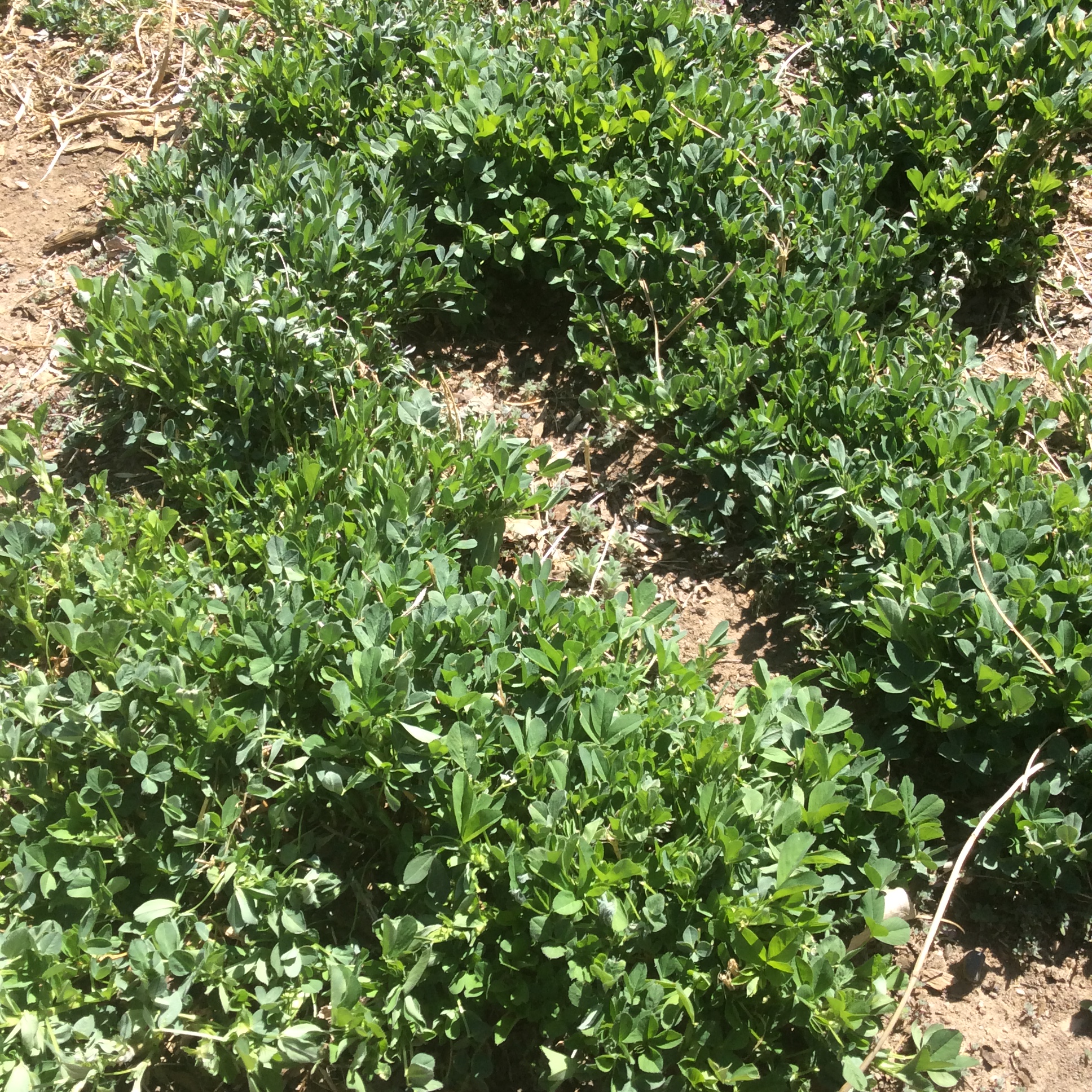
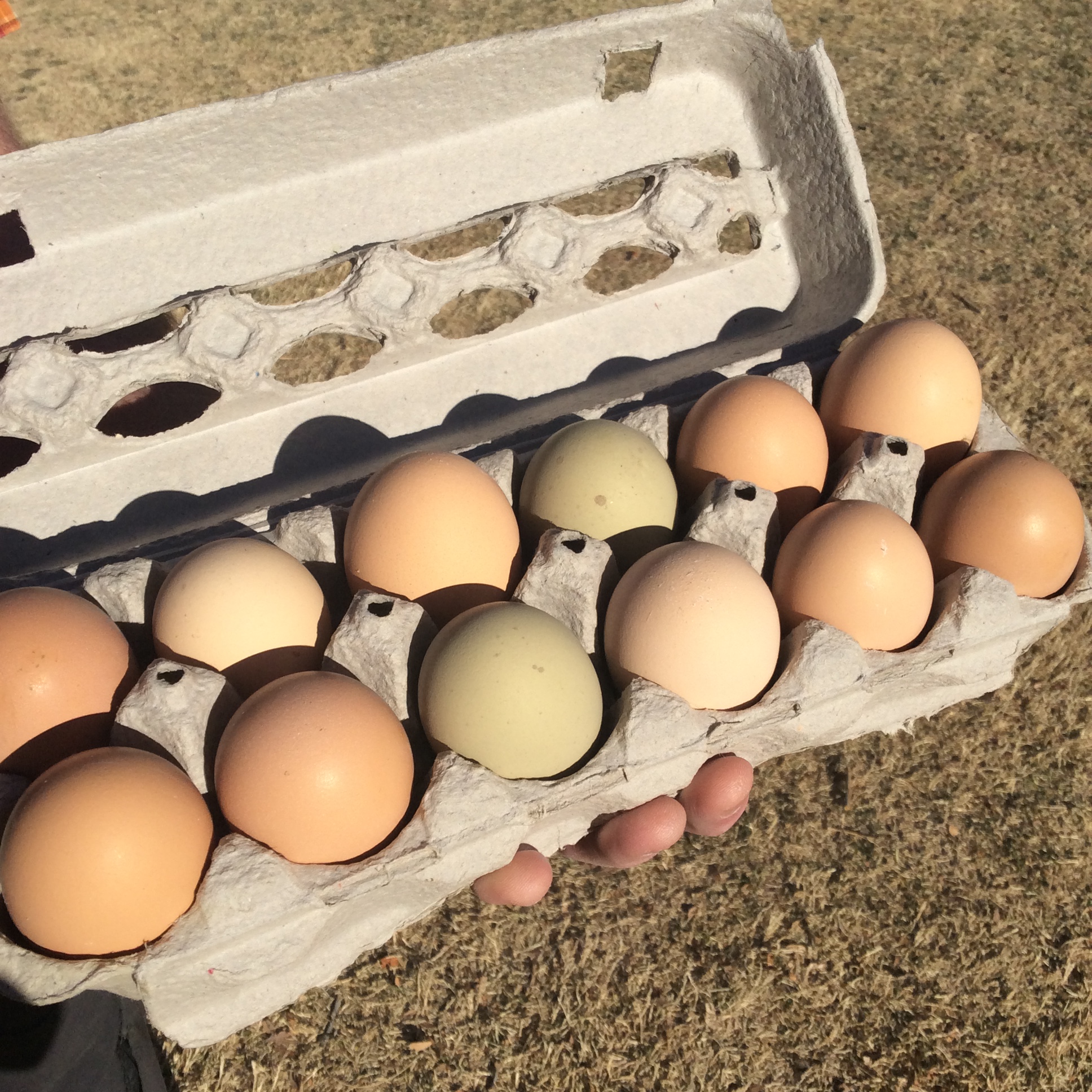
If I were a poet, I would write a hymn to alfalfa.  This workhorse plant is now all over my small property, improving soil and feeding the animals and indirectly feeding me.  For the first couple of years I labored fruitlessly to try to grow enough grass or clover to make a picnic circle, but ultimately I gave up and seeded the area with alfalfa.  What a gain in utility.  Alfalfa thrives in my alkaline soil. Its roots are reported to go down as much as 30 feet deep, and it is fairly drought resistant.  It is a bit sparse the first year but then fills out nicely. It fixes nitrogen and improves the soil. Early in the spring, usually by mid-March in my area, the vibrant green leaves are forming clumps.  It is a remarkably nutritious green, however I don’t usually eat it myself, although I will clip a few tender leaves off the tips and put them in cooked greens mixtures.  Chickens love fresh alfalfa, and it is quite astounding how much of it they will eat. Of course, this is providing all sorts of nutrients and greatly increasing the beta-carotene and omega-3 fatty acids in the egg yolks.  The yolks are beautifully vibrant orange. I grab handfuls of stems and cut them close to the ground with scissors, then go to the chicken pens and cut the stems into lengths 1 to 2 inches long, to make the plant easier for the hens to eat.  They start jumping against the door as soon as they see the alfalfa coming.   My goat relishes a handful of fresh alfalfa as a snack, although mostly she eats dried alfalfa hay.  I have little patches of alfalfa all over the yard now, wherever I had a bare space to fill, and I let at least one patch go to flower for the pleasure of seeing the bees mob the blue-purple blossoms.  I would estimate that each clump is cut four to six times between March and October.

I still wish that I had a lush smooth clover lawn to picnic on; alfalfa is clumpy and by the end of the season it is stiff with all the stems that you cut. You can’t sit right down on it.   But a large sheepskin in between you and the alfalfa makes it a much more comfortable resting place, and it is far more useful and durable than clover. Currently I’m experimenting with planting fruiting trees and berries into the alfalfa patches to see how they coexist. My hope is that the alfalfa will provide some nitrogen for the trees. I hope to report back in a year or two.

If I think about my property as a factory, alfalfa is mining the nutrients from the subsoil, combining them with water, carbon dioxide, and sunlight to make edible food, and transporting the food to the general marketplace at the soil surface. The chickens are eating from the market, breaking down the 16-carbon omega-3 fatty acids found in plants, and re-forming them into 18 carbon omega-3s that people can readily utilize, as well as making proteins and concentrating caratinoids and other nutrients. They contribute eggs and sometimes meat back to the common marketplace, where I “buy” the foody products with my labor and feed input, and happily devour them. It’s a beautiful chain.

image

These delicious eggs can be thought of as little bombs full of all the nutrients in alfalfa. But they are much easier for people to eat.